Ceiling fans don’t actually cool a room like air conditioners do. Instead, they create a wind-chill effect, making you feel cooler by enhancing air circulation and helping sweat evaporate from your skin. When the blades rotate counterclockwise in the summer, they push air downward, increasing comfort without lowering the temperature. This means you can stay cool while using less energy. Want to learn how to maximize your fan’s efficiency throughout the year?
Key Takeaways
- Ceiling fans do not cool air; they create a wind-chill effect that makes you feel cooler.
- The wind-chill effect enhances comfort by evaporating sweat from the skin, providing a cooling sensation.
- Fans can help reduce energy costs by allowing higher thermostat settings when used with air conditioning.
- For optimal cooling in summer, ceiling fans should rotate counterclockwise to push air downward.
- Ceiling fans are versatile, maintaining comfort by redistributing warm air during winter months as well.
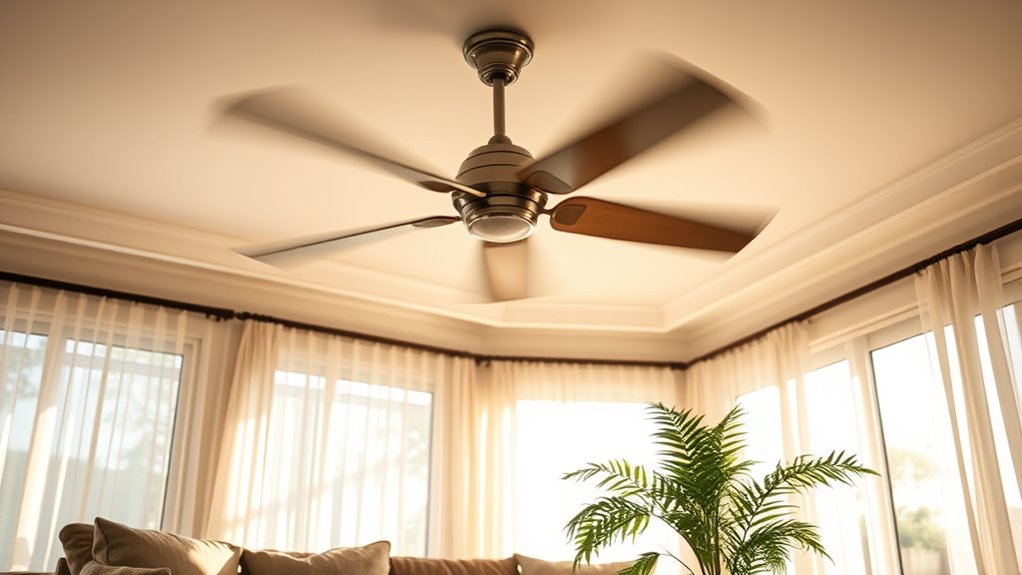
Have you ever wondered if ceiling fans actually cool a room? It’s a common question, especially during those hot summer months when you’re looking for relief without cranking up the air conditioning. The truth is, ceiling fans don’t cool the air like an air conditioner does. Instead, they create a wind-chill effect that makes you feel cooler by improving air circulation. When the blades of a ceiling fan spin, they push air downwards, and this moving air evaporates sweat from your skin, making you feel cooler even though the room temperature remains unchanged.
This wind-chill effect is why you might feel a sudden breeze when you walk under a ceiling fan. The sensation of coolness is immediate, and you can often lower your thermostat setting because of it. By using a ceiling fan in conjunction with your air conditioning, you can increase your home’s energy efficiency. In fact, ceiling fans use considerably less electricity than air conditioning units. So, while it might be tempting to blast the AC all day, a ceiling fan can help you remain comfortable without breaking the bank. Additionally, incorporating smart appliances can further enhance your kitchen’s climate control, ensuring optimal comfort.
Remember, for a ceiling fan to be effective, it’s essential to run it in the right direction. In summer, you should set the fan to rotate counterclockwise, which pushes air downward. In winter, reverse the direction to clockwise, which helps circulate warm air that rises to the ceiling. This simple adjustment can enhance your home’s overall comfort and save you on energy costs throughout the year.
Moreover, ceiling fans don’t just serve a single purpose. They can be used in various seasons, making them a versatile addition to your home. In the warmer months, they keep the air moving, while in the cooler months, they help redistribute warm air, allowing you to maintain a comfortable environment year-round.
Frequently Asked Questions
Can Ceiling Fans Reduce Humidity in a Room?
Ceiling fans can help with humidity control, but they don’t actually reduce humidity levels in a room. Instead, they improve air circulation, making you feel more comfortable by enhancing the evaporation of sweat from your skin. This can create an illusion of lower humidity and better air quality. So, while they won’t lower humidity directly, they can make your space feel fresher and more pleasant during humid days.
How Do Ceiling Fans Affect Heating in Winter?
Ceiling fans can gracefully enhance your winter heat efficiency. When you adjust the fan operation to spin clockwise at a low speed, you’ll gently circulate warm air that rises to the ceiling, allowing it to cascade back down into your living space. This subtle movement creates a cozier atmosphere, reducing the strain on your heating system. So, while they’re often associated with summer, ceiling fans can be quite beneficial during those chilly months!
What Is the Best Ceiling Fan Size for My Room?
For your room, the best ceiling fan size depends on its dimensions. Generally, a fan with a blade diameter of 36 inches suits rooms up to 100 square feet, while 42-inch fans work well for 100 to 225 square feet. If your ceiling height’s more than 8 feet, consider a downrod to hang the fan lower, enhancing airflow. Always guarantee the fan’s positioned at least 7 feet above the floor for ideal performance.
Do Ceiling Fans Help With Allergies or Air Circulation?
Yes, ceiling fans can help with allergies by improving air circulation. When you run a fan, it moves air around, reducing dust circulation and preventing it from settling on surfaces. This can enhance air quality, making it easier for you to breathe, especially if you’re sensitive to allergens. Just remember to keep your fan blades clean to minimize dust buildup, which can aggravate allergies instead of alleviating them.
How Energy-Efficient Are Ceiling Fans Compared to Air Conditioning?
Ceiling fans are generally more energy-efficient than air conditioning systems. While you might think they can’t compete with AC, their energy savings are significant, often using only a fraction of the power. In a cost comparison, running a ceiling fan costs much less than operating an air conditioner, especially during warmer months. By using both wisely, you can enjoy comfort while keeping energy bills low. So, you can stay cool without breaking the bank!
Conclusion
In the dance of air, ceiling fans act like gentle breeze-makers, weaving a tapestry of comfort in your space. While they don’t lower the room’s temperature, they create a invigorating wind-chill effect that can make you feel cooler, like a soft whisper on a warm summer day. So, embrace their grace; they’re not just fans, but your allies in comfort, reminding you that sometimes, it’s the subtle shifts in air that bring the greatest relief.