
To humidify a room without a humidifier, try placing bowls of water around your space or hang wet laundry to dry indoors. You can also simmer water on the stove, adding spices for extra scent, or leave the bathroom door open after a hot shower to let steam escape. Houseplants like peace lilies will help boost humidity while purifying the air. These simple methods can create a more comfortable environment and there are even more techniques to explore.
Key Takeaways
- Place bowls of water around the room to naturally increase humidity through evaporation.
- Simmer water on the stove while cooking to release steam and add moisture to the air.
- Hang wet laundry indoors to dry, which will release moisture and improve humidity levels.
- Use houseplants like peace lilies or spider plants, as they release moisture via transpiration.
- Leave the bathroom door open after showering to allow steam to raise humidity in other areas.
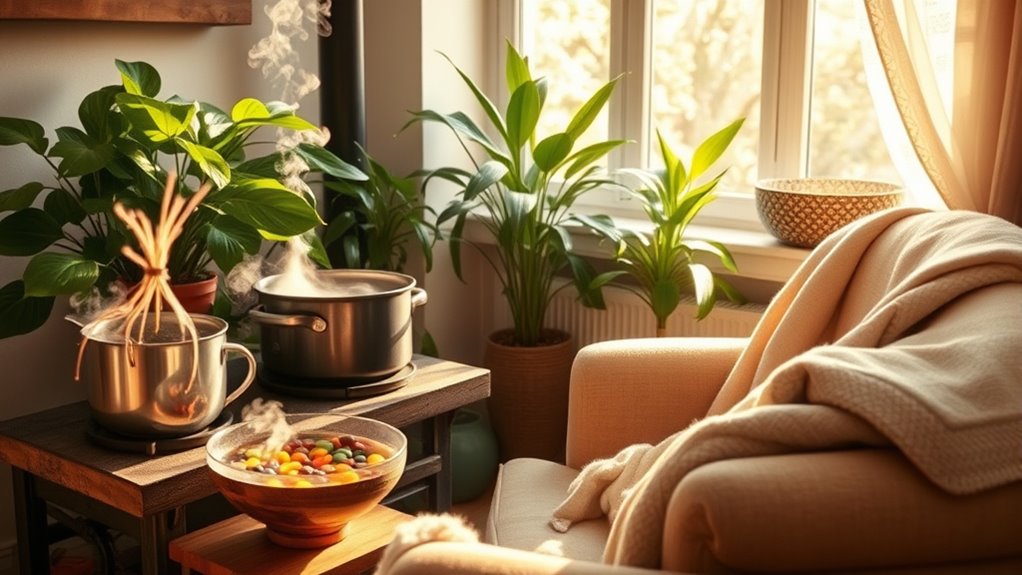
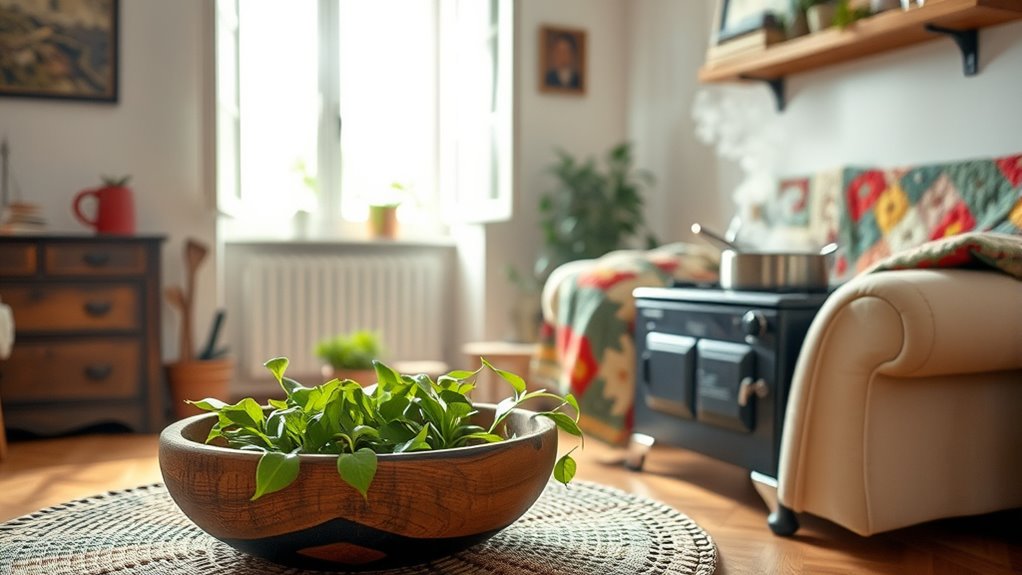
If you’re struggling with dry air in your home, don’t worry—there are plenty of effective ways to humidify a room without a humidifier. One of the simplest methods is to place bowls of water around your living space. As the water evaporates, it’ll naturally increase the humidity levels in the air. You can set these bowls on windowsills, countertops, or shelves. To enhance the process, contemplate adding a few drops of essential oils to the water. This not only helps with air quality but also adds a pleasant aroma to your environment, promoting both skin hydration and a calming atmosphere.
Another great option is to use your stove. When you’re cooking, let water simmer in a pot or kettle. The steam released will add moisture to the air while also warming your home. Plus, you can throw in some spices or citrus peels for an extra burst of fragrance. Just make sure to keep an eye on the pot to prevent it from boiling dry.
Simmering water on your stove not only warms your home but also adds much-needed moisture to the air.
You might also want to think about drying your laundry indoors. When you hang wet clothes to dry, they release moisture into the air as they dry. This is a practical way to humidify your space, especially in colder months when you may not want to open windows. Not only does it improve air quality, but it’s also an eco-friendly way to keep your home comfortable.
Additionally, you can try placing plants around your home. Houseplants naturally release moisture through a process called transpiration. Not only do they help humidify your space, but they also purify the air, enhancing your overall environment. Popular choices include peace lilies and spider plants, which are known for their air-purifying qualities.
Lastly, don’t underestimate the power of your shower. After you bathe, leave the bathroom door open to allow the steam to escape into other areas of your home. This can considerably raise humidity levels and improve skin hydration, especially during the winter months when dry air is at its peak.
Incorporating these simple methods can make a big difference in your home’s humidity levels. By taking these steps, you’ll not only enjoy better air quality but also a more comfortable living environment where your skin can stay hydrated and healthy. Additionally, maintaining a whole-home backup power can be crucial for keeping heating systems running during power outages, which helps prevent dry air issues. Give these techniques a try, and you’ll notice an immediate improvement in your indoor air quality.
Top picks for "humidify room without"
Open Amazon search results for this keyword.
As an affiliate, we earn on qualifying purchases.
Frequently Asked Questions
Can I Use Essential Oils to Humidify a Room?
You can’t use essential oils alone to humidify a room, but essential oil diffusers can help. They disperse water vapor along with your favorite oils, adding moisture to the air while providing aromatherapy benefits. This combination not only makes your space smell great but also creates a more comfortable environment. Just make sure to keep the diffuser filled with water for the best results! Enjoy the soothing atmosphere you create.
How Often Should I Replace Water in DIY Humidifying Methods?
Think of your DIY humidifier as a thirsty plant; it needs regular care. You should replace the water at least every two to three days to maintain ideal humidity and prevent mold growth. This frequency maintenance keeps the air fresh and free of unpleasant odors. If you notice the water getting cloudy or dirty, don’t hesitate to replace it sooner. Keeping up with water replacement ensures your space stays comfortably humidified.
Is It Safe to Humidify a Room With Pets?
Yes, it’s generally safe to humidify a room with pets, but you should monitor humidity levels. Too much humidity can lead to mold, which isn’t good for you or your furry friends. Keep humidity between 30% and 50% for ideal pet safety. Make sure your pets can’t access any DIY methods you use, like water bowls or damp towels, to prevent accidents. Regularly check on their comfort and health during the process.
What Materials Work Best for DIY Humidifiers?
For DIY humidifiers, materials like bowls of water, wet towels, and sponges work best. You can use evaporative techniques by placing a bowl of water near a heat source; it’ll help moisture absorption into the air. Hanging damp towels or sponges in your room also adds humidity as they slowly release water vapor. Just remember to re-wet them regularly to maintain effective moisture levels in your space.
How Do I Know if My Room Is Humid Enough?
You can tell if your room’s humid enough by checking the humidity levels with measuring devices like hygrometers. If it’s between 30% and 50%, you’re in the sweet spot. But wait—what if it drops below that? Your skin may feel dry, and static electricity might become a nuisance. So, keep an eye on those numbers; they’re your best friends in maintaining comfort. Trust your instincts and adjust as needed to create a cozy atmosphere!
Conclusion
In summary, you don’t need a fancy humidifier to create a comfortable atmosphere in your home. Simple DIY methods like using bowls of water or indoor plants can greatly boost humidity levels. Did you know that about 30% of people suffer from dry skin and respiratory issues due to low humidity? By implementing these easy techniques, you can improve your indoor air quality and keep your family feeling their best all year round.