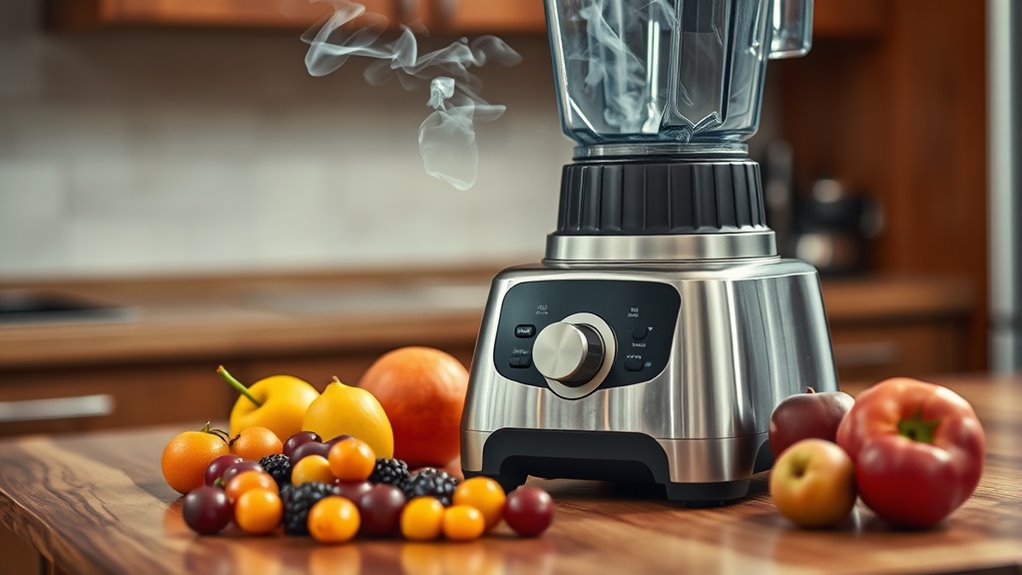

If your blender smells burnt, it’s likely overheating from overloading or continuous use. Tough ingredients without enough liquid strain the motor, leading to overheating. Make sure you’re using appropriate ingredient sizes and take breaks if blending for long periods. Regularly check for any electrical issues and clean the blades to keep it running smoothly. By adjusting your blending habits, you can prevent this problem and extend your blender’s lifespan—there’s more to learn about keeping it in top shape!
Key Takeaways
- Overloading your blender with hard ingredients can strain the motor and cause overheating, leading to a burnt smell.
- Ensure to balance your ingredient loads with enough liquid to facilitate smoother blending and reduce motor stress.
- Avoid continuous blending for extended periods; take breaks to allow the motor to cool down.
- Regularly inspect and maintain your blender’s electrical components to prevent damage and overheating.
- Clean the blades and housing frequently to eliminate food buildup that can increase motor effort and overheating risks.

Have you ever noticed a burnt smell coming from your blender? It’s not just a nuisance; it can be a sign that something’s wrong. When you smell that burnt odor, it often points to motor overheating, which can lead to serious electrical issues if left unaddressed. Understanding why this happens can help you prevent damage and guarantee your blender runs smoothly for years.
First, consider how you’re using your blender. Are you overloading it with ingredients? If you’re trying to blend hard items like ice or frozen fruits without enough liquid, the motor has to work harder than it was designed to. This excessive strain can lead to overheating, causing the burnt smell. To prevent this, balance the load by adding enough liquid and breaking down large chunks into smaller sizes before blending.
Consider your blender’s load; overloading it with hard ingredients can strain the motor, leading to overheating and that burnt smell.
Another factor to keep in mind is the duration of your blending sessions. If you’re blending continuously for extended periods, the motor can overheat. Most blenders are built to handle short bursts of blending, so if you need to blend for a longer time, it’s a good idea to take breaks. Letting the motor cool down can help prevent that burnt smell from creeping in. Additionally, proper maintenance practices ensure that your blender remains efficient and reduces the risk of overheating.
Electrical issues can also contribute to the problem. If your blender’s wiring is damaged or if there’s a fault in the electrical components, it may cause overheating. Regularly inspect the power cord and plug for any signs of wear or damage. If you notice fraying or unusual sounds coming from the motor, it’s best to stop using it immediately and have it checked by a professional.
Lastly, maintenance can’t be overlooked. Keeping your blender clean is vital. Food particles can get stuck in the blades and housing, causing the motor to work harder than necessary. Make it a habit to clean your blender after each use, ensuring it remains in good condition.
Frequently Asked Questions
Can I Fix a Burnt Blender Motor Myself?
Yes, you can attempt a DIY repair on a burnt blender motor, but it’s vital to prioritize safety precautions. Start by unplugging the blender and disassembling it carefully. Inspect for damaged components or burnt wires. If you’re comfortable with basic electronics, you might replace the motor or wiring. However, if you’re unsure, it’s safer to consult a professional. Always remember, safety first when working with electrical appliances!
How Long Should My Blender Last Before Issues Arise?
Your blender should last around 5 to 10 years, depending on usage and care. You might think that’s not long enough, but with proper maintenance tips, you can prolong its lifespan. Regularly clean the blades and motor base, avoid overloading it, and let it cool between uses. By treating your blender well, you ensure it remains a reliable kitchen companion for many delicious smoothies and soups to come.
What Types of Food Can Cause Overheating?
Certain food types can increase overheating risk for your blender. Thick ingredients like frozen fruit, ice, or nut butters demand more power, putting strain on the motor. Hard vegetables, such as carrots or beets, can also contribute to this issue. Additionally, blending large quantities at once might push your blender beyond its limits. To prevent overheating, consider blending in smaller batches or using a pulse function to ease the workload.
Are There Specific Blender Brands More Prone to Burning?
Certain blender brands may have a reputation for overheating or burning out more than others. It’s crucial to research consumer reviews and brand reputation before purchasing. Some brands offer better warranty coverage, which can provide peace of mind. If you’re concerned about performance, consider models known for durability and reliability. Investing in a high-quality blender can help you avoid issues like overheating and ensure your kitchen appliance lasts longer.
Can a Burnt Smell Be a Sign of Electrical Issues?
Yes, a burnt smell can definitely signal electrical issues. Imagine driving your car with a strange noise, ignoring it could lead to bigger problems. Similarly, if your blender emits a burnt odor, it might indicate electrical faults that compromise appliance safety. Don’t brush it off! Check the wiring, plug, and components. If anything seems off, it’s wise to unplug it and consult a professional to avoid potential hazards.
Conclusion
In summary, when your blender emits a burnt smell, it’s a siren’s call for attention. This warning signals that the motor may be overheating, urging you to pause and assess your blending habits. By giving your appliance a well-deserved break and ensuring proper use, you can avoid the smoky specter of mechanical failure. Treat your blender with care, and it’ll reward you with smooth creations, free from the acrid taste of burnt dreams.