When you’re deciding between a food processor and a blender, remember they excel in different areas. A food processor chops, slices, and mixes solid ingredients easily, making it perfect for salads and dough. In contrast, a blender is your go-to for creating smooth smoothies and purees. Depending on your cooking needs, one might suit you better. Curious about how to choose the right one for your kitchen? There’s more to discover!
Key Takeaways
- Food processors excel at chopping, slicing, and mixing solid ingredients, while blenders specialize in liquefying and creating smooth textures from liquids.
- Food processors come with multiple attachments for various tasks, whereas blenders typically have simpler designs with fewer speed settings.
- Food processors are ideal for preparing salads, sauces, and dough, while blenders are best for smoothies, soups, and purees.
- The choice between a food processor and a blender depends on whether you primarily work with solid or liquid ingredients.
- Both appliances can complement each other in the kitchen, covering a wide range of culinary needs and meal prep tasks.
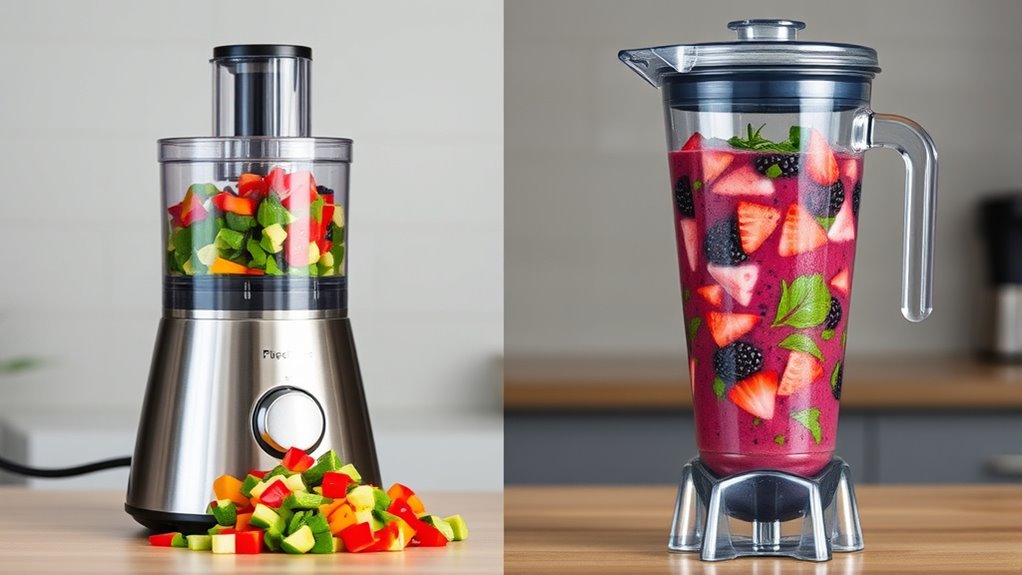
When you’re in the kitchen, deciding between a food processor and a blender can be a bit overwhelming. Both are essential kitchen gadgets that can simplify meal prep, but they serve different purposes. Understanding their unique functionalities will help you make the right choice for your cooking needs.
Deciding between a food processor and a blender can be overwhelming; each serves different purposes in simplifying meal prep.
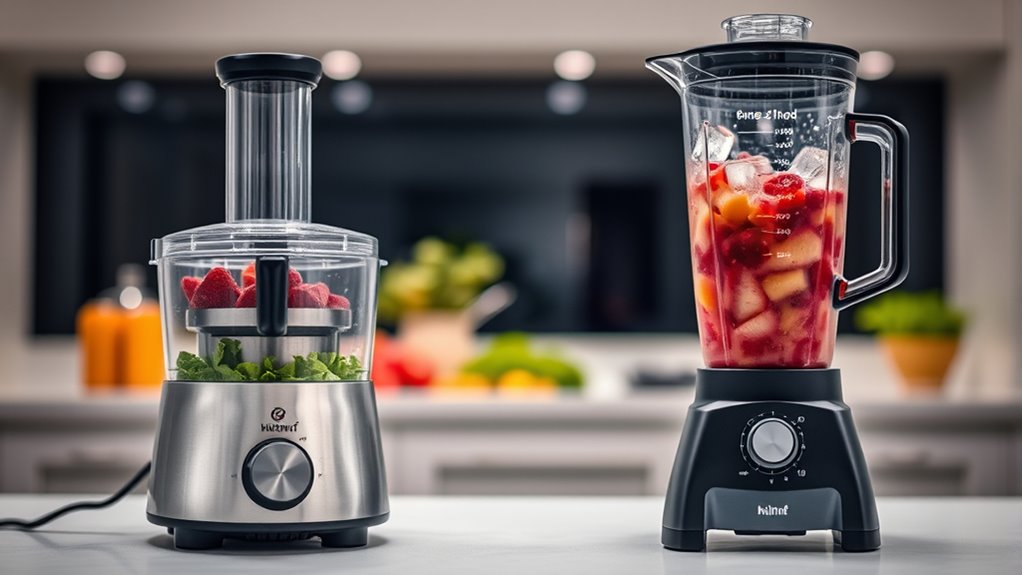
A food processor is your go-to tool for chopping, slicing, and dicing. If you’re whipping up a big batch of salsa, for instance, a food processor can quickly chop tomatoes, onions, and peppers in just a few pulses. This gadget excels at handling solid ingredients and can also shred cheese or mix dough with ease. If you frequently prepare meals that require lots of chopping, this might be the gadget for you. It saves you time and effort, allowing you to focus on cooking rather than prepping.
On the other hand, a blender is perfect for achieving smooth textures. If smoothies or soups are your primary focus, a blender is what you need. It excels at liquefying ingredients, turning fruits, vegetables, and liquids into a creamy consistency. You’ll find that blending ingredients like bananas and almond milk creates a velvety smoothie that’s hard to replicate with a food processor. If you envision yourself making shakes or purees, then a blender should be your top pick.
Another key difference lies in their design and capacity. Food processors usually come with multiple attachments that enhance their versatility. You can switch out blades to slice, shred, or mix, making it a multi-functional gadget. Blenders, while simpler, often come with varying speeds to achieve different consistencies, but they lack the same diversity in attachments.
When considering meal prep, think about what you cook most often. If you enjoy making salads, sauces, or kneading dough, invest in a food processor. If smoothies, soups, or sauces are more your style, a blender will serve you better.
Ultimately, both appliances can complement each other in your kitchen. You might find that having both is ideal for covering all your bases. Whether you choose a food processor or a blender, you’re enhancing your meal prep capabilities and taking a step towards more efficient cooking. So, weigh your options carefully, and pick the kitchen gadget that aligns best with your culinary adventures!
Frequently Asked Questions
Can I Use a Blender for Food Processing Tasks?
Yes, you can use a blender for some food processing tasks, but it’s not always ideal. Blenders excel at smoothies and purees, while food processors offer more blade versatility for chopping and slicing. If you’re short on appliance storage, a blender might seem like a practical choice. Just keep in mind, it might not handle certain food prep tasks as efficiently as a dedicated food processor would.
Which Appliance Is Better for Making Smoothies?
You might think a food processor’s your best bet for smoothies, but surprise! A blender’s really the champ here. It effortlessly creates that perfect smoothie texture you crave, blending fruits and veggies into a velvety delight. While food processors shine in versatility, they can leave your smoothies chunky. So, when it’s time to whip up that invigorating drink, grab your blender and enjoy the smoothness that only it can deliver!
Are Food Processors Louder Than Blenders?
Generally, food processors are louder than blenders when you compare appliance volume. This noise comparison varies based on the model, but food processors often generate more sound due to their powerful motors and multiple functions. If you’re sensitive to noise, you might want to contemplate which appliance you use more frequently. Ultimately, choosing the right appliance also depends on what you’re making and how much noise you’re willing to tolerate in your kitchen.
How Do I Clean My Food Processor or Blender?
Cleaning your food processor or blender is a breeze, like a dance in the kitchen. Start by disassembling the parts, then rinse them with warm water. For tougher stains, a mix of warm water and dish soap works wonders. Let them soak if needed. Regular maintenance routines keep them in top shape, so don’t forget to wipe down the base. Follow these cleaning tips, and you’ll enjoy a sparkling kitchen companion!
Can I Chop Vegetables in a Blender Effectively?
Yes, you can chop vegetables in a blender effectively, but it might not be as precise as using a food processor. For vegetable preparation, make sure to cut your veggies into smaller pieces first. Use the pulse setting for better control, and don’t overload the blender. You’ll achieve a coarser texture, so if you need finely chopped vegetables, consider blending in smaller batches. Experiment to find the right consistency for your dishes!
Conclusion
In the culinary world, choosing between a food processor and a blender is like picking between a painter’s brush and a sculptor’s chisel. Each has its own artistry and purpose. If you’re crafting smoothies and soups, the blender’s whirl is your symphony. But for chopping, slicing, and dicing, the food processor is your trusty sidekick. Embrace both tools, and watch your kitchen transform into a bustling atelier, where delicious creations come to life with every pulse and blend.