
To safely can food at home, you’ll need a pressure canner for low-acid foods and a water bath canner for high-acid foods. Always use jars specifically designed for canning and inspect them for cracks. Follow tested recipes closely, ensuring you leave adequate headspace in jars. Monitor pressure closely during processing, and check seals after cooling. Store canned goods in a cool, dark place, and you’ll enjoy your preserved foods all year round. Discover more tips for safe canning practices!
Key Takeaways
- Use a pressure canner for low-acid foods and a water bath canner for high-acid foods to ensure safe preservation.
- Follow tested recipes from reputable sources to prevent the risk of botulism and ensure proper canning techniques.
- Inspect canning jars for cracks or chips, and always use new lids for a secure seal.
- Maintain correct pressure and temperature during processing, monitoring the pressure gauge closely for safety.
- After canning, check seals and store jars in a cool, dark place for optimal preservation.
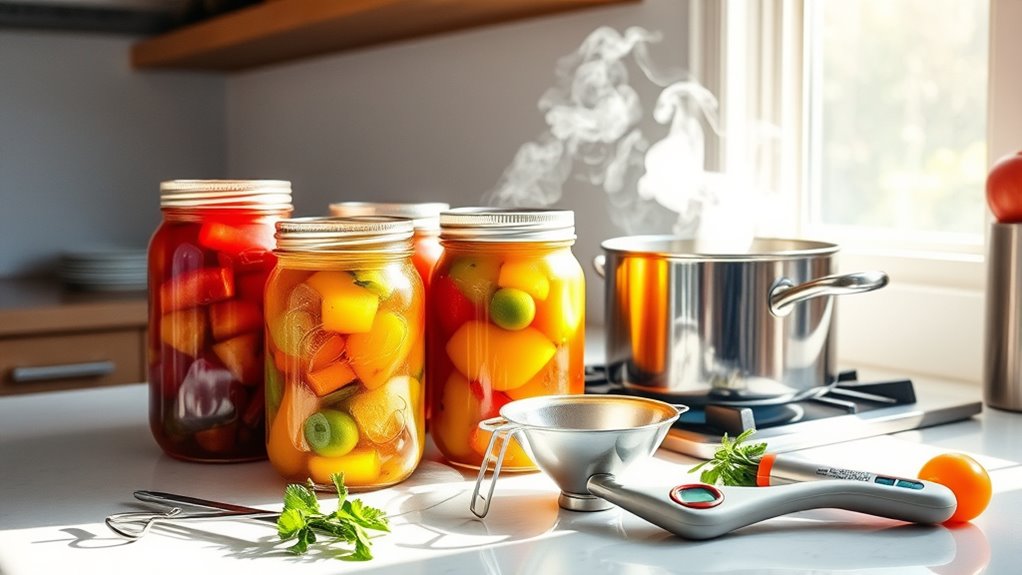
Canning food at home can feel intimidating, but with the right techniques, you can preserve your harvest safely and effectively. The first step to successful canning is understanding the importance of bot safety. You’ve probably heard about botulism, a serious illness caused by a toxin produced by the Clostridium botulinum bacteria. This bacteria thrives in low-oxygen environments, like improperly canned foods. So, it’s crucial to follow safe canning practices to eliminate any risks.
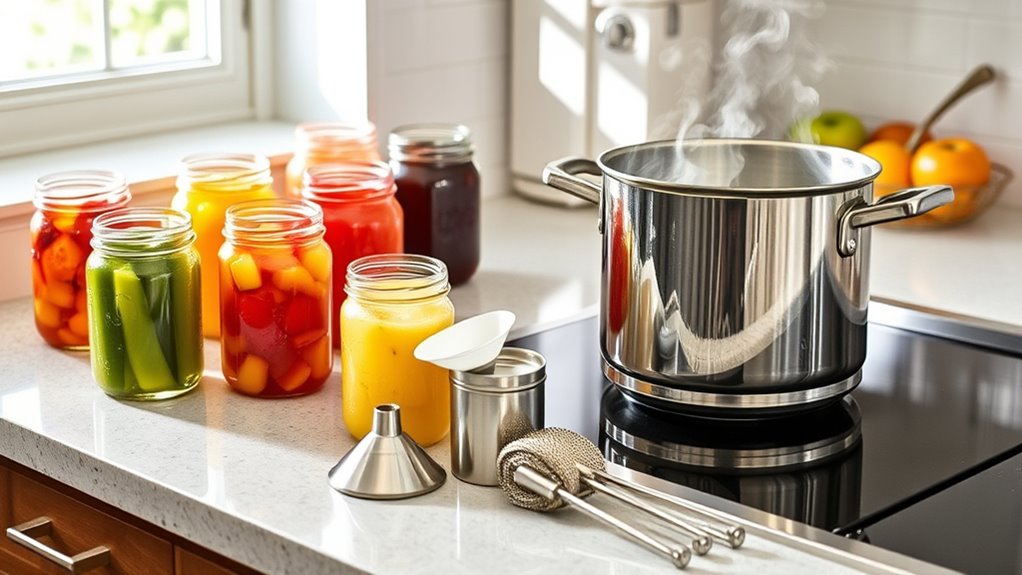
To start, you’ll need the right equipment. A pressure canner is essential for low-acid foods like vegetables, meats, and poultry. Unlike a water bath canner, which is suitable for high-acid foods like fruits and pickles, a pressure canner reaches the higher temperatures required to destroy harmful bacteria. Ensure your pressure canner is in good condition and tested for accuracy, as even slight discrepancies can affect the canning process. You can usually find testing services through local extension offices or canning suppliers.
A pressure canner is crucial for safely preserving low-acid foods by reaching the high temperatures needed to eliminate harmful bacteria.
Next, gather your jars, lids, and bands. Choose jars specifically designed for canning, as they can withstand the high temperatures and pressure. Inspect them for cracks or chips, as these can compromise the seal. The lids should be new to guarantee a proper seal, while the bands can be reused as long as they’re in good shape.
Once you’ve gathered your supplies, prepare your food according to safe canning guidelines. Always follow tested recipes from reputable sources. These recipes are formulated to guarantee safety and ideal preservation. When packing jars, leave enough headspace to allow for expansion during the canning process. This is particularly important when using a pressure canner, as improper headspace can lead to jars breaking or seals failing.
When you’re ready to can, fill your pressure canner with water according to the manufacturer’s instructions, and heat it up. Place your filled jars in the canner, lock the lid, and allow it to build pressure. Monitor the pressure gauge closely; maintaining the right pressure is essential for guaranteeing bot safety. Proper temperature control is crucial for effective canning. Once the processing time is complete, carefully release the pressure and allow the jars to cool.
After cooling, check the seals before storing your canned goods. Gently press down on the center of each lid; if it doesn’t pop back, you’ve got a good seal. Store your jars in a cool, dark place, and enjoy the fruits of your labor throughout the year, knowing you’ve canned your food safely and effectively!
Frequently Asked Questions
Can I Reuse Jars for Canning After They’ve Been Used?
Yes, you can reuse jars for canning after they’ve been used, but make sure they’re in good condition. Check for cracks or chips. Before reusing, sterilize them using boiling water or a dishwasher’s sanitize cycle. Proper sterilization methods help eliminate bacteria and guarantee your canned goods stay safe. Remember to replace the lids each time, as they lose their sealing ability after one use. Keep these tips in mind for successful jar reusability!
How Long Can Home-Canned Food Be Stored?
Home-canned food can typically be stored for up to a year if you follow proper storage tips. You might worry about spoilage, but as long as you keep your jars in a cool, dark place, they’ll maintain their shelf life. Check seals and look for any signs of spoilage before using. If you’re unsure, it’s better to be safe than sorry—don’t hesitate to toss anything that looks questionable!
Is It Safe to Can Low-Acid Foods at Home?
Yes, it’s safe to can low-acid foods at home, but you’ve got to follow strict pH requirements. Foods like vegetables and meats require pressure canning to guarantee safety. You can also use acidification techniques, like adding vinegar or lemon juice, to raise the acidity of certain low-acid foods. Always check guidelines to make sure you’re using the right method, and never skip essential steps to keep your canned goods safe.
What Are Signs of Spoilage in Canned Food?
You pop the lid off the jar, and a sense of dread washes over you. Spoilage signs in canned food can be alarming. If you notice any color change, odd odors, or bulging lids, it’s time to toss it. Remember, botulism risk lurks in improperly canned goods, so trust your instincts. If it looks or smells off, don’t take chances—better safe than sorry when it comes to your health!
Can I Can Food Without a Pressure Cooker?
Yes, you can can food without a pressure cooker by using alternative canning methods like water bath canning. This technique works well for high-acid foods like fruits, jams, and pickles, which don’t require the higher temperatures a pressure cooker provides. Just make sure to follow proper guidelines to guarantee safety. Always check the acidity levels and process times to keep your canned goods safe and delicious.
Conclusion
In conclusion, canning at home can be a rewarding and safe way to preserve your favorite foods. By using the right equipment and following safety guidelines, you can enjoy the fruits of your labor all year long. So, why not take the plunge and create delicious, homemade preserves that your family will cherish? With a little practice, you’ll master the art of canning and make memories that last as long as your jars do!