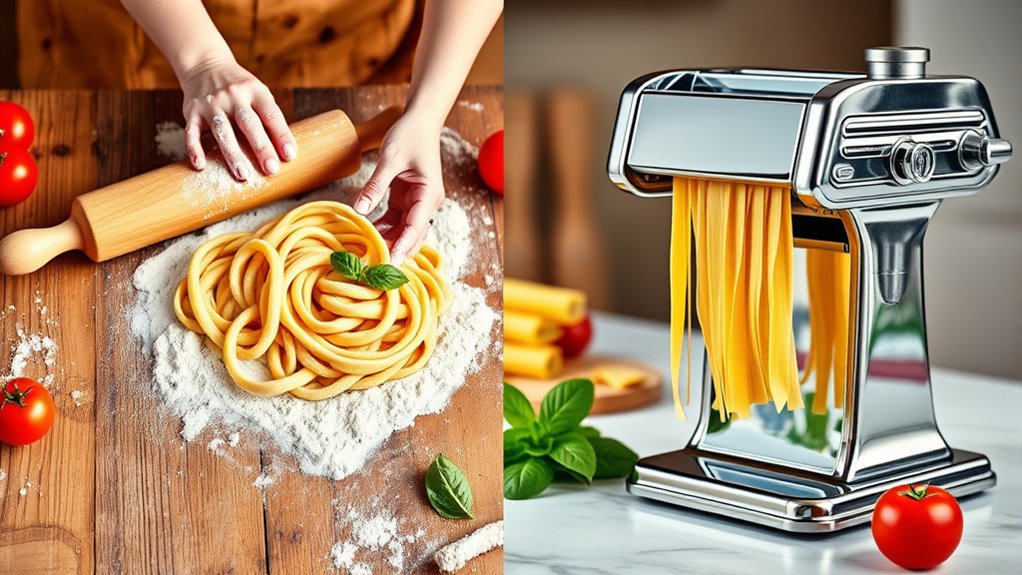

Making homemade pasta is easy and fun, whether you choose the manual method with a rolling pin or a pasta machine for efficiency. Both techniques allow you to create delicious dishes, so you can customize flavors and textures to your liking. Remember, proper gluten development and resting time are key for the best results. With a little practice, you’ll see how rewarding it is to make fresh pasta at home and discover even more tips along the way.
Listen free for 30 days with Audible
Thousands of audiobooks and originals — cancel anytime.
As an affiliate, we earn on qualifying purchases.
Key Takeaways
- Both manual and machine methods produce quality pasta; choose based on preference for control or efficiency.
- Manual rolling with a pin requires practice but allows for customization of thickness; keep surfaces floured to prevent sticking.
- A pasta machine streamlines the rolling process and ensures even thickness, ideal for beginners or those short on time.
- Proper gluten development through kneading and resting is essential, regardless of the method used, for optimal texture and elasticity.
- Fresh pasta can be cooked immediately or dried for later use; proper drying techniques enhance flavor and prevent sticking.
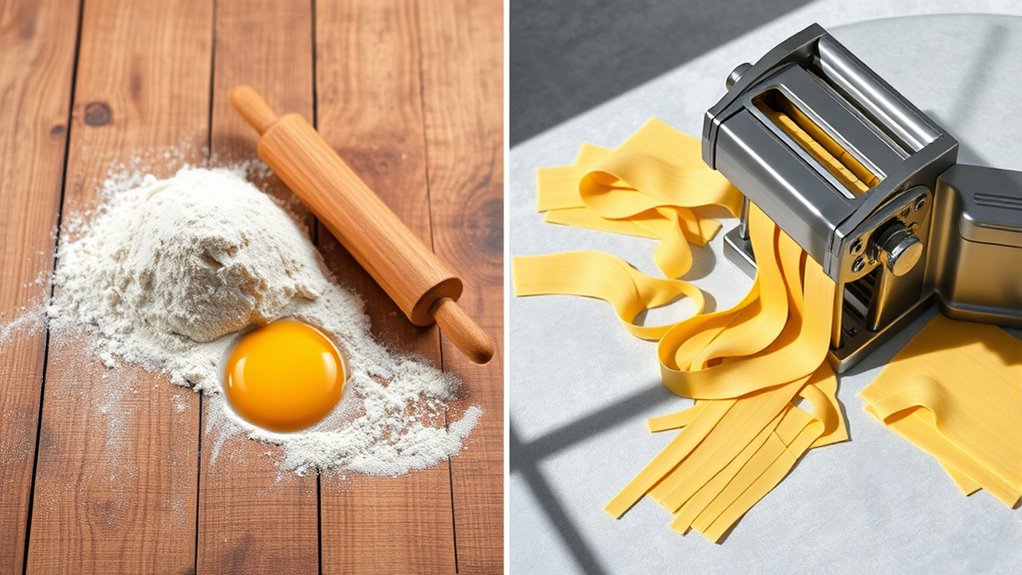
Have you ever wondered how simple it is to make fresh pasta at home? It’s a delightful process that can transform your meals and impress your friends. You don’t need fancy equipment or years of experience; just a few basic ingredients and a bit of patience will get you started. The magic lies in understanding gluten development, which is vital for achieving that perfect chewy texture you love in pasta.
When you mix flour and eggs, you’re initiating gluten development. The proteins in flour, when combined with moisture, form gluten, which gives pasta its structure. Kneading the dough is essential here. You’ll want to knead for about 10 minutes, letting the gluten form and strengthen. If you skip this step or rush through it, your pasta might turn out gummy or fragile. Once you’ve achieved a smooth, elastic dough, let it rest for at least 30 minutes. This resting period allows the gluten to relax, making it easier to roll out later.
Mixing flour and eggs starts gluten development, essential for that perfect pasta texture. Knead well and let it rest for best results.
Now, when it comes to shaping your pasta, you can choose between manual and machine methods. If you’re feeling adventurous, grab a rolling pin and roll the dough out by hand. It can be a fun workout! Just make sure you keep your surface and rolling pin lightly floured to prevent sticking. If you prefer a more streamlined process, a pasta machine can save you time and effort. Either way, you’ll need to get the dough thin enough to cut into your desired shape, whether it’s fettuccine, lasagna sheets, or ravioli.
After cutting your pasta, you’ll want to think about drying techniques. Fresh pasta can be cooked immediately, but if you’re making a larger batch, drying it is a great option. Hang the pasta over a drying rack or lay it flat on a floured surface. Proper drying prevents the pasta from sticking together and enhances the flavor. Just be cautious not to let it dry for too long; a couple of hours should suffice. Once dried, you can store your pasta in an airtight container for later use.
In the end, making homemade pasta is a rewarding experience that allows you to customize flavors and textures. Whether you opt for manual or machine methods, you’ll find that the effort is well worth it, giving you a delicious meal that’s both satisfying and fulfilling.
As an affiliate, we earn on qualifying purchases.
Frequently Asked Questions
How Do I Store Homemade Pasta for Later Use?
To store homemade pasta for later use, you can use storage containers or drying techniques. If you want to keep it fresh, lay the pasta on a floured surface for about 30 minutes to dry slightly, then place it in an airtight storage container in the fridge for up to 2 days. For longer storage, let it dry completely and store it in a sealed container at room temperature for up to a month.
Can I Freeze Homemade Pasta?
Yes, you can freeze homemade pasta! For perfect preservation, use freezing techniques that maintain pasta texture. First, lay the pasta on a baking sheet, ensuring pieces don’t touch, then freeze until solid. Once frozen, transfer it to airtight bags or containers. This method keeps your pasta’s delightful shape and chewiness intact. When you’re ready to enjoy, simply boil it straight from the freezer, and savor the scrumptious simplicity of your homemade creation!
What Flour Is Best for Making Pasta?
The best flour for making pasta is a high-protein flour like semolina or “00” flour. These flour types have a high gluten content, which gives your pasta that perfect texture and bite. If you’re looking for a lighter option, you might try all-purpose flour, but it won’t yield the same chewiness. Experimenting with different flours can help you find the perfect balance for your homemade pasta, so don’t hesitate to try a mix!
How Do I Know When Pasta Is Cooked?
Imagine your pasta as a tightrope walker, balancing perfectly between undercooked and overdone. To know when it’s cooked, taste a piece after about 8-10 minutes, checking its texture. It should be al dente—firm yet tender. If it feels too hard, give it a minute more. Remember, cooking time varies by shape and thickness, so keep an eye on it. You want that perfect bite that dances on your palate!
How Long Does Homemade Pasta Last in the Fridge?
Homemade pasta lasts about 2 to 3 days in the fridge. To maintain pasta freshness, make sure you store it in an airtight container or wrap it tightly in plastic wrap. If you want to keep it longer, consider freezing it. When you’re ready to use it, just boil it straight from the freezer. Following these refrigeration tips will help you enjoy delicious pasta for days without sacrificing quality!
As an affiliate, we earn on qualifying purchases.
Conclusion
Now that you know the ins and outs of making homemade pasta, whether by hand or with a machine, which method will you choose for your next culinary adventure? Both techniques offer unique experiences and delicious results, so don’t hesitate to experiment. Remember, the joy of cooking lies in the process as much as in the meal itself. So roll up your sleeves, grab that flour, and let the pasta-making fun begin!
As an affiliate, we earn on qualifying purchases.
As an affiliate, we earn on qualifying purchases.
Fall Picks
fall essentials
As an affiliate, we earn on qualifying purchases.