If your oven catches fire, stay calm and don’t panic. First, turn off the heat if it’s safe to do so and keep the oven door shut. This helps suffocate the flames. If the fire persists, evacuate everyone from the kitchen and call emergency services immediately. Use a Class B fire extinguisher if you’re trained and comfortable doing so. Remember, safety comes first! You’re just a step away from more tips on how to prepare for kitchen emergencies.
Key Takeaways
- Turn off the oven and keep the door closed to deprive the fire of oxygen.
- Use a Class B fire extinguisher if trained; aim at the base and follow the PASS method.
- Evacuate the kitchen and call emergency services if the fire continues to spread.
- Avoid trying to salvage the oven; prioritize personal safety over property.
- Regularly check safety features and keep the cooking area clear of combustibles.
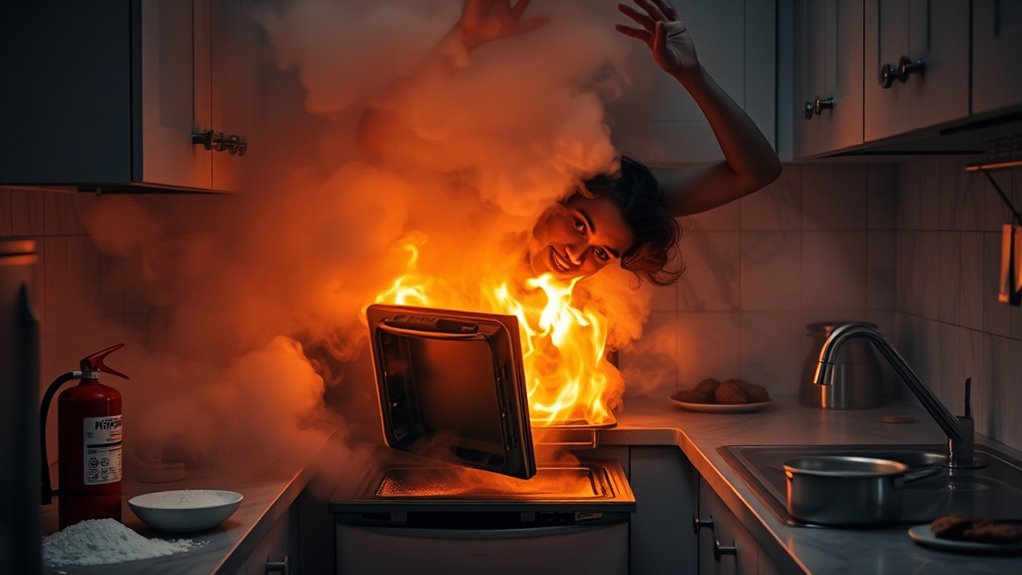
When you step into the kitchen, safety should be your top priority, as a few simple precautions can prevent accidents and injuries. One of the most critical aspects of kitchen safety is knowing what to do if your oven catches fire. While it’s easy to panic in such situations, staying calm and following the right steps can make a significant difference.
First, assess the situation. If you notice flames in the oven, immediately turn off the oven’s heat source if it’s safe to do so. Many modern ovens come equipped with safety features like automatic shut-off systems, which can help minimize damage. If you’ve got a fire inside the oven, resist the urge to open the door. Opening the oven can introduce oxygen and fuel the flames, making the situation worse.
Instead, keep the door closed to suffocate the fire. If the flames are visible and you feel comfortable doing so, you can use a fire extinguisher. Ensure you know how to use it beforehand—remember the acronym PASS: Pull the pin, Aim low, Squeeze the handle, and Sweep side to side. Make sure you’re using a Class B fire extinguisher, as it’s designed for flammable liquids and gases, including grease fires that can occur in ovens.
Keep the oven door closed to suffocate flames, and use a Class B fire extinguisher if necessary—remember to follow the PASS method.
If the fire persists or you feel overwhelmed, evacuate everyone from the kitchen and call emergency services immediately. Don’t try to be a hero; your safety is more important than salvaging a meal or appliance. While waiting for help, you can use a wet cloth to smother small flames, but this should only be your last resort.
Prevention is also key. Regularly check your oven’s safety features and keep the area around it clear of combustibles. For example, ensure that oven mitts, paper towels, and dishcloths are stored away from the oven to reduce fire risks. Familiarize yourself with the fire extinguisher use in your home and ensure it’s easily accessible and fully charged. Additionally, understanding the role of color accuracy in your kitchen appliances can help you choose safer options that minimize fire hazards.
Frequently Asked Questions
Can I Use Water to Extinguish an Oven Fire?
No, you shouldn’t use water to extinguish an oven fire. Water can spread the flames, especially if it involves grease or electrical components. Instead, grab a fire extinguisher rated for kitchen fires and aim it at the base of the flames. Always prioritize electrical safety; if the fire involves any electrical parts, disconnect the power before attempting to extinguish it. Stay calm and act quickly to prevent a larger disaster.
What Should I Do if Smoke Fills My Kitchen?
If smoke fills your kitchen, act quickly. Turn off any heat sources and open windows to ventilate the area. If the smoke escalates, grab your fire extinguisher and evaluate your fire extinguisher options. If it becomes overwhelming, don’t hesitate to initiate an emergency evacuation. Make certain everyone’s safe, then call for help. Remember, it’s better to be safe than sorry, so don’t underestimate the situation!
How Can I Prevent Oven Fires in the First Place?
You might think oven fires are rare, but they can happen to anyone. To prevent them, prioritize regular oven maintenance; clean spills and grease buildup promptly. Use fire-resistant cookware that can withstand high temperatures. Avoid overcrowding your oven, as it can block airflow and lead to overheating. Ultimately, always keep an eye on your cooking—staying attentive can make all the difference in preventing a potential fire. Stay safe while you cook!
Should I Call 911 for a Small Oven Fire?
You should definitely call 911 if the oven fire gets out of control, even if it seems small. It’s better to be safe than sorry. Make sure you have fire extinguisher options handy, like a Class K extinguisher for kitchen fires. Always prioritize oven fire safety; if you can’t put it out easily, evacuate and let professionals handle it. Trust your instincts and don’t hesitate to seek help when needed.
What Materials Are Safe to Use for Oven Fire Suppression?
For oven fire suppression, you’ll want to use specific fire extinguisher types, like Class K for grease fires or Class B for flammable liquids. Safe suppression materials include baking soda or salt, which can smother small flames. Never use water, as it can spread the fire. Always keep a fire extinguisher nearby, and make sure it’s rated for kitchen use to guarantee safety during a fire emergency.
Conclusion
In the heat of the moment, remember the wise words of Benjamin Franklin: “An ounce of prevention is worth a pound of cure.” Keep your cool, act fast, and follow the steps outlined to tackle an oven fire safely. By staying prepared and informed, you can turn a potential disaster into just another cooking story. So, embrace your inner kitchen hero and keep your culinary adventures flame-free!