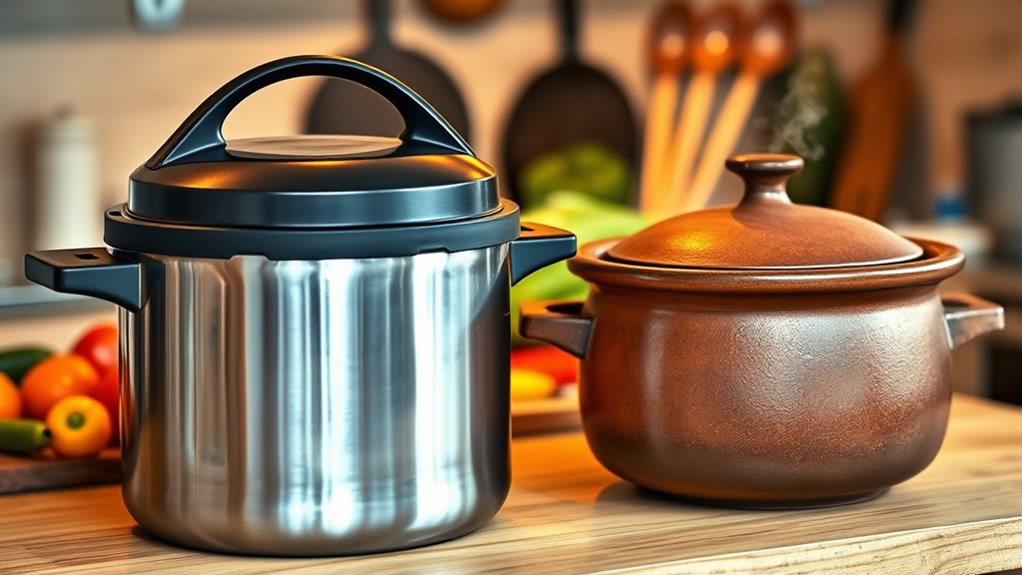

Use a pressure cooker when you need quick meals, like tenderizing tough meats or preparing dishes in under 30 minutes. Opt for a slow cooker when you’re after rich flavors and tender textures that develop over hours, perfect for stews or roasts. For fast, one-pot solutions, the pressure cooker works best, while the slow cooker excels in long, low-and-slow cooking. If you’re curious about choosing the right tool for each situation, keep exploring below.
Key Takeaways
- Use a pressure cooker for quick meals, reducing cooking time for dishes like stews or grains in under 30 minutes.
- Opt for a slow cooker when preparing meals that benefit from long, gentle simmering to develop deep flavors and tenderize tougher cuts.
- Choose a pressure cooker for recipes requiring rapid flavor infusion and high heat, such as quick braises or tenderizing meats.
- Select a slow cooker for set-and-forget convenience, ideal for overnight cooking or dishes that improve with extended simmering.
- Use a pressure cooker when time is limited; rely on a slow cooker for rich, layered flavors developed over several hours.
Speeding up Meal Preparation With a Pressure Cooker

Have you ever wondered how to cut down your cooking time without sacrificing flavor? A pressure cooker offers instant meal shortcuts that can dramatically speed up meal prep. By sealing in heat and steam, it reduces cooking times for stews, grains, and proteins, making dinner ready in a fraction of the usual time. This efficiency helps optimize your kitchen space, as you can prepare multiple dishes quickly without cluttering counters with extra appliances. Plus, the quick turnaround means less time spent watching pots and more time enjoying your meal. Whether you’re in a hurry or simply want to streamline your routine, a pressure cooker is a valuable tool for achieving flavorful results fast while maximizing your kitchen’s potential. Additionally, using a pressure cooker can help preserve nutrients better than traditional methods. When combined with high heat retention, it ensures thorough cooking in less time, further boosting efficiency. Moreover, its ability to reduce energy consumption aligns with sustainable kitchen practices. Incorporating a pressure cooker into your cooking arsenal can also support healthy eating habits by allowing quick preparation of nutritious meals. Furthermore, the energy-efficient design contributes to lowering your overall utility bills.
Developing Rich Flavors Through Slow Cooking
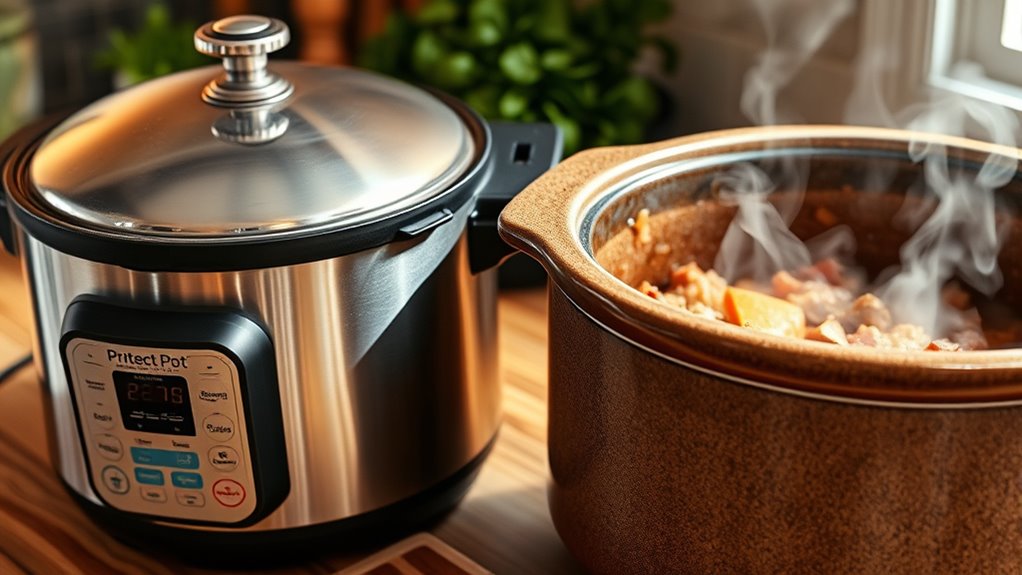
When you slow cook, your ingredients have more time to release their flavors, creating a rich, layered taste. The extended simmering allows flavors to meld seamlessly, enhancing the depth of your dish. This method truly brings out the best in hearty, complex recipes. Additionally, understanding culinary techniques can help you optimize your slow cooking results for even more satisfying meals. For example, selecting the right heat settings can further improve the texture and flavor of your dishes.
Extended Simmering Benefits
Extended simmering in a slow cooker allows flavors to meld and deepen over time, resulting in more complex and satisfying dishes. This slow process enhances ingredient layering, where each component has time to release its unique flavors and harmonize with others. As ingredients gently cook together, the dish develops greater flavor depth, making every bite richer and more nuanced. Unlike quick methods, slow simmering preserves delicate flavors and allows tougher cuts of meat to become tender without losing their essence. You can control the temperature and cooking duration precisely, ensuring that flavors develop gradually. This method is ideal when you want a dish with well-rounded, layered taste profiles, as the extended time allows flavors to fully integrate and reach their peak. Additionally, the slow cooking process can help preserve nutrients, ensuring a healthier meal while enhancing taste.
Layered Ingredient Flavors
Layered ingredient flavors develop naturally through slow cooking because each component has time to release its unique aromas and essences. This process allows flavors to deepen and meld, resulting in a richer, more complex dish. As ingredients simmer gradually, their natural oils and juices blend, creating layered flavors that can’t be achieved with quick cooking methods. The gentle heat encourages ingredient melding, where individual tastes harmonize beautifully over time. You’ll notice that slow-cooked meals often develop a more profound flavor profile, with subtle nuances emerging as the ingredients interact. Additionally, slow cooking can enhance sustainable ingredients, maximizing their potential and flavor. Incorporating nutrient retention techniques during slow cooking can further improve the health benefits of your dishes. The slow process also allows for better flavor extraction, ensuring that each ingredient’s essence is fully developed. This method provides an ideal environment for layered flavors, helping to unlock the full potential of your ingredients and deliver a rich, layered taste experience. Moreover, the gradual cooking process helps preserve delicate nutrients, making your dishes not only flavorful but also more nutritious.
Tenderizing Tough Cuts of Meat Efficiently

Tenderizing tough cuts of meat is essential to achieve a melt-in-your-mouth texture, and both pressure cookers and slow cookers excel at this task through different methods. If you want to tenderize roasts effectively, start by marinating meats to break down fibers and enhance flavor. Pressure cookers rapidly tenderize by applying high pressure and heat, breaking down collagen in less time. Slow cookers, on the other hand, tenderize gradually over hours, allowing flavors to develop deeply. For tougher cuts like brisket or chuck, both appliances work well, but your choice depends on your schedule. Marinating meats beforehand can improve results in either device. Use the pressure cooker for quick tenderness, and opt for the slow cooker when you prefer a hands-off, slow approach. Additionally, understanding the collagen breakdown process can help optimize cooking times for perfect tenderness. Recognizing the types of cuts best suited for each method can further improve your cooking results. When selecting cuts, considering meat toughness levels can guide you to choose the most suitable cooking method for optimal texture. Knowing the nutritional benefits of different cuts can also influence your choice based on health preferences. Incorporating proper cooking techniques can ensure consistent tenderness and flavor in every dish.
Ideal Uses for Quick, One-Pot Dishes
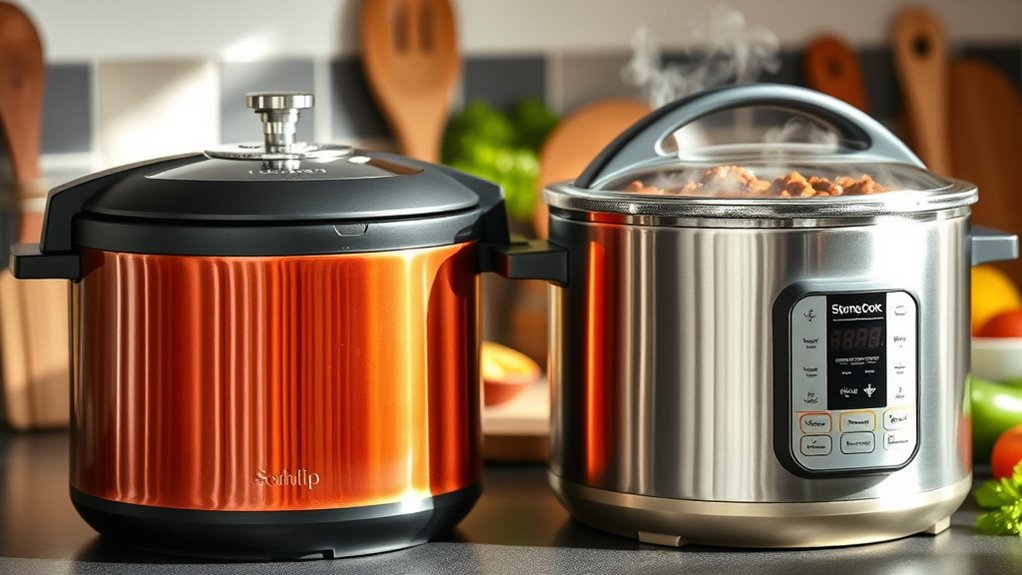
When you need a quick, satisfying meal, one-pot dishes are your best option. They’re perfect for speedy meal prep, especially when making stir-fries or hearty stews. These dishes save time and simplify cleanup, making them ideal for busy days.
Speedy Meal Preparation
If you’re short on time but still want a satisfying meal, both pressure cookers and slow cookers can help you prepare quick, one-pot dishes. Pressure cookers drastically cut cooking time, making meal prep fast—often in under 30 minutes—while still delivering tender results. Slow cookers, though typically slower, can be used for speedy meal prep by starting with prepped ingredients and setting timers in advance. Both appliances minimize ingredient prep, since you can toss everything into the pot at once. This makes them ideal for busy weeknights when you need a wholesome meal fast. Whether you opt for the high-pressure method or a quick slow cook, you’ll save time without sacrificing flavor or nutrition. Additionally, understanding vibe coding can help you optimize your cooking techniques for better efficiency and results. Mastering cooking efficiency can further enhance your meal preparation process, making it even more convenient and enjoyable.
Perfect for Stir-Fries
Pressure cookers and slow cookers are versatile tools that can handle more than just stews and braises. They can also be great for quick, flavorful stir-fries when you adapt your stir fry techniques. While they aren’t traditional wok alternatives, you can use them to quickly sauté ingredients or cook sauces efficiently. For example, a pressure cooker can rapidly soften vegetables and proteins, reducing cooking time remarkably. With a slow cooker, you can prepare ingredients in advance and then finish your stir-fry with a quick sear or toss. These appliances save time and simplify the process, making them handy options for one-pot dishes that come together in a flash. Whether you’re short on time or want to streamline your cooking, they’re useful tools for stir-fry enthusiasts. Proper heat management is essential to achieve the best results when using these appliances for stir-fries.
Ideal for Stews
Both pressure cookers and slow cookers excel at making hearty, flavorful stews with minimal effort. An instant pot speeds up the process, delivering tender meat and rich broth quickly. In contrast, a slow cooker allows flavors to develop gradually with a gentle slow simmer, perfect for deepening taste over hours. Use a pressure cooker for quick weeknight stews, while a slow cooker is ideal for overnight or all-day cooking. Here’s a quick comparison:
| Feature | Pressure Cooker | Slow Cooker |
|---|---|---|
| Cooking Speed | Fast, minutes to an hour | Slow, several hours |
| Flavor Development | Less time, intense flavors | Longer, richer flavors |
| Best For | Quick meals, tender meat | Deep, layered flavors |
Choose based on your time and flavor preference.
Best Scenarios for Long, Low-and-Slow Cooking
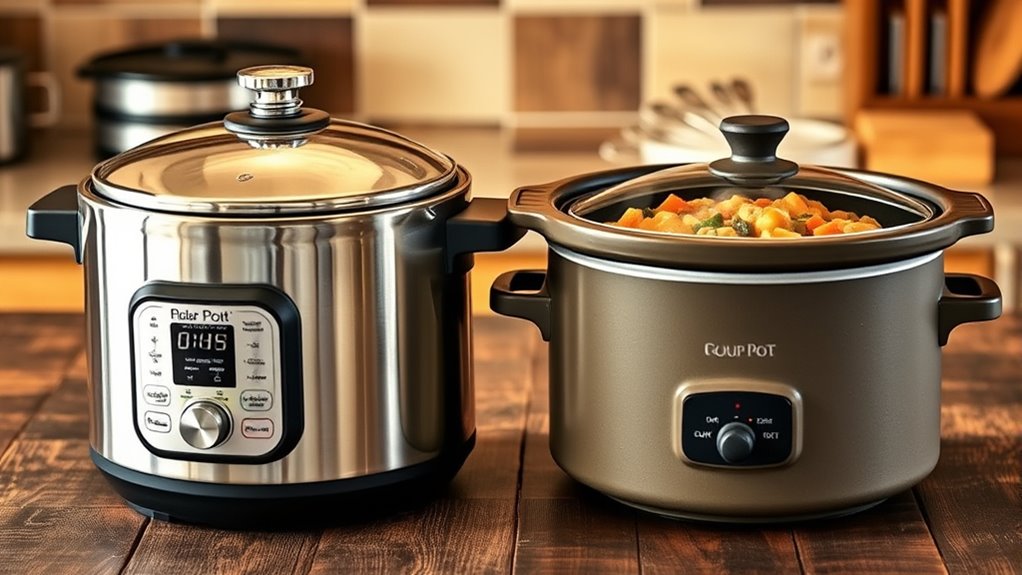
Long, low-and-slow cooking methods are ideal for tenderizing tougher cuts of meat, developing rich flavors, and creating hearty dishes with minimal effort. If you’re making a pot roast, this method allows the meat to become fall‑apart tender while absorbing the flavors of herbs and vegetables. Braising techniques work perfectly here, as they involve cooking the meat slowly in liquid, breaking down connective tissues. This approach is best when you want deep, savory flavors without constant attention. Slow cookers excel in these scenarios, letting you set it and forget it, while the extended cooking time ensures the meat is perfectly tender. Use this method for dishes like braised beef, pulled pork, or hearty stews that benefit from prolonged, gentle heat. Proper firewood selection and preparation can help maintain consistent low temperatures necessary for these long, slow cooking processes. Additionally, understanding butter usage can enhance the flavor and moisture of slow-cooked dishes, adding richness and depth.
When to Opt for Convenience or Deep Flavor Development

Choosing between a pressure cooker and a slow cooker depends on whether you prioritize convenience or profound flavor development. If you need quick meals, a pressure cooker saves time with rapid pressure release and efficient cooking. For richer, more developed flavors, a slow cooker allows ingredients to simmer slowly, enhancing taste and texture. Additionally, each appliance offers different safety mechanisms to ensure secure operation.
Frequently Asked Questions
Can Pressure Cookers Replace Slow Cookers Entirely?
You can’t fully replace slow cookers with pressure cookers because they serve different purposes. Pressure cookers excel in quick, high-pressure cooking, making them great for tenderizing tougher cuts and saving time. Slow cookers offer appliance versatility for simmering dishes over hours, developing flavors. While pressure cookers can handle some slow-cooker recipes, they aren’t a complete alternative. Use each for its strengths to get the best results in your cooking.
Which Appliance Retains More Nutrients, Pressure or Slow Cooker?
You might find that slow cookers retain more nutrients because they cook at lower temperatures, preserving vitamins and minerals better. Pressure cookers, while faster and more efficient, often cook at higher temperatures which can lead to some nutrient loss. If your goal is maximum nutrient retention and gentle cooking, a slow cooker is the better choice. For cooking efficiency, a pressure cooker saves time but may sacrifice some nutrient quality.
Are There Recipes Suitable for Both Pressure and Slow Cooking?
Yes, many recipes are suitable for both pressure and slow cooking, showcasing their recipe versatility. You can prepare stews, soups, and even roasts in either appliance. While pressure cooking speeds up flavor development and tenderizes ingredients quickly, slow cooking allows flavors to meld gradually. By choosing the right method, you can adapt recipes to your schedule and desired flavor intensity, making both appliances valuable for diverse culinary needs.
How Do Cooking Times Compare Between the Two Methods?
Cooking times are like night and day; pressure cookers drastically cut down your meal prep, often taking a third of the time compared to slow cookers. For tender meats and hearty stews, pressure cookers deliver quick results, while slow cookers take their time, blending flavors over hours. Time comparisons highlight that pressure cookers are your go-to for fast, efficient cooking, whereas slow cookers excel when you want rich, layered flavors with patience.
Is One Method More Energy-Efficient Than the Other?
You’ll find that pressure cookers are generally more energy-efficient than slow cookers because they cook food faster, reducing overall energy consumption. This efficiency also lowers environmental impact, as less electricity or gas is used. Slow cookers, while slower, tend to use steady, moderate heat, which may be less energy-efficient. Choosing a pressure cooker helps you save energy and minimizes your environmental footprint during meal prep.
Conclusion
So, whether you’re rushing or savoring, both your pressure cooker and slow cooker have their moments. Ironically, the quicker options save time, but sometimes, taking it slow creates the deepest flavors. Ultimately, choosing the right tool depends on your goals—speed or richness. So next time you’re torn, remember: rushing to get dinner done might just make you miss out on the best part—the flavor that develops with patience. Happy cooking!