To sharpen your kitchen knives like a pro at home, start by evaluating their dullness and choosing the right tools, like a whetstone or a pull-through sharpener. Hold the knife at a consistent 15-20° angle and draw it smoothly across the abrasive surface, applying steady pressure. Hone regularly to maintain the edge, and finish with a strop for a professional polish. Keep practicing these techniques, and you’ll master sharp, precise cuts every time.
Key Takeaways
- Use a sharpening stone with the correct grit, maintaining a consistent 15-20° angle while drawing the blade evenly across both sides.
- Regularly hone your knife with a honing steel to realign the edge between sharpening sessions.
- Follow manufacturer instructions for your sharpening tools, and choose the right abrasive material for your blade’s steel type.
- Stabilize your work surface, use proper technique, and wear safety gear like cut-resistant gloves for safe, effective sharpening.
- Finish with a leather strop to polish the edge and maintain a professional, sharp finish.
Understanding Knife Sharpness and Why It Matters
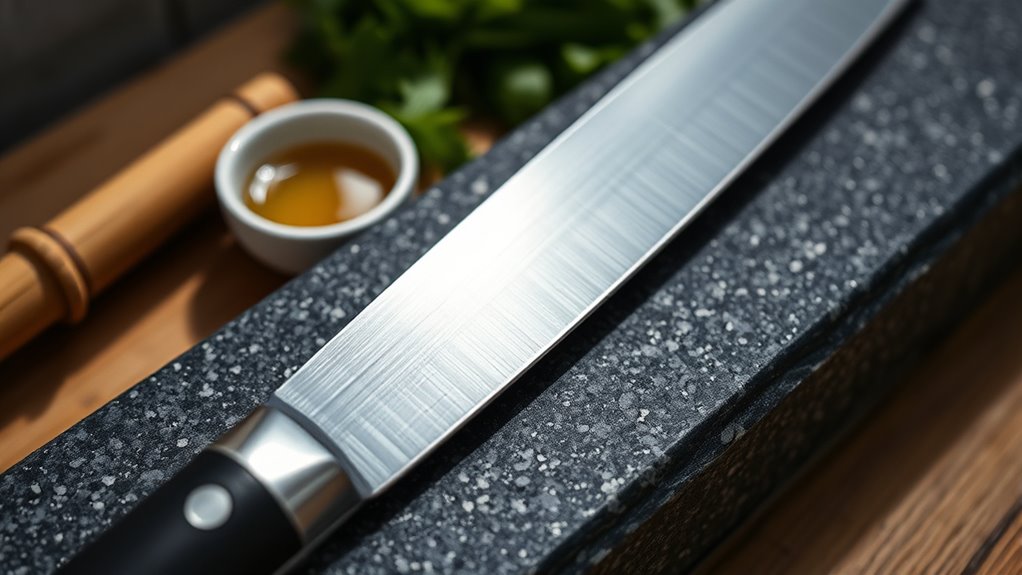
Understanding knife sharpness is vital because a sharp knife makes cutting easier and safer. The sharpness depends heavily on blade geometry, which determines the angle and edge profile, affecting how efficiently the knife slices through food. A well-designed blade geometry ensures a fine, precise edge that requires less force and reduces slipping. Additionally, steel hardness plays a key role; harder steel can hold a sharper edge longer but may be more brittle. Softer steels are more durable but tend to dull faster. Balancing blade geometry and steel hardness helps you achieve a sharp, durable edge suited to your needs. Recognizing these factors helps you understand why some knives stay sharp longer and cut better, making your sharpening efforts more effective. The role of contrast ratio in image quality can also influence how well you perceive the sharpness of your knife cuts, especially in visual demonstrations. Incorporating knowledge of sound vibrations and their effects on cellular regeneration can inspire more precise and mindful sharpening techniques, leading to superior results. Understanding the importance of material properties in steel can further enhance your ability to select and maintain the best knives for your kitchen. Additionally, understanding steel composition can help you choose the most appropriate blade for your specific culinary needs.
Choosing the Right Sharpening Tools for Home Use

Selecting the right sharpening tools is essential for maintaining your knives effectively at home. The right tools make knife maintenance easier and help you preserve the sharp edge needed for precise cutting techniques. For beginners, a honing steel can realign the edge between sharpenings, while a sharpening stone offers more control for a razor-sharp finish. If you prefer convenience, manual or electric sharpeners are quick and straightforward, but guarantee they match your knife type. Consider the material of your blades—harder steels may need specific abrasives. Using the proper tools ensures your knives stay sharp longer, improving your cutting techniques and making prep work safer. Always choose tools suited to your skill level and knife type to achieve the best results at home. Additionally, understanding the material of your blade can help you select the most compatible sharpening method, ensuring longevity and optimal performance. Choosing a sharpener suitable for your knife material can further streamline your knife maintenance routine. For example, some piercing jewelry materials require specific cleaning and care techniques to prevent irritation or infection.
Preparing Your Workspace and Safety Tips
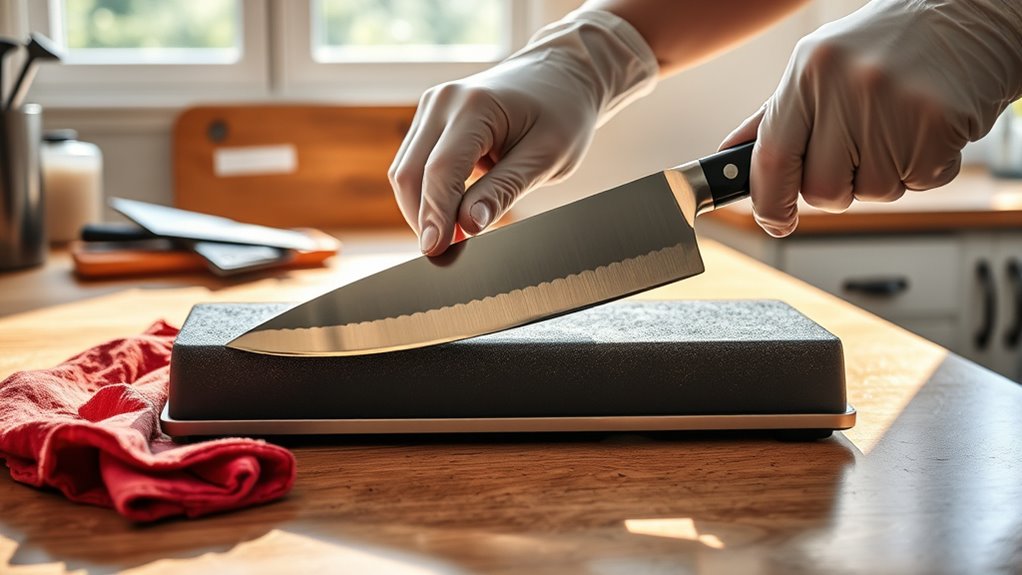
Before you start sharpening your knives, setting up a safe and organized workspace is key to preventing accidents and ensuring a smooth process. First, clear your area of clutter to avoid knocking over tools or slipping. Second, choose a stable surface, like a sturdy countertop, to keep your sharpening tools steady. Third, confirm your knife storage is secure; avoid leaving blades loose where they could accidentally cut someone. When selecting a cutting board, opt for a non-slip surface that keeps your knife steady. Keep a damp towel nearby to stabilize the board if needed. Always wear cut-resistant gloves if you’re new to sharpening, and work in a well-lit area. Proper preparation keeps you safe and makes your sharpening more precise. Incorporating knowledge about auditory feedback techniques can also help in developing better control and awareness during the sharpening process. Additionally, paying attention to proper technique can significantly improve your results and safety.
Assessing the Condition of Your Knives
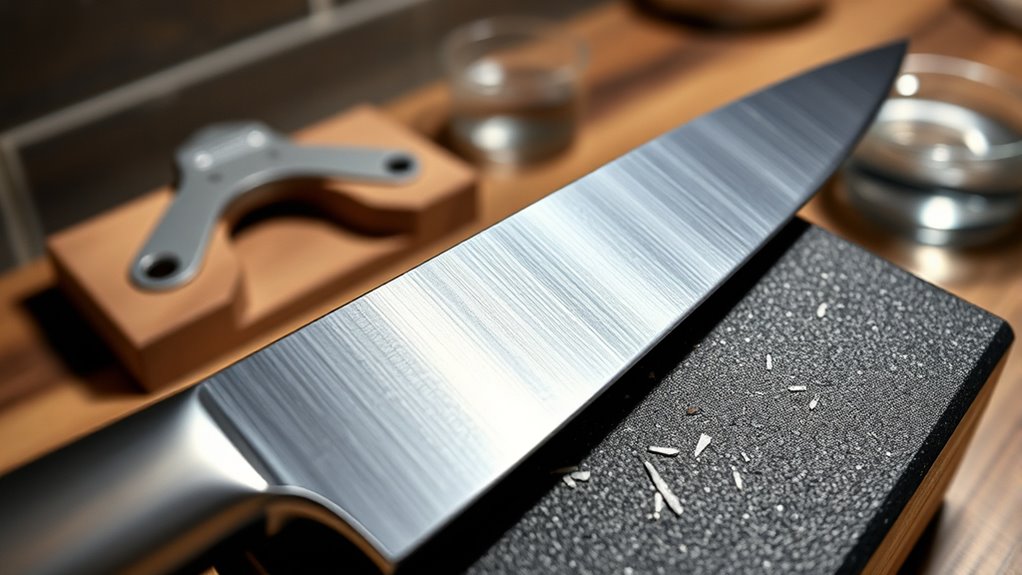
How can you tell if your knives need sharpening or repair? First, examine the edge closely. Metal fatigue can cause tiny chips or dullness, making cutting less efficient. Feel for rough spots or a lack of smoothness along the blade’s edge. If you notice persistent burrs or a slight bend, your knife may need more than just honing. Edge burrs are tiny, raised metal imperfections that indicate the blade has become dull or damaged. These imperfections can hinder clean cuts and compromise safety. Also, if your knife struggles to cut through soft foods or requires excessive pressure, it’s a sign that sharpening is overdue. Regularly evaluating your knives’ condition helps you catch problems early and maintain their sharpness and performance.
Honing Your Knife to Maintain Its Edge
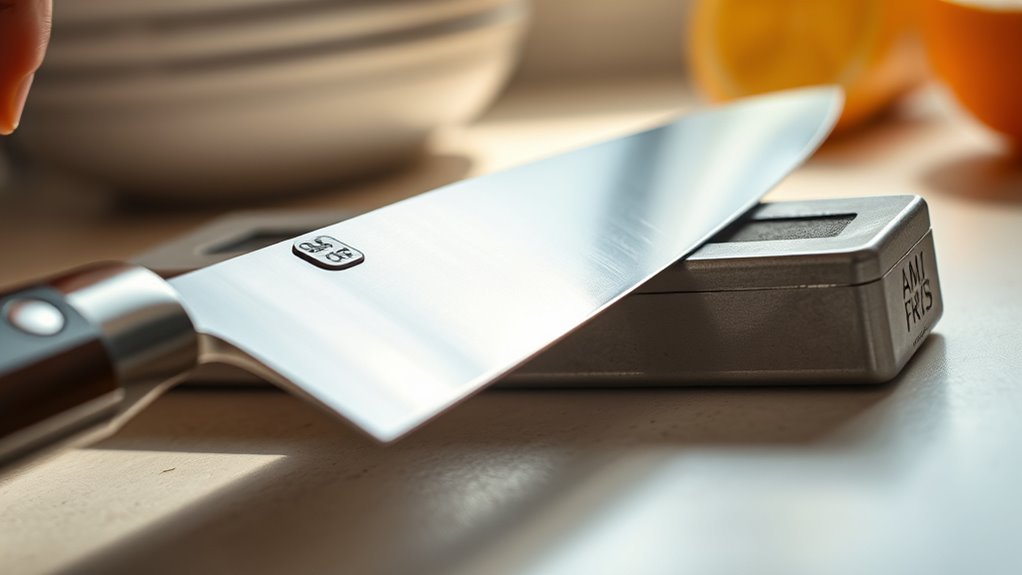
Honing your knife regularly is essential for maintaining a sharp edge and ensuring ideal performance. Proper honing aligns the blade’s microscopic teeth, preventing dullness. When honing, focus on your knife ergonomics—hold the handle firmly and maintain a comfortable grip to control the angle. Additionally, consider your cutting board selection; a softer surface like wood or bamboo reduces blade wear during honing. To hone effectively, follow these steps:
Regular honing maintains sharpness, aligns microscopic teeth, and extends your knife’s lifespan.
- Position the honing rod vertically or at a slight angle, matching your knife’s edge.
- Draw the blade down the rod in smooth, controlled motions, maintaining a consistent angle.
- Repeat on each side of the blade 5-10 times, ensuring even contact and alignment.
- Regularly inspect your water quality and consider using a whole-house filtration system to keep your kitchen environment optimal for knife maintenance.
- Ensure proper air purification in your kitchen area to reduce dust and contaminants that could affect your knives and enhance overall cleanliness.
This routine keeps your knife performing its best and extends its lifespan.
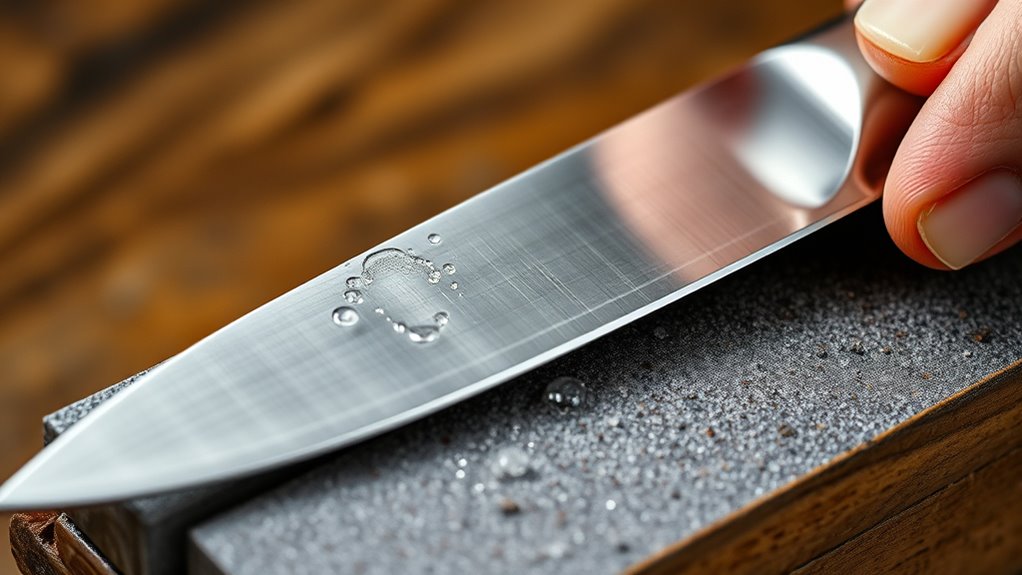
Using a Whetstone to Achieve a Razor-Sharp Edge
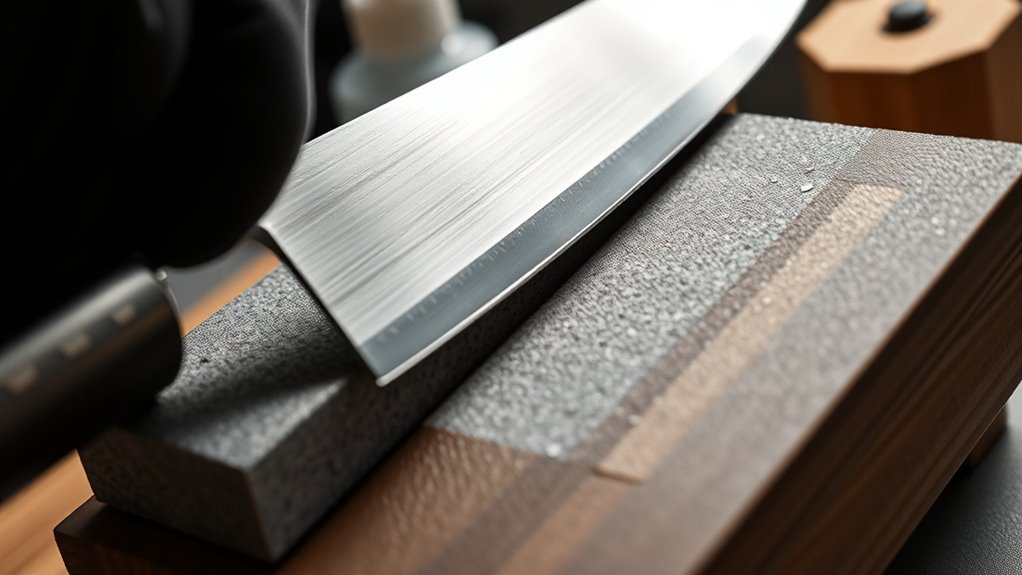
To get the best results with a whetstone, you need to choose the right one for your knife. You’ll also want to master maintaining the correct angle and applying consistent pressure throughout the process. These key points guarantee you achieve a razor-sharp edge efficiently and safely.
Selecting the Right Whetstone
Choosing the right whetstone is essential for achieving a razor-sharp edge on your kitchen knives. First, consider the grit size: a 1000-grit is great for sharpening, while a 3000-grit smooths the edge. Second, select a stone compatible with your blades—ceramic blades require a softer, finer stone, whereas serrated knives benefit from a coarser grit for reshaping. Third, think about the stone’s material: synthetic stones are affordable and durable, while natural stones offer a traditional touch. If you’re working with delicate ceramic blades, opt for a finer grit to avoid damage. For serrated knives, choose a coarser stone to maintain the serrations’ shape. Picking the proper whetstone guarantees efficient sharpening and prolongs your knives’ lifespan.
Proper Angle Technique
Once you’ve selected the right whetstone, mastering the proper angle technique guarantees your knives achieve a razor-sharp edge. To do this, set your knife at about a 15 to 20-degree angle, depending on the blade type. Keep this consistent throughout each stroke, which is vital for an even edge. When sharpening, consider your cutting board selection—using a softer surface helps prevent dulling the edge prematurely. Also, think about kitchen knife storage; storing your knives properly reduces the need for frequent sharpening. Maintain a steady, controlled motion, and regularly check your angle to guarantee uniformity. Proper angle technique is key to maximizing your sharpening efforts and keeping your knives in top condition for safe, efficient cutting.
Maintaining Consistent Pressure
Maintaining consistent pressure while sharpening with a whetstone is essential for creating a clean, razor-sharp edge. Proper control depends on your grip, your knife handle ergonomics, and your stroke technique. To achieve this, focus on: 1. Applying steady, moderate pressure—neither too heavy nor too light—using your fingers and palm to guide your grip. 2. Keeping your wrist stable and aligned with the knife handle to prevent uneven pressure that can dull your edge. 3. Using smooth, consistent strokes across the entire blade, ensuring your hand’s movement mimics your knife’s ergonomic design. Additionally, proper kitchen knife storage helps protect your sharp edge, reducing the need for frequent sharpening. Incorporating modern sharpening tools can further enhance your ability to maintain a precise edge and extend your knife’s lifespan. Consistent pressure will give you a professional finish and extend your knife’s lifespan.
Sharpening With a Manual or Electric Pull-Through Sharpener
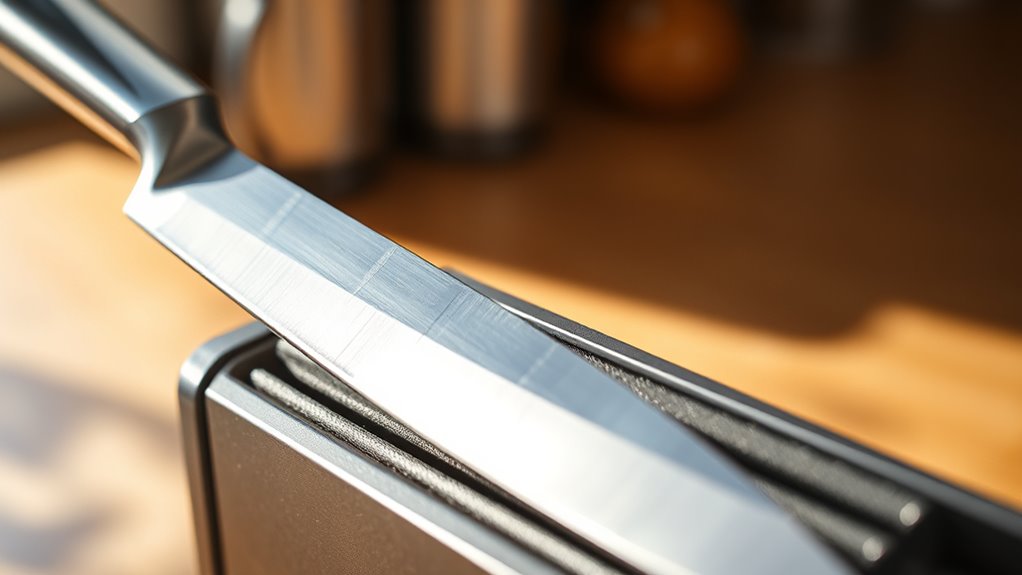
When using a manual or electric pull-through sharpener, it is crucial to follow proper technique to avoid damaging your blade. Make sure your sharpener is compatible with your knife’s material and size before starting. Properly applying consistent pressure will give you the best results and extend your knife’s lifespan. Additionally, understanding blade edge geometry can help you achieve a sharper, longer-lasting edge.
Proper Technique Application
Using a manual or electric pull-through sharpener is a straightforward way to maintain a sharp edge on your kitchen knives, but proper technique is essential for the best results. First, ensure your sharpener has a comfortable, ergonomic handle design to reduce fatigue and improve control. Second, position your knife at the correct angle—usually around 20 degrees—while gently pulling it through the sharpening slots, avoiding excessive pressure. Third, consider choosing eco-friendly sharpening materials when possible, such as ceramic or natural abrasive stones, to reduce environmental impact. Focus on steady, smooth pulls without twisting the blade, and always follow the manufacturer’s instructions for your specific sharpener. Good technique guarantees a sharper, longer-lasting edge while preserving your knives’ integrity. Additionally, understanding heat distribution and proper sharpening methods can help prevent damage and extend the lifespan of your blades.
Sharpener Compatibility Check
Before choosing a manual or electric pull-through sharpener, it’s important to verify that your knives are compatible with these tools. Not all blades work well with these sharpeners, especially if your knives have specialty edges or unique blade angles. Check your knife storage and handle any blades with care to prevent damage. Consider how sharpening will impact kitchen ergonomics—sharper knives make prep safer and easier, but using the wrong sharpener can cause uneven edges or dullness. Some pull-through sharpeners are designed for specific blade types, so review manufacturer instructions carefully. Ensuring compatibility helps you avoid unnecessary wear or damage, prolonging your knives’ lifespan and maintaining a safe, efficient kitchen environment. Proper sharpener compatibility is key to effective sharpening at home.
Fine-Tuning and Stropping for a Professional Finish
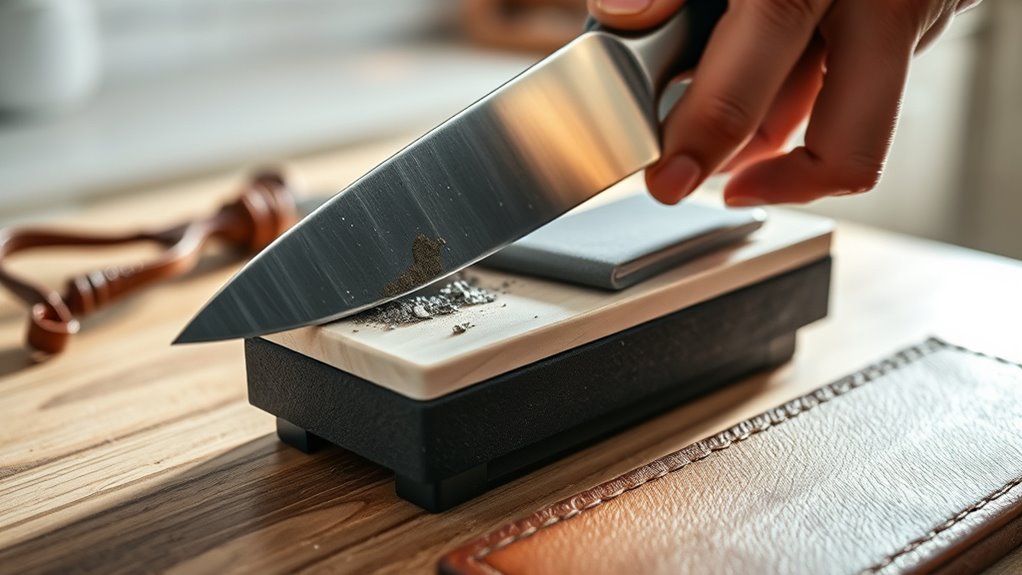
Fine-tuning and stropping are essential steps to achieve a razor-sharp edge that rivals professional standards. Proper technique enhances both kitchen ergonomics and culinary safety, reducing the risk of slips or accidents. When stropping, you focus on polishing the edge for a clean, refined cut. Here’s what to do:
- Use a leather strop or polishing leather, pulling the knife away from the edge to avoid dulling.
- Maintain a consistent angle, typically around 15-20 degrees, for even sharpening.
- Apply gentle pressure, letting the strop do the work, ensuring the blade’s fine edge is perfectly aligned.
This process ensures your knife is not only sharp but also safe and comfortable to handle, making your kitchen tasks more efficient and secure.
Maintaining Your Sharp Knives for Long-Term Performance
To guarantee your knives stay sharp over time, regular maintenance is essential. Proper knife storage plays a vital role; always store your knives in a knife block, on a magnetic strip, or with blade guards. Avoid tossing them loosely in drawers, which can dull or damage the edges. Incorporate simple kitchen maintenance habits, like wiping blades clean after use and avoiding cutting on hard surfaces. Keep your knives dry to prevent rust and corrosion. Regularly inspect for signs of wear and sharpen when necessary to maintain their performance. Proper storage and attentive kitchen maintenance extend the life of your blades, ensuring they stay sharp and safe to use for years to come. Additionally, utilizing smart kitchen technology such as connected knife sharpness sensors can help monitor and maintain optimal blade sharpness more effectively. Remember, proper maintenance isn’t just about sharpening; it’s also about consistent care and attention to detail. Incorporating proper knife care techniques — including regular honing and professional sharpening when needed — can further prolong the sharpness and overall health of your blades. For example, selecting the right cutting surfaces can significantly impact how quickly a blade dulls over time.
Frequently Asked Questions
How Often Should I Sharpen My Kitchen Knives?
You should sharpen your kitchen knives every 1 to 2 months, depending on how often you cook and the type of knife. Regular knife maintenance, including honing, keeps blades sharp longer, while sharpening restores their edge. Pay attention to how your knives perform—if they start to drag or require more effort, it’s time to sharpen. Consistent sharpening frequency ensures your knives stay effective and safe for everyday use.
Can I Sharpen Serrated Knives at Home?
You can sharpen serrated knives at home, but it’s quite different from straight blades. While straight knives benefit from sharpening tools like whetstones or honing rods, serrated knives need specialized tools, such as a ceramic rod or a serrated knife sharpener. Comparing sharpening tools, serrated vs. straight, the key is to concentrate on the scalloped edges without damaging the teeth. If unsure, professional sharpening ensures your knives stay effective.
What Signs Indicate My Knife Needs Sharpening?
You’ll notice your knife needs sharpening when the blade becomes dull and cutting feels difficult. If you find yourself pressing harder or the knife slips off food, it’s a clear sign. You might also see a lack of clean, precise cuts or dull edges that no longer slice smoothly. These signs mean it’s time to sharpen your knife to restore its sharpness and make your kitchen tasks easier and safer.
Is It Better to Use a Sharpening Stone or Electric Sharpener?
Choosing between an electric vs. manual sharpener depends on your needs. Electric sharpeners are quick and easy, perfect for frequent use, while manual sharpeners offer more control. When comparing stone vs. ceramic, stones provide precision and are versatile, whereas ceramic sharpeners are durable and low-maintenance. If you want a balance of convenience and control, go for an electric sharpener with a ceramic or stone grinding surface.
How Do I Prevent My Knives From Dulling Quickly?
To prevent your knives from dulling quickly, focus on proper blade maintenance and smart storage solutions. Avoid cutting on hard surfaces like glass or stone, and always hand wash and dry your knives thoroughly. Store them in a knife block or on a magnetic strip to protect the blades. Regularly honing your knives also keeps the edge aligned, reducing dullness. These habits help maintain sharpness and extend your knives’ lifespan.
Conclusion
With a little practice, you’ll turn your kitchen into a professional’s workshop, and your knives will slice through ingredients like lightning. Think of sharpening as sculpting a masterpiece—each stroke reveals a sharper, more precise edge. Keep up the routine, and your knives will stay as keen as a hawk’s eyesight, ready to tackle any culinary challenge. Remember, a well-sharpened knife isn’t just a tool; it’s the key to a smoother, safer, and more satisfying cooking experience.