When choosing between a stand mixer and a hand mixer for baking, think about your needs. If you bake frequently or tackle heavy tasks like bread dough, a stand mixer is your best bet. It’s powerful and durable. However, if you only bake occasionally or need something compact, a hand mixer is ideal for quick tasks and is easy to store. Both have their perks, and there’s more to explore on how each can fit into your baking routine.
Key Takeaways
- Stand mixers excel at heavy-duty tasks like dough kneading, making them ideal for extensive baking projects.
- Hand mixers are more suitable for quick recipes and smaller batches, offering convenience and portability.
- Stand mixers require less manual effort and allow for hands-free operation, while hand mixers provide greater control during mixing.
- Stand mixers often come with multiple attachments, increasing versatility for various baking tasks compared to the simpler hand mixers.
- Space constraints and baking frequency should guide your choice, as stand mixers need more storage and are best for frequent bakers.
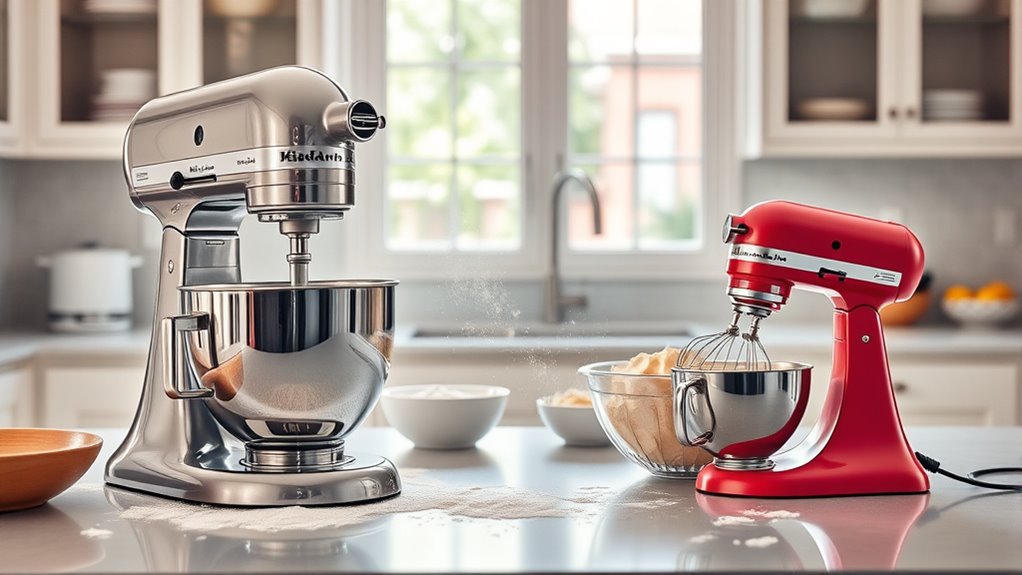
When you’re deciding between a stand mixer and a hand mixer, it helps to understand their key differences. Both appliances have their strengths, and knowing what you need will guide your choice. If you bake frequently, especially items that require extensive mixing like bread or cookies, a stand mixer might be your best bet. These machines are powerful and can handle tough tasks like dough kneading with ease. You can simply set the speed, and let it do the hard work while you tackle other baking tasks.
Understanding the differences between stand mixers and hand mixers can help you choose the best option for your baking needs.
On the other hand, if you’re someone who loves to whip up quick recipes or only bakes occasionally, a hand mixer could serve you just fine. It’s lightweight, portable, and easy to store. You can whip up fluffy whipped cream or mix batter in a flash without needing to pull out a bulky stand mixer. The hand mixer provides you with the freedom to control the mixing process closely, adjusting speed as needed. This can be especially handy when you’re preparing delicate mixtures that require gentle handling.
Consider the space you have available in your kitchen too. Stand mixers take up more counter space, which might be a deal-breaker for you if you’re limited in that area. A hand mixer, being compact, can easily fit in a drawer or cupboard. If you don’t bake in large quantities, this smaller appliance is often more than sufficient. You might find that for many tasks, like making frosting or mixing pancake batter, a hand mixer will get the job done quickly and effectively.
Durability is another factor to weigh. Stand mixers are generally built to last and can withstand heavy use over time. If you plan to make a lot of bread or pizza dough, investing in a stand mixer is likely worthwhile. They often come with various attachments, allowing for versatility in your baking endeavors. However, if you’re only looking to occasionally whip up a small batch of cookies or a cake, a hand mixer is a cost-effective choice.
Ultimately, the right mixer for you depends on your baking habits and needs. Both have their unique advantages, so think about what you’ll be using it for most. Additionally, baking habits can also influence your decision on whether to invest in a stand mixer or stick with a hand mixer. Whether you choose a stand mixer or a hand mixer, you’re setting yourself up for delicious baking adventures ahead.
Frequently Asked Questions
Can I Use a Hand Mixer for Heavy Dough?
Yes, you can use a hand mixer for heavy dough, but it’s not the best choice. When it comes to dough kneading or heavy batter mixing, a stand mixer generally handles the task better. Hand mixers can struggle with thick mixtures, and you might end up overworking your arms. If you’re determined to use a hand mixer, just be prepared for a workout and keep an eye on the motor’s heat.
What’s the Average Lifespan of a Stand Mixer?
A stand mixer typically lasts around 10 to 15 years with proper care. When considering durability comparison, higher-end models often outlast budget options. To maximize your mixer’s lifespan, keep it clean, avoid overloading, and store it safely. Regularly check the power cord and attachments for wear. By following these maintenance tips, you’ll ensure your stand mixer remains a reliable kitchen companion for all your baking adventures.
Are There Any Attachments for Hand Mixers?
Yes, there are attachments for hand mixers, though they’re usually limited compared to stand mixers. You’ll find options like dough hooks and whisk attachments that enhance versatility. When considering attachments compatibility, confirm they fit your specific mixer model. Also, think about storage considerations; since hand mixer attachments can be smaller, they’re easier to store, but you’ll want to keep them organized to prevent loss or damage. Enjoy experimenting with your hand mixer!
How Much Counter Space Do Stand Mixers Require?
Stand mixers typically require a decent amount of counter space, often around 12-18 inches in width. If you’re tight on space, consider storage solutions like a designated cabinet or shelf to keep it tucked away when not in use. You can also think about a rolling cart to easily move it in and out of your kitchen. Just remember, having it accessible makes baking so much easier and more enjoyable!
Do Stand Mixers Make Less Noise Than Hand Mixers?
Stand mixers generally produce less noise than hand mixers during operation. When you use a stand mixer, its design allows for more stable mixing, which often results in a lower noise level. In sound comparisons, you’ll find that hand mixers tend to whir and buzz more loudly as you manually control the speed. If you’re sensitive to noise while baking, a stand mixer might be the quieter option for you.
Conclusion
When choosing between a stand mixer and a hand mixer, it really comes down to your baking needs. If you’re whipping up large batches or tackling heavy doughs, a stand mixer is your best bet for efficiency and power. However, if you’re short on space or just need something for lighter tasks, a hand mixer is perfect. Imagine this: a stand mixer towering proudly on your counter, while a hand mixer easily tucks away in a drawer. Both have their place!