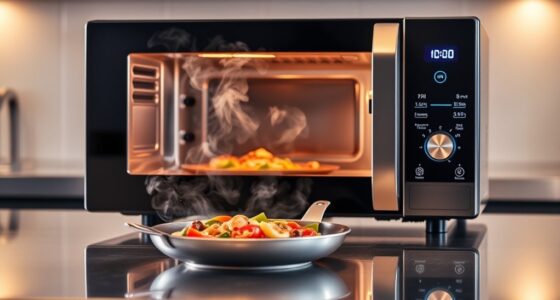
Discover surprising ways to use your microwave beyond reheating leftovers. You can make crispy snacks with less oil, quickly peel garlic and ginger, or sterilize utensils and sponges to keep your kitchen hygienic. It’s also great for drying herbs and flower petals, revitalizing stale bread, removing stickers effortlessly, and creating DIY beauty treatments. These clever tricks save time, reduce waste, and clean up easily. Keep going, and you’ll open even more useful microwave hacks to simplify your life.
Key Takeaways
- Sterilize kitchen utensils and sponges by microwaving them in water to eliminate bacteria and mold effectively.
- Quickly dry herbs and flower petals in short bursts to preserve flavor, aroma, and vibrant colors for culinary or decorative purposes.
- Refresh stale bread or warm baked goods with brief microwave bursts to restore moisture and enjoy them like fresh.
- Remove stickers and labels easily by microwaving items with adhesive for 10-15 seconds, softening residues for simple peeling.
- Use the microwave for DIY beauty masks by gently warming natural ingredients like honey, avocado, or oatmeal for enhanced skincare routines.
Make Crispy Snacks With Less Oil
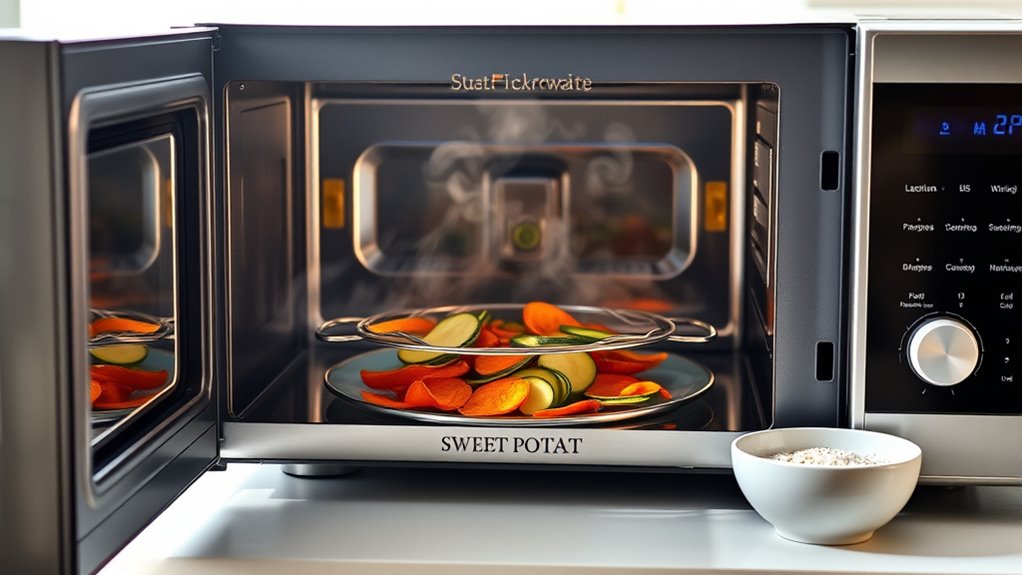
You can make crispy snacks in the microwave without using much oil, saving you calories and cleanup time. This method offers healthier snack options by reducing oil consumption through simple oil reduction techniques. For example, you can create crispy kale chips or chickpeas with minimal oil—just lightly spray or toss your ingredients with a small amount of oil or even skip it altogether. The microwave’s high heat crisps the snacks quickly, mimicking frying without the mess or added calories. This approach not only keeps your snacks healthier but also makes the preparation faster and easier. Additionally, understanding contrast ratio can help you achieve optimal crispiness and visual appeal when preparing snacks in the microwave. It’s a smart way to indulge without guilt, especially when you optimize your energy-efficient cooking techniques for quick results. Using proper microwave power levels ensures even cooking and crisping, further enhancing your snack quality. Mastering microwave temperature control can also improve your results by preventing overcooking or under-crisping. Incorporating ventilation considerations can help manage steam and keep your kitchen odor-free during the process.
Quickly Peel Garlic and Ginger
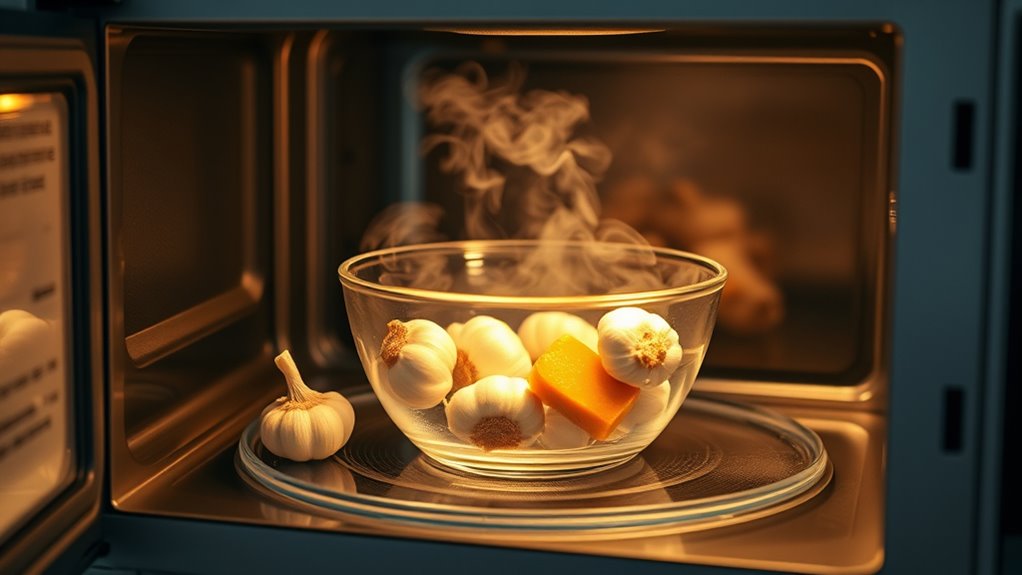
Peeling garlic and ginger can be tedious, but the microwave offers a quick and easy solution. For garlic peeling, place a few cloves in a microwave-safe bowl and microwave on high for 10-15 seconds. The heat loosens the skins, making them easy to slip off. Simply squeeze the cloves gently, and the skins should come away effortlessly. A simple kitchen hack is to shake the cloves in a covered container to loosen the skins further. For ginger prep, cut a small piece and microwave it for about 15 seconds. The heat slightly softens the ginger, making it easier to peel with a spoon or knife. This method saves time and minimizes mess, especially when peeling multiple cloves or a chunk of ginger. Using your microwave for garlic peeling and ginger prep streamlines your kitchen tasks and keeps your cooking process smooth and efficient. Additionally, understanding proper hamster care can help ensure your small pets stay healthy while you work efficiently in the kitchen. Incorporating the right kitchen gadgets can further enhance your cooking experience and save you time. Being aware of grocery savings strategies can also help you budget effectively for all your kitchen needs.
Sterilize Kitchen Utensils and Sponges

After peeling garlic and ginger quickly in the microwave, it’s the perfect time to guarantee your kitchen tools are hygienic and safe to use again. Microwaving utensils and sponges effectively sterilizes them, supporting food safety and hygiene maintenance. For utensils, place metal or plastic tools in a microwave-safe container filled with a bit of water, then heat for about a minute. The heat kills bacteria and germs. For sponges, dampen them slightly, then microwave on high for one to two minutes. The high temperature destroys common bacteria and mold. Just be careful when removing hot items, and let everything cool before handling. Incorporating proper sterilization techniques can further enhance your kitchen’s hygiene and protect your health. Using a microwave for sterilization is a quick hygiene method that fits seamlessly into your cleaning routine. Additionally, regularly cleaning and replacing filters in your microwave or other appliances can prevent the buildup of bacteria and ensure optimal performance. To maintain a healthy kitchen environment, consider water sanitation methods that complement microwave sterilization. Utilizing electric power generation methods like bike generators can also be an eco-friendly way to supplement your energy needs during kitchen chores.
Dry Herbs and Flower Petals
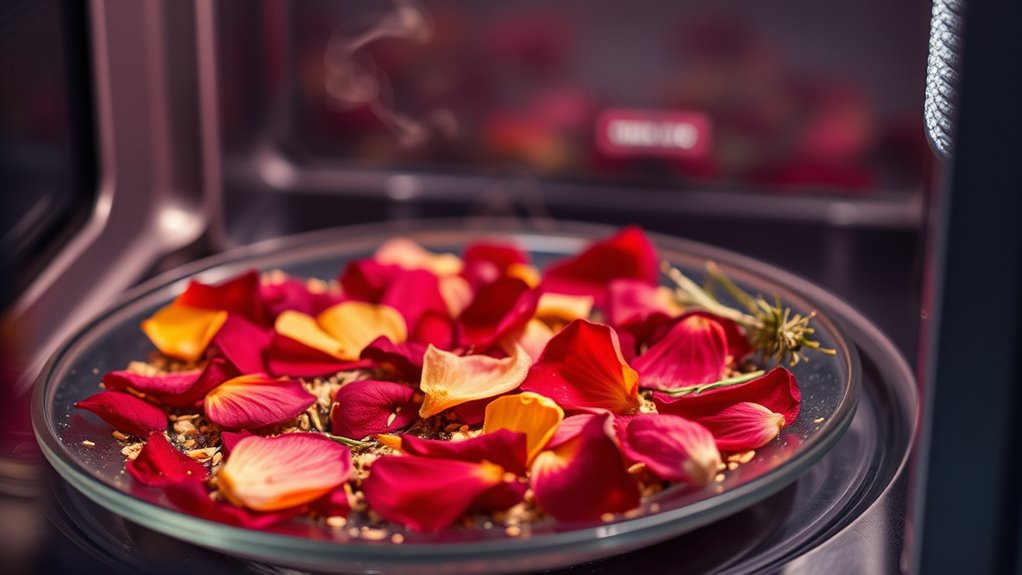
Using your microwave, you can preserve herbs and flower petals more effectively than air drying. It’s a quick method to dry herbs, helping them retain flavor, while brightening dried flowers for decoration. This technique saves time and keeps your botanicals looking fresh and vibrant. Additionally, this method can be used for flower preservation, ensuring your blooms last longer. The process is also popular among pinball enthusiasts who enjoy customizing their game rooms with preserved decorative elements. Microwave drying is also considered a vetted method for maintaining the quality of delicate botanicals. Moreover, understanding lease terms can help you make better decisions if you ever consider leasing a vehicle instead of purchasing it.
Preserving Freshness Effectively
Drying herbs and flower petals in the microwave is a quick and effective way to preserve their freshness. This method enhances food storage by maintaining flavor and aroma over time. When drying, place herbs or petals between paper towels and microwave in short bursts to prevent over-drying. This helps lock in natural oils, guaranteeing freshness preservation without mold or spoilage. Additionally, sound vibrations can influence cellular regeneration and overall health, highlighting the importance of gentle drying methods that preserve the delicate structure of herbs and petals. Using auditory techniques during drying can further optimize the process by promoting even moisture removal. Employing microwave drying techniques ensures consistent results and reduces drying time significantly. Incorporating natural methods can also help maintain the integrity of delicate plant materials and enhance their longevity.
- Use low power settings for gentle drying
- Check frequently to avoid overheating
- Store dried herbs in airtight containers
- Keep flower petals away from direct sunlight
This technique saves time and space, making it easy to extend the life of your herbs and flowers while keeping their vibrant qualities intact. Proper microwave drying assures your ingredients stay fresh and flavorful longer.
Quick Herb Drying Technique
Have you ever needed to dry herbs or flower petals quickly without sacrificing their freshness? The microwave offers an efficient way for herb preservation and floral preservation. To try this, spread the herbs or petals evenly on a microwave-safe plate lined with paper towels. Use a low power setting, typically 30%, and microwave in short bursts of 15-20 seconds. Check frequently to prevent burning or over-drying. Once the herbs or petals feel dry and brittle, let them cool. This quick herb drying technique retains much of their color and aroma, making it perfect for culinary or decorative uses. It’s a simple, fast method that preserves the essence of your herbs and flowers without the lengthy air-drying process. Herb drying techniques can further enhance your preservation process.
Brightening Dried Flowers
To give dried herbs and flower petals a vibrant, fresh appearance, a quick brightening treatment with a microwave can work wonders. This simple method enhances flower care and floral preservation by revitalizing dull, faded petals. Place the dried flowers or herbs between two paper towels and microwave on low for 10-15 seconds. Check frequently to avoid overheating. The gentle heat helps restore color and brightness without damaging delicate petals. Additionally, using a microwave for this purpose aligns with the principles of precision and automation in modern kitchen technology. This technique is also effective for preserving color and can be used to refresh dried floral arrangements quickly. Use this technique for dried floral arrangements to refresh their look. Ideal for dried herbs before using them in crafts or displays. Helps maintain the vividness of flower petals in floral preservation projects. Avoid over-drying or burning by monitoring the process carefully.
Refresh Bread and Baked Goods

If your bread has gone stale, you can revive it in the microwave by wrapping it in a damp paper towel and heating it briefly. This method also works to warm up croissants quickly, restoring their flaky goodness. With just a few seconds, your baked goods can feel fresh again.
Revive Stale Bread
Stale bread can still be enjoyable with a quick microwave fix. To achieve a successful bread revival, place your stale bread on a microwave-safe plate and sprinkle it lightly with water. Cover it with a damp paper towel to trap moisture. Microwave on high for about 10-15 seconds, then check for softness. If it’s not quite there, repeat in short bursts. This method restores moisture, making your stale bread taste fresh again. It’s perfect for turning day-old loaves into a delicious snack or base for toast. Remember, over-microwaving can make it tough, so keep an eye on it. Use this simple trick to breathe new life into stale bread and avoid waste, ensuring your baked goods stay enjoyable longer.
- Add moisture with a damp paper towel
- Microwave in short bursts
- Check for softness frequently
- Use immediately for best results
Warm Croissants Quickly
When your croissants have cooled and lost their flaky warmth, the microwave can quickly restore their freshness. Proper bread storage helps keep baked goods like croissants crisp, but sometimes they need a quick refresh. To warm them, place the croissant on a microwave-safe plate and cover it with a damp paper towel. Use the pastry warming setting or microwave on low power for 10-15 seconds. Check if it’s warmed to your liking; if not, repeat in short bursts. This method prevents over-softening while rejuvenating the flaky texture. The microwave is an efficient tool for restoring baked goods, ensuring your croissants remain delicious and satisfying without drying out or becoming soggy. It’s a simple trick for enjoying fresh-tasting pastries anytime.
Remove Stickers and Labels Easily

Removing stubborn stickers and labels becomes much easier when you use your microwave. The heat softens the adhesive, making chemical removal of sticker residue simpler. First, place the item with the sticker in the microwave for about 10-15 seconds. Be careful when handling it afterward, as it will be hot. Once heated, peel off the sticker gently, and any remaining residue can be wiped away easily with a cloth. Here are some tips:
- Use the microwave to heat glass jars or plastic containers with stickers.
- Apply a little vinegar or rubbing alcohol to loosen stubborn adhesive.
- For delicate surfaces, test a small area first.
- Always let the item cool before cleaning or handling.
This method saves time and reduces the need for harsh scrapers or chemicals.
Create DIY Beauty Treatments
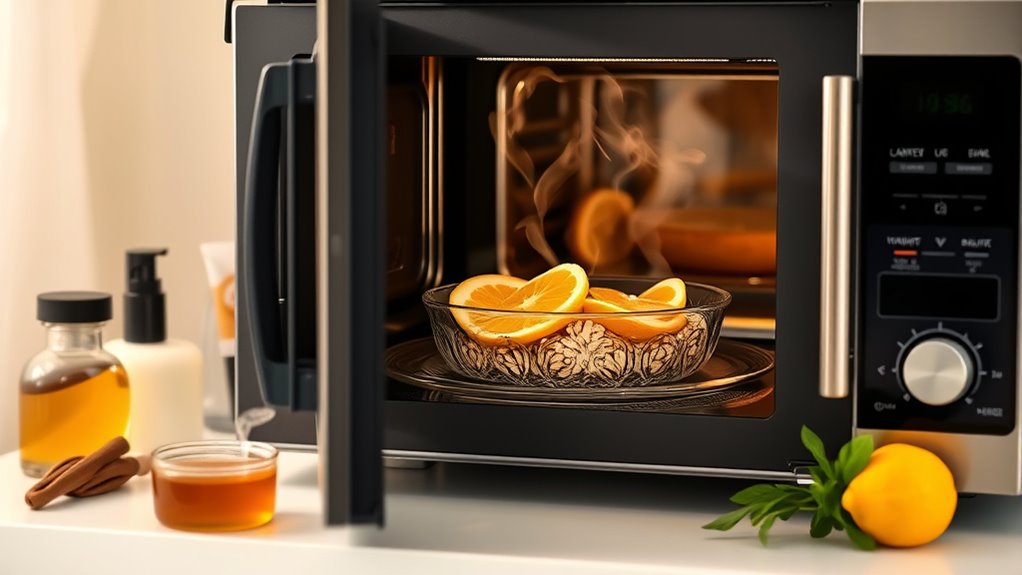
You can harness your microwave to create easy and effective DIY beauty treatments at home. Using your microwave for DIY skincare is a simple way to make homemade masks that feel luxurious and nourishing. For example, you can warm honey and oatmeal for a soothing facial mask, or gently heat avocado and yogurt for deep hydration. Just be sure to test the temperature to avoid burns. Microwaving ingredients helps them blend smoothly and enhances their soothing properties. This quick method saves time and money, plus it allows you to customize your skincare routine with natural ingredients. Whether you want to brighten your skin, hydrate, or calm irritation, your microwave makes it easy to prepare fresh, effective homemade masks.
Frequently Asked Questions
Can Microwaves Be Used to Clean Jewelry Safely?
Yes, you can use your microwave for jewelry cleaning, but you must prioritize microwave safety. Place your jewelry in a microwave-safe container with a mixture of water and gentle soap, then heat it briefly. This method helps loosen dirt and grime. Always verify your jewelry is microwave-safe and avoid using this method on delicate or porous stones. Keep a close eye to prevent overheating or damage.
How Can I Disinfect My Phone or Electronics in the Microwave?
You shouldn’t disinfect your phone or electronics in the microwave, as it can damage the devices and be unsafe. Instead, you can use UV sanitization or electronic sterilization devices designed for electronics. These methods safely eliminate germs without risking harm to your gadgets. UV sanitizers use ultraviolet light to sterilize surfaces, while electronic sterilizers emit safe electrical pulses. Always follow manufacturer instructions for effective, safe cleaning.
Is It Possible to Soften Hardened Wax or Glue in the Microwave?
You can soften hardened wax or glue in the microwave, but with caution. For wax removal, place the item in a microwave-safe container and heat in short bursts, checking frequently to prevent overheating. For glue softening, use a microwave-safe bag or wrap, again heating in brief intervals. Always verify your materials are microwave-safe and avoid overheating, which can cause damage or fire hazards.
Can Microwaving Help Remove Bad Odors From Shoes or Clothing?
Yes, microwaving can help with odor removal and shoe deodorizing. You can place a few drops of essential oil or a small bowl of baking soda inside your shoes or clothing, then microwave them for 30-60 seconds. The heat helps eliminate bacteria that cause bad odors, leaving your items smelling fresher. Just make certain your shoes are microwave-safe, and avoid overdoing it to prevent damage or fire hazards.
Are There Safety Precautions for Microwaving Certain Materials or Items?
Think of your microwave as a wild beast—powerful but unpredictable if not handled carefully. You should always check material safety before microwaving, as some items can spark or melt, risking microwave hazards. Never microwave metal, foil, or plastic not labeled microwave-safe. Always follow manufacturer instructions, and avoid heating sealed containers. By respecting these safety precautions, you keep your microwave running smoothly and prevent dangerous mishaps.
Conclusion
Your microwave isn’t just for reheating leftovers—think of it as a versatile tool that’s like a magic wand in your kitchen. With these surprising uses, you can make snacks, peel garlic effortlessly, and even sterilize your utensils. It’s a handy helper, like a Swiss Army knife, ready to simplify your daily routines. Give these tips a try, and you’ll wonder how you ever managed without your microwave doing so much more than just warming food.