
If your toaster keeps burning toast, it’s usually due to improper settings, mechanical issues, or lack of maintenance. Start by adjusting the browning control to a lower setting. Make sure to clean the crumb tray regularly and inspect the heating elements for damage. Avoid overloading the slots and use bread with the right thickness. For more tips on fixing this problem and ensuring perfect toasting, keep going to find out how to troubleshoot effectively.
Open a free Amazon Business account
Business pricing, bulk buying and tax-exempt orders.
As an affiliate, we earn on qualifying purchases.
Key Takeaways
- Mechanical issues like stuck or dirty moving parts can cause uneven heating and burning; regular cleaning and inspection help prevent this.
- Faulty or damaged heating elements may overheat; inspect for cracks or discoloration and replace if necessary.
- Inconsistent bread thickness or improper placement can lead to uneven browning; ensure slices are even and properly positioned.
- Electrical faults such as loose wiring or faulty thermostats can cause overheating; unplug and have a professional check internal components.
- Using high settings on bread that requires lower heat can result in burning; adjust browning controls to match bread type and thickness.
Check and Adjust the Toasting Settings
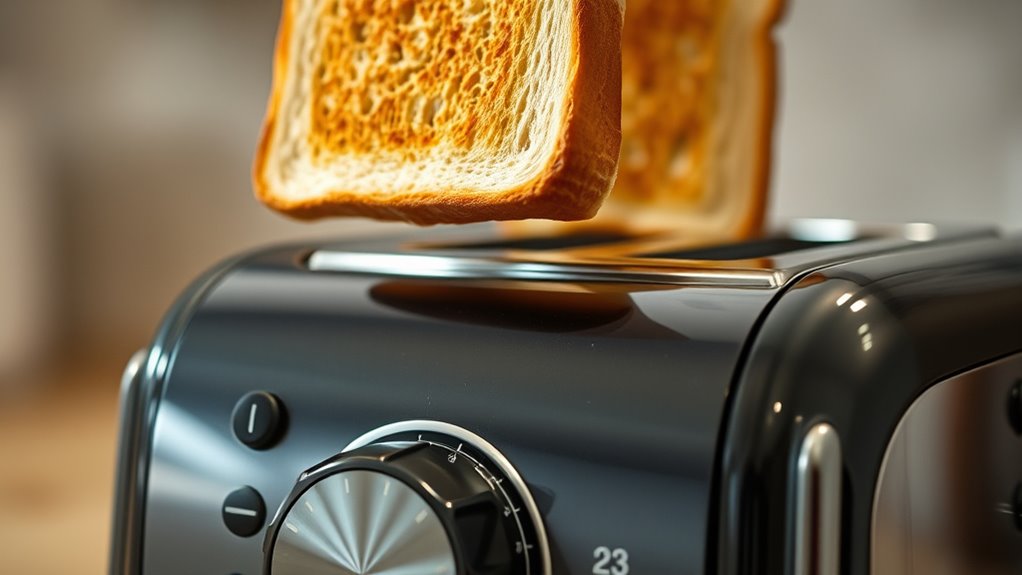
If your toast keeps burning, the first step is to check and adjust your toaster’s settings. Start by considering the bread thickness; thicker slices need a lower setting to prevent burning, while thinner slices may require a higher setting for a golden toast. Also, think about your desired toast color—if you prefer it light, set the toaster to a lower level, and for darker toast, increase the setting gradually. Many toasters have adjustable dials or browning controls that help you find the perfect balance. Don’t rush to turn it up immediately; test small adjustments to avoid over-toasting. Properly setting the toaster guarantees your bread reaches the ideal toast color without burning, saving you time and frustration. Additionally, understanding how auditory processing can influence how we perceive and respond to sensory stimuli can help you create a more comfortable environment that minimizes distractions while adjusting your toaster settings. Being aware of visual cues can also assist in judging the perfect toast level without overdoing it. Recognizing temperature regulation principles can also support maintaining consistent toast quality. Moreover, staying informed about AI detection advancements can help in troubleshooting appliance malfunctions through smart diagnostics or connected devices. Incorporating smart home automation features, such as toasters with preset profiles or connected controls, can further optimize your toasting experience and prevent burnt bread.
Clean Your Toaster Regularly
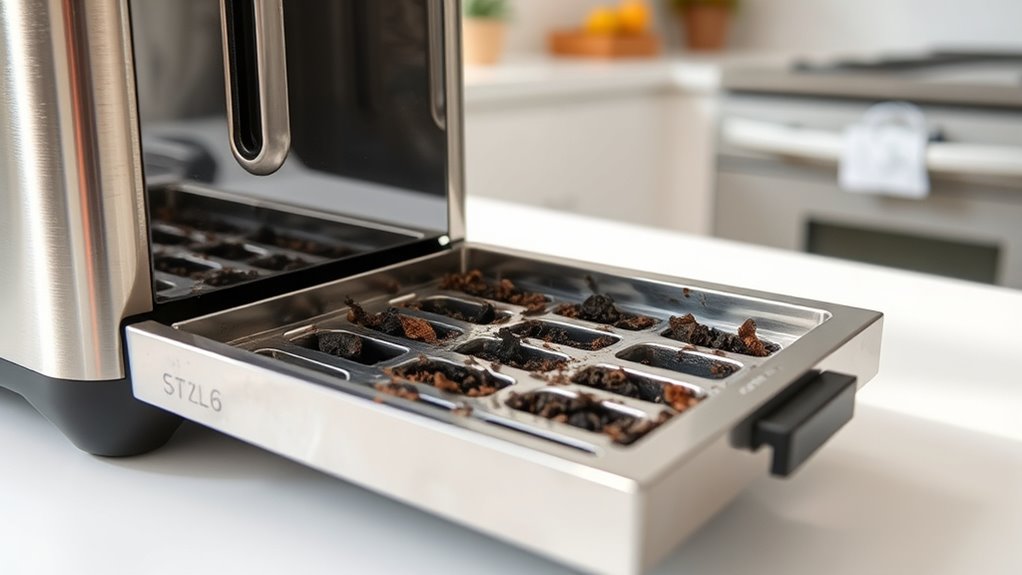
You should clean your toaster regularly to prevent burnt crumbs from causing problems. Make sure to remove crumbs often to keep it functioning properly. Always unplug the toaster before cleaning to stay safe. Additionally, inspecting and cleaning the crumb tray frequently can help avoid build-up that might ignite or affect heating efficiency. Regularly descale and maintain your toaster to prevent mineral build-up that can impair performance, especially if you have hard water. Incorporating proper appliance maintenance routines can also extend the lifespan of your kitchen tools and improve their safety and efficiency.
Remove Crumbs Frequently
Regularly removing crumbs from your toaster prevents buildup that can cause uneven heating or even fires. Crumb buildup inside the toaster can block heat distribution, leading to inconsistent toast density. When crumbs accumulate, they insulate the heating elements, making them work harder and increasing the risk of burning your toast. To keep your toaster functioning properly, empty the crumb tray after each use or at least once a week. Use a soft brush or cloth to dislodge any stubborn bits in the crumb compartment. This simple step ensures heat flows evenly, preventing hotspots that cause uneven browning or burning. Proper equipment setup and maintenance is essential for optimal performance and safety. Regular cleaning also helps maintain the longevity of your appliance, ensuring it continues to perform efficiently over time. Additionally, keeping your toaster free of debris can help prevent potential fire hazards caused by accumulated debris. Maintaining a clean crumb tray can also improve the efficiency of heat transfer, leading to better toast quality and consistent results. Consistent cleaning helps maintain excellent toast quality and reduces the chance of unwelcome fires caused by accumulated debris.
Unplug Before Cleaning
Before cleaning your toaster, always unplug it to prevent the risk of electric shock or accidental activation. This safety precaution is vital before attempting any cleaning techniques. Unplugging ensures no power runs through the appliance, protecting you from potential harm. Once unplugged, let the toaster cool completely to avoid burns. Use a damp cloth or soft brush to remove crumbs and residue, avoiding abrasive cleaners that could damage the surfaces. Regular cleaning helps prevent burnt smell and uneven toasting. Remember, safety precautions are essential when maintaining kitchen appliances. Avoid inserting metal utensils or liquids into the toaster. Proper cleaning practices help prolong your toaster’s lifespan and improve its performance. Incorporating regular maintenance is crucial for optimal operation and safety. Also, consider appliance maintenance to keep your toaster functioning efficiently over time. By following these simple steps, you keep your appliance safe and in good working condition.
Inspect the Heating Elements for Damage
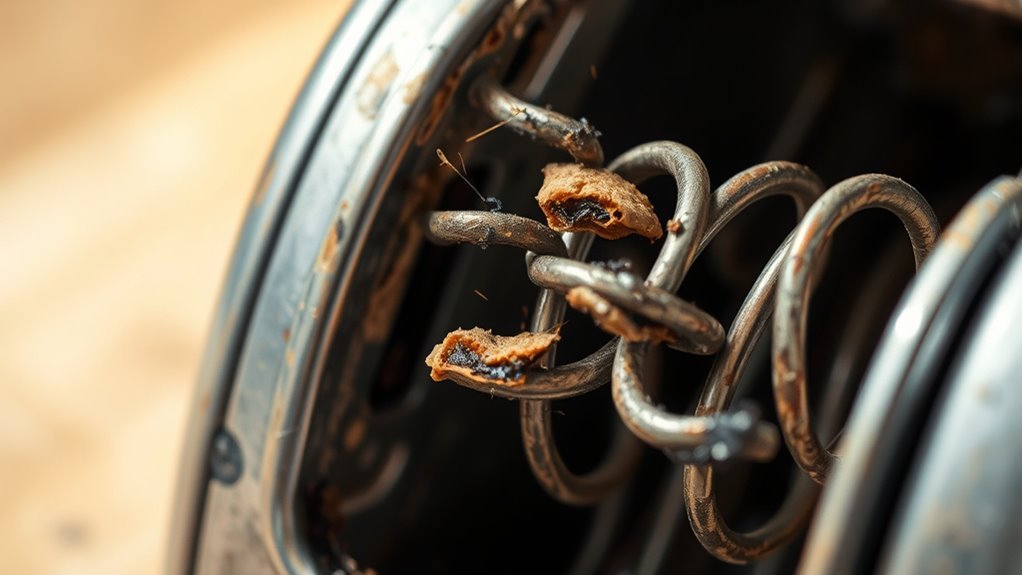
Damaged heating elements are a common cause of burnt toast, so it’s important to inspect them carefully. Look for visible signs of damage like cracks, blistering, or discoloration. Element damage can prevent even heat distribution, leading to over or under-toasting. Wiring issues, such as frayed or loose connections, can also cause uneven heating or toast burning. Use the table below to guide your inspection:
| Signs of Damage | What to Check |
|---|---|
| Cracks or breaks | Inspect heating wires and elements for visible cracks or breaks |
| Discoloration | Look for burnt or blistered areas on the elements |
| Loose wiring | Ensure all wiring is secure and free of corrosion |
Avoid Overloading the Toaster
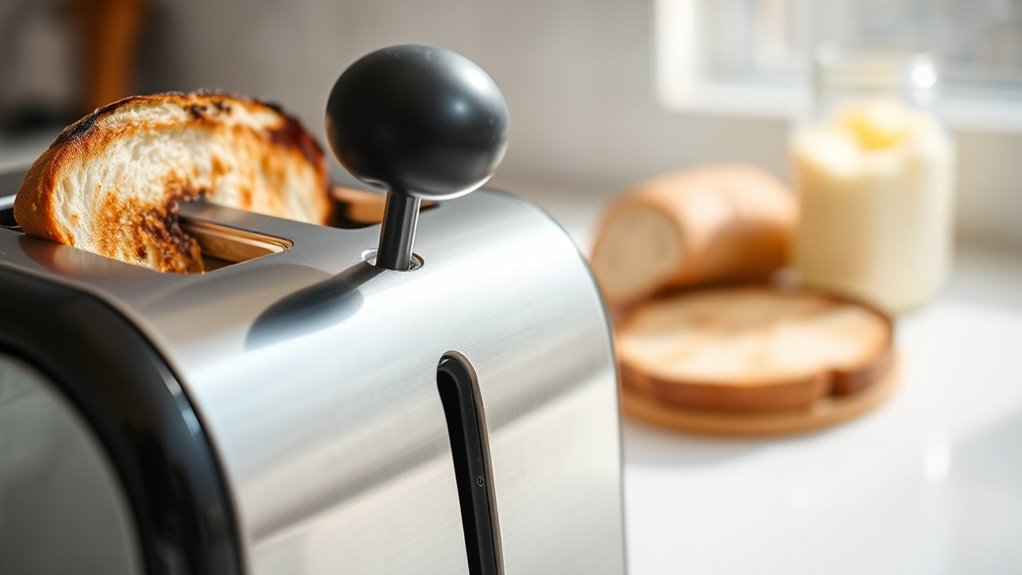
Overloading your toaster can lead to uneven heating and increase the risk of burnt toast. When you put too much bread or crammed slices inside, the heating elements struggle to distribute heat evenly. This can cause some slices to burn while others remain underdone. Make sure to choose bread size that fits comfortably without crowding the slots. Also, pay attention to toaster placement; keep it on a flat, stable surface away from clutter or heat sources that might affect its performance. Avoid stacking or stacking slices on top of each other, as this hampers proper heating. Additionally, understanding quality assurance principles can help you identify and maintain your toaster’s optimal performance. By not overloading your toaster and ensuring proper placement, you give it the best chance to toast evenly and prevent those frustrating burnt pieces.
Use Proper Bread Thickness and Type
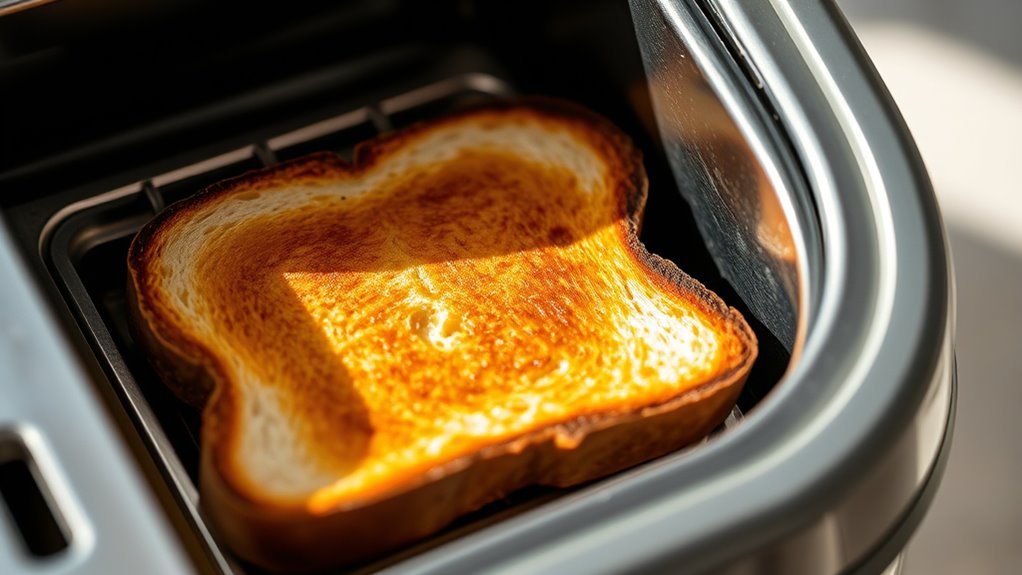
Using the right bread thickness and type is essential for achieving evenly toasted slices. Thinner bread tends to toast faster and can easily burn if your toaster settings are too high, so opt for slices that are uniformly thick. Thick bread, on the other hand, may not toast evenly or could require a longer toasting time. The quality of the bread also matters; higher-quality bread with consistent crust thickness often results in better toasting results. Select bread with a crust thickness that matches your toaster’s capabilities—thin crusts for quick toasting, thicker crusts for longer cycles. By choosing appropriate bread types and ensuring consistent thickness, you reduce the risk of burning and achieve that perfect, golden toast every time. Additionally, understanding toasting techniques can help you further optimize your bread choices for ideal results. Proper bread selection can also influence how evenly your toast browns, preventing hot spots that lead to burning. Paying attention to bread freshness can also improve toasting outcomes, as stale or overly moist bread may not toast evenly or could produce uneven browning. Incorporating bread moisture levels into your selection process can help improve toasting consistency. For best results, consider experimenting with different bread varieties to find the one that toasts most evenly in your specific toaster.
Troubleshoot Electrical and Mechanical Issues
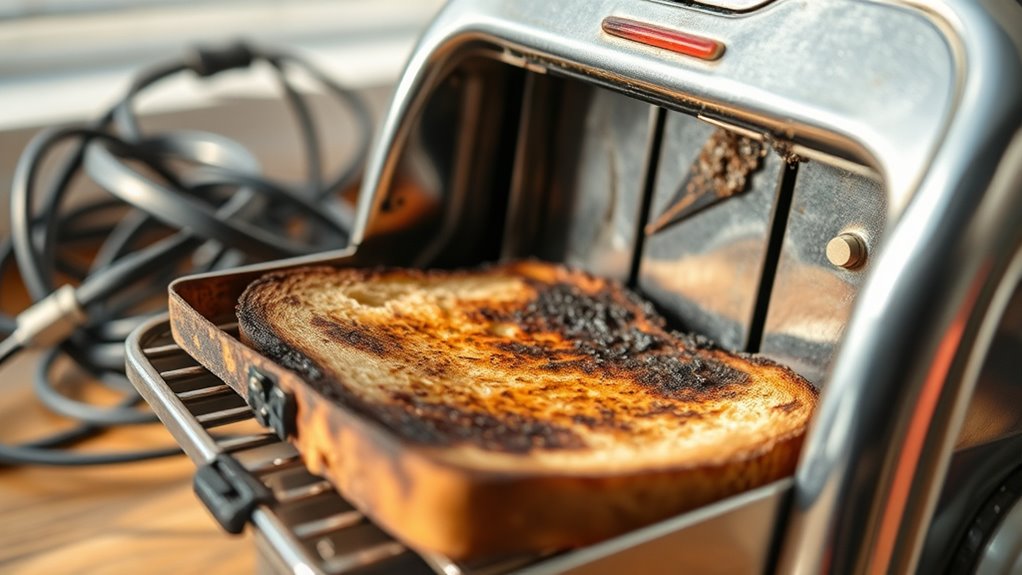
Even if you select the perfect bread, electrical or mechanical issues inside your toaster can still cause burning. Circuit malfunctions, such as faulty wiring or damaged thermostats, can lead to uneven heating or overheating, resulting in burnt toast. Power fluctuations from your outlet can also disrupt the toaster’s consistent operation, causing it to turn on or off unpredictably. To troubleshoot, unplug the toaster and inspect for obvious signs of damage or loose connections. If you notice frayed cords or scorched components, consider replacing the unit or having it repaired. Using a surge protector can help stabilize power fluctuations. Regular cleaning and ensuring the toaster’s mechanical parts move freely also prevent internal jams that might cause overheating. Being aware of **Circuit malfunctions** and their impact on appliance performance helps ensure your toast is perfectly browned every time.
Frequently Asked Questions
How Do I Reset My Toaster’s Settings to Default?
To reset your toaster’s settings to default, start by unplugging it and waiting a few minutes. Then, plug it back in and look for a reset button or consult your user manual for specific reset procedures. If your toaster lacks a reset button, you can try adjusting the setting adjustments to the middle or lowest setting, then turn it off and on again. This helps restore the original default settings.
Can Different Bread Types Affect Toasting Results?
Yes, different bread types can affect toasting results because of their bread texture and crust thickness. Thicker or denser bread, like bagels or artisan loaves, may need a longer or higher setting to toast evenly. Conversely, thinner bread, like sliced white bread, toasts quickly and can burn if the settings are too high. Adjust your toaster’s settings based on the bread’s texture and crust thickness for perfect results every time.
What Is the Average Lifespan of a Toaster’s Heating Elements?
Ever wonder how long your toaster’s heating element lasts? On average, the heating element lifespan is about 3 to 5 years, depending on usage and quality. This affects your toaster’s durability and performance over time. To prolong its life, you should avoid overloading it and keep it clean. Regular maintenance can help ensure your toaster stays reliable and prevents unexpected breakdowns.
Are There Safety Precautions When Inspecting Internal Components?
When inspecting your toaster’s internal components, you should always unplug it first to prevent electric shock. Wear insulated gloves and use tools with non-conductive handles to avoid internal damage or accidental shocks. Be cautious of exposed wiring and damaged parts, and never force open the device if you notice signs of internal damage. These safety precautions help shield you from injury and ensure a safe inspection process.
How Do I Troubleshoot Inconsistent Toasting Across Multiple Slices?
Like a conductor balancing an orchestra, you need to fine-tune your toaster for consistent results. Check if slices vary in bread thickness or crust density, which can cause uneven toasting. Adjust the toaster’s settings accordingly, and consider using even-sized slices. If the issue persists, clean the crumb tray and inspect the heating elements. Proper maintenance guarantees each slice receives the perfect level of heat, preventing surprises during breakfast.
Conclusion
To keep your toast just right, it’s worth paying a little extra attention to your toaster’s needs. Regularly checking settings, cleaning, and gentle inspection can help you avoid those unexpected dark surprises. Remember, a well-cared-for toaster is like a trusted friend—always ready to serve up perfect slices. With a bit of patience and care, you’ll find your mornings much smoother, and your toast consistently just the way you like it.
Flea & tick season Picks
flea and tick prevention
As an affiliate, we earn on qualifying purchases.