TL;DR
Air fryers with multiple presets use circulating hot air and offer suggested times and temperatures for foods or cooking modes. Treat each preset as a starting point: portion size, food thickness, basket crowding, and appliance design affect results, so adjust settings and check doneness. When shopping, prioritize useful capacity, easy controls, and cleanup over a long preset list.
A basket of fries can emerge crisp and golden—or pale, limp, and uneven—even when you pressed the same button. That’s because an air fryer preset is a suggested cooking program, not a tiny chef watching your dinner.

Get kitchen gear delivered free with Prime
- Fast, free delivery on millions of items
- Prime Video, Amazon Music and more included
- Member-only deals all year
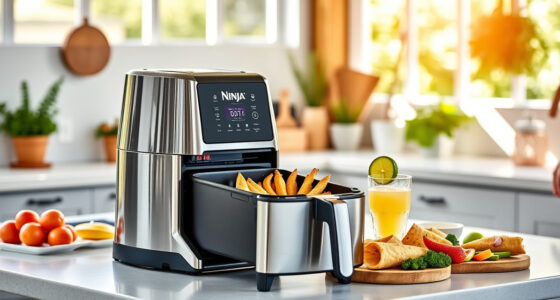
Air fryers with multiple presets circulate hot air around food and offer ready-made settings for options such as fries, chicken, fish, vegetables, and baking. Those buttons can make your first few meals easier, especially when you’re cooking after work and don’t want to hunt for a starting temperature.
This guide explains what the presets actually do, when they help, and what to look for before buying. You’ll also learn how to adapt a preset to your portion and check food safely, so the machine’s menu becomes a useful starting point instead of a promise.
Treat each preset as a suggested time and temperature, not a sensor that recognizes food or confirms doneness.
Give food room for hot air to circulate; a crowded basket can soften crisp foods and cook portions unevenly.
Look for easy time and temperature adjustments, usable basket space, and straightforward cleaning before counting preset buttons.
Use a food thermometer when safe internal temperature matters, even if the cycle has ended.
Choose a dual-basket model when you regularly cook two foods at different settings and have counter space for it.
What the preset buttons actually do for your dinner
Air fryers with multiple presets select suggested cooking settings, usually a time and temperature, for a named food or mode. They do not necessarily recognize the food in your basket or confirm that it is done. Think of a preset as a recipe card built into the control panel: handy for getting started, but still worth checking against the food in front of you.
Many air fryers are countertop convection ovens with a fan that pushes hot air around food. A fries button might choose one suggested program, while roast, bake, reheat, or dehydrate modes may offer different combinations of time and heat. Exact programs vary by model, and a food label does not guarantee the same results across different basket shapes or appliance sizes.
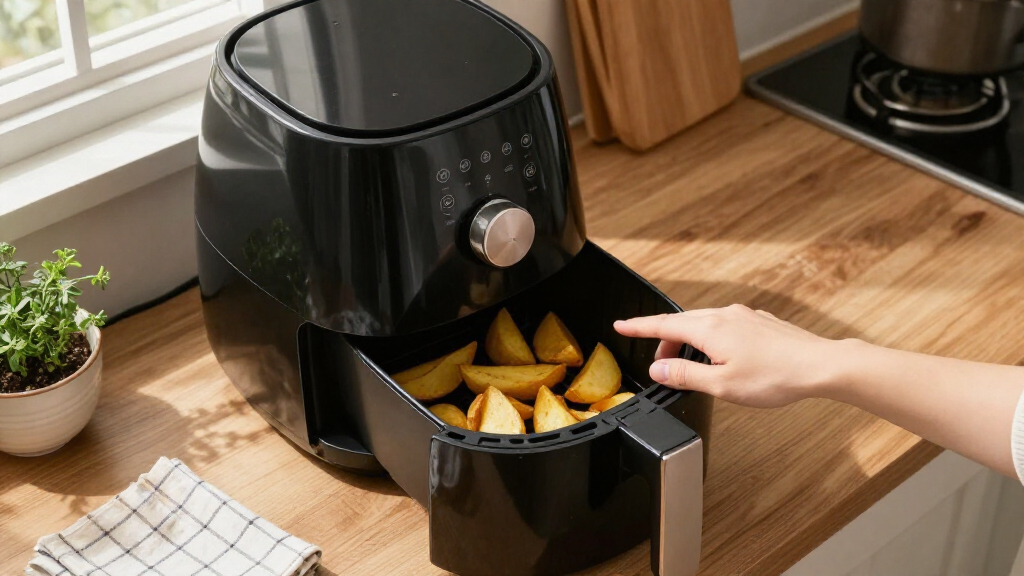
That difference shows up in an ordinary weeknight meal. A small handful of frozen fries may cook quickly, while a packed basket of thicker wedges may need more time and a shake halfway through. The button cannot tell that you doubled the portion or switched from thin fries to chunky potatoes.
Many models let you adjust the time and temperature before or during cooking. That flexibility matters: a preset offers a convenient first guess, and your eyes, recipe, and thermometer help you decide what happens next.
Products Worth Considering

KitchenAid Artisan Mini Tilt-Head Stand Mixer, 3.5 Quart, Aqua Sky Blue

Instant Pot InstantChill Ice Cream Maker with Rolled Ice Cream Plate, 2-Pint Capacity

Le Creuset Alpine Enameled Cast Iron Fondue Set, 2.5 qt., Nuit
As an affiliate, we earn on qualifying purchases.
Why a handful of useful presets can make cooking easier
Air fryers with multiple presets can shorten the learning curve by giving you a starting time and temperature without a separate search. If you have never cooked salmon in an air fryer, for instance, a fish setting can help you get started; you can then check the thickest part and adjust to your recipe and preferred texture.
Presets can also make an appliance feel less intimidating. A new owner might press a vegetable or reheat setting for a small side dish instead of guessing at every control. Some appliances offer several cooking modes in one compact unit, which can help with small portions that would feel excessive to bake in a full-size oven.
Air frying may use less added oil than deep frying, but the food and cooking method differ. A lightly oiled batch of potatoes can turn crisp around the edges without being immersed in hot oil; it will not have exactly the same texture or flavor as deep-fried chips. Nutrition also depends on ingredients, portions, and preparation—not the preset label.
There’s a tradeoff: more programs can mean more menu choices to scroll through. If you mostly cook frozen snacks and reheat leftovers, a simple machine with a few adjustable programs may serve you better than one with a crowded screen of specialized icons.
How to adapt a preset when the food or portion changes
- Start with the appliance manual or a reliable recipe. Use its time and temperature guidance as your reference, then select the closest preset if one fits.
- Leave room for hot air. Spread food in a loose layer where practical. A crowded basket can trap steam and leave the center of a pile soft.
- Check at the suggested time. Open the basket carefully and look for color and texture. Shake or turn food if the recipe or manual recommends it.
- Adjust in small steps. Add a few minutes if the food needs more browning, or reduce heat if thin pieces are darkening too fast.
- Check food safety when needed. For foods that need a safe internal temperature, use a food thermometer rather than trusting the preset.
This small routine turns a button into a flexible tool. For example, if you cook two chicken thighs instead of one, or start with pieces straight from the refrigerator, the suggested program may need adjustment. Thickness and quantity affect the result, even if the setting stays the same.
Follow the manufacturer’s instructions for preheating and suitable cookware. If the manual recommends preheating for a particular recipe, do it; if it does not, avoid assuming every dish needs it. Familiarity comes quickly: after a few batches, you’ll know whether your machine browns the edges early or needs a little more time.
Which air fryer features matter more than preset count
Air fryers with multiple presets are easier to shop for when you compare the features that affect everyday use: usable basket space, adjustable controls, cleaning, and fit on your counter. A long list of buttons does not tell you whether a basket can hold dinner without stacking food or whether you can change the time midway.
Advertised capacity may not equal practical cooking room. If you want fries with crisp edges, you may need to spread them out rather than fill every corner. Imagine cooking for two: a basket that fits a single layer of vegetables and chicken may be more useful than a larger-sounding model that crowds the food once a tray goes in.
| Feature | Why it matters | What to check |
|---|---|---|
| Preset selection | Gives you quick starting settings | Choose modes you will actually use |
| Adjustable controls | Lets you tailor a program to the food | Can you change time and temperature easily? |
| Capacity and shape | Affects how much food fits with airflow | Can your usual meal spread out comfortably? |
| Removable parts | Makes routine cleanup simpler | Check the manual for washing instructions |
| Counter footprint | Large or dual-basket units need more room | Measure your available space and storage |
Newer models may add dual baskets, separate cooking zones, finish-time synchronization, touchscreens, apps, or temperature probes. Those features can help if you often cook two foods at once, but they add controls, cost, and space needs. A smaller number of clear, adjustable programs can be the better fit.
How to get more even results from a preset
Air fryers with multiple presets cook more evenly when food has room for air to move around it. The fan needs a path through the basket; a dense mound of fries or overlapping vegetables can interrupt that flow and leave some pieces pale while the exposed ones brown quickly. In plain language: a crowded basket can make crisping patchy.
For a quick example, imagine reheating yesterday’s pizza. One or two slices with space around them may warm and crisp well; several slices stacked together will not heat the same way. Cook in batches when necessary, and use the appliance’s recommended method for shaking or turning food. A little extra time is often better than cramming every serving in at once.
Notice how thickness and starting temperature change what you see. Thin zucchini rounds can brown before a thick potato wedge cooks through. If a dish combines pieces of different sizes, cut them more evenly or remove the thinner pieces as they finish. A preset supplies a shared starting point, but it cannot erase those differences.
Fans create operating noise, and a new appliance may have an odor on first use. Follow the manual’s setup guidance, give the unit suitable ventilation, and keep the intake and exhaust clear. For liners, foil, or cookware, check the manual first; never let a loose liner block airflow or reach the heating element.
When presets can’t replace a thermometer or your oven
Air fryers with multiple presets cannot confirm food safety just because a timer has ended. A preset typically runs a suggested program; it may not sense whether the basket holds chicken, a frozen snack, or a second helping. Use a food thermometer for foods that need a safe internal temperature, and follow trusted food-safety guidance for the specific food.
That distinction is easy to picture on a busy evening. Your chicken pieces may look browned outside while a thick section needs more cooking. Check the thickest part with a thermometer; if it needs more time, continue cooking and check again rather than serving it because the display says the cycle is over.
An air fryer can handle some tasks that overlap with an oven or microwave, especially small portions, crisp reheating, or roasting a compact tray of vegetables. It does not offer the same capacity as a full oven, and its fan-driven heat behaves differently. A microwave remains convenient for quickly warming many soft or liquid foods; an oven is useful when you need more room.
Think of it as a useful specialist on your counter, not a universal replacement. If you regularly cook for a crowd or bake a large casserole, basket size may matter more than presets. If you want crunchy leftovers and quick sides, a compact model may earn its space.
How to decide whether a dual-basket model fits your routine
Air fryers with multiple presets may also come with dual baskets, which can help you cook two foods at different settings or coordinate their finish times. The feature is most useful when your meals naturally split into two jobs, such as crisping potatoes in one basket while cooking vegetables in the other. It is less compelling if you usually make one small snack.
Consider a family dinner with salmon and asparagus. Separate zones can make it easier to choose different cooking settings for each, and a synchronization feature may coordinate when the programs finish. But the machine still needs enough usable room, and the actual results depend on how the appliance circulates heat in each basket.
There are practical costs to weigh. Dual-zone machines take up more counter space, need storage room, and may require cleaning two baskets and trays. If your kitchen has a narrow counter, measure before shopping; a large appliance can become an awkward object you move every time you need to chop an onion.
Match the machine to your common meals, not the most impressive feature list. A single basket with simple controls may suit a couple reheating leftovers, while a larger household cooking separate portions may appreciate two zones. Check current product specifications and the care instructions before choosing, since features and cleaning rules vary by model.
Frequently Asked Questions
Are air fryer presets accurate?
Presets provide a suggested program, often a time and temperature, but results vary with portion size, thickness, starting temperature, and basket design. Check the food and adjust as needed; use a thermometer when safe internal temperature matters.
Do more presets mean a better air fryer?
Not necessarily. A handful of useful, adjustable programs may be easier to use than a long menu of narrow options. Compare usable capacity, control quality, cleaning instructions, and counter space too.
Can you cook frozen food with an air fryer preset?
Many air fryers can cook frozen foods, but the right method depends on the food and appliance. Follow the manual or a reliable recipe, leave room for airflow, and check that the food is done instead of relying only on the button label.
Do air fryers make food healthier?
Air frying can use less added oil than deep frying, but it does not automatically make every meal healthy. Ingredients, portions, and preparation still shape the overall nutrition, and air-fried food does not have exactly the same texture as deep-fried food.
Can you use foil or parchment paper in an air fryer?
Use foil, parchment, or other cookware only if the manufacturer allows it. A lightweight liner must stay secured beneath food and must not block airflow or touch the heating element; check your model’s instructions before use.
Are dual-basket air fryers worth the extra space?
They can be useful if you often cook two foods at different settings or want their programs to finish together. They also take up more counter space and add parts to clean, so weigh that convenience against how you usually cook.
Conclusion
Choose an air fryer for the space, controls, and cleanup you’ll use every week; let its presets provide a first guess. Spread food out, adjust for the portion, and check doneness rather than treating the timer as a verdict.
A good preset gets dinner moving. Your eyes, your thermometer, and a little breathing room in the basket bring it home.