Built-in microwaves behave differently because they’re designed for integration into cabinetry, making them more advanced and requiring specific installation, like cutting into cabinets and ensuring proper ventilation. They sit flush with your kitchen’s surfaces for a sleek look, but this means installation is more complex. Countertop models are portable, easy to set up, and don’t need modifications, though they can look bulky. To understand how these differences impact your space, explore the details further.

Get kitchen gear delivered free — and shop member deals
- Fast, free delivery on millions of items
- Access to Prime Big Deal Days deals on October 6–7
- Prime Video, Amazon Music and more included
Key Takeaways
- Built-in microwaves are integrated into cabinetry, which can affect airflow and heat dissipation, influencing their performance.
- Installation modifications and ventilation requirements for built-in models can impact their operational efficiency.
- Built-in units often have advanced technological features that may alter how they respond during use.
- Countertop models are more straightforward to use, with consistent performance due to direct placement and simpler setup.
- Differences in design and placement can influence how each type heats, cooks, and manages internal components during operation.
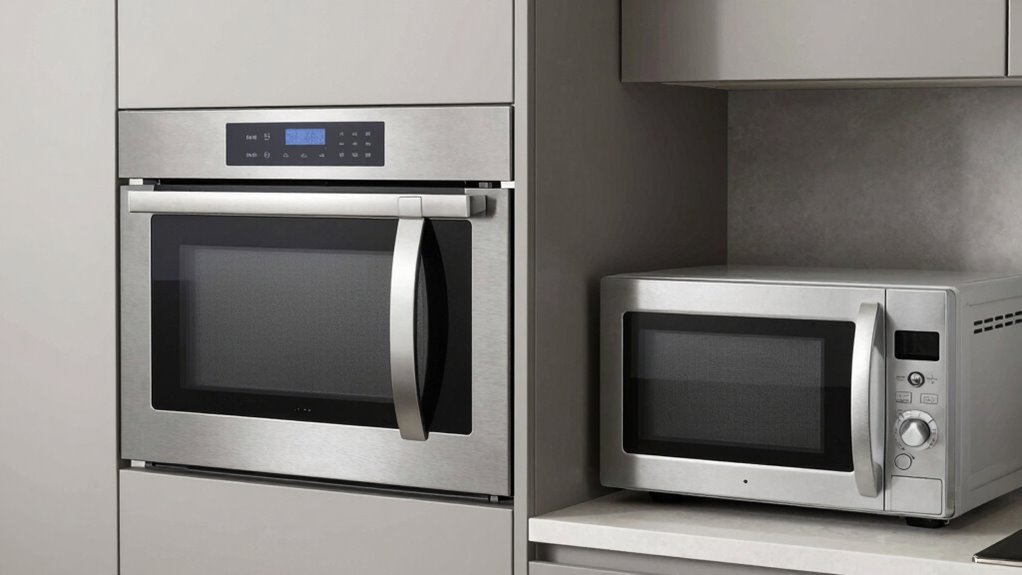
When choosing a microwave, your decision often boils down to whether you prefer a built-in model or a countertop one. Built-in microwaves are designed to integrate seamlessly into your kitchen cabinetry, offering a sleek, uniform look that enhances your kitchen aesthetics. They sit flush with cabinets and countertops, creating a clean, modern appearance. Countertop models, on the other hand, are portable and sit on your counter, which means they can be moved easily but may disrupt the visual flow of your space. If you prioritize a polished, cohesive look, a built-in microwave might be the ideal choice, but keep in mind that their installation process is more involved.
Choosing between built-in and countertop microwaves depends on your aesthetic preferences and installation preferences.
Installing a built-in microwave requires more effort and planning. You often need to modify cabinetry or create a dedicated space, which can involve cutting into your cabinets or walls. This adds to the installation complexity, often requiring professional help to ensure the unit fits precisely and is properly secured. Additionally, you must consider ventilation requirements, as built-in models typically need proper airflow to operate safely. This can mean installing vents or ensuring your cabinetry is designed to accommodate these needs, adding to the overall installation effort. In contrast, countertop models are straightforward to set up—just place them on your counter, plug them in, and you’re ready to go. No special modifications or professional installation are necessary, making them a convenient choice if you prefer simplicity.
Another aspect to consider is how each type affects your kitchen aesthetics. Built-in microwaves contribute to a streamlined look, making your kitchen appear less cluttered and more sophisticated. They blend into your cabinetry, which can elevate the overall design. Countertop models, while more flexible and easy to relocate, can sometimes look bulky or out of place if the space isn’t designed to accommodate them. They may also require you to keep the counter clear, which can impact your kitchen’s visual harmony. Furthermore, the installation process for built-in models can be a significant factor in your decision-making, especially if you prefer a hassle-free setup. It’s also worth noting that safety considerations such as proper installation can prevent potential hazards associated with improper ventilation or securing the unit correctly.
Ultimately, your choice depends on your priorities. If you value a clean, integrated appearance and are willing to handle the installation complexity, a built-in microwave is a smart investment. If you prefer flexibility and ease of setup, a countertop model might be better suited to your needs. Both options perform the same basic function, but their differences in installation and aesthetics can significantly influence how your kitchen feels and functions. Additionally, understanding the design integration options available can help you make a more informed decision that complements your overall kitchen style. Moreover, considering technological features like smart controls and energy efficiency can further influence your choice to match your lifestyle needs.
As an affiliate, we earn on qualifying purchases.
Frequently Asked Questions
Do Built-In Microwaves Consume More Energy Than Countertop Models?
Built-in microwaves generally don’t consume more energy than countertop models; their energy efficiency depends on the specific unit. While built-in models might have more powerful features, their overall power consumption is similar if they share the same wattage. Your focus should be on choosing energy-efficient models with lower wattage. Proper use and maintenance also help reduce power consumption, regardless of whether your microwave is built-in or countertop.
Can Built-In Microwaves Be Installed Without Professional Help?
You can install a built-in microwave without professional help if you’re comfortable with DIY projects, but be aware of installation challenges. It’s essential to follow the manufacturer’s instructions carefully to guarantee proper fitting and safety. Keep in mind that correct installation enhances aesthetic integration, making your kitchen look seamless. If you’re unsure about electrical connections or ventilation requirements, hiring a professional might be a smarter choice to avoid potential issues.
How Do Maintenance Requirements Differ Between Built-In and Countertop Microwaves?
When it comes to maintenance, built-in microwaves demand more attention due to installation challenges and ventilation considerations. You’ll need to regularly check for dust buildup around vents and guarantee proper airflow, unlike countertop models that are easier to clean and maintain. With a built-in, you’re walking a tightrope, making sure everything stays in top shape to avoid costly repairs. So, stay on your toes and keep up with routine checks.
Are Built-In Microwaves More Durable Than Countertop Models?
Built-in microwaves are generally more durable because they’re designed for permanent installation, which helps prevent accidental damage. However, installation challenges can arise, requiring precise fitting and proper electrical connections. You’ll also appreciate their aesthetic integration into your kitchen, giving a seamless look. While they may be more robust, careful installation is key to ensuring long-term durability, so consider professional help to avoid issues down the line.
What Safety Features Are Unique to Built-In Microwave Designs?
Built-in microwaves feature integrated safety measures like secure door latches and automatic shut-off systems that prevent accidents. Their installation complexity guarantees they’re properly fitted into cabinetry, reducing risks of electrical issues or tipping. Unlike countertop models, built-in designs often include venting systems for safe heat dissipation. These integrated safety features provide peace of mind, but they require professional installation to ensure all safety protocols are correctly followed.
countertop microwave with advanced features
As an affiliate, we earn on qualifying purchases.
As an affiliate, we earn on qualifying purchases.
Conclusion
Understanding the differences between built-in and countertop microwaves helps you make smarter choices. Did you know that built-in models can save up to 20% more energy compared to countertop ones? This efficiency boost means lower energy bills and less environmental impact. So, whether you want sleek design or energy savings, knowing these distinctions guarantees you pick the right microwave for your needs. Make your kitchen smarter by choosing the model that fits your lifestyle perfectly.
As an affiliate, we earn on qualifying purchases.
As an affiliate, we earn on qualifying purchases.
Fall Picks
fall essentials
As an affiliate, we earn on qualifying purchases.