In your kitchen, chamber sealers are great if you process large quantities, especially liquids or moist foods, thanks to their thorough sealing and professional features. Edge sealers work well for smaller batches, dry foods, and kitchens with limited space, offering quick, simple operation. Consider your volume, food types, and available space to decide. To discover which sealer fits your needs best, keep exploring the differences and benefits each type offers.

Get kitchen gear delivered free — and shop member deals
- Fast, free delivery on millions of items
- Access to Prime Big Deal Days deals on October 6–7
- Prime Video, Amazon Music and more included
Key Takeaways
- Chamber sealers are ideal for liquids and moist foods due to controlled vacuuming, while edge sealers suit dry items like grains and herbs.
- Larger, more expensive, chamber sealers are better for high-volume, professional kitchen use; edge sealers fit small, casual kitchens.
- Chamber models offer multiple sealing modes and better preservation for delicate or liquid foods; edge sealers are quick and simple for small batches.
- Space and cost considerations make edge sealers more practical for limited kitchens, whereas chamber sealers are suitable for extensive food processing.
- Both improve food shelf life, but the choice depends on kitchen size, type of food, processing volume, and desired features.
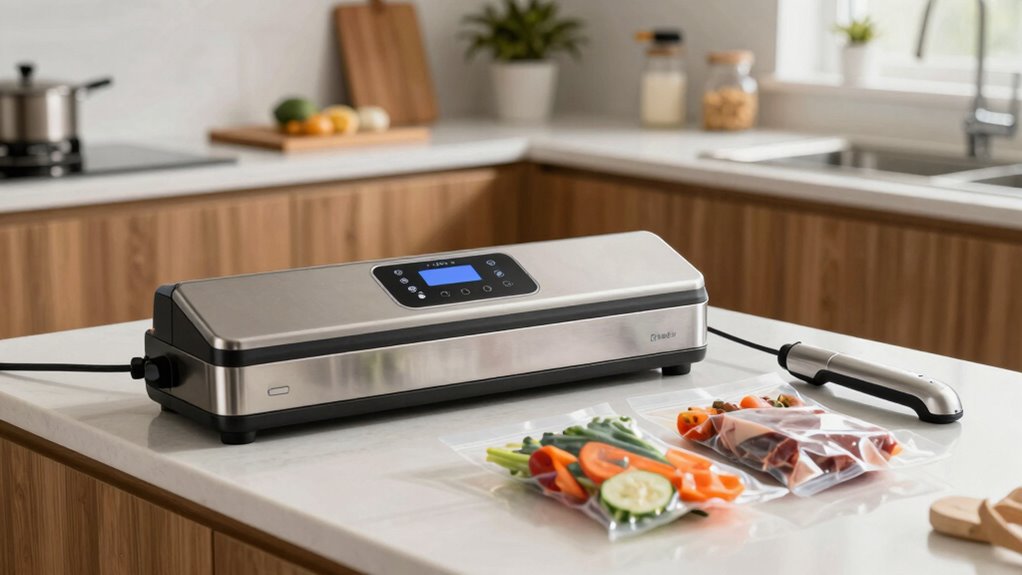
When it comes to preserving food at home, choosing the right vacuum sealer can make a significant difference. Whether you’re aiming to extend shelf life or streamline your meal prep, the type of sealer you select impacts your overall kitchen efficiency. Two popular options are chamber vacuum sealers and edge sealers, each with their own advantages and limitations. Understanding how they differ can help you decide which one best suits your needs.
Chamber vacuum sealers are often seen as the professional-grade choice, but they’re also gaining popularity among home cooks who prioritize food preservation. These units work by placing the entire bag inside a sealed chamber, removing air from the space before sealing the bag. This method ensures a more thorough vacuum, especially useful for liquids or moist foods, preventing leaks and spoilage. Because they create a controlled environment, chamber sealers typically produce a more consistent seal, which improves food preservation over time. They also offer better color fidelity and the ability to seal delicate foods without crushing them. Additionally, the controlled vacuum process can help prevent the crushing of fragile items, which is an important consideration for preserving the integrity of certain foods. Furthermore, they often include features that allow for multiple sealing modes, enhancing their versatility for different types of foods. However, they tend to be larger, heavier, and more expensive, making them less ideal for small kitchens or casual users. Still, if you process large quantities of food regularly, their efficiency can justify the investment.
Chamber vacuum sealers offer a professional-grade, thorough seal ideal for liquids and large quantities, though they are larger and costlier.
Edge sealers, on the other hand, are more compact and user-friendly. They work by sealing the bag’s open edge, then removing air with a vacuum pump. These are perfect for quick sealing tasks, small batches, or occasional use. Their smaller footprint makes them a good fit for kitchens with limited space. While edge sealers excel in convenience, they may struggle with liquids or moist foods because the seal isn’t as controlled as with chamber models. When it comes to food preservation, they do a solid job with dry foods like grains, nuts, or dried herbs. Additionally, some models feature built-in cutters, making it easier to prepare bags of various sizes. However, if you’re sealing items with liquids or want to maximize freshness, edge sealers might fall short, leading to potential spoilage or leaks.
Ultimately, your choice depends on your kitchen habits and priorities. If you process large amounts of food regularly and want optimal food preservation, a chamber vacuum sealer could be the best investment, boosting your kitchen efficiency by reducing waste and extending shelf life. If you prefer quick, simple sealing for smaller quantities or dry foods, an edge sealer offers convenience without taking up much space. Both types can improve your food preservation efforts, but understanding their differences ensures you pick the right tool for your specific needs.
chamber vacuum sealer for liquids
As an affiliate, we earn on qualifying purchases.
As an affiliate, we earn on qualifying purchases.
Frequently Asked Questions
Which Sealer Is More Energy-Efficient for Daily Use?
A chamber vacuum sealer is generally more energy-efficient for daily use because it uses less power over time compared to edge sealers. When considering cost comparison, chamber sealers may have higher upfront costs but save energy in the long run. Additionally, they tend to operate more quietly, reducing noise levels. Overall, if energy efficiency and quieter operation matter, a chamber vacuum sealer is the better choice for daily kitchen use.
How Do Maintenance Requirements Differ Between the Two Sealer Types?
Maintenance matters more with chamber vacuum sealers because they require regular cleaning of complex components to guarantee sealing consistency and machine durability. Edge sealers, being simpler, need less frequent upkeep, mainly focusing on replacing seals and cleaning surfaces. You’ll find chamber sealers demand detailed disassembly and diligent diligence, while edge sealers offer easier, quicker upkeep. Proper maintenance preserves sealing consistency and prolongs machine durability for both, but chamber sealers require more meticulous maintenance.
Can Chamber Sealers Handle Large or Irregularly Shaped Items?
Yes, a vacuum chamber sealer can handle large or irregularly shaped items effectively. Its vacuum chamber design allows you to place bigger or oddly shaped items inside without issues. Unlike edge sealers, which require a flat, consistent surface, chamber sealers create a strong, uniform seal around irregular shapes, making them ideal for sealing bulky or uneven items securely. This flexibility helps you preserve a variety of foods with ease.
Are There Specific Food Types Better Suited for Edge Sealers?
Yes, edge sealers are especially good for food preservation with delicate or irregularly shaped items. They excel in providing packaging versatility, allowing you to seal various foods like baked goods, cheeses, or sliced meats quickly. Edge sealers are ideal when you need fast, efficient sealing without the need for a chamber, making them perfect for everyday kitchen tasks and maintaining freshness in a variety of food types.
What Is the Typical Lifespan of Each Sealer in a Home Kitchen?
In your home kitchen, chamber vacuum sealers typically last 8-10 years, thanks to their durable construction and slower sealing speed, which reduces wear. Edge sealers usually last around 5-7 years, as their faster sealing speed can cause more wear over time. Noise levels are higher with edge sealers, but their lifespan remains shorter. Proper maintenance can extend both sealers’ longevity, ensuring efficient sealing for years.
compact edge vacuum sealer for small kitchens
As an affiliate, we earn on qualifying purchases.
As an affiliate, we earn on qualifying purchases.
Conclusion
Choosing between chamber vacuum sealers and edge sealers is like picking the right tool for your kitchen’s symphony. Both have their unique melodies—chamber sealers offering a deep, resonant bass for preserving bulk, while edge sealers provide a quick, sharp note for everyday needs. Think of it as assembling your culinary orchestra; having both guarantees your food stays fresh and your kitchen runs smoothly. Whichever you choose, you’re conducting your kitchen’s preservation masterpiece with confidence.
professional-grade chamber vacuum sealer
As an affiliate, we earn on qualifying purchases.
As an affiliate, we earn on qualifying purchases.
small food vacuum sealer for herbs and grains
As an affiliate, we earn on qualifying purchases.
As an affiliate, we earn on qualifying purchases.
Fall Picks
fall essentials
As an affiliate, we earn on qualifying purchases.