Convection steam ovens combine steam and convection heat to cook foods quickly while keeping them moist and flavorful, making them versatile for baking, reheating, and healthier meals. Standard convection ovens rely only on hot air, perfect for roasting and crisping but without added moisture. If you’re looking for energy efficiency, better nutrient retention, and more cooking options, a convection steam oven is a smart choice. Explore further to discover which option suits your kitchen needs best.

Get kitchen gear delivered free — and shop member deals
- Fast, free delivery on millions of items
- Access to Prime Big Deal Days deals on October 6–7
- Prime Video, Amazon Music and more included
Key Takeaways
- Convection steam ovens combine steam and convection heat for moist, faster cooking, while standard ovens rely solely on hot air for dry heat.
- Steam ovens excel at baking delicate items and reheating without drying out food, unlike standard ovens that produce crisp textures.
- Convection steam ovens generally use less energy and can cook multiple dishes simultaneously, increasing efficiency.
- Standard convection ovens are simpler to operate and better suited for roasting and baking with dry heat.
- Steam ovens improve food quality by retaining nutrients and moisture, whereas standard ovens offer crispness and browning.
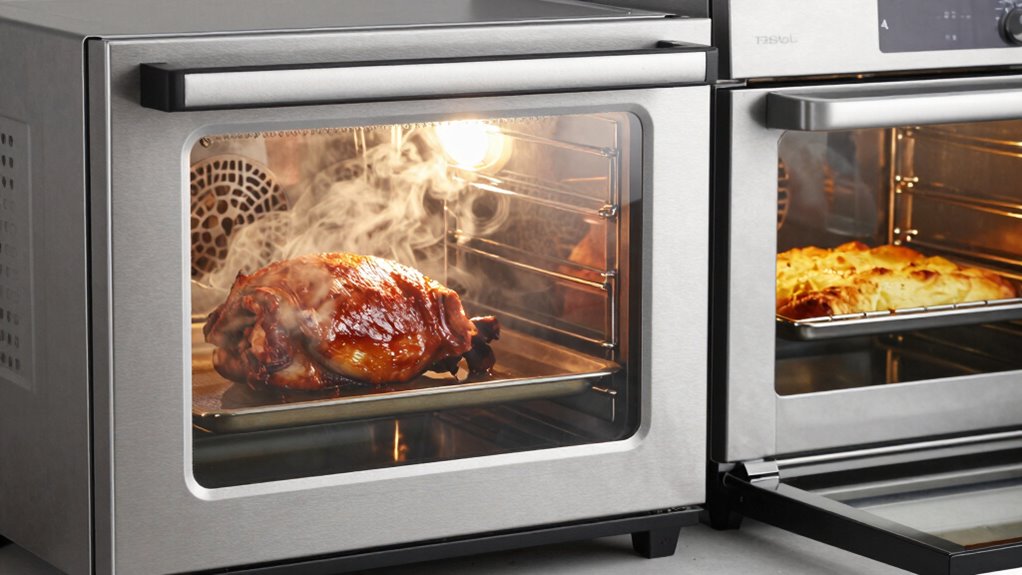
When choosing a new oven, understanding the differences between convection steam ovens and standard convection ovens can considerably impact your cooking experience. Both appliances use fans to circulate hot air, but their core functions differ, influencing energy efficiency and cooking versatility. Convection steam ovens combine steam with convection heat, allowing you to cook with moist heat, which can lead to faster cooking times and better retention of nutrients. This combination makes them particularly suitable for moist heat cooking, which enhances dish quality. This means fewer energy cycles are needed to achieve perfect results, making them more energy-efficient over time. In contrast, standard convection ovens rely solely on hot air circulating within the chamber. While they tend to consume more energy, they excel at creating dry heat environments suitable for baking and roasting, offering a different kind of cooking versatility. Additionally, the steam feature can help reduce cooking odors and humidity in your kitchen, adding to their appeal.
Your choice affects not just energy bills but also the variety of dishes you can prepare. Convection steam ovens shine when it comes to baking delicate items like bread and pastries, as the moisture prevents them from drying out. They also excel at reheating leftovers without sacrificing texture, which isn’t as easily achieved with dry heat ovens. The added steam feature expands your cooking options, allowing you to prepare healthier meals with less oil since moisture helps foods retain their natural flavors and nutrients. On the other hand, standard convection ovens are better suited for roasting meats and baking cookies or pies, where dry heat creates crisp exteriors and tender interiors. They’re also generally more straightforward to operate, making them a good choice if you prefer simplicity or need an oven that handles a broad range of traditional cooking tasks.
Another consideration is how each oven type impacts your kitchen’s energy consumption over time. Convection steam ovens tend to use less energy per cooking cycle because they cook faster and often require lower temperatures. Their ability to cook multiple dishes simultaneously without sacrificing quality adds to their efficiency. Conversely, standard convection ovens might consume more energy, especially for longer cooking times, but they make up for it with their proven versatility and familiarity. Ultimately, your decision should hinge on the kinds of dishes you prepare most often and your priorities regarding energy savings and cooking flexibility. Having a clear understanding of energy efficiency and how each oven type performs can help you make a more informed choice for your kitchen needs.
As an affiliate, we earn on qualifying purchases.
Frequently Asked Questions
How Does Cleaning Differ Between Convection Steam and Standard Convection Ovens?
You’ll find cleaning differs quite a bit: convection steam ovens use steam cleaning, which softens residues with residual moisture, making it easier to wipe away grime. You just add water and run a cleaning cycle. Standard convection ovens usually require manual scrubbing and chemical cleaners. Steam cleaning reduces the effort needed, keeps the oven more hygienic, and minimizes harsh chemical use, making maintenance more straightforward and eco-friendly.
Can Convection Steam Ovens Bake as Well as Traditional Ovens?
Yes, convection steam ovens can bake as well as traditional ovens, often with better baking precision. Their steam feature helps retain moisture, ensuring your baked goods stay tender and flavorful. You can achieve crispy crusts and evenly baked items, thanks to consistent heat circulation combined with steam. This makes convection steam ovens a versatile choice for baking, especially when moisture retention and precision are important for your recipes.
Are Convection Steam Ovens Suitable for All Types of Baking?
Convection steam ovens are suitable for a wide range of baking, thanks to their baking versatility and moisture retention. You can bake bread, cakes, and pastries with great results, as the steam keeps baked goods moist and tender. While they excel at certain tasks, they might not replace traditional ovens for very specific baking needs. Overall, they offer a flexible, moist baking environment perfect for everyday use.
What Are the Energy Consumption Differences Between the Two Oven Types?
You’ll notice that convection steam ovens typically use less energy because they combine steam with lower temperatures, which improves energy efficiency. Standard convection ovens tend to consume more power since they rely solely on dry heat and often require longer cooking times. If you’re aiming to reduce power usage, a convection steam oven can be a more energy-efficient choice, helping you save on electricity while still delivering great results.
Do Convection Steam Ovens Require Special Installation or Space Considerations?
Think of your kitchen as a stage where your oven takes center spotlight. Convection steam ovens often require special installation requirements, like dedicated electrical outlets and proper ventilation. Space considerations are vital—they tend to be larger or need clearance for steam release. Before bringing one home, measure your space carefully and check installation needs to guarantee your new culinary partner fits seamlessly into your kitchen’s rhythm.
As an affiliate, we earn on qualifying purchases.
Conclusion
Choosing between convection steam and standard convection ovens is like picking between a gentle rain and a fiery sun—each has its own magic. If you crave moist, tender dishes with a touch of elegance, the steam oven’s your loyal partner. But if you prefer crisp, golden perfection, the traditional convection oven’s your trusty flame. Whichever you choose, you’re revealing a world of culinary adventure—your kitchen’s new best friend waiting to turn your cooking dreams into reality.
best convection steam oven for home
As an affiliate, we earn on qualifying purchases.
As an affiliate, we earn on qualifying purchases.
energy-efficient convection oven
As an affiliate, we earn on qualifying purchases.
As an affiliate, we earn on qualifying purchases.
Fall Picks
fall essentials
As an affiliate, we earn on qualifying purchases.