
Home freeze dryers use advanced vacuum and sublimation technology to remove moisture, preserving your food’s flavor, nutrients, and texture much better than dehydrators. While dehydrators rely on heat and airflow, freeze dryers operate at low temperatures, preventing nutrient loss and maintaining original taste. They produce lightweight, rehydratable foods that closely resemble fresh. If you want to discover how these technologies differ even more, keep exploring the details behind each option.
Key Takeaways
- Freeze dryers use sublimation under vacuum, removing moisture without heat, unlike dehydrators that rely on low heat and airflow.
- Freeze drying preserves flavors, nutrients, and enzymes more effectively than dehydration, which can cause nutrient loss.
- Freeze-dried foods rehydrate quickly and retain near-original texture; dehydrated foods tend to be chewier and less similar to fresh.
- Freeze dryers are more expensive, complex, and require specialized technology, while dehydrators are affordable and easier to operate at home.
- Freeze drying is ideal for flavor and nutrient preservation, whereas dehydrators are practical for long-term, budget-friendly storage.
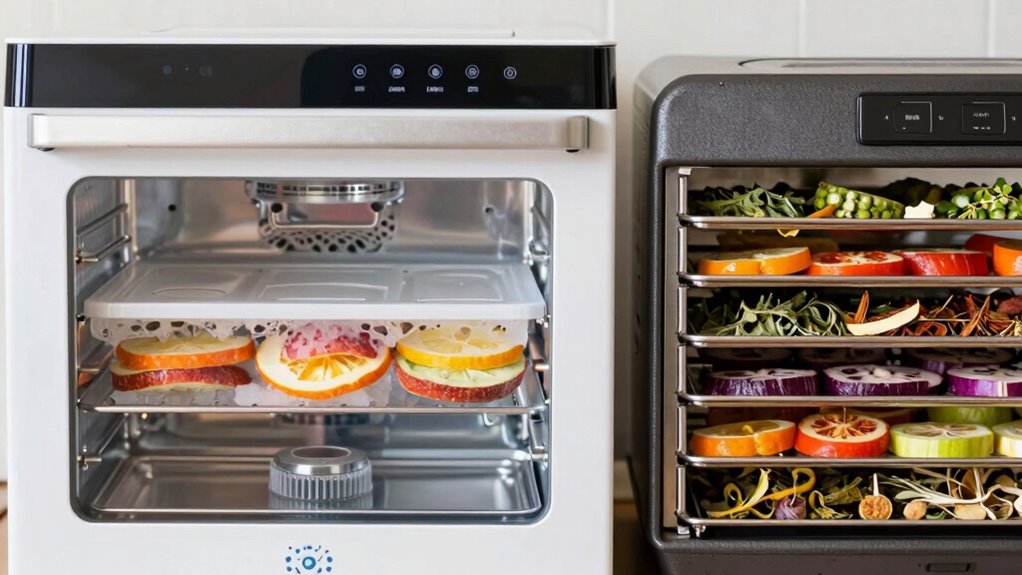
When it comes to preserving your food at home, choosing between a freeze dryer and a dehydrator can seem intimidating, but understanding their differences helps you make an informed decision. Freeze dryers and dehydrators both serve the purpose of extending the shelf life of your food, but they do so through very different processes. As you consider which appliance suits your needs, it’s important to understand how each impacts flavor preservation and nutrient retention. Freeze drying uses a process called sublimation, where the food is frozen solid and then the moisture is removed directly from ice to vapor under a vacuum. This method preserves the original flavors more effectively because it prevents the breakdown of delicate compounds that occur during dehydration. The result is food that tastes closer to its fresh state, making freeze dryers ideal if you want to maintain the natural flavor profile.
Freeze drying preserves natural flavors by removing moisture through sublimation, keeping foods tasting closer to fresh.
In contrast, dehydrators work by removing moisture through low heat and airflow, which can sometimes alter the taste and texture of your food. The heat involved in dehydration may cause some loss of flavor and nutrients, especially sensitive vitamins like vitamin C and certain antioxidants. If preserving the maximum nutritional value is a priority, freeze drying generally offers superior nutrient retention since it operates at low temperatures and minimizes heat damage. You’ll find that freeze-dried foods often contain higher levels of vitamins and enzymes compared to dehydrated options. Additionally, the specialized technology used in freeze drying allows for better preservation of enzymes, which are often destroyed during dehydration.
Another key difference lies in the texture and rehydration capabilities. Foods processed with a freeze dryer tend to be lightweight, crisp, and easy to rehydrate, making them suitable for camping meals, emergency food supplies, or gourmet snacks. Dehydrated foods, while also lightweight, often have a chewier or leathery texture and may require longer rehydration times. If you want food that reconstitutes quickly and retains a closer to original consistency, freeze drying has the edge. However, dehydrators are typically more affordable, simpler to operate, and require less maintenance, making them a popular choice for everyday home use.
Ultimately, your choice depends on what you value most. If you prioritize flavor and nutrient retention and don’t mind the higher initial investment, a home freeze dryer offers a premium preservation method. On the other hand, if you want a straightforward, budget-friendly device that still extends your food’s shelf life, a dehydrator might be more suitable. Both appliances have their strengths, but understanding these differences helps you pick the right tool for your food preservation goals.
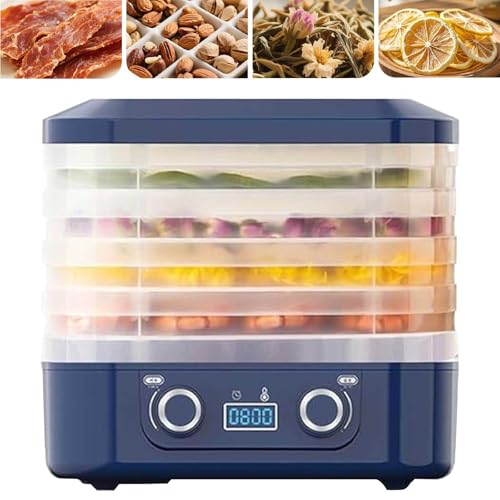
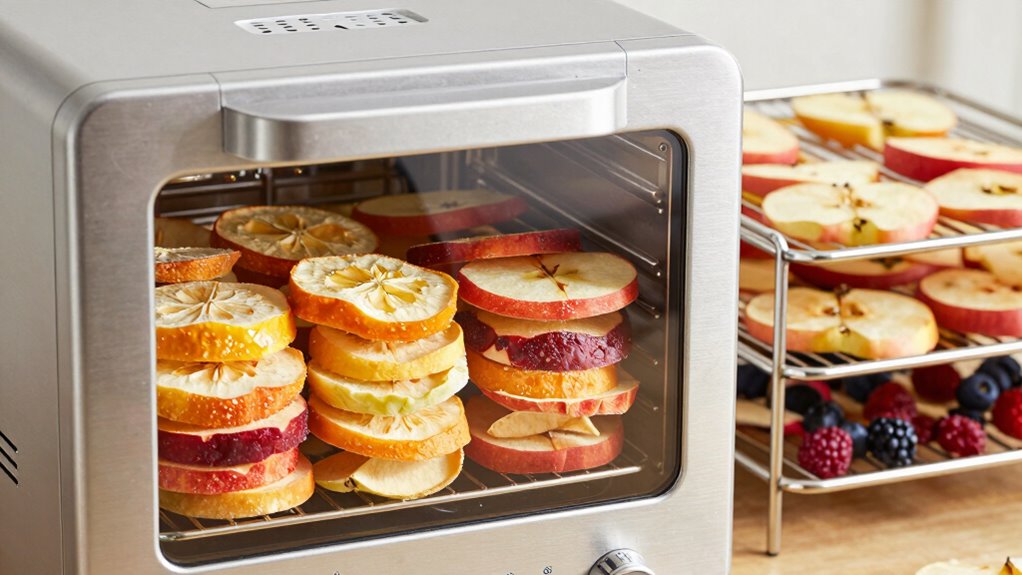
Freeze Dryers Small Home Use with 5 Trays, Freeze Dry Machine with Double Knob, Adjustable Temperature, Low Noise, for Fruits Meat Vegetables Snacks
- Long-Lasting Snacks: Preserves nutrients and flavor for months
- Adjustable Timer and Temperature: Up to 48 hours with dual knobs
- Easy to Clean: Detachable trays for effortless cleaning
As an affiliate, we earn on qualifying purchases.
As an affiliate, we earn on qualifying purchases.
Frequently Asked Questions
Can Freeze Dryers Preserve Nutrients Better Than Dehydrators?
Yes, freeze dryers preserve nutrients better than dehydrators because they maintain higher nutrient retention and vitamin preservation. Freeze drying’s low temperatures prevent nutrient loss during processing, unlike dehydration, which exposes food to heat that can degrade vitamins and other nutrients. As a result, your preserved foods retain more of their original nutritional value, making freeze dryers a better choice if you’re focused on maintaining the health benefits of your foods.
Are Freeze Dryers Suitable for All Types of Foods?
Yes, freeze dryers are suitable for most types of foods, but you should consider food texture and storage requirements. Freeze dryers excel at preserving delicate textures like fruits and herbs, maintaining their shape and flavor. However, they might not be ideal for foods with high fat content or those needing specific storage conditions. Overall, they offer versatile preservation, but understanding each food’s needs guarantees the best results.
How Loud Are Home Freeze Dryers During Operation?
Home freeze dryers tend to be quite loud during operation, with noise levels comparable to a loud vacuum or a hairdryer. You’ll hear operational sounds like compressor hums and fans running constantly. If you’re sensitive to noise, you might want to place your freeze dryer in a separate room or use noise-reducing measures. Keep in mind, the noise is temporary and essential for the freeze-drying process.
What Is the Typical Energy Consumption Difference?
Home freeze dryers typically consume more energy than dehydrators because they use powerful refrigeration cycles and vacuum systems, making them less energy-efficient. While dehydrators mainly rely on heating elements, freeze dryers require significant power for the freezing and sublimation processes. You’ll notice higher power usage with freeze dryers, but many find the improved preservation quality worth the extra energy consumption, especially if you prioritize efficiency and better shelf life.
Do Freeze Dryers Require Special Storage for Finished Products?
Yes, freeze dryers often require specialized storage solutions for finished products. You should consider packaging considerations like airtight containers or vacuum-sealed bags to protect the freeze-dried items from moisture and air. Proper storage helps maintain the product’s texture, flavor, and shelf life. Additionally, storing in a cool, dry place guarantees the freeze-dried goods stay fresh longer, preventing spoilage and preserving quality over time.
As an affiliate, we earn on qualifying purchases.
Conclusion
Think of freeze dryers as the seasoned sailors steering icy waters, preserving treasures with precision and care, while dehydrators are the steady rowers, gently drying your bounty over time. Both get your food ready for adventure, but each has its own rhythm and purpose. Whether you seek the crisp clarity of freeze-dried wonders or the warm, gentle hug of dehydrated treats, understanding their dance helps you choose your journey. Your kitchen’s voyage starts here—ready to set sail?
As an affiliate, we earn on qualifying purchases.
dehydrator with temperature control
As an affiliate, we earn on qualifying purchases.
As an affiliate, we earn on qualifying purchases.