
More home cooks are paying attention to oven heat distribution because it affects how evenly your baked goods turn out. Uneven heat causes problems like burnt edges, undercooked centers, and inconsistent results. By understanding your oven’s hot spots and using proper tools or techniques, you can improve your baking success. A well-balanced oven helps you achieve professional-quality dishes every time. Keep exploring to discover how you can optimize your baking results even further.

Get kitchen gear delivered free with Prime
- Fast, free delivery on millions of items
- Prime Video, Amazon Music and more included
- Member-only deals all year
Key Takeaways
- Consistent heat distribution ensures evenly baked goods, improving overall cooking results and presentation.
- Better oven calibration reduces trial-and-error, saving time and ingredients.
- Modern ovens with advanced features like convection fans promote uniform heat flow.
- Identifying and addressing hot spots helps home cooks achieve professional-quality dishes.
- Monitoring oven temperature enhances reliability and confidence in baking outcomes.
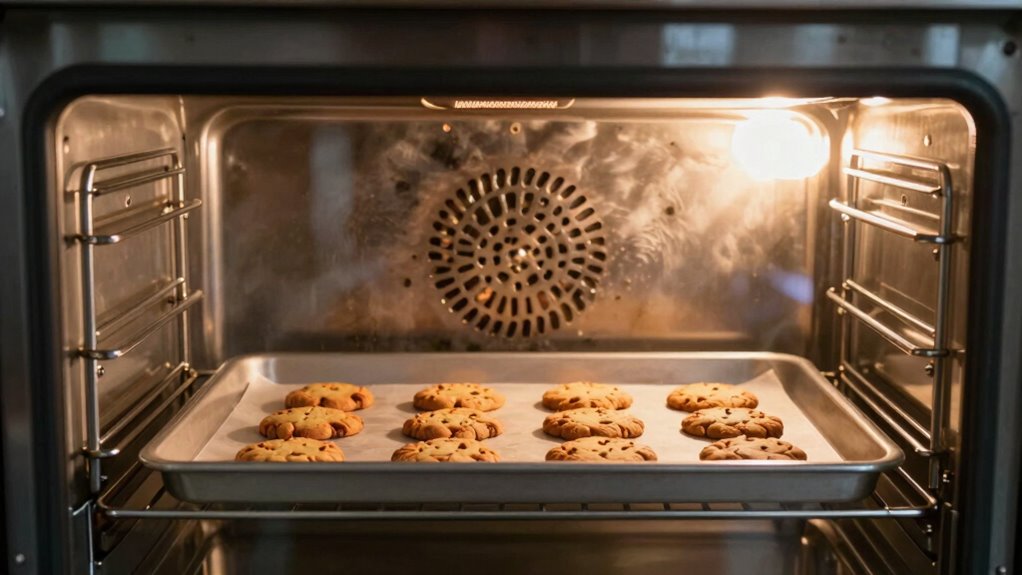
Have you ever wondered why your baked goods turn out uneven or why some parts of your dish cook faster than others? The answer often lies in oven heat distribution. Many home cooks notice inconsistent results, and that’s usually because their oven isn’t providing even heat. Achieving consistent baking, or baking consistency, depends heavily on how well your oven distributes heat during cooking. When heat isn’t evenly spread, some areas get hotter than others, leading to uneven browning, undercooked centers, or burnt edges. This inconsistency can be frustrating, especially when you’re aiming for professional-looking, perfectly cooked dishes.
Uneven heat causes inconsistent baking results and frustration in achieving perfect dishes.
One common cause of uneven heat is improper oven calibration. Your oven’s thermostat may not accurately reflect the actual temperature inside, which means you set it to a certain degree but the oven might be hotter or cooler. Over time, ovens can drift out of calibration, especially if they haven’t been serviced or tested recently. Without proper calibration, your oven’s heat distribution becomes unpredictable, making it difficult to replicate successful recipes or achieve consistent results. That’s why more home cooks are paying closer attention to oven calibration—they want to ensure that the temperature they set matches the temperature inside, leading to better baking consistency.
Understanding how your oven distributes heat can help you troubleshoot problems. Many modern ovens feature convection fans that circulate hot air, which improves heat distribution and can help achieve more uniform baking. If your oven doesn’t have this feature, you might need to rotate baking trays midway through cooking or adjust rack placement to compensate for hot spots. You can also perform simple tests, like placing slices of bread or cookies on different parts of the oven to see how they bake. This way, you’ll identify hot or cold spots and learn how to adjust your cooking process accordingly. Additionally, proper oven placement can significantly influence heat distribution and baking results. Being aware of hot spots can help you strategize your baking approach more effectively.
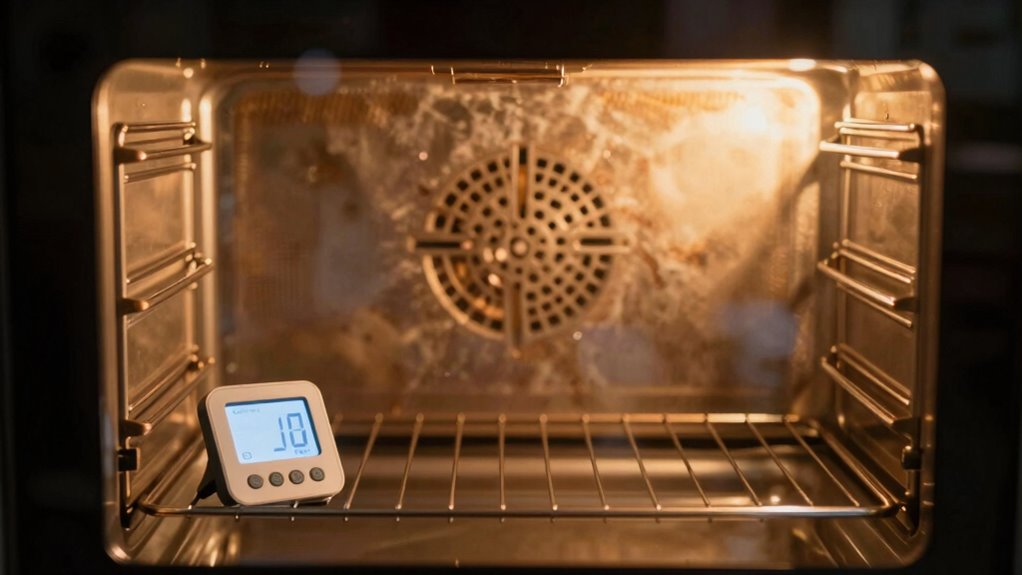
Using a quality oven thermometer can also reveal discrepancies in your oven’s actual temperature versus what is displayed, further assisting in diagnosing heat distribution issues. Regular calibration checks ensure your oven maintains proper heat levels, which is crucial for achieving consistent outcomes. When your oven is properly calibrated and your heat distribution is even, you’ll notice improvements in your baking consistency. Your cakes will rise uniformly, cookies will bake evenly, and roasts will cook thoroughly without burning on the edges. Understanding oven heat patterns can empower home cooks to modify their techniques and improve overall results.
In the end, paying attention to oven heat distribution and calibration isn’t just about precision; it’s about elevating your baking game. When you understand and control your oven’s heat, you gain confidence in your cooking, produce better results, and enjoy the process more. It’s a small adjustment that can make a significant difference in your culinary creations.
As an affiliate, we earn on qualifying purchases.
Frequently Asked Questions
How Can I Test My Oven’s Heat Distribution Accuracy?
To test your oven’s heat distribution accuracy, start with baking temperature calibration by placing an oven thermometer inside. Run a test by heating your oven to a specific temperature, then check if the thermometer reads the same. For more detailed results, perform oven heat mapping by measuring temperature at different spots. This helps you identify hot spots and guarantees your oven heats evenly, improving your cooking outcomes.
Are Convection Ovens Better for Even Heat Distribution?
Yes, convection ovens are better for even heat distribution, enhancing your baking performance and culinary precision. The fan and exhaust system circulate hot air around your food, eliminating hot spots and ensuring consistent results. This means your baked goods come out evenly cooked, with better texture and color. If you want reliable, professional-quality baking at home, a convection oven helps you achieve more consistent and precise culinary results.
What Tools Help Measure Oven Temperature Consistency?
Think of your oven as a symphony—each instrument, or tool, needs perfect tuning. To measure oven temperature consistency, use tools like an oven thermometer or infrared thermometer. These instruments guarantee baking accuracy and help with temperature calibration, preventing hot spots or uneven heat. Regularly checking your oven’s temperature with these tools keeps your cooking precise and reliable, transforming your kitchen into a well-orchestrated culinary performance.
How Does Oven Age Affect Heat Distribution?
As your oven ages, heat unevenness often increases due to wear and tear on components like heating elements and sensors. You might notice hot spots or inconsistent baking, which can be fixed through proper oven calibration. Over time, calibration drifts, leading to uneven heat distribution. Regular maintenance and calibration help restore even heat, ensuring your baked goods turn out perfectly and preventing costly repairs caused by neglecting heat unevenness.
Can Uneven Heat Distribution Impact Food Safety?
Uneven heat distribution is like a stormy sea, risking food safety. If your oven creates cold spots, you might unknowingly leave bacteria alive, increasing foodborne risks. For example, undercooked chicken in cold patches can harbor pathogens, leading to cross contamination concerns. This uneven cooking jeopardizes not just taste but safety, making it essential to guarantee your oven heats evenly to prevent bacteria survival and protect your health.
As an affiliate, we earn on qualifying purchases.
Conclusion
So, next time you step into your kitchen, remember that understanding your oven’s heat distribution isn’t just a detail—it’s the secret weapon to culinary greatness. Master this, and you’ll turn every dish into a masterpiece that wows even the most discerning palate. It’s like having a personal sous-chef whispering secrets of perfect baking and roasting in your ear. Embrace it, and watch your kitchen transform into the domain of culinary legends.
As an affiliate, we earn on qualifying purchases.
As an affiliate, we earn on qualifying purchases.
Halloween Picks
halloween
As an affiliate, we earn on qualifying purchases.