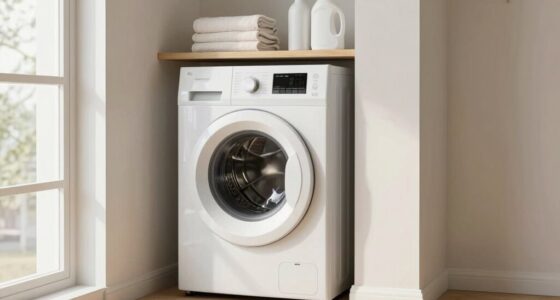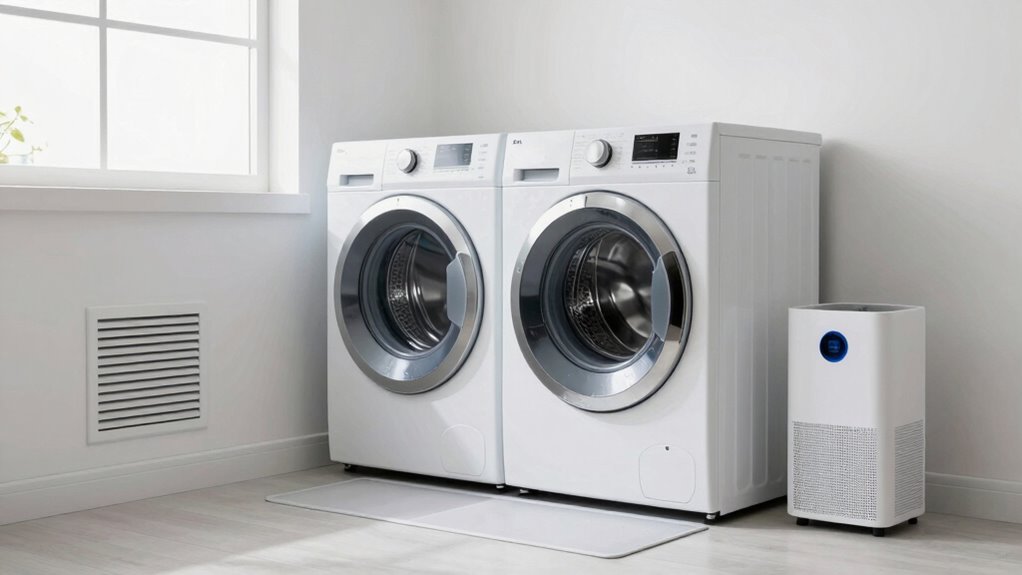

To avoid moisture problems around your laundry appliances, guarantee proper ventilation by running exhaust fans or installing outdoor vents, especially after laundry loads. Use dehumidifiers and moisture absorbers to maintain ideal humidity levels and prevent mold growth. Keep spaces organized, wipe down surfaces regularly, and check that dryer vents and washer hoses are secure and clean. Position appliances away from poorly ventilated areas. Keep moisture control tools accessible, and you’ll create a healthier, drier environment. Explore more tips to protect your space.

Get kitchen gear delivered free — and shop member deals
- Fast, free delivery on millions of items
- Access to Prime Big Deal Days deals on October 6–7
- Prime Video, Amazon Music and more included
Key Takeaways
- Ensure proper ventilation with functioning exhaust fans or vents during and after laundry loads.
- Use moisture-absorbing materials like silica gel or desiccant packs in high-humidity areas.
- Maintain optimal humidity levels (30-50%) with dehumidifiers to prevent mold and dampness.
- Position appliances away from exterior walls and ensure dryer vents are clean and unobstructed.
- Keep the laundry area organized, wipe surfaces regularly, and monitor moisture levels for ongoing prevention.
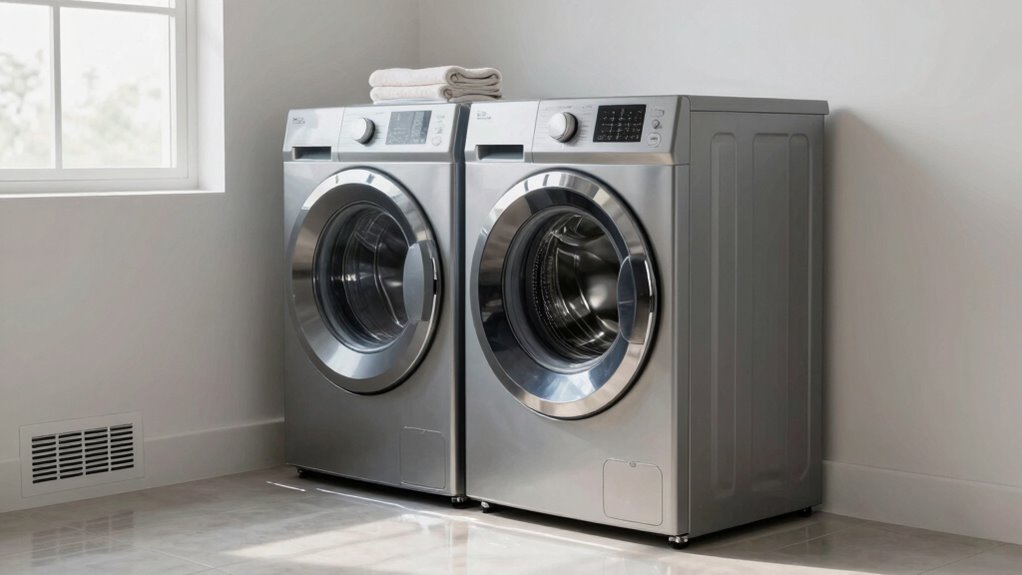
Moisture problems around laundry appliances can lead to mold, mildew, and structural damage if not addressed promptly. To prevent these issues, you need to focus on proper ventilation strategies. Good airflow is your first line of defense. Ensure your laundry area has an exhaust fan or A/C vent that’s functioning correctly. If your laundry space lacks windows, consider installing an exhaust fan that vents outdoors. Running this fan during and after laundry loads helps remove excess humidity from the air. Additionally, keep doors open after laundry cycles to promote air circulation. Using ceiling or wall-mounted fans can also help move air around the room, reducing moisture buildup.
Another effective approach involves incorporating moisture absorbing materials into your laundry area. These materials, like desiccant packs or silica gel containers, can be placed in corners or shelves where moisture tends to accumulate. They absorb excess humidity, maintaining a more balanced environment. If your laundry room is prone to high humidity, you might also consider a dehumidifier. Modern units are compact, energy-efficient, and easy to operate. Set it to maintain ideal humidity levels, ideally between 30% and 50%, to inhibit mold growth and prevent dampness. Proper ventilation of appliances is crucial in maintaining a dry laundry environment. Ensuring proper appliance placement can also help improve airflow and reduce moisture buildup.
Positioning your laundry appliances correctly plays an essential role in moisture control. Keep your washer and dryer away from exterior walls and poorly ventilated spaces. Make sure your washer’s hoses are secure and free of leaks, as water leaks contribute greatly to moisture problems. Regularly inspect and clean your dryer vent to prevent lint buildup, which can trap moisture and reduce airflow. When drying clothes, use high-efficiency settings and ensure the venting system is clear to avoid excess moisture from lingering in the room. Properly ventilating appliances is crucial in maintaining a dry laundry environment. Additionally, choosing the right location for your laundry area can significantly impact moisture levels and overall ventilation efficiency.
In addition to these strategies, maintaining a tidy laundry space helps. Remove clutter that can trap moisture, and wipe down surfaces regularly to prevent mold spores from settling. Incorporating moisture control methods such as dehumidifiers and absorbers can significantly enhance your efforts. Using moisture-absorbing materials complemented by proper ventilation strategies creates an environment where excess humidity can’t thrive. This combined approach not only protects your appliances but also preserves the integrity of your home. By staying proactive and attentive to moisture levels, you greatly reduce the risk of mold, mildew, and potential damage, making your laundry area safer and more efficient.
As an affiliate, we earn on qualifying purchases.
Frequently Asked Questions
Can I Use a Dehumidifier Near My Laundry Appliances?
Yes, you can use a dehumidifier near your laundry appliances. Place the dehumidifier strategically to maximize appliance moisture control, ideally away from direct contact with water or vents. Proper dehumidifier placement helps reduce excess humidity, preventing mold and corrosion around your laundry area. Keep it running during and after laundry loads to maintain a balanced environment, ensuring your appliances stay dry and function efficiently.
What Are Signs of Hidden Moisture Damage?
You notice a musty smell lingering in your laundry room, and suddenly ceiling stains appear, hinting at hidden moisture damage. You might see hidden mold lurking behind walls or under appliances, which can cause health issues. Peeling paint or warped surfaces also signal trouble. Keep an eye out for these signs—early detection prevents serious damage, saving you money and ensuring a healthier environment around your laundry area.
How Often Should I Inspect Laundry Appliance Vents?
You should inspect your laundry appliance vents at least once a year to guarantee proper venting maintenance. Regular checks help prevent lint buildup and blockages that can cause moisture to escape into your laundry area. This ongoing maintenance is key for mold prevention, as trapped moisture promotes mold growth. By staying on top of vent inspections, you protect your home from hidden moisture damage and keep your appliances running efficiently.
Are Moisture Problems Common in All Climates?
Moisture problems aren’t a one-size-fits-all issue; they dance differently across climates. In humid regions, excess humidity acts like an unwelcome guest, leading to mildew and mold around laundry appliances. Climate variations influence how you should manage humidity control, making it essential to adapt your approach. Whether you’re in a dry or damp environment, understanding these differences helps you prevent moisture buildup, keeping your laundry space fresh and safe.
What Is the Best Way to Dry Out a Damp Laundry Room?
To dry out a damp laundry room, you should improve ventilation by installing exhaust fans or opening windows to increase airflow. Additionally, adding moisture barriers on floors and walls helps prevent moisture from seeping in. Use a dehumidifier to extract excess humidity, and keep doors open after laundry loads to promote drying. These steps work together to reduce dampness, making your laundry space more comfortable and preventing mold growth.
As an affiliate, we earn on qualifying purchases.
Conclusion
By taking these simple steps, you can keep moisture at bay and prevent costly damage. Think of your laundry area like a well-tended garden—if you water wisely and prevent weeds, it thrives. I once saw a neighbor’s basement flood because of overlooked leaks; it was a harsh reminder that small issues, like tiny leaks, can grow into big problems. Stay vigilant, and your laundry space will stay dry, safe, and trouble-free.
As an affiliate, we earn on qualifying purchases.
As an affiliate, we earn on qualifying purchases.
Fall Picks
fall essentials
As an affiliate, we earn on qualifying purchases.