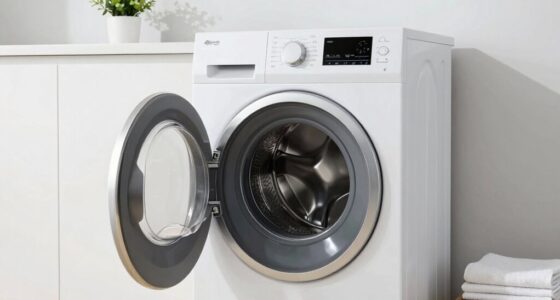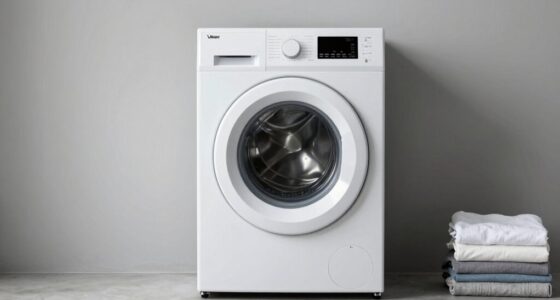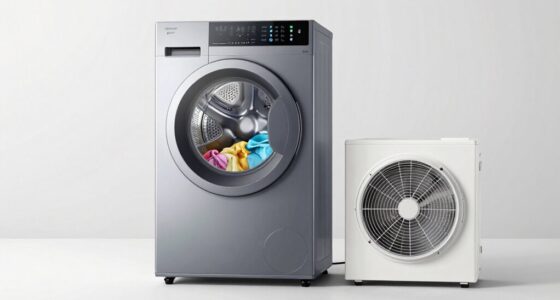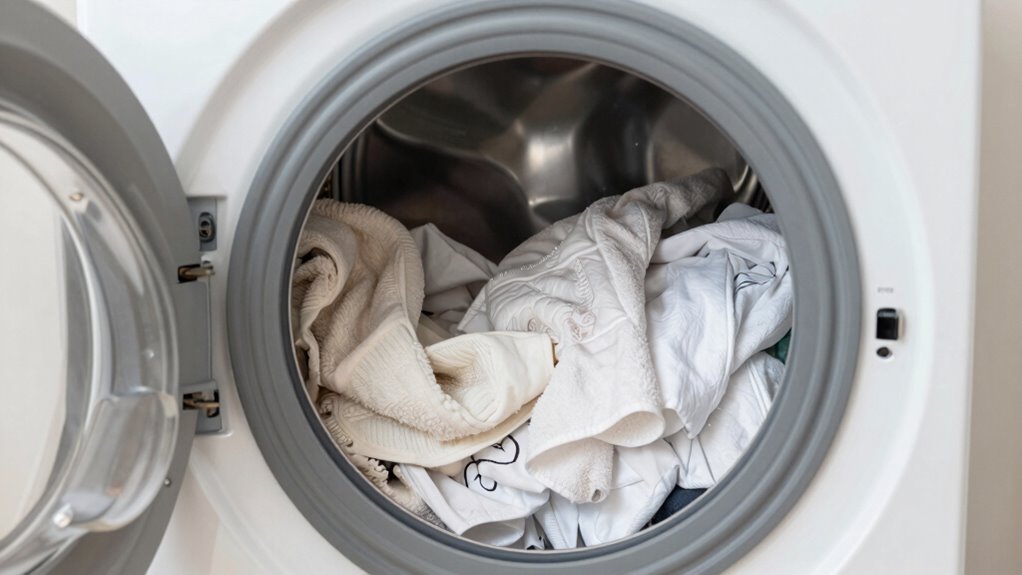

While larger washers can seem ideal for big families or heavy loads, they’re not always the best choice. Bigger models often use more water and energy, leading to higher utility bills. They can be bulky and hard to fit in limited space, and maintenance may be more complex. Often, smaller, efficient washers do the job just as well while saving you money and space. Keep going to discover more about finding the right fit for your needs.

Get kitchen gear delivered free — and shop member deals
- Fast, free delivery on millions of items
- Access to Prime Big Deal Days deals on October 6–7
- Prime Video, Amazon Music and more included
Key Takeaways
- Larger washers often consume more water and energy, increasing utility bills despite their bigger capacity.
- Bigger models can be bulky and require more space, making them impractical for limited laundry areas.
- Larger appliances may need more complex maintenance, leading to higher long-term upkeep costs.
- Smaller, modern washers can handle typical loads efficiently while saving resources and reducing environmental impact.
- The actual laundry needs might not justify a large capacity, resulting in unnecessary size and expense.

When choosing a washing machine, many people assume that larger capacity models are always the best option, especially for big families or heavy laundry loads. While it might seem logical to opt for a machine that can handle more at once, size isn’t the only factor to evaluate. Energy efficiency is vital, as larger washers often consume more power and water, which can lead to higher utility bills over time. A bigger drum doesn’t automatically mean you’ll save time or effort if it’s not energy-efficient. Modern, smaller models are designed to be just as effective while using fewer resources, making them a smarter choice for those looking to cut costs and reduce environmental impact. Additionally, considering home design and architecture details, such as space layout and appliance placement, can help optimize your laundry area for both function and aesthetics. It’s also important to consider machine maintenance, as larger models may require more frequent or complex upkeep. Space considerations also play a significant role in your decision. Large-capacity washers tend to be bulkier, requiring more room in your laundry area. If your space is limited, a sizable machine might not fit comfortably, leading to a cramped or difficult-to-access setup. Even if you have a spacious laundry room, a larger washer can feel overwhelming or cluttered, diminishing the practicality of your space. In addition, space planning can help ensure your laundry setup remains functional and visually appealing. A well-planned arrangement can also improve overall ergonomics, making laundry tasks easier and reducing strain. Additionally, choosing a model that aligns with your laundry frequency and typical load sizes can further enhance your overall efficiency and satisfaction with your appliance.
energy efficient compact washing machine
As an affiliate, we earn on qualifying purchases.
As an affiliate, we earn on qualifying purchases.
Frequently Asked Questions
How Much Energy Do Large-Capacity Washers Typically Consume?
Large-capacity washers typically consume more energy, averaging around 1.5 to 2.5 kWh per load, depending on efficiency metrics. While they save time by handling bigger loads, their energy consumption can be higher compared to smaller models. If you’re concerned about energy efficiency, check the washer’s energy star rating, and consider whether the larger capacity truly suits your laundry needs without increasing your utility bills unnecessarily.
Are Large-Capacity Washers Suitable for Small Households?
Certainly, large-capacity washers can seem tempting, but for small apartments, they’re often overkill. Their bulky build burdens limited space, and their big drum isn’t necessary for tiny loads. Compact design machines suit small households perfectly—they’re practical, portable, and perfect for petite spaces. You’ll save energy, reduce water use, and keep your laundry simple and swift, making them the ideal choice for cozy, confined quarters.
What Is the Average Lifespan of a Large-Capacity Washer?
A large-capacity washer typically lasts around 10 to 15 years, depending on maintenance costs and usage. You might notice higher noise levels as it ages, which can indicate wear and tear. Regular maintenance helps extend its lifespan, but if you neglect it, you could face costly repairs. Keep an eye on noise and perform routine checks to guarantee your washer runs smoothly for years to come.
Do Large-Capacity Washers Require Special Installation?
Large-capacity washers do require special installation, especially regarding installation requirements and space considerations. You should guarantee your laundry area has enough room for the machine’s size, including clearance for opening doors and ventilation. Additionally, check that your space can support the washer’s weight and that your plumbing and electrical outlets meet the necessary specifications. Proper installation helps prevent issues and ensures your washer operates smoothly.
How Do Large-Capacity Washers Compare in Water Efficiency?
Large-capacity washers often use more water per load, which can impact water conservation efforts. However, some models include eco-friendly features like load-sensing technology and high-efficiency cycles that minimize water use. If you’re focused on water efficiency, compare washers with these eco-friendly features. Keep in mind, using the right cycle and loading the washer properly also helps maximize water savings, regardless of capacity.
As an affiliate, we earn on qualifying purchases.
Conclusion
While large-capacity washers seem like the obvious choice, they aren’t always the best option. Did you know that over 60% of households use machines that are too big for their typical laundry loads? This can lead to wasted energy, water, and increased wear on your washer. Sometimes, choosing a smaller, more efficient model saves you money and extends the life of your appliance. So, consider your laundry habits before opting for the biggest machine available.
As an affiliate, we earn on qualifying purchases.
energy star rated compact washer
As an affiliate, we earn on qualifying purchases.
As an affiliate, we earn on qualifying purchases.
Fall Picks
fall essentials
As an affiliate, we earn on qualifying purchases.