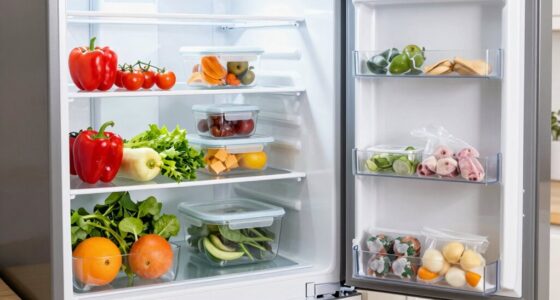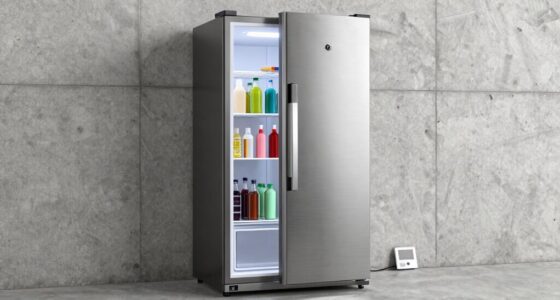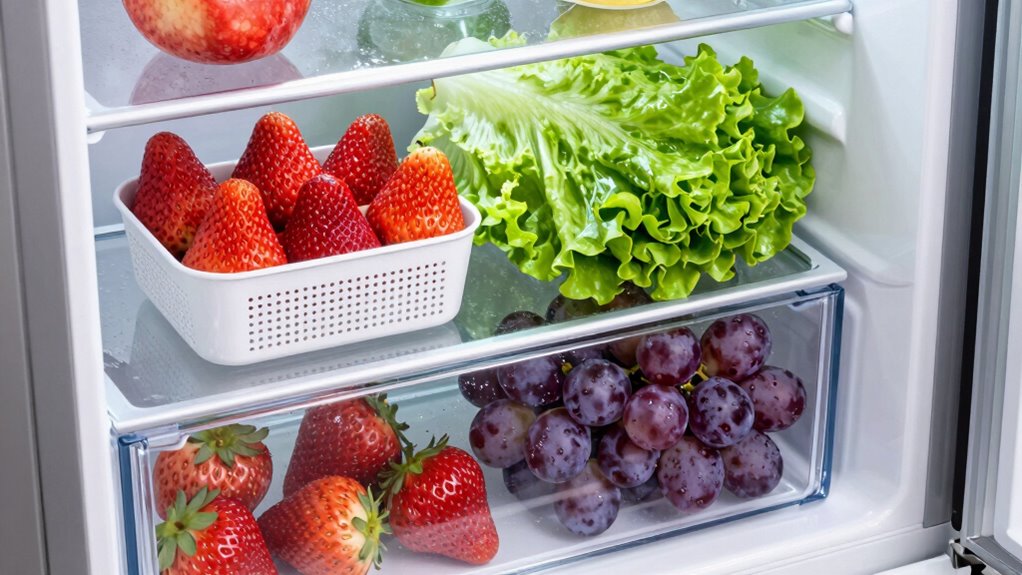

To store produce better in modern refrigerators, keep sensitive items like avocados and tomatoes outside until ripe, then transfer them inside to extend freshness. For produce like berries and carrots, guarantee they are dry before refrigerating and use paper towels in drawers to absorb excess moisture. Regulating temperature and humidity is key—adjust settings based on produce type to prevent spoilage. Proper storage helps maintain flavor, nutrition, and reduces waste; explore these tips further to improve your produce storage skills.

Get kitchen gear delivered free with Prime
- Fast, free delivery on millions of items
- Prime Video, Amazon Music and more included
- Member-only deals all year
Key Takeaways
- Store sensitive fruits outside the fridge until ripe, then transfer to extend freshness.
- Keep produce dry and line crisper drawers with paper towels to absorb excess moisture.
- Adjust refrigerator temperature to match produce needs, avoiding premature cooling of sensitive items.
- Separate fruits and vegetables based on their cold sensitivity for optimal storage.
- Regularly check and remove spoiled produce to prevent spoilage from spreading.

When storing produce, always consider the type of fruit or vegetable and its specific needs. For produce that’s sensitive to cold, like avocados or tomatoes, store them outside the fridge until ripe, then transfer to the refrigerator to prolong freshness. For items that benefit from refrigeration, such as berries or carrots, *make sure* they’re dry before placing them in the fridge. Excess moisture can lead to mold and rot, so consider lining crisper drawers with paper towels to absorb excess humidity. This simple step helps maintain freshness preservation by controlling moisture levels, which is *vital* for extending produce’s lifespan. Additionally, understanding the effects of temperature regulation** can help you adjust storage strategies further to keep your produce at its best. Proper temperature management is essential for reducing food waste and promoting sustainable living practices. Being aware of optimal storage conditions** can further enhance your produce’s freshness and nutritional value.
produce storage containers with humidity control
As an affiliate, we earn on qualifying purchases.
As an affiliate, we earn on qualifying purchases.
Frequently Asked Questions
How Do Humidity Controls Affect Produce Freshness?
Humidity controls play a essential role in produce preservation by adjusting humidity levels inside your fridge. When you set high humidity, it keeps the produce moist, preventing dehydration and spoilage, especially for leafy greens and berries. Conversely, low humidity settings are better for fruits that rot quickly, like apples and peaches. By managing humidity levels properly, you extend freshness, reduce waste, and keep your produce tasting better longer.
Should I Store Fruits and Vegetables Together or Separately?
Think of storing produce like a layered garden—fruits and vegetables each have unique needs. You should store them separately because of different ripening processes and humidity needs; mixing can cause faster spoilage. I once kept apples and carrots together, and the apples ripened too quickly. Proper produce layering keeps fruits from ripening prematurely and extends freshness, ensuring each item stays crisp and flavorful longer.
What Temperature Is Ideal for Storing Various Produce Types?
You should set your refrigerator to around 32-40°F (0-4°C) for ideal produce storage. Keep Ethylene producers like apples and bananas separate from Ethylene sensitive items such as lettuce and berries to prevent premature spoilage. Use crisper drawers with adjustable humidity for different produce types. Regularly check and adjust temperatures, and store Ethylene sensitive items away from Ethylene producers to extend freshness and prevent ripening issues.
How Often Should I Clean My Refrigerator’s Produce Drawers?
You should clean your refrigerator’s produce drawers at least once a month to prevent bacteria buildup and mold. Regular cleaning helps maintain produce ripening quality and extends shelf life. Remove all items first, then wash the drawers with warm, soapy water. Dry thoroughly before returning the produce. This routine keeps your fridge fresh, supports produce freshness, and guarantees a longer shelf life, reducing waste and keeping your food safe.
Can Storing Produce in Plastic Bags Cause Spoilage?
Storing produce in plastic bags can be like trapping freshness in a sealed box—sometimes it causes spoilage rather than prevents it. The plastic bag effects, such as trapped moisture and limited airflow, can accelerate decay. To prevent spoilage, use perforated bags or breathable containers. This way, you allow air circulation, reducing moisture buildup and helping your produce stay fresh longer, effectively warding off spoilage.
refrigerator crisper drawer liners paper towels
As an affiliate, we earn on qualifying purchases.
As an affiliate, we earn on qualifying purchases.
Conclusion
So, after all this talk about perfect produce storage, you’d think modern fridges would do the job for you, right? Ironically, even the smartest fridge can’t compensate for your neglect. The truth? With just a little attention—like using the right drawers and keeping things dry—you’ll keep your produce fresher longer. After all, isn’t it a bit amusing how the best technology still relies on your simple care? Happy storing!
avocado and tomato ripening storage bags
As an affiliate, we earn on qualifying purchases.
As an affiliate, we earn on qualifying purchases.
fridge temperature and humidity monitor
As an affiliate, we earn on qualifying purchases.
As an affiliate, we earn on qualifying purchases.
Fall Picks
fall essentials
As an affiliate, we earn on qualifying purchases.