
To understand energy labels on large appliances, focus on the star rating or letter grade from A to G—higher ratings mean better energy efficiency. Check the annual energy consumption listed in kilowatt-hours, which estimates yearly usage based on typical use. Compare these numbers across models to find potential savings, and pay attention to additional info like energy-saving features and standards. If you keep exploring, you’ll discover how to make smarter, more eco-friendly choices.

Get kitchen gear delivered free with Prime
- Fast, free delivery on millions of items
- Prime Video, Amazon Music and more included
- Member-only deals all year
Key Takeaways
- Check the energy efficiency rating (stars or letter grade) to compare overall appliance performance.
- Review the annual energy consumption in kilowatt-hours (kWh) for estimated yearly costs.
- Understand the meaning of the labels’ symbols and additional information like contrast ratio or features.
- Consider how usage patterns and settings may influence actual energy use beyond the label’s estimates.
- Use the label data to compare long-term savings and environmental impact of different appliances.

Have you ever wondered what those energy labels on your large home appliances really mean? It’s a good question because these labels hold valuable information that can help you make smarter choices. When you understand how to read them, you can assess the energy efficiency of different appliances and compare them effectively. This way, you’re not just looking at the price tag, but also considering long-term savings and environmental impact.
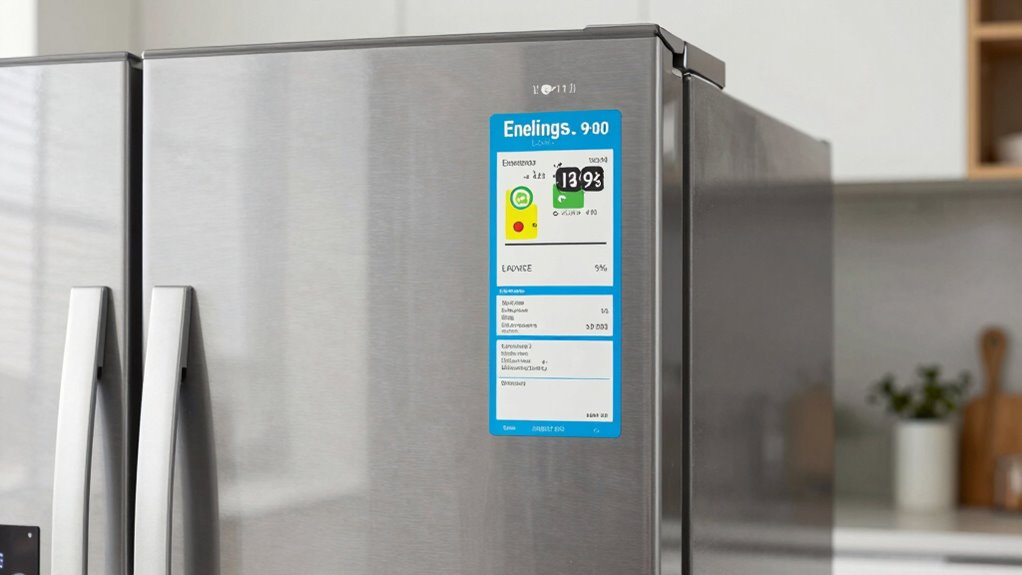
Most energy labels feature a star rating system or a letter grade, often ranging from A to G or a similar scale. An appliance with a higher rating is generally more energy-efficient, meaning it uses less electricity to perform its function. For example, a refrigerator labeled with an A++ rating will typically consume less power than one rated B or C. This is essential because energy efficiency directly impacts your utility bills over time. When doing an appliance comparison, pay close attention to these ratings, and don’t just focus on initial costs. Sometimes, paying a little more upfront for a more efficient model can save you money in the long run, thanks to lower energy consumption.
Beyond the star or letter ratings, energy labels often display specific data points such as annual energy consumption in kilowatt-hours (kWh). This figure gives you a concrete idea of how much energy the appliance consumes in a year. If you’re replacing an old appliance, compare this number with your current usage to gauge potential savings. Keep in mind that these figures are estimates based on typical usage, so your actual consumption might vary depending on how often you use the appliance and its settings. Additionally, understanding the role of contrast ratio in image quality can help you choose more efficient projectors for home cinema setups, as higher contrast often correlates with better performance and potentially lower energy use. Recognizing energy labels can also guide you toward environmentally friendly options that contribute to reducing your carbon footprint. Being aware of energy-saving features can further enhance your ability to select appliances that minimize energy consumption while maintaining performance. Moreover, paying attention to energy consumption estimates can help you plan for more sustainable and cost-effective home management. Being familiar with energy efficiency standards can also assist you in choosing appliances that meet or exceed current environmental guidelines.
As an affiliate, we earn on qualifying purchases.
Frequently Asked Questions
How Often Do Energy Labels Get Updated?
You’ll find that energy labels get updated every few years to reflect improvements in appliance efficiency and renewable energy standards. Manufacturers often update labels when new models are released or when regulations change to guarantee consumers have accurate info. By checking these updates, you can make smarter choices, supporting renewable energy efforts and selecting appliances that save energy, which ultimately benefits both your wallet and the environment.
Do Energy Labels Include Environmental Impact Details?
Imagine opening an appliance’s energy label and noticing a small section dedicated to environmental impact. Yes, these labels often include details about the carbon footprint, showing how much greenhouse gas is generated during use. This info helps you gauge the appliance’s environmental impact, making it easier to choose options that reduce your carbon footprint. So, next time you shop, look for those environmental impact details to make greener choices.
Are Energy Labels Standardized Across Different Countries?
Energy labels are not fully standardized worldwide; they often vary due to different international standards and regional regulations. You’ll notice label variations in design, information, and rating scales across countries. While some regions follow common frameworks like the EU’s Energy Label or the US EnergyGuide, others have their own standards. Always check local guidelines to understand the labels properly, as differences can influence your appliance choices and energy efficiency expectations.
Can Energy Labels Predict Appliance Lifespan?
Energy labels can’t predict an appliance’s lifespan with certainty, but they offer clues about durability. Think of them as a crystal ball for appliance longevity—you get a sense of how efficiently it’ll perform over time. A higher energy efficiency rating often hints at better build quality and longer lifespan prediction. Keep in mind, actual durability depends on usage, maintenance, and brand reputation, not just the label.
Do Energy Labels Indicate Noise Levels of Appliances?
Energy labels often include information about noise levels, helping you understand appliance noise before buying. You’ll see decibel (dB) ratings that indicate how loud the appliance is during operation. Lower decibel numbers mean quieter appliances, which is especially useful for those who want minimal noise in shared spaces. By checking these labels, you can choose appliances that match your noise preferences and keep your home peaceful.
appliance energy consumption monitor
As an affiliate, we earn on qualifying purchases.
As an affiliate, we earn on qualifying purchases.
Conclusion
Think of energy labels as your home’s compass, guiding you through a sea of choices toward efficiency and savings. They’re like a lighthouse, shining a clear path amidst the fog of unfamiliar numbers and symbols. By understanding these labels, you hold the key to making smarter decisions—illuminating a future where your appliances work smarter, not harder. Embrace this knowledge, and you’ll navigate your home’s energy landscape with confidence, steering toward a brighter, more sustainable horizon.
energy star rated washing machine
As an affiliate, we earn on qualifying purchases.
As an affiliate, we earn on qualifying purchases.
As an affiliate, we earn on qualifying purchases.
Halloween Picks
halloween
As an affiliate, we earn on qualifying purchases.