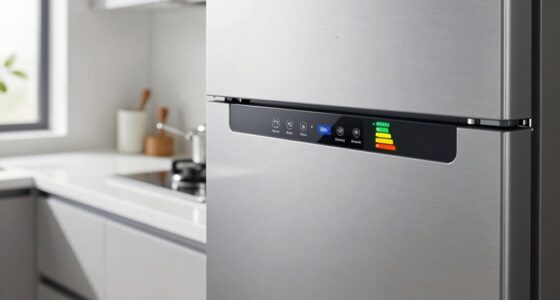
Smart thermostats with room sensors improve your comfort by precisely adjusting temperatures in different areas of your home. They detect where people are and reduce energy waste by focusing on active zones. This keeps your space consistently comfortable while lowering utility bills. Plus, they learn your routines and connect with other smart devices for easier management. If you keep exploring, you’ll discover how these systems make your home smarter and more efficient.

Get kitchen gear delivered free — and shop member deals
- Fast, free delivery on millions of items
- Access to Prime Big Deal Days deals on October 6–7
- Prime Video, Amazon Music and more included
Key Takeaways
- Improve temperature accuracy by adjusting settings based on real-time data from individual room sensors.
- Enhance energy efficiency by targeting only occupied areas, reducing unnecessary heating or cooling.
- Increase user convenience through automation and remote control, eliminating manual thermostat adjustments.
- Ensure reliable communication among sensors and devices for seamless home climate management.
- Optimize overall home energy use by integrating with other smart devices and monitoring consumption patterns.

Smart thermostats with room sensors are transforming how you manage home comfort by providing more precise temperature control. These devices go beyond traditional thermostats by actively monitoring different areas of your home, adjusting heating and cooling based on real-time data. As a result, you experience a more consistent comfort level while also making your home more energy-efficient. By focusing on specific rooms rather than relying solely on a single thermostat location, these smart systems help you avoid unnecessary heating or cooling in unoccupied spaces, reducing energy waste and lowering utility bills.
Smart thermostats with room sensors enhance comfort and energy efficiency by adjusting temperatures based on real-time room data.
One of the most noticeable improvements is in energy efficiency. When your smart thermostat uses room sensors, it can detect which areas of your home are in use and adjust the temperature accordingly. For example, if you’re relaxing in the living room, the system will prioritize maintaining comfort there, instead of unnecessarily warming or cooling bedrooms that are currently unoccupied. This targeted approach means you use less energy to achieve the same or improved comfort, making your home more sustainable and cost-effective in the long run. Over time, this can lead to significant savings, especially if you combine smart thermostats with renewable energy sources or energy-efficient HVAC systems. Additionally, the integration of smart home technology further enhances the system’s efficiency and convenience.
User convenience is another key benefit. With room sensors, you no longer need to manually adjust your thermostat multiple times a day or rely on guesswork about which areas are comfortable. Instead, the system learns your routines and preferences, automatically fine-tuning the temperature to suit your lifestyle. Many smart thermostats also feature intuitive apps that let you control your home’s climate from anywhere, whether you’re at work, on vacation, or just relaxing in bed. The sensors work silently in the background, providing updates and adjustments without any effort on your part. This seamless integration helps create a more comfortable environment while removing the hassle of constant manual adjustments. Additionally, understanding the benefits of room sensors can help you maximize your system’s potential. It’s important to note that these sensors often utilize wireless communication protocols, which ensure reliable and efficient data transfer throughout your home.
Furthermore, smart thermostats with room sensors foster better overall home management. They can integrate with other smart devices, creating a cohesive system that optimizes energy use throughout your home. For instance, sensors can communicate with smart blinds or ventilation systems to enhance energy savings and comfort. They also provide you with detailed insights into your energy consumption, helping you identify ways to improve efficiency even further. This interconnected approach offers a truly smart home experience, making your home more intuitive and responsive to your needs. Ultimately, these features make your home smarter, more comfortable, and more aligned with your energy-saving goals.
smart thermostat with room sensors
As an affiliate, we earn on qualifying purchases.
As an affiliate, we earn on qualifying purchases.
Frequently Asked Questions
Do Smart Thermostats With Sensors Save Energy Consistently?
Yes, smart thermostats with sensors can save energy consistently. They optimize your home’s temperature based on sensor placement, ensuring rooms are heated or cooled only when needed. This targeted approach reduces unnecessary energy use, lowering your bills. By adjusting to occupancy patterns and local conditions, these thermostats maintain comfort while improving energy savings over time. Proper sensor placement is key to maximizing these benefits and ensuring consistent efficiency.
How Accurate Are Room Sensors in Detecting Temperature?
Room sensors are typically quite accurate, but their precision depends on sensor placement and calibration. Think of them as a compass guiding your comfort — if placed in a drafty corner or near heat sources, their temperature readings can be off. Proper placement guarantees better temperature accuracy, helping your smart thermostat respond effectively. So, with ideal sensor positioning, you can trust your thermostat to keep your home cozy without wasting energy.
Can Room Sensors Work With Any Smart Thermostat Brand?
Room sensors can work with many smart thermostats, but brand compatibility varies. You need to check if the thermostat supports sensor integration for your specific brand. Some brands, like Ecobee, offer open platforms with broad compatibility, while others might limit sensor use to their own products. Always verify compatibility before purchasing, ensuring your room sensors will seamlessly connect and improve your home’s climate control.
Do Sensors Require Regular Calibration or Maintenance?
Think of your sensors like a car’s tires—they need regular checks to stay reliable. Usually, sensors don’t require frequent calibration, but their durability can vary based on quality. If you notice inconsistent readings, it’s a sign to recalibrate. Regular maintenance keeps your sensors accurate, ensuring your thermostat responds correctly to room conditions. On average, checking calibration once a year suffices, but monitor for any irregular temperature fluctuations.
How Do Sensors Affect Overall Home Comfort Levels?
Sensors substantially enhance your home comfort by accurately detecting temperature and humidity levels, allowing your smart thermostat to adjust settings accordingly. This improves humidity control, preventing issues like excess moisture or dryness. Additionally, sensors enable aesthetic integration by discreetly blending into your home decor, so they don’t disrupt your space’s look. With better sensor responsiveness, you enjoy consistent comfort, energy savings, and a more pleasant living environment.
home automation smart thermostat
As an affiliate, we earn on qualifying purchases.
As an affiliate, we earn on qualifying purchases.
Conclusion
So, next time you’re marveling at your fancy smart thermostat, just remember it’s probably secretly judging which rooms you ignore. Those room sensors? They’re just tiny tattletales telling your thermostat to make sure every corner of your house gets the “I care” treatment. Sure, your living room gets comfy, but don’t get too cozy thinking your thermostat’s a miracle worker. It’s just doing its best in the game of “Keep Everyone Slightly Less Miserable.”
wireless room temperature sensors
As an affiliate, we earn on qualifying purchases.
As an affiliate, we earn on qualifying purchases.
As an affiliate, we earn on qualifying purchases.
Evergreen bestsellers Picks
bestsellers
As an affiliate, we earn on qualifying purchases.