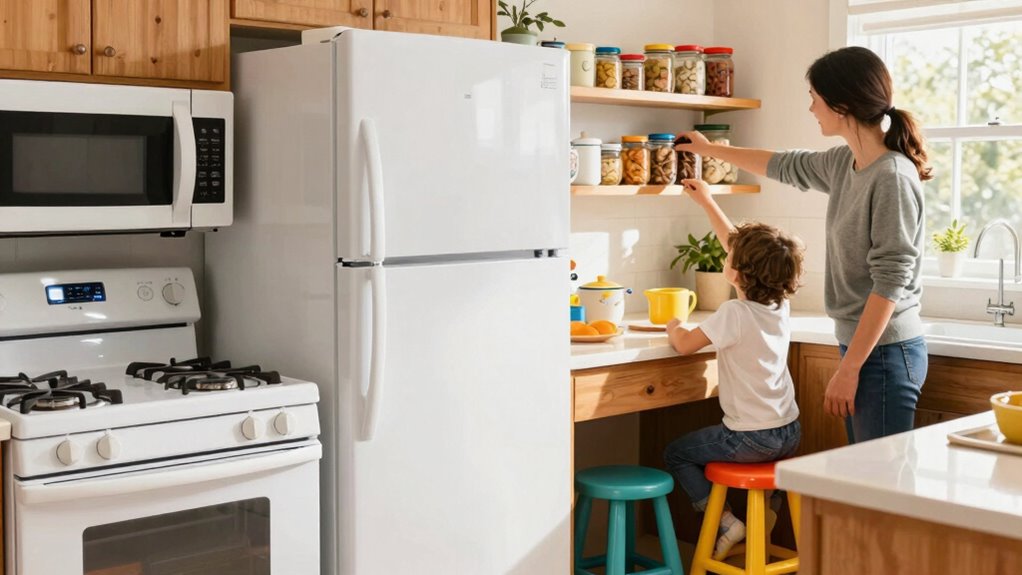

Making appliances accessible in your family kitchen is key to ensuring safety, independence, and inclusive participation for everyone. When appliances are easy to reach, operate, and adapt, all family members can contribute safely and confidently. It also encourages a more collaborative environment and reduces physical strain. Prioritizing accessibility creates a space where everyone’s needs are respected. Keep exploring to discover how smart features and ergonomic designs can transform your kitchen into a truly inclusive and functional space.

Get kitchen gear delivered free with Prime
- Fast, free delivery on millions of items
- Prime Video, Amazon Music and more included
- Member-only deals all year
Key Takeaways
- Ensures all family members can safely and independently operate appliances, promoting inclusivity.
- Enhances safety by reducing physical strain and preventing accidents during daily tasks.
- Encourages participation and cooperation among family members of varying ages and abilities.
- Modern smart features simplify appliance use, making kitchens more accessible and efficient.
- Supports a harmonious environment where everyone’s needs are acknowledged and accommodated.
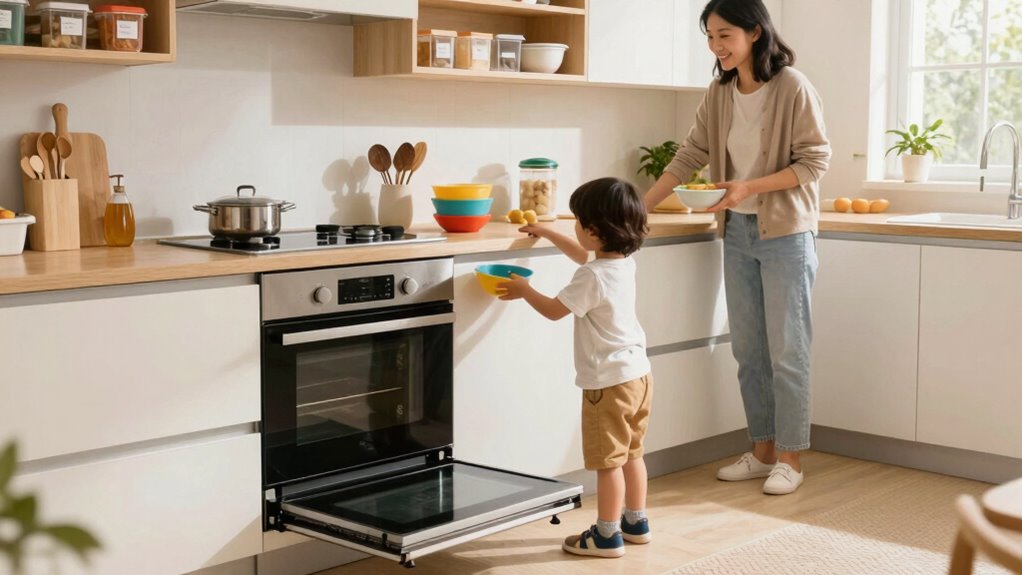
Making appliances accessible in family kitchens isn’t just about convenience; it’s about creating an inclusive space where everyone can participate. When you design your kitchen with accessibility in mind, you foster an environment where all family members, regardless of age or ability, feel empowered to contribute. Smart appliance innovations play a key role in this, offering features like voice control, touchscreens, and remote operation. These advancements eliminate the need to reach or manipulate difficult controls, making everyday tasks easier for everyone. For instance, voice-activated ovens or refrigerators let you operate appliances without bending down or stretching up, which is especially helpful for those with mobility challenges or back issues.
Creating an inclusive kitchen with accessible appliances empowers everyone to participate easily and safely.
Ergonomic kitchen design complements these smart innovations by ensuring that controls are within comfortable reach and that work zones are arranged for *ideal* efficiency. When you incorporate ergonomic principles, you reduce physical strain and make the space more user-friendly. Adjustable countertops, pull-out shelves, and lever-style handles are simple modifications that make a big difference. These features not only benefit those with physical limitations but also make everyday use more comfortable for everyone, encouraging family members to help out more willingly. Incorporating biodiversity principles into your kitchen design can also promote a more sustainable and eco-friendly environment, aligning safety with environmental consciousness. Additionally, considering smart technology options can further enhance accessibility and energy efficiency in the kitchen. Integrating assistive devices can further improve usability for individuals with specific needs, ensuring the kitchen remains adaptable over time. Incorporating accessible design standards helps ensure that all users can comfortably and safely navigate the space. Moreover, understanding appliance accessibility standards can guide the selection of appropriate features and modifications that meet safety guidelines.
Ultimately, prioritizing appliance accessibility in your family kitchen isn’t just a matter of convenience; it’s about fostering independence, safety, and participation for everyone. Smart innovations and thoughtful ergonomic design work together to create a space where family members feel comfortable and motivated to help out. When accessibility becomes a core part of your kitchen’s design, you’re not only making daily routines smoother but also reinforcing the idea that the kitchen is a shared space for all. It’s about building a home where everyone’s needs are recognized and accommodated, making family life more harmonious and inclusive.
As an affiliate, we earn on qualifying purchases.
Frequently Asked Questions
How Can Appliance Accessibility Improve Safety for Children?
You can improve safety for children by incorporating child-proofing features and safety sensor technology into appliances. Child-proofing keeps dangerous buttons and compartments out of reach, while safety sensors automatically shut off appliances when unsafe conditions are detected. These measures help prevent accidents, reduce risk, and give you peace of mind, ensuring your little ones stay safe in the kitchen while still allowing you to enjoy the space comfortably.
What Are Cost-Effective Ways to Enhance Kitchen Appliance Accessibility?
You can enhance kitchen appliance accessibility affordably by integrating smart technology that simplifies controls and automates tasks. Using ergonomic tools like adjustable shelves and lightweight utensils also makes reach and use easier for everyone. While some worry about costs, many smart devices and ergonomic solutions are budget-friendly and easy to install, offering long-term safety and convenience. These upgrades guarantee your family kitchen remains safe, functional, and inclusive without breaking the bank.
Which Appliances Are Most Critical for Accessible Kitchen Design?
In an accessible kitchen, focus on appliances like height-adjustable sinks, easy-to-use stoves with front controls, and pull-out shelves. Incorporate smart technology, such as voice-activated devices, to enhance ease of use. Space optimization is essential, so choose compact appliances that maximize room and reduce clutter. These elements guarantee everyone can comfortably operate essential appliances, improving safety, independence, and overall functionality in your family kitchen.
How Does Appliance Accessibility Benefit Elderly Family Members?
You make it easier for elderly family members to use the kitchen by ensuring appliance accessibility. Ergonomic handles reduce strain, making it safer and more comfortable to operate appliances. Visual indicators help them easily identify settings and status, preventing mistakes. This not only promotes independence but also boosts confidence, allowing seniors to participate actively in cooking and daily tasks without frustration or fear of accidents.
Are There Universal Design Standards for Accessible Kitchen Appliances?
Yes, there are universal standards and design guidelines for accessible kitchen appliances. These standards, like those from the Americans with Disabilities Act (ADA) and other organizations, aim to create appliances that are user-friendly for everyone. They specify features such as reachable controls, clear labels, and adjustable heights. Following these guidelines helps you design a kitchen that’s inclusive, safe, and convenient, ensuring all family members can comfortably use the appliances.
ergonomic kitchen faucet with lever handles
As an affiliate, we earn on qualifying purchases.
As an affiliate, we earn on qualifying purchases.
Conclusion
Imagine cooking with a toolbox where every tool is within arm’s reach—easy, quick, stress-free. When your appliances are accessible, your kitchen becomes that toolbox, making meal prep smoother and safer for everyone. In fact, homes with accessible designs see fewer accidents and more shared moments around the stove. Prioritizing appliance accessibility isn’t just about convenience; it’s about creating a space where family bonds grow stronger, and everyone feels empowered to lend a hand.
adjustable height kitchen countertops
As an affiliate, we earn on qualifying purchases.
As an affiliate, we earn on qualifying purchases.
pull-out shelves for kitchen cabinets
As an affiliate, we earn on qualifying purchases.
As an affiliate, we earn on qualifying purchases.
Columbus Day / Indigenous Peoples' Day Picks
long weekend sales
As an affiliate, we earn on qualifying purchases.