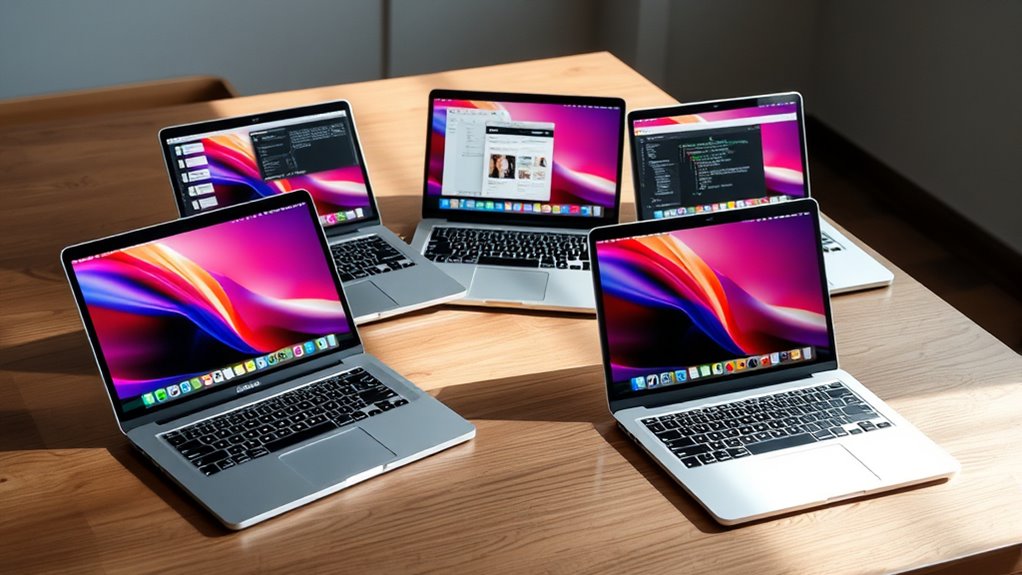

Choosing among 14 inch MacBook Pro configurations mostly comes down to three questions: how much chip you need, how much memory your workflow demands, and whether a renewed older model fits your budget. The M5 Pro with 48GB and 1TB SSD takes the top spot because it covers creative professionals for years without overpaying for storage you may never fill. If your workload is lighter, the base M5 with 16GB and 1TB delivers the same beautiful 14-inch display for far less, while the renewed M1 Pro is the smartest entry point into the Pro chassis. The main tradeoff across this lineup is longevity versus savings: Pro chips and 48GB of memory future-proof, while renewed M3 and M4 models trade peak performance for value. Read on for the full breakdown of every configuration and who each one suits best.

Get kitchen gear delivered free — and shop member deals
- Fast, free delivery on millions of items
- Access to Prime Big Deal Days deals on October 6–7
- Prime Video, Amazon Music and more included
Complete the kit


Key Takeaways
- The M5 Pro / 48GB / 1TB configuration appears three times in this lineup in different finishes and storage options, confirming it as the sweet spot for professional work — but the 2TB Silver variant only makes sense for video editors with large libraries.
- Renewed models dominated the value conversation: the 2024 M4 and M4 Pro units offer near-current performance at a lower entry price, though each carries the risks of third-party refurbishing and shorter battery health.
- The base M5 (10-core CPU, 16GB) is the clearest divide in the lineup — it lacks the extra performance cores of the Pro chips, making it right for writers and students but a poor fit for heavy multicore rendering.
- Memory was the biggest deciding factor between picks: 16GB configurations felt constrained for pro work, 24GB on the M4 Pro was a comfortable middle ground, and 48GB removed upgrade anxiety entirely.
- The renewed 2021 M1 Pro remains the cheapest way into the mini-LED Pro display and full port selection, but its 16GB/512GB ceiling makes it a short-term machine rather than a long-term investment.





| inch macbook pro configuration | Storage | Display | Memory | Chip |
|---|---|---|---|---|
| Apple MacBook Pro 14-inch with | 1TB SSD | 14-inch Liquid Retina XDR | 48GB | Apple M5 Pro |
| Apple 14-inch MacBook Pro Lapt | 1TB SSD | — | 48GB unified memory | — |
| Apple MacBook Pro 14-inch | 512GB SSD | 14-inch Liquid Retina XDR | 16GB unified memory | Apple M1 Pro |
| Apple 14.2-inch MacBook Pro wi | 1TB SSD | 14.2-inch Liquid Retina XDR, 1600 nits peak | — | Apple M5 |
| Apple 14-inch MacBook Pro with | 1TB SSD | 14 inches | — | Apple M5 Pro |
| Apple 2023 14-inch MacBook Pro | 512GB SSD | — | 18GB unified RAM | — |
| Apple MacBook Pro 14" Laptop | 2TB SSD | 14" Liquid Retina XDR, 3024 x 1964 | 48GB unified memory | Apple M5 Pro |
| Apple 2024 MacBook Pro with M4 | 512GB SSD | 14-inch Liquid Retina XDR | 16GB RAM | — |
| Apple 2024 MacBook Pro 14-inch | 512GB SSD | 14.2-inch Liquid Retina XDR | 24GB RAM | — |
More Details on Our Top Picks
Apple MacBook Pro 14-inch with M5 Pro chip, 48GB memory, and 1TB SSD
For buyers who want a 14-inch MacBook Pro configuration that won’t feel limiting within two years, this spec sheet is the one I’d point to first. The M5 Pro with an 18-core CPU and 20-core GPU sits a clear step above the 15-core M5 Pro found in the Space Black build-to-order model, and that extra GPU headroom matters for video timelines with heavy color grading or 3D renders. The nano-texture glass is the real differentiator here — compared with the glossy panel on the Silver M5 model, it tames reflections in bright studios at a small cost in contrast. This option stands out for professionals who want the full package rather than a middle-ground compromise.
Pros:- M5 Pro chip with 18-core CPU and 20-core GPU offers top-tier performance in the 14-inch size
- 48GB of unified memory handles massive timelines, virtual machines, and large datasets
- Nano-texture glass reduces glare in bright work environments
- 1TB SSD gives breathing room for project files and media libraries
Cons:- Nano-texture glass slightly softens perceived contrast and black levels versus glossy glass
- Heaviest configuration in the lineup means the longest waits on export-heavy tasks run hot enough to engage fans
Best for: Professional video editors, 3D artists, and developers running large local builds who want maximum sustained performance
Not ideal for: Students and general users — the extra cores and nano-texture display add cost that lighter workflows will never use
- Display:14-inch Liquid Retina XDR
- Chip:Apple M5 Pro
- CPU:18-core
- GPU:20-core
- Memory:48GB
- Storage:1TB SSD
- Finish:Space Black
- Display glass:Nano-texture
Our verdict“If your work pays the bills through the GPU and CPU, this is the configuration that justifies its premium outright.”
Apple 14-inch MacBook Pro Laptop with M5 Pro Chip, 48GB Memory, 1TB SSD (Space Black)
This built-to-order configuration strikes the sweet spot that many working creatives actually need. The M5 Pro with a 15-core CPU and 16-core GPU is less about raw benchmarks and more about sustained, quiet performance across a full editing day — and the 48GB of unified memory is what keeps DaVinci Resolve or Logic Pro sessions from choking. Compared with the 18-core flagship nano-texture model, you give up some GPU throughput, but the day-to-day difference in photo editing and music production is smaller than the spec gap suggests. Against the base M5 Silver model, the extra memory is the deciding factor: 16GB runs out fast with large RAW libraries.
Pros:- 48GB of unified memory comfortably handles large project files and heavy multitasking
- M5 Pro chip with 15-core CPU delivers strong sustained performance under long editing sessions
- 1TB SSD keeps media libraries local and fast
- Premium Space Black finish with backlit keyboard and Touch ID
Cons:- High-end configuration pricing puts it out of reach for casual buyers
- 16-core GPU falls short of the flagship M5 Pro for the most demanding rendering tasks
Best for: Working photographers, music producers, and developers who need big memory headroom without paying flagship pricing
Not ideal for: Gamers or 3D artists who push the GPU hardest — the 16-core GPU trails the 20-core flagship noticeably in render workloads
- Screen Size:14 inches
- Processor:Apple M5 Pro chip, 15-core CPU
- Graphics:16-core GPU (integrated)
- Memory:48GB unified memory
- Storage:1TB SSD
- Color:Space Black
- Power Adapter:70W USB-C
- Operating System:macOS
Our verdict“This pick makes the most sense for creative professionals who need memory more than they need maximum GPU cores.”
Apple MacBook Pro 14-inch (2021) with M1 Pro, 16GB RAM, 512GB SSD, Space Gray (Renewed)
Not everyone needs an M5 anything — and this renewed 2021 M1 Pro model is the honest entry point into the 14-inch MacBook Pro line. The M1 Pro still holds up well against modern base chips for real work, and this machine carries the same Liquid Retina XDR display, port selection, and six-speaker system that made the redesign famous. Compared with the Silver M5 model, you lose some battery efficiency and camera quality, but the SD card slot, HDMI, and MagSafe remain identical in practice. The tradeoff is real: 16GB and 512GB will feel tight for heavy media work, and renewed condition means variable cosmetic history. For writers, students, and hybrid workers, it’s the smarter spend than any new base configuration.
Pros:- Liquid Retina XDR display matches newer models in everyday visual quality
- Full port selection including HDMI, SDXC, and MagSafe
- Six-speaker system with spatial audio remains excellent
- Advanced thermal design sustains performance during long sessions
Cons:- 16GB RAM and 512GB storage are the tightest limits in this lineup
- Renewed condition means some unit-to-unit variation in battery health and cosmetics
- Older chip trails M5 models in efficiency and peak speed
Best for: Students, writers, and hybrid workers who want Pro hardware and the XDR display at the lowest possible entry point
Not ideal for: Video editors with 4K-plus workflows — 16GB of memory and 512GB of storage will bottleneck quickly
- Model:MacBook Pro (2021)
- Display:14-inch Liquid Retina XDR
- Chip:Apple M1 Pro
- Memory:16GB unified memory
- Storage:512GB SSD
- Color:Space Gray
- Camera:1080p FaceTime HD
- Audio:Six-speaker system with spatial audio support
- Condition:Renewed
Our verdict“The most sensible way to get genuine Pro build quality and the XDR display without financing a flagship.”
Apple 14.2-inch MacBook Pro with M5, 10-core CPU, 10-core GPU, 16GB memory, and 1TB SSD (Silver)
The base M5 configuration answers a question many buyers get wrong: do you need a Pro chip, or just a Pro chassis? For most people it’s the latter. This model delivers the full 14.2-inch hardware experience — the bright XDR display, six speakers, MagSafe, and dual external display support — without paying M5 Pro money. The 1TB SSD is unusually generous for a base configuration and beats the 512GB drives on both renewed options in this guide. Compared with the M1 Pro renewed unit, the newer 12MP Center Stage camera and better power efficiency make it the stronger daily machine, even though the M1 Pro can outperform it in sustained multi-core work. The 16GB memory ceiling is the main compromise.
Pros:- M5 chip with balanced 10-core CPU and GPU handles everyday and light creative work smoothly
- 1TB SSD is generous for a base-tier configuration
- Bright display with 1600 nits peak and a 12MP Center Stage camera
- Full port selection with support for two external displays
Cons:- 16GB of non-upgradeable memory is the lowest ceiling among new models here
- No memory upgrade path at this tier for future-proofing
Best for: Professionals in office workflows, light creative work, and general productivity who value battery life and storage over raw power
Not ideal for: Anyone running large compilations, 8K footage, or heavy virtualization — the 10-core GPU and 16GB ceiling will pinch
- Chip:Apple M5
- CPU:10-core
- GPU:10-core
- Display:14.2-inch Liquid Retina XDR, 1600 nits peak
- Unified memory:16GB
- Storage:1TB SSD
- Camera:12MP Center Stage
- Ports:Three Thunderbolt 4, MagSafe 3, SDXC, HDMI, headphone jack
- Weight:3.41 pounds (Silver)
Our verdict“The right configuration for buyers who want the premium 14-inch hardware and longevity without paying for Pro silicon.”
Apple 14-inch MacBook Pro with M5 Pro Chip, 48GB Memory, and 1TB SSD
This configuration lands in a interesting middle position: it shares the same 15-core M5 Pro, 48GB of memory, and 1TB SSD as the Best for Creative Professionals pick, which makes it the more straightforward buy for anyone who doesn’t care which listing they order through. The value logic is clear — you get nearly all of the flagship 18-core model’s memory and storage capability at a rung below it in the ladder, and the practical difference shows up mainly in GPU-bound renders rather than in everyday pro work. Compared with the renewed M1 Pro unit, the leap in multitasking headroom is enormous. Buyers should verify display and battery details with the seller, since the listing leaves those unspecified — the one transparency gap in an otherwise strong configuration.
Pros:- 48GB of unified memory matches the flagship configuration for multitasking
- M5 Pro chip with 15-core CPU handles demanding professional workflows
- 1TB SSD provides fast local storage for large projects
- Space Black finish with backlit keyboard and fingerprint reader
Cons:- 16-core GPU trails the top M5 Pro configuration for rendering-heavy work
- Listing omits display and battery specifications, requiring buyer diligence
Best for: Multitaskers and developers who prioritize 48GB of memory and the M5 Pro over display glass options or maximum GPU cores
Not ideal for: Spec-obsessed buyers who want every detail documented — display type and battery runtime aren’t specified in the listing
- Chip:Apple M5 Pro
- CPU:15-core
- GPU:16-core
- Unified memory:48GB
- Storage:1TB SSD
- Display:14 inches
- Finish:Space Black
- Power adapter:70W USB-C
Our verdict“A near-flagship configuration for buyers who need memory and storage more than the last few GPU cores.”
Apple 2023 14-inch MacBook Pro with M3 Pro Chip, 18GB RAM, 512GB SSD, Space Black (Renewed)
This configuration sits in a smart middle ground between the entry-level renewed M4 model and the pricier renewed M4 Pro. The M3 Pro’s 12-core CPU paired with 18GB of RAM means this machine still handles video editing, code compilation, and heavy multitasking without breaking a sweat — and the odd 18GB memory count actually beats the 16GB you get in the renewed M4 base model. Compared with the renewed M4 Pro with 24GB, this one gives up some raw speed but costs meaningfully less, making it a better fit for buyers who want Pro-tier performance without the Pro-tier premium. The tradeoff is storage: 512GB fills up fast for anyone working with 4K footage or large photo libraries, so budget for an external drive.
Pros:- M3 Pro 12-core CPU delivers genuine workstation-class performance
- 18GB of RAM outclasses the 16GB in base renewed models for multitasking
- Space Black finish hides fingerprints and wear better than Silver
- Renewed inspection keeps quality consistent with the rest of the lineup
- 14-core GPU handles moderate creative workloads well
Cons:- Premium asking price for a previous-generation renewed machine
- 512GB SSD is limiting for professional media work
- Older chip generation than the renewed M4 and M4 Pro alternatives
Best for: Freelance editors and developers who want Pro-chip muscle and more than 16GB of RAM at a reduced renewed price
Not ideal for: Content creators with large media libraries — 512GB of storage will feel cramped within months
- Processor:Apple M3 Pro 12-core CPU
- GPU:14-core
- Memory:18GB unified RAM
- Storage:512GB SSD
- Color:Space Black
- Condition:Renewed
Our verdict“A strong pick if you want more RAM and Pro-chip headroom than the renewed M4 base model offers, without paying M4 Pro prices.”
Apple MacBook Pro 14″ Laptop (Early 2026) – M5 Pro, 48GB Unified Memory, 2TB SSD, Silver
This is the no-compromise pick of the entire roundup. Where the renewed options trade condition and warranty coverage for savings, this new M5 Pro configuration buys you the full package: 48GB of unified memory, a 2TB SSD, Thunderbolt 5, Wi-Fi 7, and a one-year Apple warranty. Compared with the renewed M4 Pro at 24GB/512GB, the difference isn’t just speed — it’s capacity and longevity. The 2TB SSD alone removes the external-drive workaround that every 512GB model in this list imposes, and 48GB of memory means this machine will still feel current five years from now. The honest tradeoff is price: this is the most expensive way into a 14-inch MacBook Pro here, and buyers who don’t actually push their hardware should look at cheaper entries instead.
Pros:- M5 Pro 15-core CPU is the fastest chip in this roundup
- 48GB unified memory and 2TB SSD eliminate upgrade anxiety entirely
- Thunderbolt 5, Wi-Fi 7, and Bluetooth 6 are the most modern connectivity here
- Full one-year Apple warranty with 90 days of technical support
Cons:- Highest cost of any configuration in the lineup
- Standard glass display, not the nano-texture option some creatives prefer
- Silver finish shows scuffs and fingerprints more readily than Space Black
Best for: Working professionals in video, machine learning, or heavy software development who keep machines for 5+ years
Not ideal for: Students and everyday users — the 48GB/2TB spec is wasted headroom on web browsing and office work
- Chip:Apple M5 Pro
- CPU / GPU:15-core CPU / 16-core GPU
- Memory:48GB unified memory
- Storage:2TB SSD
- Display:14″ Liquid Retina XDR, 3024 x 1964
- Connectivity:Thunderbolt 5, HDMI, MagSafe 3, SDXC, Wi-Fi 7, Bluetooth 6
- Power Adapter:70W USB-C
- Warranty:1 year limited with 90-day technical support
Our verdict“The configuration to buy once and forget about — if your workloads actually justify the spend.”
Apple 2024 MacBook Pro with M4 Chip (14-inch, 16GB RAM, 512GB SSD) Space Black (Renewed)
For buyers who want the current-generation M4 chip at the lowest possible entry point, this renewed configuration is the most accessible door into the 14-inch Pro chassis. The base M4 won’t match the M3 Pro’s 12-core CPU in the other renewed Space Black model under sustained heavy loads, but for everyday creative work — photo editing, light video, coding — the difference rarely shows up, and the M4’s efficiency cores actually stretch battery life further. Where this pick clearly trails the renewed M4 Pro is GPU muscle and RAM: 16GB is workable but tight when running VMs or massive design files. The real compromises are cosmetic: a generic box, non-original accessories, and a 90-day replacement window rather than Apple coverage. Buyers who prize the Pro display, speakers, and ports over raw chip speed get the best ratio here.
Pros:- Current-generation M4 chip at the lowest entry price in the lineup
- Battery health verified above 80% at inspection
- Full 14-inch Pro chassis with the excellent Liquid Retina XDR display
- Space Black finish hides daily wear well on a pre-owned machine
Cons:- Accessories are not original Apple parts and packaging is generic
- Only a 90-day replacement or refund window, not full Apple certification
- Base M4 chip lacks the multi-core headroom of the Pro chips in this list
Best for: Students and hybrid workers who want the 14-inch Pro’s display and build quality at the lineup’s lowest cost of entry
Not ideal for: Power users running virtual machines or heavy video work — the base M4 and 16GB will bottleneck quickly
- Processor:Apple M4 chip
- Memory:16GB RAM
- Storage:512GB SSD
- Display:14-inch Liquid Retina XDR
- Color:Space Black
- Battery Health:Tested above 80% capacity
- Condition:Renewed, 90-day replacement or refund eligible
Our verdict“The cheapest legitimate way into a modern 14-inch MacBook Pro — accept the cosmetic compromises and 16GB ceiling.”
Apple 2024 MacBook Pro 14-inch with M4 Pro Chip, 24GB RAM, 512GB SSD, Space Black (Renewed)
This configuration makes the list because it balances chip power and cost better than anything else in the renewed group. The M4 Pro outperforms both the M3 Pro and base M4 renewed models on multi-core work, and 24GB of RAM is the sweet spot for creative professionals — enough for large Logic sessions or multi-cam Premiere timelines where the renewed M4’s 16GB stumbles. Its three Thunderbolt 5 ports also give it an edge over the older M3 Pro model, which is a real benefit for docking-station setups. Against the new M5 Pro with 48GB/2TB, this pick trades the latest chip, double the memory, and full warranty coverage for a much lower price — a fair exchange if your workloads fit inside 24GB. The two real risks are renewed-condition variance and the same 512GB storage ceiling that limits most of this lineup.
Pros:- M4 Pro chip delivers the best multi-core performance among the renewed options
- 24GB RAM handles memory-hungry creative apps comfortably
- Three Thunderbolt 5 ports plus MagSafe 3, HDMI, and SDXC for full desktop setups
- Six-speaker system with Spatial Audio is the best audio in the lineup
Cons:- Renewed condition and battery health can vary unit to unit
- 512GB storage is tight for professional media libraries
- Costs more than the base M4 and M3 Pro renewed alternatives without new-unit warranty coverage
Best for: Working photographers, musicians, and developers who need M4 Pro speed and 24GB of RAM but can tolerate a pre-owned machine
Not ideal for: Buyers wanting maximum future-proofing or a full warranty — the new M5 Pro configuration serves that buyer better
- Processor:Apple M4 Pro chip
- Memory:24GB RAM
- Storage:512GB SSD
- Display:14.2-inch Liquid Retina XDR
- Ports:Three Thunderbolt 5, MagSafe 3, SDXC, HDMI, headphone jack
- Camera:12MP with Center Stage
- Battery Life:All-day
- Condition:Renewed
Our verdict“The smartest performance-per-dollar choice in the lineup for creatives who need Pro-tier speed without the new M5 Pro price tag.”

How We Picked
I evaluated each configuration against the criteria that actually determine long-term satisfaction: chip tier and core count (which governs how many years the machine stays responsive under professional workloads), unified memory (non-upgradeable after purchase, so it is the single most consequential spec), storage capacity versus the feasibility of external drives, and condition and risk for renewed units, including battery cycle concerns and seller reliability. Because every pick here shares the same excellent 14-inch mini-LED display, chassis, keyboard and port selection, the ranking hinges almost entirely on what is inside — that is why memory and chip tier, not cosmetic differences like Space Black versus Silver, drive the order.
I also weighed value over time rather than just launch specs. A renewed M4 with 16GB can outperform a new base chip while costing less, but it carries refurbishment risk that a sealed M5 does not. Configurations were ranked by matching capability to a realistic buyer: professionals who keep machines 4-6 years were steered toward 48GB models, while budget-conscious buyers were matched to renewed units where the performance sacrifice is smallest. Where two configurations were nearly identical, finish and storage capacity became the tiebreaker, and I favored the option with broader long-term usefulness.
| inch macbook pro configuration | Chip |
|---|---|
| Apple MacBook Pro 14-inch with | Apple M5 Pro |
| Apple 14-inch MacBook Pro Lapt | — |
| Apple MacBook Pro 14-inch | Apple M1 Pro |
| Apple 14.2-inch MacBook Pro wi | Apple M5 |
| Apple 14-inch MacBook Pro with | Apple M5 Pro |
| Apple 2023 14-inch MacBook Pro | — |
| Apple MacBook Pro 14" Laptop | Apple M5 Pro |
| Apple 2024 MacBook Pro with M4 | — |
| Apple 2024 MacBook Pro 14-inch | — |
Factors to Consider When Choosing 14 Inch Macbook Pro Configurations
Before committing to a configuration, it helps to understand how Apple’s segmentation works — and where buyers most often overspend or underspend. The guide below covers the decisions that shape this lineup.Chip Tier: M5 vs. M5 Pro Decides Everything
The jump from the base M5 to the M5 Pro is not a small incremental upgrade — it adds performance cores, memory bandwidth and a larger GPU cluster, which is why the two chips serve genuinely different buyers. The base M5 handles web work, code editing, photo libraries and office software with headroom to spare, and it runs cooler and quieter doing it. The Pro chip earns its premium only when your software scales across cores: video encoding in Final Cut or DaVinci, large Xcode builds, 3D rendering or heavy multi-track audio. A common mistake is buying the Pro chip “to be safe” when the budget would have been better spent on memory or storage instead. Conversely, professionals who buy the base chip to save money often hit walls within a year. Match the chip to your actual software, not your aspirations.
Unified Memory: The One Spec You Cannot Fix Later
Unlike a desktop PC, memory on a MacBook Pro is soldered and permanently fixed at purchase. The 16GB tier is genuinely fine for everyday productivity, but it becomes the bottleneck the moment you open large design files, run virtual machines, or keep dozens of browser tabs alongside pro apps. The 24GB on the M4 Pro renewed unit sits in a comfortable middle zone that many mixed-workflow users never outgrow. The 48GB tier exists for people who already know they need it — 8K timelines, massive sample libraries, machine learning work. My guidance: if you keep laptops for five or more years, buy one memory tier above what you need today, because software demands grow faster than buyers expect. Storage can be extended with an external SSD; memory cannot be extended at all.
Storage: Why 512GB Catches More Buyers Than the Chip Does
Across this lineup, storage ranges from 512GB to 2TB, and it is the spec buyers most frequently regret. A 512GB drive fills within months for anyone shooting video, managing RAW photo libraries or building large projects, and macOS behaves sluggishly when the internal drive nears capacity. The 1TB configurations in this roundup represent the practical sweet spot for professionals, while the 2TB Silver model specifically targets editors who work with 4K and 8K footage where offloading mid-project breaks workflows. External Thunderbolt SSDs are fast enough for most media, which is a legitimate argument for the 512GB renewed models — provided you are disciplined about file management. The mistake to avoid is treating storage as an afterthought; Apple’s upgrade pricing is steep, but running out of space is worse.
Renewed vs. New: Reading the Real Risk
Four of the nine configurations here are renewed, and the savings can be substantial — but the category deserves clear-eyed scrutiny. A renewed M4 or M4 Pro from 2024 is still a current-generation performer, so the performance sacrifice is minimal; the risks are elsewhere: battery cycle count, cosmetic wear, shortened warranty coverage and variability between sellers. The renewed 2021 M1 Pro is a different proposition entirely — it is four generations old, and while its chassis and display are identical to today’s model, its 16GB/512GB configuration dates it. My rule of thumb: renew when the chip is at most one generation old and the seller offers a real return window; buy new when you intend to keep the machine five-plus years, because warranty coverage and battery freshness compound over that horizon.
Finish and Chassis: Cosmetic, But Not Trivial
Every configuration in this roundup shares the same excellent 14-inch Liquid Retina XDR display, keyboard and port selection, so finish is the only visible differentiator — yet it still matters to satisfaction. Space Black resists the visual blandness of prior generations and hides fingerprints reasonably well on the aluminum, while Silver is the safer, more classic look that also shows scratches less conspicuously. Neither finish affects performance, thermals or weight in any meaningful way, so this should never be the reason to pay more for a configuration. The one legitimate consideration is resale: Silver has historically held slightly broader appeal on the secondhand market. Treat finish as a tiebreaker between otherwise identical configs, never as a primary decision.
Buying for Longevity vs. Buying for Now
The configurations in this lineup split cleanly into two philosophies: buy for a five-to-six-year horizon (the M5 Pro 48GB models) or buy for the next two to three years and upgrade later (the renewed M1 Pro and M3 Pro). Neither approach is wrong, but mixing them up wastes money. Buyers who choose a cheap renewed unit and then discover they need more memory end up replacing the machine early, spending more in total than a single stronger configuration would have cost. Conversely, a hobbyist photographer who buys 48GB and 2TB is paying a premium for capacity that will sit unused. Honest self-assessment of your workload — not the appeal of maximum specs — should determine which side of this line you fall on.
Frequently Asked Questions
Is the base M5 chip enough, or do I need the M5 Pro?
The base M5 is a genuinely capable chip, and for writing, coding, web development, office work and photo editing it will feel just as fast as the Pro variant in daily use. The M5 Pro pulls ahead only when software scales across many cores — video encoding, 3D rendering, compiling large codebases or running complex audio sessions. If your heaviest task is Lightroom with a few thousand RAW files, the base chip paired with sufficient memory is the smarter allocation of budget. If you earn a living from Render, Xcode or a video NLE, the Pro chip’s extra cores and memory bandwidth will pay for themselves in saved time. The honest dividing line is whether your apps show progress bars.
How much memory do I actually need on a 14-inch MacBook Pro?
16GB is the realistic floor for general productivity and remains usable for hobbyist creative work, though heavy multitaskers will occasionally feel it. 24GB, as found on the renewed M4 Pro, is the comfort zone for mixed professional work — development with containers, moderate video projects or large design files. 48GB exists for workloads that are already memory-hungry today: 8K video, big ML models, orchestral sample libraries or running multiple VMs. Because memory is soldered and non-upgradeable, the cost of guessing wrong is replacing the entire machine. If you plan to keep the laptop longer than four years, step up one tier from what feels sufficient right now; software memory demands reliably outpace buyer expectations.
Are the renewed MacBook Pro configurations in this lineup worth the risk?
For the 2024 M4 and M4 Pro models, the risk-reward is favorable: the chips are near-current performers, and the main things to verify are battery health, cosmetic condition and the seller’s return policy. The renewed 2023 M3 Pro sits a generation further back and still handles professional workloads well, though its 18GB/512GB configuration is tighter than a modern buyer might want. The renewed 2021 M1 Pro is the riskiest value proposition — it offers the cheapest entry to the Pro display and chassis, but its fixed 16GB/512GB spec makes it a two-to-three-year machine. Across all renewed units, buy only where a genuine return window exists, and ask about battery cycle count before purchasing.
Should I pay extra for 1TB or 2TB of storage, or use an external SSD?
External Thunderbolt SSDs are fast enough that, for photographers and general users, they are a legitimate substitute for internal storage — offloading an archive after a project ends barely affects workflow. Video editors are the exception: working directly off the internal drive with 4K or 8K footage is smoother, and constantly shuttling media to externals mid-project fragments your editing process. That is why the 2TB configuration in this lineup is aimed squarely at video professionals rather than everyone. A reasonable rule is 1TB internal if your working projects exceed a few hundred gigabytes, 512GB if you are disciplined about archiving. Remember that macOS itself and apps consume a meaningful chunk of any drive before you store a single file.
Does Space Black or Silver make any practical difference?
Functionally, no — the two finishes share identical weight, thermals, display quality and durability, so this is purely an aesthetic preference. Space Black presents a more premium, modern look and is the finish Apple reserves for its Pro-tier machines, which some buyers prefer for that reason alone. Silver is the safer long-term choice visually, as it tends to show scratches and scuffs less conspicuously over years of travel. One minor practical point: fingerprints are slightly more visible on Space Black’s darker anodization, though Apple’s coating handles this better than older finishes. Let finish break ties between otherwise identical configurations, but never let it push you toward a weaker spec for the same money.
Conclusion
Mapping these nine configurations to real buyers: the M5 Pro with 48GB and 1TB is my best overall pick, pairing the strongest current chip with enough memory and storage to serve professionals for five-plus years — the Space Black and Silver variants are interchangeable, so choose on looks. For best value, the renewed M4 with 16GB and 512GB delivers current-generation performance at the lowest sensible risk, while the renewed M1 Pro is the best choice for beginners and students who want the Pro display and ports without the Pro price. The M5 Pro 48GB / 2TB Silver stands as the best premium configuration, built for video editors and creators with massive libraries. For specific needs: the base M5 with 16GB and 1TB suits writers and everyday users who want longevity without overspending on cores, and the renewed M4 Pro with 24GB is the middle-path pick for developers who need more memory than 16GB but not a full 48GB jump. Whatever you choose, prioritize memory first, chip second and storage third — that ordering reflects how these configurations actually age.
Fall Picks
fall essentials
As an affiliate, we earn on qualifying purchases.