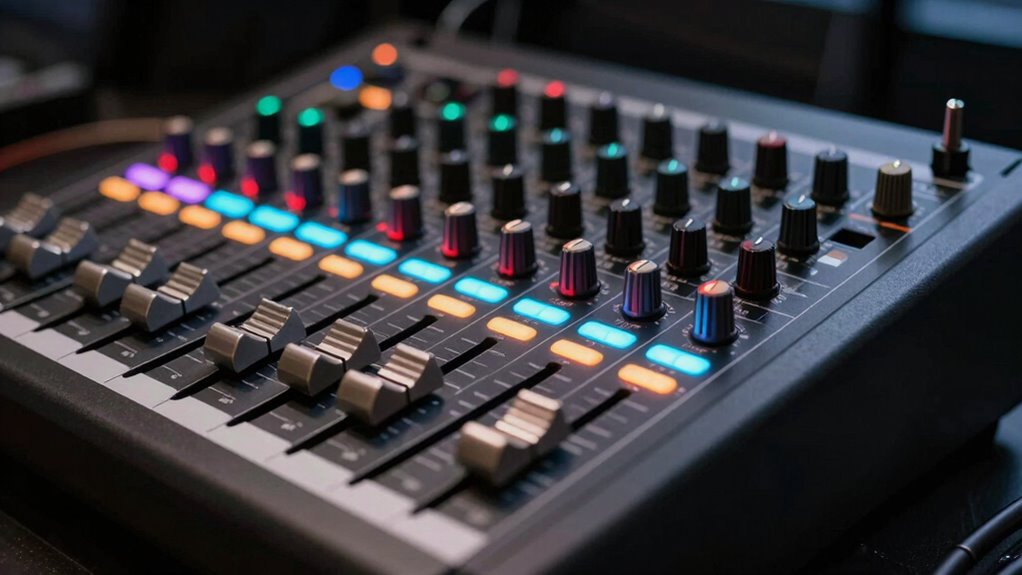

Choosing the right audio mixer for live sound depends heavily on your channel count, input types, and whether you need analog simplicity or digital control. The Mackie ProFX12v3 stands out as the best overall pick for most working musicians and small venues, offering a rare balance of robust build quality, onboard effects, and USB connectivity without the steep learning curve of digital consoles. For those needing higher power and channel density, the Rockville RPM1870 provides integrated amplification that simplifies rigging for larger events, while the Yamaha MG10 remains the gold standard for pure analog reliability in professional touring contexts. Most buyers struggle with the tradeoff between portability and connectivity; smaller units often lack phantom power or digital interfaces, while larger consoles can become unwieldy on tight stages. Continue reading to see how these thirteen models stack up against specific live sound scenarios.

Get kitchen gear delivered free with Prime
- Fast, free delivery on millions of items
- Prime Video, Amazon Music and more included
- Member-only deals all year
Complete the kit


Key Takeaways
- Analog mixers like the Yamaha MG10 and Mackie Mix8 offer superior reliability and lower failure points for touring acts who cannot risk digital firmware issues mid-set.
- The Rockville RPM1870 is the only option in this roundup with built-in power amplification, making it ideal for mobile DJs or bands that want to eliminate separate power amps from their rig.
- Digital capabilities are no longer exclusive to high-end consoles; models like the Alto Professional TMD16 bring motorized faders and scene recall to the mid-range price point.
- USB audio interfaces are standard on most modern mixers, but driver stability for recording live sets varies wildly between budget brands and established manufacturers like Mackie and Behringer.
- Channel count is often overestimated by beginners; a 4-6 channel mixer is sufficient for solo performers, while 12-16 channels are the realistic minimum for full bands with drum kits.
| Rockville RPM1870 18-Channel 6000W Powered Mixer |  | Best for Large Live Setups | Channels: 18 | Mic preamps: 18 XDR2 | Phantom power: 48V | VIEW ON AMAZON | See Our Full Breakdown |
| 6-Channel Bluetooth Audio Mixer with USB, 48V Phantom Power, and 16 DSP Effects |  | Best for a Simple Small-Group Rig | Channels: 6 | Inputs: Four XLR inputs, 1/4-inch inputs, and stereo 1/4-inch inputs on channels 5/6 | Phantom power: Switchable 48V on four XLR inputs | VIEW ON AMAZON | See Our Full Breakdown |
| Mackie ProFX12v3 12-Channel USB Mixer Bundle |  | Best for Live Sound and Recording | Channels: 12 | Microphone preamps: 7 Onyx preamps, up to 60 dB of gain | USB I/O: 2×4 | VIEW ON AMAZON | See Our Full Breakdown |
| K-mxerpro 8-Channel Audio Mixer with USB, Bluetooth, and 48V Phantom Power |  | Best for Flexible Playback in a Compact Setup | Channels: 8 | Inputs: XLR and unbalanced 1/4-inch | Phantom power: 48V | VIEW ON AMAZON | See Our Full Breakdown |
| Aveek 5-Channel Audio Mixer with USB Recording Interface |  | Best Compact Mixer for Solo Acts | Channels: 5 | Inputs: Three XLR, 1/4-inch stereo, RCA stereo, USB, and Bluetooth | Outputs: RCA stereo and 1/4-inch stereo main outputs | VIEW ON AMAZON | See Our Full Breakdown |
| SIKUING 12-Channel Audio Mixer with Bluetooth, USB, DSP Effects, and 48V Phantom Power |  | Best Mid-Size Versatility | Channels: 12 | Connectivity: Bluetooth, USB | Effects: 16-bit DSP | VIEW ON AMAZON | See Our Full Breakdown |
| Mackie Mix8 8-Channel Compact Mixer |  | Best for Durability and Simplicity | Channels: 8 | Mic/Line Inputs: 2 | Stereo Line Inputs: 2 | VIEW ON AMAZON | See Our Full Breakdown |
| Mackie ProFX10v3 10-Channel USB Mixer with GigFX Effects |  | Best for Recording and Streaming | Channels: 10 | Mic Preamps: Onyx | Built-in Effects: 24 | VIEW ON AMAZON | See Our Full Breakdown |
| Kaschun 8-Channel Audio Mixer with Bluetooth |  | Best Budget Connectivity | Channels: 8 | Bluetooth: Version 5.0 | Phantom Power: 48V | VIEW ON AMAZON | See Our Full Breakdown |
| Pyle PMXU43BT 4-Channel Bluetooth Audio Mixer |  | Best Ultra-Compact Option | Channels: 4 | Connectivity: Bluetooth, USB | Phantom Power: +48V | VIEW ON AMAZON | See Our Full Breakdown |
| Alto Professional TMD16 16-Channel Digital Mixer with Bluetooth |  | Best Digital Console for Modern Venues | Channels: 16 | Display: 7-inch color | Faders: 100 mm capacitive touch | VIEW ON AMAZON | See Our Full Breakdown |
| Behringer XENYX 802S 8-Input Analog Mixer with USB Streaming Interface |  | Best Hybrid Streaming Console | Channels: 8 | Connectivity: USB | Weight: 1.6 kg | VIEW ON AMAZON | See Our Full Breakdown |
| Yamaha MG10 10-Input Analog Stereo Mixer |  | Best Reliable Analog Workhorse | Channels: 10 | Preamps: D-PRE | Phantom Power: 48V switchable | VIEW ON AMAZON | See Our Full Breakdown |
| audio mixer for live sound | Channels | Connectivity | Weight | Phantom power |
|---|---|---|---|---|
| Rockville RPM1870 18-Channel 6 | 18 | USB, Bluetooth, XLR, TRS, RCA | — | 48V |
| 6-Channel Bluetooth Audio Mixe | 6 | USB and Bluetooth | 2.3 kg | Switchable 48V on four XLR inputs |
| Mackie ProFX12v3 12-Channel US | 12 | USB | 4.9 pounds | — |
| K-mxerpro 8-Channel Audio Mixe | 8 | USB, Bluetooth, and AUX | — | 48V |
| Aveek 5-Channel Audio Mixer wi | 5 | — | — | 48V |
| SIKUING 12-Channel Audio Mixer | 12 | Bluetooth, USB | — | +48V |
| Mackie Mix8 8-Channel Compact | 8 | Wired only | 1.1 kg | — |
| Mackie ProFX10v3 10-Channel US | 10 | — | 454 g | — |
| Kaschun 8-Channel Audio Mixer | 8 | — | 3.3 kg | 48V |
| Pyle PMXU43BT 4-Channel Blueto | 4 | Bluetooth, USB | 2.9 pounds | +48V |
| Alto Professional TMD16 16-Cha | 16 | Bluetooth, USB | 5.45 kg | — |
| Behringer XENYX 802S 8-Input A | 8 | USB | 1.6 kg | — |
| Yamaha MG10 10-Input Analog St | 10 | — | 4.2 pounds | 48V switchable |
More Details on Our Top Picks
Rockville RPM1870 18-Channel 6000W Powered Mixer
For a band, venue, or event crew that needs to connect many microphones and power passive speakers from one unit, the Rockville RPM1870 is the scale pick in this group. Its 18 mic preamps and dual 7-band graphic EQs offer more input capacity and hands-on room adjustment than the Mackie ProFX12v3, which has fewer channels and focuses more on USB recording versatility. The built-in amplifier delivers 750W RMS per side at 4 ohms, while USB recording, Bluetooth playback, and 16 effects cover common live and playback tasks without extra gear. The tradeoff is substantial: at 37 pounds and nearly 27 inches wide, it is far less convenient to move than the compact Aveek. Choose it for channel count and integrated speaker power, not a lightweight rig.
Pros:- 18 mic preamps with 48V phantom power support large microphone-heavy setups.
- 750W RMS per channel at 4 ohms provides integrated amplification for compatible passive speakers.
- Dual 7-band graphic EQs allow hands-on adjustments for the main mix.
- USB playback and recording, Bluetooth, and 16 built-in effects add useful live-source options.
Cons:- At 37 pounds, it is substantially heavier than compact mixers in this roundup.
- Its large dimensions require more transport and setup space.
- The integrated amplifier makes it a less suitable choice when a small, unpowered mixer is all the system needs.
Best for: Bands, houses of worship, and event operators who need many microphone inputs, onboard EQ, and powered-speaker output in one mixer.
Not ideal for: Solo performers or mobile operators who prioritize a small, light mixer; its 37-pound weight and large footprint make frequent transport less convenient.
- Channels:18
- Mic preamps:18 XDR2
- Phantom power:48V
- RMS amplifier output:750W × 2 at 4 ohms
- Effects:16 presets, 24-bit
- Equalizer:Dual 7-band graphic EQ
- Connectivity:USB, Bluetooth, XLR, TRS, RCA
- Dimensions and weight:18.11 × 26.97 × 7.28 inches; 37 pounds
Our verdict“Choose the RPM1870 when a large live setup needs extensive mic capacity and built-in power, and skip it if portability matters more.”
6-Channel Bluetooth Audio Mixer with USB, 48V Phantom Power, and 16 DSP Effects
This 6-channel mixer targets small performances where a few microphones, instruments, and playback sources need to share a straightforward analog-style control surface. Compared with the Aveek 5-Channel Audio Mixer, it offers one more channel and four XLR inputs with switchable 48V phantom power, making it a stronger fit for a compact vocal group or a couple of condenser mics. Bluetooth and USB playback, 3-band EQ, and 16 DSP effects add practical tools for basic live mixing without the extra channel count and recording emphasis of the Mackie ProFX12v3. Its limits are also clear: the information provided does not specify recording resolution or USB recording capability, and the product description warns that operating errors can result in no sound. I’d choose it for a modest setup, not a show that depends on detailed routing or extensive documentation.
Pros:- Six channels accommodate more sources than the Aveek 5-channel mixer.
- Four XLR inputs have switchable 48V phantom power.
- Bluetooth and USB playback provide convenient options for backing audio.
- Sixteen DSP effects and 3-band EQ add basic mix-shaping tools.
Cons:- The provided specifications do not identify recording resolution or confirm USB recording.
- The product description warns that operating errors may result in no sound.
- Its feature and routing details are less extensive than those listed for the Mackie ProFX12v3.
Best for: Small acoustic groups, presenters, and home-event operators who need several mic inputs, simple EQ, and wireless or USB playback.
Not ideal for: Sound operators needing documented multitrack recording, advanced routing, or confidence from a clearly specified professional live workflow.
- Channels:6
- Inputs:Four XLR inputs, 1/4-inch inputs, and stereo 1/4-inch inputs on channels 5/6
- Phantom power:Switchable 48V on four XLR inputs
- Equalizer:3-band EQ
- DSP effects:16
- Connectivity:USB and Bluetooth
- Power:Corded electric; 110V AC
- Weight:2.3 kg
Our verdict“Pick this mixer for a small group that needs six inputs and simple playback, but choose a better-documented model for demanding live production.”
Mackie ProFX12v3 12-Channel USB Mixer Bundle
The Mackie ProFX12v3 earns its place for buyers who want a live mixer that can also serve as a computer-recording hub. Its seven Onyx preamps, up to 60 dB of gain, and 2×4 USB I/O give it a more recording-focused feature set than the Rockville RPM1870, which instead prioritizes a much higher channel count and built-in speaker amplification. The supplied DAW software, plug-ins, and cables make it easier to build a basic recording workflow around rehearsals or performances, while 24-bit/192 kHz recording supports detailed computer capture. That flexibility comes with tradeoffs: it has fewer channels than the Rockville, and the supplied details don’t list onboard effects or Bluetooth. I’d favor it when recording and streaming matter alongside live mixing, but not when the main need is powering passive speakers from the mixer itself.
Pros:- Seven Onyx preamps offer up to 60 dB of gain for microphone sources.
- 2×4 USB I/O supports computer-based recording and custom mixes.
- 24-bit/192 kHz recording suits detailed capture beyond basic playback duties.
- Bundle includes DAW software, plug-ins, cables, adapters, and setup accessories.
Cons:- It has fewer channels than the 18-channel Rockville RPM1870.
- No built-in speaker amplifier is listed, so passive speakers need separate amplification.
- Bluetooth playback and onboard effects are not specified in the supplied product data.
Best for: Small bands, streamers, and venue operators who need a mixer for live use plus USB recording and computer-based production.
Not ideal for: Large ensembles needing more than 12 channels, or buyers seeking an integrated power amplifier or Bluetooth playback.
- Channels:12
- Microphone preamps:7 Onyx preamps, up to 60 dB of gain
- USB I/O:2×4
- Recording resolution:24-bit/192 kHz
- Connectivity:USB
- Output connectors:XLR and 1/4-inch
- Weight:4.9 pounds
- Bundle contents:Waveform OEM DAW, 16 FX plug-ins, four TRS cables, four XLR cables, two adapters, cable ties, and microfiber cloth
Our verdict“Choose the ProFX12v3 if your live mixer also needs to handle computer recording, and look elsewhere for more inputs or integrated speaker power.”
K-mxerpro 8-Channel Audio Mixer with USB, Bluetooth, and 48V Phantom Power
The K-mxerpro is a practical middle ground for small live systems that need more inputs than a five- or six-channel board but don’t need the Rockville RPM1870’s 18-channel capacity or powered output. With eight channels, XLR and unbalanced 1/4-inch inputs, and per-channel gain and 3-band EQ, it gives an operator direct control over several microphones and instruments. USB recording and playback, Bluetooth streaming, AUX, headphone monitoring, and reverb and delay broaden its usefulness for rehearsals, small events, and streaming. Compared with the Mackie ProFX12v3, this model lists Bluetooth and per-channel EQ but does not provide the same detailed recording specifications or computer I/O description. Its corded power restricts placement, and the available information leaves some technical details unclear. I’d choose it for a modest, flexible source mix rather than a recording-centered or high-capacity rig.
Pros:- Eight channels provide more source capacity than the Aveek 5-channel mixer.
- Per-channel gain and 3-band EQ give direct control over individual sources.
- USB playback and recording, Bluetooth, and AUX support varied audio sources.
- Headphone monitoring and reverb and delay are useful for rehearsal and performance.
Cons:- Corded electric power can limit placement where outlets are not convenient.
- The supplied information does not specify recording resolution or detailed USB routing.
- It lacks the 18-channel capacity and integrated amplification listed for the Rockville RPM1870.
Best for: Small event hosts, rehearsal groups, and performers who need eight inputs, Bluetooth playback, and headphone monitoring without a large mixer.
Not ideal for: Touring crews needing a fully specified recording workflow, built-in speaker amplification, or a mixer designed for a large microphone roster.
- Channels:8
- Inputs:XLR and unbalanced 1/4-inch
- Phantom power:48V
- Equalizer:3-band per channel
- Effects:Reverb and delay
- Connectivity:USB, Bluetooth, and AUX
- Headphone jack:6.5 mm
- Warranty:1 year
Our verdict“Choose the K-mxerpro for a small live setup needing eight inputs and flexible playback, not for large stages or a documented recording workflow.”
Aveek 5-Channel Audio Mixer with USB Recording Interface
For a solo performer or a very small acoustic setup, the Aveek 5-Channel Mixer keeps the live rig compact while still covering microphones, stereo sources, playback, and headphone monitoring. Its 8.27-inch-square footprint is easier to fit on a small table than the 8-channel K-mxerpro, and it includes USB recording, RCA and 1/4-inch stereo outputs, plus 48V phantom power. That connection range can help a performer combine a mic with an instrument or playback source without moving up to the larger Mackie ProFX12v3. The main compromise is capacity and simultaneous use: the product data says Bluetooth, USB, and channel functions may not be available together, and Bluetooth output devices are unsupported. With only five channels and 2-band EQ, it is better suited to simple acts than a full band mix.
Pros:- Compact dimensions suit small performance tables and portable setups.
- Three XLR inputs, stereo 1/4-inch, RCA, USB, and Bluetooth cover varied source types.
- USB recording and playback support basic computer or media-player workflows.
- 48V phantom power and a headphone jack add useful tools for microphone-based performances.
Cons:- Five channels provide less capacity than the K-mxerpro’s eight or the Mackie ProFX12v3’s twelve.
- Bluetooth, USB, and channel functions may not be usable simultaneously.
- Bluetooth output devices are not supported.
Best for: Solo musicians, presenters, and small acoustic duos who want a compact mixer with USB recording, headphone monitoring, and multiple stereo connections.
Not ideal for: Bands with several microphones or operators who need Bluetooth, USB, and all input channels active together.
- Channels:5
- Inputs:Three XLR, 1/4-inch stereo, RCA stereo, USB, and Bluetooth
- Outputs:RCA stereo and 1/4-inch stereo main outputs
- Phantom power:48V
- Equalizer:2-band EQ
- Headphone jack:3.5 mm
- Dimensions:8.27 × 8.27 × 2.56 inches
- Bluetooth range:Up to 15 feet
Our verdict“Choose the Aveek for a compact solo or small-duo rig, but move to a larger mixer if you need more microphones or simultaneous source functions.”
SIKUING 12-Channel Audio Mixer with Bluetooth, USB, DSP Effects, and 48V Phantom Power
This mixer stands out for balancing 12-channel capacity with modern connectivity like Bluetooth and USB. Unlike the more basic Mackie Mix8, the SIKUING offers dedicated DSP effects and phantom power on all mic inputs, making it suitable for small bands or podcasters who need more than just volume control. The 3-band EQ allows for basic tonal shaping without needing external processors. However, the lack of detailed input/output specifications is a drawback for professionals who need to map signal chains precisely. It is heavier than the ultra-portable Pyle PMXU43BT, so it is better suited for semi-permanent setups rather than frequent travel.
Pros:- 12 channels provide ample headroom for small ensembles
- Bluetooth and USB allow for flexible playback and recording
- Built-in DSP effects reduce the need for external gear
- 48V phantom power supports condenser microphones
Cons:- Vague documentation on specific input/output counts
- USB audio implementation details are unclear
- Heavier than ultra-compact 4-channel alternatives
Best for: Small bands, church worship teams, or podcasters who need 12 channels, effects, and Bluetooth streaming in one unit.
Not ideal for: Professional touring engineers who require detailed I/O specs and high-end preamp clarity found in premium analog consoles.
- Channels:12
- Connectivity:Bluetooth, USB
- Effects:16-bit DSP
- Phantom Power:+48V
- Equalizer:3-band EQ
- Output Connectors:TRS, XLR
- Warranty:1 year
Our verdict“Choose this if you need a flexible, feature-rich 12-channel hub for small live events or hybrid streaming setups.”
Mackie Mix8 8-Channel Compact Mixer
The Mackie Mix8 is the go-to choice for users who prioritize rugged build quality over digital bells and whistles. Its metal chassis and low-noise preamps offer reliability that cheaper plastic alternatives like the Kaschun 8-Channel cannot match. While it lacks Bluetooth and USB, this simplicity means fewer failure points and easier operation for non-technical users. It is strictly analog, so it does not compete with the Mackie ProFX10v3 for recording capabilities. This mixer is ideal for simple PA setups where audio clarity and physical resilience matter more than streaming features.
Pros:- Rugged metal chassis withstands physical abuse
- Low-noise, high-headroom performance for clean audio
- Simple analog interface is easy to learn quickly
- Phantom power included for condenser mics
Cons:- No USB or Bluetooth connectivity
- Limited to two mic/line inputs restricts expansion
- Lacks built-in effects processors
Best for: Small venue owners, community centers, or educators who need a reliable, no-nonsense analog mixer for basic PA systems.
Not ideal for: Streamers or musicians who need USB audio interfaces or Bluetooth connectivity for playback.
- Channels:8
- Mic/Line Inputs:2
- Stereo Line Inputs:2
- EQ:3-band on all channels
- Connectivity:Wired only
- Weight:1.1 kg
- Power Source:Corded electric
Our verdict“Pick this for a bulletproof, simple analog solution for basic live sound reinforcement.”
Mackie ProFX10v3 10-Channel USB Mixer with GigFX Effects
Compared to the analog-only Mackie Mix8, the ProFX10v3 adds significant value with its Onyx mic preamps and built-in USB audio interface. This model is designed for musicians who want to record rehearsals or stream live without external interfaces. The zero-latency monitoring is a key advantage for vocalists who need to hear themselves clearly without delay. While it has fewer channels than the SIKUING 12-Channel, the audio quality and preamp performance are superior. The single-knob compression is a useful tool for quick dynamic control on the fly, though it offers less precision than multi-knob compressors.
Pros:- High-quality Onyx mic preamps with 60 dB gain
- Built-in USB interface for 24-bit/192 kHz recording
- 24 built-in GigFX effects processors
- Zero-latency monitoring for live performance
Cons:- Limited to 10 channels for larger groups
- Software update support dates are unclear
- More expensive than basic analog mixers
Best for: Singer-songwriters, small bands, and content creators who need high-quality preamps and direct USB recording capability.
Not ideal for: Large productions requiring more than 10 inputs or those who prefer a fully digital workflow with touchscreens.
- Channels:10
- Mic Preamps:Onyx
- Built-in Effects:24
- Recording Resolution:24-bit/192 kHz
- USB I/O:2×4
- Weight:454 g
- Warranty:1 year
Our verdict“This is the best choice for hybrid live/recording setups where preamp quality and USB connectivity are priorities.”
Kaschun 8-Channel Audio Mixer with Bluetooth
The Kaschun 8-Channel targets users who need modern connectivity on a tighter budget than the Mackie ProFX10v3. It offers Bluetooth 5.0 and USB playback, making it easy to integrate wireless devices for backing tracks. The per-channel 3-band EQ and phantom power provide decent control for basic mixing tasks. However, the build quality and preamp headroom are likely lower than established brands like Mackie. It is a step up from the Pyle PMXU43BT in terms of channel count and control granularity, but lacks the refined audio performance of higher-end analog desks. It serves as a functional entry point for digital-hybrid mixing.
Pros:- Bluetooth 5.0 for stable wireless streaming
- 8 channels with XLR and 1/4-inch inputs
- Includes phantom power and per-channel EQ
- USB recording and playback capabilities
Cons:- Requires corded power with no battery option
- Software update support is unspecified
- Build quality may not withstand heavy touring
Best for: Hobbyists, home studio users, or small karaoke setups needing Bluetooth and USB features without a professional price tag.
Not ideal for: Professional venues or critical listening environments where audio fidelity and build durability are non-negotiable.
- Channels:8
- Bluetooth:Version 5.0
- Phantom Power:48V
- Equalizer:3-band EQ per channel
- Effects:Delay and reverb
- Weight:3.3 kg
- Model:CT80S
Our verdict“Select this for a cost-effective way to add Bluetooth and USB recording to a small 8-channel setup.”
Pyle PMXU43BT 4-Channel Bluetooth Audio Mixer
If space is the primary constraint, the Pyle PMXU43BT is the smallest option in this lineup, fitting easily on a desk or small table. It provides 4 channels with Bluetooth and USB, which is sufficient for solo performers or small interviews. Compared to the Kaschun 8-Channel, it lacks the extra inputs and finer EQ control, but it is significantly more portable. The steel chassis offers better durability than plastic competitors in this price range. It is not suitable for bands needing multiple microphones, but it excels as a dedicated, portable PA hub for very small groups or karaoke nights.
Pros:- Ultra-compact size for easy transport
- Bluetooth and USB playback included
- Rugged steel chassis for durability
- 48V phantom power supports condenser mics
Cons:- Only 4 channels limits usability
- Requires corded power connection
- Software update support is unknown
Best for: Solo musicians, karaoke hosts, or small podcast setups where portability and minimal footprint are critical.
Not ideal for: Bands or teams with more than two microphones or instruments to mix simultaneously.
- Channels:4
- Connectivity:Bluetooth, USB
- Phantom Power:+48V
- Equalizer:3-band EQ on all channels
- Inputs:XLR and unbalanced 1/4-inch
- Weight:2.9 pounds
- Model:PMXU43BT
Our verdict“Buy this if you need the absolute smallest mixer possible for a solo or duo performance setup.”
Alto Professional TMD16 16-Channel Digital Mixer with Bluetooth
This unit stands out as the most feature-rich digital option in this lineup, bridging the gap between analog simplicity and digital control. Unlike the Yamaha MG10, which relies on physical knobs, the TMD16 offers 100 mm capacitive touch faders and a 7-inch color display, allowing for precise gain staging and scene recall. This makes it ideal for venues that host multiple bands with different inputs. However, this digital complexity comes with a 5.45 kg weight and a need for reliable power, making it less portable than the Behringer XENYX 802S. While the analog competitors offer immediate tactile feedback, the Alto provides USB recording and livestreaming capabilities that are essential for modern hybrid events. It is a powerful tool, but the learning curve is steeper than the plug-and-play analog mixers.Pros:- Digital workflow with scene recall for fast setup changes
- Integrated USB interface for recording and streaming
- Large 7-inch color display simplifies parameter editing
- Robust metal chassis withstands frequent transport
Cons:- Heavier than analog alternatives at 5.45 kg
- Touch faders may lack the tactile precision of motorized faders
- Complex interface requires more initial setup time
Best for: Sound engineers managing multi-band events who need scene recall and digital recording capabilities.
Not ideal for: Musicians seeking a lightweight, battery-free portable solution for small coffee shop gigs.
- Channels:16
- Display:7-inch color
- Faders:100 mm capacitive touch
- Connectivity:Bluetooth, USB
- Weight:5.45 kg
- Chassis:Metal
Our verdict“Choose this if your live sound setup requires digital flexibility, recording outputs, and scene management.”
Behringer XENYX 802S 8-Input Analog Mixer with USB Streaming Interface
This mixer carves a niche by combining analog simplicity with digital streaming utility. Compared to the Alto TMD16, it lacks advanced digital processing and scene recall, but it offers a much more straightforward workflow for podcasters and gamers. The USB interface allows direct mixing of PC audio into the live output, a feature absent in the Yamaha MG10. It is significantly lighter at 1.6 kg, making it easy to transport. However, being an analog unit, it does not offer the extensive EQ and dynamics processing found in digital competitors. It is the right choice for creators who need reliable streaming without the overhead of managing a digital console, but it may feel limited for complex live band reinforcement where detailed channel processing is necessary.Pros:- Direct USB connectivity for streaming and recording
- Extremely lightweight at 1.6 kg for easy portability
- Simple analog interface reduces setup time
- Mixes PC audio directly into the main output
Cons:- No built-in effects or advanced dynamics processing
- Limited channel count for larger bands
- Lacks scene recall for recurring event setups
Best for: Streamers and podcasters who need to mix computer audio with live mics seamlessly.
Not ideal for: Live sound engineers who require complex signal routing and dynamic processing per channel.
- Channels:8
- Connectivity:USB
- Weight:1.6 kg
- Output Connectors:XLR, TRS, RCA
- Power Source:Corded electric
- Type:Unpowered mixer
Our verdict“Ideal for content creators who prioritize easy streaming integration over complex live sound processing.”
Yamaha MG10 10-Input Analog Stereo Mixer
The Yamaha MG10 remains a benchmark for analog reliability in live sound. Unlike the Behringer XENYX 802S, which focuses on streaming, the MG10 prioritizes audio fidelity with D-PRE preamps that provide a natural, warm sound. It lacks the USB connectivity and digital features of the Alto TMD16, meaning you cannot record directly to a computer without an interface. However, its one-knob compressors and 3-band EQ offer practical tools for taming dynamics on the fly. The powder-coated metal chassis feels durable, though it is heavier than the Behringer. This mixer is for those who value pure audio quality and tactile control over digital convenience. It is a robust choice for small venues and lectures where simplicity and sound quality are paramount.Pros:- High-quality D-PRE microphone preamps
- Durable, impact-resistant metal chassis
- Intuitive one-knob compressors for quick dynamics control
- Compact footprint fits on small tables
Cons:- No USB interface for recording or streaming
- Lacks built-in effects processors
- Heavier than ultra-compact streaming mixers
Best for: Musicians and presenters who prioritize high-quality preamps and simple, reliable analog control.
Not ideal for: Users who need built-in USB recording or streaming capabilities without external interfaces.
- Channels:10
- Preamps:D-PRE
- Phantom Power:48V switchable
- Weight:4.2 pounds
- Chassis:Powder-coated metal
- Dimensions:11.6 x 9.6 x 2.8 inches
Our verdict“Select this for its superior analog audio quality and rugged build if you do not need digital connectivity.”

How We Picked
I evaluated these mixers based on their suitability for live performance environments, prioritizing durability, input flexibility, and ease of use under pressure. Live sound demands equipment that can withstand transport, handle high-gain inputs without distortion, and allow quick adjustments during a set. I filtered out products that lacked essential features for live work, such as phantom power for condenser microphones or robust physical faders that can handle frequent adjustment. I also considered the integration of modern features like Bluetooth streaming and USB recording, which are increasingly expected even in entry-level models.
The ranking logic places an emphasis on reliability and signal quality over feature bloat. A mixer with fewer inputs but cleaner preamps and better build quality ranks higher than a feature-rich unit with flimsy construction. I also weighed the long-term support and parts availability for established brands, as live sound gear is a professional investment that needs to last beyond a single tour cycle.
| audio mixer for live sound | Connectivity |
|---|---|
| Rockville RPM1870 18-Channel 6 | USB, Bluetooth, XLR, TRS, RCA |
| 6-Channel Bluetooth Audio Mixe | USB and Bluetooth |
| Mackie ProFX12v3 12-Channel US | USB |
| K-mxerpro 8-Channel Audio Mixe | USB, Bluetooth, and AUX |
| Aveek 5-Channel Audio Mixer wi | — |
| SIKUING 12-Channel Audio Mixer | Bluetooth, USB |
| Mackie Mix8 8-Channel Compact | Wired only |
| Mackie ProFX10v3 10-Channel US | — |
| Kaschun 8-Channel Audio Mixer | — |
| Pyle PMXU43BT 4-Channel Blueto | Bluetooth, USB |
| Alto Professional TMD16 16-Cha | Bluetooth, USB |
| Behringer XENYX 802S 8-Input A | USB |
| Yamaha MG10 10-Input Analog St | — |
Factors to Consider When Choosing Audio Mixer For Live Sound
Selecting a mixer for live sound is not just about counting inputs; it is about understanding how the unit fits into your entire signal chain. This guide breaks down the critical factors that separate a stage-ready console from a home studio toy.Channel Count and Input Types
Channel count is the most obvious starting point, but it must be matched to your actual instrumentation. A solo singer-songwriter needs only one or two channels, while a four-piece rock band typically requires 8-12 channels to handle drums, guitars, bass, and vocals separately. Input types are equally important; ensure the mixer has enough XLR inputs for your microphones and balanced line inputs for keyboards or direct boxes. Phantom power is non-negotiable if you use condenser microphones, which are common for acoustic instruments and high-fidelity vocal capture. Many budget mixers limit phantom power to only the first one or two channels, a restriction that can cripple a multi-mic setup. Always verify that every channel you plan to use has its own independent phantom power switch if you rely on condensers across the stage.
Analog vs. Digital Workflow
Analog mixers offer immediate tactile control, where every knob and fader directly affects the signal path without menus or layers. This simplicity reduces the risk of operator error during a live performance and often results in lower latency for monitor mixes. Digital mixers, such as the Alto Professional TMD16, provide recallable scenes, which is invaluable for multi-band festivals where settings must be switched rapidly between acts. However, digital units introduce complexity; if a menu navigation error occurs, it can take longer to fix than turning a physical knob. For most small-to-medium venues, an analog mixer provides the most reliable and intuitive experience. Choose digital only if you require specific features like built-in effects racks, multi-track recording via USB, or remote control via tablet.
Onboard Effects and Processing
Onboard effects like reverb, delay, and EQ can save space by eliminating the need for external rack gear. For live sound, reverb is the most critical effect, as dry vocals often sound unnatural in large or reflective rooms. Look for mixers that offer adjustable send levels for effects, allowing you to control the wet/dry mix per channel rather than globally. GigFX and similar built-in processors in models like the Mackie ProFXv3 series are designed specifically for live applications, offering presets that are ready to use out of the box. While external effects units offer more depth, onboard options are more convenient for mobile setups. Ensure the effects processor does not degrade the signal quality, as some budget units add noise or coloration that is difficult to remove in the mix.
Connectivity and Recording Capabilities
USB connectivity has transformed live mixers into recording interfaces, allowing bands to capture their performances directly to a computer or digital audio workstation (DAW). This feature is useful for post-show analysis or creating live albums, but it requires stable drivers and low-latency performance. Check if the mixer supports multi-track recording over USB, which sends each channel to a separate track in your DAW, or if it only records the stereo main output. Bluetooth connectivity is increasingly popular for playing backing tracks from phones or tablets, but it can introduce latency or audio dropouts if the signal environment is congested. For critical live applications, a wired connection is still preferred for backing tracks, making Bluetooth a convenience feature rather than a core performance tool.
Build Quality and Portability
Build quality is a primary differentiator in live sound gear. A mixer must survive being loaded into a van, bumped on stage, and exposed to dust and spills. Metal chassis and reinforced fader pots are hallmarks of professional-grade units like the Yamaha MG series. Plastic housings, while lighter and cheaper, are prone to cracking and may have loose connections over time. Portability involves more than just weight; consider the footprint and the placement of inputs. Rear-panel inputs are standard for pro gear, as they keep cables out of the audience’s view, but top-panel inputs are easier for beginners to access. If you perform in tight spaces, a compact footprint is essential to leave room for other gear and stage movement.
Frequently Asked Questions
Do I need phantom power for all my microphones?
No, you only need phantom power for condenser microphones, which require 48V to operate their internal electronics. Dynamic microphones, such as the industry-standard Shure SM58, do not require phantom power and will function correctly on channels where it is turned off. However, if you plan to use condenser mics for acoustic instruments or overhead drum mics, you must ensure your mixer provides 48V phantom power on the channels you intend to use. It is safe to leave phantom power on for dynamic mics, but it is best practice to turn it off when not in use to prevent potential damage to ribbon microphones or active direct boxes.
Is a digital mixer better than an analog mixer for live sound?
A digital mixer is not inherently better; it is better for specific workflows. Digital consoles like the Alto Professional TMD16 excel in scenarios requiring quick scene changes, complex routing, or multi-track recording, making them ideal for festivals or broadcast environments. Analog mixers offer a more direct and intuitive user experience with immediate tactile feedback, which is often preferred for small venues and touring bands who value reliability and simplicity. If you are new to mixing, an analog unit like the Mackie Mix8 allows you to learn the fundamentals of gain staging and EQ without navigating menus. Choose digital only if you specifically need the advanced features it offers.
Can I use a home studio mixer for live gigs?
While possible, it is generally not recommended due to differences in design priorities. Home studio mixers often prioritize pristine audio quality and quiet operation over the ruggedness and input flexibility needed for live stages. They may lack essential features like monitor sends, which are required for stage wedges, or have limited input types that make connecting stage cables difficult. Live mixers are built with metal chassis and spill-resistant controls to withstand the rigors of touring. Using a studio mixer live can lead to connectivity issues, insufficient monitor mixes, and increased risk of equipment damage during transport.
What is the difference between a main mix and a monitor mix?
The main mix is the audio sent to the front-of-house speakers that the audience hears, while the monitor mix is the audio sent to the stage wedges or in-ear monitors that the performers hear. These mixes are independent; you can send more vocals to the monitors for the singer while keeping the guitar louder in the main mix. A critical feature for live sound is the number of auxiliary sends (aux sends) a mixer has, as each send typically corresponds to a separate monitor mix. If a mixer lacks sufficient aux sends, performers may struggle to hear themselves, leading to poor performance quality.
Do I need a powered mixer or a passive mixer?
A powered mixer, like the Rockville RPM1870, has built-in amplifiers, allowing you to plug passive speakers directly into the mixer without a separate power amp. This setup is convenient for mobile DJs and small bands who want to minimize the amount of gear they carry. A passive mixer requires an external power amplifier to drive passive speakers, or it must be connected to active (powered) speakers. Passive mixers are more common in professional installations and larger venues where the amplification is handled by a dedicated, high-power rack. For most small-to-medium live applications, a powered mixer offers the simplest and most cost-effective solution.
Conclusion
Choosing the right audio mixer for live sound comes down to matching your specific performance needs with the right feature set. For the majority of working musicians and small venue owners, the Mackie ProFX12v3 offers the best balance of reliability, features, and price, making it the best overall choice. If you are a solo performer or operate on a tight budget, the Yamaha MG10 provides exceptional analog quality in a compact, durable package that will last for years. For those who need to amplify their own sound without separate amps, the Rockville RPM1870 is the best powered solution, while the Alto Professional TMD16 serves as the best digital option for users who require scene recall and advanced routing. Beginners should start with the Mackie Mix8 for its simplicity, while mobile DJs will appreciate the versatility of the Pyle PMXU43BT for its Bluetooth integration. Evaluate your channel needs, monitor requirements, and transport constraints to make the final decision.