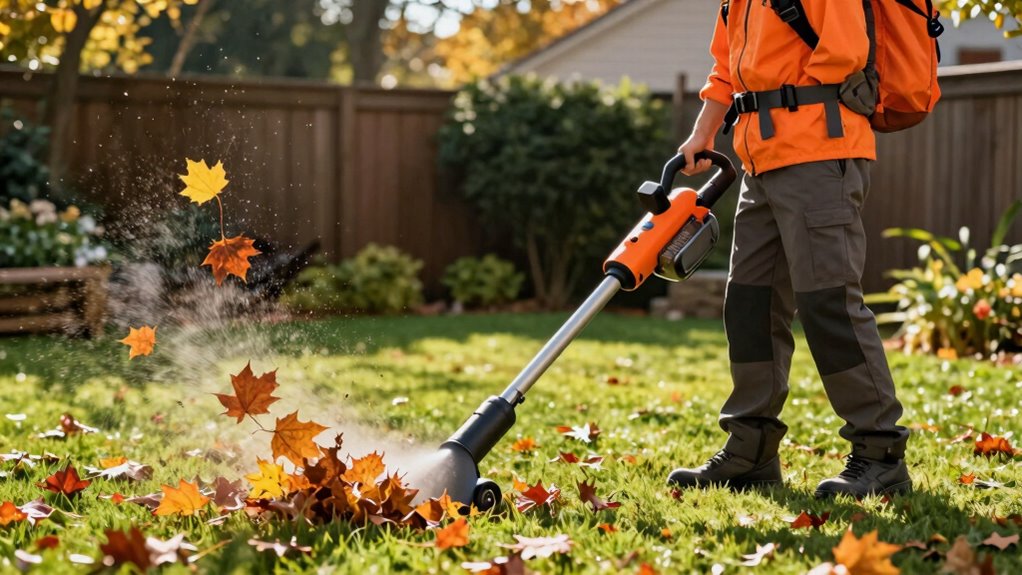
A backpack leaf blower can make large-yard cleanup faster, but the right choice depends on how much power you need and how much noise, weight, and maintenance you can accept. I rank the Husqvarna 350BT as my best overall pick for buyers seeking a balance of established brand support and a moderate-size gas engine. The Greenworks 80V stands out for shoppers who want battery power, while the VEVOR 63CC offers a high airflow claim for demanding debris-clearing jobs. Gas models bring longer work sessions and refueling flexibility; battery models avoid fuel mixing and exhaust but depend on runtime and charging. Read on for the full comparison, key buying factors, and picks for different yard needs.

Get kitchen gear delivered free with Prime
- Fast, free delivery on millions of items
- Prime Video, Amazon Music and more included
- Member-only deals all year
Complete the kit

Key Takeaways
- The lineup’s strongest split is fuel type: the Greenworks 80V avoids gas mixing and exhaust, while the gas models suit buyers who prioritize refueling over battery-runtime limits.
- The Husqvarna 350BT’s 50.2 cc engine makes it a more balanced overall choice than the larger-displacement options for buyers who do not need maximum output.
- The VEVOR 63CC advertises 1,110 CFM and 220 MPH, making its stated airflow figures stand out, though buyers should weigh those figures against comfort, noise, and support.
- Several 63 cc models share similar advertised figures, so brand support, harness fit, controls, and service access may matter more than small spec differences.
- A larger engine is not automatically the better yard tool: occasional users and noise-sensitive households may benefit more from battery convenience or a smaller gas model.
| Thalorus 52cc Gas Backpack Leaf Blower, 550 CFM |  | Best for Balanced, Mid-Size Cleanup | Engine displacement: 52cc | Power source: Gas | Airflow: 550 CFM | VIEW ON AMAZON | See Our Full Breakdown |
| HTK 63cc Gas Backpack Leaf Blower, 665 CFM, 205 MPH |  | Best for High-Volume Gas Cleanup | Engine: 63cc 2-stroke | Power source: Gas | Airflow: 665 CFM | VIEW ON AMAZON | See Our Full Breakdown |
| Greenworks 80V Backpack Leaf Blower with 4.0 Ah Battery and Charger |  | Best Battery-Powered Pick | Power source: Battery | Voltage: 80V | Motor: Brushless | VIEW ON AMAZON | See Our Full Breakdown |
| Getell 80cc Gas Backpack Leaf Blower, 900 CFM |  | Best for Heavy-Duty, High-Volume Work | Engine: 80cc 2-stroke | Power: 3.2 kW / 4.3 HP | Airflow: 900 CFM | VIEW ON AMAZON | See Our Full Breakdown |
| Biplut 63cc Gas Backpack Leaf Blower, 665 CFM |  | Best for Simple Gas-Powered Control | Brand: Biplut | Engine: 63cc 2-stroke | Engine power: 3 hp / 2.3 kW | VIEW ON AMAZON | See Our Full Breakdown |
| VEVOR 63CC Gas Backpack Leaf Blower, 2-Cycle, 1110 CFM, 220 MPH |  | Best for Maximum Airflow | Engine: 63cc, 2-cycle | Power source: Gas | Airflow capacity: 1,110 CFM | VIEW ON AMAZON | See Our Full Breakdown |
| Husqvarna 360BT Gas Backpack Leaf Blower, 65.6 cc, 3.81 HP, 2-Cycle |  | Best for Harness Comfort and Control | Engine: 65.5cc, 2-cycle X-TORQUE | Engine power: 3.81 HP | Airflow capacity: 890 CFM | VIEW ON AMAZON | See Our Full Breakdown |
| POWUSE 52cc Gas Backpack Leaf Blower, 603 CFM, 224 MPH |  | Best Lightweight Gas Pick | Engine: 52cc, 2-cycle gasoline | Airflow: 603 CFM | Maximum air speed: 224 MPH | VIEW ON AMAZON | See Our Full Breakdown |
| Thalorus 63cc Backpack Leaf Blower, 665 CFM, 205 MPH |  | Best for Easy Upkeep | Engine: 63cc, 2-cycle gas-powered | Power: 3 HP | Airflow: 665 CFM | VIEW ON AMAZON | See Our Full Breakdown |
| TDH 63CC Gas-Powered Backpack Leaf Blower |  | Best for Longer Fuel Capacity | Engine: 63cc, 2-stroke | Airflow: 665 CFM | Air speed: 205 MPH | VIEW ON AMAZON | See Our Full Breakdown |
| Husqvarna 350BT Gas Backpack Leaf Blower, 50.2 cc, 2.1 HP |  | Best for Balanced Yard Cleanup | Engine: 50.2 cc, 2-cycle, 2.1 HP X-Torq | Power source: Gas | Maximum air speed: 180 MPH | VIEW ON AMAZON | See Our Full Breakdown |
| ElfinAura 62cc 2-Stroke Backpack Leaf Blower |  | Best for Maximum Listed Air Speed | Engine: 62cc 2-stroke | Power: 4.0 HP | Power source: Gas | VIEW ON AMAZON | See Our Full Breakdown |
| PROYAMA 72cc Gas Backpack Leaf Blower |  | Best for Nozzle Versatility | Model: PBB72 | Engine: 72cc two-cycle | Power: 3.7 hp | VIEW ON AMAZON | See Our Full Breakdown |
| Husqvarna 150BT Gas Backpack Leaf Blower, 51 cc, 2.16 HP, 2-Cycle |  | Best for Blowing Force and Secure Carry | Engine: 51 cc, 2-cycle, 2.16 HP | Power source: Gas | Airflow capacity: 765 CFM | VIEW ON AMAZON | See Our Full Breakdown |
| HTK 63cc Gas Backpack Leaf Blower, 665 CFM, 205 MPH |  | Best for Cruise-Control Convenience | Engine: 63cc 2-stroke | Power source: Gas | Airflow capacity: 665 CFM | VIEW ON AMAZON | See Our Full Breakdown |
| backpack leaf blower | Engine | Weight | Power source | Airflow |
|---|---|---|---|---|
| Thalorus 52cc Gas Backpack Lea | — | 17 lb | Gas | 550 CFM |
| HTK 63cc Gas Backpack Leaf Blo | 63cc 2-stroke | — | Gas | 665 CFM |
| Greenworks 80V Backpack Leaf B | — | 9.5 lb | Battery | Up to 750 CFM |
| Getell 80cc Gas Backpack Leaf | 80cc 2-stroke | About 22 lb | — | 900 CFM |
| Biplut 63cc Gas Backpack Leaf | 63cc 2-stroke | 19 lb | — | 665 CFM |
| VEVOR 63CC Gas Backpack Leaf B | 63cc, 2-cycle | 26.5 lb | Gas | — |
| Husqvarna 360BT Gas Backpack L | 65.5cc, 2-cycle X-TORQUE | 23.2 lb | — | — |
| POWUSE 52cc Gas Backpack Leaf | 52cc, 2-cycle gasoline | 16.9 lb | — | 603 CFM |
| Thalorus 63cc Backpack Leaf Bl | 63cc, 2-cycle gas-powered | 22 lb | — | 665 CFM |
| TDH 63CC Gas-Powered Backpack | 63cc, 2-stroke | — | Gas | 665 CFM |
| Husqvarna 350BT Gas Backpack L | 50.2 cc, 2-cycle, 2.1 HP X-Torq | 22 pounds | Gas | — |
| ElfinAura 62cc 2-Stroke Backpa | 62cc 2-stroke | 25.1 pounds | Gas | — |
| PROYAMA 72cc Gas Backpack Leaf | 72cc two-cycle | 21 pounds | Gas | 880 CFM |
| Husqvarna 150BT Gas Backpack L | 51 cc, 2-cycle, 2.16 HP | 22 pounds | Gas | — |
| HTK 63cc Gas Backpack Leaf Blo | 63cc 2-stroke | — | Gas | — |
More Details on Our Top Picks
Thalorus 52cc Gas Backpack Leaf Blower, 550 CFM
The Thalorus T692 Pro suits homeowners who want a gas backpack blower with manageable output rather than the biggest engine in this group. Its 550 CFM and 230 mph combination favors a focused air stream for shifting leaves and routine yard debris; the HTK 63cc, at 665 CFM, moves a broader volume of air for larger piles. A 17-pound frame, padded harness, thumb throttle, and cruise control give this model a more approachable setup than the heavier Getell 80cc. The fuel tank is listed for up to 45 minutes of runtime, though refueling and gas-engine upkeep remain part of ownership. I’d choose it for moderate cleanup, not extensive properties where the higher-airflow alternatives may save passes.
Pros:- 230 mph maximum air speed suits focused cleanup of leaves and grass clippings.
- Padded harness helps distribute the 17-pound load.
- Thumb throttle and cruise control allow speed adjustments without constant trigger pressure.
- Fuel tank is listed for up to 45 minutes of runtime.
Cons:- 550 CFM is below the 665 CFM HTK and 900 CFM Getell, so broad or heavy piles may take longer.
- At 17 pounds, it can become tiring during extended use.
- Gas operation requires refueling and routine engine maintenance.
Best for: Homeowners with medium-size yards who want gas-powered runtime and adjustable controls without moving to a 63cc or 80cc blower.
Not ideal for: Buyers tackling large, dense leaf piles who need more airflow, or anyone who wants to avoid fuel mixing, engine upkeep, and a 17-pound pack.
- Engine displacement:52cc
- Power source:Gas
- Airflow:550 CFM
- Maximum air speed:230 mph
- Weight:17 lb
- Fuel tank capacity:33.8 fl oz
- Maximum runtime:Up to 45 minutes
- Noise level:78 dB
- Warranty:2 years
Our verdict“Choose the Thalorus for moderate yard work if you value a padded, adjustable gas backpack blower more than maximum airflow.”
HTK 63cc Gas Backpack Leaf Blower, 665 CFM, 205 MPH
The HTK 63cc is a strong fit when moving a larger volume of leaves matters more than reaching the highest listed air speed. Its 665 CFM airflow exceeds the Thalorus 52cc’s 550 CFM, making it better suited to clearing broad areas and gathering substantial piles; the Thalorus, by contrast, lists a faster 230 mph maximum. HTK pairs its output with a padded, low-vibration harness, variable-speed throttle, cruise control, and an air-purge starting aid, which can make repeated starts and longer sessions easier to manage. It remains a gas 2-stroke blower, so fuel and maintenance are unavoidable, and its long dimensions call for storage space. I’d favor it over the Biplut 63cc when listed noise is a key concern, but check the intended work area and hearing protection needs.
Pros:- 665 CFM moves more air volume than the Thalorus 52cc’s 550 CFM.
- Padded harness and low-vibration design target fatigue during longer sessions.
- Variable-speed throttle and cruise control offer adjustable operation.
- Air-purge starting aid is designed to simplify starting.
Cons:- The 2-stroke engine requires fuel and routine maintenance.
- Listed dimensions make it a bulky choice for tight storage areas.
- Its 205 MPH maximum air speed is lower than the Thalorus 52cc’s listed 230 mph.
Best for: Property owners who need higher airflow for broad leaf coverage and want cruise control, a padded harness, and a starting aid.
Not ideal for: People with limited storage, buyers seeking battery-powered operation, or those who prioritize a higher maximum air speed over airflow volume.
- Engine:63cc 2-stroke
- Power source:Gas
- Airflow:665 CFM
- Maximum air speed:205 MPH
- Fuel tank capacity:1.7 L
- Noise level:71 dB
- Dimensions:70.8 × 17.7 × 21.2 in
- Warranty:2 years
Our verdict“Pick the HTK if you want a higher-airflow gas blower with comfort and starting features for larger cleanup jobs.”
Greenworks 80V Backpack Leaf Blower with 4.0 Ah Battery and Charger
The Greenworks 80V is the clear choice here for buyers who want backpack-style carrying without a gas engine. Its brushless motor and 750 CFM give it more listed airflow than the HTK 63cc, while battery power avoids direct emissions during operation and eliminates fuel mixing. At a listed 9.5 pounds, it is also much lighter than the 19-pound Biplut and roughly 22-pound Getell. Variable speed and a turbo setting let the operator reserve extra output for stubborn debris rather than running at full power throughout. The tradeoff is dependence on battery charge: unlike the gas models, it cannot keep working simply by refueling when the battery runs down. I’d choose it for noise-conscious residential use and skip it for long, uninterrupted routes without a charged spare.
Pros:- 750 CFM is higher than the listed airflow of the HTK and Biplut 63cc models.
- Brushless motor and 80V battery operation avoid direct emissions during use.
- Listed weight of 9.5 pounds is substantially lower than the gas models in this group.
- Variable speed and turbo provide different output levels for changing debris.
Cons:- Runtime depends on battery charge, unlike gas models that can be refueled.
- Requires recharging between sessions or a charged spare for extended work.
- The provided data does not specify runtime per charge.
Best for: Homeowners who want a lighter backpack blower, no direct operating emissions, and strong airflow for residential cleanup.
Not ideal for: Crews or property owners who need uninterrupted long sessions and do not have access to a charged spare battery.
- Power source:Battery
- Voltage:80V
- Motor:Brushless
- Airflow:Up to 750 CFM
- Weight:9.5 lb
- Battery capacity:4.0 Ah
- Noise level:64.52 dB
- Form factor:Backpack
Our verdict“Choose the Greenworks if lower weight and battery-powered operation matter more than the refueling flexibility of gas.”
Getell 80cc Gas Backpack Leaf Blower, 900 CFM
For the biggest listed airflow in this batch, the Getell 80cc stands apart: its 900 CFM rating is well above the HTK and Biplut at 665 CFM. That makes it the more compelling option for dense piles and large areas where moving a broad swath of debris is the priority. A 2.3 L fuel tank, cruise control, adjustable handle, and vibration-reducing suspension are aimed at extended gas-powered work. Those advantages come with a clear cost in handling: at about 22 pounds, it is heavier than every other product here with a listed weight, and its 88 dB noise figure calls for careful hearing protection. I’d select it over the Thalorus for demanding cleanup, but not for smaller yards where its size, weight, and engine upkeep are hard to justify.
Pros:- 900 CFM is the highest listed airflow among these five products.
- Large 2.3 L fuel tank supports longer work between refills.
- Cruise control, adjustable handle, and vibration-reducing suspension aid extended use.
- Included tool kit and funnel provide basic setup and maintenance accessories.
Cons:- About 22 pounds makes it the heaviest model here with a listed weight.
- Listed noise level of 88 dB makes hearing protection especially relevant.
- The 2-stroke engine requires fuel and routine upkeep.
Best for: Owners of large properties or demanding cleanup routes who need high airflow and the ability to refuel for continued work.
Not ideal for: People who need a lightweight pack, have a small yard, or prefer quieter operation and minimal engine maintenance.
- Engine:80cc 2-stroke
- Power:3.2 kW / 4.3 HP
- Airflow:900 CFM
- Maximum air speed:206 MPH
- Fuel tank capacity:2.3 L
- Weight:About 22 lb
- Noise level:88 dB
- Engine speed:6800 RPM
- Warranty:2 years
Our verdict“Choose the Getell for large, debris-heavy properties where maximum listed airflow outweighs its substantial weight and noise.”
Biplut 63cc Gas Backpack Leaf Blower, 665 CFM
The Biplut 63cc delivers the same listed 665 CFM airflow as the HTK, so the choice is less about moving volume and more about the available handling and noise information. Biplut lists a 19-pound weight, padded backrest, adjustable shoulder straps, and speed control—a straightforward set of features for tailoring output to leaves, dust, or lighter debris. Compared with the HTK, it lacks stated low-vibration construction and an air-purge starting aid, so the HTK looks better equipped for repeated starts and fatigue management. The major warning is Biplut’s 112 dB noise rating, the highest listed in this group; buyers should take hearing protection and local noise limits seriously. I’d consider it for gas-powered work where recharge pauses are unwelcome, but not for noise-sensitive neighborhoods.
Pros:- 665 CFM airflow matches the HTK’s listed output for substantial leaf-moving capacity.
- Padded backrest and adjustable shoulder straps support backpack carrying.
- Adjustable speed control helps tailor output to different debris.
- Gas operation avoids waiting for a battery recharge.
Cons:- Listed noise level of 112 dB is the highest among these five products.
- At 19 pounds, it is heavier than the Thalorus and Greenworks.
- The 2-stroke gas engine requires fuel and regular upkeep.
Best for: Buyers seeking a gas backpack blower with 665 CFM airflow, adjustable output, and padded support for routine yard cleanup.
Not ideal for: Noise-sensitive households or users who want a quieter alternative; its listed 112 dB level is especially high in this lineup.
- Brand:Biplut
- Engine:63cc 2-stroke
- Engine power:3 hp / 2.3 kW
- Airflow:665 CFM
- Weight:19 lb
- Noise level:112 dB
- Form factor:Backpack
- Maximum engine speed:6800 rpm
Our verdict“Choose the Biplut if you want 665 CFM gas-powered cleanup and adjustable controls, but skip it if noise is a major concern.”
VEVOR 63CC Gas Backpack Leaf Blower, 2-Cycle, 1110 CFM, 220 MPH
The VEVOR makes the most sense when moving a large volume of debris matters more than keeping pack weight low: its listed 1,110 CFM exceeds the figures provided for the other blowers here. Cruise control and adjustable airflow can help match output to the job, while padded straps and shock absorption address comfort during longer sessions. Its 1.89 L tank is listed for roughly 50–60 minutes of runtime, and the included tools and accessories give buyers a fuller setup than the more streamlined Thalorus 63cc. The tradeoff is substantial: at 26.5 lb, it is heavier than the Husqvarna 360BT and considerably heavier than the POWUSE. It also uses a manual pull start, so I would choose it for demanding cleanup, not for the lightest or easiest-to-start setup.
Pros:- Highest stated airflow in this five-product group at 1,110 CFM
- Cruise control and adjustable airflow let users tune output
- Padded straps and shock absorption are designed to reduce carrying strain
- Includes ear muffs, tubes, tools, mixing bottle, and storage bag
Cons:- At 26.5 lb, it is the heaviest option in this group
- Manual pull start may be less convenient than an easier-start design
- Gas operation requires fuel mixing, refueling, and engine maintenance
Best for: Buyers clearing broad yards or bulky leaf piles who prioritize high stated airflow and want included setup accessories.
Not ideal for: People who need a lighter pack, dislike pull-start engines, or want a low-maintenance alternative to gas.
- Engine:63cc, 2-cycle
- Power source:Gas
- Airflow capacity:1,110 CFM
- Maximum air speed:220 MPH
- Fuel tank capacity:1.89 L
- Listed runtime:Approximately 50–60 minutes
- Weight:26.5 lb
- Recommended uses:Leaf removal and snow removal
Our verdict“Choose the VEVOR if maximum stated airflow and a bundled accessory kit matter more to you than carrying weight.”
Husqvarna 360BT Gas Backpack Leaf Blower, 65.6 cc, 3.81 HP, 2-Cycle
The Husqvarna 360BT is a strong fit for buyers who want a well-equipped harness and operating controls alongside substantial gas-engine output. Its ventilated, load-reducing harness, LowVib technology, and adjustable offset handle address comfort in different ways: airflow through the harness can help with heat, while vibration reduction and handle positioning support more controlled use. The air purge system and cruise control also make routine operation simpler than the VEVOR’s manual-start setup suggests. Its 232 MPH top speed is the highest listed here, though its 890 CFM is below the VEVOR’s stated 1,110 CFM. At 23.2 lb, it is lighter than the VEVOR but heavier than the POWUSE. I’d favor it for frequent yard work where fit and handling matter, while buyers seeking maximum air volume should compare the VEVOR.
Pros:- Ventilated load-reducing harness with wide shoulder straps
- LowVib technology and adjustable offset handle support more controlled handling
- Air purge system and cruise control simplify operation
- 232 MPH maximum wind speed is the highest listed in this group
Cons:- At 23.2 lb, it is heavier than the POWUSE and may tire some users
- 890 CFM is lower than the VEVOR’s listed airflow
- Gas operation requires fuel and ongoing engine care
Best for: Homeowners with regular, extended cleanup sessions who value a ventilated harness, vibration reduction, and established operating controls.
Not ideal for: Buyers prioritizing the highest stated CFM, a lightweight pack, or battery-powered convenience.
- Engine:65.5cc, 2-cycle X-TORQUE
- Engine power:3.81 HP
- Airflow capacity:890 CFM
- Maximum wind speed:232 MPH
- Blowing force:30 N
- Weight:23.2 lb
- Noise level:60 dB
- Features:Ventilated harness, adjustable offset handle, LowVib, air purge, and cruise control
Our verdict“Pick the Husqvarna 360BT if harness design and vibration management matter more than the VEVOR’s higher stated airflow.”
POWUSE 52cc Gas Backpack Leaf Blower, 603 CFM, 224 MPH
At 16.9 lb, the POWUSE is the easiest choice here for buyers who want a backpack gas blower without carrying the weight of the VEVOR or Husqvarna 360BT. Its padded, ventilated harness and anti-vibration design complement that lower listed weight, while variable speed and cruise control offer more flexibility than a fixed-output tool. The figures call for a realistic distinction: its 603 CFM is below the 665 CFM listed for the Thalorus and TDH, even though its 224 MPH air speed is higher than theirs. That makes it a better match for lighter, more targeted cleanup than moving large volumes of leaves across a wide property. It also requires a specific fuel mixture and maintenance, and the stated 97 dB noise level is a reason to plan on hearing protection.
Pros:- Lowest listed weight in this five-product group at 16.9 lb
- Padded, ventilated harness and anti-vibration design
- Variable speed control and cruise control support adaptable operation
- 224 MPH maximum air speed suits more targeted blowing
Cons:- 603 CFM is below the Thalorus and TDH figures of 665 CFM
- Requires fuel mixing, refueling, and gas-engine maintenance
- Listed noise level of 97 dB calls for hearing protection
Best for: Homeowners who want a lighter backpack gas blower for routine yard cleanup and value variable speed and cruise control.
Not ideal for: People clearing large, dense leaf piles who need higher stated airflow, or users sensitive to noise and fuel-mixing tasks.
- Engine:52cc, 2-cycle gasoline
- Airflow:603 CFM
- Maximum air speed:224 MPH
- Fuel capacity:1.2 L
- Weight:16.9 lb
- Noise level:97 dB
- Fuel mixture:25:1 for break-in; 40:1 after break-in with high-quality oil
- Features:Padded ventilated harness, anti-vibration design, variable speed, and cruise control
Our verdict“Choose the POWUSE if low carrying weight and adjustable control matter more than the higher airflow figures of the Thalorus or TDH.”
Thalorus 63cc Backpack Leaf Blower, 665 CFM, 205 MPH
The Thalorus pairs 665 CFM and 205 MPH with a tool-free, two-stage air filter, a practical advantage for owners who expect to service their blower rather than treat it as a set-and-forget tool. Its easy-start engine, variable speed, cruise control, and adjustable tube length add useful control without pushing it into the VEVOR’s heavier, higher-airflow category. Compared with the TDH, it has a slightly smaller listed tank at 1.7 L versus 1.8 L, and both share the same stated airflow and air speed. The Thalorus does list a 2-year warranty, while the supplied TDH data does not list warranty information. At 22 lb, it is still notably heavier than the POWUSE, and gas ownership brings refueling and maintenance. I’d choose it for owners who value service access and the listed warranty.
Pros:- Tool-free, two-stage air filter supports simpler filter replacement
- Easy-start engine with variable speed and cruise control
- Adjustable tube length helps tailor reach and handling
- Listed 2-year warranty
Cons:- At 22 lb, it is heavier than the POWUSE
- Its 665 CFM and 205 MPH figures are lower than the VEVOR’s listed airflow and speed
- Gas engine requires refueling and routine maintenance
Best for: Yard owners who want a mid-range gas backpack blower with cruise control, a tool-free filter, and a stated two-year warranty.
Not ideal for: Buyers seeking a light pack, battery operation, or the highest airflow available in this group.
- Engine:63cc, 2-cycle gas-powered
- Power:3 HP
- Airflow:665 CFM
- Maximum air speed:205 MPH
- Fuel tank capacity:1.7 L
- Weight:22 lb
- Air filter:Two-stage, tool-free replacement
- Warranty:2 years
Our verdict“Choose the Thalorus if accessible filter service and a stated two-year warranty appeal more than the TDH’s slightly larger fuel tank.”
TDH 63CC Gas-Powered Backpack Leaf Blower
The TDH is a close alternative to the Thalorus: both list 665 CFM and 205 MPH, so neither has a clear advantage on those output figures. The TDH’s distinction is its 1.8 L fuel tank, a little larger than the Thalorus’s 1.7 L tank, paired with adjustable speed and cruise control for sustained cleanup without holding the trigger continuously. Adjustable shoulder straps and a three-layer vibration reduction system address carrying comfort, though the backpack format still means wearing a gas engine on your back. The listed 74 dB noise level is lower than the POWUSE’s stated 97 dB, but noise figures may not be directly comparable across products. The TDH data does not specify weight, which makes fit harder to judge against the 22 lb Thalorus. I’d shortlist it when tank capacity and vibration reduction take priority.
Pros:- 1.8 L tank is slightly larger than the Thalorus’s listed 1.7 L capacity
- 665 CFM airflow and 205 MPH air speed match the Thalorus figures
- Adjustable speed and cruise control support controlled operation
- Adjustable straps and three-layer vibration reduction address carrying comfort
Cons:- Weight is not specified in the provided product data
- Gas operation requires fuel, refueling, and engine maintenance
- Backpack form can feel cumbersome for buyers who prefer handheld tools
Best for: Homeowners with larger cleanup areas who want a 63cc gas blower, cruise control, and a slightly larger listed tank than the Thalorus.
Not ideal for: Buyers who need a verified lightweight option, want battery power, or prefer a model with a stated warranty and filter-service details.
- Engine:63cc, 2-stroke
- Airflow:665 CFM
- Air speed:205 MPH
- Fuel tank capacity:1.8 L
- Noise level:74 dB
- Power source:Gas
- Features:Adjustable speed, cruise control, adjustable shoulder straps, and three-layer vibration reduction
- Dimensions:18 × 12.5 × 21 in
Our verdict“Choose the TDH over the closely matched Thalorus if its slightly larger tank and three-layer vibration reduction suit your priorities.”
Husqvarna 350BT Gas Backpack Leaf Blower, 50.2 cc, 2.1 HP
The Husqvarna 350BT pairs 692 CFM airflow with 21 N of blowing force, making it a balanced choice for homeowners clearing regular leaf fall and mixed yard debris. Its output is below the PROYAMA PBB72’s 880 CFM, but the 350BT adds practical controls: cruise control holds a chosen speed, while the tube-mounted throttle keeps adjustments within reach. The padded harness and anti-vibration design also support longer cleanup sessions, though its 22-pound weight still makes it a load to carry.
An air-purge system is intended to make starting easier, but this remains a 2-cycle gas machine that needs fuel and routine engine care. I’d choose it over higher-output options when familiar controls and a manageable level of power matter more than maximum airflow.
Pros:- 692 CFM airflow and 21 N blowing force suit routine leaf and yard-debris clearing
- Padded harness and anti-vibration features support more comfortable carrying
- Cruise control and tube-mounted throttle make speed adjustments straightforward
- Air-purge system is designed to simplify starting
Cons:- At 22 pounds, it can feel heavy during extended use
- The 2-cycle gas engine requires fuel and ongoing maintenance
- Its airflow is lower than the PROYAMA PBB72 and ElfinAura 62cc
Best for: Homeowners with medium-to-large yards who want a gas backpack blower with useful comfort and control features for routine seasonal cleanup.
Not ideal for: Buyers who want a lighter, low-maintenance machine or need more airflow than 692 CFM for large, debris-heavy properties.
- Engine:50.2 cc, 2-cycle, 2.1 HP X-Torq
- Power source:Gas
- Maximum air speed:180 MPH
- Airflow capacity:692.17 CFM
- Blowing force:21 N
- Weight:22 pounds
- Dimensions:14 x 18 x 11 inches
- Features:Anti-vibration, ergonomic harness, air purge, cruise control, tube-mounted throttle
Our verdict“Choose the 350BT if you want a well-equipped gas backpack blower for regular yard work and can accept its weight and engine upkeep.”
ElfinAura 62cc 2-Stroke Backpack Leaf Blower
The ElfinAura stands out for its listed 320 MPH air speed and 880 CFM airflow, a combination aimed at buyers facing stubborn leaves and heavier yard debris. Its airflow matches the PROYAMA PBB72, while its stated maximum speed is higher; those figures make it the more speed-focused of the two on paper. A ventilated, padded harness and anti-vibration mounts address carrying comfort, but at 25.1 pounds it is also the heaviest option in this five-product group.
The air-purge primer and tool-free air-filter access make starting and basic maintenance less fiddly, and the two-year warranty is a useful ownership detail. Still, a 62cc 2-stroke engine means fuel mixing and engine upkeep. I’d favor it over the lighter PROYAMA when maximum stated air speed matters more than carrying weight.
Pros:- Listed 880 CFM airflow and 320 MPH maximum air speed target demanding cleanup
- Padded, ventilated harness and anti-vibration mounts address carrying fatigue
- Air-purge primer and tool-free air-filter access simplify routine tasks
- Two-year warranty is specified
Cons:- At 25.1 pounds, it is heavier than the Husqvarna 350BT and PROYAMA PBB72
- The 2-stroke gas engine requires fuel and regular maintenance
- Its high output may be more than small-yard users need
Best for: Property owners tackling heavy leaf buildup who prioritize high stated air speed and airflow over a lighter backpack load.
Not ideal for: Users with smaller yards, limited carrying strength, or a preference for low-maintenance electric equipment; its 25.1-pound weight and gas engine add effort and upkeep.
- Engine:62cc 2-stroke
- Power:4.0 HP
- Power source:Gas
- Airflow capacity:880 CFM
- Maximum air speed:320 MPH
- Weight:25.1 pounds
- Warranty:2 years
- Features:Padded ventilated harness, anti-vibration mounts, air-purge primer, tool-free air-filter access
Our verdict“Pick the ElfinAura if you want the strongest listed air-speed figure here and are comfortable carrying a heavier gas blower.”
PROYAMA 72cc Gas Backpack Leaf Blower
The PROYAMA PBB72 is the most flexible pick for changing cleanup jobs: it includes flat and round nozzles, plus a variable-speed throttle and cruise control. Its 880 CFM airflow matches the ElfinAura 62cc, while its listed 275 MPH air speed is lower than that model’s 320 MPH. That makes the PROYAMA a practical choice for broad yard coverage and adjustable handling rather than the highest stated air-speed figure.
Despite its larger 72cc engine, its listed weight is 21 pounds, lighter than both the ElfinAura and the Husqvarna 150BT. The padded, shock-absorbing harness helps with carrying, but the two-cycle gas engine still brings fuel and maintenance chores, and the warranty is one year. I’d choose it over the Husqvarna 350BT when airflow and nozzle options matter more than a smaller engine.
Pros:- 880 CFM airflow supports broad-area cleanup
- Flat and round nozzles provide different approaches to directing air
- Variable-speed throttle and cruise control offer flexible operation
- Listed 21-pound weight is lower than the ElfinAura 62cc and Husqvarna 150BT
Cons:- The two-cycle gas engine requires fuel and regular maintenance
- Its 275 MPH listed air speed is below the ElfinAura’s 320 MPH
- One-year warranty is shorter than the ElfinAura and HTK options listed here
Best for: Homeowners and groundskeepers who want two nozzle styles and adjustable controls for clearing leaves, debris, and light snow across varied areas.
Not ideal for: Buyers seeking a quiet, maintenance-light blower or those who prioritize the highest listed air speed over nozzle choice.
- Model:PBB72
- Engine:72cc two-cycle
- Power:3.7 hp
- Power source:Gas
- Airflow:880 CFM
- Air speed:275 mph
- Nozzles:Flat and round
- Weight:21 pounds
- Warranty:1 year
Our verdict“Choose the PROYAMA PBB72 if you value nozzle choice and strong airflow more than maximum air speed or minimal maintenance.”
Husqvarna 150BT Gas Backpack Leaf Blower, 51 cc, 2.16 HP, 2-Cycle
The Husqvarna 150BT combines 22 N blowing force with 765 CFM airflow, making it a strong fit for users who want a capable gas blower with a more supportive carrying setup. Its force rating is slightly above the 350BT’s 21 N, and its 270 MPH air speed is also higher, though the 350BT’s tube-mounted throttle offers a different control layout. A padded harness, hip belt, and load-leveling system help distribute the backpack’s 22-pound weight across the body.
Variable-speed control with cruise control suits longer stretches of steady clearing, while the air-purge system is intended to ease starting. Compared with the PROYAMA PBB72, however, the 150BT has less airflow and no listed interchangeable nozzles. It remains a 2-cycle gas machine, so fuel and maintenance are part of ownership.
Pros:- 22 N blowing force and 765 CFM airflow support demanding leaf cleanup
- Padded harness, hip belt, and load-leveling system support a more secure carry
- Variable-speed throttle includes cruise control
- Air-purge system is designed to aid starting
Cons:- At 22 pounds, it remains a substantial load for longer sessions
- The 2-cycle gas engine requires fuel and maintenance
- Airflow is lower than the 880 CFM PROYAMA PBB72 and ElfinAura
Best for: Homeowners who want a substantial gas blower with a hip belt and load-leveling support for repeated or extended yard cleanup.
Not ideal for: Buyers who need 880 CFM airflow, included nozzle options, or a blower without gas-engine maintenance.
- Engine:51 cc, 2-cycle, 2.16 HP
- Power source:Gas
- Airflow capacity:765 CFM
- Maximum speed:270 MPH
- Blowing force:22 N
- Weight:22 pounds
- Engine speed:7000 RPM
- Features:Padded harness, hip belt, load-leveling system, air purge, variable-speed throttle with cruise control
Our verdict“The 150BT suits users who prioritize blowing force and load support, but buyers needing maximum airflow should compare it with the PROYAMA PBB72.”
HTK 63cc Gas Backpack Leaf Blower, 665 CFM, 205 MPH
The HTK makes a case for buyers who want straightforward speed control in a gas backpack blower: its variable-speed throttle and cruise control let users adjust output and hold a setting during steady clearing. The padded harness and low-vibration design also target comfort, while an air-purge start is intended to ease startup. Its 665 CFM and 205 MPH figures are more modest than the Husqvarna 150BT’s 765 CFM and 270 MPH, so the HTK is better matched to routine yard cleanup than the strongest airflow demands in this group.
A 1.7 L fuel tank and two-year warranty are specified, but gas operation still means fuel and engine care. Its listed 71 dB noise level can also be disruptive around close neighbors. Compared with the Husqvarna 350BT, it offers lower airflow but includes a stated fuel-tank capacity and warranty period.
Pros:- Variable-speed throttle and cruise control support adjustable, steady operation
- Padded harness and low-vibration design address carrying comfort
- Air-purge system is designed to simplify starting
- 1.7 L fuel tank and two-year warranty are specified
Cons:- 665 CFM and 205 MPH are below the Husqvarna 150BT’s listed output
- The two-stroke gas engine requires fuel and maintenance
- Listed 71 dB operating noise may disturb nearby people
Best for: Homeowners with routine leaf cleanup who want cruise control, a padded backpack harness, and an explicitly listed fuel-tank capacity.
Not ideal for: Buyers clearing very large or debris-heavy properties, or those working near noise-sensitive neighbors; its output is lower than the Husqvarna 150BT and its noise level is listed at 71 dB.
- Engine:63cc 2-stroke
- Power source:Gas
- Airflow capacity:665 CFM
- Maximum air speed:205 MPH
- Fuel tank capacity:1.7 L
- Noise level:71 dB
- Dimensions:18.5 x 14 x 21.5 inches
- Warranty:2 years
- Included components:Backpack leaf blower, blower tube, user manual
Our verdict“Choose the HTK for routine cleanup and convenient speed control, but look to the Husqvarna 150BT if stronger listed airflow and air speed are priorities.”

How We Picked
I compared these 15 backpack leaf blowers using the details provided for each model, prioritizing the factors that shape real ownership: airflow claims, engine or battery platform, expected work style, carrying comfort, and upkeep. I treated CFM and MPH as useful comparison points rather than guarantees of better performance; nozzle design, debris type, and operator technique also affect clearing results. I gave weight to whether a model appears suited to routine residential cleanup or heavier, longer sessions.
The ranking reflects distinct buyer needs, not a claim that one machine wins every job. The Husqvarna 350BT leads for its more moderate engine size and recognizable platform; the Greenworks is the clearest choice for avoiding gas handling; and high-output options such as the VEVOR and Getell suit buyers who prioritize stated airflow. Models with similar specifications are separated by their intended role, while limited information on comfort, noise, service, or runtime keeps me from treating headline figures as the whole story.
Factors to Consider When Choosing Backpack Leaf Blower
Choosing a backpack blower is less about finding the largest number on a spec sheet and more about matching the machine to your property, work habits, and tolerance for upkeep. I would start with the size and type of debris you clear, then compare power source, comfort, noise, and service needs.
Match Airflow to the Debris, Not Just the Yard Size
CFM describes the volume of air moved, while MPH describes its speed; each affects how a blower handles leaves, but neither tells the full story alone. Broad piles of dry leaves often call for moving a lot of air, whereas wet leaves or packed debris can demand a focused stream and more sustained power. Do not assume that the model with the highest advertised figures will clear every surface fastest. Nozzle shape, throttle control, and how easily you can direct airflow matter in tight beds and around gravel. If your cleanup is mostly light, dry leaves on open lawn, a very large engine may add weight and fuel use without improving your routine much.
Choose Gas or Battery Around Your Work Session
Gas models make sense when you need to keep working by refueling, particularly across a large property or during extended seasonal cleanup. They also bring fuel mixing or fuel management, exhaust, engine noise, and recurring maintenance into ownership. Battery models remove those tasks and can be easier to store and start, but their practical usefulness depends on battery capacity, charging time, and whether you own compatible spare batteries. A listed battery and charger do not by themselves establish how long a blower will run under heavy load. Estimate your longest cleanup session before choosing convenience over uninterrupted runtime, or vice versa.
Treat Harness Fit and Total Carry Weight as Performance Factors
A backpack blower is carried for much of the job, so fit can determine whether its power is usable for you. Check whether the harness adjusts at the shoulders and waist, whether the back pad suits your frame, and whether controls can be reached without changing grip. Engine displacement and power figures do not reveal how the load feels after a long session. If possible, inspect the complete operating weight, including fuel or battery, rather than comparing a bare-unit figure with a ready-to-work figure. Buyers with shorter cleanup sessions may accept a heavier machine for extra output; frequent users should give comfort a larger role.
Plan for Noise and Neighboring Properties
Gas backpack blowers can produce substantial noise, and powerful models may be a poor fit for close-set homes or noise-sensitive schedules. A battery blower may reduce some of the noise and exhaust burden, but it is not silent; check the specific model’s sound information and follow local rules. Ear protection is sensible for blower use, and nearby people and pets should be kept clear of the work area. Before buying, consider when you can operate the machine, not only how quickly it can move leaves. If quiet operation matters more than long runtime, the power source may be a more useful filter than engine size.
Look Beyond Purchase Specs to Maintenance and Service
Two blowers with similar displacement and airflow claims can differ greatly in how easy they are to keep running. For gas models, check the recommended fuel mixture, air-filter access, spark-plug service, and availability of parts or repair support. For battery models, investigate replacement-battery availability, charger compatibility, and how the battery platform fits other tools you own. A low-maintenance design is only an advantage if consumables and service are accessible where you live. Do not choose a machine solely by its advertised output if you cannot confirm the support you will need over time.
Buy for Your Typical Cleanup, Not the Worst Day
It is tempting to choose the biggest engine because a few heavy autumn days can be demanding, but that can mean carrying extra weight and managing more noise through the rest of the year. Think about the surfaces you clear most often, how frequently you work, and whether leaves are usually dry or wet. For a small property with occasional cleanup, easy starting and simple storage may matter more than peak airflow. For a large lot or prolonged work, stronger output and refueling flexibility can justify a more substantial gas machine. A good match handles your regular workload comfortably while leaving enough capacity for occasional heavier debris.
Frequently Asked Questions
Is a 63 cc backpack leaf blower meaningfully better than a 50 cc model?
Not for every yard. A larger-displacement engine can suit heavier debris and longer demanding sessions, but it may also add weight, noise, fuel use, and maintenance. For routine dry leaves on a modest property, a smaller model may already provide enough clearing ability. Compare airflow claims and complete operating weight alongside displacement, rather than treating engine size as a direct measure of useful performance. Choose the larger engine when your regular workload—not just an occasional worst-case cleanup—calls for it.
Should I choose the Greenworks 80V battery blower instead of a gas model?
Choose the Greenworks if avoiding fuel handling, engine upkeep, and exhaust matters more to you than being able to refuel and continue working. The battery option can suit routine residential cleanup, especially if you already use compatible tools or can plan around charging. Gas is often the more practical fit for long sessions when charging access or spare batteries are limited. Check the expected runtime under demanding use, not only the battery’s listed capacity. Your session length and tolerance for noise and maintenance should decide the tradeoff.
Are advertised CFM and MPH figures enough to compare backpack blowers?
No. CFM and MPH describe different aspects of airflow, and a single headline number cannot capture how well a blower moves wet leaves, directs air, or handles debris around delicate surfaces. Nozzle design and throttle control affect how that airflow works in practice. Treat published figures as a starting point and compare them within similar power types and intended workloads. If two models have close specifications, comfort, controls, service access, and warranty terms may be more useful tie-breakers. The highest number is not automatically the best match for your property.
What should I check before buying a gas backpack blower?
Confirm the fuel requirements and routine service tasks, including air-filter and spark-plug access, before choosing a model. Check the operating weight with fuel, harness adjustment, and whether the controls suit your reach. Noise limits in your area may rule out some gas options regardless of their clearing power. Look into parts and repair support for the brand and model, especially if you expect frequent seasonal use. These details can shape ownership more than a small difference in engine displacement.
How much blower power do I need for wet leaves and a large property?
Wet leaves generally take more effort to move than dry leaves, and a large property increases both the work area and session length. A stronger gas model may suit repeated heavy cleanup because it can be refueled, but the extra output comes with more noise, weight, and upkeep. For a large yard with mostly dry leaves, a moderate model may be enough if you can work in sections. Check whether the harness remains comfortable for the full session and whether the airflow can be controlled around beds or gravel. Match the blower to the debris you face regularly, then use technique and smaller passes for unusually difficult patches.
Conclusion
For most buyers in this lineup, I recommend the Husqvarna 350BT as the best overall because its 50.2 cc engine offers a useful middle ground without leaning on the largest engine sizes. The best value for straightforward heavy-duty output is the VEVOR 63CC, provided its high advertised airflow suits your work and you have checked service and comfort details. For a premium, established-brand direction, consider the Husqvarna 360BT if you need a larger engine and accept the additional weight and upkeep. The best choice for beginners is the Greenworks 80V for buyers who prefer to avoid fuel mixing and engine maintenance; first confirm its runtime fits your yard. For specific needs, choose the VEVOR or Getell when stated high airflow is the priority, and favor the Greenworks when battery convenience and reduced exhaust matter most. If your cleanup is occasional and your property is small, do not pay the carrying and maintenance costs of a larger gas model without a workload that calls for it.