For a camera drone for videography, I’d start with the DJI Mavic 4 Pro Creator Combo for its premium imaging setup and production-ready kit. The DJI Mini 5 Pro is a stronger fit when portability matters, while the DJI Mini 4K keeps the entry point simpler for new pilots. The main tradeoffs are camera flexibility versus carry weight, and advanced controls versus ease of use. I compare all 15 options by the footage they can support, how practical they are to fly, and what buyers give up at each tier. Read on for the full breakdown and help matching a drone to your filming needs.

Get kitchen gear delivered free with Prime
- Fast, free delivery on millions of items
- Prime Video, Amazon Music and more included
- Member-only deals all year
Complete the kit


Key Takeaways
- The Mavic 4 Pro Creator Combo leads for production flexibility: its creator-oriented package and 512GB storage distinguish it from simpler single-camera kits, but its premium setup is more than casual filmmakers need.
- The Mini line makes portability the main choice: Mini 5 Pro offers a more advanced compact route, while Mini 4K and Mini 3 suit buyers who can accept fewer high-end filming options.
- A gimbal matters more to moving footage than headline photo resolution: the Bwine F7MINI and F7GIM list three-axis gimbals, while several alternatives emphasize still-photo resolution or flight time.
- Long flight claims do not replace production planning: Ruko models advertise up to 96 minutes or long-duration packages, but spare batteries and time for safe setup still shape a real shoot.
- Remote screens and included gear change field convenience: touchscreen or tablet-style controllers can reduce reliance on a phone, while larger combos add batteries and storage at the cost of bulk and complexity.
| DJI Mavic 4 Pro Creator Combo Drone with RC Pro 2, 512GB Storage, Three Batteries, and Accessories |  | Best Overall for Professional Videography | Main camera: 100MP Hasselblad 4/3 CMOS | Video capture: 6K/60fps HDR | Camera system: Tri-camera with dual tele cameras | VIEW ON AMAZON | See Our Full Breakdown |
| DJI Neo Mini Drone with 4K UHD Camera |  | Best for Quick, Casual Clips | Weight: 135 g | Video resolution: 4K UHD | Still image resolution: 12 MP | VIEW ON AMAZON | See Our Full Breakdown |
| Ruko U11MINI 4K Camera Drone with Touchscreen Remote |  | Best for Beginners Who Want a Built-In Screen | Controller: 5.5-inch 1080p touchscreen | Image sensor: 1/2-inch CMOS | Video resolution: 4K at 30 fps | VIEW ON AMAZON | See Our Full Breakdown |
| Bwine F7MINI GPS Drone with 4K Video, 8K Photos, and 3-Axis Gimbal |  | Best Value for Extended Flight Sessions | Video resolution: 4K at 30 fps | Photo resolution: 48 MP, 8K | Gimbal: 3-axis | VIEW ON AMAZON | See Our Full Breakdown |
| Ruko Drone with Camera, 4K Video and 8K Photos, 96-Minute Flight Time |  | Best for Beginner Travel Kits | Image sensor: 1/2-inch 48MP CMOS | Video resolution: 4K at 30 fps | Photo resolution: 8K | VIEW ON AMAZON | See Our Full Breakdown |
| DJI Mini 5 Pro Fly More Combo Plus with DJI RC 2 |  | Best Compact Camera Drone for Videography | Camera sensor: 1-inch CMOS | Video: 4K/60fps HDR | Gimbal rotation: 225° | VIEW ON AMAZON | See Our Full Breakdown |
| DJI Mavic 3 Pro Drone with DJI RC |  | Best for Multi-Focal-Length Cinematic Shooting | Camera system: Triple camera | Main camera sensor: 4/3 CMOS | Main camera resolution: 20 MP | VIEW ON AMAZON | See Our Full Breakdown |
| Bwine F7GIM GPS Drone with 4K Video, 6K Photo, and 3-Axis Gimbal |  | Best Value for GPS-Assisted Video Flights | Photo resolution: 6K, 18 MP | Video resolution: 4K at 30 fps | Gimbal: 3-axis brushless | VIEW ON AMAZON | See Our Full Breakdown |
| GPS Drone with 4K UHD Camera and 3-Axis Gimbal |  | Best for Basic Follow-Me Footage | Camera resolution: 4K UHD | Gimbal: 3-axis | Maximum range: 1,640 feet | VIEW ON AMAZON | See Our Full Breakdown |
| DJI Mavic 4 Pro 512GB Creator Combo with RC Pro 2 |  | Best Premium Camera Drone for Videography | Main camera: 100MP 4/3 CMOS Hasselblad | Telephoto cameras: 48MP 1/1.3-inch medium tele; 50MP 1/1.5-inch tele | Video: 6K/60fps HDR; 4K/120fps slow motion | VIEW ON AMAZON | See Our Full Breakdown |
| Bingchat Professional Drone with 4K Camera and Tablet Screen Remote |  | Best for Feature Variety | Video resolution: 4K | Still image resolution: 48 MP | Camera and stabilization: Three-axis gimbal with EIS; 130° field of view | VIEW ON AMAZON | See Our Full Breakdown |
| DJI Mini 4K Drone with 4K UHD Camera |  | Best for Beginners | Weight: Under 249 g | Camera: 4K UHD | Gimbal: Three-axis | VIEW ON AMAZON | See Our Full Breakdown |
| DJI Mini 3 Drone with DJI RC and 3-Axis Mechanical Gimbal |  | Best for Screen-Equipped Shooting | Weight: Under 249 g with standard battery | Camera: 4K HDR video | Gimbal: Three-axis mechanical | VIEW ON AMAZON | See Our Full Breakdown |
| Ruko F11PRO 2 Drone with 6K Camera | 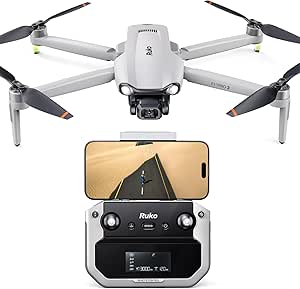 | Best for Extended Practice Flights | Photo resolution: 6K; 19 MP effective still resolution | Video resolution: 4K at 30 fps | Stabilization: Three-axis mechanical gimbal | VIEW ON AMAZON | See Our Full Breakdown |
| Ruko F11PRO 2 Plus Drone with 48MP Camera |  | Best for Long-Range Claims and High-Resolution Photos | Camera: 48 MP, 1/2-inch CMOS sensor | Photo resolution: 8K | Video resolution: 4K at 30 fps | VIEW ON AMAZON | See Our Full Breakdown |
| camera drone for videography | Gimbal | Weight | Video resolution |
|---|---|---|---|
| DJI Mavic 4 Pro Creator Combo | 360° Infinity Gimbal | — | — |
| DJI Neo Mini Drone with 4K UHD | — | 135 g | 4K UHD |
| Ruko U11MINI 4K Camera Drone w | 3-axis mechanical brushless | Under 249 g | 4K at 30 fps |
| Bwine F7MINI GPS Drone with 4K | 3-axis | 249 g | 4K at 30 fps |
| Ruko Drone with Camera | 3-axis brushless | Under 249 g | 4K at 30 fps |
| DJI Mini 5 Pro Fly More Combo | — | Approximately 249.9 g ± 4 g | — |
| DJI Mavic 3 Pro Drone with DJI | — | — | — |
| Bwine F7GIM GPS Drone with 4K | 3-axis brushless | 357 g | 4K at 30 fps |
| GPS Drone with 4K UHD Camera a | 3-axis | 2.6 pounds | — |
| DJI Mavic 4 Pro 512GB Creator | 360-degree rotation | 958 g | — |
| Bingchat Professional Drone wi | — | — | 4K |
| DJI Mini 4K Drone with 4K UHD | Three-axis | Under 249 g | — |
| DJI Mini 3 Drone with DJI RC a | Three-axis mechanical | Under 249 g with standard battery | — |
| Ruko F11PRO 2 Drone with 6K Ca | — | — | 4K at 30 fps |
| Ruko F11PRO 2 Plus Drone with | Three-axis mechanical brushless | — | 4K at 30 fps |
More Details on Our Top Picks
DJI Mavic 4 Pro Creator Combo Drone with RC Pro 2, 512GB Storage, Three Batteries, and Accessories
For a videographer who needs room to shape shots in post, the 100MP Hasselblad 4/3 camera, 6K/60fps HDR, and dual tele cameras give this Mavic a wider creative range than the compact DJI Neo or the simpler single-camera options here. Its 360° Infinity Gimbal supports unusual framing, while low-light omnidirectional sensing adds protection when filming in dim conditions. The three batteries and 512GB internal storage make it better suited to long production days than the Ruko U11MINI, which offers a built-in screen but a much more modest camera package. The tradeoff is size and complexity: at four pounds, it is not the travel-light choice, and the DJI Fly app must be downloaded from DJI rather than Google Play. The bundled 128GB card is also smaller than the internal storage.
Pros:- 100MP Hasselblad main camera and 6K/60fps HDR support detailed footage with room for reframing.
- Dual tele cameras add shot options that single-camera models such as the DJI Neo cannot provide.
- Three batteries offer up to 153 minutes of combined flight time.
- 512GB internal storage and an RC Pro 2 controller with a 7-inch display suit longer, more involved shoots.
Cons:- Four-pound weight makes it less convenient to carry than sub-249 g options.
- DJI Fly must be installed from DJI’s website rather than Google Play.
- The included 128GB memory card has less capacity than the drone’s 512GB internal storage.
Best for: Professional and advanced creators who need multi-lens aerial coverage, high-resolution HDR footage, and extended shoots without frequent battery swaps.
Not ideal for: Casual travelers or first-time pilots seeking a lightweight, simple drone; its four-pound weight, advanced feature set, and app installation step are unnecessary overhead for basic clips.
- Main camera:100MP Hasselblad 4/3 CMOS
- Video capture:6K/60fps HDR
- Camera system:Tri-camera with dual tele cameras
- Gimbal:360° Infinity Gimbal
- Maximum flight time:51 minutes per battery
- Batteries included:3
- Internal storage:512GB
- Remote controller:RC Pro 2 with 7-inch rotatable high-bright display
- Item weight:4 pounds
Our verdict“Choose this Mavic when image flexibility and production-day capacity matter more than portability or beginner-friendly simplicity.”
DJI Neo Mini Drone with 4K UHD Camera
The DJI Neo is the easiest fit here for spontaneous footage: palm takeoff and landing, controller-free operation, and subject tracking reduce the setup between deciding to film and getting a shot. Its stabilized 4K video and eight QuickShot modes make it more approachable for short social clips than the Ruko U11MINI, which adds a mechanical gimbal and touchscreen controller but asks the buyer to manage a more conventional flying setup. The Neo’s 135 g weight is a real travel advantage, though it also signals its limits as a production tool. The supplied package includes only one battery, and its camera and controls are less suited to carefully directed, extended shoots than the DJI Mavic 4 Pro. Choose it for convenience, not maximum control or a full day of coverage.
Pros:- 135 g weight makes it the easiest model here to pack for casual outings.
- Palm takeoff and landing allow quick launches without a conventional controller.
- Subject tracking and eight QuickShot modes simplify repeatable short-form shots.
- Stabilized 4K UHD recording suits everyday video capture.
Cons:- Standard combo includes only one battery, limiting time aloft before charging.
- Less suited to controlled, extended production work than the Ruko U11MINI or DJI Mavic 4 Pro.
- DJI Fly must be downloaded from DJI’s website rather than Google Play.
Best for: Travelers and casual creators who want quick stabilized 4K clips, simple subject-following shots, and minimal setup.
Not ideal for: Videographers planning long shoots or controlled cinematic moves; the standard combo has one battery and offers less dedicated camera and controller flexibility than larger options.
- Weight:135 g
- Video resolution:4K UHD
- Still image resolution:12 MP
- Battery capacity:1435 mAh
- Control options:Controller-free, voice, app, or compatible RC
- Video format:MP4
- Connectivity:Bluetooth and Wi-Fi
- Included accessories:Battery and propeller guards
Our verdict“Pick the Neo for lightweight, low-fuss 4K clips, but choose a more capable package for planned shoots or longer sessions.”
Ruko U11MINI 4K Camera Drone with Touchscreen Remote
The Ruko U11MINI earns its place through a practical combination of 3-axis mechanical stabilization and a 5.5-inch touchscreen controller. That screen means a new pilot can frame shots without mounting a phone, unlike the DJI Neo’s app-oriented control options. Its 4K/30fps video is a straightforward fit for beginner aerial clips, while GPS return and failsafe functions provide useful support as pilots learn. Two batteries offer up to 64 minutes combined flight time, although the Bwine F7MINI and the other 96-minute Ruko package provide more total airtime for repeated takes. The U11MINI’s under-249 g weight helps keep it portable, but its 90-day warranty is shorter than the Bwine F7MINI’s two-year coverage. The advertised 20,000-foot transmission range also depends on open conditions, and a suitable PD charger may be an extra purchase.
Pros:- Built-in 5.5-inch touchscreen controller avoids needing a phone as the display.
- 3-axis mechanical brushless gimbal helps keep footage steady during flight.
- Two batteries provide up to 64 minutes of combined flight time.
- GPS, optical flow, and return functions offer useful support for beginner pilots.
Cons:- 4K recording is limited to 30 fps.
- The stated 20,000-foot transmission range depends on open conditions.
- 90-day warranty is shorter than the Bwine F7MINI’s stated two-year warranty, and a PD 65W charger may be an extra purchase.
Best for: New pilots who want a dedicated touchscreen controller, stabilized 4K video, and GPS-assisted return without relying on a phone for framing.
Not ideal for: Creators who need higher frame-rate video, long uninterrupted shoot days, or longer warranty coverage; its 4K capture is 30 fps and included flight time is below the 96-minute alternatives.
- Controller:5.5-inch 1080p touchscreen
- Image sensor:1/2-inch CMOS
- Video resolution:4K at 30 fps
- Effective still resolution:48 MP
- Gimbal:3-axis mechanical brushless
- Weight:Under 249 g
- Maximum flight time:Up to 64 minutes with two batteries
- Maximum transmission range:20,000 feet
- Warranty:90 days
Our verdict“Choose the U11MINI if an integrated screen and beginner-oriented flight support matter more than longer airtime or a stronger warranty.”
Bwine F7MINI GPS Drone with 4K Video, 8K Photos, and 3-Axis Gimbal
For buyers who want more time to compose and repeat shots, the Bwine F7MINI’s standout is its three included batteries, rated for up to 96 minutes of combined flight. That gives it a clear endurance advantage over the Ruko U11MINI’s 64-minute package, while its 3-axis gimbal and 4K/30fps capture keep it focused on usable moving footage rather than stills alone. GPS flight modes—including follow, orbit, and waypoint—offer more shot-planning options than the DJI Neo’s quick, casual approach. The tradeoff is that the listing does not specify obstacle avoidance, so this is not the pick for pilots who expect automated sensing around obstacles. Its 249 g weight and included carrying case help with transport, but the advertised 20,000-foot range is condition-dependent rather than a dependable measure for every flight.
Pros:- Three batteries provide up to 96 minutes of combined flight time.
- 3-axis gimbal supports steadier footage than unstabilized camera setups.
- GPS follow, orbit, waypoint, and return-to-home modes add shot-planning options.
- 249 g design and included carrying case support portable use.
Cons:- Obstacle avoidance is not specified in the product information.
- The stated 20,000-foot transmission range may vary with flight conditions.
- 4K video is limited to 30 fps.
Best for: Budget-conscious hobbyist videographers who want stabilized 4K footage, GPS shooting modes, and multiple batteries for repeated takes.
Not ideal for: Pilots who need documented obstacle sensing or dependable long-range operation in varied conditions; the product data does not specify obstacle avoidance and the stated range depends on flight conditions.
- Video resolution:4K at 30 fps
- Photo resolution:48 MP, 8K
- Gimbal:3-axis
- Weight:249 g
- Flight time:Up to 96 minutes total with three batteries
- Maximum range:20,000 feet (6 km)
- Included accessories:Controller, three batteries, carrying case, and accessories
- Warranty:2 years
Our verdict“The F7MINI suits creators who value repeated takes and GPS-assisted shot modes more than advanced sensing or higher-frame-rate video.”
Ruko Drone with Camera, 4K Video and 8K Photos, 96-Minute Flight Time
This foldable Ruko package is aimed at newer pilots who want a travel-ready kit with enough battery capacity for repeated attempts at a shot. It pairs a 3-axis brushless gimbal with EIS and GPS auto return, offering a more stabilization-focused setup than the simple DJI Neo, while matching the Bwine F7MINI’s up to 96 minutes across three batteries. The included carrying case and under-249 g weight make it an easy fit for trips where portability matters. Video tops out at 4K/30fps, though, so the extra 8K photo resolution does not make it a higher-frame-rate video tool. The quoted 96 minutes is divided among three batteries, not a single flight, and the stated 20,000-foot range depends on conditions. It is best treated as a capable beginner kit, not a substitute for the multi-camera DJI Mavic 4 Pro.
Pros:- Three batteries provide up to 96 minutes of combined flight time.
- 3-axis gimbal and EIS support steadier video.
- GPS auto return and multiple positioning systems support beginner flying.
- Foldable design, under-249 g weight, and included case suit travel.
Cons:- The 96-minute total is shared across three batteries, not one continuous flight.
- 4K video is limited to 30 fps, unlike the higher-resolution, higher-frame-rate capture offered by the DJI Mavic 4 Pro.
- The stated 20,000-foot transmission range may depend on conditions.
Best for: Beginner travelers who want a foldable drone, a carrying case, stabilized 4K video, and several batteries for practice and multiple takes.
Not ideal for: Professional videographers who need multi-lens coverage, high-frame-rate capture, or long single flights; its 96-minute figure is split across three batteries and video is 4K/30fps.
- Image sensor:1/2-inch 48MP CMOS
- Video resolution:4K at 30 fps
- Photo resolution:8K
- Gimbal:3-axis brushless
- Stabilization:EIS
- Total flight time:Up to 96 minutes with three batteries
- Maximum transmission range:20,000 feet (6 km)
- Weight:Under 249 g
- Navigation:GPS, TOF, optical flow, and barometric positioning
Our verdict“Choose this Ruko for a portable beginner kit with multiple batteries, but step up to the Mavic 4 Pro for demanding production work.”
DJI Mini 5 Pro Fly More Combo Plus with DJI RC 2
The Mini 5 Pro is my pick for creators who want capable footage without carrying a larger aircraft. Its 1-inch sensor and 4K/60fps HDR give it a stronger image-making foundation than the Bwine F7GIM, which records 4K at 30 fps, while true vertical filming suits social-first edits without cropping landscape footage. The 225° gimbal rotation adds framing options, and omnidirectional sensing with ActiveTrack 360° helps when following a moving subject. The Fly More Combo Plus also includes three batteries and a charging hub, reducing interruptions on location. Its main compromise is that it cannot match the Mavic 4 Pro’s 6K recording or multi-camera reach. At roughly 249.9 g, it is also notably lighter and easier to pack, though local flight rules still apply.
Pros:- 1-inch CMOS sensor records 4K/60fps HDR
- True vertical filming and 225° gimbal rotation provide flexible framing
- Omnidirectional obstacle sensing and ActiveTrack 360° support subject-focused flights
- Combo includes three batteries, a charging hub, ND filters, and DJI RC 2
Cons:- Does not offer the Mavic 4 Pro’s 6K video or dual telephoto cameras
- DJI Fly must be downloaded from DJI’s website rather than Google Play
- Night flights may require permits under local regulations
Best for: Travel and social-video creators who want vertical and HDR footage in a compact drone, plus spare batteries for longer shoots.
Not ideal for: Filmmakers who need 6K capture, multiple focal lengths, or the Mavic 4 Pro’s higher-end production options.
- Camera sensor:1-inch CMOS
- Video:4K/60fps HDR
- Gimbal rotation:225°
- Obstacle sensing:Omnidirectional, with forward-facing LiDAR and vision sensors
- Subject tracking:ActiveTrack 360°
- Internal storage:42 GB
- Maximum flight time:Up to 52 minutes per battery
- Weight:Approximately 249.9 g ± 4 g
- Included accessories:DJI RC 2, three batteries, spare propellers, charging hub, ND filters
Our verdict“Choose the Mini 5 Pro if portability, vertical video, and 4K/60fps HDR matter more than the Mavic 4 Pro’s higher resolution and expanded camera system.”
DJI Mavic 3 Pro Drone with DJI RC
The Mavic 3 Pro earns its place for videographers who want framing choices without changing position in the air. Its triple-camera system pairs a 4/3 CMOS Hasselblad main camera with additional cameras, giving it a broader shooting toolkit than the Mini 5 Pro’s compact single-camera setup. That flexibility is useful for establishing shots and tighter compositions, while omnidirectional sensing and APAS 5.0 add safeguards around obstacles. The included DJI RC with a built-in screen makes the controller more ready to use than a phone-dependent setup. The tradeoff is that its main camera tops out at 20 MP, and the listing notes that ActiveTrack is unavailable above 4K or frame rates over 60 fps. It also includes only one battery, unlike the Mini 5 Pro combo’s three.
Pros:- Triple-camera system offers more framing options than the Mini 5 Pro
- 4/3 CMOS Hasselblad main camera with adjustable f/2.8–f/11 aperture
- Omnidirectional obstacle sensing with APAS 5.0
- DJI RC includes a built-in screen
Cons:- Only one battery is included
- ActiveTrack is unavailable above 4K resolution or frame rates over 60 fps
- Flight time varies with conditions and flight behavior
Best for: Videographers who regularly need several camera perspectives in one flight and want a screen-equipped controller.
Not ideal for: Travel creators prioritizing a compact kit or crews who need multiple batteries included for extended shoot days.
- Camera system:Triple camera
- Main camera sensor:4/3 CMOS
- Main camera resolution:20 MP
- Main camera aperture:f/2.8–f/11
- Maximum flight time:43 minutes
- Maximum video transmission distance:15 km
- Obstacle sensing:Omnidirectional, with APAS 5.0
- Included:DJI RC controller with screen and one battery
- FAA Remote ID:Compliant
Our verdict“Pick the Mavic 3 Pro if multiple camera perspectives matter more to your work than a lighter package or the Mavic 4 Pro’s newer 6K capability.”
Bwine F7GIM GPS Drone with 4K Video, 6K Photo, and 3-Axis Gimbal
The Bwine F7GIM is a practical choice for buyers who want a stabilized 4K image and several guided flight modes without stepping up to DJI’s more advanced camera systems. Its 3-axis brushless gimbal helps smooth footage, while follow, orbit, waypoint planning, and return-home functions give a new pilot useful ways to shape a shot. The two included batteries provide up to 70 minutes of stated total flight time, split into 35-minute flights; that is more time across a session than the Mavic 3 Pro’s stated 43-minute maximum on one included battery. But the Bwine records at 4K/30 fps, so it offers less frame-rate flexibility than the Mini 5 Pro’s 4K/60fps HDR. Its wired digital transmission setup and recommendation for a separately supplied MicroSD card also make the workflow less straightforward.
Pros:- 3-axis brushless gimbal helps stabilize 4K/30fps video
- GPS modes include follow, orbit, cruise control, waypoint planning, and return home
- Two batteries provide up to 70 minutes of stated total flight time
- One-key takeoff and auto return support beginner flights
Cons:- 4K recording is limited to 30 fps, unlike the Mini 5 Pro’s 60 fps option
- Uses wired digital transmission rather than Wi-Fi
- MicroSD card under 128 GB is recommended, but an included card is not specified
Best for: Budget-conscious beginners who want gimbal-stabilized 4K clips, GPS flight modes, and two batteries for practice and casual filming.
Not ideal for: Creators who need 4K/60fps footage, a simple wireless connection workflow, or confirmed included memory storage.
- Photo resolution:6K, 18 MP
- Video resolution:4K at 30 fps
- Gimbal:3-axis brushless
- Flight time:Up to 70 minutes total; 35 minutes per flight
- Transmission range:Up to 10,000 ft
- Control range:3 km
- Navigation:GPS with follow, orbit, cruise control, waypoint planning, and return home
- Weight:357 g
- Storage support:MicroSD under 128 GB recommended
Our verdict“Choose the F7GIM for GPS-assisted practice and stabilized 4K at 30 fps, but favor the Mini 5 Pro if smoother high-frame-rate capture is a priority.”
GPS Drone with 4K UHD Camera and 3-Axis Gimbal
This GPS drone with 4K UHD camera is aimed at buyers who want simple moving shots rather than a broad filmmaking toolkit. Follow Me and Circle Fly modes can help frame a person or orbit a subject with less manual input, while GPS and optical-flow positioning support steadier outdoor control. Its 3-axis gimbal gives it a useful stabilization advantage over camera drones without a mechanical gimbal, and two batteries extend time in the air. The limits show up next to the Bwine F7GIM: both offer 4K and GPS-assisted modes, but the F7GIM specifies waypoint planning and a longer stated transmission reach. Here, video transmission is listed at only 985 feet, shorter than the 1,640-foot maximum range, which can constrain live framing. At 2.6 pounds, it is also less suited to lightweight travel than the Mini 5 Pro.
Pros:- 4K UHD camera paired with a 3-axis gimbal
- Follow Me, Circle Fly, and Return-to-Home modes support guided shots
- GPS and optical-flow positioning aid flight stability
- Two batteries are included
Cons:- Video transmission range is 985 feet, shorter than the 1,640-foot maximum flight range
- At 2.6 pounds, it is heavier than the Mini 5 Pro
- Camera lens angle should be adjusted gently
Best for: New outdoor users who want Follow Me or Circle Fly clips, a mechanical gimbal, and two batteries for casual filming.
Not ideal for: Travel videographers seeking a light carry kit or pilots who need a long live-video link and detailed camera specifications.
- Camera resolution:4K UHD
- Gimbal:3-axis
- Maximum range:1,640 feet
- Video transmission range:985 feet
- Controls:App and remote control
- Special modes:Return to Home, Follow Me, Circle Fly, gesture mode
- Positioning:GPS and optical flow
- Batteries included:2
- Weight:2.6 pounds
Our verdict“Choose this model for basic GPS-guided follow shots, but consider the Bwine F7GIM if waypoint controls and a longer stated transmission range matter more.”
DJI Mavic 4 Pro 512GB Creator Combo with RC Pro 2
The Mavic 4 Pro Creator Combo is the most capable filming platform in this group for buyers who need resolution, camera choice, and onboard storage in one aircraft. Its 100MP Hasselblad main camera, dual telephoto cameras, and 6K/60fps HDR recording offer more framing and post-production latitude than the Mavic 3 Pro’s 20 MP main camera and triple-camera system. It also records 4K/120fps slow motion, while 512GB of onboard storage reduces reliance on removable media during a shoot. The 360-degree gimbal and low-light obstacle sensing add flexibility in framing and flight conditions. The price of that capability is a larger, heavier 958 g airframe and a more demanding skill set; the Mini 5 Pro is much easier to carry. This is a specialist tool, not the sensible pick for casual travel clips.
Pros:- 100MP 4/3 CMOS Hasselblad main camera with dual telephoto cameras
- Records 6K/60fps HDR and 4K/120fps slow motion
- 512GB onboard storage supports lengthy, high-resolution shoots
- Up to 51 minutes of flight time and omnidirectional sensing with low-light vision and LiDAR
Cons:- 958 g weight makes it less portable than the Mini 5 Pro
- Advanced controls and camera capabilities may challenge beginners
- Its broad production features are unnecessary for casual 4K filming
Best for: Experienced aerial videographers and production teams who need 6K HDR, telephoto perspectives, slow motion, and ample onboard storage.
Not ideal for: Beginners, lightweight travel creators, or casual users who do not need advanced camera options and a 958 g aircraft.
- Main camera:100MP 4/3 CMOS Hasselblad
- Telephoto cameras:48MP 1/1.3-inch medium tele; 50MP 1/1.5-inch tele
- Video:6K/60fps HDR; 4K/120fps slow motion
- Maximum flight time:51 minutes
- Maximum transmission range:30 km
- Onboard storage:512GB
- Gimbal:360-degree rotation
- Obstacle sensing:Omnidirectional, with 0.1-lux night vision and LiDAR
- Weight:958 g
Our verdict“Choose the Mavic 4 Pro Creator Combo for demanding productions that benefit from 6K HDR, telephoto cameras, and onboard storage, not for lightweight everyday filming.”
Bingchat Professional Drone with 4K Camera and Tablet Screen Remote
The Bingchat’s clearest distinction is its tablet-style Android controller: the built-in screen and app support offer a more self-contained setup than the DJI Mini 4K’s RC-N1C controller. For videography, its three-axis gimbal plus electronic stabilization is intended to steady 4K footage, while the 130° field of view can fit broad scenes into a frame. Two batteries are listed for up to 84 minutes of flight time, giving it more advertised airtime than the DJI Mini 3’s standard-battery figure. That headline is specified for no-wind conditions, though, and the wide range of extras does not establish how well they work in practice. I’d shortlist it for buyers drawn to the large controller and bundled features, but choose the Mini 3 for its built-in DJI display and clearer HDR video specification.
Pros:- Three-axis gimbal and electronic image stabilization are designed to steady 4K video.
- Two batteries are listed for up to 84 minutes of combined flight time in no-wind conditions.
- Android touchscreen controller supports apps and media without relying on a separate phone screen.
- GPS return-to-home, waypoint flight, payload release, and laser obstacle avoidance add varied functions.
Cons:- The 84-minute figure is a best-case claim for no-wind conditions, not a typical-flight guarantee.
- The manufacturer advises keeping the drone away from trees to reduce crash risk.
- A 50x digital zoom specification does not establish detail-preserving optical zoom.
Best for: Videographers who want a touchscreen Android controller, two included batteries, and extra flight functions in one package.
Not ideal for: Buyers prioritizing clearly specified video performance or flights near trees; the product description itself advises keeping away from trees, and its maximum flight time assumes no wind.
- Video resolution:4K
- Still image resolution:48 MP
- Camera and stabilization:Three-axis gimbal with EIS; 130° field of view
- Flight time:Up to 84 minutes with two batteries
- Remote controller:Touchscreen tablet controller with Android and Google Play support
- Obstacle avoidance:360° laser obstacle avoidance
- Video format:MP4
Our verdict“Choose the Bingchat if its Android screen and broad feature set matter more to you than a simpler, better-specified DJI Mini setup.”
DJI Mini 4K Drone with 4K UHD Camera
The DJI Mini 4K is the straightforward entry point here for learning to frame aerial video: its three-axis gimbal steadies 4K footage, while GPS Return to Home and beginner-friendly controls help reduce the workload during a flight. Automated QuickShots provide repeatable camera moves, a useful way to add variety without manually coordinating every control. At under 249 g, it is also lighter than the Ruko F11PRO 2, though buyers should check the rules that apply where they fly rather than treating weight as a blanket exemption. Its single included battery is a real limit beside the Ruko’s two-battery package, and the Mini 3 adds HDR recording and a controller with a built-in screen. DJI Fly must be downloaded from DJI’s website, not Google Play. This is a sensible pick for new pilots who want a simple 4K foundation, not the most complete kit.
Pros:- Three-axis gimbal helps keep 4K footage smooth during flight.
- QuickShots automate several camera movements for approachable video practice.
- Under-249 g design is compact and lighter than the Ruko F11PRO 2.
- GPS Return to Home and stable hovering support a more manageable learning process.
Cons:- Only one battery is included, limiting airtime between charging sessions.
- DJI Fly must be downloaded from DJI’s website because it is unavailable on Google Play.
- Actual flight time and transmission range vary with operating conditions.
Best for: New drone videographers who want stabilized 4K, guided camera moves, and a lightweight aircraft with GPS return features.
Not ideal for: Creators who want a screen-equipped controller, HDR video, or multiple batteries in the box; the Mini 3 offers the built-in display, while this model includes one battery.
- Weight:Under 249 g
- Camera:4K UHD
- Gimbal:Three-axis
- Maximum flight time:31 minutes per battery
- Included batteries:1
- Maximum transmission range:10 km (32,800 ft)
- Controller and app:RC-N1C; DJI Fly
Our verdict“Pick the Mini 4K for an approachable, lightweight start in stabilized 4K video, but look to the Mini 3 if you want HDR and a built-in controller display.”
DJI Mini 3 Drone with DJI RC and 3-Axis Mechanical Gimbal
The Mini 3 earns its place through the combination of 4K HDR video and the included DJI RC with a 5.5-inch display. That controller makes framing easier without mounting a phone, a practical advantage over the Mini 4K’s RC-N1C setup. Its three-axis mechanical gimbal supports stable footage, and the camera can capture vertical shots for creators making portrait-oriented clips. Standard-battery flight time reaches up to 38 minutes, longer than the Mini 4K’s stated 31 minutes per battery. There are limits: HDR recording does not support frame rates above 30 fps, and the longer 51-minute figure requires a separately sold Battery Plus that pushes the aircraft above 249 g. The charger is also sold separately. I’d choose it over the Bingchat when a built-in screen and a defined DJI camera workflow matter more than a larger advertised battery total.
Pros:- 4K HDR video and a three-axis mechanical gimbal support polished, stabilized footage.
- Included DJI RC has a built-in 5.5-inch HD display and DJI Fly app.
- Vertical shooting suits portrait-oriented social video.
- Standard-battery flight time is listed at up to 38 minutes, compared with 31 minutes for the Mini 4K.
Cons:- HDR recording does not support frame rates above 30 fps.
- Battery charger is sold separately.
- Battery Plus is sold separately and raises the drone’s weight above 249 g.
Best for: Travel and social-video creators who want a built-in controller display, stabilized HDR footage, and vertical framing in a lightweight drone.
Not ideal for: Buyers who need HDR slow-motion frame rates above 30 fps or want a charger and extended-capacity battery included.
- Weight:Under 249 g with standard battery
- Camera:4K HDR video
- Gimbal:Three-axis mechanical
- Standard-battery flight time:Up to 38 minutes
- Optional Battery Plus flight time:Up to 51 minutes
- Remote controller:DJI RC with built-in 5.5-inch HD display
- Video transmission range:Up to 10 km under FCC conditions
Our verdict“Choose the Mini 3 if a screen-equipped controller and 4K HDR matter more than higher-frame-rate HDR or an all-in-one charging kit.”
Ruko F11PRO 2 Drone with 6K Camera
The F11PRO 2 is a practical fit for pilots who want more time aloft for planning and repeating shots: its two-battery package is rated for up to 70 minutes total, compared with the single-battery Mini 4K’s 31-minute maximum. A three-axis mechanical gimbal stabilizes its 4K video at 30 fps, while Follow, Waypoint, and Orbit modes can help create repeatable moves. The 6K label applies to still photos, not video; the effective still resolution is 19 MP, so videographers should judge it by the 4K/30 fps footage rather than the larger photo number. The Mini 3 offers 4K HDR and a built-in controller display, advantages the Ruko listing does not specify. I’d favor this model for extended practice and basic automated shots, while keeping expectations measured around its 10,000-foot stated range.
Pros:- Three-axis mechanical gimbal is designed to stabilize 4K footage.
- Two batteries provide up to 70 minutes of stated combined flight time.
- Follow, Waypoint, and Orbit modes support repeatable camera paths.
- GPS return and beginner-friendly takeoff and landing features help with routine flying.
Cons:- Video is specified at 4K and 30 fps; the 6K figure refers to photos.
- The stated 10,000-foot maximum range may not reflect real operating conditions.
- The remote’s side USB-C port is for charging only, and the gimbal cover must be removed before power-on.
Best for: Beginner-to-advanced hobbyist videographers who want two batteries and smart flight modes for practicing repeatable 4K shots.
Not ideal for: Creators seeking HDR footage, a built-in controller screen, or video above 30 fps; the listed video specification is 4K at 30 fps.
- Photo resolution:6K; 19 MP effective still resolution
- Video resolution:4K at 30 fps
- Stabilization:Three-axis mechanical gimbal
- Flight time:Up to 70 minutes with two batteries
- Battery capacity:3200 mAh
- Maximum range:10,000 feet
- Smart flight modes:Follow, Waypoint, and Orbit
Our verdict“Pick the F11PRO 2 for longer practice sessions and automated 4K/30 fps moves, but choose the Mini 3 for HDR and a built-in display.”
Ruko F11PRO 2 Plus Drone with 48MP Camera
The F11PRO 2 Plus targets buyers who want a 48 MP, 1/2-inch CMOS camera for stills alongside 4K video, plus extra time to keep shooting: two batteries are listed for up to 74 minutes combined. Its three-axis mechanical brushless gimbal is the main videography benefit, helping stabilize 4K footage at 30 fps. Compared with the F11PRO 2, this model lists a higher still-camera resolution and a longer stated transmission range—20,000 feet versus 10,000 feet—but neither figure alone guarantees better usable footage or reliable connection in every location. The DJI Mini 3 is a more clearly specified choice for HDR video and includes a display-equipped controller; the Ruko’s provided details do not identify its weight or dimensions. I’d shortlist it for photo-heavy hobby work, not for a buyer whose main need is a documented video upgrade.
Pros:- 48 MP camera with a stated 1/2-inch CMOS sensor is aimed at high-resolution still photography.
- Three-axis mechanical brushless gimbal supports stabilized video.
- Two batteries are listed for up to 74 minutes of combined flight time.
- GPS-assisted return features include one-key return and auto return home.
Cons:- Video is specified at 4K and 30 fps, without a listed HDR mode.
- The stated 20,000-foot transmission range depends on operating conditions.
- Product details do not specify the drone’s weight or dimensions.
Best for: Hobbyists who want high-resolution still-photo specifications, stabilized 4K video, and two batteries for longer outings.
Not ideal for: Videographers who need HDR or frame rates above 30 fps, or buyers who need the drone’s weight and dimensions specified before choosing.
- Camera:48 MP, 1/2-inch CMOS sensor
- Photo resolution:8K
- Video resolution:4K at 30 fps
- Gimbal:Three-axis mechanical brushless
- Flight time:Up to 74 minutes total with two batteries; 37 minutes per battery
- Transmission range:Up to 20,000 feet
- Battery capacity:3200 mAh
Our verdict“Choose the F11PRO 2 Plus if high-resolution stills and two-battery airtime are priorities, but prefer the Mini 3 for a clearer HDR-focused video specification.”

How We Picked
I ranked these drones for videography first, not for still-photo claims or feature counts alone. I weighed camera and stabilization information, flight practicality, control and monitoring, portability, kit contents, and how well each model fits a defined filming task. A smooth, repeatable shot and a workable field setup matter more here than a large megapixel figure by itself.
The order reflects useful tradeoffs across the lineup. The Mavic 4 Pro Creator Combo ranks first for buyers seeking a more complete, flexible production kit; compact DJI models follow where portability and approachable operation are more persuasive. Models with a three-axis gimbal or a screen-equipped controller earn consideration for practical filming, while entry-level and less-documented options rank lower when their stated features provide less confidence for demanding footage. I treat advertised claims as stated specifications rather than proof of real-world performance.
Factors to Consider When Choosing Camera Drone For Videography
Choosing a drone for video is less about finding the biggest number on a spec sheet and more about matching the aircraft to the shots you actually need. I’d settle the filming format, flight environment, and level of manual control before choosing a model or bundle.
Prioritize Stabilization and Repeatable Motion
Video exposes small movements that a still photo can hide, so stabilization should be a leading selection factor. A mechanical gimbal helps keep the camera level as the drone changes direction, but smooth footage also depends on measured control inputs and flight conditions. Do not treat electronic stabilization or a high-resolution sensor as a substitute for a gimbal when you need controlled tracking shots. For cinematic work, check whether the camera can hold a steady horizon and whether the controls let you move slowly. Wind and abrupt stick movements can still spoil footage, regardless of the advertised camera resolution. If your clips are mostly static overhead views, you may not need the same level of stabilization as a moving subject shoot.
Match Portability to Your Locations
A compact drone is easier to pack and can make spontaneous filming more practical, especially when a shoot includes walking, travel, or several locations. Larger or more elaborate systems can offer a broader production kit, but that adds carrying weight and setup steps. Think about the entire loadout: aircraft, controller, batteries, charging gear, filters, and storage. A drone that stays at home because it is awkward to carry is a poor fit, even if its imaging options are appealing. Check local rules for the places you plan to fly; size and weight categories can affect what requirements apply. Choose the smallest model that still supports the framing, stabilization, and controls your work demands.
Plan Around Usable Flight Time, Not the Headline
Advertised flight time is a planning reference, not a promise that every minute will be available for filming. Wind, temperature, maneuvers, and a prudent return reserve all reduce the time you can spend composing shots. Extra batteries can be more useful than a claimed long single-flight figure because they let you swap power and keep a shoot moving. Account for charging time and whether you can safely recharge between locations. Avoid building a shot list that depends on one uninterrupted flight, particularly when repeating a take matters. For paid or time-sensitive work, plan a backup battery and a ground-based alternative for essential footage.
Choose a Camera for the Final Delivery
Start with where the footage will end up: a vertical social post, a standard widescreen edit, a large display, or a mix. Resolution alone does not settle image quality; lens choice, stabilization, exposure control, and the ability to frame the subject all shape the finished clip. A high still-photo megapixel claim does not tell you how flexible the video files will be in editing. If you plan to crop heavily or color grade, investigate the recording formats and image controls before buying. If you mainly publish short clips online, a simpler camera may be enough, and ease of getting a clean shot can matter more than advanced recording options. Match the camera features to your editing workflow rather than paying for specifications you will not use.
Budget for the Whole Filming Kit
The aircraft is only one part of a useful video setup. Batteries, a controller, memory, charging equipment, filters, and a suitable case can change both the carrying burden and the readiness of a kit. A combo makes sense when its included accessories match how often and where you film; otherwise, it may add items that stay unused. Storage deserves special attention for high-resolution clips, since full cards can interrupt a shoot at the wrong moment. Consider whether the controller gives you a clear view in bright conditions and whether it depends on a phone you also need for other tasks. Compare complete kits by the work they let you do, not by the number of accessories in the box.
Be Realistic About Skill, Rules, and Safety
Advanced flight features can help create polished movement, but they do not remove the need to learn safe operation and camera control. A beginner may get better footage from a simpler drone they can confidently position than from a more complex system they rarely use well. Practice basic movements in an open, permitted area before filming near people, property, or moving subjects. Check current aviation rules, airspace restrictions, and privacy requirements for every location; regulations vary by country and can change. Also review what the product actually specifies for obstacle sensing, return functions, and controller operation instead of assuming every model offers the same safeguards. Buy for the flights you can legally and safely make, not only for the shots you hope to capture.
Frequently Asked Questions
Is a 4K camera enough for professional-looking drone video?
It can be, especially when the footage is stable, well-framed, and recorded in conditions the camera can handle. The label 4K describes resolution, not the full image quality or how much control you have over exposure and editing. For professional work, check stabilization, lens and camera controls, recording options, and how the files fit your editing workflow. A more advanced camera may be worthwhile if you need cropping flexibility or consistent results across changing light. For simple web clips, technique and shot planning may matter more than moving to a higher-resolution camera.
Should I choose a compact drone or a larger premium model for travel films?
Choose based on how much camera flexibility your travel work needs and how often you will carry the drone. Compact models are easier to pack and can suit quick scenic clips, while a premium system may offer a broader filming setup for deliberate shoots. Remember that batteries, controller, and charging gear add to the travel load. A more capable camera does not help if transport limits how often you can fly it. Check destination rules and airline battery requirements before you travel, since those can shape the practical choice as much as the drone itself.
Do I need a three-axis gimbal for smooth video?
A three-axis mechanical gimbal is a strong feature for footage that includes turns, tracking, or movement in breezy conditions, because it helps keep the camera steady relative to the aircraft. It is not a guarantee of perfect clips: flight technique, wind, and subject movement still matter. For basic overhead shots, a simpler system may meet your needs if its stabilization and framing suit the final use. Compare the stated camera and stabilization setup rather than assuming that 4K video alone means smooth footage. If smooth motion is a core requirement, make gimbal design a higher priority than still-photo resolution.
Are bundled extra batteries worth choosing over a drone with a longer advertised flight time?
Extra batteries can be more useful for a real filming session because they allow a quick swap and another flight without waiting to recharge. A long advertised flight time can still be shortened by wind, cold, aggressive movement, and the need to return with reserve power. Compare the complete battery arrangement and charging plan, not just one flight-time claim. If you film several takes or move between locations, a bundle with spares may simplify the day. If you only need brief clips, a lighter setup with fewer batteries may be easier to carry.
What should I check before buying a drone with a tablet or touchscreen remote?
Check whether the screen is built into the controller, whether it needs a separate phone or account, and how readable it is outdoors. A dedicated display can make framing more convenient and keep your phone free, but it may add bulk to the kit. Look at controller compatibility and the availability of the controls you need for camera movement and flight settings. Also confirm what cables, mounts, or accessories are included rather than assuming the pictured setup comes in the box. The best remote is the one that gives you a clear view and a comfortable way to make controlled shots on location.
Conclusion
For the broadest production-minded setup, I’d choose the DJI Mavic 4 Pro Creator Combo as best overall; buyers seeking the most premium route should compare it with the DJI Mavic 3 Pro and the separately listed Mavic 4 Pro 512GB Creator Combo, checking which package contents suit their workflow. For a balance of compact size and advanced filming potential, the DJI Mini 5 Pro Fly More Combo Plus is my pick. Beginners who want a simpler starting point should look at the DJI Mini 4K, while the DJI Mini 3 makes sense for those who want its included DJI RC and mechanical gimbal. For buyers focused on a stated three-axis gimbal outside the DJI Mini range, compare the Bwine F7MINI and Bwine F7GIM; those prioritizing a touchscreen-style controller or advertised long flight package can also review the Ruko and Bingchat options carefully. My final choice would depend on whether your shoots reward camera flexibility, easy carrying, beginner-friendly operation, or a particular controller and battery setup.
Columbus Day / Indigenous Peoples' Day Picks
long weekend sales
As an affiliate, we earn on qualifying purchases.