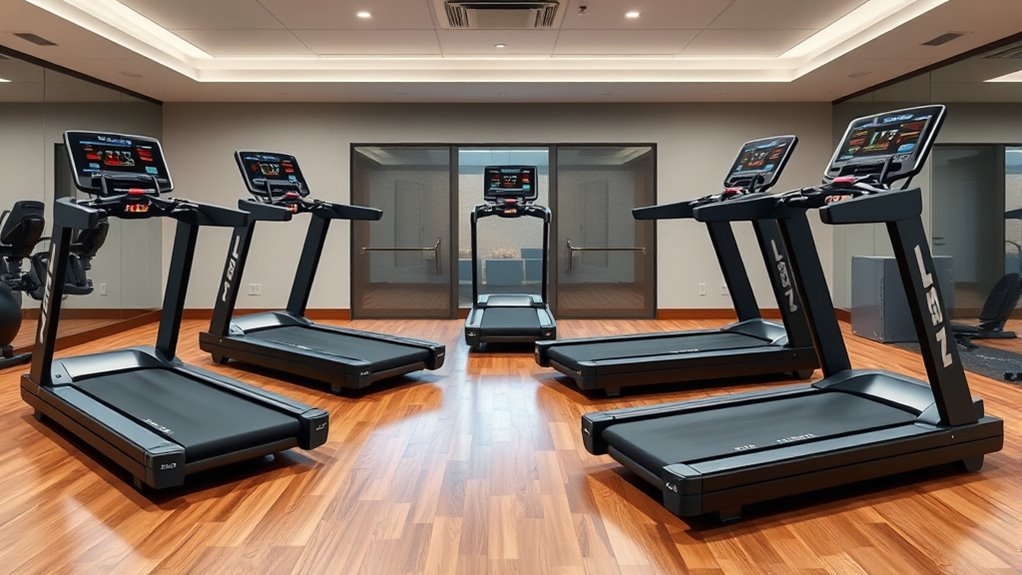

A commercial-grade treadmill for a home gym should match your training load, available space, and need for incline or guided workouts—not just carry a heavy-duty label. My best overall pick is the NordicTrack Commercial 2450 for its combination of a folding design and feature-rich training experience. The 3G Cardio Elite Runner X stands out for buyers prioritizing a robust running platform, while the UMAY 20% Auto Incline Folding Treadmill suits home users seeking steep incline work in a folding format. The main tradeoffs are footprint and construction versus storage flexibility, plus advanced features versus simpler operation. Read on for the full comparison, ranking logic, and advice on matching a treadmill to your routine.

Get kitchen gear delivered free with Prime
- Fast, free delivery on millions of items
- Prime Video, Amazon Music and more included
- Member-only deals all year
Complete the kit

Key Takeaways
The NordicTrack Commercial 2450 leads the lineup for buyers who want a substantial training feature set without giving up a folding deck.
The 3G Cardio Elite Runner X and Pro Runner X fill different roles: the Elite is the more substantial running-focused choice, while the Pro offers a folding alternative.
Several UMAY, ECHANFIT, AUDAXFIT, and heavy-duty folding models emphasize steep automatic incline, but a high incline number alone does not establish long-term durability or running comfort.
The NordicTrack T Series models are more approachable choices for smaller spaces or less intensive routines than the larger commercial-oriented machines.
The curved manual treadmill is the lineup’s specialist option: it avoids motor-driven belt speed, but its different running feel and effort demands make it a poor default choice for every household.
| NordicTrack Commercial 2450 Folding Treadmill |  | Best Overall for Connected Run Training | Display: 24-inch tilting and pivoting touchscreen | Speed range: 0–14 MPH | Incline range: -3% decline to 12% incline | VIEW ON AMAZON | See Our Full Breakdown |
| Niceday TM3 Commercial Treadmill |  | Best for Spacious Deck and App Compatibility | Running surface: 20 × 60 inches | Deck cushioning: 20 mm with six impact zones | Weight capacity: 330 lb | VIEW ON AMAZON | See Our Full Breakdown |
| UMAY 20% Auto Incline Folding Treadmill |  | Best for Steep Incline Walking | Motor: 4.0 HP | Speed range: 0.6–8 MPH | Maximum incline: 20% | VIEW ON AMAZON | See Our Full Breakdown |
| Folding Treadmill with 15-Level Auto Incline |  | Best for Preset Workouts and Simple Storage | Motor: 4 hp brushless | Speed range: 0.6–10 mph | Maximum incline: 15 levels | VIEW ON AMAZON | See Our Full Breakdown |
| UMAY Heavy-Duty Treadmill with 20% Auto Incline |  | Best for Higher-Capacity Moderate Running | Maximum speed: 9.5 mph | Maximum horsepower: 4 HP | Incline levels: 20 levels, 2%–20% | VIEW ON AMAZON | See Our Full Breakdown |
| NordicTrack T Series Treadmill (T6.5S) |  | Best for Connected Training in a Small Home Gym | Model: T6.5S | Maximum speed: 10 MPH | Incline range: 0–10% | VIEW ON AMAZON | See Our Full Breakdown |
| 3G Cardio Elite Runner X Treadmill |  | Best Commercial-Style Build for Serious Home Running | Motor: 4.0 HP | Running platform: 22 × 62 inches | Maximum speed: 12 MPH | VIEW ON AMAZON | See Our Full Breakdown |
| Heavy Duty Home Treadmill with 20-Level Auto Incline and 20″ Wide Deck |  | Best for High-Capacity Incline Training | Motor: 4.5 HP brushless | Speed range: 0.6–12 MPH | Incline: 20 automatic levels | VIEW ON AMAZON | See Our Full Breakdown |
| ECHANFIT Heavy Duty Folding Treadmill with Auto Incline |  | Best Feature-Rich Folding Alternative | Motor: 4.5 HP brushless | Speed range: 0.6–12 MPH | Incline: 20 levels | VIEW ON AMAZON | See Our Full Breakdown |
| Curved Manual Treadmill with 4 Resistance Levels and LCD |  | Best Self-Powered Option for HIIT | Power source: Manual, self-powered | Resistance levels: 4 | Running surface: 63 × 19 inches | VIEW ON AMAZON | See Our Full Breakdown |
| NordicTrack Commercial 1750 Treadmill |  | Best for Guided Training | Model: Commercial 1750 | Screen: 16-inch pivoting touchscreen | Speed: 0–12 mph | VIEW ON AMAZON | See Our Full Breakdown |
| NordicTrack T Series Treadmill (T5) |  | Best for Entry-Level iFIT Training | Maximum speed: 10 mph | Incline range: 0–10% | Cushioning: KeyFlex | VIEW ON AMAZON | See Our Full Breakdown |
| 3G Cardio Pro Runner X Folding Treadmill |  | Best Membership-Free Runner | Motor: 3.0 HP | Maximum speed: 12 mph | Speed acceleration: 0 to 12 mph in 18 seconds | VIEW ON AMAZON | See Our Full Breakdown |
| AUDAXFIT U80 Heavy Duty Treadmill with 20% Auto Incline |  | Best for High-Incline Home Training | Motor power: 4.0 HP brushless | Maximum speed: 9.5 mph | Maximum incline: 20% | VIEW ON AMAZON | See Our Full Breakdown |
| commercial grade treadmill for home gym | Motor |
|---|---|
| NordicTrack Commercial 2450 Fo | — |
| Niceday TM3 Commercial Treadmi | 4.0 HP brushless |
| UMAY 20% Auto Incline Folding | 4.0 HP |
| Folding Treadmill with 15-Leve | 4 hp brushless |
| UMAY Heavy-Duty Treadmill with | — |
| NordicTrack T Series Treadmill | — |
| 3G Cardio Elite Runner X Tread | 4.0 HP |
| Heavy Duty Home Treadmill with | 4.5 HP brushless |
| ECHANFIT Heavy Duty Folding Tr | 4.5 HP brushless |
| Curved Manual Treadmill with 4 | — |
| NordicTrack Commercial 1750 Tr | — |
| NordicTrack T Series Treadmill | — |
| 3G Cardio Pro Runner X Folding | 3.0 HP |
| AUDAXFIT U80 Heavy Duty Treadm | — |
More Details on Our Top Picks
NordicTrack Commercial 2450 Folding Treadmill
The Commercial 2450 is the most run-focused pick here: its 14 MPH top speed and -3% to 12% incline range give runners more room for fast intervals and varied terrain than the Niceday TM3, which tops out at 11.2 MPH. Its large, tilting 24-inch touchscreen is suited to guided workouts, while RunFlex cushioning and an assisted-folding frame add comfort and storage flexibility for a home gym. The main tradeoff is that connected training features require an iFIT Pro Membership, so buyers wanting a straightforward console may prefer the UMAY Heavy-Duty Treadmill. A Bluetooth heart-rate monitor is also sold separately. I’d rank it first for its mix of running range, cushioning, and connected training, not as the simplest or least subscription-dependent choice.
Pros:- Runs up to 14 MPH and includes both incline and decline
- 24-inch tilting and pivoting touchscreen supports a large workout view
- RunFlex cushioning is designed to reduce impact during runs
- Folding frame has assisted lowering and transport wheels
Cons:- iFIT Pro Membership is required for connected features
- Bluetooth heart-rate monitor is sold separately
- Its feature-rich connected setup may be more than buyers need for basic workouts
Best for: Home-gym runners who want guided iFIT workouts, high-speed intervals, and incline and decline training on a folding treadmill
Not ideal for: Buyers who want connected workout features without a paid membership or who need a Bluetooth heart-rate monitor included
- Display:24-inch tilting and pivoting touchscreen
- Speed range:0–14 MPH
- Incline range:-3% decline to 12% incline
- Cushioning:RunFlex shock absorption
- Frame:Folding with assisted lowering and transport wheels
- Connectivity:Strava, Garmin Connect, and Apple Health
- Membership requirement:iFIT Pro Membership required for connected features
Our verdict“Choose the Commercial 2450 if you want the broadest run-training range and a large guided-workout screen, and can accept the iFIT membership requirement.”
Niceday TM3 Commercial Treadmill
The Niceday TM3 stands out for combining a 20 × 60-inch cushioned deck with automatic incline up to 15%, making it a stronger fit for longer strides and sustained hill work than the UMAY 20% Auto Incline Folding Treadmill, whose listed deck width is 44.1 inches. Its 4.0 HP brushless motor and Bluetooth compatibility with Kinomap and Zwift add flexibility for buyers who prefer app-based sessions over a large built-in screen. The 15-inch LED display covers workout metrics, but it is less immersive than the NordicTrack Commercial 2450’s touchscreen. Arrival at 95% pre-assembled reduces setup work, though some assembly remains, and app experiences can depend on compatible devices or services. I’d place it here for its deck and app balance, while its 11.2 MPH ceiling makes it less compelling for faster running than the NordicTrack.
Pros:- 20 × 60-inch running surface accommodates longer strides
- Automatic incline adjusts from 0% to 15%
- Bluetooth compatibility supports Kinomap and Zwift
- Arrives 95% pre-assembled and includes parts and labor warranties
Cons:- Maximum speed of 11.2 MPH is below the NordicTrack Commercial 2450’s 14 MPH
- Bluetooth workout features may depend on compatible devices or services
- Some assembly is still required
Best for: Home-gym users who want a full-length, cushioned running deck, automatic incline, and Bluetooth access to Kinomap or Zwift
Not ideal for: Runners training above 11.2 MPH or buyers who want a large built-in touchscreen and guided workouts without relying on separate services
- Running surface:20 × 60 inches
- Deck cushioning:20 mm with six impact zones
- Weight capacity:330 lb
- Motor:4.0 HP brushless
- Speed range:0.6–11.2 MPH
- Automatic incline:0%–15%
- Display:15-inch LED
- Connectivity:Bluetooth; compatible with Kinomap and Zwift
- Assembly:95% pre-assembled
Our verdict“Pick the TM3 if deck space and app-compatible hill workouts matter more to you than a high top speed or built-in premium touchscreen.”
UMAY 20% Auto Incline Folding Treadmill
For hill-focused home workouts, this UMAY’s 20% automatic incline is its defining advantage: it exceeds the 15% maximum on the Niceday TM3 and the listed incline range of the NordicTrack Commercial 2450. The trade is speed and stride room. Its 8 MPH limit suits walking and moderate jogging better than faster run training, while the 44.1-inch deck width is notably narrower than the TM3’s 20-inch-wide, 60-inch-long surface. A stated 400 lb capacity, handrail controls, safety key, and touchscreen metrics make the feature set practical for varied household users. Hydraulic-release folding and transport wheels help with storage, though the supplied 24 × 24.8 × 52-inch dimensions should be checked against the intended storage area. I’d choose it for incline walking, not as the strongest all-around running machine in this group.
Pros:- Automatic incline reaches 20% for steep hill sessions
- Stated weight capacity is 400 lb
- Hydraulic-release folding design includes transport wheels
- Touchscreen, handrail controls, and safety key support straightforward operation
Cons:- Maximum speed of 8 MPH limits fast running and sprint intervals
- Listed 44.1-inch running deck width is narrower than the Niceday TM3’s 20-inch-wide surface
- Dimensions should be checked carefully against the planned floor and storage space
Best for: Walkers and moderate joggers who want steep automatic hill work, handrail controls, and a high stated weight capacity
Not ideal for: Fast runners or people who need a wide, long running surface for full-stride training
- Motor:4.0 HP
- Speed range:0.6–8 MPH
- Maximum incline:20%
- Weight capacity:400 lb
- Running deck width:44.1 inches
- Noise level:Less than 45 dB
- Dimensions:24 × 24.8 × 52 inches
- Features:Auto incline, folding design, touchscreen, handrail controls, transport wheels, and safety key
- Assembly:90% pre-assembled
Our verdict“Choose this UMAY for steep incline walking and moderate jogging, but skip it if you need high-speed training or a broad running deck.”
Folding Treadmill with 15-Level Auto Incline
This folding model suits buyers who value a ready-made workout menu over advanced run metrics: its 18 preset programs and 15 levels of automatic incline give home sessions more structure than the UMAY Heavy-Duty Treadmill, whose supplied details emphasize incline and tracking rather than preset programs. Its 0.6–10 MPH range covers walking through moderate running, and the soft-drop folding system is useful when floor space has to serve other purposes. The 47.24 × 18.11-inch belt is shorter than the Niceday TM3’s 60-inch deck, so longer-stride runners may find the TM3 a better match. Bluetooth speakers and app compatibility add convenience, but the product data does not name supported apps. At 131 lb, it can be awkward to reposition despite its wheels, and it needs a corded outlet.
Pros:- 18 preset programs provide structured workout options
- 15 levels of automatic incline with quick controls
- Soft-drop folding system and transport wheels aid storage
- Cushioned belt and shock absorption are designed to reduce joint impact
Cons:- 47.24-inch belt is shorter than the Niceday TM3’s 60-inch running surface
- At 131 lb, it may be difficult to move despite its transport wheels
- Bluetooth app compatibility is listed without naming supported apps
Best for: Home users who want preset workout variety, automatic incline, and a folding treadmill for a shared or limited-use room
Not ideal for: Tall or long-stride runners who need a longer belt, or buyers who must move the treadmill often without help
- Motor:4 hp brushless
- Speed range:0.6–10 mph
- Maximum incline:15 levels
- Running belt dimensions:47.24 × 18.11 inches
- Weight capacity:400 lbs
- Workout programs:18
- Folded dimensions:30.31 × 26.77 × 50.59 inches
- Item weight:131 lbs
- Display and connectivity:LCD; Bluetooth speakers and app connectivity
Our verdict“Choose this model for preset workout variety and fold-away convenience, but favor the Niceday TM3 if you need a longer deck for running.”
UMAY Heavy-Duty Treadmill with 20% Auto Incline
The UMAY Heavy-Duty Treadmill is a more balanced running choice than the other UMAY in this group: it reaches 9.5 MPH instead of 8 MPH and lists a 55 × 18-inch belt, making it better suited to moderate jogging as well as incline walking. Its 20 incline levels span 2% to 20%, while the 400 lb stated capacity and triple-layer belt target buyers who want a higher-capacity home setup. Compared with the Niceday TM3, it offers a steeper maximum grade and higher capacity, but the TM3 has a wider, longer 20 × 60-inch surface and a faster 11.2 MPH ceiling. The console tracks heart rate and basic workout metrics, though the supplied heart-rate accuracy claim is not independently verified. I’d rank this as a capacity-and-incline pick, not a substitute for a faster, wider-deck runner.
Pros:- 20 incline levels range from 2% to 20%
- 55 × 18-inch belt supports walking and moderate running
- Stated maximum weight capacity is 400 lbs
- Triple-layer belt is designed to reduce impact and the console tracks workout metrics
Cons:- 9.5 MPH maximum is below the Niceday TM3’s 11.2 MPH and the NordicTrack Commercial 2450’s 14 MPH
- 18-inch belt width is narrower than the Niceday TM3’s 20-inch surface
- Heart-rate accuracy claim is not independently verified
Best for: Users seeking a treadmill with a stated 400 lb capacity, steep incline options, and enough speed for walking or moderate jogging
Not ideal for: Fast runners or users who need a wider, longer deck and a higher top speed, such as the Niceday TM3 provides
- Maximum speed:9.5 mph
- Maximum horsepower:4 HP
- Incline levels:20 levels, 2%–20%
- Running belt dimensions:55 × 18 inches
- Maximum weight capacity:400 lbs
- Motor type:Brushless
- Noise level:Under 45 dB
- Metrics measured:Heart rate, speed, distance, time, and calories
Our verdict“Choose this UMAY for a higher-capacity setup with steep incline and moderate running, but pick a faster, wider-deck treadmill for demanding run training.”
NordicTrack T Series Treadmill (T6.5S)
I’d choose the NordicTrack T6.5S when guided workouts and easier storage matter more than commercial-level running capacity. Its 0–10 MPH speed range, 0–10% incline, and KeyFlex cushioning cover walking, jogging, and moderate home training, while the folding frame suits tighter rooms. The main distinction from the 3G Cardio Elite Runner X is its emphasis on iFIT and compact storage rather than a larger platform, higher speed, and heavier-duty construction. iFIT can adjust speed and incline during workouts, but many smart features depend on a paid membership; the separate Bluetooth heart-rate monitor adds another cost and is needed for ActivePulse. I wouldn’t rank it as a commercial-style choice for frequent fast running or demanding shared use, but it makes more sense for app-led home cardio.
Pros:- Folding frame makes storage more practical in a small home gym.
- iFIT can provide guided workouts with automatic speed and incline changes.
- KeyFlex cushioning adds impact reduction for regular walking and jogging.
- Bluetooth and Wi-Fi connectivity support several fitness app integrations.
Cons:- Full smart-training features require a paid iFIT membership.
- ActivePulse requires a separately purchased Bluetooth heart-rate monitor.
- Its 10 MPH top speed and 0–10% incline are less suited to demanding training than the 3G Cardio Elite Runner X.
Best for: Home exercisers in smaller spaces who want guided iFIT sessions and mostly walk or jog.
Not ideal for: Frequent fast runners or multiple heavy-use trainees who need the larger platform and 12 MPH top speed of the 3G Cardio Elite Runner X.
- Model:T6.5S
- Maximum speed:10 MPH
- Incline range:0–10%
- Display:LCD
- Connectivity:Bluetooth and Wi-Fi
- App integration:iFIT, Strava, Garmin, Apple Health
- Cushioning:KeyFlex
- Folding:Yes
Our verdict“Choose the T6.5S for app-guided walking and jogging in a compact home gym, not for commercial-level speed or capacity.”
3G Cardio Elite Runner X Treadmill
For buyers who want a home treadmill that prioritizes sustained running over compact storage, I’d put the 3G Cardio Elite Runner X ahead of the other options here. Its 4.0 HP motor, 22 × 62-inch platform, 12 MPH top speed, and 15% incline give runners more room and training range than the NordicTrack T6.5S. A 400-pound user limit and Ortho Flex Shock Suspension also suit a broader range of runners and harder sessions. The tradeoff is physical: at 386 pounds and 84 inches long, it needs a permanent, roomy location and is not a casual roll-away machine. Its built-in programs, wireless heart-rate control, fan, and speakers cover common workout needs, though buyers wanting a folding treadmill with guided app sessions may prefer the T6.5S. The warranty is substantial, including in-home labor, but the footprint is the deciding constraint.
Pros:- Large 22 × 62-inch running platform provides room for longer strides.
- 4.0 HP motor, 12 MPH speed, and 15% incline support demanding training.
- 400-pound user capacity and Ortho Flex Shock Suspension suit regular, higher-impact use.
- Includes wireless heart-rate control, workout programs, speakers, and a cooling fan.
Cons:- At 386 pounds, it is difficult to move and requires a committed location.
- Its 84 × 35.5-inch footprint is much less space-conscious than the folding NordicTrack T6.5S.
- It lacks the T6.5S’s stated iFIT integration and automatic guided-workout adjustments.
Best for: Dedicated home runners who have a permanent workout space and want a large deck, higher speed, and sturdy construction.
Not ideal for: Apartment dwellers or anyone who needs to fold and move a treadmill regularly; its 386-pound weight and large footprint make that impractical.
- Motor:4.0 HP
- Running platform:22 × 62 inches
- Maximum speed:12 MPH
- Maximum incline:15%
- Maximum user weight:400 lbs
- Treadmill weight:386 lbs
- Dimensions:84 × 35.5 × 58 inches
- Warranty:Lifetime frame, 10-year parts, 2-year in-home labor
Our verdict“Pick the Elite Runner X if serious running capacity matters more than folding convenience or a small footprint.”
Heavy Duty Home Treadmill with 20-Level Auto Incline and 20″ Wide Deck
I’d shortlist this model for households that need a 500-pound capacity and want a wide belt with substantial incline variety. Its 20-inch running surface is broader than the 3G Cardio Elite Runner X’s listed 22-inch platform only in neither dimension? The 3G is wider at 22 inches, so this model’s advantage is its stated capacity and 20 automatic incline levels, not belt width versus the 3G. Compared with the ECHANFIT Heavy Duty Folding Treadmill, the listed core figures are strikingly similar: both have a 4.5 HP brushless motor, 12 MPH maximum speed, 20 incline levels, and a 50 × 20-inch belt. The supplied details do not establish a clear performance advantage over that alternative. Its 128-pound folding frame is easier to store than the 386-pound 3G, but still needs floor space even when folded, and initial setup may be awkward.
Pros:- 500-pound stated weight capacity supports a wider range of users.
- 20 automatic incline levels add variety to hill workouts.
- 50 × 20-inch belt and shock absorption provide room and impact mitigation.
- Folding frame, transport wheels, Bluetooth, and 36 programs add home-use flexibility.
Cons:- At 128 pounds, setup and repositioning may take more than one person.
- Folded dimensions of 39 × 30 × 53 inches still require meaningful storage space.
- Its listed specifications closely match the ECHANFIT model, with no clear supplied-data advantage to settle the choice.
Best for: Larger users or households seeking a high stated weight capacity, automatic incline workouts, and a folding frame.
Not ideal for: Buyers with a very tight storage area or anyone expecting a light, easy-to-carry treadmill; it weighs 128 pounds and remains sizable when folded.
- Motor:4.5 HP brushless
- Speed range:0.6–12 MPH
- Incline:20 automatic levels
- Running belt:50 × 20 inches
- Maximum user weight:500 lbs
- Programs:36 preset programs
- Item weight:128 lbs
- Folded dimensions:39 × 30 × 53 inches
Our verdict“Choose this treadmill for high stated capacity and incline variety if you can accommodate its substantial folded footprint.”
ECHANFIT Heavy Duty Folding Treadmill with Auto Incline
The ECHANFIT is a practical pick for buyers who want automatic incline, app connectivity, and built-in speakers without moving up to a very heavy, nonfolding running machine. Its stated 4.5 HP brushless motor, 12 MPH top speed, 20 incline levels, 50 × 20-inch running surface, and 500-pound capacity match the Heavy Duty Home Treadmill with 20-Level Auto Incline closely. That makes the choice less about headline performance and more about the supplied details: ECHANFIT lists speakers, app connectivity, hydraulic folding, transport wheels, and a one-year warranty. Against the 3G Cardio Elite Runner X, it is easier to store and has higher stated capacity, while the 3G offers a larger 22 × 62-inch platform and a more extensive warranty. At 128 pounds, “folding” does not mean light, and its one-year warranty is a meaningful limitation for a heavy-use home gym.
Pros:- 20 automatic incline levels and speeds up to 12 MPH support varied workouts.
- 500-pound stated user capacity and a 50 × 20-inch running surface suit a broad range of users.
- Hydraulic folding system and transport wheels help with storage and repositioning.
- Bluetooth, app connectivity, built-in speakers, and 36 preset programs add training options.
Cons:- The one-year warranty is shorter than the 3G Cardio Elite Runner X’s listed coverage.
- At 128 pounds, it is still cumbersome to move despite its folding design.
- Its core motor, speed, incline, belt, and capacity figures closely match the other heavy-duty folding model in this lineup.
Best for: Home users who want a folding, incline-capable treadmill with app connectivity and speakers, plus a high stated user capacity.
Not ideal for: Buyers prioritizing long-term warranty coverage or a larger running deck; the 3G Cardio Elite Runner X has a larger platform and longer listed warranty.
- Motor:4.5 HP brushless
- Speed range:0.6–12 MPH
- Incline:20 levels
- Running surface:50 × 20 inches
- Maximum user weight:500 lbs
- Programs:36 preset programs
- Item weight:128 lbs
- Warranty:1 year
Our verdict“Choose the ECHANFIT for a feature-rich folding setup, but favor the 3G Cardio Elite Runner X if deck size and warranty matter more.”
Curved Manual Treadmill with 4 Resistance Levels and LCD
I’d place this curved treadmill in a separate lane from the motorized machines: it is for self-powered effort, not a substitute for an incline treadmill with preset speed control. Its four resistance levels let users vary the challenge for walking, jogging, sprinting, and HIIT, while the 63 × 19-inch belt offers more length than the 50-inch belts on the Heavy Duty Home Treadmill and ECHANFIT. With no motor or electrical supply, it avoids the motorized setup those models require, but the runner supplies the force that moves the belt; that can make steady, low-effort walking less comfortable. The stated capacity is approximately 450 pounds, below the two folding heavy-duty models’ 500-pound figures. I’d also hesitate if placement is tight: the product data gives no assembled dimensions or weight, making space planning and moving harder to judge.
Pros:- Self-powered operation does not require an electrical connection.
- Four resistance levels let users vary effort across walking, jogging, sprinting, and HIIT.
- 63 × 19-inch curved running surface provides a long stride area.
- Heavy-duty steel construction and approximately 450-pound stated capacity suit demanding use.
Cons:- Manual belt operation requires users to generate the movement, unlike motorized options such as the ECHANFIT.
- No automatic incline or motorized speed control is listed.
- Assembled dimensions and treadmill weight are not provided, complicating space and setup planning.
Best for: Fitness-focused home users who want self-powered sprint intervals or HIIT and do not need motorized pacing.
Not ideal for: People seeking easy, consistent walking, automatic incline, or a known fit for a small gym; dimensions and assembled weight are not provided.
- Power source:Manual, self-powered
- Resistance levels:4
- Running surface:63 × 19 inches
- Approximate weight capacity:450 lbs
- Display:LCD: time, speed, distance, and calories
- Construction:Heavy-duty steel
- Belt design:Curved
- Movement features:Transport pulleys
Our verdict“Pick this curved model for self-powered intervals and resistance-based training, not for motor-assisted walking or automatic incline work.”
NordicTrack Commercial 1750 Treadmill
The Commercial 1750 is the strongest fit here for runners who want a connected training experience, not just a sturdy deck. Its 16-inch pivoting touchscreen and iFIT coaching give it a more immersive setup than the LCD-equipped NordicTrack T Series T5, while the 12 mph top speed and 12% incline to -3% decline allow varied pace and terrain workouts. RunFlex cushioning and a foldable frame add useful home-gym flexibility. The tradeoff is that many connected features depend on a paid iFIT Pro membership, so it is less appealing to buyers who want built-in workouts without an ongoing plan. A Bluetooth heart-rate monitor is also sold separately. I’d choose it over the 3G Cardio Pro Runner X when coaching and app syncing matter more than membership-free operation.
Pros:- 16-inch pivoting touchscreen supports a more engaging guided-workout setup
- 12 mph top speed suits walking, jogging, and faster running
- Incline and decline settings support varied terrain sessions
- Foldable frame and syncing with Strava, Garmin Connect, and Apple Health suit connected home gyms
Cons:- Many connected workout features require an iFIT Pro membership
- Bluetooth heart-rate monitor is sold separately
Best for: Home runners who want trainer-led iFIT sessions, app syncing, and both incline and decline training in one foldable treadmill.
Not ideal for: Buyers who want guided workouts without a paid membership or who need a heart-rate monitor included.
- Model:Commercial 1750
- Screen:16-inch pivoting touchscreen
- Speed:0–12 mph
- Incline/decline:-3% decline to 12% incline
- Cushioning:RunFlex
- Frame:Foldable
- Fitness app sync:Strava, Garmin Connect, Apple Health
- Membership:iFIT Pro membership required for connected features
Our verdict“Choose the Commercial 1750 if a large coaching-focused screen and broad terrain range matter more than avoiding a paid fitness membership.”
NordicTrack T Series Treadmill (T5)
The NordicTrack T5 offers a simpler route into treadmill training than the Commercial 1750: it has a straightforward LCD display, speeds up to 10 mph, and a 0–10% incline for walking, jogging, and moderate running. KeyFlex cushioning is designed to soften impact, while iFIT can add trainer-led sessions and automatic workout adjustments for buyers willing to use a membership. Compared with the 1750, the T5 gives up the large pivoting touchscreen, decline setting, and higher running speed; that makes it a less complete choice for serious, varied run training. It also shares the connected-feature and separate heart-rate monitor caveats. I’d favor the 3G Cardio Pro Runner X instead for membership-free built-in programs and a faster top speed, but the T5 suits buyers who prefer the NordicTrack coaching ecosystem.
Pros:- 10 mph maximum speed accommodates walking, jogging, and moderate running
- 0–10% incline adds hill sessions to home workouts
- KeyFlex cushioning is designed to reduce joint impact
- iFIT can provide trainer-led workouts and automatic adjustments with membership
Cons:- Many iFIT features require a paid iFIT Train Membership
- LCD display is less immersive than the Commercial 1750’s touchscreen
- Bluetooth heart-rate monitor is sold separately
Best for: Walkers and newer runners who want a basic treadmill with incline and the option to add iFIT coaching.
Not ideal for: Experienced runners seeking decline training, a large interactive screen, or membership-free workout programming.
- Maximum speed:10 mph
- Incline range:0–10%
- Cushioning:KeyFlex
- Display:LCD
- Workout platform:iFIT
- Membership:iFIT Train Membership required for many features
Our verdict“Pick the T5 for approachable NordicTrack training features, but choose the Commercial 1750 or 3G Cardio Pro Runner X for a more capable running setup.”
3G Cardio Pro Runner X Folding Treadmill
The 3G Cardio Pro Runner X is the most compelling option here for buyers who want commercial-leaning running capacity without tying workouts to a subscription. Its 3.0 HP motor, 12 mph top speed, 15% incline, and 20.5-by-58-inch belt give runners more room and hill range than the NordicTrack T5, while built-in programs and fitness tests work without a membership. Ortho Flex suspension is intended to reduce foot-strike vibration, and the 350 lb user capacity supports a broad range of home users. The foldable design saves floor space, though the 216 lb frame is still a substantial object to reposition. Compared with the Commercial 1750, it lacks the large coaching screen and decline training, but avoids the paid iFIT dependency. Heart-rate control requires an optional strap.
Pros:- 12 mph top speed and 15% incline support demanding run and hill sessions
- 20.5-by-58-inch belt provides generous running space
- Built-in programs and fitness tests do not require a membership
- 350 lb user capacity and Ortho Flex suspension suit varied home training needs
Cons:- At 216 lb, the treadmill can be difficult to reposition
- Wireless heart-rate strap is optional
- Does not offer the Commercial 1750’s large interactive screen or decline setting
Best for: Runners who want a wide belt, steep incline, built-in programs, and high-capacity support without a required workout membership.
Not ideal for: Buyers who want an integrated touchscreen coaching experience or a treadmill that is easy to move around the room.
- Motor:3.0 HP
- Maximum speed:12 mph
- Speed acceleration:0 to 12 mph in 18 seconds
- Incline:0–15%
- Running belt:20.5 x 58 inches
- Maximum user weight:350 lb
- Treadmill weight:216 lb
- Connectivity:Bluetooth with FTMS
- Warranty:Lifetime frame, 5-year parts, 1-year in-home labor
Our verdict“Choose the Pro Runner X for substantial running capacity and built-in workouts without a required subscription, provided its heavy frame fits your space.”
AUDAXFIT U80 Heavy Duty Treadmill with 20% Auto Incline
The AUDAXFIT U80 stands apart from the running-focused 3G Cardio Pro Runner X by prioritizing steep climbing and heavy-duty capacity over outright speed. Its 20-level auto incline reaches 20%, and the 4.0 HP brushless motor pairs with a stated 400 lb capacity for users seeking a sturdy platform for incline walking or mixed home workouts. The 55-by-18-inch belt and triple-layer shock absorption add room and cushioning, while operation under 45 dB may better suit shared living spaces. The main compromise is its 9.5 mph maximum speed, below the 12 mph offered by both the Pro Runner X and Commercial 1750, so it is not the strongest match for fast running. Its 44.8 kg weight and substantial footprint also call for a dedicated spot.
Pros:- 20% auto incline supports demanding climbing workouts
- 400 lb stated weight capacity suits users seeking a heavy-duty home treadmill
- 55-by-18-inch belt provides a broad walking and running surface
- Operation under 45 dB and triple-layer shock absorption suit shared-space workouts
Cons:- 9.5 mph maximum speed is lower than the 12 mph Pro Runner X and Commercial 1750
- 44.8 kg unit weight may make repositioning difficult
- 65-inch depth requires a dedicated floor area
Best for: Home users who prioritize steep incline walking, a high stated weight capacity, and quieter operation over high-speed running.
Not ideal for: Speed-focused runners or people with limited floor space who need a compact treadmill that is easy to relocate.
- Motor power:4.0 HP brushless
- Maximum speed:9.5 mph
- Maximum incline:20%
- Running belt:55 x 18 inches
- Weight capacity:400 lb
- Noise level:Under 45 dB
- Item weight:44.8 kg
- Dimensions:65 x 25 x 45 inches
Our verdict“Choose the U80 for steep incline work and a high stated capacity, but select the Pro Runner X or Commercial 1750 if faster running is a priority.”

How We Picked
I ranked these treadmills for home-gym use with commercial-grade expectations, weighing the demands of regular walking, running, and incline training against residential constraints. I compared the stated construction and running surface, motorized or manual operation, incline capability, folding design, controls, and the practical fit for different training styles. I also treated advertised workload and incline claims as features to verify against the manufacturer’s specifications and warranty, not as proof of commercial durability by themselves.
The order reflects how broadly useful each model is, then its strengths for more specific needs. The NordicTrack Commercial 2450 ranks first for its blend of training features and folding storage; the 3G Cardio models rank well for buyers focused on a running platform, with the Elite ahead of the folding Pro for a less space-driven use case. Incline-heavy and general-purpose folding options follow, while the T Series models suit lighter home routines. The curved manual model sits apart because its belt and workout demands differ from conventional motorized treadmills. Exact model specifications and warranty terms can vary by version, so I would confirm them before choosing.
Factors to Consider When Choosing Commercial Grade Treadmill For Home Gym
Commercial-grade claims can describe very different machines, from a folding treadmill with incline presets to a heavier running platform built around frequent use. I would start with your training pattern and room constraints, then check whether the treadmill’s construction, support, and controls actually fit that plan.
Match the treadmill to your weekly workload
Think about who will use the machine, how many sessions it will see, and whether those sessions are walking, jogging, or sustained running. Several short walking workouts place different demands on a treadmill than repeated fast runs, even if the total weekly minutes look similar. A shared home gym may also need to account for different user weights and stride lengths. Avoid treating “heavy duty” in a product name as a verified capacity rating; check the exact model’s stated user limit and warranty language. If more than one person will run regularly, prioritize a stable frame and a deck that suits the tallest runner’s stride. A lighter-duty model can still be a sound fit when use is modest, but it is a weak choice if the household expects frequent hard training.
Choose deck space and frame stability together
A treadmill needs enough usable belt length and width for your gait, not merely enough room to stand on it. Taller runners and people who run at faster speeds often benefit from more deck space, while walking-focused users may be comfortable with a more compact surface. Stability matters too: a treadmill that shifts or feels cramped can make speed work less appealing and may limit how confidently you train. Measure the machine’s operating footprint, including space behind and beside it, before delivery. Folding can reclaim floor area, but it does not make a large treadmill easy to move or small enough for every room. Compare the folded dimensions and the unit’s weight with the actual storage route, including doorways and stairs.
Buy incline for a training purpose, not a headline number
Incline is useful for hill sessions and harder walking workouts, but the maximum setting is only one part of the decision. Ask whether you will use incline often enough to justify a powered mechanism, and whether the console offers adjustments that are easy to make while moving. Steep grades can change your running form and may not suit every workout or user. An incline feature also adds moving parts, so warranty coverage and maintenance guidance deserve attention. If your training mostly involves flat running, a roomy, stable deck may matter more than chasing the highest advertised grade. The lineup’s incline-focused models make the most sense when hills are part of a real routine, not just an occasional novelty.
Check warranty, service, and maintenance access
For a home treadmill expected to handle frequent use, support after delivery is part of the purchase decision. Read the warranty separately for the frame, motor, parts, and labor, since those terms can differ. Confirm how service is arranged in your area and whether moving the machine is required for repairs. Ask what routine belt care the manufacturer expects, how to access adjustment points, and whether replacement parts are available for the exact model. A complicated console is not a substitute for a clear service path. Where two machines appear similar on paper, stronger and easier-to-understand support can be more useful than an extra preset workout.
Decide whether connected features will earn their space
Interactive workouts, large displays, and app connections can make training more engaging, but they may bring subscriptions, account setup, or dependence on internet access. Check which functions remain usable without a paid membership before treating a connected feature as a lasting benefit. Simple speed and incline controls may suit a buyer who already follows a training plan elsewhere. On the other hand, guided sessions can help users who want structure and variety. Consider how the console looks and feels during normal use, not only what the feature list promises. The right choice is the one whose controls you will use consistently, rather than the one with the longest menu.
Account for delivery, assembly, and household noise
A large treadmill can be difficult to bring into a home, assemble, and position even when the frame folds. Measure the delivery path from the entrance to the workout area, including turns and stairways, before ordering. Check whether assembly is included or whether you will need help lifting and aligning heavy components. Running noise and floor vibration can affect people in nearby rooms or neighbors below, so placement and a suitable floor mat may matter. A folding design can help with storage, but frequent folding and unfolding may become tiresome if the unit is heavy. Factor these practical issues into the choice alongside workout features, especially for a shared or upstairs space.
Frequently Asked Questions
Can a folding treadmill really handle regular running?
Folding describes how the deck stores; it does not, by itself, tell you how well the treadmill handles running. Check the particular model’s user capacity, deck dimensions, frame construction, and warranty terms, then compare those details with your intended speed and weekly use. A stable folding design can work well for a home runner, while a compact frame may feel less suitable for frequent hard sessions. If possible, look for clear manufacturer guidance on intended use rather than relying on the word “commercial” in the listing. Also confirm that you can safely lower and raise the deck in your space.
Is a 20% incline treadmill a better buy than a treadmill with a larger running deck?
Neither feature is automatically the better investment; it depends on how you train. A steep incline can add demanding hill walking and climbing workouts, while a larger deck can give runners more room to move comfortably. If your routine centers on flat running or faster intervals, deck fit and stability may be more useful than a high maximum grade. If incline walking is a frequent part of your plan, the grade range may matter more. Compare the full specifications and make sure the belt dimensions suit your stride before choosing based on one headline figure.
Should I choose a curved manual treadmill instead of a motorized model?
A curved manual treadmill is a distinct training tool, not a direct substitute for every motorized treadmill. Its belt is moved by the runner, which changes how speed is controlled and how the workout feels. That can appeal to users who want a self-powered running option, but it may feel unfamiliar and demanding to someone accustomed to setting a motorized pace. It is also less suited to buyers who want guided speed changes or powered incline. If several people will share the machine, consider whether each person is comfortable with the manual format before making it the household’s only treadmill.
What should I verify before buying a treadmill labeled commercial grade?
Check the exact model’s stated user capacity, intended-use guidance, motor and frame coverage, parts and labor terms, and available service support. The label alone does not guarantee that a treadmill is built for commercial-facility workloads or backed by commercial service. Confirm the deck size and footprint against your body, training plan, and room. Review what maintenance the manufacturer expects and whether the console’s core functions require a subscription. These checks help distinguish a residential treadmill with sturdy features from a machine that fits your own definition of commercial-grade use.
Is it worth choosing a connected NordicTrack model over a simpler treadmill?
A connected model makes sense if guided workouts, console-based training, or app features are part of how you plan to exercise. Before committing, check which functions require a membership and what you can still use if you do not subscribe or lose internet access. A simpler treadmill may be a better fit if you already follow workouts on another device or mainly need dependable speed and incline controls. Also compare the machine’s physical fit and warranty rather than letting a large screen dominate the decision. The best choice depends on whether the connected features will change your routine enough to justify their added complexity.
Conclusion
For the broadest mix of home-gym training features and a folding design, I would start with the NordicTrack Commercial 2450 as best overall. Buyers prioritizing a substantial running platform should compare the 3G Cardio Elite Runner X as the premium running-focused choice, while the folding 3G Cardio Pro Runner X suits those who want a 3G alternative with storage flexibility. For best value, I would shortlist the UMAY, ECHANFIT, and AUDAXFIT incline-focused models against the exact capacity, warranty, and deck specifications rather than choosing by advertised incline alone. The NordicTrack T Series T5 or T6.5S makes more sense for beginners and lighter home routines than a heavier-duty running machine. Choose the curved manual treadmill only if you specifically want self-powered training; for steep incline work, focus on the UMAY 20% options or the other incline models that fit your space and support requirements.