
In 2025, the top cooled CMOS astro cameras for deep sky imaging are the SVBONY SV605CC and the Astromania SGCMOS series. The SV605CC offers high resolution, excellent cooling, and low noise, making it perfect for detailed astrophotos. The Astromania model is versatile, with auto-guiding features and durable build quality. Both excel in sensitivity and thermal management, but there’s more to contemplate if you want to optimize your setup—keep exploring to learn all the details.
Key Takeaways
- The SVBONY SV605CC features a high-resolution 9MP sensor with efficient cooling, ideal for detailed deep sky imaging.
- The Astromania SGCMOS offers high sensitivity, fast frame rates, and auto-guiding capabilities suitable for long-exposure astrophotography.
- Both cameras utilize durable aluminum CNC housings and effective TEC cooling to minimize thermal noise and ensure consistent performance.
- Compatibility with USB 3.0/2.0, ASCOM, and other software enhances integration into various astrophotography setups.
- Advanced thermal management and robust build quality make these cooled CMOS cameras reliable choices for deep sky imaging in 2025.
SVBONY SV605CC Cooled Astrophotography Camera

If you’re serious about deep sky imaging, the SVBONY SV605CC cooled astrophotography camera is an excellent choice because it combines a high-quality sensor with advanced cooling technology to deliver clear, detailed images. It features a 9MP IMX533 color CMOS sensor with 3008×3008 resolution and 80% quantum efficiency, capturing fine details of faint objects. The double-layer refrigeration cools the sensor up to 30°C below ambient, reducing thermal noise during long exposures. Its glow suppression technology enhances image clarity, while USB 3.0 ensures fast data transfer. Overall, the SV605CC offers professional-grade performance suited for both amateurs and experienced astrophotographers.
Best For: amateur and professional astronomers seeking high-quality deep sky imaging with advanced cooling technology and detailed image capture capabilities.
Pros:
- High-resolution 9MP IMX533 sensor with 80% quantum efficiency for detailed imaging
- Effective double-layer refrigeration cooling system reducing thermal noise during long exposures
- Glow suppression technology enhances image clarity and reduces residual glow artifacts
Cons:
- May require additional accessories or computer equipment for optimal use
- Slightly higher cost compared to basic astrophotography cameras
- Learning curve for beginners unfamiliar with astrophotography camera settings and processing
Astromania SGCMOS Series Telescope CMOS Camera
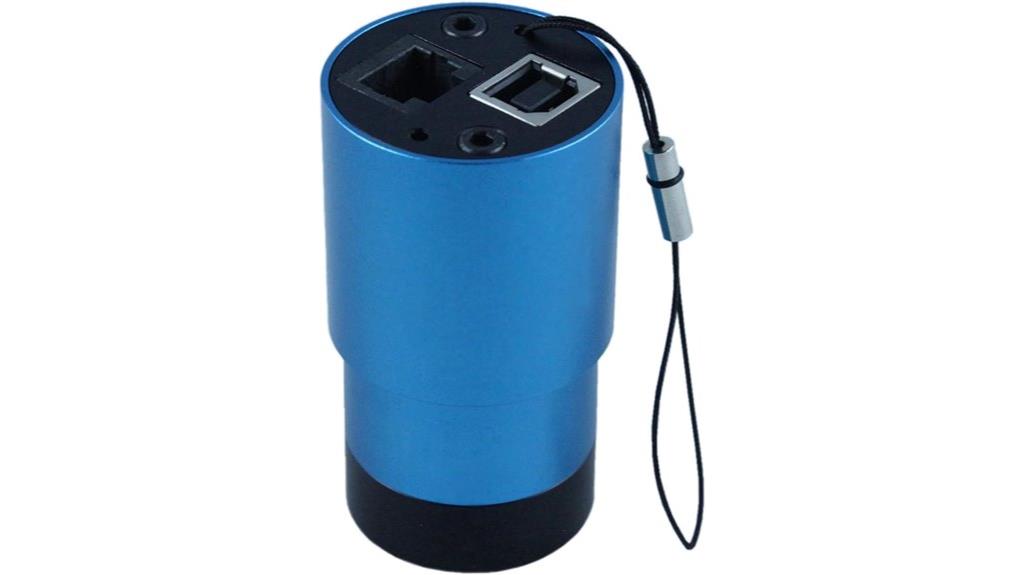
The Astromania SGCMOS Series Telescope CMOS Camera stands out as an ideal choice for both amateur and professional astronomers who need high sensitivity and fast imaging capabilities. Its high-sensitivity sensor, combined with a fast frame rate and long exposure support, makes capturing faint deep-sky objects straightforward. The aluminum CNC housing ensures durability and efficient heat transfer, maintaining stable operation. With a standard 1.25-inch interface and inner C-mount, it’s versatile for various accessories. Built-in auto-guiding, compatibility with multiple software, and extensive accessories make this camera a flexible, reliable tool for astrophotography, whether you’re capturing colorful images or recording videos.
Best For: amateur and professional astronomers seeking a versatile, high-sensitivity CMOS camera for deep-sky imaging and auto-guiding.
Pros:
- High sensitivity sensor with fast frame rate and long exposure support for capturing faint objects
- Durable aluminum CNC housing with efficient thermal design for stable operation
- Compatibility with multiple software platforms and standard astrophotography accessories
Cons:
- Slightly heavier and larger compared to basic cameras, may require stable mounting solutions
- Requires familiarity with astrophotography software and setup processes for optimal use
- Limited to 1.25-inch interface, which may restrict use with larger or specialized accessories
Factors to Consider When Choosing Cooled CMOS Astro Cameras for Deep Sky Imaging
When selecting a cooled CMOS astro camera for deep sky imaging, I focus on several key factors that impact performance. These include sensor sensitivity and QE, cooling efficiency, resolution, compatibility, and software features. Understanding these points helps me choose the right camera to capture clear, detailed images of the night sky.
Sensor Sensitivity and QE
Have you ever wondered how some astrophotographers capture stunning deep sky images with shorter exposures? The answer lies in sensor sensitivity and quantum efficiency (QE). A sensor with high sensitivity can detect faint objects more effectively, reducing the required exposure time. QE measures how efficiently a sensor converts incoming photons into electrons; higher QE, like 80%, means brighter, more detailed images. Cooled CMOS sensors enhance sensitivity by minimizing thermal noise, allowing for clearer captures of dim objects. Pixel size also plays a role—larger pixels gather more light, boosting sensitivity and resolution. High-sensitivity sensors not only improve image quality but also enable shorter exposures, helping to reduce issues like tracking errors and atmospheric disturbances. Choosing a camera with excellent sensor sensitivity and QE is key to achieving stunning deep sky images.
Cooling Efficiency and Noise Reduction
Sensor sensitivity and QE are crucial for capturing faint deep sky objects, but optimizing image quality also depends on how effectively a cooled CMOS camera manages thermal noise. Efficient cooling systems, like TEC refrigeration, are essential because they lower sensor temperatures, reducing dark current noise during long exposures. Achieving a temperature differential of at least 30°C below ambient significantly enhances image clarity by minimizing thermal noise. Lower sensor temperatures also suppress CMOS glow, decreasing artifacts and improving the signal-to-noise ratio. Proper thermal management prevents heat buildup that can distort images and extends the sensor’s lifespan. Ultimately, the combination of cooling efficiency and noise reduction is indispensable for capturing sharp, detailed deep sky images with minimal noise, making it a key factor when selecting a cooled CMOS astro camera.
Resolution and Pixel Size
Choosing the right cooled CMOS astro camera involves understanding how resolution and pixel size influence your deep sky imaging results. Higher resolution allows capturing more detailed images of faint and intricate structures in deep sky objects, boosting image quality. Smaller pixels, like 3.76μm, enable finer detail resolution but often require longer exposures to gather enough signal, especially in low-light conditions. Conversely, larger pixels collect more light per pixel, increasing sensitivity and reducing noise, which is ideal for capturing faint objects but can limit resolution. The balance between resolution and pixel size depends on your telescope’s focal length and imaging goals, such as wide-field views or high-magnification details. Selecting the right combination ensures you maximize image clarity without sacrificing sensitivity.
Compatibility and Connectivity
Selecting a cooled CMOS astro camera that connects seamlessly with your equipment is crucial for smooth operation and reliable imaging. Make sure it offers compatible connectivity options like USB 3.0 or USB 2.0 to match your computer and software needs. Check if the camera supports standard interfaces such as C-mount or 1.25-inch nosepieces for easy integration with your telescope or eyepiece system. Verify that it has drivers compatible with ASCOM or WDM to ensure smooth communication with your imaging software. Also, confirm the connection ports align with your existing gear, including auto-guiding ports like ST4 if needed. Ultimately, consider the length and quality of included cables to guarantee reliable data transfer and straightforward setup within your observing station.
Software and Processing Capabilities
When evaluating cooled CMOS astro cameras for deep sky imaging, ensuring they have advanced software compatibility is essential for seamless integration with your existing imaging and processing programs. High frame rates enable real-time viewing and quick image acquisition, crucial for capturing transient events. Long exposure support allows stacking multiple images, boosting the signal-to-noise ratio and revealing faint objects. Built-in dark frame correction and noise reduction algorithms improve image quality by minimizing sensor artifacts during post-processing. Compatibility with drivers like ASCOM, WDM, and dedicated astrophotography software enhances control, automation, and workflow efficiency. These features collectively streamline the imaging process, reduce post-processing time, and help achieve clearer, more detailed astrophotos, making them vital considerations when choosing the right cooled CMOS camera for your deep sky projects.
Build Quality and Durability
A sturdy build quality is essential for cooled CMOS astro cameras, especially during long exposures where stability and reliability matter most. High-quality materials like aluminum CNC housings provide durability and help with thermal management, keeping the sensor cool and stable. Robust construction minimizes vibrations and mechanical stress, which can blur images during extended sessions. Weather-resistant, sealed designs protect internal components from moisture, dust, and environmental fluctuations, ensuring consistent performance. Precise manufacturing tolerances keep the sensor aligned, maintaining image quality over time. Additionally, durable cooling systems with reliable TEC modules and efficient heat dissipation ensure consistent thermal regulation even during prolonged use. Overall, a well-constructed camera withstands the rigors of astrophotography, offering dependable operation night after night.
Frequently Asked Questions
How Do Cooled CMOS Cameras Compare to CCD Options for Deep Sky Imaging?
Cooled CMOS cameras often outperform CCDs in deep sky imaging because they offer faster readout speeds, lower power consumption, and advanced noise reduction. I find them more versatile and easier to use, especially for beginners. While CCDs excel in ultra-long exposures and high sensitivity, CMOS sensors have improved markedly, making them a compelling choice for capturing detailed, high-quality astrophotography images efficiently.
What Maintenance Is Required for Cooled CMOS Astro Cameras Over Time?
Cooled CMOS astro cameras need minimal maintenance, but I recommend keeping the sensor clean and dust-free using a gentle blower or lens cleaning tools. Regularly check the cooling system and ensure the fans and thermoelectric modules are functioning properly, especially after long sessions. Avoid exposing the camera to extreme temperatures or moisture, and store it in a dry, dust-free environment when not in use. This keeps your equipment in top shape.
Are There Specific Software Requirements for Operating Cooled CMOS Astrophotography Cameras?
You’ll need compatible software to operate cooled CMOS astrophotography cameras effectively. I recommend using dedicated capture software like SharpCap, N.I.N.A., or Astro Photography Tool, which support camera control, focusing, and image capturing. Make sure your camera’s drivers are up-to-date and compatible with your operating system. Some cameras also require specific SDKs or plugins, so always check the manufacturer’s recommendations to guarantee seamless integration and ideal imaging results.
How Does Temperature Regulation Affect Image Quality in Cooled CMOS Cameras?
Temperature regulation greatly impacts image quality in cooled CMOS cameras. When I keep the sensor cool, it reduces thermal noise, resulting in cleaner, sharper images. Fluctuations can cause noise spikes or uneven exposure, so precise temperature control guarantees consistent results. I always monitor and adjust cooling systems to maintain a stable temperature, which helps me capture detailed deep sky images with minimal noise and maximum clarity.
Can Cooled CMOS Cameras Be Used Effectively for Planetary Imaging as Well?
Absolutely, cooled CMOS cameras are like Swiss Army knives for astronomy—they shine just as bright in planetary imaging. Their low noise and high sensitivity let me capture fine details on planets, even in challenging conditions. While they’re optimized for deep sky work, I’ve found they adapt surprisingly well for planets, especially with the right focus and frame rate. They’re versatile tools, making planetary imaging both accessible and rewarding.
Conclusion
Choosing the right cooled CMOS astro camera is like finding the perfect lens for a photographer—it’s all about clarity and capturing the unseen. After testing these models, I realized that investing in quality and understanding your needs transforms faint stars into breathtaking images. Think of it as tuning your telescope—when everything aligns, the universe reveals its hidden beauty. So, pick wisely, and let your passion for deep sky imaging soar.