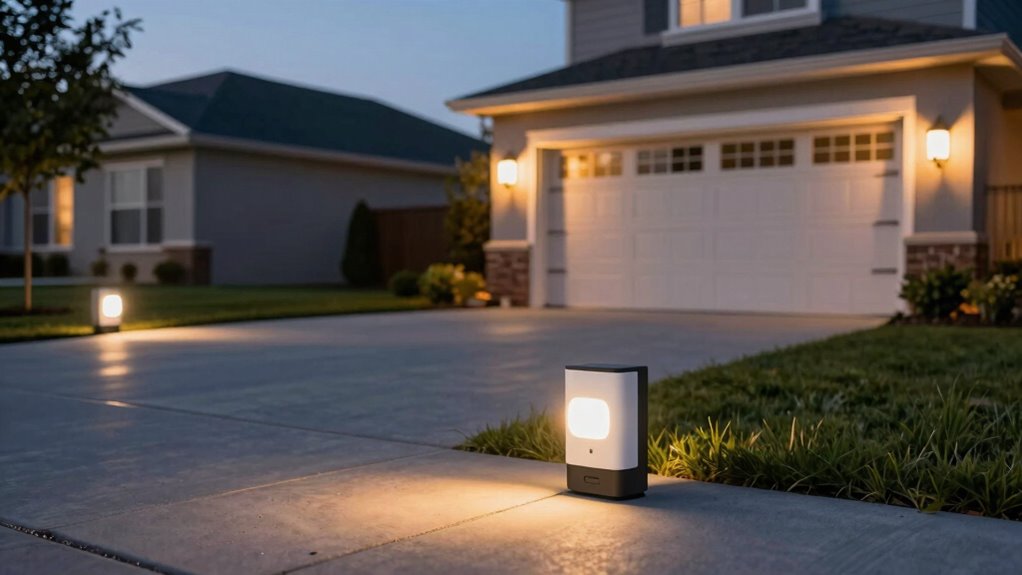

A wireless driveway alarm can alert you when a vehicle approaches without requiring a wired connection across the yard. My best overall pick is the 1byone Wireless Driveway Alarm with two infrared sensors, a practical starting point for covering more than one approach area. For buyers who want solar-powered sensors, the eMACROS two-sensor system stands out, while the Mighty Mule FM231 is the specialized choice for detecting vehicles with an electromagnetic sensor. The main tradeoffs are sensor coverage, power and upkeep, and how well the detection method fits your driveway. Read on for the full comparison, buying advice, and recommendations by need.

Get kitchen gear delivered free with Prime
- Fast, free delivery on millions of items
- Prime Video, Amazon Music and more included
- Member-only deals all year
Complete the kit


Key Takeaways
- Sensor count changes coverage more than headline range: several kits include two or three sensors, which can cover separate approaches more readily than a single-sensor kit.
- Solar power is a convenience, not a guarantee of maintenance-free use: placement and sunlight affect charging, so a shaded sensor location may favor a battery-powered option.
- The Mighty Mule FM231 fills a different role: its electromagnetic vehicle detection targets vehicles rather than general motion, but its listed 400-foot range is shorter than the half-mile claims on several motion-sensor systems.
- Receiver power affects where alerts can be heard: plug-in and portable rechargeable receivers suit different home layouts, so match the receiver to the place you need to hear an alert.
- Long-range claims do not settle the choice: terrain, walls, interference, and sensor placement can affect a wireless link, making real-world layout and detection type key comparison points.
| 1byone Wireless Driveway Alarm with Receiver and 2 Infrared Sensors |  | Best for Flexible Alerting | Included components: 2 PIR sensors, 1 receiver, wall plugs, screws, instruction manual | Wireless range: Up to 1,000 ft / 300 m | Motion detection range: Up to 24 ft / 8 m | VIEW ON AMAZON | See Our Full Breakdown |
| Solar Driveway Alarm with Portable Rechargeable Receiver and 2 Solar Sensors |  | Best for Long-Range Properties | Wireless range: Up to 3,000 ft | Included components: 1 receiver and 2 solar sensors | Detection distance: Adjustable, 32–55 ft | VIEW ON AMAZON | See Our Full Breakdown |
| 1byone Driveway Alarm with 2 PIR Sensors and Plug-in Receiver |  | Best for Indoor Plug-In Alerts | Included components: 2 waterproof PIR sensors and 1 plug-in receiver | Wireless range: Up to 1,000 ft / 300 m | Motion detection range: Up to 24 ft / 8 m | VIEW ON AMAZON | See Our Full Breakdown |
| Hosmart Wireless Driveway Alarm Motion Sensor System, 1/2-Mile Range |  | Best for a Simple Single-Sensor Setup | Included components: 1 base receiver and 1 sensor | Wireless range: Up to 1/2 mile in ideal conditions; about 1,500 ft in most conditions | Detection range: 30 ft | VIEW ON AMAZON | See Our Full Breakdown |
| HTZSAFE Wireless Driveway Alarm with Receiver and Motion Sensors |  | Best for Wider Motion Detection | Included components: 1 plug-in receiver and 2 motion sensors in the description; title lists 4 sensors | Wireless transmission range: Up to 0.5 miles, depending on terrain | Motion detection range: 35–50 ft | VIEW ON AMAZON | See Our Full Breakdown |
| Driveway Alarm – 1/2 Mile Long Range Motion Sensor – 1 Receiver + 3 Sensors |  | Best for Multi-Entry Coverage | Included components: 1 receiver and 3 sensors | Maximum wireless transmission range: Up to 1/2 mile | Motion detection range: 35–50 feet | VIEW ON AMAZON | See Our Full Breakdown |
| Wireless Driveway Alarm with 1/2-Mile Range, 1 Receiver and 1 Motion Sensor |  | Best for Simple Long-Range Coverage | Included components: 1 receiver and 1 motion sensor | Wireless transmission range: Up to 1/2 mile | Motion detection range: 35–50 feet | VIEW ON AMAZON | See Our Full Breakdown |
| TECKNET Solar-Powered Wireless Driveway Alarm with RGB Alerts |  | Best for Visual Alerts | Power source: Solar-powered | Detection technology: PIR motion sensor | Detection range: 16 feet low sensitivity; 33 feet high sensitivity | VIEW ON AMAZON | See Our Full Breakdown |
| Wireless Weatherproof Driveway Alarm with Motion Sensor |  | Best for Adjustable Detection and Aiming | Brand and model: FREETIM I8-313 | Sensor detection range: 19–65 feet | Wireless transmission range: 500 feet | VIEW ON AMAZON | See Our Full Breakdown |
| eMACROS Solar Wireless Driveway Alarm with 1 Receiver and 2 Sensors |  | Best Solar Multi-Sensor Pick | Included components: 1 plug-in receiver and 2 sensors | Power source: Solar-powered sensors | Maximum wireless range: 2,600 feet in open areas | VIEW ON AMAZON | See Our Full Breakdown |
| eMACROS Solar Wireless Driveway Alarm with 1 Receiver and 1 Sensor |  | Best for Large Properties | Power source: Solar powered | Maximum wireless range: Up to 2,640 feet | Detection range: Up to 30 feet on high; 20 feet on low | VIEW ON AMAZON | See Our Full Breakdown |
| Wuloo Wireless Solar Driveway Alarm with 2 Motion Sensors |  | Best Two-Zone Solar Starter Kit | Wireless range: Up to 1,760 feet | Motion detection range: Up to 30 feet | Power source: Solar and battery powered | VIEW ON AMAZON | See Our Full Breakdown |
| Mighty Mule FM231 Wireless Driveway Alarm – Electromagnetic Vehicle Detection, Indoor Receiver, 400 ft Range, Expandable, Battery Powered |  | Best for Vehicle-Only Alerts | Detection method: Electromagnetic vehicle detection | Power source: 2 AA batteries, not included | Maximum wireless range: Up to 400 feet | VIEW ON AMAZON | See Our Full Breakdown |
| FULNIX Driveway Alarm with Rechargeable Receiver and Solar Sensor |  | Best Rechargeable Premium Feature Set | Maximum transmission range: Up to 3,000 feet in open, unobstructed conditions | Motion detection range: Up to 55 feet on high or 32 feet on low | Sensor battery: 2500mAh rechargeable | VIEW ON AMAZON | See Our Full Breakdown |
| HTZSAFE Wireless Driveway Alarm with 1 Receiver and 2 Motion Sensors |  | Best for Wide Motion Coverage | Wireless transmission range: Up to 0.5 miles | Motion detection range: 35–50 feet | Included components: 1 plug-in receiver and 2 motion sensors | VIEW ON AMAZON | See Our Full Breakdown |
| driveway alarm wireless | Included components | Motion detection range |
|---|---|---|
| 1byone Wireless Driveway Alarm | 2 PIR sensors, 1 receiver, wall plugs, screws, instruction manual | Up to 24 ft / 8 m |
| Solar Driveway Alarm with Port | 1 receiver and 2 solar sensors | — |
| 1byone Driveway Alarm with 2 P | 2 waterproof PIR sensors and 1 plug-in receiver | Up to 24 ft / 8 m |
| Hosmart Wireless Driveway Alar | 1 base receiver and 1 sensor | — |
| HTZSAFE Wireless Driveway Alar | 1 plug-in receiver and 2 motion sensors in the description; title lists 4 sensors | 35–50 ft |
| Driveway Alarm | 1 receiver and 3 sensors | 35–50 feet |
| Wireless Driveway Alarm with 1 | 1 receiver and 1 motion sensor | 35–50 feet |
| TECKNET Solar-Powered Wireless | — | — |
| Wireless Weatherproof Driveway | — | — |
| eMACROS Solar Wireless Drivewa | 1 plug-in receiver and 2 sensors | Up to 30 feet high sensitivity or 20 feet low sensitivity |
| eMACROS Solar Wireless Drivewa | 1 receiver, 1 sensor, charging cables, and adapters | — |
| Wuloo Wireless Solar Driveway | — | Up to 30 feet |
| Mighty Mule FM231 Wireless Dri | — | — |
| FULNIX Driveway Alarm with Rec | — | Up to 55 feet on high or 32 feet on low |
| HTZSAFE Wireless Driveway Alar | 1 plug-in receiver and 2 motion sensors | 35–50 feet |
More Details on Our Top Picks
1byone Wireless Driveway Alarm with Receiver and 2 Infrared Sensors
The 1byone makes sense when I want coverage at two approach points without choosing between an audible warning and a visual cue. Its two PIR sensors detect motion up to 24 feet away, while the receiver can chime, flash its LED, or do both. The 1,000-foot link suits many home driveways, though it falls short of the 3,000-foot claim on the Solar Driveway Alarm with Portable Rechargeable Receiver and 2 Solar Sensors. That solar model also asks less frequent attention to sensor power, while this 1byone relies on batteries. Expansion to five sensors gives it room to grow, but the short detection radius means sensor placement matters: it is better for watching defined entry points than a broad area. I’d choose it for straightforward multi-zone alerts, not maximum reach.
Pros:- Includes two PIR sensors, so buyers can monitor separate approaches from the start.
- Receiver supports sound, LED flash, or both.
- Wireless communication range reaches up to 1,000 feet.
- Can expand to five sensors.
Cons:- Motion detection reaches only up to 24 feet, making placement important.
- Battery-powered sensors require ongoing battery replacement.
Best for: Homeowners who want two monitored approach points and a choice of audible, visual, or combined alerts.
Not ideal for: Owners of deep or wide properties who need longer sensor detection or more than a 1,000-foot receiver link.
- Included components:2 PIR sensors, 1 receiver, wall plugs, screws, instruction manual
- Wireless range:Up to 1,000 ft / 300 m
- Motion detection range:Up to 24 ft / 8 m
- Expandable sensors:Up to 5
- Alert options:Sound, LED flash, or both
- Power source:Battery powered
- Mounting type:Wall mount
- Warranty:2 years
Our verdict“Choose this 1byone for two-zone coverage and flexible local alerts, but pick the solar 3,000-foot system for larger properties or reduced battery upkeep.”
Solar Driveway Alarm with Portable Rechargeable Receiver and 2 Solar Sensors
For a property where the receiver sits far from the entrance, this system’s up to 3,000-foot wireless range is its clearest advantage. The two solar-powered sensors are listed for up to two years between charges, and the portable receiver is rated for up to 30 days, reducing routine power maintenance compared with the battery-powered 1byone Wireless Driveway Alarm with Receiver and 2 Infrared Sensors. Its adjustable 32–55-foot detection distance also gives me more room to tune coverage than that 1byone’s fixed 24-foot range. The tradeoff is greater setup complexity: several sensitivity settings can take adjustment, and there is no app, Wi-Fi, or smart-home connection. With 37 chimes and expansion to 84 sensors, it favors broad local coverage over connected alerts.
Pros:- Wireless range is listed at up to 3,000 feet.
- Solar sensors are rated for up to two years on a charge, with USB-C backup noted in the product details.
- Adjustable detection distance spans 32–55 feet.
- Supports up to 84 sensors and offers 37 chime options.
Cons:- No Wi-Fi, app, or smart-home integration for remote alerts or settings.
- Multiple sensitivity settings may take time to tune.
- Receiver battery life is listed at up to 30 days, so it still needs periodic charging.
Best for: Owners of long driveways or large rural lots who want solar sensor power, a portable receiver, and extensive sensor expansion without Wi-Fi.
Not ideal for: Buyers who want smartphone notifications, smart-home integration, or the simplest possible sensitivity setup.
- Wireless range:Up to 3,000 ft
- Included components:1 receiver and 2 solar sensors
- Detection distance:Adjustable, 32–55 ft
- Sensor power:Solar powered; up to two years per charge
- Receiver power:Rechargeable; up to 30 days per charge
- Chime options:37
- Expandable sensors:Up to 84
- Receiver dimensions:3.4 × 3.1 × 3.5 in
Our verdict“Pick this model when long wireless reach and solar-powered sensors matter more than app control or minimal setup adjustments.”
1byone Driveway Alarm with 2 PIR Sensors and Plug-in Receiver
This 1byone is the better fit when I want a receiver that stays plugged in and a wider choice of sounds than the simpler 1byone Wireless Driveway Alarm with Receiver and 2 Infrared Sensors. Its 36 chimes, three volume levels, and sound, LED, or combined alerts make it easier to distinguish a driveway alert from other household sounds. Two waterproof PIR sensors cover up to 24 feet, and the receiver link reaches up to 1,000 feet; those limits are similar to its 1byone sibling, so neither is a standout for expansive land. The plug-in receiver avoids managing receiver batteries, but the sensors still use AAA batteries. Expansion stops at five sensors, making this a practical home setup rather than a large-property system like the solar 3,000-foot model.
Pros:- Plug-in receiver avoids relying on receiver batteries.
- Offers 36 chimes, three volume levels, and three alert modes.
- Includes two waterproof PIR sensors.
- Supports up to five sensors per receiver.
Cons:- Motion detection range is limited to 24 feet.
- Sensors require AAA alkaline batteries.
- Wireless range is up to 1,000 feet, below the 3,000-foot solar model’s stated reach.
Best for: Homeowners who want a receiver powered from an indoor outlet, multiple chime choices, and two weather-resistant sensors.
Not ideal for: People who need a long sensor detection radius, battery-free sensors, or coverage across a very large property.
- Included components:2 waterproof PIR sensors and 1 plug-in receiver
- Wireless range:Up to 1,000 ft / 300 m
- Motion detection range:Up to 24 ft / 8 m
- Chimes:36
- Alert modes:Sound, LED flash, or both
- Volume:3 levels, 25–80 dB
- Power source:Receiver plugs in; sensors use AAA alkaline batteries
- Expandable capacity:Up to 5 sensors per receiver
- Warranty:24 months
Our verdict“Choose this 1byone for a convenient plug-in receiver and customizable household alerts, not for wider detection or extensive property coverage.”
Hosmart Wireless Driveway Alarm Motion Sensor System, 1/2-Mile Range
Hosmart keeps the starting setup spare: one outdoor sensor and one base receiver, with room to add up to four sensors and unlimited receivers later. Its 30-foot detection range exceeds the 24-foot reach of both 1byone systems, which can provide more warning distance at a driveway entrance. The wireless link is listed as up to half a mile in ideal conditions, or about 1,500 feet in most conditions, so I would not treat the headline figure as guaranteed across obstructed terrain. The adjustable sensor angle and weather-resistant housing help tailor placement, while 38 ringtone options provide alert variety. Compared with the two-sensor HTZSAFE system, Hosmart includes only one sensor; buyers who need two monitored zones immediately will need an additional sensor. Its four AA batteries are also not included.
Pros:- 30-foot detection range is longer than the 24-foot range on the listed 1byone models.
- Weather-resistant sensor has an adjustable angle.
- Can expand to four sensors and unlimited receivers.
- Offers 38 ringtone options.
Cons:- Includes only one sensor, unlike the two-sensor HTZSAFE and 1byone packages.
- Wireless range varies with surroundings; the 1,500-foot typical figure is below its ideal-condition claim.
- Sensor requires four AA batteries, which are not included.
Best for: Buyers who want to begin with one weather-resistant sensor and add coverage gradually around a home or small property.
Not ideal for: Households that need two or more monitored entry points out of the box or want sensors supplied with batteries.
- Included components:1 base receiver and 1 sensor
- Wireless range:Up to 1/2 mile in ideal conditions; about 1,500 ft in most conditions
- Detection range:30 ft
- Expandable system:Up to 4 sensors and unlimited receivers
- Chimes:38 ringtone options
- Sensor power:4 AA batteries, not included
- Receiver power:Adapter or AA batteries
- Warranty:2 years on parts and workmanship
Our verdict“Choose Hosmart for a straightforward one-sensor start with adjustable placement, but select a two-sensor package if you need multiple zones immediately.”
HTZSAFE Wireless Driveway Alarm with Receiver and Motion Sensors
HTZSAFE stands out for its stated 35–50-foot motion detection range, giving it more distance to spot movement than the 30-foot Hosmart and 24-foot 1byone sensors. That can provide earlier notice along a long approach, although the listing’s conflicting sensor counts—its description and included-components field say one receiver and two sensors, while the title says four—make it hard to know exactly how much coverage arrives in the package. Its half-mile wireless claim suits larger lots, but terrain affects actual range. Four volume levels and 35 melodies give the receiver useful alert choices, and expansion to 32 sensors and unlimited receivers outpaces the smaller systems in this group. The compromise is battery upkeep: each sensor uses three AA batteries, not included. I’d verify the package contents before choosing it over Hosmart.
Pros:- Listed motion detection range of 35–50 feet exceeds the ranges given for the Hosmart and 1byone models.
- Expandable to 32 sensors and unlimited receivers.
- Provides four volume levels and 35 melody options.
- Weather-resistant sensors are described for indoor or outdoor use.
Cons:- Product information conflicts on whether the package includes two or four sensors.
- Each sensor needs three AA alkaline batteries, which are not included.
- Wireless range can vary with terrain and surroundings.
Best for: Owners of longer approaches who value a broader motion detection zone and may expand coverage with additional sensors.
Not ideal for: Buyers who need a clearly specified sensor count, included sensor batteries, or a wireless range unaffected by terrain.
- Included components:1 plug-in receiver and 2 motion sensors in the description; title lists 4 sensors
- Wireless transmission range:Up to 0.5 miles, depending on terrain
- Motion detection range:35–50 ft
- Sensor power:3 AA alkaline batteries per sensor, not included
- Expandable capacity:Up to 32 sensors and unlimited receivers
- Receiver settings:4 volume levels and 35 melodies
- Mounting type:Wall mount
- Operating temperature:-30 to 150 °F in description; product information also lists 10 °F
Our verdict“Choose HTZSAFE for its longer stated detection distance and expansion capacity only after confirming the included sensor count.”
Driveway Alarm – 1/2 Mile Long Range Motion Sensor – 1 Receiver + 3 Sensors
With three sensors included, this system is a stronger starting point for monitoring a driveway plus a gate or outbuilding than the single-sensor Wireless Driveway Alarm with 1/2-Mile Range. Its claimed half-mile transmission range can help connect distant sensor locations to the receiver, though terrain and obstacles can shorten that reach. Detection adjusts between 35 and 50 feet, giving buyers a way to trade broader coverage for fewer unwanted alerts. Multiple melodies and volume levels also help distinguish sensor locations. The system can expand to 32 sensors, a useful path for covering more of a property without replacing the receiver. The tradeoff is ongoing battery upkeep: each sensor needs three AA batteries, which are not included. Choose this over the single-sensor option when coverage points matter more than minimizing setup and battery costs.
Pros:- Includes three sensors for covering multiple locations from the start.
- Up to half-mile wireless transmission range in suitable conditions.
- Adjustable 35–50-foot detection distance helps balance coverage and false alerts.
- Supports expansion to as many as 32 sensors.
Cons:- Three AA batteries per sensor are required and are not included.
- Transmission range can fall when terrain or obstacles block the signal.
- More sensors mean more battery checks than the single-sensor Wireless Driveway Alarm with 1/2-Mile Range.
Best for: Owners who want to monitor several driveway or property access points from one receiver.
Not ideal for: Buyers who want solar-powered sensors or do not want to purchase and replace AA batteries.
- Included components:1 receiver and 3 sensors
- Maximum wireless transmission range:Up to 1/2 mile
- Motion detection range:35–50 feet
- Sensor batteries:3 AA 1.5 V alkaline batteries per sensor; not included
- Expandability:Up to 32 sensors; unlimited receivers
- Mounting type:Wall mount
- Operating temperature:-30°F to 150°F
- Dimensions:3.74 × 2.95 × 3.94 inches (D × W × H)
Our verdict“Choose this package if you need several sensor locations and accept battery upkeep in exchange for broad, expandable coverage.”
Wireless Driveway Alarm with 1/2-Mile Range, 1 Receiver and 1 Motion Sensor
This single-sensor package keeps the setup straightforward while retaining the claimed half-mile signal range found in larger systems. It suits a buyer who needs one alert point—such as a driveway entrance—and may add sensors later, rather than paying attention to several locations from day one. Compared with the three-sensor Driveway Alarm – 1/2 Mile Long Range Motion Sensor, it has less included coverage but fewer devices to place and maintain. The sensor detects movement from 35 to 50 feet, with two sensitivity settings to help reduce alerts from activity beyond the intended zone. A choice of 35 melodies and four volume levels makes the receiver flexible for different rooms. The main compromises are battery dependence and range uncertainty: the sensor needs three AA batteries, and the advertised wireless distance depends on terrain and obstacles.
Pros:- Single-sensor setup is simpler than a multi-sensor package.
- Up to 1/2-mile transmission range in suitable conditions.
- Two sensitivity settings and a 35–50-foot detection zone.
- Supports up to 32 sensors and offers 35 melodies with four volume levels.
Cons:- Only one sensor is included, so additional access points require more sensors.
- Sensor requires three AA batteries, which are not included.
- Actual wireless range varies with terrain and obstructions.
Best for: Homeowners monitoring one driveway entrance who want the option to add sensors as needs grow.
Not ideal for: Buyers who need several monitoring points immediately or prefer solar-powered sensors.
- Included components:1 receiver and 1 motion sensor
- Wireless transmission range:Up to 1/2 mile
- Motion detection range:35–50 feet
- Sensitivity settings:2
- Alert options:35 melodies and 4 volume levels
- Power:Sensor uses 3 AA 1.5 V alkaline batteries, not included; receiver plugs into an outlet
- Expandability:Up to 32 sensors; unlimited receivers
- Operating temperature:-30°F to 150°F
Our verdict“Pick this for one driveway alert point and long-range expandability without starting with a multi-sensor kit.”
TECKNET Solar-Powered Wireless Driveway Alarm with RGB Alerts
The TECKNET stands apart through its RGB visual alerts, a useful cue when an audible chime could be missed or is unwelcome. Its solar-charged sensor also cuts down on routine battery replacement compared with the battery-powered Wireless Weatherproof Driveway Alarm with Motion Sensor. The receiver offers four alert zones, 36 melodies, and five volume levels, giving buyers several ways to distinguish events and tune the alert to their space. The tradeoff is a shorter detection window: its maximum is 33 feet, below the 50-foot upper range of the half-mile systems in this roundup. Signal transmission still reaches up to 2,600 feet under suitable conditions, but that does not extend the sensor’s motion-detection area. The sensor is IPX5-rated, though its stated operating temperature range is narrower than some alternatives.
Pros:- Solar-powered sensor reduces routine battery replacement.
- RGB visual alerts add a cue beyond the audible alarm.
- Four alert zones, 36 melodies, and five volume levels support tailored alerts.
- IPX5-rated sensor is designed for outdoor use.
Cons:- Detection range tops out at 33 feet, shorter than the 50-foot options in this roundup.
- Battery is not included, despite the solar-powered description.
- Stated operating temperature range is narrower than those of several competing models.
Best for: Households that want a solar-charged sensor and a visible receiver alert alongside sound.
Not ideal for: Owners needing a detection zone beyond 33 feet or operation in temperatures outside its stated range.
- Power source:Solar-powered
- Detection technology:PIR motion sensor
- Detection range:16 feet low sensitivity; 33 feet high sensitivity
- Signal transmission range:Up to 2,600 feet
- Water resistance:IPX5
- Alerts:36 melodies, 5 volume levels, and 4 alert zones
- Operating temperature:-15°C to 50°C
- Dimensions:4 × 3.5 × 3 inches (D × W × H)
Our verdict“Choose the TECKNET if visual alerts and solar charging matter more than a long motion-detection zone.”
Wireless Weatherproof Driveway Alarm with Motion Sensor
This FREETIM model favors sensor placement flexibility over long-distance communication. Its detection range adjusts from 19 to 65 feet, and the 360-degree swivel mount helps aim the sensor around a post or toward a particular approach. That wider detection ceiling exceeds the 33-foot limit of the TECKNET Solar-Powered Wireless Driveway Alarm, but the FREETIM’s wireless transmission reaches only 500 feet, far less than the half-mile systems. Its IP44 rating provides weather resistance, though it is a different protection level from the TECKNET’s IPX5 rating. Sixty ringtone choices and four volume levels offer plenty of alert customization, while support for up to eight sensors is more limited than the 32-sensor systems. The sensor uses three AAA batteries, and the listed temperature information is unclear, so buyers should check suitability for their local conditions.
Pros:- Adjustable 19–65-foot detection range accommodates different sensor placements.
- 360-degree swivel mount helps direct coverage toward an approach.
- IP44 weather-resistant sensor is suited to outdoor placement.
- Offers 60 ringtones and four volume levels.
Cons:- 500-foot wireless transmission range is shorter than the half-mile systems.
- Receiver supports a maximum of eight sensors, below the 32-sensor alternatives.
- Requires three AAA batteries, and the stated temperature specifications are unclear.
Best for: Buyers who need to angle a sensor precisely and adjust detection distance for a specific driveway layout.
Not ideal for: Owners with a distant receiver location or those who need a clearly specified broad operating-temperature range.
- Brand and model:FREETIM I8-313
- Sensor detection range:19–65 feet
- Wireless transmission range:500 feet
- Weather resistance:IP44
- Mounting type:Pole mount with 360-degree swivel
- Power:Sensor uses 3 AAA 1.5 V batteries; receiver plugs in
- Alert options:60 ringtones and 4 volume levels
- Maximum sensors per receiver:8
- Sensor dimensions:2.36 × 1.34 × 2.01 inches
Our verdict“Choose this model when adjustable detection and a swivel mount matter more than long-range transmission or large-scale expansion.”
eMACROS Solar Wireless Driveway Alarm with 1 Receiver and 2 Sensors
For buyers who want more than one monitoring point without wiring or Wi-Fi, this eMACROS package pairs a plug-in receiver with two solar-powered sensors. That makes it a more practical starting point for covering a driveway and a second approach than the single-sensor Wireless Driveway Alarm with 1/2-Mile Range, while avoiding the AA battery replacement routine of that model. Its 2,600-foot wireless range is specified for open areas, so trees, buildings, and terrain may reduce the link. Detection reaches up to 30 feet on high sensitivity or 20 feet on low, a shorter zone than the 35–50-foot systems. The standalone design keeps setup independent of apps and network coverage, but that also means no phone alerts or remote controls. Choose it for straightforward solar multi-point coverage, not smart-home integration or the broadest detection area.
Pros:- Includes two solar-powered sensors for monitoring separate approaches.
- Up to 2,600-foot wireless range in open areas.
- High and low sensitivity settings adjust detection up to 30 or 20 feet.
- No wiring, Wi-Fi, Bluetooth, or app setup is required.
Cons:- No smartphone app, remote alerts, or smart-home connectivity.
- Detection range is shorter than the 35–50-foot systems in this roundup.
- Maximum wireless range is stated for open areas and may be reduced by obstacles.
Best for: Property owners who want two solar-powered monitoring points and a simple system that works without Wi-Fi.
Not ideal for: Buyers who need smartphone alerts, app controls, or a motion-detection zone longer than 30 feet.
- Included components:1 plug-in receiver and 2 sensors
- Power source:Solar-powered sensors
- Maximum wireless range:2,600 feet in open areas
- Motion detection range:Up to 30 feet high sensitivity or 20 feet low sensitivity
- Frequency:433 MHz
- Temperature range:-20°C to 60°C
- Connectivity:Standalone; no Wi-Fi, Bluetooth, or app support
- Mounting type:Wall mount
Our verdict“Pick this for two-point solar coverage and a standalone setup, provided its shorter detection range and lack of app features suit your needs.”
eMACROS Solar Wireless Driveway Alarm with 1 Receiver and 1 Sensor
The eMACROS is a strong fit when wireless reach and future expansion matter more than starting with multiple sensors. Its stated range reaches 2,640 feet, and its solar-powered sensor can reduce routine battery changes when it receives adequate sunlight. Adjustable sensitivity gives me a way to tailor motion alerts, while support for up to 64 sensors and unlimited receivers suits a property with several entrances or buildings. Compared with the Wuloo two-sensor kit, this package starts with only one sensor, but offers greater stated transmission range and much larger expansion capacity. The tradeoff is that detection depends on careful sensor placement, and the supplied battery details are inconsistent about battery type. I would choose it for a spread-out property, not for buyers who need two monitored zones straight out of the box.
Pros:- Stated wireless range of up to 2,640 feet suits long driveways and larger properties
- Solar-powered sensor can reduce routine battery replacement
- Adjustable sensitivity helps tailor the motion detection area
- Supports up to 64 sensors and unlimited receivers
Cons:- The package includes only one sensor, unlike the Wuloo two-sensor kit
- Reliable alerts depend on suitable sensor placement
- Battery information is inconsistent about the specified battery type
Best for: Owners of large or multi-entry properties who want a long stated transmission range and room to add many sensors later
Not ideal for: Buyers who need coverage at two locations immediately or want clear, consistent battery specifications before purchase
- Power source:Solar powered
- Maximum wireless range:Up to 2,640 feet
- Detection range:Up to 30 feet on high; 20 feet on low
- Frequency:433 MHz
- Operating temperature:-20 to 60 °C
- Expandable capacity:Up to 64 sensors and unlimited receivers
- Included components:1 receiver, 1 sensor, charging cables, and adapters
Our verdict“Choose the eMACROS if you need long-range coverage and extensive expansion, and can work with a one-sensor starter kit.”
Wuloo Wireless Solar Driveway Alarm with 2 Motion Sensors
The Wuloo makes sense for buyers who want to monitor two locations from one receiver without adding a second sensor later. Its two weatherproof, solar-powered sensors detect movement up to 30 feet away, while the stated 1,760-foot transmission range gives the alerts room to travel across a sizable property. Adjustable chimes, volume, and sensitivity let me tailor the indoor alert and reduce unwanted triggers. Compared with the eMACROS one-sensor kit, Wuloo gives you a second monitored zone in the box, but has a shorter stated wireless range and supports fewer added sensors. Detection still reaches only about 30 feet, and leaves or small animals may trigger alerts if sensitivity is set too high. This is a more practical starting point for a driveway plus gate than for a very wide or highly expandable setup.
Pros:- Includes two sensors for monitoring separate approaches from the start
- Solar-powered rechargeable sensors reduce routine battery changes
- Weatherproof design is intended for rain and snow
- Receiver offers adjustable chimes, sounds, volume, and sensor sensitivity
Cons:- Motion detection reaches only about 30 feet
- Sensitivity may need tuning to limit alerts from leaves or small animals
- Supports up to eight additional sensors, fewer than the eMACROS system
Best for: Homeowners who want to monitor a driveway and a second approach, such as a gate or side entrance, with one receiver
Not ideal for: Owners of very large properties who need the longest stated transmission range or extensive sensor expansion
- Wireless range:Up to 1,760 feet
- Motion detection range:Up to 30 feet
- Power source:Solar and battery powered
- Battery:Rechargeable lithium polymer, included
- Battery life:Up to 24 months per full charge
- Weather resistance:Weatherproof; designed for rain and snow
- Package contents:1 receiver and 2 sensors
- Expandable sensors:Up to 8 additional sensors
Our verdict“Pick Wuloo when two solar-powered detection zones matter more than maximum range or large-scale expansion.”
Mighty Mule FM231 Wireless Driveway Alarm – Electromagnetic Vehicle Detection, Indoor Receiver, 400 ft Range, Expandable, Battery Powered
Unlike the motion-based sensors in the HTZSAFE two-sensor system, the Mighty Mule FM231 uses electromagnetic detection to respond to large metal objects such as cars. That makes it a better match for a driveway where pedestrians, pets, or wildlife would otherwise cause unwanted alerts. The transmitter is buried beside the drive, so it monitors vehicle passage rather than general movement across an open area. Its 400-foot wireless range connects the sensor to an indoor receiver, and extra receivers can extend alert coverage inside the home. The tradeoff is narrower use: it is not the pick for detecting people walking up a path or animals crossing a yard. It also needs two AA batteries, which are not included, and its stated range is shorter than the long-range solar options in this group.
Pros:- Electromagnetic detection targets large metal objects such as cars
- Vehicle-focused sensing can reduce alerts from pedestrians and animals
- Battery-powered transmitter installs without wiring
- Additional indoor receivers can extend alert coverage
Cons:- Detects vehicles rather than general pedestrian or animal movement
- Wireless range is up to 400 feet, shorter than the solar long-range options here
- Two AA batteries are required and not included
Best for: Homeowners who mainly need to know when a vehicle enters the driveway and want fewer alerts from people or animals
Not ideal for: Buyers who need to detect pedestrians, pets, or general movement across a yard, or who need long wireless range
- Detection method:Electromagnetic vehicle detection
- Power source:2 AA batteries, not included
- Maximum wireless range:Up to 400 feet
- Receiver:Indoor receiver with audible chime
- Expandable receivers:Supports additional receivers
- Item dimensions:6 × 3 × 13 inches
- Item weight:1.5 pounds
Our verdict“Choose the Mighty Mule for vehicle alerts with fewer motion-related false alarms, but skip it if you need general outdoor movement detection.”
FULNIX Driveway Alarm with Rechargeable Receiver and Solar Sensor
FULNIX stands out for combining a rechargeable portable receiver with a solar- and USB-C-charged sensor. Its stated transmission range reaches 3,000 feet in open, unobstructed conditions, while adjustable detection extends to 55 feet on high—more flexibility than the 30-foot Wuloo sensor offers. The receiver provides 37 chimes and 10 volume levels, useful when I want to distinguish an alert or set a more suitable indoor volume. It also supports up to 84 sensors, the largest stated expansion capacity among these five products. Those figures come with qualifications: the maximum range assumes open conditions, and battery runtime varies with alert frequency and use. Compared with the eMACROS, FULNIX adds receiver portability and USB-C charging, while eMACROS has a lower stated detection range and a different battery-information caveat. This is the most feature-rich choice, not the simplest one-sensor setup.
Pros:- Outdoor sensor charges by solar power or USB-C
- Portable receiver has a rechargeable 5000mAh battery
- Detection range and sensitivity offer high and low settings
- Supports up to 84 sensors, with 37 chimes and 10 volume levels
Cons:- The 3,000-foot maximum transmission range applies to open, unobstructed conditions
- Battery runtime depends on conditions and alert frequency
- Includes only one sensor, so multiple zones require additional sensors
Best for: Buyers who want a portable rechargeable receiver, flexible alert settings, and capacity to expand across many monitored zones
Not ideal for: Shoppers who need a proven range through obstructed terrain or prefer a simple, fixed receiver with fewer settings
- Maximum transmission range:Up to 3,000 feet in open, unobstructed conditions
- Motion detection range:Up to 55 feet on high or 32 feet on low
- Sensor battery:2500mAh rechargeable
- Sensor charging:Solar and USB-C
- Receiver battery:5000mAh rechargeable
- Chimes and volume:37 chimes and 10 volume levels
- Expandable sensors:Up to 84
- Included:1 receiver and 1 sensor
Our verdict“Choose FULNIX for rechargeable portability and extensive customization, provided its open-condition range claim fits your site.”
HTZSAFE Wireless Driveway Alarm with 1 Receiver and 2 Motion Sensors
The HTZSAFE pairs two motion sensors with a plug-in receiver, making it a straightforward option for monitoring a driveway and another approach without relying on a rechargeable setup. Its stated motion range of 35–50 feet covers more ground than the Wuloo’s 30-foot detection limit, and the half-mile transmission claim suits properties where a sensor sits well away from the house. Adjustable sensitivity, four volume levels, and 35 melodies provide useful alert control, while expansion supports up to 32 sensors and unlimited receivers. Compared with the FULNIX system, HTZSAFE gives you two sensors in the package, but lacks its rechargeable portable receiver and larger sensor capacity. The sensors run on three AA batteries each, not included, and actual transmission range can vary with terrain. It fits buyers who value included coverage and a plug-in receiver over solar charging.
Pros:- Includes two motion sensors and one plug-in receiver
- Motion detection is specified at 35–50 feet
- Offers adjustable sensitivity, four volume levels, and 35 melodies
- Expandable to 32 sensors and unlimited receivers
Cons:- Each sensor requires three AA alkaline batteries, not included
- Wireless range varies with terrain and site conditions
- Plug-in receiver is less portable than FULNIX’s rechargeable receiver
Best for: Homeowners who want two motion-sensing zones, a plug-in indoor receiver, and a longer detection area than a 30-foot sensor provides
Not ideal for: Buyers who want solar or rechargeable sensor power, or who cannot place sensors where terrain supports the wireless signal
- Wireless transmission range:Up to 0.5 miles
- Motion detection range:35–50 feet
- Included components:1 plug-in receiver and 2 motion sensors
- Sensor power:3 AA alkaline batteries per sensor, not included
- Volume levels:4
- Melodies:35
- Operating temperature:-30°F to 150°F
- Expandable system:Up to 32 sensors and unlimited receivers
Our verdict“Pick HTZSAFE for two included motion zones and a plug-in receiver, if battery replacement and terrain-dependent range are acceptable.”

How We Picked
I compared these 15 systems by the factors that shape day-to-day driveway monitoring: sensor type and coverage, stated wireless range, power source, receiver setup, weather suitability, and expandability where specified. I gave more weight to a useful balance of coverage and manageable setup than to a long range claim alone; a sensor needs to detect the right event, and the receiver needs to work where the alert matters.
The order reflects how clearly each product fits a practical buyer need based on the supplied product details. Multi-sensor kits and flexible receiver arrangements have an advantage for larger or more complex approaches, while solar models suit buyers seeking fewer battery changes if the sensor locations receive adequate light. I ranked the 1byone two-sensor kit first as a balanced starting point, then separated specialized picks such as vehicle-only electromagnetic detection from general motion sensing. Where details were limited, I avoided treating unlisted capabilities as proven advantages.
Factors to Consider When Choosing Driveway Alarm Wireless
Choose a driveway alarm by working backward from what you need to detect, where alerts must sound, and how much upkeep you are willing to handle. These broader checks can prevent a mismatch that a product name or range figure alone will not reveal.
Match the sensor to the alert you actually need
Most driveway alarm sensors in this lineup use motion detection, while the Mighty Mule FM231 uses electromagnetic vehicle detection. Motion sensing can suit an approach where people or other movement should also trigger an alert, but it may create alerts for activity you do not care about. Vehicle detection is more targeted, though it may not alert you to pedestrians. Before buying, decide whether the goal is to know that something moved or specifically that a vehicle passed. If you need both kinds of awareness, check whether a system supports separate sensor types rather than assuming one sensor covers every event.
Plan sensor positions before choosing a sensor count
Two sensors help only when they can be placed at useful points, such as separate entrances or a long approach with more than one blind spot. A single sensor may be enough for a short, direct driveway, and extra sensors can add setup work without improving the view of the road. Walk the property and mark likely mounting spots, keeping the intended detection path clear. Check what each kit includes, since the roundup spans one-, two-, and three-sensor configurations. Avoid buying by sensor count alone: placement, detection direction, and the location of likely obstructions matter just as much.
Treat stated wireless range as a starting point
A listed range describes a wireless link under particular conditions; it does not promise the same reach through every yard. Exterior walls, metal structures, trees, slopes, and radio interference can weaken communication between a sensor and receiver. Measure the likely path and note anything between those points before selecting a long-range model. If your property has barriers, prioritize a system whose placement and receiver options suit the layout, and check the return policy and installation guidance before mounting sensors permanently. Do not assume a half-mile label removes the need to test reception at the intended locations.
Choose a power plan that fits the sensor location
Solar sensors can reduce routine battery changes, but their usefulness depends on access to suitable light. A shaded tree line or north-facing wall may make a solar setup less convenient than its name suggests. Battery-powered sensors can be easier to place where sunlight is limited, though you will need to monitor and replace their batteries. Rechargeable receivers add another charging task but can be moved to a location without an outlet. Consider the whole system, not just the sensor: its power needs, receiver power, and access for maintenance all affect long-term convenience.
Check weather exposure and mounting practicality
Outdoor sensors face rain, temperature swings, dust, and accidental knocks, so review the maker’s weather and mounting specifications before installation. A product described as weatherproof is not automatically suited to every exposed position; the stated rating and recommended mounting method still matter. Mount the sensor where it has a clear view of the intended detection area without pointing at constant movement such as a busy sidewalk. Keep access in mind too, since a sensor that is difficult to reach can turn battery changes or repositioning into a chore. A modestly placed sensor with reliable access may serve better than one mounted in an ideal but unreachable spot.
Decide how alerts should work inside the house
The receiver determines where and how you hear or notice an alert. A plug-in unit suits a fixed indoor location with an available outlet; a portable or rechargeable receiver offers more flexibility but needs charging and a place where it will not be misplaced. Some options add visual alerts, which can help in a noisy room or for someone who may not hear a chime. Think through where you spend time during the day and at night, then check whether the receiver can be heard or seen from those areas. Also check whether additional receivers or sensors are supported if your needs may grow.
Frequently Asked Questions
Will a half-mile-range driveway alarm work through my house walls?
Not necessarily. The stated range is a guide, and walls, metal siding, terrain, and wireless interference can reduce the distance between sensor and receiver. Identify the actual sensor-to-receiver path, including indoor walls the signal must cross. If possible, place the receiver near an exterior wall facing the sensor and test reception before fixing the sensor in place. A shorter route with fewer obstacles can work better than a longer, clearer distance claim suggests.
Should I choose motion detection or electromagnetic vehicle detection?
Choose based on what should trigger the alert. Motion sensors can respond to movement beyond vehicles, which may suit a property where people approaching also matter, but unwanted activity can lead to extra alerts. The Mighty Mule FM231 is the listed option with electromagnetic vehicle detection, making it a more specific fit for vehicle presence. That focus may leave pedestrian activity undetected. If you need alerts for both, check compatibility for mixed sensors rather than expecting a single detection method to do both jobs.
Are solar driveway alarm sensors a good choice for a shaded driveway?
They may be less convenient if the sensor receives little direct light, since available sunlight affects charging. Before choosing solar, check whether the sensor can be mounted somewhere sunnier while still covering the approach you want to monitor. A battery-powered sensor may make more sense when the useful detection point stays shaded. Also account for receiver power separately: solar sensors do not mean the indoor receiver will run without charging or an outlet. Favor the power arrangement that fits both sides of the system.
Is a kit with more sensors always better for a long driveway?
No. Extra sensors help when they cover distinct blind spots or approaches, but they cannot correct a poor wireless path or unsuitable placement. A long, straight driveway with one clear entry point may need only one well-positioned sensor. A branching driveway, separate gate, or areas hidden by landscaping may benefit from multiple sensors. Check the kit’s included count and whether the system supports expansion, then plan each sensor position before paying for additional coverage.
What should I verify before mounting a wireless driveway alarm permanently?
First, test the wireless connection from the intended sensor position to the receiver location, with doors and walls in their usual state. Confirm the sensor detects the type of movement or vehicle you want, rather than assuming a successful signal test proves useful detection. Check that the mounting spot meets the maker’s weather guidance and can be reached for battery or charging tasks. Make sure the receiver alert is noticeable where you spend time. A short trial in the final locations can reveal placement problems before drilling or fastening mounts.
Conclusion
For most buyers seeking a balanced start, I recommend the 1byone Wireless Driveway Alarm with two infrared sensors as the best overall pick. The best value depends on the coverage you need: the 1byone two-sensor plug-in model is a sensible fit for a simple fixed receiver setup, while a multi-sensor kit makes better use of its contents when you have separate approaches to monitor. For a best premium-style feature set, consider the TECKNET solar-powered system with RGB alerts if its visual signaling and solar placement match your needs. Beginners can start with the straightforward 1byone two-sensor system rather than choosing solely for the longest stated range. For specific needs, choose Mighty Mule FM231 for electromagnetic vehicle detection, or an eMACROS or Wuloo solar kit when sensor placement gets adequate light. The best choice is the one whose detection method, sensor layout, and receiver location fit your property—not simply the one with the biggest range claim.