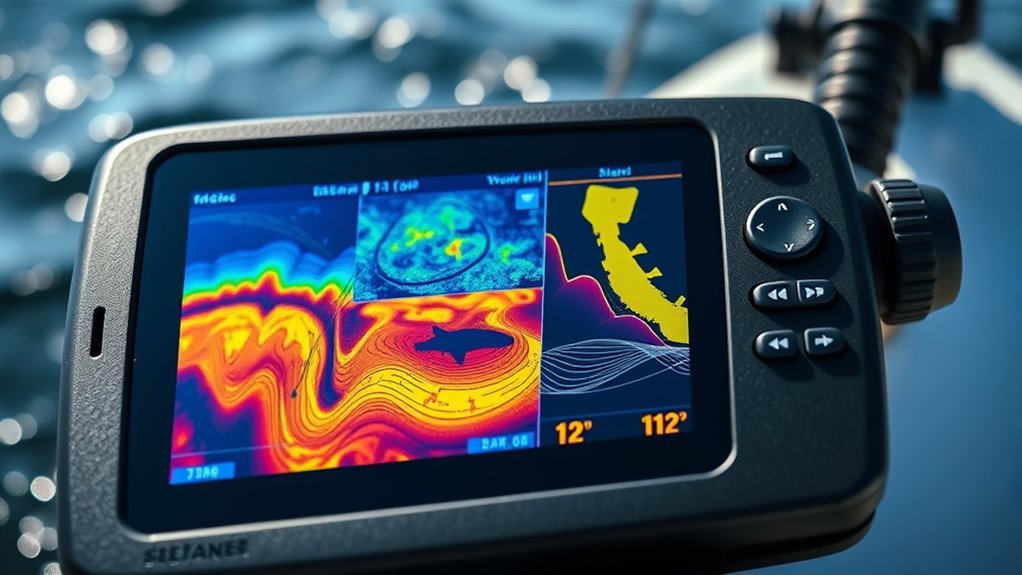

Choosing the right fish finder with GPS can feel overwhelming given the sheer volume of technology available. My top overall pick, the Garmin STRIKER Vivid 7cv, stands out for its balance of clarity, mapping accuracy, and intuitive interface. For those prioritizing screen real estate and advanced imaging, the Humminbird XPLORE offers a massive 10-inch display that simplifies spotting structure in deep water. Conversely, beginners or anglers on a strict budget will find the Garmin Striker 4 provides essential functionality without unnecessary complexity. The main tradeoff you face is between display size and portability, as well as the depth of mapping data versus raw sonar performance. Continue reading to see which of these fourteen devices aligns with your specific fishing style and vessel setup.

Get kitchen gear delivered free with Prime
- Fast, free delivery on millions of items
- Prime Video, Amazon Music and more included
- Member-only deals all year
Complete the kit


Key Takeaways
- Screen size correlates directly with usability; units under 5 inches require more frequent menu navigation to access detailed maps.
- CHIRP sonar technology is now standard on most mid-range models, offering clearer separation of bait and game fish than traditional dual-beam units.
- GPS functionality varies widely; some entry-level models offer basic waypoint marking, while premium units include detailed C-MAP or LakeMaster charting.
- Transducer compatibility is a critical hidden cost, as some high-end fish finders require specific transducers that may not be included in the base package.
- Touchscreen interfaces have largely replaced rotary knobs on screens larger than 7 inches, but physical buttons remain superior for use with wet hands or gloves.
| Humminbird Helix 5 CHIRP GPS G3 Fish Finder |  | Best Overall | Display: 5-inch TFT color | Sonar: Dual Spectrum CHIRP | GPS mapping: Humminbird Basemap; more than 10,000 lakes and continental U.S. coastlines | VIEW ON AMAZON | See Our Full Breakdown |
| Garmin STRIKER Vivid 7cv Fishfinder with GT20-TM Transducer |  | Best for App-Connected Mapping | Display: 7-inch LCD | Sonar: Garmin CHIRP traditional sonar and CHIRP ClearVü | Transducer: GT20-TM | VIEW ON AMAZON | See Our Full Breakdown |
| Humminbird XPLORE Fish Finder with 10-Inch Touchscreen |  | Best Premium Sonar and Mapping | Display: 10-inch TFT color touchscreen | Sonar: MEGA Side Imaging+, MEGA Down Imaging+, and Dual Spectrum CHIRP | Maximum measuring depth: 200 feet | VIEW ON AMAZON | See Our Full Breakdown |
| Simrad GO9 XSE Chartplotter and Fish Finder with HDI Transducer and C-MAP Discover Card |  | Best for Chartplotter-First Boaters | Display: 9-inch multi-touch | GPS: Built-in 10 Hz GPS receiver | Sonar: CHIRP sonar and DownScan Imaging | VIEW ON AMAZON | See Our Full Breakdown |
| Humminbird Helix 5 CHIRP DI GPS G3 Fish Finder |  | Best Compact Down-Imaging Pick | Display: 5-inch TFT color | Sonar: Dual Spectrum CHIRP 2D and CHIRP Down Imaging | GPS mapping: Humminbird Basemap | VIEW ON AMAZON | See Our Full Breakdown |
| Garmin STRIKER Plus 5cv GPS Fishfinder with Transducer |  | Best Overall | Display: 5-inch WVGA color | Sonar: CHIRP traditional and ClearVü scanning sonar | Mapping: Quickdraw Contours with 1-foot contours; stores maps for up to 2 million acres | VIEW ON AMAZON | See Our Full Breakdown |
| Humminbird XPLORE GPS Fish Finder with MEGA Side Imaging+ and 10-Inch HD Touchscreen |  | Best Premium GPS Mapping and Imaging | Display: 10-inch TFT touchscreen with keypad | Sonar: MEGA Side Imaging+, MEGA Down Imaging+, and Dual Spectrum CHIRP | Side imaging range: 200 feet per side | VIEW ON AMAZON | See Our Full Breakdown |
| Garmin STRIKER Vivid 4cv 4-Inch Color Fishfinder |  | Best Compact GPS Fish Finder | Display: 4-inch LCD | Sonar: Garmin CHIRP traditional and CHIRP ClearVü scanning sonar | GPS: High-sensitivity GPS | VIEW ON AMAZON | See Our Full Breakdown |
| Humminbird HELIX 7 G4 GPS Fish Finder with Transducer |  | Best for Side-Imaging Detail | Display: 7-inch color TFT | Imaging: MEGA Side Imaging and MEGA Down Imaging | Sonar: Dual Spectrum CHIRP | VIEW ON AMAZON | See Our Full Breakdown |
| Garmin Striker Plus 4 Fishfinder with Dual-Beam Transducer |  | Best Value Compact GPS Pick | Display: 4.3-inch sunlight-readable display | Resolution: 272 x 480 pixels | Sonar: CHIRP traditional sonar | VIEW ON AMAZON | See Our Full Breakdown |
| Lowrance HOOK Reveal 5 SplitShot Fish Finder with C-MAP US Inland Mapping |  | Best Overall for Freshwater Anglers | Display Size: 5-inch SolarMAX | Sonar Technology: CHIRP, DownScan Imaging, FishReveal | Mapping: Preloaded C-MAP US inland maps; Genesis Live | VIEW ON AMAZON | See Our Full Breakdown |
| Garmin Striker 4 GPS Fishfinder with Transducer and CHIRP Sonar |  | Best Value for Ice and Small Boats | Display Size: 3.5 inches | Sonar: CHIRP and ClearVü | Weight: 8 ounces | VIEW ON AMAZON | See Our Full Breakdown |
| Lowrance Eagle 5 SplitShot HD Fish Finder with C-MAP U.S. Inland Charts |  | Best for Structure and Chart Accuracy | Display: 5-inch IPS LCD | Charts: C-MAP U.S. inland charts | Sonar: CHIRP, DownScan Imaging, FishReveal | VIEW ON AMAZON | See Our Full Breakdown |
| Garmin STRIKER Vivid 4cv 4-Inch Color Fishfinder with GT20 Transducer |  | Best for Color Clarity and Simplicity | Display Size: 4 inches | Sonar: CHIRP traditional and ClearVü scanning | Mapping: Quickdraw Contours | VIEW ON AMAZON | See Our Full Breakdown |
| fish finder with gp | Sonar | Warranty | Display |
|---|---|---|---|
| Humminbird Helix 5 CHIRP GPS G | Dual Spectrum CHIRP | 1 year | 5-inch TFT color |
| Garmin STRIKER Vivid 7cv Fishf | Garmin CHIRP traditional sonar and CHIRP ClearVü | 2-year limited warranty | 7-inch LCD |
| Humminbird XPLORE Fish Finder | MEGA Side Imaging+, MEGA Down Imaging+, and Dual Spectrum CHIRP | 3 years with registration | 10-inch TFT color touchscreen |
| Simrad GO9 XSE Chartplotter an | CHIRP sonar and DownScan Imaging | — | 9-inch multi-touch |
| Humminbird Helix 5 CHIRP DI GP | Dual Spectrum CHIRP 2D and CHIRP Down Imaging | 1 year | 5-inch TFT color |
| Garmin STRIKER Plus 5cv GPS Fi | CHIRP traditional and ClearVü scanning sonar | 1-year limited | 5-inch WVGA color |
| Humminbird XPLORE GPS Fish Fin | MEGA Side Imaging+, MEGA Down Imaging+, and Dual Spectrum CHIRP | Three years with registration | 10-inch TFT touchscreen with keypad |
| Garmin STRIKER Vivid 4cv 4-Inc | Garmin CHIRP traditional and CHIRP ClearVü scanning sonar | 2-year limited | 4-inch LCD |
| Humminbird HELIX 7 G4 GPS Fish | Dual Spectrum CHIRP | 1 year | 7-inch color TFT |
| Garmin Striker Plus 4 Fishfind | CHIRP traditional sonar | — | 4.3-inch sunlight-readable display |
| Lowrance HOOK Reveal 5 SplitSh | — | 1 year | — |
| Garmin Striker 4 GPS Fishfinde | CHIRP and ClearVü | 1-year limited | — |
| Lowrance Eagle 5 SplitShot HD | CHIRP, DownScan Imaging, FishReveal | 1 year | 5-inch IPS LCD |
| Garmin STRIKER Vivid 4cv 4-Inc | CHIRP traditional and ClearVü scanning | 2-year limited | — |
More Details on Our Top Picks
Humminbird Helix 5 CHIRP GPS G3 Fish Finder
I’d choose the Helix 5 CHIRP GPS G3 as the most balanced pick here for anglers who want mapping and useful sonar without stepping up to a large, more complex display. Its Dual Spectrum CHIRP offers wide and narrow views, so you can favor broader coverage or focus on fish and structure. GPS Basemap covers more than 10,000 lakes and U.S. coastlines, while AutoChart Live records depth, bottom hardness, and vegetation as you fish. Compared with the Helix 5 CHIRP DI GPS G3, this model does not list Down Imaging, but it keeps the sonar choice straightforward and adds a useful wide/narrow mode distinction. The tradeoff is a five-inch screen and only eight hours of built-in AutoChart Live recording; anglers needing larger views or more recording capacity should look at the XPLORE or add chart storage.
Pros:- Wide and narrow Dual Spectrum CHIRP modes support different search priorities.
- Basemap includes coverage for more than 10,000 lakes and U.S. coastlines.
- AutoChart Live records depth, bottom hardness, and vegetation in real time.
- Keypad controls suit operation when touchscreen use is inconvenient.
Cons:- The five-inch display limits detail and room for simultaneous views.
- Built-in AutoChart Live recording is limited to eight hours.
- Premium chart compatibility may require separate charts or an SD card.
Best for: Anglers who want a compact, keypad-operated unit with broad lake coverage, GPS, and flexible CHIRP views.
Not ideal for: Boaters who need Down Imaging, a larger screen for split views, or more than eight hours of built-in AutoChart Live recording.
- Display:5-inch TFT color
- Sonar:Dual Spectrum CHIRP
- GPS mapping:Humminbird Basemap; more than 10,000 lakes and continental U.S. coastlines
- AutoChart Live:8 hours of built-in recording
- Mounting:Transom mount with gimbal bracket
- Power:Corded electric
- Weight:2.1 pounds
- Warranty:1 year
Our verdict“I’d pick this for a compact, well-rounded GPS fish finder, but choose the DI version if Down Imaging is a priority.”
Garmin STRIKER Vivid 7cv Fishfinder with GT20-TM Transducer
The STRIKER Vivid 7cv is the better fit for anglers who want a larger screen and a path to build their own maps. Its Quickdraw Contours creates maps with one-foot contours, while built-in GPS handles waypoints, routes, and boat-speed display. Garmin CHIRP traditional sonar and ClearVü scanning sonar give it a more imaging-focused setup than the standard Helix 5 CHIRP GPS G3, and its vivid palettes help separate fish from structure on screen. Wi-Fi adds waypoint transfers and app features through ActiveCaptain, though those extras depend on a compatible smartphone. Unlike the Simrad GO9 XSE, this is not positioned as a chartplotter with included C-MAP Discover charts; its mapping strength is making contours yourself and sharing them. The seven-inch display is useful, but the unit is larger and heavier than the compact Humminbird options.
Pros:- Seven-inch color display gives more room to read sonar and navigation views.
- Quickdraw Contours creates maps with one-foot contours.
- GPS supports waypoints, route planning, and boat-speed display.
- Wi-Fi enables ActiveCaptain features and access to the Quickdraw Community.
Cons:- ActiveCaptain features require a compatible smartphone.
- It is heavier and larger than the five-inch Helix models.
- The supplied mapping approach centers on user-created contours rather than an included C-MAP chart card.
Best for: Anglers who want a seven-inch display, GPS waypoint tools, and the option to create and share detailed contours using a smartphone.
Not ideal for: Boaters who want included preloaded chart-card coverage or who prefer a compact unit that works without app-connected features.
- Display:7-inch LCD
- Sonar:Garmin CHIRP traditional sonar and CHIRP ClearVü
- Transducer:GT20-TM
- Mapping:Quickdraw Contours with 1-foot contours
- GPS functions:Waypoints, routes, and boat-speed display
- Connectivity:Wi-Fi
- Mounting:Surface mount with tilt/swivel bail mount
- Warranty:2-year limited warranty
Our verdict“I’d choose this for a larger-screen Garmin with user-created contour mapping, provided smartphone connectivity fits your routine.”
Humminbird XPLORE Fish Finder with 10-Inch Touchscreen
For anglers who want broad sonar coverage and a large navigation screen, the Humminbird XPLORE is the most capable option in this group. It combines MEGA Side Imaging+, MEGA Down Imaging+, and Dual Spectrum CHIRP with GPS and included LakeMaster and CoastMaster VX charts for the U.S. and Canada. The 10-inch touchscreen can be paired with keypad controls, giving buyers more screen space than the Garmin STRIKER Vivid 7cv for viewing sonar and maps together. Bluetooth, Ethernet, and NMEA 2000 support also make it a stronger fit for connected boat systems. Its main catch is significant: this is a control-head-only model, so a transducer must be sourced separately. Built-in AutoChart Live recording is limited to eight hours, too, which tempers its appeal for anglers who regularly create extensive maps.
Pros:- Combines MEGA Side Imaging+, MEGA Down Imaging+, and Dual Spectrum CHIRP.
- Ten-inch touchscreen provides ample room for sonar and GPS views.
- Includes LakeMaster and CoastMaster VX charts for the U.S. and Canada.
- Bluetooth, Ethernet, and NMEA 2000 support connected equipment.
Cons:- Transducer is not included, adding a separate equipment decision.
- Built-in AutoChart Live recording is limited to eight hours.
- Its large screen and broad feature set are more than many casual anglers need.
Best for: Serious anglers outfitting a compatible boat who want side- and down-imaging, included regional charts, and a large touchscreen.
Not ideal for: Buyers seeking a ready-to-install package with a transducer included, or anglers who want a smaller, simpler unit.
- Display:10-inch TFT color touchscreen
- Sonar:MEGA Side Imaging+, MEGA Down Imaging+, and Dual Spectrum CHIRP
- Maximum measuring depth:200 feet
- Side imaging range:200 feet on each side
- Charts:LakeMaster and CoastMaster VX charts for the U.S. and Canada
- Connectivity:Bluetooth, Ethernet, and NMEA 2000
- Transducer:Not included
- Warranty:3 years with registration
Our verdict“I’d choose the XPLORE for advanced sonar, extensive chart coverage, and system connections, but only if you are prepared to source a transducer.”
Simrad GO9 XSE Chartplotter and Fish Finder with HDI Transducer and C-MAP Discover Card
The Simrad GO9 XSE makes the most sense for boaters who want GPS chartplotting at the center of their setup, not just a fish finder with basic waypoint functions. It pairs a 9-inch touchscreen with a 10 Hz GPS receiver, CHIRP sonar, DownScan Imaging, an HDI transducer, and a C-MAP Discover card covering the U.S. and Canada. That included chart card gives it a different advantage from the Garmin STRIKER Vivid 7cv, which emphasizes Quickdraw mapping you create yourself. Customizable split-screen views, Wi-Fi, and NMEA 2000 also make the Simrad a better match for a connected helm. The tradeoff is that some capabilities depend on add-ons: radar needs compatible equipment, and automatic routing is unavailable in the USA. It is a more involved choice than either five-inch Helix.
Pros:- Combines chartplotting and fish-finding on a nine-inch touchscreen.
- Includes a C-MAP Discover chart card with U.S. and Canada coverage.
- 10 Hz GPS receiver supports responsive position updates.
- Wi-Fi, NMEA 2000, and customizable split views suit connected helm setups.
Cons:- Automatic routing is not available in the USA.
- Radar and some chart features require compatible additional products.
- The larger chartplotter feature set may be unnecessary for anglers wanting basic GPS fish finding.
Best for: Boaters who want a touchscreen chartplotter with included C-MAP coverage, sonar, and connections for a wider marine system.
Not ideal for: Small-boat anglers seeking a compact, keypad-operated fish finder or U.S. users counting on automatic routing.
- Display:9-inch multi-touch
- GPS:Built-in 10 Hz GPS receiver
- Sonar:CHIRP sonar and DownScan Imaging
- Transducer support:83/200 kHz HDI transducer
- Included chart card:C-MAP Discover
- Connectivity:Wi-Fi and NMEA 2000
- Radar compatibility:Simrad Broadband 3G, Broadband 4G, and Halo Pulse Compression
- Automatic routing:Requires compatible Navionics or C-MAP charts; unavailable in the USA
Our verdict“I’d pick the GO9 XSE for chart-focused boaters who want included C-MAP charts and system connectivity, not for a simple compact setup.”
Humminbird Helix 5 CHIRP DI GPS G3 Fish Finder
The Helix 5 CHIRP DI GPS G3 is for anglers who want to inspect what lies beneath the boat while keeping the unit compact. It combines Dual Spectrum CHIRP with CHIRP Down Imaging, which gives a more detailed below-boat view than the standard Helix 5 CHIRP GPS G3; the standard model, by contrast, offers wide and narrow CHIRP modes without Down Imaging listed. GPS Basemap covers more than 10,000 lakes, and AutoChart Live can build maps of depth and bottom hardness as you fish. Keypad controls keep operation simple in changing weather. The compromise is the five-inch display, which leaves less room for detailed imaging and map views than the Garmin Vivid 7cv or XPLORE. Premium LakeMaster charts also require a separate purchase.
Pros:- Adds CHIRP Down Imaging to Dual Spectrum CHIRP sonar.
- Basemap covers more than 10,000 lakes.
- AutoChart Live maps depth and bottom hardness in real time.
- Compact five-inch display and keypad controls suit smaller installations.
Cons:- Five-inch screen offers less space for detailed imaging and navigation views.
- LakeMaster and other premium chart options require separate purchases.
- The feature set is focused on views beneath the boat rather than the XPLORE’s side imaging.
Best for: Anglers with limited console space who want GPS mapping and Down Imaging in a keypad-controlled unit.
Not ideal for: Boaters who need a large screen for simultaneous sonar and chart views, or who want premium charts included.
- Display:5-inch TFT color
- Sonar:Dual Spectrum CHIRP 2D and CHIRP Down Imaging
- GPS mapping:Humminbird Basemap
- Mapping tools:AutoChart Live
- Chart compatibility:LakeMaster, CoastMaster, and Navionics
- Mounting:Bail mount with gimbal mounting bracket
- Included transducer:XNT 9 HW DI T transom-mount transducer
- Warranty:1 year
Our verdict“I’d choose this compact Helix when Down Imaging matters more than a larger screen or side-scanning coverage.”
Garmin STRIKER Plus 5cv GPS Fishfinder with Transducer
I rank the STRIKER Plus 5cv first for anglers who want GPS mapping and useful sonar without stepping up to a larger, more elaborate chartplotter. Its 5-inch sunlight-readable display gives waypoints, routes, boat speed, and sonar views more room than the STRIKER Vivid 4cv’s 4-inch screen, while CHIRP traditional sonar and ClearVü add both fish-finding and structure-viewing options. Quickdraw Contours can build maps with 1-foot contours, a practical advantage for marking productive water that existing charts may not show. The tradeoff is that its mapping capacity and stated maximum depth may be more than casual anglers need. It also lacks the larger screen and connectivity of Humminbird’s XPLORE, which is a better match for complex, connected setups.
Pros:- Built-in GPS supports waypoints, routes, and boat-speed viewing
- CHIRP traditional sonar and ClearVü provide complementary fish and structure views
- Quickdraw Contours creates maps with 1-foot contours
- Sunlight-readable 5-inch color display is roomier than compact 4-inch units
Cons:- Mapping and depth capabilities may exceed what casual users need
- Smaller and less connected than larger-screen options such as the Humminbird XPLORE
Best for: Anglers who want a readable mid-size display, built-in GPS, two sonar views, and the ability to create their own lake contours.
Not ideal for: Casual anglers who only need basic depth readings, or boaters who want a large touchscreen and advanced network connections.
- Display:5-inch WVGA color
- Sonar:CHIRP traditional and ClearVü scanning sonar
- Mapping:Quickdraw Contours with 1-foot contours; stores maps for up to 2 million acres
- Maximum measuring depth:2,300 feet
- GPS functions:Waypoints, routes, and boat-speed display
- Included transducer:CV20-TM
- Dimensions:7.4 x 2.1 x 4.5 inches
- Warranty:1-year limited
Our verdict“Choose the STRIKER Plus 5cv for a balanced GPS-and-sonar setup with useful custom mapping, but skip it if you need a large networked display.”
Humminbird XPLORE GPS Fish Finder with MEGA Side Imaging+ and 10-Inch HD Touchscreen
The Humminbird XPLORE is the premium pick here for anglers who want chart coverage, imaging, and boat-system connections on one large display. Its 10-inch touchscreen with keypad controls gives maps and sonar views more space than the HELIX 7 G4, while MEGA Side Imaging+, MEGA Down Imaging+, and Dual Spectrum CHIRP offer several ways to inspect fish and structure. Built-in GPS works with Basemap and included LakeMaster and CoastMaster VX charts; AutoChart Live can add locally recorded contours, bottom hardness, and vegetation data. That breadth comes with a notable catch: this is a control-head-only model, so the transducer is not included. Its eight hours of AutoChart Live recording also limits onboard mapping, unlike the STRIKER Plus 5cv’s much larger stated map-storage capacity.
Pros:- 10-inch touchscreen and keypad controls give charts and sonar views ample display space
- MEGA Side Imaging+, MEGA Down Imaging+, and Dual Spectrum CHIRP cover multiple sonar needs
- Built-in GPS pairs with Basemap and included LakeMaster and CoastMaster VX charts
- Bluetooth, Ethernet, and NMEA 2000 support connections with compatible equipment
Cons:- Control-head-only package does not include a transducer
- AutoChart Live recording is limited to eight hours
- Larger, heavier unit is less suited to compact boats than the STRIKER Vivid 4cv
Best for: Experienced anglers with compatible boat electronics who want a large touchscreen, included chart coverage, detailed imaging, and network integration.
Not ideal for: First-time buyers seeking a ready-to-install package, since this model does not include a transducer, or anglers who need extensive onboard AutoChart Live recording.
- Display:10-inch TFT touchscreen with keypad
- Sonar:MEGA Side Imaging+, MEGA Down Imaging+, and Dual Spectrum CHIRP
- Side imaging range:200 feet per side
- Maximum measuring depth:200 feet
- GPS and charts:Built-in GPS; Humminbird Basemap, LakeMaster and CoastMaster VX chart card
- AutoChart Live recording:8 hours
- Connectivity:Bluetooth, Ethernet, and NMEA 2000
- Included components:Control head, power adapter, unit cover, and mounting bracket; no transducer listed
- Warranty:Three years with registration
Our verdict“Pick the XPLORE for a connected, large-screen charting and imaging system if you already have or plan to source a compatible transducer.”
Garmin STRIKER Vivid 4cv 4-Inch Color Fishfinder
For a small boat or a crowded console, I give the STRIKER Vivid 4cv the compact-unit role. It combines built-in GPS for waypoints, routes, and speed with CHIRP traditional sonar and ClearVü scanning, so its modest footprint does not mean giving up the core GPS-and-sonar functions. Quickdraw Contours can create 1-foot maps, too—a useful capability that separates it from basic compact finders without mapping. Compared with the STRIKER Plus 5cv, the main sacrifice is screen space: the 4-inch display makes map and sonar details harder to read at a glance. It includes a GT20-TM transducer and mounting hardware, but the supplied information specifies an electric power source, making it a less flexible fit for buyers who need a battery-powered setup.
Pros:- Compact 4-inch unit includes high-sensitivity GPS for waypoints, routes, and speed
- CHIRP traditional sonar and ClearVü scanning sonar are both included
- Quickdraw Contours creates and saves maps with 1-foot contours
- GT20-TM transducer, tilt/swivel mount, and hardware are included
Cons:- Small display offers less room for maps and sonar detail than the STRIKER Plus 5cv
- Listed as requiring an electric power source
- Compact screen can be harder to read when several details are displayed at once
Best for: Kayak anglers and owners of small boats who need GPS waypoints and custom contour mapping in a compact unit with a transducer included.
Not ideal for: Anglers who regularly compare charts and sonar side by side, or buyers who need a larger screen or battery-powered operation.
- Display:4-inch LCD
- Sonar:Garmin CHIRP traditional and CHIRP ClearVü scanning sonar
- GPS:High-sensitivity GPS
- Mapping:Quickdraw Contours with 1-foot contours
- Transducer:GT20-TM
- Mounting:Bail mount with tilt/swivel mount and hardware
- Dimensions:1.8 x 3.9 x 6.9 inches
- Power source:Electric
- Warranty:2-year limited
Our verdict“Choose this Vivid 4cv when compact size matters more than screen space and you still want GPS mapping and two sonar views.”
Humminbird HELIX 7 G4 GPS Fish Finder with Transducer
The HELIX 7 G4 GPS makes sense for anglers who want to search around the boat as well as beneath it. MEGA Side Imaging and MEGA Down Imaging pair with Dual Spectrum CHIRP, while the 7-inch color display offers more viewing room than Garmin’s STRIKER Plus 5cv. Built-in GPS, Humminbird Basemap, and AutoChart Live add route-oriented utility and on-water mapping; the included transducer makes this a more complete package than the XPLORE control head. The compromises are the reported 125-foot maximum depth and eight-hour AutoChart Live recording limit. Buyers seeking expanded chart coverage may also need separate charts or accessories, whereas the XPLORE includes LakeMaster and CoastMaster VX chart coverage. I’d choose this HELIX for imaging and a bundled transducer, not for deep-water use or extensive onboard recording.
Pros:- MEGA Side Imaging and MEGA Down Imaging show structure to the sides and below the boat
- Dual Spectrum CHIRP provides wide and narrow scanning modes
- Built-in GPS, Humminbird Basemap, and AutoChart Live support navigation and custom mapping
- Transducer and mounting hardware are included, unlike the XPLORE control-head-only package
Cons:- Maximum measuring depth is listed as 125 feet
- AutoChart Live has eight hours of built-in recording time
- Premium chart compatibility may require separate charts or accessories
Best for: Anglers fishing relatively shallow lakes who want side- and down-imaging, a 7-inch screen, built-in GPS, and a transducer in the box.
Not ideal for: Deep-water anglers or buyers who need more than eight hours of onboard AutoChart Live recording and expanded charts included.
- Display:7-inch color TFT
- Imaging:MEGA Side Imaging and MEGA Down Imaging
- Sonar:Dual Spectrum CHIRP
- Maximum measuring depth:125 feet
- GPS and mapping:Built-in GPS, Humminbird Basemap, and AutoChart Live
- Included components:Control head, power cable, transducer, mounting hardware, and gimbal bracket
- Weight:2.1 pounds
- Dimensions:3.06 x 10.54 x 5.44 inches
- Warranty:1 year
Our verdict“Choose the HELIX 7 G4 for a ready-to-mount imaging-focused GPS finder on shallow waters, but look elsewhere for greater depth or longer onboard recording.”
Garmin Striker Plus 4 Fishfinder with Dual-Beam Transducer
The Striker Plus 4 is the straightforward choice for anglers who want GPS waypoints and custom mapping without paying for imaging features they may not use. Its 4.3-inch sunlight-readable display is slightly larger than the STRIKER Vivid 4cv’s 4-inch screen, and CHIRP traditional sonar keeps the setup focused on finding fish rather than adding ClearVü views. Quickdraw Contours lets anglers build 1-foot maps, giving it a useful edge over basic GPS units. The tradeoff is limited sonar scope: compared with the STRIKER Plus 5cv, there is no ClearVü scanning sonar and less room to view data. The listed maximum depth is only 20 meters, so I would not choose it for deeper-water fishing; its 272 x 480 resolution is also modest beside larger displays.
Pros:- Built-in GPS supports waypoint marking and route creation
- Sunlight-readable 4.3-inch display suits compact installations
- Quickdraw Contours creates detailed maps with 1-foot contours
- Dual-beam transducer and mounting hardware are included
Cons:- Listed maximum measuring depth is 20 meters
- Traditional CHIRP sonar lacks the ClearVü scanning view found on the STRIKER Plus 5cv
- 272 x 480 resolution is lower than that of larger-screen models
Best for: Budget-conscious anglers on small boats who mainly need waypoint marking, boat-speed viewing, traditional CHIRP sonar, and custom contours.
Not ideal for: Deep-water anglers or buyers who want ClearVü imaging, a larger screen, or higher display resolution.
- Display:4.3-inch sunlight-readable display
- Resolution:272 x 480 pixels
- Sonar:CHIRP traditional sonar
- Frequencies:50/77/83/200 kHz
- Transmit power:200 W RMS
- Maximum depth:20 meters
- Mapping:Quickdraw Contours with 1-foot contours; maps up to 2 million acres
- Included transducer:Dual-beam transducer
- Dimensions:9.09 x 6.96 x 5.03 inches
Our verdict“Pick the Striker Plus 4 for compact GPS mapping and traditional sonar on shallower water, but choose the STRIKER Plus 5cv for ClearVü and more display space.”
Lowrance HOOK Reveal 5 SplitShot Fish Finder with C-MAP US Inland Mapping
This unit stands out for its Genesis Live real-time mapping, a feature that sets it apart from the Garmin Striker 4. While the Striker 4 offers basic waypoint navigation, the HOOK Reveal allows you to build custom contour maps as you fish, revealing subtle structure changes that fixed charts miss. The SolarMAX display maintains clarity in direct sunlight, unlike the smaller screens on the Garmin Striker Vivid 4cv, which can struggle under harsh glare. FishReveal technology is another key advantage, overlaying traditional sonar targets onto DownScan Imaging to make fish detection intuitive. However, the 5-inch screen can feel cramped for detailed chart plotting compared to larger units like the Humminbird Helix 5. Additionally, creating custom maps requires a separate blank microSD card, an extra cost not needed by competitors with fixed mapping.
Pros:- Genesis Live creates custom contour maps in real time
- FishReveal combines CHIRP sonar and DownScan Imaging for clear fish targets
- SolarMAX display remains readable in direct sunlight
- Autotuning adjusts sonar settings automatically as conditions change
Cons:- Custom mapping requires a separate blank microSD card
- The 5-inch display may feel small for detailed navigation
Best for: Serious freshwater anglers who want to discover new structure through real-time mapping and value intuitive fish identification over raw screen size.
Not ideal for: Saltwater anglers who need coastal charts, as this model focuses on inland freshwater data, and users who dislike managing separate memory cards for mapping.
- Display Size:5-inch SolarMAX
- Sonar Technology:CHIRP, DownScan Imaging, FishReveal
- Mapping:Preloaded C-MAP US inland maps; Genesis Live
- Transducer:SplitShot Skimmer
- Warranty:1 year
- Included Components:Fish finder, transducer, mounting bracket, power cable
- Brand:Lowrance
Our verdict“This is the strongest choice for freshwater anglers who want to actively map their lake rather than just follow pre-loaded charts.”
Garmin Striker 4 GPS Fishfinder with Transducer and CHIRP Sonar
The Striker 4 earns its spot as the best value pick by delivering essential features at a compact size. Its built-in flasher is a distinct advantage for ice fishermen, a feature largely absent from the Lowrance Eagle 5 SplitShot HD, which focuses more on open-water structure scanning. At just 8 ounces, it is significantly lighter than the 16-ounce Lowrance Eagle, making it ideal for portable ice shacks or tiny kayaks. The 3.5-inch display is its primary limitation; while sufficient for basic arches, it lacks the clarity and detail of the 4-inch screen on the Garmin Striker Vivid 4cv. Furthermore, the keyed interface can be less intuitive than touchscreen alternatives, requiring some muscle memory to navigate quickly. It is a utilitarian tool that prioritizes function over form.
Pros:- Built-in flasher supports ice fishing and vertical jigging
- Lightweight at 8 ounces, ideal for portable setups
- CHIRP sonar provides crisp fish arches and target separation
- Simple keyed interface is easy to learn
Cons:- Small 3.5-inch display limits detail visibility
- Maximum depth is lower in saltwater than freshwater
Best for: Ice anglers, kayak fishermen, and budget-conscious buyers who need a lightweight, portable unit with a dedicated flasher mode.
Not ideal for: Anglers who rely on detailed underwater imaging or need a large screen for reading charts, as the 3.5-inch display is quite small.
- Display Size:3.5 inches
- Sonar:CHIRP and ClearVü
- Weight:8 ounces
- Maximum Depth:1,600 ft freshwater; 750 ft saltwater
- Warranty:1-year limited
- Brand:Garmin
- Model:010-01550-00
Our verdict“A no-nonsense, lightweight fish finder that excels in ice fishing scenarios where portability and a flasher are critical.”
Lowrance Eagle 5 SplitShot HD Fish Finder with C-MAP U.S. Inland Charts
The Eagle 5 SplitShot HD differentiates itself with high-resolution C-MAP charts covering over 17,000 lakes, offering more detailed inland navigation than the Garmin Striker Vivid 4cv’s basic waypoint system. While both units feature a 5-inch class display, the Eagle’s IPS screen offers wider viewing angles, making it easier for multiple people to see the screen from different positions in a boat. The Auto-Tuning Sonar simplifies setup for beginners compared to the more manual adjustments often required on older Garmin models. However, the 5-inch screen is still a compromise for those wanting maximum detail, similar to the Lowrance HOOK Reveal. The inclusion of DownScan Imaging helps visualize structure, but the lack of a touchscreen interface may slow down menu navigation for users accustomed to modern tablets.
Pros:- C-MAP charts cover more than 17,000 U.S. lakes
- IPS display works well with polarized sunglasses
- FishReveal overlays fish targets on DownScan images
- Auto-Tuning Sonar reduces manual setup time
Cons:- 5-inch display may be small for some console setups
- Non-touchscreen interface can feel dated
Best for: Boaters who prioritize accurate inland charting and need a sunlight-viewable screen with wide viewing angles for shared use.
Not ideal for: Users who prefer touchscreen interfaces or need coastal marine charts, as this model is optimized for inland freshwater lakes.
- Display:5-inch IPS LCD
- Charts:C-MAP U.S. inland charts
- Sonar:CHIRP, DownScan Imaging, FishReveal
- Max Depth:500 feet
- Weight:16 ounces
- Warranty:1 year
- Brand:Lowrance
Our verdict“Choose this model if you want reliable inland mapping and a robust display for open-water fishing with a crew.”
Garmin STRIKER Vivid 4cv 4-Inch Color Fishfinder with GT20 Transducer
The Striker Vivid 4cv improves upon the base Striker 4 with a 4-inch color LCD and vivid color palettes that make distinguishing fish from structure easier than on monochrome or lower-contrast screens. It includes Quickdraw Contours, which allows users to create custom maps with 1-foot contours, a feature that rivals the Genesis Live on the Lowrance HOOK Reveal but without needing an external memory card for basic use. The built-in high-sensitivity GPS provides reliable waypoint marking, essential for returning to spots, whereas some basic fish finders lack GPS entirely. The tradeoff is the 4-inch display size, which is smaller than the 5-inch screens on both Lowrance options, potentially making detailed sonar interpretation harder. Additionally, the lack of wireless connectivity means you cannot sync data to a phone app, limiting its modern integration capabilities.
Pros:- Vivid color palettes help distinguish fish and structure
- Quickdraw Contours creates and saves custom maps
- Built-in GPS supports waypoint marking and route planning
- Includes both traditional and scanning sonar
Cons:- 4-inch display may be small for viewing detailed sonar
- No wireless connectivity for app integration
Best for: Anglers who want a simple, color-rich display and basic mapping capabilities without the complexity of large chartplotter systems.
Not ideal for: Tech-savvy users who want to sync data to mobile devices or those who need a larger screen for detailed navigation.
- Display Size:4 inches
- Sonar:CHIRP traditional and ClearVü scanning
- Mapping:Quickdraw Contours
- Transducer:GT20-TM
- Weight:11.2 ounces
- Warranty:2-year limited
- Brand:Garmin
Our verdict“A solid mid-range option that balances color visibility and basic mapping without overwhelming the user with complex features.”

How We Picked
I evaluated these fourteen devices based on three core pillars: sonar clarity, GPS mapping accuracy, and user interface ergonomics. Sonar clarity was assessed by comparing CHIRP frequencies and side-imaging capabilities, as these factors determine how easily an angler can distinguish structure from fish. GPS mapping accuracy was judged by the depth and detail of the charting software included, distinguishing between basic waypoint recorders and full-featured chartplotters. I also prioritized user interface ergonomics, recognizing that a device that is difficult to operate in bright sunlight or while moving the boat is of little value.
The ranking reflects a balance between performance and practicality. I gave preference to models that offer a cohesive ecosystem between the display and the transducer, ensuring that the hardware limitations do not bottleneck the software’s potential. Products were excluded if they lacked integrated GPS or if their transducer options were severely limited, as these constraints hinder long-term versatility.
Factors to Consider When Choosing Fish Finder With Gps
Selecting a fish finder requires balancing your budget with your specific fishing environment. Below are the critical factors that should drive your decision.
Display Size And Visibility
The size of the screen dictates how much information you can view at once. Larger displays (7 inches and up) allow for split-screen views, showing sonar and map data simultaneously without constant switching. Smaller units (under 5 inches) are more portable and less intrusive on small boats but often require you to toggle between views, which can be distracting while actively fishing. Consider your boat’s console space; a large unit might require custom mounting solutions or obscure existing gauges. High-brightness screens are non-negotiable for offshore or open-water fishing, as standard displays can wash out in direct sunlight. Always verify the viewing angle, as some cheaper panels lose contrast when viewed from the side.
Sonar Technology: CHIRP Vs. Traditional
CHIRP sonar has largely replaced traditional fixed-frequency sonar in modern units. CHIRP technology sweeps a range of frequencies, providing better target separation and depth penetration. This means you can distinguish individual fish from each other and from the bottom, even in weedy or rocky areas. Traditional dual-beam transducers are cheaper but often result in a ‘blob’ effect where fish and structure blur together. If you fish in deep water or heavy cover, investing in a CHIRP-capable unit is worth the extra cost. Check if the unit supports High Wide CHIRP, which offers superior resolution for side and down imaging compared to standard CHIRP.
GPS Mapping And Charting Depth
Not all GPS features are created equal. Some entry-level fish finders offer basic waypoint marking, allowing you to save specific spots like docks or drop-offs. Mid-to-high-end models include detailed lake or coastal charts with contour lines, depth data, and hazard warnings. Determine if you need pre-loaded maps for your specific fishing area, as purchasing additional chart cards can add significant cost. Auto-routing capabilities are beneficial if you frequently travel between multiple hotspots, as the device can calculate the most efficient path. Ensure the GPS receiver updates quickly and maintains a lock in challenging environments like canyons or under heavy tree cover.
Transducer Compatibility And Installation
The transducer is the sensor that sends and receives sonar signals, and it is often the most overlooked component. Some fish finders come with a transducer included, while others require you to purchase it separately. Verify the mounting options—transom mount is common, but trolling motor mounts offer better signal clarity at speed. Consider whether you need a 3-in-1 transducer (standard sonar, down imaging, side imaging) or if you prefer separate units for specialized tasks. Cable length and connector type must match your boat’s wiring harness to avoid adapter issues. Poor installation can degrade performance, so choose a model with clear mounting instructions and accessible connections.
Connectivity And Networking
Modern fish finders often integrate with smartphones and other boat electronics. Bluetooth and Wi-Fi connectivity allow you to update maps, share waypoints, and control the device via a mobile app. This feature is particularly useful for anglers who want to plan trips on a larger screen at home. Some systems support networking with multiple displays, allowing you to run a separate unit for bow-mounted sonar while keeping the main console for navigation. If you already have a specific brand of electronics on your boat, sticking to the same ecosystem often simplifies wiring and data sharing. Lack of networking capabilities can limit future upgrades, so consider your long-term plans for your vessel.
Frequently Asked Questions
Do I need a fish finder with GPS if I only fish small ponds?
While a fish finder helps locate fish, the GPS component is primarily for navigation and waypoint marking. If you are fishing small ponds where you can easily see the entire shoreline and landmarks, a basic fish finder without GPS might suffice. However, even in small ponds, GPS capabilities allow you to mark productive spots and return to them accurately, which saves time and fuel. The added cost is minimal for many entry-level models, making the GPS feature a worthwhile investment for consistency. It also helps in low-visibility conditions or when fishing unfamiliar waters, providing a safety layer that basic sonar lacks.
Is side imaging worth the extra cost over standard sonar?
Side imaging provides a photorealistic view of the bottom structure to the left and right of your boat, whereas standard sonar looks directly below. This technology is invaluable for identifying specific structures like rock piles, brush, or drop-offs where fish hide. For anglers targeting bass or walleye in clear water, side imaging significantly improves catch rates by allowing precise bait placement. If you primarily fish open water or target suspended fish, standard down-imaging may be sufficient. The tradeoff is that side imaging requires slower boat speeds and a higher-quality transducer, which increases the overall system cost.
Can I use a fish finder with GPS on a kayak?
Yes, many anglers use fish finders on kayaks, but installation requires careful planning. Compact units with smaller screens are preferable to save space and reduce drag. You will need a transducer that can be mounted on the hull or a trolling motor, ensuring it stays submerged and free of air bubbles. Power management is critical, as kayaks lack the large battery banks found on boats; look for units with low power consumption or dedicated lithium battery packs. Waterproofing is also a concern, as kayaks are more prone to splashing and capsizing, so ensure the device is rated for marine conditions.
What is the difference between LakeMaster and C-MAP charts?
LakeMaster charts are generally optimized for freshwater lakes, providing detailed contour lines and depth data specific to inland waters. C-MAP charts are more versatile, covering both freshwater and saltwater, and often include additional features like tide data and hazard warnings. If you fish exclusively in freshwater lakes, LakeMaster may offer more granular detail for a lower price. However, if you split your time between lakes and coastal areas, C-MAP provides a unified solution. Verify which chart provider supports your specific fishing locations, as coverage can vary significantly by region.
How important is screen resolution for a fish finder?
Screen resolution affects how clearly you can see fine details, such as small baitfish or subtle bottom contours. Higher resolution screens (VGA or HD) provide sharper images, which is particularly beneficial for side imaging where pixel density matters. Lower-resolution screens can appear pixelated when zoomed in, making it difficult to distinguish between types of structure. While resolution is important, it is secondary to the quality of the sonar signal itself. A high-resolution screen cannot fix a poor sonar reading, but a low-resolution screen can mask a good one. Prioritize resolution if you plan to use the device for detailed structure analysis.
Conclusion
Choosing the right fish finder with GPS depends largely on your fishing style and budget. For the Best Overall experience, the Garmin STRIKER Vivid 7cv delivers a perfect blend of size, clarity, and mapping features. If you are a Beginner or working with a limited budget, the Garmin Striker 4 offers the essential tools needed to learn sonar interpretation without overwhelming features. For those seeking Premium performance and a massive interface, the Humminbird XPLORE stands out with its 10-inch touchscreen and advanced imaging capabilities. Anglers who prioritize Value and compact size should look at the Lowrance HOOK Reveal 5, which offers solid mapping and sonar in a portable package. Ultimately, match the device’s capabilities to your specific environment—don’t pay for saltwater features if you only fish freshwater lakes, and don’t compromise on screen size if you need detailed structure analysis.