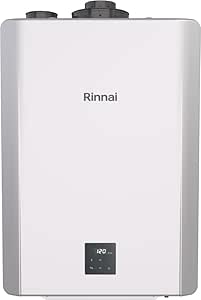
For most homes, I’d start with the Rinnai RX199iN as the best overall gas tankless water heater in this lineup, while the Rheem RTGH-84DVLN-3 stands out for higher-demand households and the ThermoMate CZ422NG for buyers seeking a more modest natural-gas option. The main tradeoffs are capacity, fuel type, indoor or outdoor installation, and whether condensing efficiency is worth the added installation requirements. A higher GPM figure alone does not guarantee enough hot water in a cold climate, since incoming water temperature affects delivered flow. I compare all 15 options by fit, performance claims, installation demands, and usability below. Continue reading for the full breakdown and a guide to choosing the right unit for your home.

Get kitchen gear delivered free with Prime
- Fast, free delivery on millions of items
- Prime Video, Amazon Music and more included
- Member-only deals all year
Complete the kit


Key Takeaways
- The lineup spans small and large demand: several models are rated around 4–5 GPM, while the Rheem RTGH-84DVLN-3 reaches a stated 8.4 GPM; household demand and local inlet-water temperature should guide the choice.
- Condensing models trade installation complexity for efficiency potential: the Rinnai RX199iN and Rheem RTGH-84DVLN-3 are worth comparing if efficiency matters, but their venting and condensate needs may add work.
- Fuel type narrows the field quickly: most listed units use natural gas, while the Ranein is propane-only, so buyers should match the appliance to the gas supply already available.
- Indoor and outdoor models solve different installation problems: indoor units need suitable venting, while outdoor units avoid indoor flue routing but require weather-appropriate placement and freeze protection.
- High BTU and GPM claims are not directly interchangeable: capacity figures need to be checked against temperature rise, climate, and simultaneous fixtures before choosing a unit.




| gas tankless water heater | Fuel | Heat output | Dimensions | Maximum flow rate |
|---|---|---|---|---|
| Novieex Natural Gas Tankless W | Natural gas | 100,000 BTU/h | — | 4.3 GPM |
| MIZUDO Indoor Natural Gas Tank | Natural gas | — | 15.9 × 24.8 × 10.4 inches | 10.3 GPM |
| Rheem RTG Series 7.0 GPM Natur | Natural gas | 160,000 BTU/h | 13.5 × 24.2 × 10.27 inches | 7 GPM |
| Rinnai RX199iN Condensing Tank | Natural gas or propane | 199,000 BTU | 18.5 × 30.11 × 11.4 inches | Up to 11.1 GPM |
| Ranein Indoor Propane Tankless | Propane gas | 80,000 BTU | 13.8 × 21.7 inches | 3.6 GPM |
| GASLAND Gasmart E Indoor Natur | Natural gas | 199,000 BTU | 14.25 in W × 24.69 in H × 7.28 in D | 7.6 GPM |
| ThermoMate CZ422NG Natural Gas | Natural gas | 113,000 BTU | 13.77 in W × 21.65 in H × 7 in D | 5 GPM |
| 18L Natural Gas Tankless Water | Natural gas | 81,888 BTU/hour | — | 4.74 GPM |
| Westinghouse Indoor Natural Ga | Natural gas | 180,000 BTU | — | 7.9 GPM |
| Mizudo 120,000 BTU Natural Gas | Natural gas | 120,000 BTU | — | 5.1 GPM |
| Konfino Outdoor Natural Gas Ta | Natural gas | 190,000 BTU/h | 24.3 × 15 × 8.3 inches | — |
| APUS Indoor Natural Gas Tankle | Natural gas | — | 20.55 × 13.27 × 5.91 inches | — |
| Rheem RTGH-84DVLN-3 Indoor Con | Natural gas | 157,000 BTU/hr | 17.7 × 23.7 × 9.8 inches | — |
| Westinghouse Tankless Water He | Gas-powered; natural gas stated in product description | 180,000 BTU | 17.1 × 26.8 inches | — |
| Rheem RTG Series 8.4 GPM Natur | Natural gas | 180,000 BTU/hr | 13.5 × 20.75 × 9.4 inches | — |
More Details on Our Top Picks
Novieex Natural Gas Tankless Water Heater Up to 4.3 GPM 100,000 BTU Indoor
The Novieex suits buyers who want a modest-capacity indoor natural gas tankless heater without giving up precise controls. Its 4.3 GPM maximum flow and 100,000 BTU output put it below the Rheem RTG Series 7.0 GPM model for households regularly running several showers, but the Novieex is a lighter, space-saving choice for a smaller home or a couple of fixtures. The LED touchscreen and stated ±1°F control make temperature adjustments more exact than a basic dial-based setup, while freeze and overheat protections add useful safeguards.
The tradeoff is a natural-gas-only design with indoor placement and venting requirements; it is not a flexible substitute for the propane-capable Rinnai RX199iN. Professional installation and a one-year warranty also temper its appeal.
Pros:- Up to 4.3 GPM flow for moderate multi-fixture demand
- Stated ±1°F temperature control with an LED touchscreen
- Compact 19.8-pound wall-mounted design
- Built-in freeze, overheat, dry-combustion, and flame-failure protections
Cons:- Natural gas only, unlike the natural-gas-or-propane Rinnai RX199iN
- Indoor installation requires venting and professional installation
- One-year manufacturer warranty is shorter than the listed warranties for several larger models
Best for: Smaller households with natural gas service that want a compact wall-mounted heater for moderate, simultaneous hot-water use.
Not ideal for: Large households that often run several showers at once, or buyers who need propane compatibility, outdoor placement, or a longer stated warranty.
- Fuel:Natural gas
- Maximum flow rate:4.3 GPM
- Heat output:100,000 BTU/h
- Temperature range:95°F–149°F
- Temperature accuracy:±1°F
- Voltage:120 V AC
- Mounting:Wall-mounted
- Weight:19.8 lb
- Warranty:1 year
Our verdict“Choose the Novieex for compact, moderate-demand natural-gas service, but step up to a higher-flow model for a busy household.”
MIZUDO Indoor Natural Gas Tankless Water Heater, 199,000 BTU
For households that want high output plus remote controls, the MIZUDO 199,000 BTU combines a listed 10.3 GPM maximum flow with Wi-Fi and app operation. That capacity sits close to the Rinnai RX199iN’s 11.1 GPM, while the MIZUDO adds included smart controls and Alexa compatibility rather than requiring a separately sold Wi-Fi module. Its low-flow activation point of 0.53 GPM can also help it respond to smaller draws, and the sealed direct-vent arrangement brings combustion air from outdoors.
This is a substantial indoor installation, not a simple swap-in appliance: it weighs 55.5 pounds, uses 3/4-inch NPT connections, and calls for professional installation. Its elevation limit of 3,000 feet is lower than some buyers may need, and the Rinnai offers propane compatibility and a higher stated flow ceiling. The MIZUDO’s appeal is strongest when natural gas, indoor direct venting, and app control fit the home.
Pros:- 10.3 GPM maximum flow for multiple household fixtures
- Wi-Fi and app controls with abnormal-operation alerts
- Alexa compatibility is listed
- Sealed direct vent draws outdoor air for combustion
Cons:- Professional installation is recommended for this 55.5-pound unit
- Natural gas only, while the Rinnai RX199iN supports propane too
- Not recommended above 3,000 feet
Best for: Larger households with natural gas service that want high simultaneous flow and built-in app monitoring for an indoor installation.
Not ideal for: Homes above the stated 3,000-foot elevation limit, buyers seeking propane operation, or anyone needing a lightweight DIY installation.
- Fuel:Natural gas
- Maximum flow rate:10.3 GPM
- Heating input:199,000 BTU
- Temperature range:95°F–149°F
- Low-flow activation:0.53 GPM
- Temperature accuracy:±1°F
- Vent:3 × 5-inch concentric direct vent
- Dimensions:15.9 × 24.8 × 10.4 inches
- Warranty:2 years on unit; 5 years on heat exchanger
Our verdict“Pick the MIZUDO if you want near-premium household capacity with app controls built in and your home meets its indoor and elevation requirements.”
Rheem RTG Series 7.0 GPM Natural Gas Tankless Water Heater (Indoor, 160,000 BTU)
The Rheem RTG-70DVLN-3 is the middle ground in this group: its 7 GPM rating is a meaningful step above the Novieex’s 4.3 GPM, but it avoids the larger output of the 199,000 BTU MIZUDO and Rinnai units. Rheem describes it as suitable for two to three simultaneous showers at a 35°F temperature rise, making it a plausible fit for households with recurring, but not exceptionally heavy, overlap. The LED control panel offers stated ±1°F precision, and LeakGuard detection adds a layer of protection not specified for the Novieex.
Capacity depends on incoming-water temperature and demand, so the 7 GPM headline should not be read as a guarantee under every condition. It is indoor-only and requires a direct-vent system; at 46.5 pounds, installation is also less manageable than the compact Novieex. Buyers who need more headroom or propane flexibility should compare it with the MIZUDO or Rinnai RX199iN.
Pros:- 7 GPM maximum flow with 160,000 BTU/h output
- Digital control panel with stated ±1°F precision
- LeakGuard leak detection and freeze protection
- Wall-mounted form saves floor space
Cons:- Indoor installation requires a direct-vent system
- At 46.5 pounds, mounting may be difficult without professional help
- Lower rated flow than the MIZUDO and Rinnai RX199iN
Best for: Households that commonly run two or three showers and want a mid-capacity indoor natural-gas unit with listed leak detection.
Not ideal for: Very high-demand homes needing more than a 7 GPM rated maximum, or buyers who need outdoor installation or propane compatibility.
- Fuel:Natural gas
- Maximum flow rate:7 GPM
- Heat output:160,000 BTU/h
- Temperature rise:35°F
- Maximum temperature:140°F
- Temperature accuracy:±1°F
- Uniform Energy Factor:0.82
- Dimensions:13.5 × 24.2 × 10.27 inches
- Weight:46.5 lb
Our verdict“Choose the Rheem for moderate multi-shower demand when 7 GPM is enough and indoor direct venting suits your installation.”
Rinnai RX199iN Condensing Tankless Water Heater
The Rinnai RX199iN earns its premium role through a combination few other entries match: up to 11.1 GPM, natural gas or propane compatibility, and indoor or outdoor installation when fitted with the required venting adaptation. Its 0.98 UEF and listed 96% efficiency set it apart from the Rheem RTG’s 0.82 UEF, while the Quick Flush feature may simplify periodic maintenance. For a home where fuel choice or placement could change the shortlist, that flexibility matters as much as raw flow.
The compromises are practical rather than small: professional installation is recommended, the outdoor vent cap is an additional requirement, and Wi-Fi control needs a separately sold module. Its maximum temperature is 140°F, below the 149°F upper setting listed for the MIZUDO. Registration within 90 days also affects the stated labor-warranty term. This is the strongest fit when high capacity and installation flexibility outweigh add-on requirements.
Pros:- Up to 11.1 GPM flow and 199,000 BTU output
- Compatible with natural gas or propane
- Indoor or outdoor installation options with required adaptation
- 0.98 UEF, Quick Flush feature, and listed 15-year heat-exchanger warranty
Cons:- Wi-Fi control requires a separately sold Control-R module
- Outdoor installation requires the RX-OVC vent cap
- Warranty terms depend partly on registration within 90 days
Best for: High-demand households choosing between natural gas and propane, or needing the option of indoor or outdoor placement.
Not ideal for: Buyers who want Wi-Fi included, a simpler installation, or a unit with a stated maximum temperature of 149°F.
- Fuel:Natural gas or propane
- Maximum flow rate:Up to 11.1 GPM
- Heat output:199,000 BTU
- Uniform Energy Factor:0.98
- Listed efficiency:96%
- Maximum temperature:140°F
- Installation:Indoor or outdoor with required venting adaptation
- Dimensions:18.5 × 30.11 × 11.4 inches
- Warranty:15 years on heat exchanger; 5 years on parts; labor term depends on registration
Our verdict“Choose the Rinnai when high output, fuel choice, and flexible placement matter more than included smart controls or a simpler setup.”
Ranein Indoor Propane Tankless Water Heater, 3.6 GPM, 80,000 BTU
The Ranein fills a useful niche for buyers with propane service who need a smaller indoor tankless heater. Its 3.6 GPM rating and 80,000 BTU output are below the natural-gas Novieex’s 4.3 GPM and the Rheem’s 7 GPM, so this is better matched to lighter household demand than to several showers running together. In return, it provides four preset modes, a child lock, an LED display, and multiple listed safety protections. A vent pipe is included, which distinguishes it from models where venting components are specified separately.
That included part does not remove the need for licensed professional installation. The unit is also not recommended above 2,000 feet, and the instructions call for draining during prolonged non-use or temperatures below -5°C to help limit pipe damage. Choose it for compact propane service, not as a high-capacity alternative to the MIZUDO or Rinnai.
Pros:- Propane fuel suits homes without natural-gas service
- Four preset modes, LED display, and child lock
- Freeze protection and multiple safety protections are listed
- Vent pipe is included
Cons:- 3.6 GPM and 80,000 BTU output limit its fit for heavy simultaneous demand
- Licensed professional installation is required
- Not recommended above 2,000 feet and may need draining in prolonged cold or non-use
Best for: Smaller households with propane service looking for an indoor wall-mounted heater with simple preset controls and a child lock.
Not ideal for: Large households with frequent overlapping showers, homes above the stated 2,000-foot elevation limit, or buyers who cannot drain the unit during prolonged cold-weather non-use.
- Fuel:Propane gas
- Maximum flow rate:3.6 GPM
- Heat output:80,000 BTU
- Temperature range:95°F–149°F
- Maximum pressure:150 psi
- Voltage:120 V
- Dimensions:13.8 × 21.7 inches
- Weight:18 lb
- Warranty:2 years
Our verdict“Choose the Ranein for modest hot-water demand in a propane-served home, but select a higher-flow model for a busy household.”
GASLAND Gasmart E Indoor Natural Gas Tankless Water Heater, 199,000 BTU, 7.6 GPM
The GASLAND Gasmart E pairs a high 199,000 BTU input with a stated maximum flow of 7.6 GPM, making it a stronger fit for several fixtures running at once than the smaller ThermoMate CZ422NG. Its wall-mounted, 7.28-inch-deep body helps save floor space, while freeze, flame-failure, and high-pressure protections add useful safeguards for an indoor installation. I’d shortlist it for a household that needs substantial on-demand supply without stepping up to the Westinghouse 7.9 GPM model. The tradeoffs are a natural-gas-only setup, a required 120 V connection, and a 0.8 UEF listed in the product data; that efficiency figure is a point to compare carefully against alternatives. Installation and venting requirements also make this less suited to a casual DIY swap.
Pros:- 199,000 BTU input and up to 7.6 GPM provide substantial stated capacity for concurrent household use.
- Compact wall-mounted profile saves floor space.
- Freeze, overheat, flame-failure, and high-water-pressure protections are listed.
- CSA certification is specified.
Cons:- Requires natural gas, indoor installation, venting, and a 120 V electrical connection.
- The listed 0.8 UEF is a consideration for buyers comparing efficiency figures.
- Maximum flow does not guarantee that every fixture can receive that rate at the home’s temperature rise.
Best for: Households with natural gas, indoor venting, and several hot-water fixtures that may run simultaneously.
Not ideal for: Homes without a natural-gas line or 120 V outlet, and buyers prioritizing a higher listed efficiency figure or an especially simple DIY installation.
- Fuel:Natural gas
- Heat output:199,000 BTU
- Maximum flow rate:7.6 GPM
- Maximum temperature:140 °F
- UEF:0.8
- Dimensions:14.25 in W × 24.69 in H × 7.28 in D
- Electrical:120 V
- Certification:CSA certified
Our verdict“Choose the GASLAND if your natural-gas home needs high stated flow in a compact indoor unit and can accommodate the required installation.”
ThermoMate CZ422NG Natural Gas Tankless Water Heater Indoor Up to 5 GPM
The ThermoMate CZ422NG trades the high flow of the GASLAND Gasmart E for a more modest 5 GPM ceiling and a focus on controlled output. Its smart flow sensor and stated ±1°F temperature control are aimed at reducing temperature swings as water demand changes, while the LED diagnostic display gives owners error codes without relying only on guesswork. At 22 pounds and just 7 inches deep, it is also a more compact handling proposition than the larger Westinghouse 7.9 GPM unit. Product information cites enough flow for two showers under suitable conditions, but actual capacity depends on incoming water temperature and demand. I’d skip it for a large household that regularly runs multiple bathrooms and appliances together; its 113,000 BTU input leaves less headroom than the GASLAND.
Pros:- Smart flow sensor and stated ±1°F temperature control target steadier output.
- LED diagnostic display provides error codes for troubleshooting.
- Compact 13.77-inch-wide, 7-inch-deep wall-mounted design.
- Anti-freeze and flame-out protections are listed.
Cons:- The 5 GPM maximum and 113,000 BTU input offer less capacity than the GASLAND Gasmart E.
- Requires a natural-gas line, suitable venting, and 120 V power.
- Professional installation may be needed for gas and vent connections.
Best for: Smaller households that value steady temperature control, a diagnostic display, and moderate simultaneous hot-water demand.
Not ideal for: Large families or homes that expect several showers and other hot-water fixtures to run together, where the 5 GPM maximum may be limiting.
- Fuel:Natural gas
- Heat output:113,000 BTU
- Maximum flow rate:5 GPM
- Temperature control:±1°F stated
- Maximum temperature:140 °F
- Dimensions:13.77 in W × 21.65 in H × 7 in D
- Weight:22 lb
- Electrical:120 V AC
Our verdict“Pick the ThermoMate for a smaller home where temperature stability and clear diagnostics matter more than high multi-fixture capacity.”
18L Natural Gas Tankless Water Heater, 4.74 GPM
This 18L natural gas model is a lower-output option for buyers who want an indoor tankless unit without paying for capacity they are unlikely to use. Its listed 4.74 GPM and 81,888 BTU input sit below the ThermoMate CZ422NG’s 5 GPM and 113,000 BTU, so I’d reserve it for moderate demand rather than assume it can keep up with several high-flow fixtures at once. The LED display and adjustable 38–75°C range make temperature changes visible and direct, while stainless steel and copper construction and three named safety protections round out the basics. The tradeoff is a more installation-dependent package: it calls for proper ventilation and a 2.4-inch horizontal exhaust pipe, and the product data specifies natural gas only. Buyers wanting remote controls or a higher flow ceiling should compare the Mizudo or Westinghouse options instead.
Pros:- Up to 4.74 GPM is suited to moderate multi-point demand under suitable conditions.
- LED display and 38–75°C adjustment range make temperature settings accessible.
- Stainless steel and copper materials are specified.
- Flame-failure, overheating, and anti-freezing protections are listed.
Cons:- Lower listed output than the ThermoMate CZ422NG, with 81,888 BTU input and 4.74 GPM maximum.
- Requires correct ventilation and a 2.4-inch horizontal exhaust pipe.
- Designed for natural gas rather than offering fuel flexibility.
Best for: Smaller households with a natural-gas connection and moderate hot-water use that want an indoor wall-mounted unit with a visible temperature display.
Not ideal for: Homes with frequent simultaneous showers or buyers who need Wi-Fi controls, a higher flow ceiling, or flexible fuel options.
- Fuel:Natural gas
- Capacity:18 L
- Maximum flow rate:4.74 GPM
- Heat output:81,888 BTU/hour
- Temperature adjustment:38–75 °C
- Minimum water pressure:3.6 PSI
- Vent:2.4 in horizontal vent pipe
- Connections:1/2 in NPT water fittings and gas inlet
Our verdict“Choose this model for moderate indoor demand and simple displayed temperature adjustment, but look to a higher-output unit for a busy multi-bath home.”
Westinghouse Indoor Natural Gas Tankless Water Heater, 7.9 GPM, 180,000 BTU
The Westinghouse indoor unit stands out for pairing a high stated 7.9 GPM flow with Wi-Fi app and voice control. It offers slightly more listed flow than the GASLAND Gasmart E, while its ±1°F temperature stability and 0.53 GPM activation point are aimed at maintaining control even when demand is low. Remote status monitoring and alerts are useful for owners who want to check the heater without standing beside it; the listed two-year unit and five-year heat-exchanger warranties also distinguish it from the GASLAND’s stated one-year replacement warranty. The tradeoff is a larger, heavier installation and a specific 3/4-inch NPT plumbing requirement, alongside natural gas and 120 V power. I’d compare connections and venting with an installer before choosing it over the simpler ThermoMate.
Pros:- Highest stated flow in this five-product group at 7.9 GPM.
- Wi-Fi app and voice control provide remote monitoring and alerts.
- Stated ±1°F temperature stability and 0.53 GPM minimum activation flow.
- Listed warranty coverage is two years for the unit and five years for the heat exchanger.
Cons:- Requires natural gas, 120 V AC power, and 3/4-inch NPT plumbing.
- At 39.3 pounds and 17.1 × 26.2 inches, it is larger and heavier than the ThermoMate.
- Maximum pressure is listed as 150 PSI, so the home’s water conditions need to suit the unit.
Best for: Tech-oriented households with high simultaneous demand that want app monitoring, voice control, and a low stated activation flow.
Not ideal for: Buyers seeking a small, lightweight unit, homes without compatible 3/4-inch NPT plumbing, or anyone unable to provide natural gas and 120 V power.
- Fuel:Natural gas
- Heat output:180,000 BTU
- Maximum flow rate:7.9 GPM
- Temperature stability:±1°F
- Minimum activation flow:0.53 GPM
- Plumbing requirement:3/4-inch NPT
- Electrical:120 V AC
- Warranty:2 years for unit; 5 years for heat exchanger
Our verdict“Choose the Westinghouse if you want high stated flow with remote controls and your plumbing and installation setup match its requirements.”
Mizudo 120,000 BTU Natural Gas Tankless Water Heater with Wi-Fi and App Control
The Mizudo 120,000 BTU is the placement-focused pick: the product data describes indoor or outdoor installation when the required accessories are fitted. That flexibility separates it from the indoor-only ThermoMate CZ422NG, while its 5.1 GPM maximum gives it a modest flow advantage over the ThermoMate’s 5 GPM. Wi-Fi app controls and stated ±1°F temperature stability add monitoring and adjustment features usually associated with larger, higher-flow models such as the Westinghouse. Still, the Mizudo’s 120,000 BTU input and 5.1 GPM ceiling make it a mid-capacity choice, not the best match for a household seeking the 7.6–7.9 GPM listed by GASLAND or Westinghouse. Outdoor use also depends on obtaining the correct accessories, so buyers should confirm the full installation requirements before committing.
Pros:- Indoor or outdoor placement is specified when required accessories are used.
- Wi-Fi and mobile app controls support remote adjustment and monitoring.
- Stated ±1°F temperature stability and up to 5.1 GPM flow.
- CSA certification and multiple listed safety protections.
Cons:- Indoor and outdoor installation accessories may need to be purchased separately.
- Its 120,000 BTU input and 5.1 GPM flow are below the high-capacity GASLAND and Westinghouse models.
- Requires natural gas and a 120 V electrical connection.
Best for: Natural-gas households that need a mid-capacity heater with app controls and may choose indoor or outdoor placement using the required accessories.
Not ideal for: Large households seeking the highest listed flow, or buyers who need a ready-to-install outdoor setup without sourcing additional accessories.
- Fuel:Natural gas
- Heat output:120,000 BTU
- Maximum flow rate:5.1 GPM
- Temperature stability:±1°F
- Maximum temperature:149 °F
- Installation:Wall-mounted; indoor or outdoor with required accessories
- Electrical:120 V
- Warranty:2 years for unit; 5 years for heat exchanger
Our verdict“Pick the Mizudo for app control and placement flexibility when 5.1 GPM is enough and you can account for the required installation accessories.”
Konfino Outdoor Natural Gas Tankless Water Heater, 190,000 BTU, 8.1 GPM
The Konfino pairs an 8.1 GPM flow rate with Wi-Fi temperature control, giving households a way to monitor settings without walking to the outdoor unit. Its stated capacity suits several fixtures running together, while a 0.79 GPM minimum flow can help it activate at lower draw rates. Compared with the similarly high-capacity Westinghouse outdoor model, Konfino offers remote access and a lower stated activation threshold; Westinghouse lists CSA certification and a higher maximum temperature. The tradeoff is installation complexity: this 44.1-pound unit needs natural gas, 120 V power, and 3/4-inch connections. Its anti-freeze features support outdoor placement, but buyers should verify local climate limits and installation requirements before relying on them.
Pros:- 8.1 GPM capacity is suited to multiple simultaneous fixtures.
- Wi-Fi remote control allows temperature adjustments away from the heater.
- 0.79 GPM low-flow start may help with smaller draws or lower pressure.
- Outdoor design includes anti-freeze protection.
Cons:- Requires both a natural-gas connection and 120 V electrical power.
- Its 44.1-pound weight and large dimensions can complicate mounting.
- The stated 0.81 UEF is lower than the Rheem indoor condensing model’s 0.93 UEF.
Best for: Households seeking high-capacity outdoor natural-gas heating with Wi-Fi temperature adjustments and multiple fixtures in use.
Not ideal for: Buyers without an accessible natural-gas line, 120 V outlet, or installer able to handle a 44.1-pound wall-mounted unit.
- Fuel:Natural gas
- Heat output:190,000 BTU/h
- Flow rate:8.1 GPM
- Maximum temperature:149°F
- UEF:0.81
- Power:120 V AC
- Mounting:Outdoor wall mount
- Dimensions:24.3 × 15 × 8.3 inches
- Weight:44.1 lb
Our verdict“Choose Konfino if you want a high-flow outdoor heater with Wi-Fi access, and favor another option if efficiency or easier installation matters more.”
APUS Indoor Natural Gas Tankless Water Heater, 95,000 BTU, 4.42 GPM
The APUS is the smaller-capacity indoor choice in this group, aimed at buyers who need a compact wall-mounted heater rather than whole-home output for many fixtures. Its 4.42 GPM rating and 0.66 GPM low-flow start make it a better match for modest household demand than the 8-plus-GPM Rheem models. A touchscreen, stated ±1°F temperature stability, and several safety protections add useful control without a large cabinet. The manufacturer claims up to 98% thermal efficiency, but the listed UEF is 0.81, so I would compare ratings on the same basis rather than treating those figures as interchangeable. Its main limitation is cold-weather care: freeze protection is included, yet the heater must be drained during extended cold conditions or disuse.
Pros:- Compact 20.55 × 13.27 × 5.91-inch wall-mounted design.
- 0.66 GPM low-flow start supports smaller hot-water draws.
- Touchscreen control and stated ±1°F temperature stability.
- Includes freeze protection and multiple safety protections.
Cons:- 4.42 GPM capacity is well below the 8.1–8.4 GPM options for heavier simultaneous use.
- Needs a 120 V electrical connection.
- Must be drained during extended cold conditions or periods of nonuse to reduce freeze damage risk.
Best for: Small households or accessory spaces that need an indoor natural-gas heater with a compact footprint and moderate hot-water demand.
Not ideal for: Larger households expecting several showers and fixtures to run at once, or owners who cannot drain the unit during prolonged cold-weather shutdowns.
- Fuel:Natural gas
- Heating capacity:95,000 BTU
- Flow rate:4.42 GPM
- Low-flow start:0.66 GPM
- Temperature range:95°F–140°F
- Temperature stability:±1°F
- UEF:0.81
- Voltage:120 V
- Dimensions:20.55 × 13.27 × 5.91 inches
Our verdict“Pick APUS for compact indoor installation and moderate demand, but choose a higher-flow model for a busy household.”
Rheem RTGH-84DVLN-3 Indoor Condensing Natural Gas Tankless Water Heater, 8.4 GPM
For an indoor whole-house installation, the Rheem RTGH-84DVLN-3 combines an 8.4 GPM rating with a listed 0.93 UEF, giving it a stronger efficiency case than the outdoor Konfino and Westinghouse models, both listed at 0.81 or without a comparable UEF. Its condensing design and direct venting make it a different installation choice, not a simple swap for an outdoor unit. Rheem’s Hot Start Programming is intended to reduce cold bursts between uses, while digital control provides stated ±1°F precision. The costs in practicality are its 59.9-pound weight and the need for indoor direct-vent installation, which can call for professional planning. Its 140°F maximum is also lower than Westinghouse’s listed 158°F maximum.
Pros:- 8.4 GPM rating supports substantial simultaneous hot-water demand.
- 0.93 UEF is the strongest stated UEF among these five products.
- Hot Start Programming is designed to reduce cold bursts between uses.
- Digital LED control provides stated ±1°F precision.
Cons:- Indoor direct-vent installation limits placement and may require professional work.
- At 59.9 pounds, it is heavier than the other products in this batch.
- Maximum temperature is 140°F, below Westinghouse’s listed 158°F.
Best for: Homeowners planning an indoor, direct-vent whole-house system who prioritize high flow and a strong stated UEF.
Not ideal for: Buyers seeking a straightforward outdoor replacement, a lightweight installation, or a maximum set temperature above 140°F.
- Fuel:Natural gas
- Installation:Indoor, direct vent
- Flow rate:8.4 GPM at 35°F rise
- Heat output:157,000 BTU/hr
- UEF:0.93
- Maximum temperature:140°F
- Power:120 V, 132 W
- Dimensions:17.7 × 23.7 × 9.8 inches
- Weight:59.9 lb
Our verdict“Choose this Rheem for indoor high-flow demand and a strong stated UEF if you can accommodate direct venting and professional installation.”
Westinghouse Tankless Water Heater Natural Gas Outdoor, CSA Certified
The Westinghouse outdoor heater suits buyers who want high output outside the living space and value its stated CSA certification. It delivers up to 8.1 GPM and 180,000 BTU, slightly less heat output than the Konfino, while listing a higher 158°F maximum temperature. Its self-modulating control is specified to hold temperature within ±1°F, and freeze protection supports year-round outdoor placement. Compared with the Konfino, this model’s clearest distinction is certification and higher maximum temperature rather than Wi-Fi access; the Konfino provides remote control and a lower stated low-flow start. Westinghouse still requires a natural-gas line, 120 V power, and 3/4-inch NPT plumbing, and its 42-pound weight makes mounting a two-person or installer task for many buyers.
Pros:- 8.1 GPM output is listed for three to five fixtures simultaneously.
- Self-modulating control is specified to maintain temperature within ±1°F.
- CSA certification and built-in freeze protection are stated.
- 158°F maximum temperature exceeds the listed maximums of the other products in this batch.
Cons:- Requires a natural-gas line, 120 V power, and 3/4-inch NPT plumbing.
- 42-pound weight can make installation and mounting difficult.
- Unlike the Konfino, it does not list Wi-Fi remote control.
Best for: Homeowners replacing or installing an outdoor natural-gas heater who prioritize stated CSA certification, stable temperature, and high fixture capacity.
Not ideal for: Buyers who want Wi-Fi adjustments, a documented low-flow start threshold, or an easier-to-handle lightweight unit.
- Fuel:Gas-powered; natural gas stated in product description
- Heat output:180,000 BTU
- Flow rate:8.1 GPM
- Maximum temperature:158°F
- Maximum pressure:150 psi
- Power:120 V
- Mounting:Outdoor wall mount
- Dimensions:17.1 × 26.8 inches
- Weight:42 lb
Our verdict“Choose Westinghouse for a certified, high-flow outdoor setup with a high maximum temperature, not for app-based controls.”
Rheem RTG Series 8.4 GPM Natural Gas Tankless Water Heater Outdoor, 180,000 BTU
The Rheem RTG-84XLN-3 is the strongest fit here for outdoor buyers who want the batch’s highest listed flow rate: 8.4 GPM at a 35°F rise. Its 180,000 BTU/hr output and outdoor mounting avoid indoor venting, unlike the indoor condensing Rheem RTGH-84DVLN-3, which instead lists a higher 0.93 UEF. This model is non-condensing, so buyers should weigh its simpler outdoor placement against the efficiency distinction and local climate conditions. Digital LED control and freeze and flame-failure protection cover useful operating safeguards. The stainless-steel cabinet and stated 15-year heat-exchanger and 5-year parts warranties add reassurance, but professional installation is recommended and the 39.3-pound unit still needs secure mounting and utility connections.
Pros:- 8.4 GPM at a 35°F rise is the highest stated flow rate in this batch.
- Outdoor installation avoids indoor venting requirements.
- Digital LED temperature control and built-in freeze and flame-failure protection.
- Lists a 15-year heat-exchanger warranty and 5-year parts warranty.
Cons:- Non-condensing design has a different efficiency profile from the indoor condensing Rheem RTGH-84DVLN-3.
- Professional installation is recommended.
- Requires 120 V power and secure mounting for a 39.3-pound unit.
Best for: Households needing high simultaneous hot-water flow who prefer outdoor installation and want to avoid indoor venting.
Not ideal for: Buyers prioritizing condensing efficiency, indoor placement, or a heater that can be mounted without professional assistance.
- Fuel:Natural gas
- Heat output:180,000 BTU/hr
- Flow rate:8.4 GPM at 35°F rise
- Maximum temperature:140°F
- Power:120 V, 132 W
- Mounting:Outdoor wall mount
- Dimensions:13.5 × 20.75 × 9.4 inches
- Weight:39.3 lb
- Warranty:15 years heat exchanger; 5 years parts
Our verdict“Choose the outdoor Rheem for high fixture demand without indoor venting, and choose the condensing Rheem if its indoor installation and stated UEF better fit your home.”

How We Picked
I compared the 15 listed gas tankless water heaters by the factors that change a homeowner’s decision: stated flow and BTU capacity, natural-gas or propane compatibility, indoor or outdoor placement, condensing or non-condensing design where specified, and available controls. I gave more weight to a clear fit for a common household need than to a single headline number. For example, an 8-GPM-class unit can suit heavier demand, while a smaller unit may be a better match for a compact home with fewer simultaneous hot-water uses.
The order reflects the balance of stated capability, versatility, and practical fit—not a claim that every home will get the same output. Models with stronger capacity or a more clearly differentiated feature set rank ahead when those advantages serve a defined buyer. I also account for tradeoffs: a high-capacity indoor unit may call for more gas-line and venting work, and a specialized propane or outdoor model makes sense only when the home’s setup supports it. Manufacturer flow figures should be verified against temperature-rise conditions and local installation requirements before purchase.
| gas tankless water heater | Fuel |
|---|---|
| Novieex Natural Gas Tankless W | Natural gas |
| MIZUDO Indoor Natural Gas Tank | Natural gas |
| Rheem RTG Series 7.0 GPM Natur | Natural gas |
| Rinnai RX199iN Condensing Tank | Natural gas or propane |
| Ranein Indoor Propane Tankless | Propane gas |
| GASLAND Gasmart E Indoor Natur | Natural gas |
| ThermoMate CZ422NG Natural Gas | Natural gas |
| 18L Natural Gas Tankless Water | Natural gas |
| Westinghouse Indoor Natural Ga | Natural gas |
| Mizudo 120,000 BTU Natural Gas | Natural gas |
| Konfino Outdoor Natural Gas Ta | Natural gas |
| APUS Indoor Natural Gas Tankle | Natural gas |
| Rheem RTGH-84DVLN-3 Indoor Con | Natural gas |
| Westinghouse Tankless Water He | Gas-powered; natural gas stated in product description |
| Rheem RTG Series 8.4 GPM Natur | Natural gas |
Factors to Consider When Choosing Gas Tankless Water Heater
I’d choose a gas tankless water heater by working from the home’s installation constraints and hot-water demand, then comparing models that fit those limits. The details below address common selection mistakes that a product spec sheet cannot resolve on its own.
Size for Temperature Rise and Simultaneous Use
Start with how many hot-water fixtures may run at once, not the household’s total number of bathrooms. A shower, dishwasher, and sink can overlap, and the required flow depends on each fixture’s needs. The advertised GPM is often tied to a particular temperature rise, so output can fall when winter groundwater is colder. Check the manufacturer’s performance chart for the temperature rise expected in your region rather than treating the headline GPM as a fixed output. Oversizing can add installation demands without improving a household’s everyday experience. Undersizing, on the other hand, can leave multiple users competing for hot water.
Match the Heater to Your Gas Supply
Natural gas and propane models are not interchangeable by assumption; select the fuel type that matches the home’s actual supply and the manufacturer’s approved configuration. Propane models such as the Ranein option suit homes without a natural-gas connection, but they require the right tank, regulator, and supply capacity. Large BTU appliances may need a gas line sized to their input, especially if a furnace or range shares the line. Ask a licensed installer to check line length, pipe diameter, meter capacity, and other gas appliances before ordering. A unit that appears adequate on paper may not perform as intended if the supply cannot support its rated input. Avoid choosing based on BTU alone.
Choose Indoor or Outdoor Placement Before Comparing Features
Installation location affects venting, clearances, weather exposure, and access for service. An indoor model needs a compatible exhaust route and adequate combustion-air provisions according to its instructions and local code. An outdoor model can avoid routing a flue through the home, but it still needs approved clearances and protection suited to local temperatures. In freezing areas, confirm the unit’s freeze-protection requirements and whether power must remain available for those features to work. Also check where condensate or service access will be handled. Deciding on placement first prevents spending time comparing models that cannot be installed at the intended location.
Understand Condensing Versus Non-Condensing Installation
Condensing designs recover more heat from exhaust than conventional non-condensing designs, which can improve fuel use under suitable operating conditions. They also produce condensate that must be drained and may need treatment, depending on local rules and the manufacturer’s instructions. Venting material and routing differ by model, so an existing flue should not be assumed compatible. Non-condensing models can be a simpler fit for some replacement projects, but venting specifications still need careful review. Compare the full installed setup, not just the heater’s efficiency label. A higher-efficiency design may make sense when its added installation work fits the home and long-term plans.
Check Whether the Existing Home Needs Plumbing Changes
A tank-to-tankless replacement may call for changes beyond removing the old heater. Depending on the model and local code, the installation may need new venting, a condensate drain, isolation valves, upgraded gas piping, or electrical service. Recirculation compatibility also varies, so buyers who expect near-instant hot water at distant taps should ask how the system will be configured. Water hardness can affect scale buildup and maintenance intervals, making filtration or periodic flushing relevant in some areas. Get an installer’s site assessment before treating a listed unit as a straightforward swap. The cost and disruption of these changes can outweigh differences between similar heater models.
Compare Controls, Maintenance, and Warranty Support
Wi-Fi or app controls can make temperature adjustments and status checks more convenient, but they do not replace proper installation or routine service. Decide whether remote access solves a real need, such as managing a second home, or simply adds another feature to maintain. Ask what filter cleaning, flushing, and inspection the manufacturer recommends, and whether local technicians can service the brand. Hard water may raise maintenance demands, so confirm the unit’s descaling procedure before buying. Read warranty terms for required installation conditions and proof of maintenance. A model with familiar controls and accessible service support may suit a first-time tankless owner better than one chosen for a long feature list.
Frequently Asked Questions
How many GPM do I need for a gas tankless water heater?
Estimate the hot-water flow of the fixtures likely to run at the same time, then compare that total with the heater’s output at the temperature rise your home needs. Do not rely on a single advertised GPM figure: a unit rated for high flow under mild conditions may deliver less in a cold climate. The lineup ranges from models listed around 3.6–5 GPM to options rated above 8 GPM, so it covers very different household demands. Check the manufacturer’s output chart and discuss winter inlet-water temperatures with an installer. If demand varies widely, a correctly sized higher-capacity unit may offer more flexibility, but it can also require greater gas and venting capacity.
Can I replace my current tank water heater with a tankless gas model without changing anything else?
Often, a tankless replacement needs more than a like-for-like swap. The gas line may need to support a higher input rate, and the venting, electrical connection, clearances, or condensate drainage may differ from the existing setup. Indoor and outdoor models have different placement requirements, and condensing units add condensate handling. Have a qualified installer inspect the site and confirm local code requirements before ordering. That assessment can reveal whether a seemingly less expensive or simpler unit would require major changes after purchase.
Should I choose a condensing gas tankless water heater?
A condensing model may use fuel more efficiently by recovering additional heat from exhaust, but it brings installation details that a non-condensing unit may not share. The home needs a suitable condensate drain, and the vent materials and routing must match the model’s instructions. If those changes are straightforward, the efficiency benefit may be attractive for a household with frequent hot-water use. If the installation site makes drainage or venting difficult, a non-condensing model could be a more practical fit. Compare the complete installed design and local service options rather than choosing by efficiency claims alone.
Is an outdoor gas tankless water heater a good choice in a cold climate?
It can work where the specific model is approved for the conditions, but outdoor placement requires careful attention to freeze protection. Check the manufacturer’s operating limits, required electrical supply, installation clearances, and instructions for cold-weather protection. A power outage may affect freeze-protection features on some units, so ask how the model behaves when power is unavailable. Indoor installation can avoid direct weather exposure, though it requires compliant venting and combustion-air provisions. The better choice depends on the site, climate, and installation requirements—not simply on whether outdoor placement seems easier.
Can a natural-gas model be converted to propane?
Do not assume that a natural-gas heater can run on propane with a simple adjustment. Conversion is permitted only when the manufacturer supports it for that exact model and provides the required approved parts and instructions. The propane supply, regulator, and installation must also meet the appliance’s requirements and local code. In this lineup, the Ranein is specifically identified as a propane model, while most other listings specify natural gas. Confirm fuel compatibility with the manufacturer and installer before purchase rather than planning an unsupported conversion.
Conclusion
For the broadest balance in this lineup, I’d begin with the Rinnai RX199iN as my best overall choice, then confirm its sizing and installation fit with a qualified professional. For higher hot-water demand, the Rheem RTGH-84DVLN-3 is the premium-capacity pick, while the ThermoMate CZ422NG makes more sense for buyers whose needs fit its lower stated capacity. Beginners should prioritize a local installer’s support, clear fuel compatibility, and a straightforward installation plan over app features or headline GPM. For propane households, the Ranein is the specific-fuel option; for outdoor placement, compare the listed outdoor Rheem and Westinghouse models against local weather and code requirements. I’d make the final choice only after checking temperature-rise output, gas supply, venting, and service needs for the home.