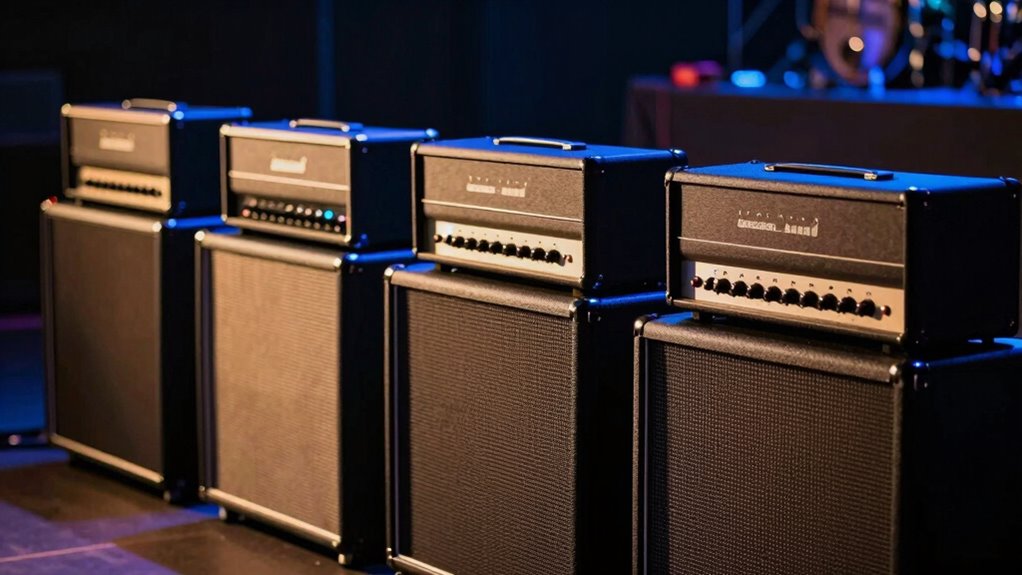
A guitar amplifier for gigs needs enough clean headroom and stage presence for your venues, without making setup or transport a burden. I’d put the BOSS Katana-100 Gen 3 first for its broad range of usable tones and gig-friendly power, while the Fender Mustang GTX100 stands out for players who want deep preset control and the Coolmusic BP60D for acoustic sets away from outlets. The main tradeoff is between volume and projection, flexible features, and how much weight or complexity you want to carry. A higher wattage number alone does not guarantee that an amp will suit your band or venue. Read on for the full breakdown and a guide to matching an amp to your gigs.

Get kitchen gear delivered free with Prime
- Fast, free delivery on millions of items
- Prime Video, Amazon Music and more included
- Member-only deals all year
Complete the kit


Key Takeaways
- BOSS Katana-100 Gen 3 is the strongest all-round choice here: it pairs gig-suited output with a broad range of amp voices and effects.
- The Fender Mustang GTX100 favors preset variety and foot control, making it a better match for players who switch sounds often than for buyers seeking a simple, immediate setup.
- Fender Champion II 100 offers a more straightforward high-output combo approach, while the Katana-100 is the more flexible pick for shaping varied tones.
- The Coolmusic BP60D solves a different problem from the electric combos: battery operation helps acoustic performers play where mains power is unavailable.
- The Katana-50 Gen 3, Marshall MG30GFX, and Rockville G-AMP 40 suit smaller rooms and lighter-duty setups better than loud full-band stages, where drummer volume and PA support can change what is practical.
| Fender Mustang GTX100 100-Watt Guitar Amp with 7-Button Footswitch |  | Best for Preset Variety and Live Control | Power: 100 watts | Speaker: 12-inch Celestion | Presets: 200 onboard | VIEW ON AMAZON | See Our Full Breakdown |
| Coolmusic BP60D 120W Battery-Powered Acoustic Guitar Amplifier |  | Best for Battery-Powered Acoustic Gigs | Output power: 120W | Speakers: Dual 8-inch woofers and dual 2-inch tweeters | Frequency range: 40Hz–18kHz | VIEW ON AMAZON | See Our Full Breakdown |
| Rockville G-AMP 40 Guitar Combo Amplifier |  | Best Value for Small Gigs and Practice | Output power: 40 watts | Speaker: 10 inches | Amplifier type: Solid state | VIEW ON AMAZON | See Our Full Breakdown |
| BOSS Katana-100 Gen 3 Guitar Amplifier |  | Best Overall for Gigging Electric Guitarists | Output power: 100 watts | Speaker: 12 inches | Amplifier type: Digital modeling | VIEW ON AMAZON | See Our Full Breakdown |
| Fender Champion II 100-Watt Combo Guitar Amplifier with Footswitch |  | Best for Players Who Want a Big, Simple Combo | Amplifier type: Solid state | Output power: 100 watts | Speaker configuration: Dual 12-inch Fender Special Design speakers | VIEW ON AMAZON | See Our Full Breakdown |
| BOSS Katana-50 Gen 3 Guitar Amplifier | | Best for Versatile Gigging | Amplifier type: Class AB | Output wattage: 50 watts | Speaker size: 12 inches | VIEW ON AMAZON | See Our Full Breakdown |
| Marshall MG30GFX 30W Combo Electric Guitar Amplifier |  | Best for Small Gigs and Practice | Amplifier type: Solid state | Output power: 30 watts | Speaker size: 10 inches | VIEW ON AMAZON | See Our Full Breakdown |
| guitar amplifier for gig | Weight | Output power | Amplifier type | Dimensions |
|---|---|---|---|---|
| Fender Mustang GTX100 100-Watt | 47.55 lbs | — | — | 13.2 x 22.6 x 27.4 inches |
| Coolmusic BP60D 120W Battery-P | 9.0kg | 120W | — | — |
| Rockville G-AMP 40 Guitar Comb | — | 40 watts | Solid state | — |
| BOSS Katana-100 Gen 3 Guitar A | 32.6 pounds | 100 watts | Digital modeling | 9.92 × 21.2 × 19.36 inches (D × W × H) |
| Fender Champion II 100-Watt Co | 44.8 pounds | 100 watts | Solid state | 29.1 x 22.3 x 13.7 inches |
| BOSS Katana-50 Gen 3 Guitar Am | — | — | Class AB | 21 × 12 × 17 inches |
| Marshall MG30GFX 30W Combo Ele | 23.8 pounds | 30 watts | Solid state | — |
More Details on Our Top Picks
Fender Mustang GTX100 100-Watt Guitar Amp with 7-Button Footswitch
For gigging players who change sounds between songs, I’d put the Mustang GTX100 ahead of simpler combos for its 200 presets, broad amp and effect selection, and included seven-button footswitch. The footswitch’s 60-second looper adds a useful live option, while stereo XLR outputs make connecting to a PA more straightforward. Bluetooth and app control also help with editing and playback, though the many choices may take more setup than the BOSS Katana-100 Gen 3, which focuses on six amp characters and five effects sections. The GTX100’s 100 watts and 12-inch Celestion speaker suit rehearsals and smaller stages, but its 47.55-pound weight is a real carrying burden. I’d choose it for flexibility, not for players who want a light, simple grab-and-go amp.
Pros:- 200 onboard presets and varied amp models support quick changes between songs.
- Included seven-button footswitch offers hands-free control and a 60-second looper.
- Stereo XLR outputs and a stereo effects loop suit PA and recording setups.
- Bluetooth, Wi-Fi, and app support add playback and editing options.
Cons:- At 47.55 pounds, it is a substantial load for frequent gig transport.
- The breadth of presets and effects may take more setup than a simpler amp.
Best for: Gigging guitarists who need many recallable tones, hands-free preset changes, looping, and stereo PA connections.
Not ideal for: Players who carry their amp often or prefer a small set of straightforward controls; it weighs 47.55 pounds and offers a large range of presets to manage.
- Power:100 watts
- Speaker:12-inch Celestion
- Presets:200 onboard
- Footswitch:Seven-button, with tap tempo and 60-second looper
- Connectivity:Bluetooth, Wi-Fi, stereo XLR outputs, stereo effects loop
- Dimensions:13.2 x 22.6 x 27.4 inches
- Weight:47.55 lbs
- Warranty:2 years limited
Our verdict“Choose the Mustang GTX100 if live preset control and tone variety matter more to you than keeping your gigging rig light and simple.”
Coolmusic BP60D 120W Battery-Powered Acoustic Guitar Amplifier
The Coolmusic BP60D fills a different gigging need from the other amps here: it can run on battery power and handle several sources at once. Its six independent input channels make it a practical choice for acoustic performers who sing, play, or share the amp with other musicians, while the dual woofers and tweeters are designed for a broad frequency range. Reverb, chorus, and delay provide onboard sound shaping, and Bluetooth or USB playback can cover backing tracks. Compared with the corded Rockville G-AMP 40, the BP60D is more flexible for busking and outdoor sets, but at 9 kg it is no featherweight. Its 6–8-hour battery life also calls for planning around longer events, and USB playback has a 32GB FAT32 limit.
Pros:- Battery operation supports outdoor performances and busking without a nearby outlet.
- Six independent input channels accommodate multiple microphones and instruments.
- Dual 8-inch woofers and dual 2-inch tweeters cover a wide frequency range.
- Bluetooth and USB playback work well for backing tracks.
Cons:- Its 9 kg weight can be cumbersome for frequent carrying.
- The stated battery life is 6–8 hours, which may not cover extended events.
- USB playback is limited to FAT32 drives up to 32GB.
Best for: Acoustic performers and buskers who need battery operation, multiple mic or instrument inputs, and backing-track playback.
Not ideal for: Electric guitarists seeking a traditional guitar amp tone or performers who need all-day battery runtime without recharging.
- Output power:120W
- Speakers:Dual 8-inch woofers and dual 2-inch tweeters
- Frequency range:40Hz–18kHz
- Battery life:6–8 hours
- Weight:9.0kg
- Inputs:6 independent input channels
- Effects:Reverb, chorus, and delay
- Playback:Bluetooth and USB; FAT32 drives up to 32GB
- Connections:6.35mm jack, USB, 3.5mm jack, DI OUT, headphone monitor, SEND/RETURN
Our verdict“Pick the BP60D for mobile acoustic sets that need several inputs and battery power, rather than for a conventional electric-guitar rig.”
Rockville G-AMP 40 Guitar Combo Amplifier
The Rockville G-AMP 40 is the more modest gigging choice in this group: its 40 watts and 10-inch speaker are aimed at practice and small performances, not players who need the larger stage-oriented output of the Fender Mustang GTX100 or BOSS Katana-100 Gen 3. That lower-powered setup can suit rehearsals, intimate rooms, and players who want a single corded combo for home and occasional sets. Clean and overdrive channels, four-band EQ, and a range of effects give it useful tone-shaping options without requiring a separate pedalboard. The included footswitch can change channels and control spring reverb hands-free. Bluetooth, USB, and SD playback are convenient for practice, but they do not change the key limitation: this amp is not the strongest fit for loud stages, and it needs mains power.
Pros:- 40-watt output and a 10-inch speaker suit practice and smaller performances.
- Clean and overdrive channels with four-band EQ offer useful tone adjustment.
- Included two-button footswitch provides hands-free channel and spring-reverb control.
- Bluetooth, USB, SD playback, and a headphone output add practice flexibility.
Cons:- Its 40-watt output is less suited to loud stages than the 100-watt combos in this roundup.
- Corded operation rules it out for performances without a suitable power outlet.
Best for: Newer or budget-conscious electric guitarists playing rehearsals, home sessions, and quieter gigs who want onboard effects and a footswitch.
Not ideal for: Bands playing loud stages or performers who need battery power; its 40-watt output is intended for practice and small performances, and it is corded.
- Output power:40 watts
- Speaker:10 inches
- Amplifier type:Solid state
- Channels:1 output channel; clean and overdrive channels
- EQ:4 bands
- Built-in effects:Reverb, delay, chorus, flanger, phaser, tremolo, spring reverb
- Connectivity:Bluetooth, USB, SD card, microphone input, headphone output
- Power requirements:120V AC, 60Hz
- Included accessory:2-button footswitch
Our verdict“Choose the G-AMP 40 for practice and small, controlled gigs, but step up to a 100-watt combo for louder stages.”
BOSS Katana-100 Gen 3 Guitar Amplifier
For a gigging electric guitarist who wants stage-ready output without the Mustang GTX100’s extensive preset library, I’d start with the BOSS Katana-100 Gen 3. Its 100 watts and custom 12-inch speaker make it a stronger match for band rehearsals and live sets than the 40-watt Rockville G-AMP 40. The six amp characters, each with a variation, provide 12 tonal options, while five effects sections let players shape a sound without relying on a deep preset catalog. BOSS Tone Studio app editing adds remote adjustment, but this model has one output channel and a more limited connection list than the Mustang, which includes stereo XLR outputs and a stereo effects loop. At 32.6 pounds, it is also lighter than the Fender Champion II 100, though still a corded combo to carry to each show.
Pros:- 100-watt output and a 12-inch speaker suit stage and rehearsal use.
- Six amp characters with variations provide 12 tonal options.
- Five effects sections offer flexible sound shaping.
- BOSS Tone Studio app supports remote editing.
Cons:- At 32.6 pounds, it still requires effort to transport regularly.
- One output channel and limited listed connections offer less routing flexibility than the Mustang GTX100.
- Corded operation is less convenient for outdoor sets without mains power.
Best for: Electric guitarists playing regular rehearsals and gigs who want 100-watt output, a 12-inch speaker, and manageable amp-model and effects choices.
Not ideal for: Players who need stereo XLR outputs, a stereo effects loop, battery operation, or a very light practice amp.
- Output power:100 watts
- Speaker:12 inches
- Amplifier type:Digital modeling
- Amp characters:6, each with a selectable variation (12 tonal options)
- Effects sections:Booster, Mod, FX, Delay, Reverb
- Connectors:3.5 mm jack, USB
- Dimensions:9.92 × 21.2 × 19.36 inches (D × W × H)
- Weight:32.6 pounds
- Warranty:2-year manufacturer standard warranty
Our verdict“Choose the Katana-100 Gen 3 if you want a straightforward 100-watt gigging combo with varied tones and effects, rather than extensive stereo routing.”
Fender Champion II 100-Watt Combo Guitar Amplifier with Footswitch
The Fender Champion II 100 favors a familiar, direct approach: two 12-inch speakers, 100 watts, and clean, overdrive, and distortion tones. Compared with the more model-rich Fender Mustang GTX100, it offers fewer listed preset and editing features, but players who prefer built-in sounds over browsing a large preset library may find that simpler setup appealing. Reverb, delay, chorus, tremolo, and other effects cover common gigging needs, and the included two-button footswitch supports hands-free control. USB recording, auxiliary input, and a headphone output extend its use beyond rehearsals and gigs. The tradeoff is physical: at 44.8 pounds and with a broad cabinet, it is less inviting to carry than the BOSS Katana-100 Gen 3, which weighs 32.6 pounds. Choose it for speaker presence and straightforward operation, not portability.
Pros:- Dual 12-inch speakers and 100-watt output suit rehearsals and gig use.
- Clean, overdrive, and distortion tones cover common electric-guitar needs.
- Built-in effects and an included two-button footswitch support live control.
- USB recording, auxiliary input, and headphone output add useful connections.
Cons:- At 44.8 pounds, it is heavier than the BOSS Katana-100 Gen 3.
- Its large 29.1 x 22.3 x 13.7-inch dimensions take up more transport and storage space.
- It lacks the Mustang GTX100’s extensive preset selection and stereo XLR outputs.
Best for: Guitarists who want a 100-watt combo with dual 12-inch speakers, built-in effects, and footswitch control without a large modeling preset system.
Not ideal for: Players who frequently carry their amp alone or need app-based model editing and lighter transport; this combo weighs 44.8 pounds and has large dimensions.
- Amplifier type:Solid state
- Output power:100 watts
- Speaker configuration:Dual 12-inch Fender Special Design speakers
- Output channels:2
- Effects:Reverb, delay/echo, chorus, tremolo, Vibratone, and more
- Connectivity:Auxiliary input, headphone output, USB port
- Included accessory:2-button footswitch
- Dimensions:29.1 x 22.3 x 13.7 inches
- Weight:44.8 pounds
Our verdict“Pick the Champion II 100 if you want a substantial dual-speaker combo and straightforward onboard sounds, and can manage its weight.”
BOSS Katana-50 Gen 3 Guitar Amplifier
The Katana-50 Gen 3 is the stronger fit for players who need several usable sounds from one manageable combo. Its 50-watt output and 12-inch speaker give it more gig-oriented headroom than the Marshall MG30GFX, whose 30 watts and 10-inch speaker suit smaller rooms and practice more naturally. Six amp characters, selectable variations for 12 total voicings, and five effects sections let a player cover clean, pushed, and higher-gain parts without building a large pedal setup. Remote editing through BOSS Tone Studio is useful for shaping sounds between rehearsals, though it adds an app-based workflow some players may not want. The tradeoff is a single output channel, so this is less suited to players who need separate channel outputs or a battery-powered setup. Like the other combos here, it also needs mains power.
Pros:- 50-watt output and a custom 12-inch speaker suit rehearsals and smaller gigs
- Six amp characters with variations provide 12 voicings for contrasting parts
- Five effects sections reduce the need to carry a full set of pedals
- BOSS Tone Studio supports remote amp and effects editing
Cons:- Single output channel may not suit players who need separate outputs
- Corded electric power rules out battery-powered performance
- App editing may feel unnecessary to players who prefer hands-on controls
Best for: Gigging guitarists who want a flexible electric-guitar combo with enough output for rehearsals and smaller venues, plus built-in effects and app-based editing.
Not ideal for: Players who need battery operation, separate output channels, or a simple amp with no app-based editing; the Coolmusic BP60D is a better fit for battery-powered acoustic use.
- Amplifier type:Class AB
- Output wattage:50 watts
- Speaker size:12 inches
- Amp voicings:6 characters with selectable variations; 12 total voicings
- Effects sections:Booster, Mod, FX, Delay, Reverb
- Output channels:1
- Connectors:3.5 mm jack, USB
- Dimensions:21 × 12 × 17 inches
Our verdict“Choose the Katana-50 Gen 3 if you want broad onboard tone options and more gig-ready output than the Marshall MG30GFX without stepping up to a 100-watt combo.”
Marshall MG30GFX 30W Combo Electric Guitar Amplifier
The MG30GFX suits guitarists who value straightforward channel choices and practice-friendly connections over the extra output and speaker size of the BOSS Katana-50 Gen 3. Its four channels—Clean, Crunch, OD1, and OD2—make it easy to move between distinct gain levels, while the three-band EQ offers direct tone shaping. Built-in effects cover common colors, and the headphone output and auxiliary input make this a more convenient home-and-rehearsal choice than a gig-focused setup that lacks those practice features. For louder rooms, its 30 watts and 10-inch speaker leave less headroom than the Katana-50, so it is better suited to small venues or situations with sound reinforcement than to competing with a loud drummer unaided. At 23.8 pounds, it is also not a featherweight carry, and it requires mains power.
Pros:- Four channels cover clean, crunch, and two overdrive levels
- Built-in digital effects provide several tones without extra pedals
- Headphone output supports quiet practice
- Auxiliary input makes it easy to play along with external music
Cons:- 30-watt output and 10-inch speaker offer less gig headroom than the BOSS Katana-50 Gen 3
- At 23.8 pounds, it may be cumbersome for frequent transport
- Requires corded electric power, limiting use away from an outlet
Best for: Players who split time between home practice, rehearsals, and smaller gigs, and want four distinct channels plus headphone and auxiliary connections.
Not ideal for: Bands playing louder venues without sound reinforcement or guitarists who need more clean headroom; the 50-watt BOSS Katana-50 Gen 3 is the stronger choice for that use.
- Amplifier type:Solid state
- Output power:30 watts
- Speaker size:10 inches
- Channels:4: Clean, Crunch, OD1, OD2
- Equalizer:3-band: bass, mid, treble
- Effects:Chorus, phaser, flanger, delay, octave, reverb
- Inputs and outputs:3.5 mm auxiliary input; headphone output
- Weight:23.8 pounds
Our verdict“Pick the MG30GFX for compact-venue playing and home practice with clear channel choices, but choose the Katana-50 Gen 3 if your gigs call for more output and speaker headroom.”

How We Picked
I ranked these amps around the demands of actual gig setups: usable stage volume, tonal flexibility, controls that are manageable between songs, and how well each model fits the type of performance it targets. I also weighed practical details such as portability, power access, and whether the amp’s feature set helps a player solve a real stage need rather than simply adding options.
The Katana-100 Gen 3 ranks first because it balances output and versatility for a wide range of electric-guitar gigs. The Mustang GTX100 and Champion II 100 follow for players with different priorities—programmable variety versus simpler combo operation—while the battery-powered Coolmusic earns a distinct place for acoustic and outdoor use. Smaller or more specialized electric combos rank lower for loud-band duties, but can make better sense for controlled stages, rehearsals, and players who value a compact setup. These placements reflect fit for gigging, not a claim that one amp suits every venue or playing style.
| guitar amplifier for gig | Amplifier type |
|---|---|
| Fender Mustang GTX100 100-Watt | — |
| Coolmusic BP60D 120W Battery-P | — |
| Rockville G-AMP 40 Guitar Comb | Solid state |
| BOSS Katana-100 Gen 3 Guitar A | Digital modeling |
| Fender Champion II 100-Watt Co | Solid state |
| BOSS Katana-50 Gen 3 Guitar Am | Class AB |
| Marshall MG30GFX 30W Combo Ele | Solid state |
Factors to Consider When Choosing Guitar Amplifier For Gigs
Choosing a gig amp starts with the room and the band, not a wattage contest. I’d work out how the amp will be heard, how you’ll move it, and how much control you need onstage before comparing features.
Match Stage Volume to the Band and Venue
A quiet solo set and a loud drummer create very different demands, even if both count as gigs. Ask whether you need the amp to fill the room by itself or only provide a clear sound onstage while a PA carries the mix. A higher-powered combo can offer more headroom, which helps keep clean tones from breaking up as volume rises, but it can also be heavier and harder to run quietly at home. Smaller combos may work well in small rooms or with PA support, yet struggle to compete with an unreinforced band. Don’t assume the wattage figure predicts perceived loudness across different speakers and designs. If possible, plan around the loudest setting you expect to play, not the average volume at rehearsal.
Decide How Much You Need the PA
Before buying, find out whether your usual venues provide a PA and whether you can connect your amp to it. With dependable reinforcement, a compact amp can serve as a personal monitor rather than the sole source of guitar sound in the room. Without PA support, speaker size, projection, and clean headroom matter more because the combo must carry the performance. A direct output can make setup easier, but check what signal it sends and whether it suits the venue’s mixing needs. Players who rely on stage sound alone should also think about where the amp sits; a powerful combo pointed at the back of your legs may not help the audience hear you clearly. Asking the sound engineer about stage volume can prevent buying more amp than your venues allow you to use.
Choose Between Presets and Immediate Controls
Preset-heavy amps can make a multi-song set easier when you need distinct tones at the press of a footswitch. That convenience comes with setup work: you may need to build, organize, and check sounds before the gig. A simpler control layout can be quicker to adjust when a room sounds different from rehearsal, especially for players who shape tones with their hands or pedals. Think about how often you change channels, effects, or levels during a set, rather than counting the available sounds. A footswitch may be central to your workflow, so confirm which changes it controls and whether it is included with the amp. The right choice is the one you can operate reliably under stage conditions, not the one with the longest feature list.
Account for Transport, Power, and Setup Time
Gig readiness includes getting the amp from home to the stage and having it work once you arrive. A larger combo can reduce the need for extra equipment, but its weight and bulk may become a regular burden on stairs, public transit, or tight stages. Battery-powered models solve the outlet problem for some acoustic performers, though runtime, charging habits, and the needs of other connected equipment still matter. For a mains-powered amp, check that the venues you play have accessible outlets and enough space for safe cable routing. Also factor in the rest of your rig: a compact amp can be a sensible choice if you already carry a PA or monitor, while a self-contained combo may simplify a minimal setup. Repeatedly carrying an amp is a better test of portability than looking only at its dimensions.
Prioritize the Right Kind of Versatility
Versatility can mean many tones in one amp, clean headroom for pedals, or a setup that works without venue power. Decide which kind would change your actual gig workflow. Players covering varied material may benefit from presets and built-in effects, while a player with a settled pedalboard may prefer a dependable amp voice and straightforward controls. Acoustic guitarists should focus on an amp designed for acoustic signals and their performance needs rather than assuming an electric combo will be a suitable substitute. Extra effects can reduce what you carry, but they can also complicate troubleshooting if a sound changes unexpectedly. Paying for features makes sense when they replace equipment or speed up set changes; unused options add little value onstage.
Plan for Monitoring and Reliable Operation
Stage volume is not the same as hearing yourself clearly. A guitar amp aimed across a room may sound different from where you stand, so consider placement, a tilt-back solution, or a separate monitor when the stage is crowded. Keep a workable backup plan for essential sounds, particularly if your set depends on saved presets or a battery-powered system. Check cables, power connections, and footswitch operation before performance day rather than troubleshooting during soundcheck. New features can add flexibility, but each extra connection or control is another part of the setup to learn and maintain. A gig rig that is easy to set up consistently can be more useful than a more elaborate one that takes longer to verify.
Frequently Asked Questions
Is a 50-watt amp enough for a full-band gig?
It can be, but the answer depends on the drummer, stage volume, speaker design, and whether the venue reinforces guitar through a PA. A 50-watt combo is more likely to work in a controlled room with sound support than in a loud band where the amp must fill the space alone. Clean tones usually need more headroom than deliberately driven sounds, so the same amp can feel adequate for one player and strained for another. Ask the venue whether your guitar will be mic’d or sent to the PA. If you regularly play loud stages without reinforcement, a higher-powered option such as the Katana-100 or Fender Champion II 100 is a safer fit in this lineup.
Should I choose a 100-watt combo if I want more volume?
Not automatically: wattage is only one part of how loud and clear an amp sounds in a room. Speaker efficiency, cabinet design, tone settings, and how much clean headroom you need all affect the result. A 100-watt combo can give more room before a clean sound starts to break up, which is useful for some band settings, but the added size and weight may be a poor match for small stages or frequent travel. If the venue uses a PA, a smaller amp may provide enough stage sound. Choose the larger model when you need its headroom or self-contained projection, not just because its number is higher.
Is a battery-powered amp practical for outdoor gigs?
It can be a strong option for acoustic sets in locations without convenient mains power, and that is where the Coolmusic BP60D has a clear role among these picks. Before relying on any battery amp, check expected runtime at the volume you need, charging time, and whether microphones or other inputs are part of your setup. Outdoor sound can disperse more than sound in a room, so battery operation alone does not guarantee enough coverage for a large audience. For bigger events, arrange PA support or a suitable external speaker system. Keep a charged backup plan if a performance cannot pause when the battery runs low.
Are built-in effects useful for gigging, or should I use pedals?
Built-in effects can reduce the number of pedals and cables you carry, and presets can make repeatable song changes faster. They are especially useful if you want one amp to cover several styles without assembling a large pedalboard. A pedalboard may be preferable when you already know your sounds, need a specific effect, or want the same control layout across different amps. Consider how quickly you can adjust the sound onstage and whether the amp’s footswitch gives access to the changes you actually use. The Mustang GTX100 and Katana models offer more tone-shaping options than a simple combo, but those options only help if you are comfortable preparing and managing them.
Can a small combo work for gigs if I already own a PA?
Yes, a PA can carry your guitar sound to the audience while a smaller combo supplies stage sound, making a compact amp more workable than it would be on its own. Confirm that the amp has a suitable output or that the venue can mic its speaker, and coordinate the stage level with the sound engineer. The PA does not solve every monitoring issue: you still need to hear yourself clearly onstage. This setup can make the Katana-50 Gen 3, Marshall MG30GFX, or Rockville G-AMP 40 more practical for smaller, reinforced performances. For loud stages or venues without reliable sound support, their compactness may come with a real limit in projection and clean headroom.
Conclusion
For most electric players who need one amp to handle varied gigs, I’d choose the BOSS Katana-100 Gen 3 as the best overall balance of output and tonal range. The Rockville G-AMP 40 is the best value-oriented, simpler option for smaller stages and lighter-duty use, while the Fender Mustang GTX100 is my best premium-style pick for players who want extensive preset control and footswitch access. Beginners who want a capable amp with room to explore sounds should start with the BOSS Katana-50 Gen 3, provided their gigs have PA support or modest stage volume. For straightforward high-output operation, the Fender Champion II 100 suits players who prefer less preset management; choose the Marshall MG30GFX for compact, lower-volume needs, and the Coolmusic BP60D for acoustic performances where battery power is the deciding factor. Match the amp to your loudest regular gig and the way you travel, then choose the features you will actually use.