
Among these high-end smartphones, I rank the Samsung Galaxy S26 Ultra as the best overall for buyers who want a versatile flagship, while the Google Pixel 11 Pro XL stands out for a Google-centered experience and the Galaxy Z Fold8 Ultra for a large foldable screen. The lineup ranges from full-featured flagships to more focused choices, so the best fit depends on whether you value cameras, multitasking, compactness, or a lower-cost route into premium features. A newer model is not automatically the better buy if an older Ultra covers your needs, and foldables bring different handling and durability tradeoffs than conventional phones. I compare all 13 options by their role, strengths, and drawbacks below. Continue reading for the full breakdown and advice on choosing a phone that suits how you use it.

Get kitchen gear delivered free with Prime
- Fast, free delivery on millions of items
- Prime Video, Amazon Music and more included
- Member-only deals all year
Complete the kit


Key Takeaways
- The Galaxy S26 Ultra is my best overall pick because it offers the broadest conventional flagship appeal in this lineup; buyers who already own a recent Ultra should weigh the upgrade against their actual needs.
- The Pixel 11 and Pixel 11 Pro XL split the Google choice: the standard model suits buyers who want a simpler flagship, while the Pro XL is better for those who prioritize a larger, more premium device.
- The Galaxy Z Fold8 Ultra and Z Fold7 serve a distinct use case: their foldable screens favor multitasking and expansive viewing, but buyers must accept a bulkier, more specialized design than a standard phone.
- Not every high-end option is an Ultra: the OnePlus 15R, Nothing Phone (4a) Pro, and Galaxy A57 offer different routes for buyers who care about storage, design, or everyday needs more than maximum flagship features.
- Two S24 Ultra listings describe the same core model, so the meaningful listed differences are color and listing details, not a distinct product role; compare the exact configuration before choosing.
| Samsung Galaxy S26 Ultra Unlocked Android Smartphone 256GB Sky Blue |  | Best Overall | Storage: 256GB | Color: Sky Blue | Network: Unlocked | VIEW ON AMAZON | See Our Full Breakdown |
| Samsung Galaxy S24 Ultra 256GB Unlocked Android Smartphone, Titanium Gray | 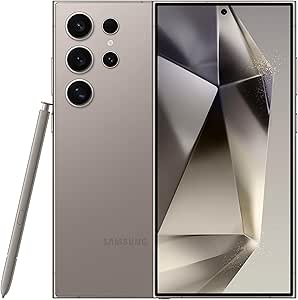 | Best for S Pen Productivity | Operating system: Android 14, One UI 6.1 | Processor: Snapdragon 8 Gen 3 for Galaxy | RAM: 12GB | VIEW ON AMAZON | See Our Full Breakdown |
| Samsung Galaxy S25 Ultra 512GB Dual SIM Smartphone, 12GB RAM, Titanium Black |  | Best for Storage and Dual SIM | Model: SM-S938B/DS | Operating system: Android 15 | RAM: 12GB | VIEW ON AMAZON | See Our Full Breakdown |
| Samsung Galaxy S24 Ultra 256GB Unlocked Smartphone, Titanium Black |  | Best for Display and Durability | Storage: 256GB | RAM: 12GB | Display: 6.8-inch Dynamic AMOLED 2X | VIEW ON AMAZON | See Our Full Breakdown |
| Nothing Phone (4a) Pro Unlocked Android Smartphone, 12GB RAM, 256GB Storage |  | Best for Distinctive Design | Display: 6.83-inch 1.5K AMOLED, 144Hz, up to 5,000 nits | Processor: Qualcomm Snapdragon 7 Gen 4 | Memory: Up to 12GB LPDDR5X RAM | VIEW ON AMAZON | See Our Full Breakdown |
| Google Pixel 11 Unlocked Smartphone, 512 GB, Pistachio |  | Best for Point-and-Shoot Photography | Operating system: Android 16 | Display: 6.3-inch OLED, 1080 x 2424, 120Hz | Processor and RAM: Google Tensor, 3.1 GHz; 12GB RAM | VIEW ON AMAZON | See Our Full Breakdown |
| OnePlus 15R 5G Unlocked Android Smartphone, 12GB RAM, 512GB Storage, Dual SIM, Charcoal Black |  | Best for Battery and High-Refresh Gaming | Operating system: Android 15 | Processor and RAM: Snapdragon 8 Gen 5, up to 3.8 GHz; 12GB RAM | Storage: 512GB | VIEW ON AMAZON | See Our Full Breakdown |
| Samsung Galaxy A57 5G Unlocked Android Smartphone, 128GB, Awesome Gray |  | Best for Long-Term Software Support | Model: Galaxy A57 5G, unlocked US version | Display: 6.7-inch Super AMOLED Plus | Storage: 128GB | VIEW ON AMAZON | See Our Full Breakdown |
| Samsung Galaxy Z Fold8 Ultra 512GB Unlocked Android Smartphone, Violet Shadow |  | Best for Foldable Multitasking | Operating system: Android 17, One UI 9 | Form factor and display: Foldable; 8-inch inner display | Processor and RAM: Snapdragon 8 Elite; 12GB RAM | VIEW ON AMAZON | See Our Full Breakdown |
| Samsung Galaxy Z Fold7 512GB Unlocked Foldable Smartphone, Jet Black |  | Best Dual-SIM Foldable | Operating system: Android 16, One UI 8 | Form factor: Foldable | Displays: 6.5-inch cover display and 8-inch inner display | VIEW ON AMAZON | See Our Full Breakdown |
| Nothing Phone (3) 5G Unlocked Smartphone, 512GB, White |  | Best for a Distinctive Android Experience | Processor: Snapdragon 8s Gen 4, 4nm, up to 3.2GHz | Memory: 24GB LPDDR5X | Storage: 512GB | VIEW ON AMAZON | See Our Full Breakdown |
| Sony Xperia 1 V 256GB 5G Unlocked Smartphone, Black |  | Best for Manual Photo and Video Creators | Processor: Snapdragon, 3.36GHz | RAM: 12GB | Storage: 256GB, expandable memory supported | VIEW ON AMAZON | See Our Full Breakdown |
| Google Pixel 11 Pro XL (Unlocked) – Gemini – 512 GB – Olive |  | Best for AI Features and Long Battery Life | Processor: Google Tensor G6, 3.1GHz | RAM: 16GB | Storage: 512GB | VIEW ON AMAZON | See Our Full Breakdown |
| high end smartphone | Storage | Operating system | Display |
|---|---|---|---|
| Samsung Galaxy S26 Ultra Unloc | 256GB | — | — |
| Samsung Galaxy S24 Ultra 256GB | 256GB | Android 14, One UI 6.1 | — |
| Samsung Galaxy S25 Ultra 512GB | 512GB | Android 15 | — |
| Samsung Galaxy S24 Ultra 256GB | 256GB | — | 6.8-inch Dynamic AMOLED 2X |
| Nothing Phone | Up to 256GB UFS 3.1 | Android 16 with Nothing OS 4.1 | 6.83-inch 1.5K AMOLED, 144Hz, up to 5,000 nits |
| Google Pixel 11 Unlocked Smart | 512GB | Android 16 | 6.3-inch OLED, 1080 x 2424, 120Hz |
| OnePlus 15R 5G Unlocked Androi | 512GB | Android 15 | 6.83-inch AMOLED, 2800 × 1272, 165Hz |
| Samsung Galaxy A57 5G Unlocked | 128GB | — | 6.7-inch Super AMOLED Plus |
| Samsung Galaxy Z Fold8 Ultra 5 | 512GB | Android 17, One UI 9 | — |
| Samsung Galaxy Z Fold7 512GB U | 512GB | Android 16, One UI 8 | — |
| Nothing Phone | 512GB | Android 15 | 6.67-inch FHD+ 1.5K AMOLED, adaptive 120Hz |
| Sony Xperia 1 V 256GB 5G Unloc | 256GB, expandable memory supported | Android 12.0 | 6.5-inch OLED, 1644 × 3840 pixels, 120Hz |
| Google Pixel 11 Pro XL | 512GB | Android 16 | 6.8-inch Super Actua |
More Details on Our Top Picks
Samsung Galaxy S26 Ultra Unlocked Android Smartphone 256GB Sky Blue
The Galaxy S26 Ultra is my lead pick for buyers who want a high-end phone centered on privacy, photography, and convenience. Its built-in privacy display can hide on-screen information when discretion matters, while Photo Assist and Nightography target two distinct jobs: quick edits and low-light capture. Compared with the Galaxy S24 Ultra, this model emphasizes newer listed features rather than the S24’s clearly specified 200MP camera and integrated S Pen. That makes it a stronger fit for buyers drawn to privacy tools and streamlined photo editing, but the supplied details do not establish a camera-resolution or stylus advantage. Super Fast Charging 3.0 helps reduce time tethered to an outlet; the tradeoff is that advanced AI tools may depend on a Samsung account and internet access, and premium positioning may not suit buyers seeking a lower-cost route to flagship basics.
Pros:- Built-in privacy display helps shield on-screen content when needed.
- Photo Assist offers quick AI-supported photo enhancements.
- Nightography is designed for clearer low-light photos and videos.
- Super Fast Charging 3.0 reduces charging downtime.
Cons:- Some AI features may require a Samsung account and internet connection.
- The supplied product details do not specify camera resolution, display size, or included stylus.
- Premium specifications may be more than buyers who need only core smartphone functions require.
Best for: Buyers who want a premium Samsung phone with screen privacy, assisted photo editing, and low-light camera features.
Not ideal for: Shoppers who need a confirmed S Pen, detailed camera specifications, or AI features that work without account and internet requirements.
- Storage:256GB
- Color:Sky Blue
- Network:Unlocked
- Charging:Super Fast Charging 3.0
- Audio:Hi-Res Audio support
- Privacy feature:Built-in privacy display
- Camera feature:Nightography for low-light photos and videos
- Photo tools:AI-powered Photo Assist
Our verdict“Choose the Galaxy S26 Ultra if privacy features and assisted low-light photography matter more to you than a clearly specified S Pen or camera-resolution package.”
Samsung Galaxy S24 Ultra 256GB Unlocked Android Smartphone, Titanium Gray
The Galaxy S24 Ultra earns this spot for buyers who want a high-end phone that can also serve as a pocket notebook. Its built-in S Pen supports handwriting and quick annotations, a more direct productivity advantage than the camera-and-privacy emphasis of the Galaxy S26 Ultra. The 200MP camera and up-to-100x zoom give photo enthusiasts room to frame distant subjects, while the Snapdragon 8 Gen 3 processor and 12GB RAM provide a substantial performance foundation. Samsung’s AI tools add search, translation, note assistance, and photo editing, though some buyers may prefer a newer model’s listed privacy display and charging features. The provided information does not list a refresh rate, battery capacity, or charging speed, so I would not choose it on those grounds. Its single-SIM setup may also limit flexibility for frequent travelers.
Pros:- Built-in S Pen supports handwriting, annotations, and note-taking.
- 200MP camera and up-to-100x zoom offer broad framing options.
- 12GB RAM and Snapdragon 8 Gen 3 for Galaxy support demanding multitasking.
- AI tools cover translation, note assistance, search, and photo editing.
Cons:- Single-SIM configuration is less flexible for people who regularly use two numbers.
- The supplied details do not specify battery capacity or charging speed.
- Its listed AI and camera feature set lacks the S26 Ultra’s built-in privacy display.
Best for: Note-takers, students, and professionals who want an integrated stylus alongside a high-resolution camera and Android productivity tools.
Not ideal for: Buyers who need dual SIM, newer listed privacy features, or clearly documented battery and charging specifications.
- Operating system:Android 14, One UI 6.1
- Processor:Snapdragon 8 Gen 3 for Galaxy
- RAM:12GB
- Storage:256GB
- Camera:200MP; up to 100x zoom
- SIM:Single Nano-SIM
- Connector:USB Type-C
- Water resistance:Water resistant
Our verdict“Pick this S24 Ultra if an included S Pen and a detailed 200MP zoom camera matter more than newer privacy-focused features.”
Samsung Galaxy S25 Ultra 512GB Dual SIM Smartphone, 12GB RAM, Titanium Black
With 512GB of storage and dual-SIM support, the Galaxy S25 Ultra is the most practical fit here for people carrying a large media library or separating work and personal numbers. Its 200MP rear camera system and 8K video recording give creators more capture flexibility than the Nothing Phone (4a) Pro’s listed camera details, while 12GB RAM and Android 15 suit multitasking. The S24 Ultra models in this roundup offer a built-in S Pen and specify up to 100x zoom; those are clearer reasons to choose them if handwriting or distant-subject framing matters more. The major caveat is network fit: this global model does not work with the listed US CDMA carriers, including Verizon and Cricket. I’d verify carrier compatibility before buying, and note that there is no headphone jack.
Pros:- 512GB storage accommodates large photo, video, and app libraries.
- Dual-SIM support helps separate personal and work numbers or manage travel service.
- 200MP rear camera system records video at up to 8K and 30 fps.
- 12GB RAM supports multitasking across demanding apps.
Cons:- The global model is incompatible with some US CDMA carriers, including Verizon and Cricket.
- No headphone jack for wired headphones without an adapter.
- Unlike the S24 Ultra models listed here, the supplied details do not list an included S Pen.
Best for: Frequent travelers, dual-number users, and mobile video creators who need generous storage and whose carrier supports this global model.
Not ideal for: Verizon or Cricket customers, or anyone who needs a headphone jack or built-in S Pen.
- Model:SM-S938B/DS
- Operating system:Android 15
- RAM:12GB
- Storage:512GB
- SIM:Dual Nano-SIM
- Rear cameras:4
- Video recording:8K at 30 fps
- Weight:250g
- Headphone jack:None
Our verdict“Choose the S25 Ultra if you need 512GB and dual SIM, but only after confirming that your carrier supports this global model.”
Samsung Galaxy S24 Ultra 256GB Unlocked Smartphone, Titanium Black
This Galaxy S24 Ultra is the display-focused choice: its 6.8-inch QHD+ AMOLED panel and 120Hz refresh rate put a large, fluid screen at the center of the experience. That makes it a natural fit for reading, gaming, and video, while IP68 water and dust resistance adds reassurance beyond the Nothing Phone (4a) Pro’s listed IP65 rating. It shares the 200MP camera, up-to-100x zoom, and S Pen strengths of the Titanium Gray S24 Ultra, so the distinction between these two listings is mostly the stated configuration and color rather than a different core feature set. The tradeoff is its substantial 0.34kg listed weight, and the product details report only five hours of talk time. There is also no headphone jack, so wired listening may require an adapter.
Pros:- 6.8-inch QHD+ AMOLED display with a 120Hz refresh rate.
- S Pen supports handwriting and direct on-screen interaction.
- 200MP main camera with up to 100x zoom.
- IP68 water and dust resistance.
Cons:- Listed weight of 0.34kg makes it a substantial phone to carry.
- The supplied details list only five hours of talk time.
- No headphone jack for direct wired headphone connection.
Best for: Buyers who prioritize a large, high-resolution screen, integrated stylus, and IP68 protection in an unlocked 5G phone.
Not ideal for: People seeking a lightweight handset, long stated talk time, or a built-in headphone jack.
- Storage:256GB
- RAM:12GB
- Display:6.8-inch Dynamic AMOLED 2X
- Display resolution:2560 x 1440
- Refresh rate:120Hz
- Rear camera:200MP; 4 rear cameras; up to 100x zoom
- Connectivity:5G; unlocked for all carriers
- Water and dust resistance:IP68
- Weight:0.34kg
Our verdict“Choose this S24 Ultra if the large QHD+ display, S Pen, and IP68 rating outweigh its listed weight and talk-time limits.”
Nothing Phone (4a) Pro Unlocked Android Smartphone, 12GB RAM, 256GB Storage
The Nothing Phone (4a) Pro is the design-led alternative for buyers who want a high-end-feeling screen and a phone that looks different from the Samsung Ultra models. Its 6.83-inch AMOLED panel runs at 144Hz, and the Glyph Matrix gives notifications a visible rear-facing display instead of relying only on the main screen. The Snapdragon 7 Gen 4, 50MP main camera with OIS, telephoto and ultra-wide lenses, plus a 5,080mAh battery with 50W charging, make a persuasive everyday package. Compared with the Galaxy S24 Ultra, it gives up the S Pen, 200MP camera, and IP68 rating; its IP65 protection is more limited. Carrier compatibility also varies, with Verizon specifically not recommended. The listed camera information conflicts across the product text, so buyers should confirm the exact camera configuration before relying on it.
Pros:- 6.83-inch AMOLED display with a 144Hz refresh rate and stated peak brightness up to 5,000 nits.
- Glyph Matrix offers a distinctive way to display notifications.
- Rear camera setup lists OIS, telephoto, and ultra-wide cameras.
- 5,080mAh battery and 50W fast charging support extended use and quicker charging.
Cons:- Verizon compatibility is limited and not recommended; support varies by carrier.
- IP65 protection is below the Galaxy S24 Ultra’s listed IP68 rating.
- Camera specifications conflict across the supplied product information.
Best for: Style-conscious Android buyers who value a high-refresh-rate display, distinctive notification design, and fast charging, and whose carrier supports the phone.
Not ideal for: Verizon users, buyers who need IP68 protection or an S Pen, and camera-focused shoppers who require consistent specification details.
- Display:6.83-inch 1.5K AMOLED, 144Hz, up to 5,000 nits
- Processor:Qualcomm Snapdragon 7 Gen 4
- Memory:Up to 12GB LPDDR5X RAM
- Storage:Up to 256GB UFS 3.1
- Rear cameras:50MP main with OIS, telephoto, and ultra-wide
- Battery:5,080mAh
- Charging:50W fast charging
- Operating system:Android 16 with Nothing OS 4.1
- Water and dust resistance:IP65
Our verdict“Pick the Nothing Phone (4a) Pro for its distinctive design and fast display if your carrier supports it and you can verify the camera configuration.”
Google Pixel 11 Unlocked Smartphone, 512 GB, Pistachio
The Pixel 11 is the most camera-led compact option here: its 30x Super Zoom and Night Sight features suit buyers who want reach and low-light shooting without carrying a larger phone. Compared with the OnePlus 15R, its 6.3-inch OLED is easier to handle, while OnePlus offers a much larger, faster-refresh display and a bigger stated battery. Pixel counters with IP68 protection and more than 30 hours of stated battery life, giving it a better-defined durability and endurance story than the OnePlus, whose water-resistance level is unspecified. The 512GB capacity leaves room for photos and 4K video, but this model relies on eSIM rather than a physical SIM slot. Buyers who need dual physical SIMs or a headphone jack should look elsewhere.
Pros:- 30x Super Zoom and Night Sight support distant and low-light photography
- 6.3-inch 120Hz OLED is more manageable than the OnePlus 15R’s 6.83-inch display
- More than 30 hours of stated battery life and IP68 water and dust protection
- 512GB storage and unlocked carrier compatibility
Cons:- Uses eSIM rather than a physical SIM card slot
- No headphone jack is listed
- The display is smaller than those on the OnePlus 15R and Samsung Galaxy A57
Best for: Camera-focused Android buyers who want a manageable-size phone, long stated battery life, and 512GB for photos and video.
Not ideal for: People who need a physical SIM card, dual-SIM flexibility, or a large screen for gaming and video.
- Operating system:Android 16
- Display:6.3-inch OLED, 1080 x 2424, 120Hz
- Processor and RAM:Google Tensor, 3.1 GHz; 12GB RAM
- Storage:512GB
- Rear camera and zoom:48MP; 30x Super Zoom
- Battery:More than 30 hours stated battery life
- Protection:IP68 water and dust resistance
- Charging:Wireless charging; wired charging up to 55% in about 30 minutes
- Weight:204g
Our verdict“Choose the Pixel 11 if camera reach and a compact 6.3-inch form matter more than a physical SIM slot or a large display.”
OnePlus 15R 5G Unlocked Android Smartphone, 12GB RAM, 512GB Storage, Dual SIM, Charcoal Black
The OnePlus 15R makes its case with a combination few phones here match: a 7,400mAh battery, 80W charging, and a 165Hz AMOLED screen. That makes it a stronger fit than the Google Pixel 11 for long gaming sessions and heavy screen time, while Pixel offers a more compact body and a more clearly specified camera feature set. The OnePlus pairs its large display with a Snapdragon 8 Gen 5 processor, 12GB of RAM, and 512GB of storage, so it is equipped for demanding apps and sizable media libraries. Dual Nano SIM support also gives it more physical-SIM flexibility than the Pixel. The tradeoff is size: its 6.83-inch screen and broad body are less pocket-friendly, and the water-resistance rating is not specified.
Pros:- 7,400mAh battery and 80W SUPERVOOC charging suit extended use
- 6.83-inch AMOLED display with a 165Hz refresh rate
- Snapdragon 8 Gen 5, 12GB RAM, and 512GB storage
- Dual Nano SIM support, 5G, and NFC
Cons:- Large dimensions make one-handed use and pocket carry less convenient than with the Pixel 11
- Water resistance is mentioned but no protection level is specified
- No headphone jack is listed
Best for: Mobile gamers and frequent travelers who want a large, high-refresh display, substantial battery capacity, fast charging, and dual physical SIMs.
Not ideal for: Buyers who prioritize a compact phone, a documented IP rating, or camera and zoom details comparable to the Pixel 11.
- Operating system:Android 15
- Processor and RAM:Snapdragon 8 Gen 5, up to 3.8 GHz; 12GB RAM
- Storage:512GB
- Display:6.83-inch AMOLED, 2800 × 1272, 165Hz
- Battery capacity:7,400mAh
- Charging:80W SUPERVOOC
- Rear cameras:50MP and 8MP
- SIM:Dual Nano SIM
- Video recording:4K, up to 120 fps
Our verdict“Pick the OnePlus 15R for endurance, fast charging, and smooth large-screen gaming, provided its size and unspecified water-resistance level suit you.”
Samsung Galaxy A57 5G Unlocked Android Smartphone, 128GB, Awesome Gray
The Galaxy A57 5G earns its place through a particularly clear ownership advantage: Samsung lists six OS updates and six years of security updates. That makes it a practical choice for buyers who keep phones for years, especially compared with the Pixel 11, whose supplied details do not specify a software-support period. Its 6.7-inch Super AMOLED Plus display and 5,000mAh battery also suit everyday video, browsing, and photography, while IP68 protection adds a defined level of water and dust resistance. The compromises are in the details: 128GB storage is much less than the 512GB offered by the Pixel 11 and OnePlus 15R, and the 45W charger is sold separately. Pick it for support and dependable essentials, not maximum storage or headline performance figures.
Pros:- Six OS updates and six years of security updates are explicitly stated
- 6.7-inch Super AMOLED Plus display for expansive video and browsing
- IP68 water and dust resistance
- 5,000mAh battery with support for 45W charging
Cons:- 128GB storage is substantially less than the Pixel 11 and OnePlus 15R
- 45W charger is sold separately
- 5G availability and speeds depend on the carrier and network conditions
Best for: Buyers who plan to keep an unlocked Samsung phone for several years and value a large display, IP68 protection, and a stated update commitment.
Not ideal for: People who store extensive video libraries, want 512GB onboard, or expect a charger to be included for 45W charging.
- Model:Galaxy A57 5G, unlocked US version
- Display:6.7-inch Super AMOLED Plus
- Storage:128GB
- Rear camera:Triple-lens system with 50MP HDR main camera
- Battery:5,000mAh
- Charging:45W Super Fast Charging 2.0
- Water and dust resistance:IP68
- Software support:Six OS updates and six years of security updates
- Network:5G
Our verdict“Choose the Galaxy A57 if long-term software support and IP68 protection outweigh the need for 512GB storage or an included fast charger.”
Samsung Galaxy Z Fold8 Ultra 512GB Unlocked Android Smartphone, Violet Shadow
The Galaxy Z Fold8 Ultra is the multitasking pick: its 8-inch foldable display supports up to three apps at once, a useful advantage over the conventional screens on the Pixel 11 and Galaxy A57. The 200MP main camera and 50MP ultra-wide camera give it a more ambitious listed camera setup than those two phones, while 512GB storage accommodates a large app and media collection. A Snapdragon 8 Elite processor and 5,000mAh battery round out a high-end specification set. This format is best for buyers who will actually use the inner screen for work, reading, or split-screen tasks; otherwise, the smaller Pixel is easier to carry and the OnePlus offers a much larger battery capacity. The listing specifies single-SIM use and only says water resistant, without an IP rating.
Pros:- 8-inch inner display supports using up to three apps at once
- 200MP main and 50MP ultra-wide cameras
- Snapdragon 8 Elite processor with 12GB RAM
- 512GB storage and 5,000mAh battery
Cons:- Single SIM slot offers less flexibility than the dual-SIM OnePlus 15R and Galaxy Z Fold7
- Water resistance is listed without a specific IP rating
- The foldable format is less suited to buyers who do not need a large inner screen
Best for: Professionals and power users who regularly read, edit, or manage several apps at once on a tablet-size inner display.
Not ideal for: Buyers seeking a compact handset, dual-SIM support, a stated IP rating, or a clear battery runtime claim.
- Operating system:Android 17, One UI 9
- Form factor and display:Foldable; 8-inch inner display
- Processor and RAM:Snapdragon 8 Elite; 12GB RAM
- Storage:512GB
- Cameras:200MP main and 50MP ultra-wide
- Battery capacity:5,000mAh
- SIM:Single Nano SIM
- Biometric security:Fingerprint recognition
- Water resistance:Water resistant; rating not specified
Our verdict“Choose the Z Fold8 Ultra if an expansive foldable workspace is worth more to you than dual-SIM flexibility and a specified water-resistance rating.”
Samsung Galaxy Z Fold7 512GB Unlocked Foldable Smartphone, Jet Black
The Galaxy Z Fold7 brings foldable multitasking to buyers who also need dual-SIM support, a practical distinction from the single-SIM Z Fold8 Ultra. Its 6.5-inch cover display handles routine phone tasks, while the 8-inch inner screen can show up to three windows for work or media. The Snapdragon 8 Elite for Galaxy and 200MP camera with ProVisual Engine give it flagship-level processing and a high-resolution camera specification; the reinforced frame and Gorilla Glass Ceramic 2 display add material protection. Compared with the Z Fold8 Ultra, the Fold7 lists dual SIM and a 6.5-inch cover display, but its supplied information does not state battery capacity or runtime. The missing battery figures make endurance harder to judge, and there is no headphone jack.
Pros:- 8-inch inner screen supports multitasking across up to three windows
- Dual-SIM support offers more flexibility than the single-SIM Z Fold8 Ultra
- 200MP camera with ProVisual Engine and photo editing features
- Snapdragon 8 Elite for Galaxy and reinforced frame materials
Cons:- No battery capacity or runtime specification is provided
- No headphone jack
- Foldable design is less compelling for buyers who will not use the large inner screen
Best for: Frequent travelers and multitaskers who want an 8-inch foldable workspace but need dual-SIM capability in a premium handset.
Not ideal for: Buyers who need a published battery capacity or runtime, a headphone jack, or a conventional compact phone.
- Operating system:Android 16, One UI 8
- Form factor:Foldable
- Displays:6.5-inch cover display and 8-inch inner display
- Processor and RAM:Snapdragon 8 Elite for Galaxy; 12GB RAM
- Storage:512GB
- Camera:200MP with ProVisual Engine
- SIM:Dual SIM
- Build:Reinforced Armor Aluminum frame and Gorilla Glass Ceramic 2 display
- Headphone jack:None
Our verdict“Pick the Galaxy Z Fold7 if you want foldable multitasking with dual SIM, but skip it if published battery details are a priority.”
Nothing Phone (3) 5G Unlocked Smartphone, 512GB, White
The Nothing Phone (3) pairs flagship-style versatility with a more expressive design than the Sony Xperia 1 V. Its four 50MP cameras, including a periscope camera, cover more shooting angles than a conventional multi-camera setup, while 4K Ultra XDR video adds flexibility for creators. The 6.67-inch adaptive 120Hz AMOLED display makes scrolling and motion look smooth, and IP68 protection helps it stand up to dust and water. Nothing’s Glyph Interface and Essential Key offer a different kind of interaction than the Pixel 11 Pro XL’s Gemini-centered approach. The tradeoff is a less straightforward carrier story: Verizon use requires IMEI whitelisting. The listing also has inconsistent memory and storage descriptions, so I’d verify configuration details before buying.
Pros:- Four 50MP cameras include a periscope option for more flexible framing
- 6.67-inch adaptive 120Hz AMOLED display supports smooth scrolling and motion
- IP68-rated protection against water and dust
- Glyph Interface and Essential Key offer distinctive interaction options
Cons:- Verizon use requires contacting customer service to whitelist the IMEI
- The listing gives inconsistent memory and storage descriptions
Best for: Android buyers who want a distinctive interface, a versatile multi-camera setup, and 512GB of listed storage.
Not ideal for: Verizon customers who want uncomplicated activation, or buyers who need fully consistent memory and storage information before ordering.
- Processor:Snapdragon 8s Gen 4, 4nm, up to 3.2GHz
- Memory:24GB LPDDR5X
- Storage:512GB
- Display:6.67-inch FHD+ 1.5K AMOLED, adaptive 120Hz
- Cameras:Four 50MP cameras: main, periscope, ultra-wide, and front
- Video:Ultra XDR 4K
- Battery:5150mAh
- Operating system:Android 15
- Durability:IP68 water and dust resistance
Our verdict“Choose the Nothing Phone (3) for distinctive design and camera versatility, but verify its configuration and carrier compatibility first.”
Sony Xperia 1 V 256GB 5G Unlocked Smartphone, Black
The Sony Xperia 1 V is the specialist pick here: its 4K HDR recording at up to 120fps gives video-focused buyers more capture headroom than the Nothing Phone (3), while its 6.5-inch 4K OLED panel offers exceptionally high resolution for reviewing footage. Sony also emphasizes low-light imaging through its next-generation sensor and computational processing, making this a better fit for people who care about capture controls and results than about novelty features. Expandable memory and dual SIM support add practical flexibility that the listed Pixel 11 Pro XL configuration does not match. Its age is the key caveat: the supplied listing specifies Android 12, and the front camera is 8MP. It is also water resistant rather than carrying a stated IP68 rating, so I would not treat it as equally protected as the newer alternatives.
Pros:- Records 4K HDR video at up to 120fps
- 6.5-inch 4K OLED display with a 120Hz refresh rate
- Expandable memory and dual SIM support provide configuration flexibility
- Low-light processing is designed to reduce noise and improve dynamic range
Cons:- The supplied listing specifies Android 12, an older operating system version
- The 8MP front camera is modest beside newer high-end phone options
- Water resistance is listed without a specific IP rating
Best for: Video creators and photography enthusiasts who value high-frame-rate 4K HDR recording, expandable storage, and dual SIM support.
Not ideal for: Buyers seeking a current listed Android version, a high-resolution front camera, or a stated IP68 rating.
- Processor:Snapdragon, 3.36GHz
- RAM:12GB
- Storage:256GB, expandable memory supported
- Display:6.5-inch OLED, 1644 × 3840 pixels, 120Hz
- Rear cameras:Three cameras; 12MP sensor resolution listed
- Front camera:8MP
- Video:4K HDR recording up to 120fps
- SIM:Dual SIM
- Operating system:Android 12.0
Our verdict“Pick the Xperia 1 V for its video tools and expandable memory, not for the newest software or the clearest durability rating.”
Google Pixel 11 Pro XL (Unlocked) – Gemini – 512 GB – Olive
The Pixel 11 Pro XL centers its appeal on Gemini Intelligence, a large display, and extended battery life rather than Sony’s creator-focused recording specifications. Its stated 30-plus-hour battery life and wireless charging make it the stronger choice for buyers who prioritize all-day use and convenient charging. The 120× ProZoom is a headline camera feature, though the supplied data gives only a 48MP rear-camera resolution and does not detail the zoom hardware, so I would not choose it on magnification alone. Compared with the Nothing Phone (3), the Pixel has a larger 6.8-inch screen and a newer listed Android 16 system, but it offers only eSIM and may feel cumbersome in one-handed use. No headphone jack means audio relies on USB-C or Bluetooth.
Pros:- Gemini Intelligence and Google Tensor G6 are central to its assistance features
- 30-plus-hour stated battery life with wireless charging
- 120× ProZoom and Pixel camera features including Night Sight
- IP68 protection and fingerprint and facial recognition
Cons:- The 6.8-inch display may be unwieldy for one-handed use
- eSIM-only configuration does not provide a physical SIM slot
- No headphone jack; wired listening requires USB-C audio
Best for: Buyers who want Google’s Gemini features, a large screen, wireless charging, and a long stated battery life.
Not ideal for: People who prefer compact phones, need a physical SIM slot, or regularly use wired headphones without USB-C audio gear.
- Processor:Google Tensor G6, 3.1GHz
- RAM:16GB
- Storage:512GB
- Display:6.8-inch Super Actua
- Rear camera:48MP with 120× ProZoom
- Front camera:13MP
- Battery:5115mAh; stated 30+ hours of talk time; wireless charging
- Operating system:Android 16
- Durability:IP68 water resistance
Our verdict“Choose the Pixel 11 Pro XL for its AI features, large display, and long stated battery life if its size and eSIM-only setup suit you.”

How We Picked
I ranked these phones by how well each one serves a clear buyer need, rather than treating the newest or most expensive-sounding model as an automatic winner. I weighed the stated storage and configurations, form factor, brand experience, and the likely usefulness of each device’s distinguishing features. I also considered whether a pick appears versatile enough for everyday use or is better suited to a narrower priority, such as a foldable screen or a particular software ecosystem.
The order gives priority to broad appeal, then to phones with a compelling advantage for a specific audience. A model can rank lower without being a poor choice: it may be older, more specialized, or less clearly positioned as a high-end all-rounder based on the supplied product information. Listings with the same core model are treated as variants, not separate innovations. Since detailed testing data and full specifications were not provided, I avoid claiming performance or camera results that cannot be verified from the listed information.
Factors to Consider When Choosing High End Smartphones
Before choosing among high-end smartphones, decide which compromises you are willing to live with. A premium label alone does not tell you whether a phone fits your hands, workflow, or preferred software. These broader checks can help separate meaningful upgrades from features that look good on a spec sheet but may not change your daily use.
Choose a form factor you will want to carry
A foldable can make reading, multitasking, and viewing content feel different from using a conventional phone, but its larger unfolded screen comes with a distinct closed-phone shape. Try to judge the device as both a phone and a small-screen workspace, not only by its open display. If one-handed use, pocket comfort, or a familiar slab design matters most, a standard flagship is the safer fit. Buyers often focus on the extra screen area and overlook how often they will actually open the device. Compare the Fold models with conventional options in person if possible. Choose the foldable only when its expanded format solves a regular problem for you.
Buy storage for your habits, not just the largest number
Storage needs depend on how you use a phone: offline video, large photo libraries, games, and long periods between device changes can all add up. A 512GB listing gives more headroom than a 256GB or 128GB configuration, but it is not automatically worth prioritizing if you routinely remove files or keep them elsewhere. Check the exact variant before ordering, since the same phone family can be listed with different capacities. Also look at whether your intended workflow depends on local files rather than cloud access. A common mistake is paying for capacity while overlooking whether the rest of the configuration suits you. Match storage to how long you keep devices and what you keep on them.
Treat an older flagship as a different value proposition
An earlier-generation flagship can still make sense when its established feature set matches your priorities, but its age matters for support runway and future resale. Do not assume the model with the newer number is a worthwhile change if your current phone already handles your routine well. Instead, identify the specific improvement you expect to notice, such as a different form factor or a newer software experience. Check the manufacturer’s current support policy and the exact device condition or regional variant before buying. This matters especially when choosing between the S24 Ultra listings and newer Galaxy Ultra models. The right comparison is the phone’s remaining useful life against the features you will actually use.
Choose an ecosystem you are comfortable keeping
Switching phone brands can change how you share files, sync photos, use accessories, and interact with other devices. A feature that seems minor on a spec sheet may matter more if it fits a laptop, watch, earbuds, or smart-home setup you already own. Before changing ecosystems, check which apps and services carry over cleanly and which require extra setup. Buyers who value a consistent software approach may prefer staying with a familiar platform, while those seeking a different interface should plan for a brief adjustment. Do not choose on brand reputation alone: compare the everyday tasks you perform most. Familiarity can be a real advantage, but it should not outweigh a feature you specifically need.
Pay for a premium feature only when it changes your routine
High-end phones often ask buyers to choose between broad capability and a standout specialty. A larger foldable display, a particular camera-oriented design, or a high-capacity configuration is useful only when it supports how you work or relax. Write down the three phone tasks you do most before comparing feature lists. Then separate must-haves from features that would be pleasant but rarely used. This prevents a common mistake: treating every flagship feature as equally valuable. If a more focused model fits your routine, the all-around flagship may not be the best personal choice.
Frequently Asked Questions
Should I choose the Galaxy S26 Ultra or an older Galaxy S24 Ultra?
I would choose the S26 Ultra if you want the newest option in this Galaxy Ultra group and expect its generation-specific features to matter to you. The S24 Ultra remains a distinct choice for buyers who find its listed configuration sufficient and do not need to prioritize the newest model. Compare the exact storage, regional version, and support terms rather than relying on model name alone. The two S24 Ultra entries here appear to be color variants of the same core phone, not separate performance tiers. If you already own a recent Ultra, identify a specific benefit you would gain before replacing it.
Is a foldable smartphone a better choice than a standard flagship?
A foldable makes more sense when its larger inner screen supports activities you do often, such as viewing documents side by side or reading on a bigger display. A standard flagship is generally the simpler fit for buyers who prioritize a conventional shape and do not need the expanded screen. Consider the folded device’s feel and portability as well as its open-screen experience. Foldables also add a different set of ownership considerations, including care and repair questions that buyers should check for the exact model. Choose the format that suits your daily routine, not the one that looks more novel.
Is 512GB worth choosing over 256GB on a high-end phone?
More storage is useful if you keep large media libraries, install many demanding apps, or want to retain files locally for years. For buyers who routinely back up or remove older content, 256GB may be enough, while the listed 128GB Galaxy A57 calls for more careful planning. Think about how much space your current phone uses and how quickly that amount grows. Check the precise listing because capacity can vary within a model family. Avoid paying for a larger tier simply because it sounds more future-proof if your habits do not require it.
Which phone in this lineup makes the most sense for someone new to premium smartphones?
I would start by choosing a familiar software ecosystem and a conventional phone shape, since both make the first premium-phone decision easier to live with. The standard Google Pixel 11 is a straightforward option for a buyer drawn to Google’s phone experience, while the Galaxy A57 may suit someone who wants a less demanding entry point within this Samsung-heavy selection. Buyers who already know they need an advanced camera or foldable screen can move to a more specialized pick. Check the storage variant and support policy before deciding. The best starter phone is the one whose extra features feel useful rather than distracting.
How should I choose between the Pixel 11 and Pixel 11 Pro XL?
Choose the Pixel 11 Pro XL if you specifically want the larger, more premium option in this Google pair and are comfortable with its size. The standard Pixel 11 is the better starting point if you want a less imposing device and do not need the XL form factor. Both listings show 512GB, so storage alone does not separate them here. Look up the full specifications for the exact versions you are comparing before deciding, since the supplied listing names do not provide enough detail to verify every hardware difference. Your preferred size and the features you will use should decide the choice.
Conclusion
For the broadest flagship fit, I recommend the Samsung Galaxy S26 Ultra as best overall. The best value direction is an earlier-generation flagship such as the Galaxy S24 Ultra, provided its configuration and support runway meet your needs; I would not treat it as a bargain without checking the exact listing. For the best premium, large-screen experience, consider the Galaxy Z Fold8 Ultra, while the Z Fold7 is an alternative for buyers who want the foldable format in an earlier model. For beginners, I would start with the standard Pixel 11 or Galaxy A57, guided by preferred ecosystem and feature needs. For specific priorities, choose the Pixel 11 Pro XL for a larger Google phone, the OnePlus 15R for its listed 512GB configuration and dual SIM, or a Nothing model if its distinct design appeals to you. Check exact specifications, compatibility, and support details before making the final choice.