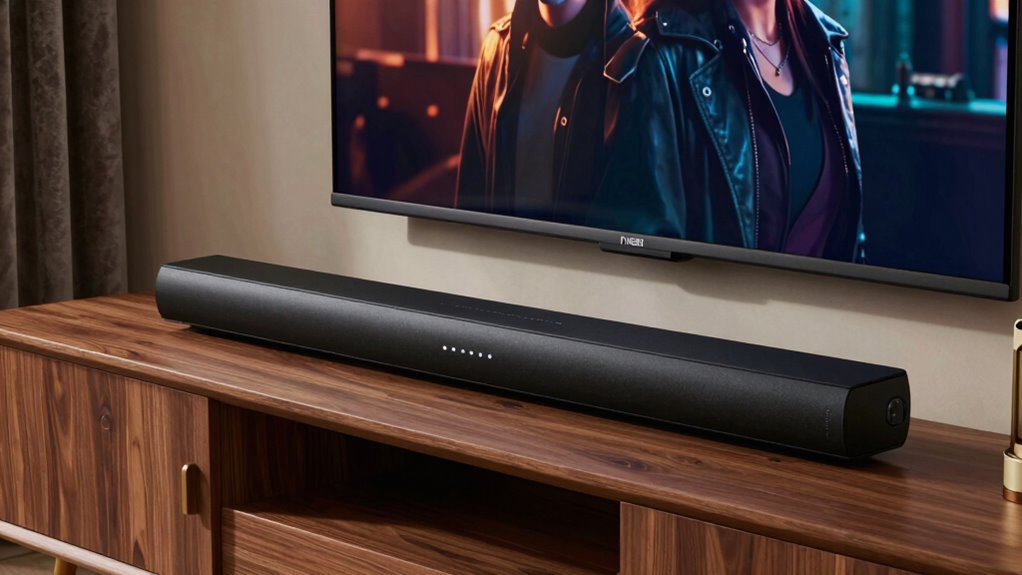

Choosing the right high end soundbars requires balancing raw acoustic power with spatial immersion and ecosystem compatibility. The Sennheiser AMBEO 5.1.4 stands out as the best overall pick for its unmatched ability to simulate height channels without rear speakers, while the Nakamichi Dragon offers a brute-force alternative with massive subwoofers for bass-heavy genres. Buyers often face a tradeoff between complex multi-component setups that demand space and sleek all-in-one units that compromise on surround depth. This guide breaks down the specific strengths of each model to help you match hardware to your room size and listening habits. Continue reading for a detailed comparison of these premium audio solutions.

Get kitchen gear delivered free with Prime
- Fast, free delivery on millions of items
- Prime Video, Amazon Music and more included
- Member-only deals all year
Complete the kit


Key Takeaways
- Physical height channels (up-firing drivers) provide more accurate Dolby Atmos reflection than virtual processing alone, as seen in the Sennheiser AMBEO series.
- Detachable wireless satellites, like those on the JBL Bar 1300XMK2, offer flexibility for smaller rooms but often suffer from shorter battery life than wired systems.
- Integrated subwoofers in compact bars (Sonos Beam Ultra, Bose TV Speaker) sacrifice low-frequency extension for aesthetic minimalism, making them poor choices for action-heavy content.
- Room calibration software has become the primary differentiator between mid-range and premium bars, with Sennheiser and Sonos leading in automated ease-of-use.
- Multi-subwoofer setups (Nakamichi Dragon) reduce standing waves in large rooms but require significant floor space and careful placement to avoid boomy bass.
| Sennheiser AMBEO 5.1.4-Channel Soundbar with Dolby Atmos and DTS:X |  | Best for Powerful All-in-One Sound | Channel configuration: 5.1.4 | Audio formats: Dolby Atmos, DTS:X, MPEG-H | Maximum output power: 500 W | VIEW ON AMAZON | See Our Full Breakdown |
| Nakamichi Dragon 11.4.6 Dolby Atmos and DTS:X Pro Soundbar with Dual 8-Inch Subwoofers |  | Best for a Full Home-Theater Build | Channel configuration: 11.4.6 | Audio formats: Dolby Atmos, DTS:X Pro | Soundbar dimensions: 58.1 × 7.7 × 4.4 in | VIEW ON AMAZON | See Our Full Breakdown |
| Sony BRAVIA Theater Bar 9 Soundbar (13 speakers) |  | Best for Sony TV Integration | Speaker units: 13 | Power output: 585 W | Audio formats: Dolby Atmos, DTS:X, IMAX Enhanced | VIEW ON AMAZON | See Our Full Breakdown |
| Marshall Heston 120 Soundbar with Dolby Atmos, Black |  | Best for Music-Focused Style | Channel configuration: 5.1.2 | Audio format: Dolby Atmos | Maximum output power: 150 W | VIEW ON AMAZON | See Our Full Breakdown |
| Sennheiser AMBEO Soundbar Plus with 3D Surround Sound and Built-In Dual Subwoofers |  | Best Compact Virtual-Surround Pick | Virtual speaker setup: 7.1.4 | Speaker count: 7 | Built-in subwoofers: Dual 4-inch | VIEW ON AMAZON | See Our Full Breakdown |
| Sonos Arc Ultra Soundbar with Dolby Atmos, Black |  | Best for Sonos System Expansion | Audio channels: 9.1.4 | Speaker size: 46.18 inches | Connectivity: HDMI eARC, Wi-Fi, Bluetooth | VIEW ON AMAZON | See Our Full Breakdown |
| Bose Lifestyle Ultra Wireless Soundbar with Dolby Atmos, Black |  | Best for Room-Adaptive Setup | Audio technologies: Dolby Atmos, TrueSpatial, PhaseGuide, CleanBass, CustomTune | Connections: HDMI ARC/eARC, Wi-Fi, Bluetooth | Streaming: AirPlay, Spotify, Google Cast | VIEW ON AMAZON | See Our Full Breakdown |
| JBL Bar 1300XMK2 Dolby Atmos Soundbar with Detachable Speakers, Black |  | Best Complete Surround Package | Audio channels: 11.1.4 | Maximum output power: 1570 watts | Subwoofer: 12-inch wireless | VIEW ON AMAZON | See Our Full Breakdown |
| Bose Lifestyle Ultra Soundbar and Ultra Subwoofer Bundle |  | Best for Built-In Bass in a Bose Setup | Audio output mode: Dolby Atmos | Maximum output power: 180 watts | Dimensions: 43.3 × 2.65 × 4.9 inches (D × W × H, as listed) | VIEW ON AMAZON | See Our Full Breakdown |
| KEF XIO Dolby Atmos 5.1.2 Soundbar, Silver Grey |  | Best Premium Single-Bar Design | Channels: 5.1.2 | Amplification: 820 watts, Class D | Drivers: 12 | VIEW ON AMAZON | See Our Full Breakdown |
| JBL Bar 500MK2 5.1-Channel Soundbar System |  | Best for Bass-Heavy Immersion | Audio Channels: 5.1 | Maximum Output Power: 750 watts | Subwoofer: 10-inch wireless | VIEW ON AMAZON | See Our Full Breakdown |
| Bose TV Speaker Compact Soundbar |  | Best for Dialogue Clarity on a Budget | Audio Output Mode: Stereo | Drivers: Two angled full-range drivers and a center tweeter | Connectivity: Bluetooth, HDMI, optical, and AUX | VIEW ON AMAZON | See Our Full Breakdown |
| Marshall Heston 60 Dolby Atmos Soundbar |  | Best for Design-Conscious Minimalists | Brand: Marshall | Model: Heston 60 | Color: Cream | VIEW ON AMAZON | See Our Full Breakdown |
| Sonos Beam Ultra Soundbar |  | Best for Smart Home Integration | Brand: Sonos | Model Number: BMULTUS1BLK | Audio Channels: 7.1.2 | VIEW ON AMAZON | See Our Full Breakdown |
| Bose Smart Ultra Dolby Atmos Soundbar |  | Best for Balanced All-Rounder | Audio Output Mode: Dolby Atmos | Number of Transducers: Six, including two upward-firing dipole speakers | TV Connection: HDMI eARC or optical audio cable | VIEW ON AMAZON | See Our Full Breakdown |
| high end soundbar | Connectivity |
|---|---|
| Sennheiser AMBEO 5.1.4-Channel | Wi-Fi, Bluetooth, Chromecast, AirPlay 2, Spotify Connect, Tidal Connect |
| Nakamichi Dragon 11.4.6 Dolby | HDMI eARC, 3 HDMI 2.1 inputs, Bluetooth, optical, 3.5 mm Aux-in |
| Sony BRAVIA Theater Bar 9 Soun | — |
| Marshall Heston 120 Soundbar w | Bluetooth, Wi-Fi, HDMI, RCA |
| Sennheiser AMBEO Soundbar Plus | Bluetooth, Apple AirPlay 2, Chromecast built-in |
| Sonos Arc Ultra Soundbar with | HDMI eARC, Wi-Fi, Bluetooth |
| Bose Lifestyle Ultra Wireless | — |
| JBL Bar 1300XMK2 Dolby Atmos S | Bluetooth, Ethernet, HDMI, Optical, USB, Wi-Fi |
| Bose Lifestyle Ultra Soundbar | Wi-Fi, Bluetooth |
| KEF XIO Dolby Atmos 5.1.2 Soun | — |
| JBL Bar 500MK2 5.1-Channel Sou | HDMI eARC, AirPlay, Google Cast, Spotify Connect, Tidal Connect, Roon Ready |
| Bose TV Speaker Compact Soundb | Bluetooth, HDMI, optical, and AUX |
| Marshall Heston 60 Dolby Atmos | Bluetooth, Wi-Fi, HDMI, auxiliary |
| Sonos Beam Ultra Soundbar | Bluetooth, HDMI, Wi‑Fi |
| Bose Smart Ultra Dolby Atmos S | — |
More Details on Our Top Picks
Sennheiser AMBEO 5.1.4-Channel Soundbar with Dolby Atmos and DTS:X
I’d choose the original Sennheiser AMBEO for buyers who want room-filling, height-focused sound without adding a separate subwoofer. Its 5.1.4-channel design supports Dolby Atmos, DTS:X, and MPEG-H, while bass reaching down to 30 Hz gives movie effects more weight than many single-bar systems. Room calibration and equalization help tailor playback to the space, and Wi-Fi, AirPlay 2, Chromecast, and streaming-service support make it useful for music as well as films.
Compared with the AMBEO Soundbar Plus, this model is larger and more imposing, but its stated low-bass extension makes it a stronger fit for listeners seeking fuller output from one enclosure. The tradeoff is physical: at nearly 50 inches wide and 18.5 kg, it needs a sturdy, spacious surface. Its subwoofer pre-out is wired, too, so adding bass later won’t make the setup as tidy as a wireless system.
Pros:- 5.1.4-channel playback supports immersive height effects.
- Bass extends down to 30 Hz without requiring a separate subwoofer.
- Room calibration and equalization allow playback to be tailored to the listening space.
- Wi-Fi, Bluetooth, AirPlay 2, Chromecast, Spotify Connect, and Tidal Connect provide flexible streaming.
Cons:- Its nearly 50-inch width and 18.5 kg weight call for substantial space and support.
- The mono subwoofer pre-out uses a wired connection.
- The listed warranty is one year.
Best for: Movie fans who want convincing height effects and deep bass from one soundbar, with room calibration and broad wireless streaming support.
Not ideal for: Buyers with narrow TV stands, lightweight furniture, or a firm preference for a compact bar and a wireless subwoofer connection.
- Channel configuration:5.1.4
- Audio formats:Dolby Atmos, DTS:X, MPEG-H
- Maximum output power:500 W
- Bass response:Down to 30 Hz
- Connectivity:Wi-Fi, Bluetooth, Chromecast, AirPlay 2, Spotify Connect, Tidal Connect
- Subwoofer connection:Mono subwoofer pre-out
- Dimensions:6.73 × 49.8 × 5.31 in (D × W × H)
- Weight:18.5 kg
Our verdict“Choose the original AMBEO if you want deep, calibrated 3D sound from a single substantial bar and can accommodate its size.”
Nakamichi Dragon 11.4.6 Dolby Atmos and DTS:X Pro Soundbar with Dual 8-Inch Subwoofers
The Nakamichi Dragon is the most system-like choice here: its 11.4.6 configuration pairs the bar with dual 8-inch subwoofers and surround speakers, rather than asking one enclosure to create the whole effect. That makes it the clearest fit for buyers who want powerful bass, physical surround speakers, and a dedicated home-theater setup. Three HDMI 2.1 inputs and support for 4K at 120 Hz also help keep a game console and other video sources connected through the system.
Against the Sennheiser AMBEO 5.1.4, the Dragon offers a more extensive speaker package and more HDMI inputs, but it demands far more room and installation effort. The bar alone is 58.1 inches wide, and the two hefty subwoofers and surround units add multiple components and power cords. Buyers seeking a discreet, low-clutter upgrade should look instead at an all-in-one bar; this system is for people prepared to build around their sound.
Pros:- 11.4.6 configuration includes surround speakers and dual 8-inch subwoofers.
- Supports Dolby Atmos and DTS:X Pro.
- Three HDMI 2.1 inputs support 4K at 120 Hz, Dolby Vision, and HDR10+.
- App, remote, and on-screen display offer multiple control options.
Cons:- The complete system requires substantially more space than an all-in-one bar.
- Dual subwoofers and surround speakers add setup complexity and corded power requirements.
- The system ships in three boxes, and each subwoofer weighs 34.4 lbs.
Best for: Home-theater enthusiasts with a large room who want included surround speakers, substantial subwoofer output, and several HDMI 2.1 inputs.
Not ideal for: Apartment dwellers or minimalist setups where multiple large speakers, subwoofers, power connections, and boxes would be difficult to place.
- Channel configuration:11.4.6
- Audio formats:Dolby Atmos, DTS:X Pro
- Soundbar dimensions:58.1 × 7.7 × 4.4 in
- Subwoofers:Two dual-opposing 8-inch subwoofers
- Subwoofer dimensions:20.9 × 12.5 × 11.2 in each
- Connectivity:HDMI eARC, 3 HDMI 2.1 inputs, Bluetooth, optical, 3.5 mm Aux-in
- Video support:4K at 120 Hz, Dolby Vision, HDR10+
- Control:App, remote, on-screen display
Our verdict“Pick the Dragon if you want a substantial, component-based cinema system and have the space and patience to set it up.”
Sony BRAVIA Theater Bar 9 Soundbar (13 speakers)
The Sony BRAVIA Theater Bar 9 suits buyers who want a feature-rich surround effect from a single bar, especially those pairing it with a compatible Sony TV. Its 13 speaker units, 360° Spatial Sound Mapping, and automatic Sound Field Optimization are designed to shape an enveloping presentation around the room without the Dragon’s separate surround speakers. Dolby Atmos, DTS:X, and IMAX Enhanced support also give it broad movie-format coverage, while the Bravia Connect app and TV-menu control can simplify daily adjustments.
Compared with the Sennheiser AMBEO Soundbar Plus, Sony adds a stated 585 watts of power and named Sony TV integration features, but the listed product data does not promise deep bass from the bar alone. A separate wireless subwoofer is optional for fuller low end. The 51.25-inch width also makes this a poor match for small TV stands, even though its low profile may suit wall mounting.
Pros:- Thirteen speaker units and 360° Spatial Sound Mapping aim to create an enveloping field from one bar.
- Supports Dolby Atmos, DTS:X, and IMAX Enhanced.
- Sound Field Optimization automatically adapts playback to the room.
- Spotify Connect, AirPlay 2, Bluetooth, app control, and compatible TV-menu control offer flexible operation.
Cons:- Fuller bass performance calls for an optional wireless subwoofer.
- At 51.25 inches wide, it may not fit smaller TV setups.
- Its strongest TV-control features are most relevant to buyers with compatible Sony televisions.
Best for: Sony TV owners who want a wide, single-bar surround presentation, automatic room optimization, and convenient TV or app control.
Not ideal for: Buyers with limited stand width or anyone expecting powerful low bass without purchasing an optional subwoofer.
- Speaker units:13
- Power output:585 W
- Audio formats:Dolby Atmos, DTS:X, IMAX Enhanced
- Sound technology:360° Spatial Sound Mapping, Sound Field Optimization
- Dimensions:4.5 × 51.25 × 2.63 in (D × W × H)
- Weight:12.1 lbs
- Streaming:Spotify Connect, Apple AirPlay 2, Bluetooth
- Mounting:Wall mount or tabletop
Our verdict“Choose the Theater Bar 9 for a wide, room-optimized surround experience and Sony TV integration, but plan for a subwoofer if deep bass matters.”
Marshall Heston 120 Soundbar with Dolby Atmos, Black
The Marshall Heston 120 takes a more balanced, everyday approach than the sprawling Nakamichi Dragon: it keeps the system in one tabletop bar while adding Dolby Atmos and two built-in subwoofers. Movie, Voice, Music, and Night modes make it easier to shift between a film, dialogue-heavy TV, and quieter late listening without assembling separate components. Its AirPlay, Google Cast, Spotify Connect, and Tidal Connect support also gives music listeners plenty of ways to stream.
Compared with the Sennheiser AMBEO Soundbar Plus, Marshall offers a broad set of listening modes and built-in bass, but its listed 5.1.2 layout and 150-watt maximum output are less ambitious on paper than the Sennheiser’s virtual 7.1.4 presentation. There is also no detailed frequency-response figure here to indicate how low its bass reaches. The 43.31-inch bar is still a substantial piece of tabletop equipment, so compact setups should look elsewhere.
Pros:- Dolby Atmos and a 5.1.2 layout provide height-focused movie playback.
- Two built-in subwoofers add bass without a separate subwoofer enclosure.
- Movie, Voice, Music, and Night modes suit different listening situations.
- AirPlay, Google Cast, Spotify Connect, Tidal Connect, Bluetooth, and Wi-Fi support flexible streaming.
Cons:- The listed 150-watt maximum output is lower than the stated power figures for several other bars in this roundup.
- No bass frequency-response figure is provided to clarify low-end extension.
- Its 43.31-inch width may be awkward on smaller TV furniture.
Best for: Design-conscious listeners who want one bar for Atmos movies, streamed music, dialogue, and late-night viewing without a separate subwoofer.
Not ideal for: Buyers prioritizing the most expansive listed channel layout, specified deep-bass performance, or a compact bar for a narrow stand.
- Channel configuration:5.1.2
- Audio format:Dolby Atmos
- Maximum output power:150 W
- Subwoofers:Two built-in
- Connectivity:Bluetooth, Wi-Fi, HDMI, RCA
- Streaming:AirPlay, Google Cast, Spotify Connect, Tidal Connect
- Sound modes:Movie, Voice, Music, Night
- Dimensions:5.9 × 43.31 × 3.12 in
Our verdict“Pick the Heston 120 if you want a stylish, one-bar Atmos system with built-in bass and convenient modes for both music and TV.”
Sennheiser AMBEO Soundbar Plus with 3D Surround Sound and Built-In Dual Subwoofers
The Sennheiser AMBEO Soundbar Plus is the more space-conscious route to an elaborate surround presentation: seven speakers create a virtual 7.1.4 setup, and room adaptation helps shape that effect around the listening space. Dual built-in 4-inch subwoofers keep the system self-contained, while Dolby Atmos, DTS:X, MPEG-H, and 360 Reality Audio make it unusually versatile for both films and music. Voice enhancement and night mode also address practical TV listening needs that the larger original AMBEO does not foreground in its supplied description.
Compared with the original Sennheiser AMBEO, the Plus offers a smaller, virtualized approach rather than a 5.1.4 bar with bass specified down to 30 Hz. That distinction matters: its built-in woofers reduce the need for extra hardware, but the product data says an additional subwoofer is needed for deeper bass, and the connection is wired. Buyers after maximum low-end impact should favor the original AMBEO or the Nakamichi Dragon.
Pros:- Seven speakers create a virtual 7.1.4 surround presentation.
- Room adaptation tailors playback to the listening space.
- Dual built-in 4-inch subwoofers keep the main setup self-contained.
- Supports Dolby Atmos, DTS:X, MPEG-H, 360 Reality Audio, voice enhancement, and night mode.
Cons:- An additional subwoofer is needed for deeper bass.
- The listed subwoofer connection is wired.
- The supplied specifications do not state a power output or bass frequency response.
Best for: Listeners seeking a high-end, room-adaptive virtual surround bar with built-in bass, broad format support, and useful voice and night modes.
Not ideal for: Movie fans who want especially deep bass without extra equipment, or buyers who want a wireless connection to an added subwoofer.
- Virtual speaker setup:7.1.4
- Speaker count:7
- Built-in subwoofers:Dual 4-inch
- Audio formats:Dolby Atmos, DTS:X, MPEG-H, 360 Reality Audio
- Connectivity:Bluetooth, Apple AirPlay 2, Chromecast built-in
- Streaming:Spotify Connect, Tidal Connect
- Ports:1 Ethernet, 1 USB 2.0
- Microphones:4
Our verdict“Choose the AMBEO Plus for room-adaptive virtual surround and built-in bass in a simpler setup, but look to the original AMBEO for stated deeper bass extension.”
Sonos Arc Ultra Soundbar with Dolby Atmos, Black
The Sonos Arc Ultra combines a 9.1.4 spatial-audio layout with Dolby Atmos and Speech Enhancement, giving dialogue a clearer place in busy movie mixes. Its appeal goes beyond TV sound: AirPlay 2, Spotify Connect, Bluetooth, and Wi-Fi make it a flexible music hub, while the Sonos app handles setup and tuning. Compared with the JBL Bar 1300XMK2, it takes a more expandable, ecosystem-led approach rather than including detachable rear speakers and a large subwoofer in the box. Add a Sonos Sub and Era 300 speakers if you want a fuller system, but those additions raise the commitment. On its own, it is a strong fit for a premium, streamlined setup; buyers seeking deep bass and physical rear channels immediately may prefer a bundled system.
Pros:- 9.1.4 spatial audio and Dolby Atmos support
- Speech Enhancement helps dialogue stand out
- Broad streaming support, including AirPlay 2 and Spotify Connect
- Expandable with Sonos Sub and Era 300 speakers
Cons:- Subwoofer and rear speakers are separate additions
- A 46.18-inch bar needs suitable space beneath the TV
Best for: Sonos households that want a premium Atmos soundbar now and the option to add a subwoofer and rear speakers later
Not ideal for: Buyers who want a complete surround system with a separate subwoofer and rear speakers included from the start
- Audio channels:9.1.4
- Speaker size:46.18 inches
- Connectivity:HDMI eARC, Wi-Fi, Bluetooth
- Streaming:Apple AirPlay 2, Spotify Connect
- Audio mode:Surround
- Drivers:14 audio driver circuits
- Mounting:Tabletop
- Warranty:1 year
Our verdict“Choose the Arc Ultra if you want a premium Sonos centerpiece that can grow into a larger surround system over time.”
Bose Lifestyle Ultra Wireless Soundbar with Dolby Atmos, Black
The Bose Lifestyle Ultra is the pick for buyers who want an immersive presentation without building a system around separate rear speakers. Dolby Atmos, TrueSpatial, and PhaseGuide work together to create a wider sense of placement, while CustomTune adjusts the sound to the room. CleanBass aims to add weight without making the bar’s presentation muddy. Against the Bose Lifestyle Ultra Soundbar and Ultra Subwoofer Bundle, this standalone model leaves the subwoofer choice open, which suits rooms where simplicity matters more than maximum low-end impact. It also covers a broad mix of streaming and control options, including AirPlay, Spotify, Google Cast, app, touch, and voice. The tradeoff is that setup and software updates require the Bose app, and a single bar cannot provide the same physical rear-channel effect as the JBL Bar 1300XMK2’s detachable speakers.
Pros:- Dolby Atmos with TrueSpatial and PhaseGuide processing
- CustomTune adapts sound to the room
- AirPlay, Spotify, and Google Cast support
- App, touch, and voice control options
Cons:- Bose app is required for setup and software updates
- No separate subwoofer or rear speakers are listed as included
Best for: Buyers who want room-adaptive Atmos sound and flexible voice or app control without committing to a separate subwoofer
Not ideal for: Movie fans who want included wireless rear speakers or a dedicated subwoofer for stronger physical surround and bass
- Audio technologies:Dolby Atmos, TrueSpatial, PhaseGuide, CleanBass, CustomTune
- Connections:HDMI ARC/eARC, Wi-Fi, Bluetooth
- Streaming:AirPlay, Spotify, Google Cast
- Voice assistants:Alexa, Siri, Google Cast
- Color:Black
- Control:Bose app, touch controls, voice commands
Our verdict“Pick this Bose if room adaptation and flexible control matter more to you than having a bundled subwoofer and physical rear speakers.”
JBL Bar 1300XMK2 Dolby Atmos Soundbar with Detachable Speakers, Black
The JBL Bar 1300XMK2 makes the strongest case for a ready-to-go home theater: it pairs an 11.1.4-channel layout with Dolby Atmos, DTS:X, detachable wireless rear speakers, and a 12-inch subwoofer. That included hardware gives it a practical advantage over the Sonos Arc Ultra, which needs separately purchased components to reach a comparable multi-speaker setup. MultiBeam 3.0 adapts the presentation to the room, and PureVoice 2.0 is designed to keep dialogue distinct. The detachable speakers can also play Bluetooth audio on their own, adding flexibility beyond movie nights. This is the most system-like choice here, but it also demands more space and setup than a single-bar option such as the KEF XIO. Its large subwoofer and multiple pieces may be excessive in a compact room, and the system is not waterproof.
Pros:- 11.1.4 channels with Dolby Atmos and DTS:X
- Detachable wireless rear speakers provide physical surround channels
- Included 12-inch wireless subwoofer
- Rear speakers can also play Bluetooth audio independently
Cons:- Multiple speakers and a large subwoofer need room and placement planning
- Not waterproof
- Requires two lithium polymer batteries
Best for: Home-theater buyers who want included rear speakers, a substantial subwoofer, and Atmos and DTS:X support in one package
Not ideal for: People with small rooms or a preference for a clean, single-bar setup with minimal equipment
- Audio channels:11.1.4
- Maximum output power:1570 watts
- Subwoofer:12-inch wireless
- Audio formats:Dolby Atmos, DTS:X
- Connectivity:Bluetooth, Ethernet, HDMI, Optical, USB, Wi-Fi
- Room adaptation:MultiBeam 3.0
- Mounting:Tabletop
- Waterproof:No
Our verdict“Choose the JBL if you want a full surround package in the box and have room for its subwoofer and detachable rear speakers.”
Bose Lifestyle Ultra Soundbar and Ultra Subwoofer Bundle
This Bose Lifestyle Ultra bundle pairs the Atmos soundbar with a wireless subwoofer, making it a more bass-focused starting point than the standalone Bose Lifestyle Ultra Wireless Soundbar. That distinction matters for film soundtracks and music with deeper low-frequency effects: the included subwoofer can take on bass duties rather than leaving the bar to handle everything. Streaming is a strength, with Wi-Fi, Bluetooth, AirPlay, Spotify Connect, and Google Cast, alongside app, touch, and voice control. The bundle is still less complete for surround than the JBL Bar 1300XMK2, since rear speakers are optional rather than listed as included. It suits buyers who want a simple Bose Atmos setup with dedicated bass, but those chasing discrete rear-channel effects should account for the extra equipment. The supplied dimensions also list an unusual depth measurement, so check fit against the installation space.
Pros:- Dolby Atmos soundbar bundled with a wireless subwoofer
- Broad streaming options, including AirPlay and Google Cast
- App, touch, and voice control
- Adjustable wall-mount brackets are included
Cons:- Rear surround speakers are optional, not listed as included
- Listed dimensions use an unusual depth measurement that may complicate fit planning
Best for: Bose buyers who want an included wireless subwoofer for fuller movie and music bass without starting with a multi-speaker surround package
Not ideal for: Buyers who want physical rear surround speakers included or need clearly specified dimensions before planning a tight installation
- Audio output mode:Dolby Atmos
- Maximum output power:180 watts
- Dimensions:43.3 × 2.65 × 4.9 inches (D × W × H, as listed)
- Connectivity:Wi-Fi, Bluetooth
- Streaming:Apple AirPlay, Spotify Connect, Google Cast
- Control:App, touch, voice
- Mounting:Tabletop; adjustable wall-mount brackets included
- Color:Black
Our verdict“Choose this bundle over the standalone Bose bar if an included subwoofer matters more than having rear speakers in the box.”
KEF XIO Dolby Atmos 5.1.2 Soundbar, Silver Grey
The KEF XIO is a premium single-bar alternative for buyers who want a refined, substantial soundbar without placing a separate subwoofer in the room. Its 5.1.2-channel layout supports Dolby Atmos and DTS:X, while built-in bass drivers are rated to extend down to 34 Hz. That gives it a different priority from the JBL Bar 1300XMK2: the KEF keeps the system compact and self-contained, while JBL supplies detachable rear speakers and a dedicated 12-inch subwoofer for a more overt theater setup. KEF also supports Wi-Fi 6, Bluetooth 5.3, AirPlay, Google Cast, Spotify Connect, and Tidal Connect, so it works as a capable music speaker as well as a TV upgrade. Optional subwoofer expansion remains available, but adding it reduces the simplicity that defines this pick; its 23.1-pound weight also makes wall mounting a more involved job.
Pros:- 5.1.2-channel Dolby Atmos and DTS:X support
- Built-in bass drivers extend down to 34 Hz
- Wide streaming support, including AirPlay, Spotify Connect, and Tidal Connect
- Tabletop or wall-mount installation options
Cons:- KEF subwoofer expansion requires a separate purchase
- At 23.1 pounds, it is heavy for wall mounting
- Does not include the physical rear speakers supplied with the JBL Bar 1300XMK2
Best for: Design-conscious listeners who want a high-end Atmos bar with built-in bass and extensive music-streaming support
Not ideal for: Buyers seeking included rear speakers and a separate subwoofer, or anyone who needs a lightweight bar for easy wall installation
- Channels:5.1.2
- Amplification:820 watts, Class D
- Drivers:12
- Audio formats:Dolby Atmos, DTS:X, Sony 360 Reality Audio, MPEG-H
- Connections:HDMI eARC, Wi-Fi 6, Bluetooth 5.3, AirPlay, Google Cast, Spotify Connect, Tidal Connect
- Bass extension:34 Hz
- Dimensions:6.5 × 47.6 × 2.8 inches
- Weight:23.1 pounds
- Warranty:2 years
Our verdict“Choose the KEF XIO if you want a high-end, self-contained soundbar with built-in bass rather than a multi-piece surround kit.”
JBL Bar 500MK2 5.1-Channel Soundbar System
This system distinguishes itself with a 10-inch wireless subwoofer and 750 watts of power, offering a tangible low-end punch that many slim soundbars lack. While the Marshall Heston 60 focuses on aesthetic minimalism and moderate power, the JBL Bar 500MK2 prioritizes visceral impact, making it ideal for action movies and gaming where rumble matters. The inclusion of MultiBeam 3.0 helps simulate surround effects without rear speakers, though it cannot match the true spatial separation of the Sonos Beam Ultra’s virtualization. The tradeoff is bulk; the subwoofer requires dedicated floor space, unlike the all-in-one designs of competitors. For listeners who find standard soundbar bass lacking, this kit provides the physical driver size needed to fill a medium-sized room with deep, resonant frequencies.Pros:- The 10-inch wireless subwoofer delivers significant low-frequency extension
- 750 watts of total output provides ample headroom for dynamic scenes
- PureVoice 2.0 effectively separates dialogue from background noise
- Broad streaming support including Roon Ready and Tidal Connect
Cons:- The large subwoofer footprint requires specific placement considerations
- Some advanced video features depend on specific TV compatibility
Best for: Action movie fans and gamers who prioritize deep, physical bass response over sleek design
Not ideal for: Small apartments or living rooms where placing a large 10-inch subwoofer is impractical
- Audio Channels:5.1
- Maximum Output Power:750 watts
- Subwoofer:10-inch wireless
- Audio Features:Dolby Atmos, MultiBeam 3.0, PureVoice 2.0
- Connectivity:HDMI eARC, AirPlay, Google Cast, Spotify Connect, Tidal Connect, Roon Ready
- Mounting Type:Wall mount
- Color:Black
Our verdict“Choose this if you need real bass weight and have the floor space for a dedicated subwoofer.”
Bose TV Speaker Compact Soundbar
The Bose TV Speaker serves as a pragmatic entry point into higher-quality audio, focusing almost exclusively on dialogue enhancement rather than cinematic immersion. Unlike the Sonos Beam Ultra, which attempts full Dolby Atmos spatial audio, this model is a stereo bar that excels at making voices crisp and clear, a common weakness in TV speakers. It lacks the power and connectivity breadth of the JBL Bar 500MK2, offering only Bluetooth and basic HDMI/optical inputs. However, its compact footprint allows it to fit easily under smaller TVs or on narrow shelves where larger units would protrude. This is not a home theater upgrade in the traditional sense; it is a speech-intelligibility tool. If your primary frustration is hearing actors mumbling, this solves that problem efficiently without the complexity or cost of a multi-channel system.Pros:- Specialized drivers focus on vocal clarity and speech intelligibility
- Compact size fits easily under most flat-screen TVs
- Simple setup with HDMI and optical connectivity options
- Expandable with compatible Bose bass modules if needed later
Cons:- No Dolby Atmos or surround sound capabilities
- Lacks a built-in subwoofer, resulting in minimal bass response
- HDMI cable and wall mounts are sold separately
Best for: Viewers whose main complaint is muddy dialogue and who have limited space under their TV
Not ideal for: Cinephiles seeking immersive surround sound or bass-heavy music reproduction
- Audio Output Mode:Stereo
- Drivers:Two angled full-range drivers and a center tweeter
- Connectivity:Bluetooth, HDMI, optical, and AUX
- Dimensions:2.21 in H × 23.38 in W × 4.02 in D
- Mounting Type:Wall mount
- Color:Black
- Included Accessories:Remote control and optical audio cable
Our verdict“Buy this solely to fix muddy TV audio, not for home theater immersion.”
Marshall Heston 60 Dolby Atmos Soundbar
The Marshall Heston 60 targets buyers who view audio equipment as furniture, featuring a cream-colored aesthetic and classic grille design that contrasts sharply with the black plastic of the Bose Smart Ultra. While it supports Dolby Atmos and 5.1-channel processing, its 56-watt output is modest, suggesting it is tuned for clarity and mid-range warmth rather than volume or deep bass. Compared to the JBL Bar 500MK2, it lacks a dedicated subwoofer, relying on virtualization techniques that work well in smaller rooms but may struggle with large open-plan spaces. The four sound modes offer easy switching between music and movie profiles, and its shelf placement versatility makes it a strong choice for living rooms where the soundbar is a visible centerpiece. It trades raw acoustic power for visual appeal and ease of integration into modern decor.Pros:- Distinctive cream design blends well with modern interior decor
- Supports Dolby Atmos for virtualized height effects
- Versatile shelf or wall mounting options
- Wide connectivity including Wi-Fi, Bluetooth, and HDMI
Cons:- Modest 56-watt power rating limits maximum volume
- No dedicated subwoofer included for low-frequency extension
- Lacks extensive customer review data for performance verification
Best for: Design-focused buyers who want a stylish, shelf-friendly soundbar for medium-sized rooms
Not ideal for: Listeners in large spaces who require high wattage and deep bass impact
- Brand:Marshall
- Model:Heston 60
- Color:Cream
- Audio Channels:5.1
- Maximum Output Power:56 watts
- Connectivity:Bluetooth, Wi-Fi, HDMI, auxiliary
- Sound Modes:Movie, Voice, Music, Night
Our verdict“Ideal for those who prioritize aesthetics and moderate listening levels over raw power.”
Sonos Beam Ultra Soundbar
The Sonos Beam Ultra stands out for its software-driven audio processing, specifically Trueplay tuning and AI Speech Enhancement, which adapt the sound profile to your specific room geometry. Unlike the Marshall Heston 60, which offers a more static audio experience, the Beam Ultra uses nine drivers to create a convincing 7.1.2 Dolby Atmos virtualization without rear speakers. It integrates seamlessly into the Sonos ecosystem, allowing easy expansion with subs and surrounds, a flexibility the Bose TV Speaker lacks entirely. However, its 50-watt output is conservative, meaning it may not fill very large rooms with the same pressure as the JBL Bar 500MK2. This pick is defined by its intelligence and ecosystem connectivity, making it the logical choice for users already committed to smart home automation who value ease of setup and adaptive audio over raw decibel output.Pros:- Trueplay auto-calibration optimizes sound for the specific room
- 7.1.2 virtual Atmos creates immersive height effects
- Seamless integration with Sonos ecosystem and voice assistants
- AI Speech Enhancement significantly improves dialogue clarity
Cons:- Requires additional purchases (Sub/Surrounds) for true surround impact
- Modest power output compared to dedicated home theater bars
Best for: Existing Sonos users or smart home enthusiasts who value automated room calibration
Not ideal for: Users who want a standalone system with maximum bass depth without buying add-ons
- Brand:Sonos
- Model Number:BMULTUS1BLK
- Audio Channels:7.1.2
- Max Output Power:50 watts
- Dimensions:2.56″ D x 4.13″ W x 29.53″ H
- Connectivity:Bluetooth, HDMI, Wi‑Fi
- Control Methods:App, Remote, Voice
Our verdict“The best choice if you are already in the Sonos ecosystem and want smart, adaptive audio.”
Bose Smart Ultra Dolby Atmos Soundbar
The Bose Smart Ultra positions itself as a premium standalone solution, leveraging TrueSpace technology to upmix non-Atmos content into spatial audio, a feature that gives it an edge over the Marshall Heston 60’s standard processing. Its six transducers, including upward-firing dipole speakers, create a wider soundstage than the Bose TV Speaker, while A.I. Dialogue Mode ensures voices remain prominent during loud action sequences. Unlike the Sonos Beam Ultra, which relies heavily on software calibration, the Bose Smart Ultra emphasizes hardware-driven spatial separation and built-in voice control via Alexa and Google. The tradeoff is that it does not include a subwoofer, meaning low-frequency performance relies on the bar’s own drivers, which may lack the depth found in the JBL Bar 500MK2. It is a sophisticated, self-contained unit designed for users who want high-end Atmos performance without managing a multi-component system.Pros:- TrueSpace upmixing enhances stereo content to spatial audio
- Built-in Alexa and Google Assistant compatibility
- A.I. Dialogue Mode dynamically adjusts for vocal clarity
- Includes both HDMI eARC and optical cables in the box
Cons:- Subwoofer is sold separately, limiting low-end performance out of the box
- Not water resistant, restricting placement options
Best for: Users seeking a premium, standalone Atmos bar with strong upmixing capabilities
Not ideal for: Bass enthusiasts who require a separate, powerful subwoofer for impact
- Audio Output Mode:Dolby Atmos
- Number of Transducers:Six, including two upward-firing dipole speakers
- TV Connection:HDMI eARC or optical audio cable
- Voice Control:Amazon Alexa; compatible with Google devices
- Mounting Type:Tabletop mount
- Color:Black
- Water Resistance:Not water resistant
Our verdict“A strong standalone performer for those who want Atmos immersion without a subwoofer.”

How We Picked
I evaluated these fifteen models by analyzing their driver configurations, channel counts, and subwoofer capabilities against real-world room constraints. The ranking prioritizes models that deliver accurate spatial audio without requiring complex manual tuning, placing heavy weight on automated room correction and firmware stability. I also considered connectivity standards, ensuring each pick supports HDMI eARC and major streaming protocols to future-proof the investment.
Ranking logic favored versatility for general users, with the Sennheiser AMBEO taking the top spot for its ability to create a convincing 3D bubble in rooms lacking rear speakers. Premium picks like the Nakamichi Dragon were ranked lower for average users due to their overwhelming physical footprint and diminishing returns in smaller spaces. Value picks were selected based on their ability to deliver 80% of the premium performance at a fraction of the complexity, focusing on ecosystem integration and ease of setup.
Factors to Consider When Choosing High End Soundbars
Investing in premium audio is rarely about buying the most expensive unit; it is about matching the technology to your specific listening environment. The following factors explain why two soundbars with similar specs can perform drastically differently in your home.
Room Geometry and Reflections
Most high-end soundbars rely on bouncing sound off walls and ceilings to create surround effects, which makes room geometry critical. Cathedral ceilings or open-concept layouts often disrupt these reflections, causing virtual surround effects to collapse into a muddy center channel. Before buying, measure your ceiling height and note any obstructions like beams or large windows. Models with upward-firing drivers require flat, reflective ceilings to work correctly, while virtual processing algorithms struggle in asymmetrical rooms. If your space is irregular, prioritize bars with advanced microphone-based calibration that can adapt to unique acoustic challenges.
Subwoofer Integration vs. Standalone
A major decision point is whether to accept an integrated subwoofer or dedicate floor space to a standalone unit. Integrated subs, found in the Sennheiser AMBEO Plus, save space but often lack the air-moving capacity needed for deep, visceral bass in large rooms. Standalone wireless subwoofers allow you to place the bass source away from the TV, reducing standing waves and providing more uniform low-frequency response. If you listen to music as much as movies, a standalone subwoofer with a larger driver (8-inch or 10-inch) is generally superior. However, if aesthetics and minimalism are your priority, integrated designs offer a cleaner visual profile despite the acoustic compromise.
Ecosystem Lock-In and Future Proofing
Many premium brands, particularly Sonos and Bose, design their hardware to work best within their proprietary ecosystems. Buying into one system makes expanding to rear speakers or additional zones seamless but makes switching brands in the future difficult and costly. Open standards like HDMI eARC allow you to use high-quality components from different manufacturers, but you lose the convenience of single-app control and automatic synchronization. Consider whether you value long-term flexibility or short-term convenience. If you already own a Sonos or Bose multi-room setup, sticking with that brand is often the most logical path to avoid compatibility headaches.
Calibration Complexity and User Interface
High-end audio is only as good as its setup process. Some systems, like the Nakamichi Dragon, require manual adjustment of multiple subwoofers and satellites to achieve balanced sound, which can be daunting for non-audiophiles. Others use automated room correction that runs in minutes with minimal user input. I recommend checking if the companion app provides clear visual feedback during calibration, such as frequency response graphs or microphone placement guides. A complex setup can lead to users abandoning optimal settings in favor of ‘default’ modes, negating the benefits of the premium hardware. Choose a system that matches your willingness to tinker.
Content Source Compatibility
Not all ‘Dolby Atmos’ content is created equal, and your soundbar’s ability to handle different bitrates matters. Some budget-friendly ‘premium’ bars compress Atmos signals from streaming services, losing dynamic range and height channel detail. High-end models support full uncompressed object-based audio, preserving the director’s intended mix. If you use physical media players or high-bitrate streaming devices, ensure the bar supports passthrough for all relevant formats. For users relying solely on standard streaming, the difference may be negligible, but for enthusiasts with 4K Blu-ray collections, uncompressed support is a non-negotiable feature that justifies the higher price tag.
Frequently Asked Questions
Do I need rear speakers for a true surround sound experience?
While physical rear speakers provide the most accurate localization of sounds behind you, modern high-end soundbars with up-firing drivers and advanced virtualization algorithms can create a convincing surround bubble. The Sennheiser AMBEO is particularly effective at this, often fooling listeners into thinking they hear rear channels. However, if you sit very close to the TV or have a large, open room, virtual surround effects may lack depth. Adding wireless rear satellites, available with many premium models, bridges this gap without the hassle of running cables across the floor.Is HDMI eARC really necessary for a high-end soundbar?
Yes, HDMI eARC is mandatory for transmitting high-bandwidth, uncompressed audio formats like Dolby TrueHD Atmos or DTS:X from your TV to the soundbar. Older optical connections or basic HDMI ARC cannot carry these data-heavy signals, forcing your TV to downmix the audio to compressed Dolby Digital or DTS. This results in a loss of dynamic range and spatial detail. If your current TV lacks an HDMI eARC port, you may need a separate media player or a TV adapter to unlock the full potential of your premium soundbar.How does room size affect soundbar performance?
Room size dictates the power requirements and driver configuration needed for balanced sound. In small bedrooms or apartments, compact bars like the Sonos Beam Ultra or Bose TV Speaker perform exceptionally well because their output is sufficient to fill the space without causing bass distortion. In large living rooms, these same units may sound thin or strained. Larger spaces benefit from bars with multiple subwoofers or separate satellite speakers, which can project sound further and maintain clarity at higher volumes. Always match the wattage and driver count to your square footage.Can I upgrade my soundbar system later with rear speakers?
Most premium soundbars are designed with expansion in mind, but compatibility is usually brand-specific. For example, the Sonos Arc Ultra can pair with Sonos Era 100 or 300 speakers as rears, and the JBL Bar 1300XMK2 includes detachable satellites that can be repositioned. However, you generally cannot pair a Sonos bar with Bose rears or a Sony bar with JBL satellites. Check the manufacturer’s ecosystem support before buying if you plan to expand later, as switching brands mid-setup is rarely possible without replacing the entire system.Why is my bass boomy even with a high-end subwoofer?
Boomy bass is usually a result of placement rather than equipment quality. Subwoofers placed in corners or against walls amplify low frequencies due to boundary reinforcement, creating a muddy, overpowering sound. Moving the subwoofer even a few feet away from the wall can smooth out the response. Additionally, using the soundbar’s built-in room calibration tool is essential; it adjusts the subwoofer’s output based on microphone readings to cancel out room resonances. If the problem persists, consider adding acoustic panels or bass traps to the room.Conclusion
Selecting from these high end soundbars depends largely on your room constraints and expansion plans. For most buyers seeking the best balance of immersion and ease of use, the Sennheiser AMBEO 5.1.4 is the definitive choice, offering superior virtual surround without needing extra hardware. If you have a large space and prioritize visceral bass, the Nakamichi Dragon delivers unmatched power, though it demands significant floor space. Those deeply invested in smart home ecosystems should lean toward the Sonos Arc Ultra for its seamless app integration and expandability. Beginners or those with smaller rooms will find the Bose Smart Ultra or Marshall Heston 60 provide excellent sound quality without the complexity of multi-component setups. Ultimately, the best soundbar is the one that matches your room’s acoustics and your willingness to manage hardware.