For most households that want a whole-home gas unit, the Rinnai RX199iN is my best overall pick, while the Rheem RTEX-24 stands out for homes with the electrical capacity for a powerful electric heater. For smaller electric loads, the Rheem 11 kW is a more practical match than a high-output model, and the HOTTAP V2 Nomad serves campers who need portable hot water rather than a fixed home system. The main tradeoffs are fuel type, hot-water flow in cold weather, installation requirements, and the capacity of your home’s gas line or electrical service. A unit’s advertised flow rate alone does not tell you how many showers and taps it can support at once. Read on for the full breakdown and guidance on choosing a model that fits your home and hot-water habits.

Get kitchen gear delivered free with Prime
- Fast, free delivery on millions of items
- Prime Video, Amazon Music and more included
- Member-only deals all year
Complete the kit


Key Takeaways
- Whole-home capacity depends on more than the advertised GPM: incoming water temperature and simultaneous demand can limit real output, so a high-flow gas model such as the ThermoMate CZ750NG needs to be matched to local conditions and household use.
- Gas and electric models solve different installation problems: the Rinnai condensing units suit buyers seeking gas-powered whole-home performance, while Rheem’s electric models avoid combustion venting but may require substantial dedicated circuit capacity.
- Electric output varies widely across this lineup: the 8 kW VEVOR and 11 kW Rheem are better suited to constrained or smaller loads than the 24 kW Rheem RTEX-24, which calls for a more capable electrical setup.
- Small 110 V, 3,000 W heaters are not whole-home substitutes: the two near-identical listings and the Jflapil are better treated as limited point-of-use options, with modest output that cannot serve multiple fixtures like a full-capacity system.
- Portable and RV units are specialized picks, not home-system alternatives: the HOTTAP V2 Nomad and Virtue Sensor RV prioritize mobility and outdoor use, while the outdoor natural-gas model needs an appropriate permanent outdoor installation.
| 110V 3000W Tankless Electric Water Heater with Digital Display | 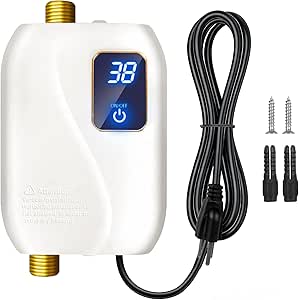 | Best for Point-of-Use Sinks | Power and voltage: 3000W, 110V | Temperature rise: 82°F at 0.3 GPM; up to 131°F at 0.5 GPM | Maximum temperature: 131°F | VIEW ON AMAZON | See Our Full Breakdown |
| HOTTAP V2 Nomad Portable Outdoor Camping Shower and Water Heater with Sink |  | Best Portable Camping Setup | Fuel: Liquid propane | Heat output: 37,500 BTU | Maximum temperature: 122°F | VIEW ON AMAZON | See Our Full Breakdown |
| Fogatti 14 kW Electric Tankless Water Heater, 240 V, Up to 3.3 GPM |  | Best Mid-Capacity Electric Pick | Power and voltage: 14 kW, 240V | Maximum flow rate: 3.3 GPM at 77°F inlet | Flow at colder inlets: 1.9 GPM at 57°F; 1.4 GPM at 37°F | VIEW ON AMAZON | See Our Full Breakdown |
| Vancepic Indoor Natural Gas Tankless Water Heater, 4.23 GPM, 100,000 BTU |  | Best for Moderate Multi-Fixture Gas Use | Fuel and power: Natural gas; 240V, 40W | Heat output: 100,000 BTU | Flow rate: Up to 4.23 GPM | VIEW ON AMAZON | See Our Full Breakdown |
| ThermoMate CZ750NG Natural Gas Tankless Water Heater, 8 GPM |  | Best High-Capacity Natural Gas Pick | Fuel: Natural gas | Heat output: 199,000 BTU | Maximum flow rate: 8 GPM at a 33°F temperature rise | VIEW ON AMAZON | See Our Full Breakdown |
| Rheem 18 kW 240 V Tankless Electric Water Heater, Gray |  | Best Mid-Range Electric for a Single Shower | Model: RTEX-18 | Power: 18 kW | Voltage: 240 V | VIEW ON AMAZON | See Our Full Breakdown |
| VEVOR 8 kW 240 V Tankless Electric Water Heater |  | Best for a Single-Person Shower | Model: R1T-80 | Power: 8 kW | Voltage: 240 V | VIEW ON AMAZON | See Our Full Breakdown |
| Jflapil 3000W Electric Tankless Water Heater with Digital Display |  | Best for a Small Sink on 110 V | Wattage: 3,000 W | Voltage: 110 V | Flow rate: 0.45 GPM | VIEW ON AMAZON | See Our Full Breakdown |
| Rinnai RX199iN Condensing Tankless Water Heater | 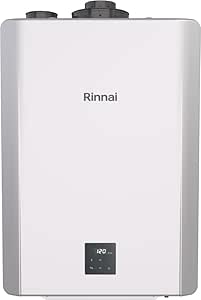 | Best High-Capacity Gas Pick | Fuel type: Natural gas or propane | Maximum output: 199,000 BTU | Flow rate: Up to 11.1 GPM | VIEW ON AMAZON | See Our Full Breakdown |
| Rinnai RX160iN Condensing Smart Sense Tankless Water Heater | 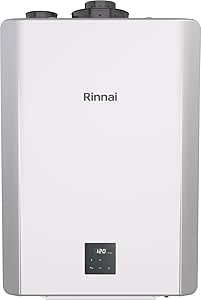 | Best Mid-Capacity Gas Alternative | Fuel type: Natural gas or propane | Flow rate: Up to 9 GPM | Energy efficiency: UEF 0.97 | VIEW ON AMAZON | See Our Full Breakdown |
| 110V 3000W Tankless Electric Water Heater with Digital Display |  | Best for Under-Sink Use | Power: 3000 W | Voltage: 110 V | Maximum temperature: 122 °F | VIEW ON AMAZON | See Our Full Breakdown |
| Outdoor Natural Gas Tankless Water Heater, 5.3 GPM, 130,000 BTU |  | Best Outdoor Gas Pick | Fuel: Natural gas | Heat output: 130,000 BTU | Maximum flow rate: 5.3 GPM | VIEW ON AMAZON | See Our Full Breakdown |
| Rheem RTEX-24 24 kW 240 V Electric Tankless Water Heater |  | Best High-Capacity Electric Pick | Power: 24 kW | Voltage: 240 V, single-phase | Maximum flow rate: Up to 5.9 GPM | VIEW ON AMAZON | See Our Full Breakdown |
| Virtue Sensor RV Tankless Water Heater, 65,000 BTU Propane On-Demand Hot Water |  | Best for Cold-Weather RV Use | Power source: 12V DC | Fuel and heat output: Propane; 65,000 BTU | Temperature range: 95°F–123°F | VIEW ON AMAZON | See Our Full Breakdown |
| Rheem 11 kW Multi-Fixture Tankless Electric Water Heater, 240 V |  | Best Compact Multi-Fixture Electric Pick | Model: RTEX-11 | Power and voltage: 11 kW; 240 V single-phase | Maximum flow rate: 2.68 GPM | VIEW ON AMAZON | See Our Full Breakdown |
More Details on Our Top Picks
110V 3000W Tankless Electric Water Heater with Digital Display
I’d reserve this compact 110V unit for a sink or other low-flow point of use, not as a whole-home heater. Its stated temperature rise reaches 82°F at 0.3 GPM, which can suit a modest hand-washing demand, while the tiny wall-mounted body takes little space. The LED display and multiple safety protections add useful control for a small appliance. Compared with the Fogatti 14 kW, this model is far less demanding electrically, but that comes with a major limit: its listed maximum rise is tied to only 0.5 GPM, and the product is explicitly not suitable for showers. It also needs vertical installation and a high-capacity electrical connection for its size. I’d choose it for a dedicated sink where compactness matters more than broad hot-water delivery.
Pros:- Provides hot water on demand without a storage tank or preheating
- Compact wall-mounted body fits tight point-of-use locations
- LED display supports temperature monitoring in Fahrenheit or Celsius
- Includes leakage, dry-boil, overheating, and inactivity protections
Cons:- Not suitable for showers or other high-flow uses
- Requires vertical installation and a high-capacity electrical connection
- Temperature rise is specified at very low flow rates
Best for: Homeowners seeking a compact, dedicated heater for a low-flow utility or hand-washing sink near an available 110V connection.
Not ideal for: Anyone needing shower water or simultaneous hot water at several fixtures; its listed flow and temperature-rise figures are too limited for those jobs.
- Power and voltage:3000W, 110V
- Temperature rise:82°F at 0.3 GPM; up to 131°F at 0.5 GPM
- Maximum temperature:131°F
- Thermal efficiency:Up to 98%
- Connections:1/2-inch NPT
- Dimensions:4.32 in W × 7.86 in H
- Installation:Wall-mounted; vertical installation only
- Safety features:IPX4 waterproofing, leakage and dry-boil protection, water/electricity isolation, automatic shutoff
Our verdict“Choose this small electric unit for a low-flow sink, but skip it if you need shower-ready or multi-fixture output.”
HOTTAP V2 Nomad Portable Outdoor Camping Shower and Water Heater with Sink
For campsites without plumbing, the HOTTAP V2 Nomad is a more complete answer than a fixed indoor tankless heater: it combines a propane water heater with a shower, sink setup, and 12V pump. The pump can draw from different water sources, while separate gas and water controls give campers a way to adjust heat and pressure without relying on an electrical outlet. Its 37,500 BTU output and 1.6 GPM flow are aimed at outdoor washing rather than feeding a house. Compared with the Virtue Sensor RV heater in this roundup, the HOTTAP’s included sink and shower kit makes it the more self-contained campsite option, but it also depends on both a propane cylinder and 12V power for the pump. I’d skip it for a permanent household installation or anyone wanting a simple, fuel-free appliance.
Pros:- Includes a shower and camp sink setup in one portable kit
- 12V pump can draw water from different sources
- Separate gas and water controls help adjust temperature and pressure
- Heats water on demand without a tank to preheat
Cons:- Requires a propane cylinder and 12V power for the pump
- Portable setup needs access to a usable water source
- Maximum listed temperature of 122°F and 1.6 GPM flow limit its output
Best for: Campers who want a portable hot-water shower and sink arrangement and can bring propane, a water source, and 12V power.
Not ideal for: Homeowners looking for a permanently installed heater, or campers who cannot carry a propane cylinder and power the pump.
- Fuel:Liquid propane
- Heat output:37,500 BTU
- Maximum temperature:122°F
- Flow rate:1.6 GPM
- Power:12V pump
- Dimensions:19 in W × 15 in H
- Included setup:Shower, camp sink setup, and 12V pump
- Safety features:Flame-failure protection and overheat protection
Our verdict“Pick the HOTTAP for a portable campsite washing station, not as a substitute for a fixed home water heater.”
Fogatti 14 kW Electric Tankless Water Heater, 240 V, Up to 3.3 GPM
The Fogatti 14 kW is the electric choice here for buyers who need more than a point-of-use unit but do not need the capacity of a larger whole-home gas heater. Its flow rating changes sharply with incoming water temperature: it reaches 3.3 GPM at a 77°F inlet, but falls to 1.4 GPM at 37°F. That makes local winter water conditions a key part of the decision, not a minor spec detail. Compared with the small 110V 3000W heater, it can serve more meaningful household demand; compared with the ThermoMate CZ750NG, it avoids gas but offers lower multi-fixture capacity. A control knob, LED display, and ±1°F temperature accuracy support straightforward adjustment. The tradeoff is a demanding electrical installation, including a 60A double-pole breaker and 6 AWG copper wire, so professional installation is recommended.
Pros:- Provides continuous hot water without a storage tank
- LED display and control knob make temperature adjustment accessible
- Temperature control is specified within ±1°F
- Includes overheating, leak, and dry-heating protection
Cons:- Requires a 60A double-pole breaker and 6 AWG copper wire
- Flow rate drops to 1.4 GPM at a 37°F inlet temperature
- Designed for only one or two outlets at a time
Best for: Households with suitable 240V electrical service that need on-demand hot water for one or two outlets and have moderate incoming water temperatures.
Not ideal for: Homes with cold incoming water or frequent simultaneous multi-fixture demand; output drops at lower inlet temperatures, and electrical upgrades may be needed.
- Power and voltage:14 kW, 240V
- Maximum flow rate:3.3 GPM at 77°F inlet
- Flow at colder inlets:1.9 GPM at 57°F; 1.4 GPM at 37°F
- Temperature range:86°F–140°F
- Temperature accuracy:±1°F
- Electrical requirement:60A double-pole breaker and 6 AWG copper wire
- Water connections:3/4-inch NPT
- Dimensions:17.1 × 12.9 × 3.9 inches
- Certification and protection:ETL Certified; overheating, leak, and dry-heating protection
Our verdict“Choose the Fogatti if your electrical service can support it and your household needs are modest enough for its temperature-dependent flow.”
Vancepic Indoor Natural Gas Tankless Water Heater, 4.23 GPM, 100,000 BTU
With a stated 4.23 GPM capacity and support for three to four outlets, this Vancepic suits a home with moderate hot-water demand and an existing natural-gas setup. Its oxygen-free copper heat exchanger, child lock, freeze protection, and four preset temperature modes make it more feature-rich than a basic point-of-use heater. The listed ±1°F temperature control is also tighter than the available specs for the HOTTAP, which is designed for portable outdoor use rather than household fixtures. Against the higher-capacity ThermoMate CZ750NG, however, Vancepic is the smaller-demand option: its 100,000 BTU output and 4.23 GPM rating are aimed at fewer simultaneous needs. It requires natural gas and 240V power, and the provided information does not specify venting details. I’d verify installation requirements with a qualified installer before choosing it.
Pros:- Listed to support three to four outlets with up to 4.23 GPM flow
- Oxygen-free copper heat exchanger
- Temperature control specified within ±1°F
- Includes child lock, freeze protection, and an eight-layer safety system
Cons:- Requires natural gas and 240V power
- Lower stated capacity than the 8 GPM ThermoMate CZ750NG
- Venting and installation details need confirmation before purchase
Best for: Households with natural gas that want a wall-mounted heater for moderate use across a few fixtures, with child-lock and freeze-protection features.
Not ideal for: Large households that often run several showers or appliances at once, or buyers without natural-gas service and compatible electrical supply.
- Fuel and power:Natural gas; 240V, 40W
- Heat output:100,000 BTU
- Flow rate:Up to 4.23 GPM
- Outlet capacity:Listed for 3–4 outlets
- Temperature control:±1°F
- Maximum temperature:149°F
- Heat exchanger:Oxygen-free copper
- Dimensions and weight:14.4 in W × 24.6 in H; 25.1 lbs
- Connections and warranty:1/2-inch NPT water and air fittings; 2-year warranty
Our verdict“The Vancepic is a fit for natural-gas homes with moderate multi-fixture demand, but larger households should look at a higher-capacity unit.”
ThermoMate CZ750NG Natural Gas Tankless Water Heater, 8 GPM
Among these five, the ThermoMate CZ750NG is the strongest match for a busy household that wants to supply several fixtures at once. Its listed 8 GPM capacity and 199,000 BTU heat output exceed the Vancepic’s 4.23 GPM and 100,000 BTU ratings, while the stated fixture range is three to five. The key qualifier is that the maximum flow is specified at only a 33°F temperature rise; buyers in colder climates should not treat 8 GPM as a guaranteed winter flow rate. The unit adds ±1°F temperature stability, up to 98% thermal efficiency, freeze protection, and eight safety protections. Unlike the portable HOTTAP, this is an indoor natural-gas installation with venting needs, so it is not a flexible camping or plug-in solution. I’d favor it for a properly equipped home with higher simultaneous demand.
Pros:- Listed capacity of up to 8 GPM for multi-fixture household demand
- 199,000 BTU heat output and up to 98% thermal efficiency
- Temperature stability specified within ±1°F
- Includes freeze protection and eight safety protections
Cons:- Requires natural gas and indoor venting installation
- The 8 GPM maximum is specified at a 33°F temperature rise
- Higher output may exceed the needs of smaller households
Best for: Households with natural gas and indoor venting capacity that regularly need hot water at three to five fixtures.
Not ideal for: Homes without natural-gas service or suitable venting, and buyers expecting 8 GPM at a large temperature rise without checking local inlet-water conditions.
- Fuel:Natural gas
- Heat output:199,000 BTU
- Maximum flow rate:8 GPM at a 33°F temperature rise
- Fixture capacity:Designed for 3–5 fixtures
- Thermal efficiency and UEF:Up to 98%; UEF 0.81
- Temperature stability:±1°F
- Connections:3/4-inch NPT water inlet and outlet; 3/4-inch NPT gas
- Vent:3 in OD
- Dimensions and power:21 × 13 × 7 in; 120V
Our verdict“Choose the ThermoMate for a natural-gas home with substantial simultaneous hot-water demand, after checking the flow available at your required temperature rise.”
Rheem 18 kW 240 V Tankless Electric Water Heater, Gray
For a home with a 240 V supply and demand centered on one shower, the Rheem RTEX-18 offers a useful step up from compact sink heaters without moving to the higher electrical load of a larger unit. Its stated flow rate reaches up to 4.4 GPM, though incoming water temperature and simultaneous use affect what it can deliver. Self-modulating power adjusts to demand, while the external digital control and LED display make temperature settings easier to read than on basic units such as the VEVOR 8 kW.
The wall-mounted design needs no venting, but this is not a low-effort replacement: it requires 240 V power, and its actual capacity may not cover multiple fixtures at once. I’d choose it over the VEVOR for greater household capacity, but choose a gas model like the Rinnai RX160iN when higher flow and multi-fixture use matter more than avoiding gas and venting.
Pros:- Self-modulating power adjusts to hot-water demand.
- Up to 4.4 GPM stated flow offers more capacity than the 8 kW VEVOR.
- Compact wall-mounted design requires no venting.
- LED display and external digital temperature control simplify adjustments.
Cons:- Flow and suitability depend on incoming water temperature and household demand.
- Requires a 240 V power supply.
- Less suited to multiple simultaneous fixtures than the gas-fired Rinnai models in this lineup.
Best for: Households with a 240 V electrical supply that want on-demand hot water for one shower or a similarly limited set of fixtures.
Not ideal for: Homes expecting several simultaneous hot-water uses, or buyers without the 240 V electrical capacity needed for installation.
- Model:RTEX-18
- Power:18 kW
- Voltage:240 V
- Flow rate:Up to 4.4 GPM, depending on conditions
- Maximum temperature:140 °F
- Efficiency:99.8%
- Connections:Bottom 3/4-inch NPT water connections
- Dimensions and weight:14.5 in W × 18.25 in H; 14.8 lb
Our verdict“Choose the Rheem RTEX-18 for a 240 V home focused on one shower; choose a higher-capacity gas unit if several fixtures must run together.”
VEVOR 8 kW 240 V Tankless Electric Water Heater
The VEVOR 8 kW is aimed at a narrow use case: a single-person shower or handwashing, rather than whole-home hot water. Its 86–131°F adjustment range and LED touch panel give buyers direct temperature control, while the small, lightweight body is easier to place than the larger Rheem RTEX-18. The cast aluminum heating element is designed to resist scale, a practical feature where mineral buildup is a concern.
That compact format comes with a clear capacity limit. At 8 kW, it is intended for limited use and is not the pick for several fixtures running at once. Installation also calls for 240 V power, a breaker rated above 40 A, and specified 8 AWG wiring, so the small heater does not mean a simple plug-in setup. Compared with the 110 V Jflapil 3000W, it better suits a shower, but requires a more demanding electrical installation.
Pros:- Designed for limited-use hot water such as a single-person shower and handwashing.
- LED touch panel and adjustable 86–131°F temperature range.
- Compact 8.5-inch-wide body weighs 8.8 lb.
- Cast aluminum heating element is designed to resist scale.
Cons:- 8 kW capacity is intended for limited use, not multiple simultaneous fixtures.
- Requires 240 V power, a breaker rated above 40 A, and specified 8 AWG wiring.
- Maximum temperature is 131°F, below the 140°F maximum listed for the Rheem RTEX-18.
Best for: Single occupants needing on-demand hot water for one shower or a handwashing fixture, with a suitable 240 V circuit.
Not ideal for: Families or households seeking multi-fixture hot water, and buyers who cannot meet its specified 240 V circuit and wiring requirements.
- Model:R1T-80
- Power:8 kW
- Voltage:240 V
- Temperature range:86–131°F (30–55°C)
- Heating element:Cast aluminum
- Controls:LED touch panel
- Installation requirements:240 V power, breaker rated above 40 A, 8 AWG wires and 8 AWG ground wire
- Dimensions and weight:8.5 in W × 13.31 in H; 8.8 lb
Our verdict“Pick the VEVOR for a compact, limited-use shower heater when its specific 240 V electrical requirements are manageable.”
Jflapil 3000W Electric Tankless Water Heater with Digital Display
For a sink that needs a compact on-demand heater, the Jflapil 3000W is the most targeted option here. It runs on 110 V and measures just 4.5 inches wide, so it can suit a tight installation space where the 240 V VEVOR 8 kW would be a poor match. The LED display, adjustable temperature, and low-water-flow and overheat protections add useful control for this small-scale job.
The listed 0.45 GPM flow rate makes its limits explicit: this is for low-flow sink use, not showers or broad household demand. Its 98% thermal efficiency is a stated product spec, but does not change the modest output. Buyers must also mount it vertically and follow the specified wiring and circuit-breaker requirements. Compared with the more powerful Rheem RTEX-18, it asks less of the electrical setup but cannot serve the same hot-water tasks.
Pros:- Runs on 110 V, unlike the 240 V VEVOR and Rheem electric models.
- Very compact, with a 4.5 in W × 7.7 in H footprint.
- LED display and adjustable 82–131°F temperature range.
- Includes low-water-flow and overheat protection and a 24-month warranty.
Cons:- Listed flow rate is only 0.45 GPM and it is not suitable for showers.
- Must be installed vertically with the specified wiring and circuit breaker.
- Its 3,000 W output is limited to low-flow applications.
Best for: Buyers adding low-flow hot water to a small sink in a space where a compact 110 V wall-mounted unit is useful.
Not ideal for: Anyone needing shower water, higher flow, or hot water for multiple household fixtures.
- Wattage:3,000 W
- Voltage:110 V
- Flow rate:0.45 GPM
- Temperature range:82–131°F
- Thermal efficiency:98%
- Installation:Wall-mounted; vertical installation only
- Connector size:1/2-inch NPT
- Dimensions and weight:4.5 in W × 7.7 in H; 2.4 lb
- Warranty:24 months
Our verdict“Choose the Jflapil for a compact sink-only installation on 110 V, not as a shower or whole-home heater.”
Rinnai RX199iN Condensing Tankless Water Heater
Among these five, the Rinnai RX199iN has the highest stated flow rate, making it the strongest fit for households that need more than a single shower’s worth of hot water. It runs on natural gas or propane and can be set up indoors or outdoors with the appropriate equipment. Its up-to-11.1-GPM rating exceeds the Rinnai RX160iN at 9 GPM, giving the RX199iN more stated capacity for concurrent demand; actual output still depends on conditions.
The tradeoff is installation complexity. At 55 lb and 199,000 BTU, it is not a simple electric wall-unit swap, and professional installation is recommended. Outdoor placement requires an RX-OVC vent cap. The Quick Flush feature supports maintenance, while optional Wi-Fi requires a separate module. Compared with the electric Rheem RTEX-18, this Rinnai targets much greater flow but brings fuel, venting, and installation requirements into the decision.
Pros:- Up to 11.1 GPM is the highest stated flow in this five-product group.
- Supports natural gas or propane.
- Indoor or outdoor installation is possible with the appropriate setup.
- Quick Flush feature supports maintenance; heat exchanger warranty is listed for 15 years.
Cons:- Professional installation is recommended, adding complexity compared with electric wall units.
- Outdoor installation requires a separately specified RX-OVC vent cap.
- Wi-Fi control requires a separately sold module.
Best for: Households with natural gas or propane that need high stated flow for multiple hot-water uses and can arrange a suitable professional installation.
Not ideal for: Buyers seeking a straightforward electric replacement, a do-it-yourself installation, or included Wi-Fi controls.
- Fuel type:Natural gas or propane
- Maximum output:199,000 BTU
- Flow rate:Up to 11.1 GPM
- Efficiency:UEF 0.98
- Installation:Indoor or outdoor with appropriate setup
- Electrical requirements:98 W; 120 V
- Maximum temperature and pressure:140°F; 150 psi
- Dimensions and weight:18.5 in W × 30.11 in H × 11.4 in D; 55 lb
- Warranty:15 years on heat exchanger, 5 years on parts and 5 years on labor; registration conditions apply
Our verdict“Choose the RX199iN when high gas-fired capacity matters more than simpler installation or included smart controls.”
Rinnai RX160iN Condensing Smart Sense Tankless Water Heater
The Rinnai RX160iN suits buyers who want a gas-fired condensing heater but do not need the RX199iN’s higher stated output. It supports natural gas or propane, offers indoor or outdoor installation with appropriate venting, and lists up to 9 GPM. That is less than the RX199iN’s 11.1 GPM, but may be a more fitting capacity for households whose hot-water needs do not call for the larger model. Its UEF of 0.97 is also just below the RX199iN’s 0.98.
The Quick Flush feature and easy-to-use interface are practical conveniences, though Wi-Fi control requires a separate Control-R module. At 54 lb, it remains a substantial installed appliance, and professional installation is recommended. Compared with the electric Rheem RTEX-18, it offers a higher stated flow ceiling and gas-fuel flexibility, but brings venting and fuel-line considerations. Warranty labor coverage depends on registration within 90 days; otherwise, it defaults to one year.
Pros:- Supports natural gas or propane and indoor or outdoor installation with appropriate venting.
- Up to 9 GPM offers more stated flow than the electric Rheem RTEX-18.
- Condensing design lists a UEF of 0.97.
- Includes a Quick Flush feature and an easy-to-use interface.
Cons:- Professional installation is recommended, with fuel and venting needs to address.
- Wi-Fi control requires a separately sold Control-R module.
- Outdoor installation requires the RX-OVC vent cap; labor warranty defaults to one year without timely registration.
Best for: Households with natural gas or propane that need substantial hot-water capacity but do not require the RX199iN’s higher stated flow.
Not ideal for: Buyers who want a simple electric installation, need the highest available flow in this group, or expect Wi-Fi control to be included.
- Fuel type:Natural gas or propane
- Flow rate:Up to 9 GPM
- Energy efficiency:UEF 0.97
- Installation:Indoor or outdoor with appropriate venting
- Electrical requirements:73 W; 120 V
- Maximum temperature and pressure:140°F; 150 psi
- Dimensions and weight:19 in W × 31 in H; 54 lb
- Warranty:15 years on heat exchanger, 5 years on parts; labor is 5 years with registration within 90 days, otherwise 1 year
Our verdict“Pick the RX160iN for gas-fired capacity below the RX199iN’s level, while accepting professional setup and separate smart-control hardware.”
110V 3000W Tankless Electric Water Heater with Digital Display
I’d place this compact 3,000W unit in a narrow role: point-of-use hot water at a sink, not whole-home service. Its small wall-mounted body and on-demand operation suit a remote bathroom or utility sink where waiting for a central heater is inconvenient. The LED display can show Fahrenheit or Celsius, and leakage, dry-boil, and overheating protections add useful safeguards. Compared with the Rheem RTEX-11, it needs less power and occupies less space, but it cannot match that model’s multi-fixture capacity. Its stated temperature rise also depends heavily on flow, and the product data explicitly rules it out for showers. Installation is another limit: it must mount vertically and calls for specified wiring and a trip switch over 32 A. I’d choose it only when the job is a single sink and the electrical setup is suitable.
Pros:- Provides hot water on demand for a point-of-use sink
- Compact dimensions suit under-sink or tight wall spaces
- LED display switches between Fahrenheit and Celsius
- Includes leakage, dry-boil, and overheating protections
Cons:- Not suitable for showers or broader household hot-water demand
- Must be installed vertically
- Requires wiring with at least 2.5 mm² cross-sectional area and a trip switch over 32 A
Best for: Homeowners adding on-demand hot water at a single remote sink where a compact wall-mounted unit fits.
Not ideal for: Anyone seeking shower, whole-home, or simultaneous multi-fixture hot water, or unable to meet the specified wiring and vertical-mount requirements.
- Power:3000 W
- Voltage:110 V
- Maximum temperature:122 °F
- Temperature rise:82 °F at 0.3 GPM; 131 °F at 0.5 GPM
- Mounting:Wall mount; vertical installation only
- Dimensions:4.32 in W × 7.86 in H
- Connection:1/2-inch NPT
- Warranty:24 months for quality-related issues
Our verdict“Choose this for a single sink that needs compact, on-demand hot water, not for showers or multiple fixtures.”
Outdoor Natural Gas Tankless Water Heater, 5.3 GPM, 130,000 BTU
This model suits buyers who want a dedicated outdoor gas heater without adding indoor venting. Its 130,000 BTU output and stated flow of up to 5.3 GPM put it above compact point-of-use units such as the 110V 3000W Tankless Electric Water Heater, making multiple outlets more plausible when household demand and incoming water conditions cooperate. Freeze and weather protection, eight safety features, and a remote with a 49.2-foot range add convenience for an exterior installation; the remote lets someone adjust settings from indoors. The tradeoff is a firm dependence on natural gas and a suitable outdoor mounting location, so it is not a flexible replacement for an indoor electric model. I’d also read the flow figure as a maximum, not a promise of that delivery at every temperature rise. Its CSA certification and 3/4-inch connections help define the installation requirements.
Pros:- Up to 5.3 GPM and 130,000 BTU output for broader household use than small electric point-of-use units
- Outdoor installation avoids placing the heater inside living space
- Freeze and weather protection support exterior mounting
- Remote controller works from up to 49.2 feet away
Cons:- Requires a natural-gas supply and outdoor wall installation
- Maximum flow is not a guarantee of delivered flow under all temperature-rise conditions
- Its electrical and gas connections add installation requirements compared with compact electric point-of-use models
Best for: Households with natural gas and an appropriate exterior wall that need more than point-of-use hot water across several outlets.
Not ideal for: Homes without natural gas or a suitable outdoor installation site, and buyers needing guaranteed peak flow regardless of groundwater temperature or demand.
- Fuel:Natural gas
- Heat output:130,000 BTU
- Maximum flow rate:5.3 GPM
- Installation:Outdoor, wall mount
- Voltage and wattage:110 V; 35 W
- Maximum temperature:149 °F
- Connections:3/4-inch NPT
- Remote range:49.2 ft
- Certification and warranty:CSA; 2 years
Our verdict“Pick this outdoor gas unit if your home has natural gas and exterior mounting space; skip it if you need an indoor or fuel-flexible heater.”
Rheem RTEX-24 24 kW 240 V Electric Tankless Water Heater
Among the electric models here, I’d look at the Rheem RTEX-24 when higher household demand matters more than an easy electrical retrofit. Its 24 kW rating and stated maximum of 5.9 GPM place it well above the Rheem RTEX-11, which tops out at 2.68 GPM. That extra capacity makes the RTEX-24 a stronger candidate for multiple fixtures, though actual flow depends on how much the incoming water must be heated. Digital controls adjust in one-degree increments across an 80°F–140°F range, while the wall-mounted design avoids a storage tank and does not need venting. The central drawback is the electrical work: three 40-amp double-pole breakers, three sets of #8 AWG copper conductors, and a recommended 200-amp service panel can make this a poor fit for older or already loaded homes. I’d verify service capacity before choosing it.
Pros:- Higher stated flow capacity than the Rheem RTEX-11
- Digital controls adjust in one-degree increments
- Wall-mounted design saves floor space and requires no venting
- Up to 99.8% stated efficiency
Cons:- Requires three 40-amp double-pole breakers and substantial wiring
- Recommended 200-amp household service may require an electrical upgrade
- Maximum flow depends on incoming water temperature and the required temperature rise
Best for: Households seeking higher-capacity electric on-demand hot water and already equipped for the required electrical load.
Not ideal for: Homes with limited electrical service or buyers who want a straightforward swap without checking panel capacity and wiring needs.
- Power:24 kW
- Voltage:240 V, single-phase
- Maximum flow rate:Up to 5.9 GPM
- Temperature range:80°F–140°F
- Electrical requirements:Three 40-amp double-pole breakers; three sets of #8 AWG copper conductors with ground
- Recommended household service:200 A
- Dimensions:17.63 in W × 18.25 in H × 3.5 in D
- Efficiency:99.8%
- Warranty:5-year leak; 1-year parts
Our verdict“Choose the RTEX-24 for stronger electric multi-fixture potential only if your home can support its substantial electrical requirements.”
Virtue Sensor RV Tankless Water Heater, 65,000 BTU Propane On-Demand Hot Water
This heater is a specialized RV choice, not a substitute for a house-sized tankless system. Its 65,000 BTU propane output, built-in buffer tank, and 12V DC power design target RV installations where stable hot water and compatibility with the vehicle’s electrical system matter. Windproof, waterproof, and freeze-protected construction gives it a use case the residential Rheem RTEX-11 does not address: outdoor travel and cold-weather camping. The wired remote offers temperature adjustment from 95°F to 123°F, but buyers who expect wireless controls will need to accept the cable connection. Its listed dimensions and RV-style ports also mean fit must be checked against the existing cutout and plumbing. CSA certification and protections for freeze, dry-burn, and flame failure add reassurance, but the limited temperature range and RV-specific power and gas connections make this a poor fit for ordinary home plumbing.
Pros:- 65,000 BTU output paired with a buffer tank for steadier temperature control
- Windproof, waterproof, and freeze-protected construction suits demanding RV conditions
- Includes freeze, dry-burn, and flame-failure protections
- CSA certified and designed around RV connections
Cons:- Requires a compatible 12V DC RV electrical system and propane supply
- Temperature control uses a wired remote rather than wireless operation
- RV-specific ports and dimensions limit use as a residential replacement
Best for: RV owners with compatible 12V DC power and propane plumbing who camp in exposed, cold, or high-altitude conditions.
Not ideal for: Homeowners seeking a residential whole-house heater, or RV owners who require wireless control or incompatible port dimensions.
- Power source:12V DC
- Fuel and heat output:Propane; 65,000 BTU
- Temperature range:95°F–123°F
- Certification:CSA certified
- Dimensions:15 in W × 15 in H
- Water ports:1/2-inch NPT
- Gas inlet:5/8-inch UNF
- Heat exchanger:TP2 deoxidized copper
Our verdict“Choose this for a compatible RV that needs propane hot water in cold or exposed camping conditions, not for a stationary home.”
Rheem 11 kW Multi-Fixture Tankless Electric Water Heater, 240 V
The Rheem RTEX-11 sits between a single-sink heater and a higher-demand electric system. Its 11 kW output and maximum 2.68 GPM can serve point-of-use needs or a modest combination of fixtures, but it has much less headroom than the Rheem RTEX-24 and its stated 5.9 GPM maximum. That lower capacity is the practical trade: the RTEX-11 is smaller, needs only one 50-amp double-pole breaker, and calls for a minimum 100-amp service panel, which may suit homes that cannot support the larger Rheem. It still requires a dedicated 240 V circuit, so compact dimensions do not make it a plug-in replacement. Digital one-degree controls and no venting simplify the appliance layout, while real output will vary with incoming groundwater temperature. I’d size it around expected simultaneous use rather than its maximum flow figure.
Pros:- More capacity than a small 3,000W point-of-use heater
- Compact wall-mounted design requires no venting
- Digital temperature settings adjust in one-degree increments
- Lower electrical demand than the Rheem RTEX-24
Cons:- Maximum flow of 2.68 GPM limits simultaneous high-demand use
- Requires a 240 V circuit with a 50 A double-pole breaker
- Actual hot-water output depends on incoming groundwater temperature
Best for: Owners of smaller homes or targeted multi-fixture installations who have a suitable 240 V circuit but do not need high simultaneous flow.
Not ideal for: Large households expecting several high-demand fixtures at once, or homes that lack a dedicated 50 A circuit and adequate service capacity.
- Model:RTEX-11
- Power and voltage:11 kW; 240 V single-phase
- Maximum flow rate:2.68 GPM
- Temperature range:80°F–140°F
- Electrical requirements:One 50 A double-pole breaker; #8 AWG copper conductors with ground
- Recommended service panel:Minimum 100 A
- Dimensions:8.25 in W × 12.63 in H
- Efficiency:99.8%
- Warranty:5-year leak; 1-year parts
Our verdict“Choose the RTEX-11 for modest electric multi-fixture demand when your home has the required 240 V, 50 A circuit.”

How We Picked
I compared these tankless water heaters by the job they are designed to do: supply one small fixture, support several household fixtures, provide hot water outdoors, or serve a mobile setup. The main ranking factors were fuel and power requirements, stated flow and heat output, installation setting, control features, and how clearly each model’s intended use can be matched to a buyer’s needs. I treated capacity claims as a starting point rather than a guarantee, since incoming water temperature and simultaneous demand affect usable hot-water flow.
The order favors options with a clearer fit for common household needs, followed by capable choices for narrower installation or use cases. Whole-home models rank ahead of limited point-of-use units for general residential buyers, but compact, portable, and RV heaters remain useful when their constraints match the job. I also weighed installation burden: an electric heater may require dedicated circuits, while a gas unit can involve venting, gas-line, and combustion-air requirements. Listings that share similar basic specifications are not treated as meaningfully different without a clear performance or use-case distinction.
Factors to Consider When Choosing Tankless Water Heaters
Before comparing model names, I would first pin down where the heater will go and what it needs to supply. Tankless equipment can reduce standby heating, but choosing by a headline flow figure alone can lead to weak showers, electrical upgrades, or a unit that does not suit the installation.
Match Capacity to Your Coldest Incoming Water
A heater’s flow rate is tied to how much it must raise the water temperature, so the same unit may deliver less hot water in a colder climate than its headline figure suggests. Start by listing the fixtures likely to run at the same time, then estimate their combined flow rather than counting every tap in the house. A household with one shower and an occasional sink draw has a different load from one running two showers and a laundry cycle. Ask the manufacturer or installer for output at your local incoming-water temperature and desired set temperature. Choosing a unit at the limit can make the water turn lukewarm during peak use. A little capacity margin is useful, but buying far beyond the expected demand can add installation cost without improving ordinary use.
Check Electrical Service or Gas Supply Before Choosing Fuel
Electric tankless heaters shift the main constraint from venting to the home’s electrical panel, breaker spaces, and wiring. High-output models may need several dedicated circuits, so a low-profile unit can still prompt costly electrical work. Gas heaters need sufficient gas-line capacity and a compatible venting arrangement, with requirements varying by model and installation location. Do not assume an existing tank heater’s connections will support a tankless replacement without changes. Have a qualified installer check the actual panel, service, gas line, and vent path before you commit. Comparing the full installed scope is more useful than comparing appliances alone.
Decide Whether You Need Whole-Home or Point-of-Use Hot Water
A small point-of-use heater can make sense for a remote sink or a single low-demand fixture, especially where a long pipe run wastes time and water. It is not a substitute for a whole-home unit when several bathrooms need hot water. Some buyers get better results by using a smaller dedicated heater for an outlying fixture while leaving the main system to serve the rest of the house. That approach adds another appliance and more connections to maintain, so it is most useful when the location problem is real. Before buying a compact 110 V model, confirm both its intended fixture load and the minimum flow needed to activate it. A mismatch can mean a trickle of warm water rather than a useful hot-water supply.
Treat Installation Location as a Performance Requirement
Indoor, outdoor, portable, and RV heaters are built around different exposure and connection conditions. An outdoor-rated unit still needs the clearances and protection specified by its manufacturer, and it may not be suitable for a freezing climate without approved freeze protection. Indoor gas equipment needs an appropriate vent route and combustion-air plan. Portable camping showers need a compatible water source and fuel arrangement, while RV heaters must fit the vehicle’s power, plumbing, and mounting setup. Buying for the wrong setting can create safety concerns or leave the appliance unable to operate as intended. Verify the installation manual and local code requirements before treating a product’s label as permission to place it anywhere.
Compare Maintenance, Controls, and Repair Support
Tankless units need upkeep, even though they do not store a tank of hot water. Hard water can cause mineral buildup, so check whether the model supports flushing and whether its connections make that service manageable. Ask how filters, igniters, sensors, and other service parts are accessed, and whether local technicians work on the brand. Smart controls can help monitor or adjust operation, but they do not replace correct sizing or routine care. A less complicated heater may suit a buyer who values straightforward operation, while remote monitoring can appeal to someone who wants more visibility. Check the warranty terms and service network before placing heavy weight on advanced features.
Compare Total Ownership Cost, Not Just the Appliance
The purchase decision includes installation, possible panel or gas-line upgrades, venting, permits, and ongoing maintenance. A lower-capacity model can cost less to install but fall short when several fixtures run together; a larger model may require infrastructure work that changes the overall calculation. Fuel availability and local energy costs also affect long-term operating expense, though actual savings depend on usage and the system being replaced. Ask for itemized installation estimates for the specific models you are considering. Include annual descaling or other required service in the comparison rather than assuming maintenance will be negligible. Paying more makes sense when it buys capacity or features your household will use, not simply a larger number on the specification sheet.
Frequently Asked Questions
Can a tankless water heater run two showers at the same time?
It can, but the answer depends on the heater’s delivered flow at the temperature rise your home needs, not just its maximum advertised GPM. Add the expected flow of both showers and any other fixtures that may run concurrently, then compare that demand with manufacturer data for your incoming-water temperature. Colder inlet water raises the workload and can reduce the hot-water flow available. If two showers are a regular requirement, ask an installer to size the unit for that peak use rather than typical daily use. A unit that barely meets the estimate may feel inconsistent when another tap opens.
Should I choose an electric or gas tankless water heater?
Choose based on the infrastructure your home can support as well as the hot-water load. Electric models avoid gas combustion and venting, but powerful units can need substantial panel capacity and dedicated circuits. Gas models can suit higher household demand, though they need a properly sized gas supply and an approved venting plan indoors. If you already have a suitable service and installation path, that can make one fuel type much simpler than the other. Get an electrician or plumber to verify the actual upgrade work before comparing equipment costs.
Are 110 V, 3,000 W tankless heaters suitable for a whole house?
These compact units are generally better suited to a limited point-of-use task than whole-house service. Their electrical input constrains how quickly they can raise water temperature, especially when water enters cold or a fixture needs a steady flow. They are not a practical replacement for a higher-capacity system serving showers, kitchens, and multiple bathrooms. Before purchasing one, check the manufacturer’s stated application, activation flow, and expected temperature rise. If you need hot water at several fixtures, compare a properly sized whole-home unit instead.
Do outdoor tankless water heaters work in freezing weather?
Cold-weather operation depends on the specific model’s freeze-protection provisions, installation conditions, and access to power or other required utilities. An outdoor label does not mean the heater can safely withstand any freeze without protection. Follow the manual’s rules for clearances, drainage, insulation, and any freeze-prevention system, and ask how the unit should be shut down during an outage or extended vacancy. In areas with severe winter conditions, an indoor installation may be a better fit if venting and space allow. Have a local professional check the installation against climate and code requirements.
What should I verify before replacing a tank water heater with a tankless model?
First confirm that the home’s gas line or electrical service can support the chosen heater, then check venting, condensate handling where applicable, plumbing connections, and local permit requirements. A tankless unit may need a different vent material or route from the old appliance, so an existing opening should not be assumed to work. Ask for a load calculation based on simultaneous fixtures and winter inlet-water temperature. Compare the complete installation scope, including electrical or gas upgrades and service access. A site visit before ordering helps prevent choosing a model that cannot be installed as planned.
Conclusion
For a general whole-home gas installation, I would start with the Rinnai RX199iN as the best overall fit in this group; buyers who want a smart gas option with a somewhat different capacity profile can compare it with the Rinnai RX160iN. My best value recommendation depends on existing infrastructure: the Rheem 11 kW is a sensible electric choice for a limited multi-fixture load, while the VEVOR 8 kW is better reserved for smaller demand. For best premium electric capacity, consider the Rheem RTEX-24 only if your panel and installation plan can support it. Beginners replacing a conventional system should begin with a site assessment and compare the Rheem 18 kW or an appropriately sized Rinnai with an installer, rather than selecting by GPM alone. For specific needs, choose the HOTTAP V2 Nomad for portable camping use, the Virtue Sensor RV for a compatible RV setup, or an outdoor-rated gas model only when its location and fuel requirements fit. The right pick is the one whose actual capacity and installation demands match your home—not simply the unit with the biggest advertised output.