The Waterdrop 10UA is my best overall pick for buyers who want a straightforward under-sink filter, while the iSpring RCC7AK-BN suits shoppers seeking reverse osmosis and the Waterdrop G3P600 offers a tankless RO alternative. These filters differ in more than stage count: filtration method, faucet setup, space needs, and replacement schedule all affect day-to-day fit. A simpler filter can be easier to install and maintain, while RO systems bring a different level of complexity and plumbing requirements. Long-capacity models may mean fewer filter changes, but only if their stated capacity and replacement guidance fit your water use. Read on for my full breakdown of the tradeoffs and how to choose.

Get kitchen gear delivered free with Prime
- Fast, free delivery on millions of items
- Prime Video, Amazon Music and more included
- Member-only deals all year
Complete the kit


Key Takeaways
Simple filtration leads for everyday convenience. The Waterdrop 10UA is my overall choice for a direct, uncomplicated setup; the 10UB adds a dedicated faucet, while the 15UA is another option to compare by its installation and replacement details.
RO is a distinct commitment, not just another stage count. The iSpring RCC7AK-BN pairs reverse osmosis with an alkaline stage, while the Waterdrop G3P600 is a tankless RO model; both make more sense when you want that filtration approach and can accommodate its plumbing needs.
Capacity labels point to different maintenance priorities. ICEPURE’s 22,000-gallon model, Waterdrop UA-5Y, and CuZn UC-200 draw attention to service life, while Waterdrop UL12A adds a filter-life reminder; check each model’s actual replacement instructions rather than treating labels as interchangeable.
Specialized designs should match a specific reason for buying. Waterdrop TSU lists 0.01-micron ultrafiltration, and Aquasana Claryum Direct Connect is named for a direct-connect setup. Compare their stated filtration claims and plumbing fit with your needs instead of choosing by a technical label alone.
The remaining choices broaden the lineup, not the case for buying more features. Waterdrop TSA’s 8-layer design, ICEPURE WFS6310A, and Amazon Basics merit comparison by stated claims, upkeep, and installation details; extra layers by themselves do not establish a better fit.
| iSpring RCC7AK-BN NSF-Certified 6-Stage Alkaline Reverse Osmosis Water Filtration System, 75 GPD |  | Best for Reverse Osmosis and Remineralization | Filtration stages: 6 | Daily capacity: 75 gallons | Certification: NSF/ANSI 58 | VIEW ON AMAZON | See Our Full Breakdown |
| Waterdrop TSU 0.01 Micron Under-Sink Ultrafiltration Water Filter System |  | Best for Mineral Retention | Filtration: 0.01-micron ultrafiltration; reduces 30+ substances | Stages: 3 | Maximum flow rate: 1.05 GPM | VIEW ON AMAZON | See Our Full Breakdown |
| Waterdrop 10UA Under Sink Water Filter System | 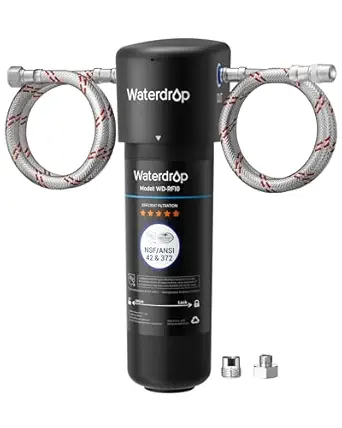 | Best Compact Pick for Easy Installation | Model: WD-10UA | Certification: NSF/ANSI 42 and 372 | Purification method: Activated carbon | VIEW ON AMAZON | See Our Full Breakdown |
| Waterdrop TSA 8-Layer Under Sink Water Filter System |  | Best Multi-Stage Mineral-Retaining Filter | Filtration stages: 8-stage filtration across 3 filters | Certifications: NSF/ANSI 42; IAPMO | Maximum flow rate: 1.5 GPM | VIEW ON AMAZON | See Our Full Breakdown |
| ICEPURE WFS6310A Under-Sink Water Filter System |  | Best for High Flow and Long Cartridge Capacity | Filtration: 8-stage; activated carbon | Filter precision: 0.5 μm | Capacity: 12,000 gallons per cartridge | VIEW ON AMAZON | See Our Full Breakdown |
| Waterdrop UL12A Under-Sink Water Filter with Filter Life Reminder |  | Best Filter-Life Reminder | Model: WD-UL12A | Replacement filter: WD-FUL12 | Filtration: Reduces PFAS, PFOA/PFOS, rust, lead, chlorine, heavy metals, chemical impurities, and sand | VIEW ON AMAZON | See Our Full Breakdown |
| Waterdrop UA-5Y 5-Year Under-Sink Water Filter System |  | Best for Low-Maintenance Municipal Water | Filter type: 0.5 μm activated carbon block | Filter life: Up to 5 years | Contaminants reduced: Chlorine, PFOA/PFOS, turbidity, rust, sand, taste, and odor | VIEW ON AMAZON | See Our Full Breakdown |
| Waterdrop G3P600 Tankless Reverse Osmosis Water Filter System, 600 GPD |  | Best for TDS Reduction | Filtration: 8-stage reverse osmosis | Certifications: NSF/ANSI 42, 58, and 372; FCC; EU; UKCA | Capacity: 600 gallons per day | VIEW ON AMAZON | See Our Full Breakdown |
| CuZn UC-200 Under Sink Water Filter |  | Best Long-Life Direct-Connect Filter | Model: UC-200 | Filter life: 5 years | Certifications: NSF/ANSI 42 and NSF/ANSI 372 | VIEW ON AMAZON | See Our Full Breakdown |
| ICEPURE Under-Sink Water Filter System, 22,000-Gallon Capacity |  | Best High-Capacity Chlorine Filter | Installation: Under sink; direct connection | Water-line compatibility: 1/2-inch or 3/8-inch female NPT cold-water line | Purification method: Activated carbon | VIEW ON AMAZON | See Our Full Breakdown |
| Waterdrop 10UB Under Sink Water Filter System with Dedicated Faucet |  | Best for a Dedicated Filter Faucet | Purification method: Activated carbon | Water source: Cold municipal tap water | Maximum flow rate: 0.75 gpm at 60 psi | VIEW ON AMAZON | See Our Full Breakdown |
| Aquasana Claryum Direct Connect Under-Sink Water Filter, AQ-MF-1 |  | Best No-Drill, Existing-Faucet Option | Installation: Under-sink connection to a cold water line | Dimensions: 4 x 4 x 20.5 inches | Required clearance: 3 inches for filter changes | VIEW ON AMAZON | See Our Full Breakdown |
| Amazon Basics Under Sink Water Filter System |  | Best for Basic Chlorine and Taste Improvement | Certification: NSF/ANSI 42 and 372 | Capacity: 11,000 gallons | Service life: 1 year | VIEW ON AMAZON | See Our Full Breakdown |
| Waterdrop 15UA Under Sink Water Filter System |  | Best for Long Filter Life | Capacity: 19,000 gallons | Service life: 24 months | Flow rate: 0.75 gpm at 60 psi | VIEW ON AMAZON | See Our Full Breakdown |
More Details on Our Top Picks
iSpring RCC7AK-BN NSF-Certified 6-Stage Alkaline Reverse Osmosis Water Filtration System, 75 GPD
I’d choose the iSpring RCC7AK-BN when reducing dissolved solids is a priority and I want a remineralization stage afterward. Its reverse osmosis design sets it apart from the Waterdrop TSU, which retains minerals and does not reduce TDS. The alkaline stage adds minerals and balances pH, while NSF/ANSI 58 certification applies to the complete system. A 75-gallon daily capacity suits regular household use, but the system needs room beneath the sink for its 15.5 × 16 × 18-inch footprint. The top-mounted faucet and quick-connect fittings may simplify installation, though this remains a multi-stage setup with filters to replace every six months. I’d skip it if preserving existing TDS or saving under-sink space matters more than reverse osmosis treatment.
Pros:- NSF/ANSI 58 certification applies to the complete system.
- Reverse osmosis reduces TDS and a wide range of listed contaminants.
- Alkaline stage adds minerals and balances pH.
- Top-mounted faucet design and quick-connect fittings can simplify installation.
Cons:- Requires substantial under-sink space for the system.
- Filters need periodic replacement, with a stated six-month filter life.
Best for: Households seeking an NSF/ANSI 58-certified reverse osmosis system that reduces TDS and adds minerals back into the water.
Not ideal for: Renters or owners with crowded under-sink cabinets, or buyers who want to retain TDS and avoid periodic filter changes.
- Filtration stages:6
- Daily capacity:75 gallons
- Certification:NSF/ANSI 58
- Maximum water TDS level:750 ppm
- Filter life:6 months
- Dimensions:15.5 × 16 × 18 in
- Power:No power needed
- Operating pressure:70 psi
Our verdict“Choose the iSpring if TDS reduction and post-RO remineralization matter more to you than a compact installation.”
Waterdrop TSU 0.01 Micron Under-Sink Ultrafiltration Water Filter System
The Waterdrop TSU suits buyers who want filtration without removing TDS or producing wastewater. Its 0.01-micron ultrafiltration reduces listed substances while retaining essential minerals, a different approach from the iSpring RCC7AK-BN reverse osmosis system, which reduces TDS and adds minerals back through a separate stage. The TSU delivers up to 1.05 GPM without electricity, and its UF filter has a stated 24-month lifespan; indicators help track when other filters need attention. That makes it a practical fit for municipal cold water, but not for well water or hot-water lines. The included brushed nickel faucet requires a countertop hole, so installation is less convenient for anyone avoiding drilling. I’d pass if lowering TDS is a central goal.
Pros:- 0.01-micron ultrafiltration reduces 30+ listed substances while retaining essential minerals.
- Produces no wastewater and needs no electricity.
- UF filter lifespan is stated at 24 months.
- Filter replacement indicators and installation components are included.
Cons:- Does not reduce TDS.
- Designed for municipal cold water, not well water or hot water.
- Separate faucet installation requires countertop drilling.
Best for: Municipal-water households that want to retain minerals, avoid wastewater, and have space to install a separate faucet.
Not ideal for: Well-water users, buyers seeking TDS reduction, or renters who cannot drill a countertop for the included faucet.
- Filtration:0.01-micron ultrafiltration; reduces 30+ substances
- Stages:3
- Maximum flow rate:1.05 GPM
- Filter lifespan:UF: 24 months; CT: 12 months; PP: 6 months
- Dimensions:4.68 W × 13.97 H × 14.81 L in
- Water compatibility:Municipal cold water only
- TDS reduction:Does not reduce TDS
- Faucet:Separate brushed nickel faucet; countertop drilling required
Our verdict“Pick the TSU if mineral retention and wastewater-free operation matter more than TDS reduction or a no-drill installation.”
Waterdrop 10UA Under Sink Water Filter System
For a crowded cabinet or a straightforward filter upgrade, I’d put the Waterdrop 10UA ahead of the larger iSpring RCC7AK-BN. Its 3.9 × 3.6 × 12.3-inch body takes little room, and the twist-and-lock setup is designed for a three-minute installation. Activated carbon reduces chlorine, PFAS, and PFOA/PFOS while retaining essential minerals, so it suits buyers who want treated-tasting water without reverse osmosis. Its 1.33 GPM flow rate is higher than the Waterdrop TSU’s stated 1.05 GPM, and the 11,000-gallon filter life is listed as 12 months. The tradeoff is that it does not reduce TDS and is intended for municipal cold water. I’d look elsewhere for well water or dissolved-solids reduction.
Pros:- Compact housing suits tight under-sink spaces.
- Twist-and-lock design is specified for quick installation.
- Reduces chlorine, PFAS, and PFOA/PFOS while retaining essential minerals.
- Provides a stated 1.33 GPM flow rate and 11,000-gallon filter life.
Cons:- Does not reduce TDS.
- Designed for municipal cold water, not well water or hot water.
- Replacement filter is specific to the WD-RF10 model.
Best for: Homeowners with limited cabinet space who want a compact, quick-install carbon filter for municipal cold water.
Not ideal for: Well-water users or buyers who expect reverse osmosis-style TDS reduction.
- Model:WD-10UA
- Certification:NSF/ANSI 42 and 372
- Purification method:Activated carbon
- Filter life:12 months / 11,000 gallons
- Flow rate:1.33 GPM (3/8-inch outlet)
- Dimensions:3.9 L × 3.6 W × 12.3 H in
- Maximum TDS:700 ppm
- Replacement filter:WD-RF10
Our verdict“Choose the 10UA for compact, quick-install carbon filtration on municipal water, not for TDS reduction.”
Waterdrop TSA 8-Layer Under Sink Water Filter System
The Waterdrop TSA is a fit for buyers who want several filtration layers but do not need reverse osmosis. Its eight-stage filtration is delivered through three filters, with reduction claims covering PFAS, PFOA/PFOS, chlorine, fluoride, and sediment while retaining beneficial minerals. Compared with the simpler Waterdrop 10UA, the TSA offers a more involved filtration setup and a higher stated maximum flow of 1.5 GPM, though its flow is still slower than direct tap water. Push-to-connect fittings support DIY installation, and twist-and-lock replacement is designed to take seconds. Filter lifespans vary from six to 18 months. It does not reduce TDS and is limited to municipal cold water, so I wouldn’t choose it for well water or dissolved-solids reduction.
Pros:- Eight-stage filtration is delivered through three filters.
- Reduces listed substances while retaining beneficial minerals.
- Push-to-connect fittings support DIY installation.
- Twist-and-lock filter replacement is designed for quick changes.
Cons:- Does not reduce TDS.
- Not suitable for untreated well water or hot water.
- Flow is slower than direct tap water, and filter lifespans vary by stage.
Best for: Municipal-water households wanting multi-stage filtration, mineral retention, and a DIY system with push-to-connect fittings.
Not ideal for: Well-water users, buyers who need TDS reduction, or anyone who prioritizes direct-tap flow above filtration layers.
- Filtration stages:8-stage filtration across 3 filters
- Certifications:NSF/ANSI 42; IAPMO
- Maximum flow rate:1.5 GPM
- Filter lifespan:6 to 18 months, depending on stage
- Water source:Municipal cold tap water only
- Installation time:Under 3 minutes
- Connection size:1/2-inch or 3/8-inch Female NPT
- Burst pressure test:400 psi
Our verdict“Choose the TSA if you want layered filtration and mineral retention on municipal cold water, but not TDS reduction.”
ICEPURE WFS6310A Under-Sink Water Filter System
I’d shortlist the ICEPURE WFS6310A for households that value a strong stated flow rate and a long cartridge capacity. It lists 1.75 GPM and up to 12,000 gallons per cartridge, both above the Waterdrop TSA’s 1.5 GPM maximum and its stated six-to-18-month filter intervals. Its activated-carbon, eight-stage design targets chlorine, odors, heavy metals, rust, and sediment while retaining beneficial minerals. Tool-free installation and filter changes may also appeal to buyers who want fewer steps during upkeep. The main limitation is water compatibility: this system is designed for municipal cold tap water, not well water. Its 12-month service life still calls for replacement, and the product data does not list a certification. I’d choose another type if TDS reduction is required.
Pros:- Stated maximum flow rate of 1.75 GPM.
- Cartridge capacity is listed at 12,000 gallons.
- Tool-free installation and filter changes.
- Activated-carbon filtration is designed to retain beneficial minerals.
Cons:- Designed specifically for municipal cold tap water.
- Cartridge replacement is required after its stated service life.
- Product data does not list a certification.
Best for: Households on municipal cold water that want a high stated flow rate, substantial cartridge capacity, and tool-free upkeep.
Not ideal for: Well-water users or buyers who need reverse osmosis, TDS reduction, or a listed third-party certification.
- Filtration:8-stage; activated carbon
- Filter precision:0.5 μm
- Capacity:12,000 gallons per cartridge
- Filter life cycle:12 months
- Maximum flow rate:1.75 GPM
- Operating pressure range:30–125 psi
- Temperature range:40–100 °F
- Connections:1/2-inch and 3/8-inch cold-water lines
Our verdict“Pick the WFS6310A for high stated flow and cartridge capacity on municipal cold water, rather than for TDS reduction.”
Waterdrop UL12A Under-Sink Water Filter with Filter Life Reminder
I give the Waterdrop UL12A this role because it pairs a long stated capacity with a reminder system that does more than rely on a calendar: a light and audible beep signal replacement time. Its no-drill, twist-and-lock setup also makes it a more approachable fit for renters or anyone avoiding a separate faucet installation. Compared with the Waterdrop UA-5Y, the UL12A has a shorter maximum service life but offers a clearer replacement prompt and a stated 11,000-gallon capacity. It reduces several listed contaminants while retaining dissolved minerals, so it is not a substitute for reverse osmosis like the Waterdrop G3P600. The tradeoffs are its cold-water-only connection, coconut-shell carbon, and no TDS reduction.
Pros:- No-drill installation with a twist-and-lock setup and included connection converter
- Light and audible filter-replacement reminders
- Rated for up to 11,000 gallons or 12 months
- Reduces several listed contaminants while retaining dissolved minerals
Cons:- Does not reduce TDS
- Designed for cold-water connections only
- Uses coconut-shell activated carbon, which may not suit people with a coconut allergy
Best for: Households seeking a no-drill cold-water filter with a clear reminder for scheduled cartridge replacement.
Not ideal for: People who need TDS reduction, use only hot-water connections, or need to avoid coconut-shell carbon.
- Model:WD-UL12A
- Replacement filter:WD-FUL12
- Filtration:Reduces PFAS, PFOA/PFOS, rust, lead, chlorine, heavy metals, chemical impurities, and sand
- TDS reduction:Does not reduce TDS
- Certifications:NSF/ANSI 42 and 372; IAPMO certified
- Installation and connection:Freestanding, no drilling; 3/8-inch line with 3/8-to-1/2-inch converter
- Capacity and lifespan:Up to 11,000 gallons or 12 months
- Flow rate and reminder:5.026 L/min; indicator light and audible beep
Our verdict“Choose the UL12A if you want a straightforward under-sink filter with a built-in audible and visual replacement reminder, not TDS reduction.”
Waterdrop UA-5Y 5-Year Under-Sink Water Filter System
The Waterdrop UA-5Y suits municipal-water households that want a long interval between filter changes without adding a powered system. Its 0.5-micron activated carbon block reduces chlorine, PFOA/PFOS, particles, turbidity, rust, and sand while retaining minerals. Compared with the CuZn UC-200, it has a similar five-year stated filter life, but the UA-5Y specifies a prorated five-year replacement warranty and is expressly intended for municipal tap water. That makes water source an important dividing line: this is not recommended for well water. The system connects to a kitchen faucet and includes installation hardware, though its larger size can be a problem in a crowded cabinet. Unlike the Waterdrop G3P600, it does not offer reverse-osmosis filtration or TDS reduction.
Pros:- Filter life rated for up to five years
- Retains essential minerals while reducing listed particles and chlorine
- Operates without electricity
- Includes installation hardware and a five-year prorated replacement warranty
Cons:- Not recommended for well water
- Larger dimensions may not fit some under-sink cabinets
- Does not provide reverse-osmosis filtration or stated TDS reduction
Best for: Municipal-water households wanting a non-electric carbon filter with infrequent scheduled replacement.
Not ideal for: Well-water users or owners with limited cabinet clearance who need a compact system or TDS reduction.
- Filter type:0.5 μm activated carbon block
- Filter life:Up to 5 years
- Contaminants reduced:Chlorine, PFOA/PFOS, turbidity, rust, sand, taste, and odor
- Certification:NSF/ANSI 372 lead-free compliance
- Water source:Municipal tap water; not recommended for well water
- Installation:Under sink; connects to kitchen faucet and includes hardware
- Power and warranty:No electricity required; five-year prorated replacement warranty
Our verdict“Pick the UA-5Y for municipal tap water and fewer filter changes, provided the larger unit fits your cabinet.”
Waterdrop G3P600 Tankless Reverse Osmosis Water Filter System, 600 GPD
I rank the Waterdrop G3P600 as the choice for buyers who want reverse osmosis and TDS reduction, rather than the mineral-retaining carbon filtration offered by the CuZn UC-200 or Waterdrop UA-5Y. Its eight-stage system is rated for 600 gallons per day, and the smart faucet displays TDS and filter life so users can see those readings at the tap. The tankless design avoids a storage tank, but the unit itself still measures 18.12 by 5.67 by 17.72 inches and weighs 31 pounds, so cabinet space remains part of the fit check. Unlike simpler direct-connect filters, it needs under-sink electricity. Its 2:1 pure-water-to-wastewater ratio also means some water goes to waste, a meaningful tradeoff for buyers prioritizing RO filtration.
Pros:- Eight-stage reverse-osmosis filtration reduces TDS
- Rated to produce up to 600 gallons per day
- Smart faucet shows TDS and filter life
- Tankless design with tool-free filter replacement
Cons:- Requires under-sink electricity
- The unit’s dimensions and 31-pound weight call for cabinet space
- Produces wastewater at a 2:1 pure-water-to-wastewater ratio
Best for: Households seeking under-sink reverse osmosis, TDS reduction, and a faucet that displays water and filter readings.
Not ideal for: Buyers without an outlet beneath the sink, limited cabinet clearance, or a preference for a no-waste carbon filter.
- Filtration:8-stage reverse osmosis
- Certifications:NSF/ANSI 42, 58, and 372; FCC; EU; UKCA
- Capacity:600 gallons per day
- Pure-water-to-wastewater ratio:2:1
- Maximum flow rate:0.42 gpm
- Dimensions and weight:18.12 x 5.67 x 17.72 inches; 31 pounds
- Power:Corded electric
- Filter life:24 months
Our verdict“Choose the G3P600 when TDS reduction and faucet monitoring matter more than simple installation and water efficiency.”
CuZn UC-200 Under Sink Water Filter
The CuZn UC-200 is a strong match for buyers who want a direct-connect filter with a five-year stated life and no separate faucet drilling. Its three-stage combination of micro sediment membranes, KDF-55, and coconut-shell carbon targets PFAs, PFOA/PFOS, lead, and chlorine while retaining beneficial minerals. That gives it a broader stated contaminant list than the ICEPURE filter, which focuses on chlorine, taste, and odor. Compared with the Waterdrop UA-5Y, both offer a five-year life, but the UC-200’s specific direct-plumbing setup makes connection compatibility more central to the decision. It is not a TDS-reduction system, so buyers seeking that function should look at the Waterdrop G3P600 instead. Check the plumbing connection before choosing this otherwise low-intervention option.
Pros:- Five-year stated filter life
- Three-stage filtration includes micro sediment membranes, KDF-55, and coconut-shell carbon
- Reduces listed PFAs, PFOA/PFOS, lead, and chlorine
- DIY direct-connect installation without drilling
Cons:- Does not reduce TDS
- Requires a compatible direct-connection plumbing setup
- Does not include a separate dedicated faucet
Best for: Homeowners with compatible plumbing who want a mineral-retaining inline filter and infrequent cartridge replacement.
Not ideal for: Buyers needing TDS reduction or anyone whose under-sink plumbing does not match its direct-connect setup.
- Model:UC-200
- Filter life:5 years
- Certifications:NSF/ANSI 42 and NSF/ANSI 372
- Filtration stages:3-stage: Micro Sediment Membranes, KDF-55, and Coconut Shell Carbon
- Contaminants reduced:PFAs, PFOA/PFOS, lead, and chlorine
- Installation type:Inline / direct connect
- Mineral retention:Retains beneficial minerals
Our verdict“Choose the UC-200 if your plumbing suits its direct connection and you want long-lived filtration without drilling.”
ICEPURE Under-Sink Water Filter System, 22,000-Gallon Capacity
The ICEPURE stands out for its 22,000-gallon stated capacity, making it a fit for buyers who want a simple carbon filter and fewer replacement interruptions. It reduces chlorine, taste, and odor, while retaining minerals; its NSF/ANSI 42 and 372 certifications add specific support for those listed functions. Compared with the Waterdrop UL12A, ICEPURE claims twice the capacity and up to three years of service, but it has a narrower stated contaminant focus and no built-in audible or visual reminder. Its direct cold-water connection keeps the setup straightforward, though compatibility is limited to specified 1/2-inch or 3/8-inch female NPT lines. The 15.55-inch height also deserves a cabinet check. This is not the pick for TDS reduction or broad reverse-osmosis treatment like the Waterdrop G3P600.
Pros:- Rated for up to 22,000 gallons or three years
- NSF/ANSI 42 and 372 certified
- Direct connection and filter changes are designed to be tool-free
- Retains minerals while reducing chlorine, taste, and odor
Cons:- For cold-water lines only
- Compatible only with specified 1/2-inch or 3/8-inch female NPT lines
- Does not provide TDS reduction or the broader filtration scope of reverse osmosis
Best for: Households wanting a high-capacity carbon filter primarily for chlorine, taste, and odor on a compatible cold-water line.
Not ideal for: Buyers who need TDS reduction, broader stated contaminant coverage, a replacement reminder, or different plumbing compatibility.
- Installation:Under sink; direct connection
- Water-line compatibility:1/2-inch or 3/8-inch female NPT cold-water line
- Purification method:Activated carbon
- Certifications:NSF/ANSI 42 and 372
- Capacity and filter life:22,000 gallons; up to 3 years
- Maximum flow rate:2.5 gpm at 60 psi
- Dimensions and weight:6.81 x 5.39 x 15.55 inches; 4 pounds
- Filter material:Coconut shell carbon with a 0.5-micron outer layer
Our verdict“Choose ICEPURE for high-capacity chlorine and taste filtration if your cold-water line matches its connection requirements.”
Waterdrop 10UB Under Sink Water Filter System with Dedicated Faucet
The 10UB is a strong fit if I want filtered water from its own faucet rather than through the kitchen tap. Its brushed stainless steel faucet gives the setup a finished look, while activated carbon targets chlorine, taste, odor, lead, and PFAS-related contaminants and retains dissolved minerals. Push-to-connect fittings and a twist-and-lock cartridge make installation and annual changes simpler than a more involved filtration setup. Compared with the Waterdrop 15UA, this model’s clearest distinction is the included dedicated faucet; the 15UA connects directly to the existing cold-water line. That separate faucet takes up a sink or countertop opening, though, and the 10UB is limited to cold municipal water. Its coconut-shell carbon may also not suit people with coconut allergies.
Pros:- Includes a brushed stainless steel dedicated faucet
- Third-party tested to NSF/ANSI 53 for lead reduction
- Designed to reduce chlorine, taste, odor, PFAS, PFOA/PFOS, and particles
- Push-to-connect fittings and tool-free twist-and-lock filter changes
Cons:- Needs a separate faucet opening and its own under-sink connections
- Not suitable for well water or hot water
- Coconut-shell activated carbon may be unsuitable for people with coconut allergies
Best for: Homeowners with cold municipal water who want a separate filtered-water faucet and tested lead reduction.
Not ideal for: Renters or kitchens without an available faucet opening, and households using well or hot water.
- Purification method:Activated carbon
- Water source:Cold municipal tap water
- Maximum flow rate:0.75 gpm at 60 psi
- Filter life:1 year
- Replacement filter:WD-RF10
- Certifications and testing:IAPMO certified to NSF/ANSI 42 and 372; third-party tested to NSF/ANSI 53 for lead reduction
- Faucet material:Brushed stainless steel
- System dimensions:3.9 in L x 3.6 in W; height not provided
Our verdict“Choose the 10UB if you want a dedicated filtered-water faucet and can accommodate the extra opening and cold-municipal-water restriction.”
Aquasana Claryum Direct Connect Under-Sink Water Filter, AQ-MF-1
The Claryum Direct Connect suits buyers who want filtered water through their existing tap and would rather avoid installing another faucet. It connects to a cold-water line, needs no countertop drilling, and is described as removing up to 99% of 78 contaminants, including lead and PFAS, while retaining calcium, magnesium, and potassium. It also does not reduce TDS, a useful distinction for buyers who want mineral content preserved rather than a reverse-osmosis-style reduction. Compared with the Amazon Basics filter, this Aquasana targets a broader stated range of contaminants, but its 20.5-inch length and required 3 inches of filter-change clearance call for a careful cabinet fit check. Hard water may also call for a pre-filter to help maintain flow and filtration performance.
Pros:- Uses the existing faucet without countertop drilling
- Described as removing up to 99% of 78 contaminants, including lead and PFAS
- Retains naturally occurring calcium, magnesium, and potassium
- Includes parts for 3/8-inch installations
Cons:- Needs 3 inches of clearance for filter changes
- Hard water may call for a pre-filter to maintain flow and performance
- Does not reduce TDS
Best for: Homeowners who want broad contaminant reduction through their existing cold-water faucet without drilling for a second tap.
Not ideal for: Buyers with cramped cabinets, hard water and no room for a pre-filter, or anyone seeking TDS reduction.
- Installation:Under-sink connection to a cold water line
- Dimensions:4 x 4 x 20.5 inches
- Required clearance:3 inches for filter changes
- Contaminant removal:Up to 99% of 78 contaminants
- Minerals retained:Calcium, magnesium, and potassium
- TDS reduction:No
- Included installation parts:Parts for 3/8-inch installations
Our verdict“Pick the Claryum Direct Connect if broad stated contaminant coverage and a no-extra-faucet installation matter more than compact size or TDS reduction.”
Amazon Basics Under Sink Water Filter System
This Amazon Basics system makes the most sense when the goal is straightforward improvement to cold tap water’s chlorine taste and odor, not broad contaminant claims. Its NSF/ANSI 42 and 372 certifications and twist-and-lock cartridge keep the setup relatively simple, while the stated 11,000-gallon capacity or one-year service life means fewer routine changes than a short-life cartridge. Compared with the Aquasana Claryum Direct Connect, it has a narrower stated filtration scope: Aquasana lists removal of up to 78 contaminants, while this model focuses on chlorine, taste, and odor. The included 3/8-to-1/2-inch converter adds some flexibility, but direct connection still depends on compatible feed-water valves. This is a practical pick for basic filtration, not for buyers seeking stated lead or PFAS reduction.
Pros:- Certified to NSF/ANSI 42 and 372
- Up to 11,000 gallons of capacity or one year of service
- Twist-and-lock design and push-to-connect fittings
- Includes a 3/8-to-1/2-inch converter
Cons:- Stated reduction focuses on chlorine, taste, and odor rather than a broad contaminant list
- Cold-water use only
- Direct connection requires compatible feed-water valves
Best for: Households on cold municipal water that mainly want a certified option for reducing chlorine taste and odor with infrequent filter changes.
Not ideal for: Buyers seeking stated lead or PFAS reduction, or kitchens without compatible 3/8-inch feed-water valves.
- Certification:NSF/ANSI 42 and 372
- Capacity:11,000 gallons
- Service life:1 year
- Water source:Cold water only
- Connection size:3/8-inch line; includes 3/8-to-1/2-inch converter
- Installation:Twist-and-lock design with push-to-connect fittings
- Color:White
Our verdict“Choose this system for a simple, long-capacity filter focused on chlorine taste and odor, rather than broader contaminant reduction.”
Waterdrop 15UA Under Sink Water Filter System
The 15UA is the lineup’s long-interval choice for buyers who want a direct-connect filter and fewer cartridge changes. Its stated 19,000-gallon capacity and 24-month service life outlast the one-year interval listed for the Waterdrop 10UB, while push-to-connect fittings are designed for installation in under three minutes. I also like that it connects to a 3/8-inch cold-water line, so unlike the 10UB, it does not need a separate dedicated faucet. IAPMO certification covers NSF/ANSI 372, 42, and 53, and the system is described as reducing PFAS, lead, chlorine, and heavy metals while retaining minerals. The tradeoff is that it is limited to municipal cold water, its larger body may crowd a cabinet, and its coconut-shell carbon may not suit people with coconut allergies.
Pros:- Stated service life of up to 24 months and capacity of 19,000 gallons
- Connects directly to a 3/8-inch line and includes a 3/8-to-1/2-inch converter
- IAPMO certified to NSF/ANSI 372, 42, and 53
- Push-to-connect installation is listed as taking under three minutes
Cons:- Suitable for municipal cold water only
- Larger physical size may be difficult to fit in some cabinets
- Coconut-shell activated carbon may be unsuitable for people with coconut allergies
Best for: Households on municipal cold water that want direct connection to the existing faucet and a longer stated filter interval.
Not ideal for: Well-water users, homes with limited cabinet space, or people avoiding coconut-derived filter media.
- Capacity:19,000 gallons
- Service life:24 months
- Flow rate:0.75 gpm at 60 psi
- Certifications:IAPMO certified to NSF/ANSI 372, 42, and 53
- Filter material:BPA-free, lead-free, coconut-shell activated carbon
- Water type:Municipal cold water only
- Connection size:3/8-inch direct connect; includes 3/8-to-1/2-inch converter
- Installation time:Under 3 minutes
Our verdict“The 15UA is a strong match if a direct-connect design and a longer stated replacement interval outweigh cabinet-space and water-source limits.”

How We Picked
I compared the 14 models by filtration approach, installation format, maintenance cues, and stated capacity, then weighed how those choices affect a household’s daily use. The list spans reverse osmosis, ultrafiltration, direct-connect and faucet-based setups, and conventional under-sink filter designs, so I treated each as a different solution rather than ranking them by stage count alone. Product names and listed features informed the comparisons; I did not treat a feature label as proof of contaminant reduction beyond the product’s stated claims.
The order favors a useful balance of fit and complexity. The Waterdrop 10UA leads as a straightforward everyday option; RO models rank higher for buyers who specifically want that system type, not as a default for every kitchen. Capacity-led and reminder-equipped models matter for buyers prioritizing upkeep, while faucet and direct-connect designs rise or fall on plumbing fit. I give less weight to features that do not clarify what a buyer gains, and I recommend checking exact certification, replacement-filter, and installation details before choosing.
Factors to Consider When Choosing Water Filter Under Sink
Before choosing a model, I would start with your water concern and the way you want filtered water delivered. These five decisions often matter more than how many stages appear on the box.
Match the Filtration Method to Your Water Concern
Start with a recent water report or a clear description of the problem you want to address, such as taste, odor, or a specific contaminant. Then compare that concern with the product’s stated reduction claims and the documentation behind them. Stage count and micron size are not complete performance summaries, so neither should stand in for contaminant-specific evidence. Reverse osmosis, ultrafiltration, and standard filter cartridges work differently and are not interchangeable choices. A household focused on taste may not need the same system as someone seeking a specific reduction claim. If your water comes from a private well, consider testing it before buying a filter.
Check the Plumbing and Faucet Arrangement
Under-sink systems can connect to an existing faucet, use a dedicated filtered-water faucet, or connect directly to a compatible line. These formats affect countertop holes, cabinet plumbing, and whether filtered and unfiltered water come from the same tap. Confirm the connection type before ordering, especially if you rent, have limited cabinet access, or use a nonstandard faucet. Also check whether installation calls for a drain connection, extra fittings, or a power outlet. A system that fits the cabinet but not the plumbing is not a practical match. When you are uncertain, compare the installation diagram with your sink setup rather than relying on the product title.
Count the Full Maintenance Routine
Filter life can be listed by time, gallons, or a reminder feature, and those measures do not mean the same thing for every household. Your actual replacement timing may depend on water quality and daily consumption, so read the manufacturer’s schedule and replacement instructions. Check replacement availability and the cost of required cartridges before committing, even though upfront price is not the only measure of value. A long stated capacity may reduce how often changes are needed, but it does not remove the need to follow maintenance guidance. Reminder indicators can help with routine changes, while manual tracking works if you prefer fewer electronic features. Avoid assuming that all cartridges in a product family fit every model.
Decide Whether Reverse Osmosis Fits Your Kitchen
Reverse osmosis is a different system choice, with its own installation and upkeep demands, rather than a simple upgrade to any under-sink filter. Check the space available for the unit, the required plumbing connections, and whether the configuration uses a storage tank or a tankless design. Choose RO for a defined reason, such as a need that matches its documented reduction claims, rather than assuming it is automatically the best option. Compare the iSpring tank-style design and Waterdrop tankless option by installation fit and the product documentation, not capacity figures alone. If a simpler filter meets your needs, a more involved setup may add work without adding useful benefit for your household. Review any water-use and maintenance guidance supplied with the RO model.
Treat Certifications and Claims as Separate Checks
A certification can help substantiate a specific performance claim, but buyers should check which model, standard, and contaminant the documentation covers. Read the actual certification details rather than inferring broad protection from a general label. The iSpring product name identifies it as NSF-certified, but that alone does not answer every question about the exact claims relevant to your water. Apply the same scrutiny to claims about layers, micron ratings, and capacity across the lineup. Compare documentation from the manufacturer and certifying body when available. If the paperwork does not address your concern, contact the manufacturer or select a model with clearer supporting information.
Frequently Asked Questions
Should I choose reverse osmosis or a standard under-sink filter?
I would choose based on the water issue you are trying to address, not on the assumption that one method suits every home. Compare the product’s documented reduction claims with your water report or concern. RO also asks more of the installation than many simpler filter arrangements, so check plumbing, available space, and maintenance before buying. The iSpring RCC7AK-BN and Waterdrop G3P600 give this roundup two RO formats to compare, while options such as the Waterdrop 10UA represent a simpler route. If you cannot identify a need for RO, start by checking whether a less involved model’s documented claims fit your requirements.
Do I need a dedicated faucet for an under-sink water filter?
No; some systems use an existing faucet or a direct-connect arrangement, while others call for a separate filtered-water faucet. Your sink and plumbing determine which format is workable, along with whether you are comfortable adding a faucet hole. The Waterdrop 10UB is explicitly listed with a dedicated faucet, while other models in this roundup have different connection formats. Check the installation guide for the exact model because product-family names do not guarantee identical fittings. If you rent or want to avoid altering the sink, confirm the required installation before choosing.
Does a higher gallon capacity mean I can wait longer between filter changes?
A higher stated capacity can point to a longer rated service interval, but it is not a universal replacement calendar. Follow the manufacturer’s time and capacity limits, and account for household use and water conditions. ICEPURE’s 22,000-gallon model and Waterdrop UA-5Y highlight capacity or service-life priorities, while Waterdrop UL12A includes a filter-life reminder. Those labels do not mean the products share the same cartridge schedule or performance claims. Check replacement availability and instructions for the exact model before treating a capacity figure as a maintenance promise.
How can I tell whether an under-sink filter addresses a contaminant in my water?
Start with a water report or a test, then look for product documentation that names the contaminant and the reduction claim. A broad filtration label is not enough to establish performance for a particular substance. Check whether supporting certification applies to the exact model and claim you care about. If you use well water, test it before selecting a system, since the right choice depends on what is present. When the documentation is unclear, ask the manufacturer for the relevant test or certification details rather than guessing from stage count or micron size.
Is a tankless reverse-osmosis system right for a small kitchen?
Tankless construction may appeal when cabinet space is limited, but it does not automatically make installation simple or guarantee that the unit fits your setup. Compare the full dimensions and connection requirements, including any drain or electrical needs, with the space under your sink. The Waterdrop G3P600 is the tankless RO option in this roundup, while the iSpring RCC7AK-BN offers a contrasting RO configuration. Check the product installation diagram and maintenance requirements before deciding. If your main goal is to save space and you do not need RO, a simpler filter may be easier to accommodate.
Conclusion
For the broadest everyday fit, I recommend the Waterdrop 10UA as best overall and the ICEPURE 22,000-Gallon model as best value for buyers focused on stated capacity, provided its documented claims suit their water. Choose the Waterdrop G3P600 as best premium if you want a tankless RO format and can meet its installation requirements; the Waterdrop 10UA is also my pick for beginners seeking a simpler starting point. For a specific RO preference, compare the iSpring RCC7AK-BN’s six-stage alkaline design with the G3P600’s tankless format. If you want ultrafiltration, investigate the Waterdrop TSU’s stated 0.01-micron specification and confirm its claims address your need. Before buying any of them, verify plumbing fit, exact performance documentation, and replacement-filter details.