For a beginner choosing a non-slip yoga mat, the key decision is how much cushioning you need without giving up a stable base. I put the Gaiam Premium 6mm Printed Yoga Mat first for its balance of texture, joint support, and manageable weight. The YOGATI mat with alignment lines is the more instructional pick, while the Gaiam 10mm NBR mat favors comfort for floor work and sensitive joints.

Get kitchen gear delivered free with Prime
- Fast, free delivery on millions of items
- Prime Video, Amazon Music and more included
- Member-only deals all year
These mats do not grip or feel alike: thickness ranges from a firmer 4mm to a plush 10mm, and added softness can make balancing poses feel less steady. I also factor in portability, care, and practical caveats such as initial odor and a conflicting thickness listing. My ranking favors a useful beginner balance of traction and stability over maximum padding alone.
Complete the kit


Key Takeaways
Best balance: Gaiam Premium 6mm pairs textured grip with more cushioning than the thinner 4mm Classic Print.
Most support: Gaiam Thick is 10mm thick, but its soft NBR foam may feel less firm under balance poses.
Best learning aid: YOGATI adds alignment markings to help beginners position hands and feet, with less padding than the thickest pick.
Check the listing: Gaiam Reversible has conflicting thickness information—5mm in some details and 6mm in its description.
For portability: Gaiam Classic Print is the lightest listed at 2.1 pounds, though its 4mm build offers less cushioning.
| Gaiam Premium 6mm Printed Yoga Mat |  | Best Overall for Beginner Balance | Material: PVC | Dimensions: 68 x 24 inches | Thickness: 6 mm | VIEW ON AMAZON | See Our Full Breakdown |
| Gaiam Thick Yoga Mat with Carrying Strap |  | Best for Extra Joint Cushioning | Material: NBR foam | Dimensions: 72 x 24 inches | Thickness: 10 mm (2/5 in) | VIEW ON AMAZON | See Our Full Breakdown |
| Gaiam Reversible Non-Slip Yoga Mat, 68 x 24 Inches |  | Best Reversible Design | Material: PVC | Dimensions: 68 x 24 inches | Thickness: Conflicting listing: 5 mm in title and item details; 6 mm in description | VIEW ON AMAZON | See Our Full Breakdown |
| YOGATI Yoga Mat with Alignment Lines and Carrying Strap | 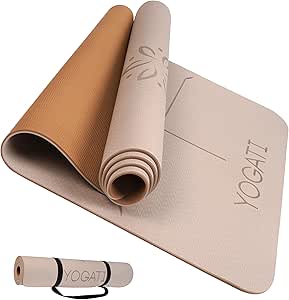 | Best for Learning Placement | Material: Thermoplastic elastomers | Dimensions: 72 x 24 x 0.24 inches | Weight: 820 g | VIEW ON AMAZON | See Our Full Breakdown |
| Gaiam Classic Print Yoga Mat, 4mm |  | Best Lightweight, Firm-Feeling Pick | Material: PVC | Dimensions: 68 x 24 inches | Thickness: 4 mm | VIEW ON AMAZON | See Our Full Breakdown |
| yoga mat for beginners non slip | Material | Dimensions | Surface | Care |
|---|---|---|---|---|
| Gaiam Premium 6mm Printed Yoga | PVC | 68 x 24 inches | Textured, non-slip | Spot clean; air out for 2–3 days before use |
| Gaiam Thick Yoga Mat with Carr | NBR foam | 72 x 24 inches | Textured | Wipe clean with a damp cloth |
| Gaiam Reversible Non-Slip Yoga | PVC | 68 x 24 inches | Textured, non-slip | Spot clean, dry flat, and avoid extended sun exposure |
| YOGATI Yoga Mat with Alignment | Thermoplastic elastomers | 72 x 24 x 0.24 inches | Textured, non-slip | Hand wash with mild soap and water |
| Gaiam Classic Print Yoga Mat | PVC | 68 x 24 inches | Textured, non-slip | Spot clean with damp cloth and mild detergent; dry flat |
More Details on Our Top Picks
Gaiam Premium 6mm Printed Yoga Mat
I rank this Gaiam Premium 6mm first because it lands between the two extremes in this lineup: more joint cushioning than the 4mm Classic Print, without the very soft 10mm feel of the NBR mat. Its textured PVC surface is intended to provide non-slip traction, a useful starting point for learning poses on a hard floor. At 3.1 pounds, it remains portable enough for home and studio routines.
The 68-by-24-inch footprint is standard among the thinner Gaiam choices, so it does not add extra length over the reversible or Classic Print versions. Its 6mm thickness is the simpler choice for a beginner who wants moderate padding without making cushioning the entire priority. By comparison, YOGATI offers alignment guides, but the Gaiam gives a more straightforward mat surface for general yoga and floor workouts.
The tradeoff is that PVC mats can arrive with a harmless initial odor; the supplied care guidance says to air it out for two to three days. It is also spot-clean only, so it asks for simple but deliberate upkeep. I would choose it for broad beginner use, not for someone who needs maximum joint padding or wants to use a mat immediately after unwrapping.
Pros:- 6mm thickness balances cushioning and a relatively stable practice surface.
- Textured surface is designed to help provide grip.
- Lightweight enough for yoga, Pilates, and home floor workouts.
- Made without seven listed phthalates.
Cons:- May have a strong but harmless odor at first and needs two to three days to air out.
- Spot-clean care offers less convenience than a mat that can be wiped more freely.
Best for: Beginners who want a middle-ground mat for standing and floor poses, with moderate padding and a textured surface.
Not ideal for: Anyone prioritizing very thick cushioning, a mat with alignment markings, or no airing period before use.
- Material:PVC
- Dimensions:68 x 24 inches
- Thickness:6 mm
- Weight:3.1 pounds
- Surface:Textured, non-slip
- Care:Spot clean; air out for 2–3 days before use
- Included:Access to online yoga content
Our verdict“I recommend this as the most balanced starting point for beginners who want grip, moderate cushioning, and practical portability.”
Gaiam Thick Yoga Mat with Carrying Strap
If pressure on knees, hips, or wrists makes floor poses uncomfortable, this 10mm NBR foam mat puts cushioning ahead of a firm, close-to-the-floor feel. It is thicker than every other option here, and its 72-inch length also gives more room than the 68-inch Gaiam mats. A textured surface is described as helping reduce slipping on hard floors, while the included strap makes the larger, padded mat easier to carry.
That extra softness is also its main compromise for a beginner. Compared with the 6mm Premium, this model is more focused on comfort and less on a steady feel for balance poses; plush foam may compress beneath hands and feet. I would favor it for stretching, Pilates, and gentle routines over practice that emphasizes standing balance or precise foot placement. YOGATI is thinner but offers alignment markings, while this Gaiam gives up that guidance for deeper padding.
The mat weighs 3.11 pounds, close to the 6mm Premium despite its added thickness. It wipes clean with a damp cloth, and the adjustable carrying strap is useful for storage as well as transport. The supplied guidance notes that an initial foam odor may take 24–48 hours to fade. Choose it for comfort, but skip it if a firmer surface matters more than cushioning.
Pros:- 10mm NBR foam provides the most cushioning in this group.
- 72-inch length offers more room than the 68-inch mats.
- Textured surface helps reduce slipping on hard floors.
- Includes an adjustable carrying and storage strap.
Cons:- Soft cushioning may feel less stable for balance poses.
- Initial foam odor may take 24–48 hours to fade.
- Thicker construction is less suited to buyers seeking a close-to-floor feel.
Best for: Beginners who want substantial padding for floor poses, stretching, Pilates, or tender joints.
Not ideal for: People who prefer a firm platform for standing balance or who want a thinner, more compact mat.
- Material:NBR foam
- Dimensions:72 x 24 inches
- Thickness:10 mm (2/5 in)
- Weight:3.11 pounds
- Surface:Textured
- Care:Wipe clean with a damp cloth
- Included:Adjustable carrying strap
Our verdict“I would choose this Gaiam when comfort is the first priority, while beginners focused on steady standing poses should start with the 6mm Premium instead.”
Gaiam Reversible Non-Slip Yoga Mat, 68 x 24 Inches
This mat’s appeal is its reversible two-color design: either side can serve as the practice surface, giving a beginner a visual change without changing the mat. The textured PVC surface is intended to provide grip, and the lightweight build suits yoga, Pilates, and floor workouts. Like the 6mm Premium, it has a familiar 68-by-24-inch footprint and moderate cushioning in the product description.
There is one detail I would verify before choosing it: the supplied information lists thickness as 5mm in the title and item details, but 6mm in the description. That matters because even a small thickness difference can shape how much padding and stability a new user expects. The Premium is an easier recommendation for someone who wants a clearly stated 6mm build; this reversible option makes more sense if the two-sided design and listed material claims matter more.
It is latex-free and listed as free of six specified phthalates, which may help buyers comparing material declarations. Care calls for spot cleaning and drying flat, with extended sun exposure to avoid. As with the other PVC choices, it may have a harmless odor when first opened and should air out for two to three days. The main drawback is not the design, but the uncertainty around its exact thickness.
Pros:- Reversible two-color design offers two visual sides.
- Textured surface is intended to provide non-slip grip.
- Lightweight and suitable for yoga, Pilates, and floor workouts.
- Latex-free and listed as free of six specified phthalates.
Cons:- Thickness is listed as both 5mm and 6mm in the supplied details.
- May have a harmless initial odor and needs two to three days to air out.
- Care guidance advises avoiding extended sun exposure.
Best for: Beginners who value a reversible look, a textured surface, and stated latex-free construction.
Not ideal for: Buyers who need an unambiguous thickness specification or want extra-thick joint padding.
- Material:PVC
- Dimensions:68 x 24 inches
- Thickness:Conflicting listing: 5 mm in title and item details; 6 mm in description
- Surface:Textured, non-slip
- Design:Reversible, two-color
- Latex:Latex-free
- Care:Spot clean, dry flat, and avoid extended sun exposure
Our verdict“I would pick this over the Premium only when reversibility and its material details outweigh the need for a clearly specified thickness.”
YOGATI Yoga Mat with Alignment Lines and Carrying Strap
Beginners who are still figuring out where hands and feet belong may benefit from the alignment markings on this YOGATI mat. They give visible placement cues that the plain Gaiam surfaces do not, so its standout feature is instructional rather than extra thickness. The mat is reversible and uses a textured TPE surface, with a listed 72-by-24-inch size and a shoulder strap for carrying.
Its 0.24-inch thickness is about 6mm, giving it a less padded profile than the 10mm Gaiam Thick. That can support a more stable feel for standing poses, while offering less relief for sensitive joints than the plush NBR option. The 820-gram listed weight makes it notably lighter than the Gaiam mats with stated weights, which can help if a beginner plans to carry it to class. The alignment guides provide a different kind of beginner support than simply adding foam.
Care is a tradeoff: this mat is hand-wash only with mild soap and water, which may be more involved than wiping a mat with a damp cloth. Its dense foam is described as cushioning joints while maintaining a stable base, but the relatively modest thickness may not suit everyone. I would choose it for placement guidance and portability, not for maximum padding or the easiest cleaning routine.
Pros:- Alignment markings can guide hand and foot placement.
- Textured surface helps provide grip.
- Lightweight at a listed 820 grams and includes a shoulder strap.
- Reversible design and dense foam offer a stable, cushioned base.
Cons:- At 0.24 inches thick, it may not provide enough cushioning for some users.
- Hand-wash-only care takes more effort than wiping with a damp cloth.
Best for: New practitioners who want visible pose-placement cues and a lighter mat to carry to class.
Not ideal for: Anyone seeking deep joint cushioning or a low-effort cleaning routine.
- Material:Thermoplastic elastomers
- Dimensions:72 x 24 x 0.24 inches
- Weight:820 g
- Surface:Textured, non-slip
- Design:Reversible with alignment markings
- Included:Shoulder strap
- Care:Hand wash with mild soap and water
Our verdict“I recommend YOGATI for beginners who want positioning cues and portability more than the deeper padding of the 10mm Gaiam.”
Gaiam Classic Print Yoga Mat, 4mm
At 2.1 pounds and 4mm thick, the Classic Print is the easiest Gaiam in this lineup to carry. That lower-profile build can feel more connected to the floor than the 10mm NBR mat, and its textured PVC surface is designed to provide non-slip grip. For a beginner taking a mat to a studio or storing it away between sessions, the lighter weight is a real practical distinction.
The same thin construction means less cushioning than the 6mm Premium, YOGATI, or the 10mm Thick. I would not make it the first choice for someone whose knees need extra padding for kneeling poses. Compared with the reversible Gaiam, this model has a clearly stated thickness, but it does not offer a two-sided design or alignment markings. Its role is simple: basic portability and a firmer, thinner feel.
The PVC mat is listed as made without six common phthalates and suits yoga, Pilates, and floor workouts. It may have a harmless odor when first unwrapped, so the supplied guidance recommends airing it out for two to three days. Spot-clean it with a damp cloth and mild detergent, dry it flat, and avoid prolonged sun exposure because the material can become brittle or fade. Choose it for easy carrying, not for plush comfort.
Pros:- Lightest mat in this comparison at 2.1 pounds.
- Textured surface is designed to provide non-slip grip.
- Clearly specified 4mm thickness offers a thinner feel than the other picks.
- Made without six common phthalates.
Cons:- 4mm thickness gives less cushioning than the 6mm and 10mm alternatives.
- May have a harmless odor when first opened and needs airing.
- Prolonged sun exposure can cause brittleness or fading.
Best for: Beginners who prioritize a lightweight mat for studio travel and prefer a thinner, closer-to-floor surface.
Not ideal for: People who need substantial cushioning for knees or want extra room, alignment lines, or a reversible design.
- Material:PVC
- Dimensions:68 x 24 inches
- Thickness:4 mm
- Weight:2.1 pounds
- Surface:Textured, non-slip
- Care:Spot clean with damp cloth and mild detergent; dry flat
- Material note:Made without six common phthalates
Our verdict“I would choose the Classic Print for carrying ease and a thinner feel, but beginners seeking knee comfort should move up to the 6mm Premium.”

How We Picked
I ranked these five mats around the needs behind the search for a beginner-friendly non-slip mat: surface traction, enough cushioning to make floor poses approachable, and enough firmness to support balance practice. A textured surface can help reduce slipping on a hard floor, but it is not a guarantee of grip in every condition. I avoid treating “non-slip” as a promise that a mat will stay secure for every person, pose, or amount of perspiration.
I compared thickness and material alongside weight, dimensions, care, and practical extras. The 10mm NBR mat earns credit for pressure relief, but the softer feel is a tradeoff for standing balance. The thinner PVC mats are easier to carry and can feel steadier, though they provide less padding. YOGATI’s alignment lines have a distinct learning benefit, while the reversible Gaiam’s uncertain thickness makes its cushioning harder to judge from the supplied details.
My order rewards versatility for a new practice first, then assigns the remaining mats to clear use cases rather than treating them as interchangeable. Product details supplied here do not include standardized grip testing, so I compare the stated textured surfaces without claiming one has proven superior traction. Odor notes, cleaning instructions, and sun exposure guidance also matter: a mat that needs airing or careful maintenance may not suit every routine. I make no first-hand testing claim; the picks reflect the listed construction, dimensions, and tradeoffs.
| yoga mat for beginners non slip | Material | Surface | Care | Included |
|---|---|---|---|---|
| Gaiam Premium 6mm Printed Yoga | PVC | Textured, non-slip | Spot clean; air out for 2–3 days before use | Access to online yoga content |
| Gaiam Thick Yoga Mat with Carr | NBR foam | Textured | Wipe clean with a damp cloth | Adjustable carrying strap |
| Gaiam Reversible Non-Slip Yoga | PVC | Textured, non-slip | Spot clean, dry flat, and avoid extended sun exposure | — |
| YOGATI Yoga Mat with Alignment | Thermoplastic elastomers | Textured, non-slip | Hand wash with mild soap and water | Shoulder strap |
| Gaiam Classic Print Yoga Mat | PVC | Textured, non-slip | Spot clean with damp cloth and mild detergent; dry flat | — |
Factors to Consider When Choosing Yoga Mat For Beginners Non Slip
I would choose a beginner mat by matching grip, cushioning, and stability to the practice you expect to do most often. A textured surface is a useful feature, but thickness, material, cleaning, and carry weight can change how a mat feels in daily use.
Grip is more than a label
All five options describe a textured surface intended to help with traction, but none of the supplied details gives standardized grip measurements. I would treat “non-slip” as a helpful design feature rather than a guarantee, especially if hands become sweaty. For a new practice on hard flooring, the Gaiam Premium, Classic Print, and YOGATI all state textured surfaces; YOGATI adds placement markings, while the Premium is the most balanced general-purpose choice in my ranking.
A mat that shifts on the floor can disrupt practice even if its top feels textured. If floor security is a concern, check the mat on the intended surface before a full session and keep the floor clean and dry. Grip also depends on how a person practices, so avoid choosing only by the word “non-slip.”
Choose thickness for your body and poses
Thickness is a tradeoff, not a simple ladder where more is always better. The 10mm Gaiam Thick offers the most padding for floor work and tender joints, but soft foam may feel less steady in standing balance poses. The 6mm Premium offers a middle ground, while the 4mm Classic Print is thinner and easier to carry but leaves less padding between joints and the floor.
YOGATI’s listed 0.24-inch build is around 6mm, though its cushioning will not match the 10mm mat. The reversible Gaiam has a thickness conflict in its supplied details, so I would confirm that information before making a decision based on padding. Beginners unsure what they prefer can start with moderate thickness rather than assuming the thickest model is best.
Consider length, weight, and carrying
Four mats list a width of 24 inches. The Gaiam models and the reversible mat are 68 inches long, while the Gaiam Thick and YOGATI are 72 inches. If you want more room to stretch out, those longer options may suit you better. Weight differs too: the Classic Print is listed at 2.1 pounds, the Premium and Thick at about 3.1 pounds, and YOGATI at 820 grams.
YOGATI and the 10mm Gaiam include straps, which can make transport and storage easier. The Classic Print’s lighter build is appealing for regular studio trips, but its low weight comes with thinner cushioning. Consider where the mat will live and whether carrying it is part of your routine.
Match material and care to your routine
The Gaiam choices are PVC, while the Thick uses NBR foam and YOGATI uses thermoplastic elastomers. The supplied descriptions note that several PVC mats may have an initial harmless odor and recommend airing them out for two to three days; the NBR mat may need 24–48 hours for its odor to fade. If you are sensitive to smells, plan that airing time before your first session.
Care instructions vary: some models call for spot cleaning, the Thick wipes clean with a damp cloth, and YOGATI is hand-wash only. The Classic Print and reversible Gaiam also come with guidance about drying flat or avoiding extended sun exposure. I would favor the care routine you can keep up with, since a mat that is awkward to clean may be less convenient over time.
Look for the feature you will actually use
YOGATI’s alignment lines are the clearest instructional feature here, potentially useful while learning where to place hands and feet. The reversible Gaiam offers two visual sides, but not the placement cues. The 10mm Gaiam includes a carrying strap and prioritizes padding; the Premium includes access to online yoga content. Those extras can help, but they should not outweigh the basics of fit, grip, and support.
For a straightforward first mat, I would lean toward the Premium. For comfort on the floor, choose the Thick; for visual alignment help, choose YOGATI; for light carrying, choose the Classic Print. That role-based approach is more useful than buying the mat with the longest feature list.
Frequently Asked Questions
Which of these mats is the best starting point for a beginner?
I rank the Gaiam Premium 6mm first for a balanced mix of textured surface, moderate cushioning, and portability. It avoids the pronounced softness of the 10mm Gaiam while providing more padding than the 4mm Classic Print. If alignment guidance or maximum joint cushioning matters more to you, YOGATI or the Gaiam Thick may be a better fit.
Does a textured surface guarantee that a yoga mat will not slip?
No. A textured surface is intended to help provide traction, but the supplied product details do not establish a universal grip guarantee for every floor, pose, or level of perspiration. These five mats all describe textured surfaces, so I would compare thickness, stability, and care alongside that feature rather than treating the non-slip label as the only decision point.
Should a beginner choose the thickest mat available?
Not necessarily. The 10mm Gaiam Thick has the most cushioning here and may be more comfortable for floor poses or sensitive joints, but its soft foam may feel less stable for balance. The 6mm Premium is a middle-ground choice, and thinner mats such as the 4mm Classic Print can feel closer to the floor while offering less padding.
How should I choose between the Gaiam Premium and Gaiam Reversible?
The Premium is the clearer pick if you want a stated 6mm thickness and a straightforward general-purpose mat. The Reversible adds a two-color design and is listed as latex-free, but its supplied thickness details conflict: one place says 5mm and another says 6mm. I would confirm the thickness before choosing the Reversible specifically for its padding.
Do these mats need special care before the first session?
Several may have a harmless odor when newly unwrapped. The supplied guidance recommends airing the Gaiam PVC mats for two to three days, while the NBR Gaiam may need 24–48 hours for its foam odor to fade. Follow each mat’s cleaning instructions as well; for example, YOGATI is hand-wash only, while the Thick Gaiam can be wiped with a damp cloth.
Conclusion
For most beginners, I would start with the Gaiam Premium 6mm: it balances moderate padding and a textured surface without making the mat especially thick or specialized. Choose the Gaiam Thick if pressure relief during floor poses matters more than a firm feel for balance. Pick YOGATI if placement markings and a light carry matter most, and the Classic Print if low weight and a thinner profile are your priorities.
The Reversible Gaiam suits buyers who value its two-sided design and stated material details, but I would check its conflicting thickness listing before ordering. Whichever mat fits your routine, weigh texture alongside cushioning, firmness, care, and portability; the right beginner choice is the one whose tradeoffs match the way you plan to practice.