For a practical NSF-certified under-sink filter, I’d start with the Waterdrop 15UA: its high stated capacity and two-year filter life make it a strong everyday pick, while the Waterdrop G3P600 suits households seeking reverse osmosis and the CuZn UC-200 stands out for its long stated service life. The main tradeoffs are filtration scope, replacement intervals, installation needs, and whether you want a dedicated faucet or reverse-osmosis water. Certification claims are not interchangeable: check the exact NSF/ANSI standard and the specific contaminant reduction listed for each model. Read on for the full comparison, including which options fit compact kitchens, simpler installs, and specialized filtration needs.

Get kitchen gear delivered free — and shop member deals
- Fast, free delivery on millions of items
- Access to Prime Big Deal Days deals on October 6–7
- Prime Video, Amazon Music and more included
Complete the kit


Key Takeaways
- Certification scope matters more than the word “NSF.” The Waterdrop TSA and 10UA list NSF/ANSI 42 certification, but buyers should verify which exact claims apply to each model and filter cartridge.
- Filter-life claims vary widely. The CuZn UC-200 and Waterdrop UA-5Y emphasize long service life, while other systems have different stated capacity or replacement schedules; household use and water quality can shorten real intervals.
- Reverse osmosis is a different kind of choice. The Waterdrop G3P600 and iSpring RCC7AK-BN offer RO-style filtration, but bring more components and installation and upkeep considerations than direct-connect carbon-style systems.
- Faucet setup affects fit and effort. Direct-connect options such as the VIOMI differ from dedicated-faucet models such as the Waterdrop 10UB, so check sink openings, plumbing access, and counter space before choosing.
- Several picks share a product family but are not identical. The Waterdrop 10UA, 10UA with two filters, 10UB, 15UA, TSA, TSU, and UA-5Y differ in configuration, filtration approach, or included components; compare the exact model rather than relying on brand name alone.
| CuZn UC-200 Under-Sink Water Filter, 5-Year Filter Life |  | Best for Long Replacement Intervals | Model: UC-200 | Filtration stages: 3 | Filter life: Up to 5 years | VIEW ON AMAZON | See Our Full Breakdown |
| Waterdrop 15UA Under-Sink Water Filter System, 19,000 Gallons, 2-Year Filter Life |  | Best for NSF/ANSI 53 Lead-Reduction Testing | Capacity: 19,000 gallons | Filter life: Up to 24 months | Maximum flow rate: 0.75 gpm at 60 psi | VIEW ON AMAZON | See Our Full Breakdown |
| Waterdrop G3P600 Tankless Reverse Osmosis Water Filter System, 600 GPD |  | Best for TDS Reduction | Filtration: 8-stage reverse osmosis | Capacity: 600 gallons per day | Pure-to-drain ratio: 2:1 | VIEW ON AMAZON | See Our Full Breakdown |
| Waterdrop TSA 3-Stage Under-Sink Water Filter System, NSF/ANSI 42 Certified |  | Best for Higher Listed Flow Rate | Filter configuration: 3 filters, 8-stage filtration | Certification: NSF/ANSI 42; CT filter certified by IAPMO | Compatible connections: 3/8-inch and 1/2-inch cold-water tubes | VIEW ON AMAZON | See Our Full Breakdown |
| VIOMI Under Sink Water Filter System, Direct Connect to Kitchen Faucet |  | Best for Broad Faucet Compatibility | Filter type: 2-in-1 composite PP cotton and carbon rod, 0.5 micron | Certifications: NSF/ANSI 42, 53, and 372 | Filter life: 12 months or 10,000 gallons | VIEW ON AMAZON | See Our Full Breakdown |
| ICEPURE Under-Sink Water Filter System, 22,000-Gallon Capacity |  | Best for Long Replacement Intervals | Certification: NSF/ANSI 42 and 372 | Filtration method: Activated carbon | Capacity: Up to 22,000 gallons | VIEW ON AMAZON | See Our Full Breakdown |
| PUREPLUS Under-Sink Water Filter System, 22,000-Gallon Capacity |  | Best for Multi-Contaminant Claims at High Capacity | Certifications: NSF/ANSI 42 and NSF/ANSI 372 | Filtration method: Six-in-one activated carbon | Filtration accuracy: 0.5 microns | VIEW ON AMAZON | See Our Full Breakdown |
| iSpring RCC7AK-BN 6-Stage Alkaline Reverse Osmosis Water Filtration System |  | Best for TDS Reduction | Certification: NSF/ANSI 58 | Filtration stages: 6 | Capacity: 75 gallons per day (284 liters per day) | VIEW ON AMAZON | See Our Full Breakdown |
| Waterdrop 10UA Under-Sink Water Filter System, NSF/ANSI 42 Certified | 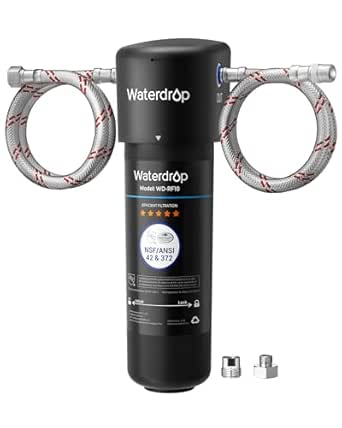 | Best Compact Pick for Municipal Water | Certifications: NSF/ANSI 42 and 372 | Purification method: Activated carbon | Water source: Cold municipal tap water | VIEW ON AMAZON | See Our Full Breakdown |
| ICEPURE WFS6310A Under-Sink Water Filter System |  | Best for Faster Flow with a Compact Cartridge | Certifications: NSF/ANSI 42 certified; NSF/ANSI/CAN 372 approved materials | Filtration method: Activated carbon, eight-stage | Filter precision: 0.5 μm | VIEW ON AMAZON | See Our Full Breakdown |
| Waterdrop UA-5Y 5-Year Under-Sink Water Filter System |  | Best for Fewer Filter Changes | Filter life: 5 years | Filtration method: 0.5 μm activated carbon block | Listed reductions: Chlorine, PFOA/PFOS, turbidity, rust, and sand | VIEW ON AMAZON | See Our Full Breakdown |
| Waterdrop TSU 0.01 Micron Ultra Filtration Under Sink Water Filter System | 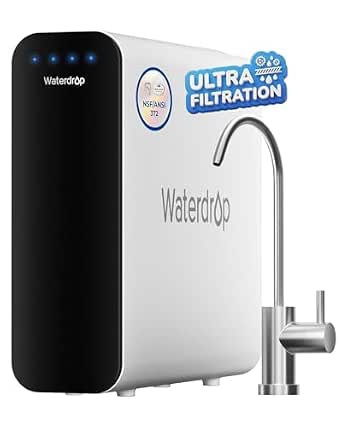 | Best for Guided Filter Maintenance | Filtration method: 3-stage system with 0.01-micron ultrafiltration membrane | Filter life cycle: UF 24 months; CT 12 months; PP 6 months | Capacity: 2,200 gallons | VIEW ON AMAZON | See Our Full Breakdown |
| Waterdrop 10UA Under-Sink Water Filter System with 2 Filters |  | Best Compact Certified Pick | Purification method: Activated carbon | Certifications: NSF/ANSI 42 and 372 | Filter life: Up to 12 months | VIEW ON AMAZON | See Our Full Breakdown |
| Waterdrop 10UB Under Sink Water Filter System with Dedicated Faucet |  | Best for a Dedicated Faucet | Purification method: Activated carbon made from coconut shells | Certifications and testing: IAPMO certified to NSF/ANSI 42 and 372; third-party tested against NSF/ANSI 53 for lead reduction | Filter life: 1 year | VIEW ON AMAZON | See Our Full Breakdown |
| nsf certified under sink filter | Dimensions | Maximum flow rate | Filter life | Capacity |
|---|---|---|---|---|
| CuZn UC-200 Under-Sink Water F | 5.5 x 14 x 5.5 in (D x W x H) | — | Up to 5 years | — |
| Waterdrop 15UA Under-Sink Wate | 3.9 × 3.6 × 16.7 in | 0.75 gpm at 60 psi | Up to 24 months | 19,000 gallons |
| Waterdrop G3P600 Tankless Reve | 18.12 x 5.67 x 17.72 in | — | — | 600 gallons per day |
| Waterdrop TSA 3-Stage Under-Si | — | 1.5 GPM | — | — |
| VIOMI Under Sink Water Filter | 3.9 x 3.6 x 16.7 in | 0.5 gpm | 12 months or 10,000 gallons | — |
| ICEPURE Under-Sink Water Filte | 6.81 × 5.39 × 15.55 inches | 2.5 GPM | — | Up to 22,000 gallons |
| PUREPLUS Under-Sink Water Filt | 13.7 × 4.5 × 4.5 inches | 2.5 GPM at 60 PSI | — | 22,000 gallons |
| iSpring RCC7AK-BN 6-Stage Alka | 15.5 × 16 × 18 inches | — | — | 75 gallons per day (284 liters per day) |
| Waterdrop 10UA Under-Sink Wate | 3.9 × 3.6 × 12.3 inches | 2.5 GPM | Up to 12 months | 11,000 gallons |
| ICEPURE WFS6310A Under-Sink Wa | 6.89 × 3.74 × 14.17 inches | 1.75 GPM | Up to 12,000 gallons or 12 months | — |
| Waterdrop UA-5Y 5-Year Under-S | 3.9 × 3.6 × 16.7 in | 1.33 gpm | 5 years | — |
| Waterdrop TSU 0.01 Micron Ultr | 14.81 × 4.68 × 13.97 in | 1.05 gpm | — | 2,200 gallons |
| Waterdrop 10UA Under-Sink Wate | 3.9 × 3.6 × 12.3 in | 1.33 gpm | Up to 12 months | 11,000 gallons |
| Waterdrop 10UB Under Sink Wate | — | 0.75 gpm | 1 year | — |
More Details on Our Top Picks
CuZn UC-200 Under-Sink Water Filter, 5-Year Filter Life
The UC-200 is the standout here for buyers who want to avoid frequent cartridge changes: its filter is rated for up to five years, longer than the Waterdrop 15UA’s two-year limit and the VIOMI’s one-year interval. It uses micro-sediment membranes, KDF-55, and coconut-shell carbon to target chlorine, lead, and PFAS while retaining beneficial minerals. Its no-drill inline connection and included stainless steel hose also suit renters or anyone who would rather not add a separate faucet. The certification scope is narrower than some buyers may expect: the supplied data lists NSF/ANSI 42 and 372, not a contaminant-reduction certification under NSF/ANSI 53. It also does not reduce TDS, so it is not a reverse-osmosis substitute.
Pros:- Filter life rated for up to five years
- Three-stage media targets sediment, chlorine, lead, and PFAS
- No-drill inline installation with a stainless steel connection hose
- Retains beneficial minerals
Cons:- Does not reduce TDS
- Listed certifications are NSF/ANSI 42 and 372, not NSF/ANSI 53
- Long service interval may not suit buyers who prefer more frequent filter renewal
Best for: Households on municipal water that want long intervals between filter changes and mineral-retaining filtration.
Not ideal for: Buyers who need TDS reduction or want a listed NSF/ANSI 53 certification for lead-reduction claims.
- Model:UC-200
- Filtration stages:3
- Filter life:Up to 5 years
- Filter media:Micro-sediment membranes, KDF-55, coconut-shell carbon
- Listed certifications:NSF/ANSI 42 and 372
- Installation:Inline faucet connection; no drilling required
- Dimensions:5.5 x 14 x 5.5 in (D x W x H)
- TDS reduction:No
Our verdict“Choose the UC-200 if long filter life and a no-drill setup matter more than TDS reduction or NSF/ANSI 53 certification.”
Waterdrop 15UA Under-Sink Water Filter System, 19,000 Gallons, 2-Year Filter Life
Among these mineral-retaining carbon filters, the 15UA makes the clearest case for shoppers prioritizing lead-reduction documentation: it is IAPMO certified to NSF/ANSI 42 and 372 and third-party tested to NSF/ANSI 53 for lead reduction. That distinction separates it from the CuZn UC-200, whose listed certifications are 42 and 372, and from the Waterdrop TSA, listed with NSF/ANSI 42 certification. The 15UA is rated for 19,000 gallons or up to 24 months, with push-to-connect fittings that simplify installation. Its 0.75-gpm flow rate is moderate, not a match for the faster-listed TSA. This model is designed for cold municipal water, so well-water households should skip it; it also retains minerals rather than lowering TDS.
Pros:- IAPMO certified to NSF/ANSI 42 and 372, with third-party NSF/ANSI 53 testing for lead reduction
- Rated for up to 19,000 gallons or 24 months
- Push-to-connect fittings support a simpler installation
- 0.75-gpm tested flow rate at 60 psi
Cons:- Intended for cold municipal water, not well water
- Does not reduce TDS
- Coconut-shell activated carbon may be unsuitable for people with a coconut allergy
Best for: Municipal-water households seeking lead-reduction testing alongside chlorine and PFAS reduction, with a two-year cartridge interval.
Not ideal for: Well-water users, households needing TDS reduction, or buyers who cannot accommodate its 16.7-inch height.
- Capacity:19,000 gallons
- Filter life:Up to 24 months
- Maximum flow rate:0.75 gpm at 60 psi
- Purification method:Activated carbon
- Water source:Cold municipal tap water
- Certifications and testing:IAPMO certified to NSF/ANSI 42 and 372; third-party tested to NSF/ANSI 53 for lead reduction
- Dimensions:3.9 × 3.6 × 16.7 in
- Replacement filter:WD-RF15
Our verdict“Pick the 15UA if documented lead-reduction testing matters more than a faster flow rate or a longer service interval.”
Waterdrop G3P600 Tankless Reverse Osmosis Water Filter System, 600 GPD
The G3P600 is the option for buyers whose goal goes beyond the mineral-retaining filtration offered by the CuZn UC-200, Waterdrop 15UA, and VIOMI: its reverse-osmosis membrane reduces TDS as well as targeting contaminants such as fluoride and PFAS. It carries NSF/ANSI 42, 58, and 372 certifications, giving it a broader listed certification set than those carbon-filter alternatives. The tankless design and 600-gallon-per-day capacity support regular household use, while the smart faucet displays TDS and filter life so users can check system status at the tap. The tradeoffs are more involved installation and operation: it requires electricity, occupies a substantial cabinet footprint, and sends water to the drain at a 2:1 pure-water-to-drain ratio. Its 0.42-gpm flow rate is also lower than the TSA’s listed 1.5 GPM.
Pros:- Reverse-osmosis filtration reduces TDS
- NSF/ANSI 42, 58, and 372 certifications are listed
- Tankless system rated for up to 600 gallons per day
- Smart faucet displays TDS and filter life
Cons:- Requires an electrical connection under the sink
- Large cabinet footprint at 18.12 x 5.67 x 17.72 inches
- Produces drain water at a 2:1 pure-water-to-drain ratio
Best for: Households that want reverse-osmosis TDS reduction, a display-equipped faucet, and high daily production capacity.
Not ideal for: Renters or buyers with limited cabinet space, no under-sink electrical outlet, or a preference for a simple inline carbon filter.
- Filtration:8-stage reverse osmosis
- Capacity:600 gallons per day
- Pure-to-drain ratio:2:1
- Flow rate:0.42 gpm
- Dimensions:18.12 x 5.67 x 17.72 in
- Weight:31 lb
- Installation:Under sink; requires electricity
- Certifications:NSF/ANSI 42, 58, and 372; FCC
Our verdict“Choose the G3P600 if TDS reduction is your priority and your kitchen can accommodate an electric reverse-osmosis system.”
Waterdrop TSA 3-Stage Under-Sink Water Filter System, NSF/ANSI 42 Certified
The TSA suits municipal-water users who want a conventional, mineral-retaining filter and value its listed maximum flow rate of 1.5 GPM. That is higher than the Waterdrop 15UA’s 0.75 gpm and the VIOMI’s 0.5 gpm, though actual flow can vary with household conditions. Its three filters use an eight-stage process and have staggered replacement windows, with one filter listed for up to 12–18 months. Push-to-connect fittings and twist-and-lock replacements keep routine upkeep straightforward. The certification listing is narrower than the 15UA’s: this system is listed as NSF/ANSI 42 certified, with the CT filter certified by IAPMO, rather than carrying the 15UA’s stated NSF/ANSI 53 lead-reduction testing. It does not reduce TDS, has no included faucet, and is not intended for hot water or untreated well water.
Pros:- Listed maximum flow rate of 1.5 GPM
- Three filters with replacement lifespans ranging from 6 to 18 months
- Push-to-connect installation and twist-and-lock filter replacement
- Helps reduce PFAS, PFOA/PFOS, chlorine, fluoride, and particles
Cons:- Does not reduce TDS
- NSF/ANSI 42 is the listed system certification; this data does not list NSF/ANSI 53 certification
- Designed for municipal cold water and may require pre-filtration for well water
Best for: Municipal-water households that want a higher listed flow rate, mineral retention, and quick filter changes.
Not ideal for: Buyers who need TDS reduction, a supplied dedicated faucet, or filtration for untreated well water.
- Filter configuration:3 filters, 8-stage filtration
- Certification:NSF/ANSI 42; CT filter certified by IAPMO
- Compatible connections:3/8-inch and 1/2-inch cold-water tubes
- Maximum flow rate:1.5 GPM
- Filter lifespans:6 months; 8–12 months; 12–18 months
- Water source:Municipal tap water
- TDS reduction:No
- Faucet included:No
Our verdict“Choose the TSA if a higher listed flow rate and easy cartridge swaps matter more than TDS reduction or broader listed certification.”
VIOMI Under Sink Water Filter System, Direct Connect to Kitchen Faucet
The VIOMI is a compact, direct-connect choice for buyers who want a clearly stated NSF/ANSI 42, 53, and 372 certification set without adding a separate faucet. Its included 3/8-to-1/2-inch adapter can help it fit common U.S. feed-line sizes, while tool-free push-to-connect fittings keep installation simpler than the electric reverse-osmosis setup of the Waterdrop G3P600. The 0.5-micron composite filter is rated for up to 10,000 gallons or 12 months and is specified to reduce PFAS, lead, chlorine, and odors. Compared with the Waterdrop 15UA, it has a shorter stated service interval and lower listed flow rate; the supplied data does not specify third-party NSF/ANSI 53 testing details beyond the certification listing. It also requires a cold-water line and does not claim TDS reduction.
Pros:- Lists NSF/ANSI 42, 53, and 372 certifications
- Includes a 3/8-to-1/2-inch adapter for common feed-line sizes
- Tool-free push-to-connect installation
- Rated for up to 10,000 gallons or 12 months
Cons:- 0.5-gpm maximum flow rate may feel slow during high-volume filling
- Requires replacement after 12 months or 10,000 gallons
- Cold-water use only; TDS reduction is not specified
Best for: Homeowners with standard 3/8- or 1/2-inch cold-water connections who want direct-faucet filtration and a listed NSF/ANSI 53 certification.
Not ideal for: High-demand kitchens that need faster dispensing, or buyers seeking reverse-osmosis TDS reduction or longer intervals between replacements.
- Filter type:2-in-1 composite PP cotton and carbon rod, 0.5 micron
- Certifications:NSF/ANSI 42, 53, and 372
- Filter life:12 months or 10,000 gallons
- Maximum flow rate:0.5 gpm
- Compatibility:Standard 3/8-inch feed valve; includes 3/8-inch to 1/2-inch adapter
- Operating pressure range:15–60 psi
- Temperature range:41°F–100°F
- Dimensions:3.9 x 3.6 x 16.7 in
Our verdict“Pick the VIOMI if broad standard-line compatibility and listed NSF/ANSI 53 certification matter more than flow speed or a longer cartridge interval.”
ICEPURE Under-Sink Water Filter System, 22,000-Gallon Capacity
For buyers focused on NSF-certified chlorine and taste improvement without a reverse-osmosis setup, this ICEPURE pairs NSF/ANSI 42 and 372 certifications with a stated capacity of up to 22,000 gallons or three years. Its 2.5 GPM flow rate is a stronger fit for a busy kitchen than the Waterdrop 10UA’s tested 0.75 GPM full flow rate, while its stated reduction claims are narrower than that Waterdrop model’s claims for PFAS, PFOA, and PFOS. Plug-and-play installation and quick filter changes keep routine maintenance straightforward, and the carbon filter retains beneficial minerals. The tradeoff is that certification does not mean broad contaminant removal: this pick is aimed at chlorine, taste, and odor, not TDS reduction. It also connects only to cold-water lines with specified thread types, so check plumbing compatibility first.
Pros:- NSF/ANSI 42 and 372 certifications
- Capacity up to 22,000 gallons and stated filter life up to three years
- 2.5 GPM maximum flow rate
- Plug-and-play installation and quick filter changes
Cons:- Reduction claims focus on chlorine, taste, and odor rather than a broad set of contaminants
- Cold-water use only
- Connection compatibility is limited to specified thread types
Best for: Households wanting a high-capacity, fast-flowing filter for chlorine taste and odor, with infrequent cartridge changes.
Not ideal for: Buyers targeting TDS reduction or broader contaminant claims, and anyone whose cold-water connection does not match the specified 1/2-inch or 3/8-inch female NPT threads.
- Certification:NSF/ANSI 42 and 372
- Filtration method:Activated carbon
- Capacity:Up to 22,000 gallons
- Stated filter life:Up to 3 years
- Maximum flow rate:2.5 GPM
- Reduces:Chlorine, taste, and odor
- Water connection:Cold water only; 1/2-inch or 3/8-inch female NPT threads
- Dimensions:6.81 × 5.39 × 15.55 inches
Our verdict“Choose this ICEPURE if long filter life and fast flow matter more than broad contaminant reduction claims.”
PUREPLUS Under-Sink Water Filter System, 22,000-Gallon Capacity
The PUREPLUS stands apart from the ICEPURE 22,000-gallon model by pairing the same headline capacity and 2.5 GPM maximum flow with a broader stated reduction list: chlorine, heavy metals, and sediment, plus a 0.5-micron filtration accuracy. It carries NSF/ANSI 42 and 372 certifications, but those certifications should not be read as proof of every reduction claim listed. Its five-year filter-life claim is notably longer than the ICEPURE’s stated three years, though actual replacement timing can depend on water quality and use. Quick-connect fittings help simplify installation, and the filter retains minerals rather than reducing TDS. That makes it a poor match for anyone seeking low-TDS water; the iSpring RCC7AK-BN is the more relevant option in this group for TDS reduction, but requires a tank and more under-sink space.
Pros:- NSF/ANSI 42 and 372 certifications
- Up to 22,000-gallon capacity and a stated five-year filter life
- 0.5-micron filtration accuracy with stated chlorine, heavy-metal, and sediment reduction
- Quick-connect installation and 2.5 GPM maximum flow
Cons:- Does not reduce TDS
- Cold-water use only, with a maximum temperature of 100 °F
- Compatibility is limited to 1/2-inch or 3/8-inch female NPT threads
Best for: Cold-water households seeking a high-capacity carbon filter with stated heavy-metal and sediment reduction claims, while retaining dissolved minerals.
Not ideal for: Buyers who need TDS reduction, use hot water at the filter, or cannot verify compatibility with the listed faucet threads.
- Certifications:NSF/ANSI 42 and NSF/ANSI 372
- Filtration method:Six-in-one activated carbon
- Filtration accuracy:0.5 microns
- Capacity:22,000 gallons
- Stated filter life:Up to 5 years
- Maximum flow rate:2.5 GPM at 60 PSI
- Maximum supported TDS:500 ppm; does not reduce TDS
- Maximum temperature:100 °F
- Dimensions:13.7 × 4.5 × 4.5 inches
Our verdict“Pick PUREPLUS for high capacity and broader stated carbon-filter reduction claims, but skip it if lowering TDS is your goal.”
iSpring RCC7AK-BN 6-Stage Alkaline Reverse Osmosis Water Filtration System
Among these five picks, the iSpring is the clear choice for shoppers who want reverse osmosis and TDS reduction, not just a certified carbon filter for taste and chlorine. Its NSF/ANSI 58 certification, six filtration stages, and 75 GPD capacity set it apart from the ICEPURE and PUREPLUS carbon systems, which retain minerals and do not claim TDS reduction. A post-treatment mineral stage is designed to add minerals and balance pH, giving buyers an alternative to untreated RO water. The tradeoff is a more involved installation footprint: this system includes a storage tank and faucet, while the Waterdrop 10UA is a smaller direct under-sink carbon option. Filter replacement is listed at six months, so upkeep is more frequent than the long-capacity cartridge systems. Choose it for RO treatment, not for minimal maintenance.
Pros:- NSF/ANSI 58-certified reverse osmosis system
- Reduces TDS and a range of contaminants
- Mineral stage is designed to add minerals and balance pH
- Includes a brushed nickel faucet and top-mounted faucet fastener
Cons:- Requires space for the system and storage tank
- Listed filter life is six months, requiring recurring replacements
- More involved setup than direct-connect carbon filters such as the Waterdrop 10UA
Best for: Households that specifically want NSF/ANSI 58-certified reverse osmosis, TDS reduction, and a mineral stage, and have room for a tank.
Not ideal for: Renters or compact-kitchen owners who want a simple carbon filter, minimal under-sink equipment, or less frequent filter servicing.
- Certification:NSF/ANSI 58
- Filtration stages:6
- Capacity:75 gallons per day (284 liters per day)
- Purification methods:Reverse osmosis, alkaline, activated carbon, and carbon block
- Maximum supported water TDS:750 ppm
- Operating pressure:70 PSI
- Listed filter life:6 months
- Dimensions:15.5 × 16 × 18 inches
- Included components:RO system, brushed nickel faucet, storage tank, and extra tool set
Our verdict“Choose the iSpring when TDS reduction is the priority and you can accommodate its tank and recurring filter schedule.”
Waterdrop 10UA Under-Sink Water Filter System, NSF/ANSI 42 Certified
The Waterdrop 10UA is the compact choice for buyers who value NSF/ANSI 42 and 372 certification alongside stated PFAS, PFOA, and PFOS reduction claims. Its 3.9 × 3.6 × 12.3-inch footprint is easier to place than the iSpring RCC7AK-BN, which needs room for a reverse-osmosis unit and storage tank. The compromise is capacity and flow: the 10UA is rated for 11,000 gallons or up to 12 months, and its tested full flow rate is 0.75 GPM at 60 PSI, below the 2.5 GPM maximum listed for both 22,000-gallon ICEPURE and PUREPLUS systems. It retains dissolved minerals and is intended for cold municipal tap water, not well water or hot-water lines. Buyers should also check faucet connections, since a converter fitting may be needed.
Pros:- NSF/ANSI 42 and 372 certifications
- Stated reduction of chlorine, PFAS, PFOA, and PFOS
- Compact dimensions and twist-and-lock filter changes
- Retains dissolved minerals
Cons:- 11,000-gallon capacity and up to 12-month filter life are shorter than the ICEPURE and PUREPLUS 22,000-gallon options
- Tested full flow rate is 0.75 GPM at 60 PSI
- Not suitable for well water or hot water; faucet connections may need a converter
Best for: Apartment and small-kitchen owners on municipal water who want a compact certified filter with stated PFAS, PFOA, and PFOS reduction claims.
Not ideal for: Well-water users, households needing high tested flow or multi-year capacity, and buyers who want TDS reduction.
- Certifications:NSF/ANSI 42 and 372
- Purification method:Activated carbon
- Water source:Cold municipal tap water
- Capacity:11,000 gallons
- Filter life:Up to 12 months
- Tested full flow rate:0.75 GPM at 60 PSI
- Maximum flow rate:2.5 GPM
- Maximum supported TDS:700 ppm
- Dimensions:3.9 × 3.6 × 12.3 inches
Our verdict“Choose the Waterdrop 10UA for a compact municipal-water setup and its stated PFAS-related reduction claims, not for high flow or TDS reduction.”
ICEPURE WFS6310A Under-Sink Water Filter System
This ICEPURE suits buyers who want a faster-flowing carbon filter but do not need the 22,000-gallon capacity of the ICEPURE WFS5300A or PUREPLUS system. It is rated for up to 12,000 gallons or 12 months, with a 1.75 GPM maximum flow rate—above the Waterdrop 10UA’s tested 0.75 GPM full flow, though below the 2.5 GPM maximum listed for the two higher-capacity alternatives. Its 0.5-micron, eight-stage filtration is described as reducing chlorine, odors, heavy metals, rust, and sediment while retaining beneficial minerals. The listed credentials distinguish certified performance for chlorine reduction under NSF/ANSI 42 from NSF/ANSI/CAN 372 approval of materials. Tool-free installation, converter fittings, and included hoses can ease setup, but it is intended for municipal cold tap water and still needs a replacement filter.
Pros:- NSF/ANSI 42 certified and NSF/ANSI/CAN 372 approved materials
- 0.5-micron, eight-stage filtration with stated reduction of chlorine, odors, heavy metals, rust, and sediment
- 1.75 GPM maximum flow rate
- Tool-free installation and filter changes; converter set and hoses are included
Cons:- Filter life is listed as up to 12,000 gallons or 12 months, shorter than the ICEPURE WFS5300A and PUREPLUS options
- Designed for municipal cold tap water
- Replacement filter is required
Best for: Municipal-water households seeking a 0.5-micron carbon filter with faster stated flow than the Waterdrop 10UA and a more compact capacity commitment than a 22,000-gallon model.
Not ideal for: Buyers seeking reverse-osmosis TDS reduction, a multi-year filter interval, or a system intended for well water.
- Certifications:NSF/ANSI 42 certified; NSF/ANSI/CAN 372 approved materials
- Filtration method:Activated carbon, eight-stage
- Filter precision:0.5 μm
- Filter life:Up to 12,000 gallons or 12 months
- Maximum flow rate:1.75 GPM
- Operating pressure:30–125 PSI
- Temperature range:40–100 °F
- Dimensions:6.89 × 3.74 × 14.17 inches
- Included components:System, 2 hoses, converter set, 3 screws, and Teflon tape
Our verdict“Pick the WFS6310A if you want a faster-flowing certified carbon filter and accept annual cartridge replacement.”
Waterdrop UA-5Y 5-Year Under-Sink Water Filter System
The five-year rated filter life is the main reason I’d choose the UA-5Y: it reduces the hassle of frequent cartridge changes compared with the Waterdrop 10UA, whose stated service life is 12 months. Its 0.5 μm activated carbon block is described as reducing chlorine, PFOA/PFOS, turbidity, rust, and sand while retaining minerals, and the system runs without electricity. That makes it a straightforward fit for municipal tap water when a separate faucet isn’t needed. The key certification caveat matters in a roundup focused on NSF-certified filters: its NSF/ANSI 372 certification covers lead-free materials, not the listed contaminant-reduction claims. At 16.7 inches long, it also needs more cabinet clearance than the shorter 10UA. I’d skip it for well water or anyone seeking broader contaminant-reduction certification.
Pros:- Five-year rated filter life reduces replacement frequency.
- Retains essential minerals while reducing the listed particles and substances.
- Includes installation hardware and is designed for DIY setup.
- Operates mechanically without electricity.
Cons:- NSF/ANSI 372 certification addresses lead-free materials, not contaminant-reduction performance.
- Its 16.7-inch length may not fit crowded under-sink cabinets.
- Not recommended for well water.
Best for: Municipal-water households that want a faucet-connected carbon filter and prefer infrequent filter changes over a compact cabinet fit.
Not ideal for: Well-water users, buyers who need NSF certification for contaminant reduction, or anyone with limited vertical space under the sink.
- Filter life:5 years
- Filtration method:0.5 μm activated carbon block
- Listed reductions:Chlorine, PFOA/PFOS, turbidity, rust, and sand
- Maximum flow rate:1.33 gpm
- Maximum supported TDS:700 ppm
- Dimensions:3.9 × 3.6 × 16.7 in
- Water temperature range:35–100 °F
- Certification:NSF/ANSI 372
Our verdict“Choose the UA-5Y for municipal tap water and infrequent filter changes, but not if you need NSF certification for contaminant reduction.”
Waterdrop TSU 0.01 Micron Ultra Filtration Under Sink Water Filter System
I’d put the Waterdrop TSU on the shortlist for buyers who want 0.01-micron ultrafiltration and a built-in reminder for changing its staged filters. Its LED panel tracks the UF, CT, and PP filter cycles, which are rated at 24, 12, and 6 months respectively; that is more guidance than the simpler Waterdrop 10UB’s one-year replacement schedule. The TSU also produces no wastewater and retains essential minerals, a practical distinction from reverse-osmosis systems such as the Waterdrop G3P600. Its NSF-related credential needs careful reading: the supplied data lists IAPMO NSF/ANSI 372, which concerns lead-free materials rather than certification of the stated contaminant reductions. The system includes a brushed-nickel faucet, but installation calls for countertop drilling, and replacement filters add recurring upkeep.
Pros:- 0.01-micron ultrafiltration is paired with listed reductions for chlorine, PFAS, heavy metals, taste, and odor.
- LED panel alerts users when staged filters need replacement.
- Produces no wastewater and retains essential minerals.
- Includes a brushed-nickel faucet and supports a maximum flow rate of 1.05 gpm.
Cons:- Separate faucet installation requires countertop drilling.
- IAPMO NSF/ANSI 372 covers lead-free materials, not the listed contaminant reductions.
- Not compatible with well water or hot water, and filter replacements carry ongoing cost.
Best for: Municipal-water households that want staged ultrafiltration, filter-life reminders, and no wastewater, and can install a separate faucet.
Not ideal for: Renters who cannot drill a countertop, well-water users, or buyers seeking NSF certification for contaminant-reduction claims.
- Filtration method:3-stage system with 0.01-micron ultrafiltration membrane
- Filter life cycle:UF 24 months; CT 12 months; PP 6 months
- Capacity:2,200 gallons
- Maximum flow rate:1.05 gpm
- Maximum supported TDS:700 ppm
- Dimensions:14.81 × 4.68 × 13.97 in
- Power source:Mechanical water pressure
- Certification:IAPMO NSF/ANSI 372
Our verdict“Pick the TSU if you want mineral-retaining ultrafiltration with maintenance reminders and can accommodate countertop drilling.”
Waterdrop 10UA Under-Sink Water Filter System with 2 Filters
Among these four, the Waterdrop 10UA has the clearest stated NSF coverage for this buying brief: its data lists NSF/ANSI 42 and 372. Those standards relate to the listed scope of its certification; I would not read them as certification for every reduction claim, including lead or PFAS. The twist-and-lock design makes installation and cartridge swaps less involved than adding the dedicated faucet supplied with the Waterdrop 10UB. Its 12-month filter life is shorter than the UA-5Y’s five-year rating, but the 10UA’s 12.3-inch length can suit tighter cabinets better. A tested flow rate of 0.75 gpm at 60 psi gives a more grounded reference than the separate 1.33 gpm maximum. It is limited to cold municipal water, so well-water households should choose another setup.
Pros:- Lists NSF/ANSI 42 and 372 certifications.
- Twist-and-lock design simplifies installation and filter replacement.
- Compact 12.3-inch length can suit tighter under-sink spaces.
- Includes two filters and has a stated maximum filter life of 12 months.
Cons:- Limited to cold municipal tap water, not well water or hot water.
- Stated service life is much shorter than the UA-5Y’s five-year rating.
- Tested flow rate is 0.75 gpm at 60 psi, below the listed 1.33 gpm maximum.
Best for: Municipal-water households seeking a compact, faucet-connected filter with stated NSF/ANSI 42 and 372 certifications and simple cartridge changes.
Not ideal for: Well-water users, households needing hot-water filtration, or buyers who want a dedicated faucet included.
- Purification method:Activated carbon
- Certifications:NSF/ANSI 42 and 372
- Filter life:Up to 12 months
- Capacity:11,000 gallons
- Maximum flow rate:1.33 gpm
- Tested flow rate:0.75 gpm at 60 psi
- Dimensions:3.9 × 3.6 × 12.3 in
- Included filters:2
Our verdict“Choose the 10UA for a compact municipal-water setup with stated NSF/ANSI 42 and 372 certifications and easy filter swaps.”
Waterdrop 10UB Under Sink Water Filter System with Dedicated Faucet
The Waterdrop 10UB is the better fit when you want filtered water from a separate included faucet rather than routing filtration through an existing kitchen faucet. Its brushed stainless steel faucet and push-to-connect fittings give it a more complete installation package than the faucet-connected 10UA, while the twist-and-lock cartridge keeps annual replacement simple. For this NSF-focused roundup, its certification details are stronger than the UA-5Y’s: it is listed as IAPMO certified to NSF/ANSI 42 and 372, with third-party testing against NSF/ANSI 53 for lead reduction. That distinction still matters: the supplied data describes third-party testing for the lead claim, not NSF/ANSI 53 certification. The tradeoffs are a lower 0.75 gpm maximum flow rate and a one-year filter life; like the 10UA, it is for municipal cold water, not well or hot water.
Pros:- Includes a lead-free brushed stainless steel dedicated faucet.
- IAPMO certified to NSF/ANSI 42 and 372, with third-party testing against NSF/ANSI 53 for lead reduction.
- Push-to-connect fittings and twist-and-lock replacement filter simplify installation and maintenance.
- Uses BPA-free and lead-free materials.
Cons:- Maximum flow rate is 0.75 gpm.
- Filter life is one year, shorter than the UA-5Y’s five-year rating.
- Not suitable for well water or hot water; coconut-shell carbon may not suit people with a coconut allergy.
Best for: Municipal-water households that want a dedicated filtered-water faucet, listed NSF/ANSI 42 and 372 certification, and third-party testing for lead reduction.
Not ideal for: Well-water users, buyers who cannot add a faucet, or households prioritizing higher flow and longer filter life.
- Purification method:Activated carbon made from coconut shells
- Certifications and testing:IAPMO certified to NSF/ANSI 42 and 372; third-party tested against NSF/ANSI 53 for lead reduction
- Filter life:1 year
- Maximum flow rate:0.75 gpm
- Operating temperature range:35–100 °F
- Maximum supported TDS:700 ppm
- Replacement filter:WD-RF10
- Water source:Municipal cold water
Our verdict“Choose the 10UB if you want an included dedicated faucet and clearly described certification and lead-testing details for municipal cold water.”

How We Picked
I ranked these filters around what the phrase NSF-certified should mean to a buyer: a verifiable, model-specific certification claim tied to a stated standard and contaminant-reduction scope. I also weighed filtration approach, stated capacity and service life, connection and faucet requirements, system complexity, and the practical burden of replacement. A certification label by itself does not establish that a unit reduces every contaminant, so the product listing and certification record should agree on the exact model and claim.
The ranking favors options that appear to balance clearly stated specifications with manageable installation and maintenance, while specialized systems earn their place for buyers who want their particular approach, such as reverse osmosis or ultrafiltration. Capacity figures and filter-life estimates are not treated as guarantees; water conditions and consumption affect them. Because this lineup includes products with different levels of published certification detail, I would verify current documentation before purchase rather than assume that similarly named models carry identical approvals.
Factors to Consider When Choosing Nsf Certified Under Sink Filter
Before choosing a model, I’d match the filter to your water concern and kitchen setup, then verify certification and replacement details. These checks can prevent the common mistake of buying a system that sounds broadly certified but does not cover the contaminant or configuration you care about.
Match the Certification to the Claim You Need
NSF/ANSI standards cover different performance claims, so the standard number matters more than a broad “NSF certified” phrase. Check whether the exact system or cartridge is certified, and read which contaminant reductions are included in that certification. A filter certified for taste and odor claims is not automatically certified for lead, cysts, or other substances. Look up the exact model in the certifier’s directory when a particular contaminant drives your purchase. If the listing does not name the standard and scope clearly, treat the claim as unverified until you find documentation.
Start With Your Water, Not the Product’s Marketing
Different homes can have different water concerns, even within the same municipality, so a filter’s broad language may not address your specific need. Review your utility’s water quality report, and consider an appropriate lab test for a private well or a concern the report does not resolve. Choose a system whose certified reduction claims match those findings rather than selecting by the largest contaminant list. A filter’s performance is also affected by incoming water conditions and proper installation. Avoid assuming that reverse osmosis is automatically the right answer for every taste or water-quality issue.
Compare Filter Life With Replacement Access
Capacity and service-life estimates help compare systems, but they are not fixed schedules for every household. Higher daily use, sediment, and source-water conditions can change how soon a cartridge needs attention. Before buying, confirm the replacement filter’s exact model, availability, and whether the system uses one cartridge or several. A long stated lifespan is less useful if replacements are difficult to find or the maintenance process is awkward. Set a reminder based on the manufacturer’s schedule and watch for any stated performance or flow changes.
Check Faucet, Tubing, and Cabinet Fit
Under-sink systems need room not only for the unit but also for tubing, shutoff access, and future cartridge changes. A direct-connect design may use the existing faucet, while a dedicated-faucet model can require a spare sink or countertop opening. Measure the cabinet and inspect the plumbing before ordering; disposal units and stored cleaning supplies often compete for the same space. Confirm connector sizes and whether the package includes the fittings your setup requires. A system that fits the cabinet on paper can still be inconvenient if it blocks valves or makes filter changes hard to reach.
Choose Filtration Style With Its Tradeoffs in Mind
Carbon-style filtration, ultrafiltration, and reverse osmosis serve different preferences and should not be treated as interchangeable. RO systems can address a broader range of dissolved substances when the relevant reduction claims are supported, but they typically involve more components and may generate reject water. Ultrafiltration and simpler cartridge systems can suit buyers who want a different balance of installation and operation, but their claims depend on the exact model. Consider whether you want to retain minerals, reduce particular dissolved substances, or mainly improve taste and odor. Use certified performance documentation to settle that choice, not a filtration label alone.
Factor in Installation and Ongoing Ownership
A low-complexity connection can be a better fit for renters or first-time installers, while multi-stage systems may call for more plumbing work and cabinet planning. Read the installation instructions before buying and check whether the warranty requires a particular setup or maintenance schedule. Also account for replacement cartridges, flushing steps, and any system-specific upkeep—not just the initial installation. A dedicated faucet or storage tank can change the amount of space and work involved. Paying for extra stages makes sense only when they address a real water need and you are comfortable maintaining them.
Frequently Asked Questions
Does an NSF/ANSI 42 claim mean a filter removes lead or other health-related contaminants?
No. A claim under NSF/ANSI 42 generally concerns aesthetic effects such as taste and odor, not every health-related contaminant. Other standards or specific certified claims may apply to substances such as lead, and the exact scope varies by product. Check the model’s documentation and certification listing for the reduction you need. If lead or another specific contaminant is your concern, do not rely on a general NSF label alone.
How can I tell whether the exact product configuration is certified?
Start with the full model number, including any suffix that distinguishes a faucet, extra cartridge, or system version. Compare that number with the manufacturer’s performance sheet and the certifier’s public listing. Confirm that the listed standard and reduction claims match the specific filter cartridge included with the system. Similar product names do not prove that two configurations share the same certification. If the documentation is unclear, contact the manufacturer before ordering.
Should I choose reverse osmosis or a simpler under-sink filter?
Choose based on the contaminants you need to address and the verified claims for each system, not on the assumption that more stages always mean better water. Reverse osmosis can be a fit when its certified reductions match your needs, but it generally adds parts, installation demands, and maintenance. Simpler systems may be easier to install and maintain when their certified scope covers the concern at hand. Compare water use, faucet setup, replacement steps, and available space before deciding. A water report or test can help clarify which approach is justified.
Can I install a dedicated-faucet filter if my sink has no spare hole?
Not without an alternative way to mount the faucet or a compatible connection plan. Check the sink and countertop for a capped accessory opening, and confirm the material and installation requirements before drilling. Some direct-connect models use the existing faucet and avoid that issue, though they have different system configurations. Ask a qualified installer if the countertop material or plumbing layout makes the work uncertain. Confirm the chosen model’s faucet requirements before purchasing.
Are long filter-life claims a reason to delay replacement?
No. A stated capacity or lifespan is an estimate tied to conditions such as water quality and daily use, not permission to ignore the manufacturer’s replacement schedule. Sediment, higher consumption, or other source-water factors can shorten a cartridge’s useful life. Record the installation date and follow the specified interval, along with any instructions about changes in flow or performance. If your water needs are unusual, contact the manufacturer about how its guidance applies to your conditions.
Conclusion
For the best overall balance, I’d begin with the Waterdrop 15UA, while checking its exact certification scope against your water needs. The best value in simplicity may be a direct-connect choice such as the Waterdrop 10UA or VIOMI if its documented claims fit your priorities; the CuZn UC-200 is a stronger match for buyers focused on a long stated filter life. For a premium, more involved filtration approach, compare the Waterdrop G3P600 and iSpring RCC7AK-BN by their certified claims, installation demands, and upkeep. Beginners may prefer a straightforward connection and easy-to-source replacement cartridge over a multi-stage system. For a dedicated faucet, consider the Waterdrop 10UB; for ultrafiltration, review the Waterdrop TSU’s precise claims. My final pick would depend on the exact contaminant, verified certification, and fit under your sink—not the product with the broadest-sounding label.
Halloween Picks
halloween
As an affiliate, we earn on qualifying purchases.