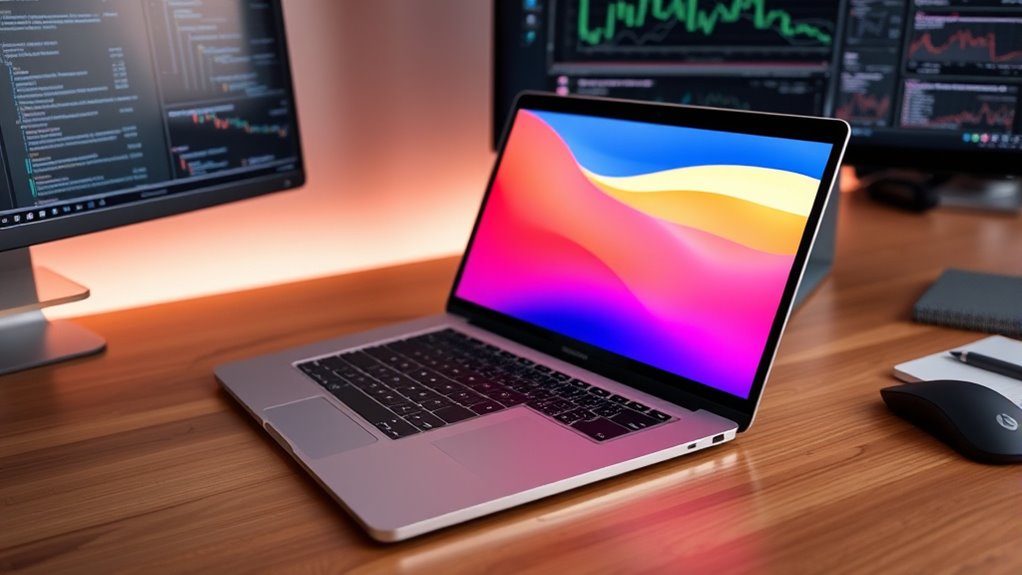

Shopping for a MacBook Pro with 64GB unified memory means deciding between chip class, screen size, storage, and whether a renewed older model gets you the same memory for less. My top pick is the Apple MacBook Pro 16-inch with M5 Max, 64GB unified memory, and 2TB SSD, which pairs the fastest GPU here with enough internal storage for heavy video and 3D work. If portability matters more, the 14.2-inch M5 Max with 64GB delivers nearly identical performance in a smaller chassis, while the renewed 16-inch M3 Max is the standout value route to 64GB. The main tradeoff in this category is price versus chip generation — and note that two entries here ship with 48GB, so check configurations carefully. Keep reading for the full breakdown of which model fits which workflow.

Get kitchen gear delivered free with Prime
- Fast, free delivery on millions of items
- Prime Video, Amazon Music and more included
- Member-only deals all year
Complete the kit


Key Takeaways
- Every true 64GB configuration in this lineup is a Max-class or high-end Pro-class machine, so the real differentiators are chip tier, screen size, and storage rather than memory itself.
- The M5 Max models with 40-core GPUs dominate for video editing and 3D rendering, but the M5 Pro with 64GB handles memory-hungry multitasking (large Xcode builds, many virtual machines) at a lower cost with only modest GPU sacrifice.
- Two entries — the M5 Pro 14.2-inch and 16.2-inch — ship with 48GB RAM, not 64GB, making them fallback picks for buyers whose memory needs are close to but below the 64GB threshold.
- The renewed M3 Max remains remarkably capable with 64GB and a 40-core GPU, but buyers trade warranty simplicity and the latest media engine refinements for savings.
- The nano-texture glass option on the 16-inch M5 Max is a genuine productivity upgrade for glare-prone offices, but it slightly reduces contrast and costs more than the standard glass variant.







| macbook pro with 64gb unified memory | Display | Memory | Storage | Ports |
|---|---|---|---|---|
| Apple MacBook Pro 16-inch with | 16.2-inch Liquid Retina XDR, 1600 nits peak | 64GB Unified Memory | 2TB SSD | 3x Thunderbolt 5, MagSafe 3, HDMI, SDXC, headphone jack |
| Apple MacBook Pro 14.2-inch wi | 14.2-inch Liquid Retina XDR, 1600 nits peak | 64GB Unified Memory | 2TB SSD | 3x Thunderbolt 5, MagSafe 3, SDXC, HDMI, headphone jack |
| Apple MacBook Pro 16.2-inch La | 16.2-inch Liquid Retina XDR | 64GB Unified Memory | 2TB SSD | Three Thunderbolt 5, MagSafe 3, SDXC, HDMI, headphone jack |
| Apple MacBook Pro 16-inch with | 16-inch Standard Display | 64GB Unified Memory | 1TB SSD | — |
| Apple MacBook Pro 16.2-inch | 16.2-inch Liquid Retina XDR | 64GB Unified Memory | 1TB SSD | — |
| Apple MacBook Pro 16.2-inch wi | 16.2-inch Liquid Retina XDR with Nano-Texture Glass | 64GB unified memory | 2TB SSD | Three Thunderbolt 5, MagSafe 3, HDMI, SDXC, headphone jack |
| Apple 2026 MacBook Pro Laptop | 16.2-inch Liquid Retina XDR | 48GB unified memory | 1TB SSD | Three Thunderbolt 5, MagSafe 3, SDXC, HDMI, headphone jack |
| Apple MacBook Pro Laptop with | 14.2-inch Liquid Retina XDR | 48GB unified memory | 1TB SSD | Three Thunderbolt 5, MagSafe 3, HDMI, SDXC, headphone jack |
| Apple 16-inch MacBook Pro with | 16-inch Liquid Retina XDR | 64GB unified memory | 1TB SSD | — |
More Details on Our Top Picks
Apple MacBook Pro 16-inch with M5 Max (18-core CPU, 40-core GPU), 64GB Unified Memory, 2TB SSD – Space Black
This is the configuration most 64GB shoppers are actually picturing when they start their search. The M5 Max with its 40-core GPU is the chip that justifies doubling the memory in the first place — it feeds large AI models, 8K timelines, and massive sample libraries without the memory ceiling becoming the bottleneck. Compared with the M5 Pro model (B0H7Z68CLL), the step up in GPU cores translates directly into faster exports and smoother real-time effects, and the 2TB SSD doubles your project headroom. The Space Black finish and Thunderbolt 5 ports round out a machine built for the next several years. The tradeoff is straightforward: this is the most expensive path to 64GB here, and the 16-inch chassis demands a bag sized for it.
Pros:- 40-core M5 Max GPU handles 8K editing, 3D rendering, and on-device AI workloads with headroom
- 2TB SSD gives serious project storage without external drives
- Thunderbolt 5 and Wi-Fi 7 keep it future-proof for high-bandwidth peripherals
- 1600-nit XDR display with extreme contrast for color-critical work
Cons:- Highest-cost path to 64GB in this lineup
- 16-inch size and weight reduce everyday portability
Best for: Professional video editors, 3D artists, and developers running large local AI models who need maximum sustained performance
Not ideal for: Budget-conscious buyers or anyone who primarily browses and edits documents — the M5 Max GPU power will sit idle
- Chip:Apple M5 Max, 18-core CPU, 40-core GPU
- Display:16.2-inch Liquid Retina XDR, 1600 nits peak
- Memory:64GB Unified Memory
- Storage:2TB SSD
- Ports:3x Thunderbolt 5, MagSafe 3, HDMI, SDXC, headphone jack
- Wireless:Wi-Fi 7, Bluetooth 6 (Apple N1 chip)
- External Displays:Up to 4
- Color:Space Black
Our verdict“If 64GB is a requirement rather than a luxury, this is the machine that earns it.”
Apple MacBook Pro 14.2-inch with M5 Max, 18-core CPU, 40-core GPU, 64GB Memory, 2TB SSD, Silver
Most 64GB configurations force you into the 16-inch chassis, which is exactly why this 14.2-inch M5 Max stands out. You get the same 40-core GPU and full 2TB of storage as the larger Silver M5 Max 16-inch (B0GV5CD97J), but in a body that actually fits in a smaller messenger bag. For consultants, traveling colorists, and developers who work from cafés and client sites, that size difference changes daily behavior more than any spec sheet suggests. The tradeoffs are real: the smaller display makes timeline and multi-window work more cramped, and thermally the compact body has less headroom under sustained all-core loads. The Silver finish also shows wear differently than Space Black — some buyers love it, others find fingerprints more visible.
Pros:- Full M5 Max performance in the most portable chassis available
- 2TB SSD and 64GB memory match the larger configurations
- Complete port selection including Thunderbolt 5, HDMI, and SDXC
- 1600-nit XDR display in a compact form factor
Cons:- Smaller display limits timeline-heavy and multi-monitor-at-desk workflows
- More cramped thermal envelope under long sustained loads
Best for: Mobile professionals who need M5 Max-class power but carry their laptop daily
Not ideal for: Studio-based editors who rarely travel — the 16-inch models deliver a better workstation experience for the same money
- Chip:Apple M5 Max, 18-core CPU, 40-core GPU
- Display:14.2-inch Liquid Retina XDR, 1600 nits peak
- Memory:64GB Unified Memory
- Storage:2TB SSD
- Ports:3x Thunderbolt 5, MagSafe 3, SDXC, HDMI, headphone jack
- Wireless:Wi-Fi 7, Bluetooth 6
- Color:Silver
Our verdict“The only real answer for buyers who refuse to sacrifice power for portability.”
Apple MacBook Pro 16.2-inch Laptop with M5 Max, 64GB RAM, 2TB SSD, Silver
Spec-for-spec, this Silver 16.2-inch M5 Max mirrors the Space Black flagship (B0GV1L6Z8Y) almost exactly — same chip, same 64GB, same 2TB — which makes the finish the practical differentiator. Silver hides fingerprints and micro-scratches that show readily on darker coatings, which matters for a machine that travels between sets and studios. Where this model earns its place is the combination of the six-speaker Spatial Audio system and deep Apple ecosystem integration: AirDrop, Handoff, and continuity features make it the natural hub if you already shoot on iPhone and cut on an iPad. The drawbacks are shared with its twin: it is heavy, expensive, and buyers who don’t need the Max-tier GPU would be better served by the M5 Pro configuration elsewhere in this lineup.
Pros:- Identical M5 Max performance to the flagship at the same specification
- Silver finish resists visible fingerprints and smudges better than dark coatings
- Six-speaker system with Spatial Audio suits audio preview work
- Deep integration with iPhone and iPad workflows
Cons:- Premium price for capability many buyers won’t fully use
- Large and heavy for regular travel use
Best for: Apple-first creative professionals who want a fingerprint-resistant finish and seamless device handoff
Not ideal for: Windows-dependent workplaces or buyers who only need 64GB for memory-heavy but GPU-light tasks
- Processor:M5 Max with 18-core CPU and 40-core GPU
- Display:16.2-inch Liquid Retina XDR
- Memory:64GB Unified Memory
- Storage:2TB SSD
- Ports:Three Thunderbolt 5, MagSafe 3, SDXC, HDMI, headphone jack
- Camera:12MP Center Stage
- Audio:Six speakers with Spatial Audio and Dolby Atmos
- Wireless:Wi-Fi 7, Bluetooth 6
Our verdict“The same muscle as the top pick, chosen primarily when the lighter finish fits your environment better.”
Apple MacBook Pro 16-inch with M5 Pro, 18-core CPU, 20-core GPU, 64GB Memory, 1TB SSD
Not everyone who needs 64GB of unified memory needs a 40-core GPU. This M5 Pro configuration is the smart pick for developers, data analysts, and software engineers whose workloads eat RAM — large Xcode builds, multiple containers, hefty datasets — but don’t push pixels. Compared with the M5 Max model (B0GV1L6Z8Y), you give up half the GPU cores and a terabyte of storage, and in exchange the price drops considerably while the 18-core CPU keeps everyday compile and multitasking performance competitive. The 1TB SSD fills faster than you’d expect once Xcode, Docker images, and virtual machines accumulate, so external storage is a realistic part of the ownership plan. Note the standard display listed here rather than the XDR panel on pricier siblings — colorists should look elsewhere.
Pros:- Most affordable route to 64GB unified memory in this lineup
- 18-core CPU matches the Max chip for general and compile-heavy workloads
- Included 140W adapter and MagSafe 3 cable out of the box
- Large 16-inch display for side-by-side coding and documentation
Cons:- Half the GPU cores of the Max configurations limits rendering and effects work
- 1TB SSD fills quickly with development environments and large projects
- Standard display rather than the Liquid Retina XDR panel
Best for: Developers and engineers who need 64GB for builds, containers, and VMs but do little GPU work
Not ideal for: Video editors and 3D artists — the 20-core GPU and 1TB SSD will bottleneck professional creative pipelines
- Chip:Apple M5 Pro, 18-core CPU, 20-core GPU
- Memory:64GB Unified Memory
- Storage:1TB SSD
- Display:16-inch Standard Display
- Finish:Space Black
- Included Accessories:140W USB-C Power Adapter, 6.5-ft USB-C to MagSafe 3 Cable
- Model Year:Early 2026
Our verdict“The rational choice when memory is your bottleneck rather than graphics.”
Apple MacBook Pro 16.2-inch (2023) with M3 Max, 16-core CPU, 40-core GPU, 64GB RAM, 1TB SSD, Space Black (Renewed)
For buyers who need the memory and GPU bandwidth but not the newest silicon, this renewed M3 Max is the value play of the roundup. The 40-core GPU still handles 4K and much 6K work credibly, and 64GB of unified memory behaves the same whether the chip has a 3 or a 5 in front of it — your timeline doesn’t care. The honest comparisons sting, though: against the M5 Max (B0GV1L6Z8Y) you lose the newer chip’s AI acceleration, Thunderbolt 5, and Wi-Fi 7, and the 1080p webcam trails the 12MP Center Stage camera on current models. Buying renewed also means accepting variable cosmetic condition and a shorter effective lifespan of Apple software support. It is a capable machine at a lower entry point, not a bargain without strings.
Pros:- 40-core GPU still delivers strong editing and rendering performance
- 64GB unified memory for a fraction of new-config pricing
- Up to 22 hours of battery life on a proven platform
- Genuine 16.2-inch Liquid Retina XDR display
Cons:- Renewed condition carries cosmetic and battery-health uncertainty
- Two generations behind on chip, ports, and camera technology
- Listed weight of 8.4 pounds makes it the heaviest option here
Best for: Freelancers and students who need Max-tier memory and GPU on a tight budget and can accept pre-owned hardware
Not ideal for: Buyers wanting warranty peace of mind, the latest AI features, or long-term macOS support runway
- Processor:Apple M3 Max, 16-core CPU, 40-core GPU
- Display:16.2-inch Liquid Retina XDR
- Memory:64GB Unified Memory
- Storage:1TB SSD
- Battery Life:Up to 22 hours
- Camera:1080p FaceTime HD
- Color:Space Black
- Condition:Renewed
Our verdict“A sensible 64GB entry point if you prioritize capability over newness and accept renewed-hardware risk.”
Apple MacBook Pro 16.2-inch with M5 Max, 18-core CPU, 40-core GPU, 64GB Memory, 2TB SSD, Nano-Texture Glass, Space Black
This is the configuration I would point most serious professionals toward, because it refuses to compromise anywhere that matters. The M5 Max with a 40-core GPU doubles the graphics throughput of the M5 Pro machines in this lineup, which changes what 64GB of unified memory can actually do — large local AI models, 8K multicam edits, and heavy 3D rendering all stop being a bottleneck. The nano-texture glass is the quiet differentiator: compared with the standard-glass 16-inch M5 Pro model, it kills glare in bright studios and outdoor shoots, though it does slightly soften on-screen contrast. The 2TB SSD also means buyers won’t be juggling external drives the way they might with the 1TB configurations. Compared with the 14.2-inch M5 Max sibling, this larger chassis sustains peak performance longer under sustained load.
Pros:- 40-core GPU in the M5 Max handles AI inference and 3D rendering far beyond M5 Pro configurations
- Nano-texture glass dramatically reduces glare in bright working environments
- 2TB SSD avoids external storage juggling for large project files
- Thunderbolt 5 ports support up to four external displays
Cons:- Largest and heaviest chassis in the lineup, limiting portability
- Nano-texture glass slightly reduces perceived contrast and cannot be cleaned with standard cloths
- Max-chip pricing puts it well above the M5 Pro options
Best for: Professional video editors, 3D artists, and developers running large local AI models who want maximum sustained power and glare-free viewing
Not ideal for: Frequent travelers and commuters — the 16.2-inch chassis is heavy and bulky compared with the 14.2-inch M5 Pro
- Chip:Apple M5 Max
- CPU:18-core
- GPU:40-core
- Memory:64GB unified memory
- Storage:2TB SSD
- Display:16.2-inch Liquid Retina XDR with Nano-Texture Glass
- Ports:Three Thunderbolt 5, MagSafe 3, HDMI, SDXC, headphone jack
- Wireless:Wi-Fi 7, Bluetooth 6
- Color:Space Black
Our verdict“If your workload genuinely saturates a GPU and you work in bright spaces, this is the 64GB MacBook Pro worth paying full freight for.”
Apple 2026 MacBook Pro Laptop with M5 Pro Chip, 16.2-inch Liquid Retina XDR Display, 48GB RAM, 1TB SSD, Wi-Fi 7, Space Black
Here’s the honest truth for many shoppers: you don’t need the M5 Max, and this 16.2-inch M5 Pro configuration proves it. The 18-core CPU matches the core count of the far pricier M5 Max 16-inch model, and the 20-core GPU still chews through 4K timelines and code compilation without breaking a sweat. The tradeoff is real, though — 48GB instead of 64GB of memory means heavyweight local AI models and massive sample libraries will hit a ceiling sooner. Compared with the 16-inch M5 Pro with 64GB, this model trades memory headroom for a lower entry price, which makes sense if your projects live at 4K rather than 8K. The shared 16.2-inch chassis, six-speaker system, and full port selection mean you give up nothing ergonomically.
Pros:- 18-core M5 Pro CPU matches the M5 Max in core count for everyday pro workloads
- Same 16.2-inch Liquid Retina XDR display and speaker system as the flagship
- Full port selection including three Thunderbolt 5 and SDXC
- Noticeably more affordable than equivalent M5 Max configurations
Cons:- 48GB of memory is a real downgrade for AI and memory-heavy workflows
- 20-core GPU is roughly half the graphics throughput of the M5 Max
- 1TB SSD fills quickly for video professionals
Best for: Working professionals and creators who want the big 16-inch canvas and strong performance without paying Max-chip prices
Not ideal for: Anyone running large local LLMs or extreme multitasking — 48GB will feel tight where 64GB configurations would not
- Processor:Apple M5 Pro, 18-core CPU, 20-core GPU
- Display:16.2-inch Liquid Retina XDR
- Memory:48GB unified memory
- Storage:1TB SSD
- Ports:Three Thunderbolt 5, MagSafe 3, SDXC, HDMI, headphone jack
- Wireless:Wi-Fi 7, Bluetooth 6
- Color:Space Black
Our verdict“The smart middle path: big-screen Mac power at a price that leaves budget for peripherals, as long as 48GB covers your workflows.”
Apple MacBook Pro Laptop with M5 Pro Chip, 14.2-inch Liquid Retina XDR Display, 48GB RAM, 1TB SSD, Silver
Not everyone editing video or compiling code wants to carry a 16-inch slab, and this 14.2-inch M5 Pro is the answer for the mobile-first buyer. The smaller chassis shaves meaningful weight and bulk compared with the 16.2-inch M5 Pro, fitting properly in backpacks and on cafe tables. The catch is the down-binned 15-core CPU and 16-core GPU — this is a gentler M5 Pro than the 18-core/20-core version in the larger model, so sustained exports and renders take longer. The 48GB memory ceiling similarly narrows its range compared with the 64GB configurations elsewhere in this roundup. Still, for photographers, developers, and hybrid workers, the portability dividend often outweighs the performance gap, and the Silver finish resists fingerprints better than Space Black.
Pros:- Most portable MacBook Pro in this lineup while retaining pro-class performance
- Same Liquid Retina XDR display quality and six-speaker system as larger models
- Silver finish hides fingerprints and smudges far better than Space Black
- Full port selection, unusual for a compact pro laptop
Cons:- Down-binned 15-core CPU and 16-core GPU trail the larger M5 Pro configurations
- 48GB memory limits future-proofing for AI workloads
- Smaller display means less timeline and code real estate than 16-inch models
Best for: Photographers, developers, and hybrid workers who carry their machine daily and value portability over maximum render speed
Not ideal for: Heavy GPU workloads like 3D rendering or large local AI models — the reduced core counts and 48GB memory will bottleneck quickly
- Processor:Apple M5 Pro, 15-core CPU, 16-core GPU
- Display:14.2-inch Liquid Retina XDR
- Memory:48GB unified memory
- Storage:1TB SSD
- Battery:All-day
- Ports:Three Thunderbolt 5, MagSafe 3, HDMI, SDXC, headphone jack
- Wireless:Wi-Fi 7, Bluetooth 6
Our verdict“The pick for buyers who actually carry their laptop every day and can accept slightly slower renders in exchange for genuine portability.”
Apple 16-inch MacBook Pro with M5 Pro chip, 64GB RAM, 1TB SSD, Space Black
This configuration solves a specific problem: you want 64GB of unified memory without paying the M5 Max tax. Compared with the 16-inch M5 Max flagship, you keep the same 18-core CPU count, the same 16-inch XDR display, and the same 64GB headroom for parallel apps, virtual machines, or large datasets — you simply give up GPU cores and 1TB of storage. For developers, data analysts, and audio engineers, that’s a shrewd trade, because their workloads are memory-hungry rather than graphics-hungry. Against the 48GB M5 Pro 16-inch model, the extra 16GB is the difference between comfortable headroom and constant memory pressure under heavy multitasking. The 1TB SSD is the weakest link — video creators will want an external drive budget from day one.
Pros:- Full 64GB of unified memory at a lower price than any M5 Max configuration
- 18-core M5 Pro CPU handles compile times and parallel workloads well
- Same 16-inch Liquid Retina XDR display as the flagship models
- Strong balance of memory capacity and everyday performance
Cons:- 1TB SSD is limiting for media-heavy projects
- 20-core GPU trails the M5 Max by a wide margin for graphics work
- Only available in Space Black, which shows fingerprints readily
Best for: Developers, audio engineers, and data professionals who need 64GB of memory but whose workloads don’t demand a Max-tier GPU
Not ideal for: 3D artists and video editors with massive libraries — the 20-core GPU and 1TB SSD are the weak points relative to M5 Max configs
- Processor:M5 Pro, 18-core CPU
- Graphics:20-core GPU
- Memory:64GB unified memory
- Storage:1TB SSD
- Display:16-inch Liquid Retina XDR
- Color:Space Black
Our verdict“The clearest thinking-person’s pick: pay for memory where it counts, skip the GPU premium, and budget for external storage.”

How We Picked
I ranked these machines by asking what a buyer actually needs from 64GB of unified memory: sustained professional workloads like 8K video editing, large ML datasets, music production with heavy sample libraries, or software development with massive builds. That meant prioritizing GPU core count and chip tier first (Max chips can feed memory to the GPU far faster than Pro chips), then storage capacity (1TB fills quickly when your workloads justify 64GB of RAM), and finally form factor and display options like the 14-inch chassis and nano-texture glass.
I also factored in value positioning. A renewed M3 Max with identical memory and a 40-core GPU can outperform a new M5 Pro for GPU-bound tasks, so ranking purely by chip generation would mislead buyers. Configurations that fall short of the 64GB target — the two 48GB models — sit at the bottom but remain included because they suit buyers hovering near, not past, that memory threshold. Where two machines share a chip and memory, the tiebreakers were storage, finish availability, and display coating options.
| macbook pro with 64gb unified memory | Wireless | Color | Processor |
|---|---|---|---|
| Apple MacBook Pro 16-inch with | Wi-Fi 7, Bluetooth 6 (Apple N1 chip) | Space Black | — |
| Apple MacBook Pro 14.2-inch wi | Wi-Fi 7, Bluetooth 6 | Silver | — |
| Apple MacBook Pro 16.2-inch La | Wi-Fi 7, Bluetooth 6 | — | M5 Max with 18-core CPU and 40-core GPU |
| Apple MacBook Pro 16-inch with | — | — | — |
| Apple MacBook Pro 16.2-inch | — | Space Black | Apple M3 Max, 16-core CPU, 40-core GPU |
| Apple MacBook Pro 16.2-inch wi | Wi-Fi 7, Bluetooth 6 | Space Black | — |
| Apple 2026 MacBook Pro Laptop | Wi-Fi 7, Bluetooth 6 | Space Black | Apple M5 Pro, 18-core CPU, 20-core GPU |
| Apple MacBook Pro Laptop with | Wi-Fi 7, Bluetooth 6 | — | Apple M5 Pro, 15-core CPU, 16-core GPU |
| Apple 16-inch MacBook Pro with | — | Space Black | M5 Pro, 18-core CPU |
Factors to Consider When Choosing Macbook Pro With 64gb Unified Memory
Before committing to a specific configuration, it helps to understand why 64GB exists as a tier, what actually consumes that memory, and where Apple’s configuration ladder rewards or punishes your choices.Max vs. Pro Chips With the Same Memory
The single biggest mistake buyers make is assuming 64GB of unified memory performs identically across chip tiers. It doesn’t. Memory bandwidth on Max-class chips is far higher than on Pro-class chips, which matters enormously when the GPU is the bottleneck — video effects rendering, 3D, and local AI inference all pull data through memory constantly. A Pro chip with 64GB is excellent for CPU-bound multitasking like compiling code or running dozens of tabs alongside VMs, but it will feel slower than a Max chip in DaVinci Resolve or Blender. Match the chip to where your workload actually strains, not just to the memory number. If you can’t name a GPU-heavy task you do weekly, the Pro chip is likely the smarter spend.
Storage: The Configuration You Can’t Upgrade Later
Unified memory and SSD storage are both soldered, but storage is the one that fills up silently. Workloads that justify 64GB of RAM — 8K footage, sample libraries, model checkpoints — tend to generate enormous files, and a 1TB SSD can fill within months of serious use. External Thunderbolt drives mitigate this, but they add cost, cables, and fragility to a mobile workflow. My advice: if your projects live on the machine, treat 2TB as the professional baseline and 1TB as acceptable only if you already have a storage strategy. Budget the extra storage at purchase time, because there is no second chance.
14-inch vs. 16-inch: Weight, Thermals, and Screen Real Estate
The size decision shapes daily use more than most spec differences. The 14-inch chassis is genuinely portable and, with a Max chip inside, delivers near-identical peak performance to its larger sibling — but the smaller body sustains heavy loads with more fan noise and slightly more thermal throttling during marathon renders. The 16-inch gives you a bigger canvas for timeline work and cooler, quieter sustained performance, at the cost of a heavier bag and less desk flexibility. Editors who dock to external monitors most of the week often prefer the 14-inch; those who work on the built-in display daily tend to regret going small.
Renewed vs. New: Where the Value Line Sits
A renewed M3 Max with 64GB is the most debated pick in this category, and the calculus depends on your risk tolerance. The M3 Max’s 40-core GPU still handles professional video and 3D work capably, and the memory capacity is identical to a new machine. What you give up are the newest media engine improvements, peak efficiency (translated as battery life), and the clean certainty of a fresh warranty. Buyers who keep machines for five-plus years should weigh whether the savings justify starting a generation behind. Buyers on a two-to-three-year upgrade cycle get more from the renewed route.
Display Coating: Nano-Texture Is Not for Everyone
Apple’s nano-texture glass is a配置 option that professional buyers often undervalue or overbuy. It dramatically reduces glare from windows and overhead lighting, which matters for color-critical work in uncontrolled environments. The tradeoff is slightly lower perceived contrast and a microscopically matte finish that some designers dislike for pure media consumption. If you work in a studio with controlled lighting, standard glass looks better and costs less. If your desk faces a window, nano-texture can be the difference between usable and unusable afternoon working conditions.
Watch for Memory Configurations That Aren’t Quite 64GB
A recurring trap in this category is listings that bundle a desirable chip with a memory tier below the one you searched for — 48GB machines frequently appear alongside 64GB results. The 48GB tier is real and capable, but it’s a different memory bus configuration, and for workloads like large virtualization setups or heavy sample libraries, that gap between 48GB and 64GB is exactly where failures happen. Verify the memory line in the specification table before buying, not just the chip name in the title. This is doubly important with third-party sellers, where configuration titles are sometimes assembled loosely.
Frequently Asked Questions
Is 64GB of unified memory overkill for photography work in Lightroom and Photoshop?
For pure raw editing and layer-based retouching, 64GB is more than most photographers need — 32GB or 48GB handles even large panoramas and composites comfortably. Where 64GB earns its keep is in hybrid workflows: photographers who also edit 4K or 6K video, run local AI upscaling models, or keep multiple Adobe apps plus a browser full of references open simultaneously. Unified memory also lets the GPU share that pool, so GPU-accelerated filters benefit from headroom beyond what a traditional RAM split would suggest. If photography is your only workload, a 48GB M5 Pro configuration will feel identical day to day and costs less. If video or AI is creeping into your business, 64GB future-proofs the machine for its likely five-year lifespan.
Does the M5 Pro with 64GB actually need that much memory, or should I just get the M5 Max?
It depends entirely on whether your bottleneck is memory capacity or memory bandwidth. Developers running large Xcode builds, multiple Docker containers, and virtual machines are capacity-bound — the M5 Pro with 64GB handles that beautifully, and the Max chip’s extra bandwidth buys almost nothing there. GPU-heavy users (video editors, 3D artists, local LLM inference) are bandwidth-bound, and the Max chip’s wider memory bus makes the same 64GB feel dramatically faster in those tasks. A useful rule: if your fans spin up during exports and renders, you want the Max; if your machine slows down from having too much open, the Pro with 64GB is the smarter allocation of your budget.
Is a renewed M3 Max with 64GB a risky buy compared to a new machine?
The hardware risk is lower than many buyers fear, because Apple’s silicon Macs have shown strong long-term reliability and the M3 Max remains a genuinely fast professional chip with a 40-core GPU. What you should scrutinize are the seller’s refurbishment standards, battery cycle count, and return window — those vary far more than the hardware itself. Performance-wise, you give up roughly one generation of efficiency gains, which shows up as somewhat shorter battery life rather than dramatic speed loss. For GPU-bound work, the renewed M3 Max can outperform a new M5 Pro while costing less. Buyers who prioritize warranty simplicity and longest possible lifespan should still lean new, but value-focused professionals get a legitimate machine here.
Should I pay extra for the 2TB SSD or manage storage externally?
If your workloads justify 64GB of memory, your files are almost certainly large, and internal storage speed matters for active projects — editing 8K footage or large sample libraries off an external drive works but adds friction and failure points. A practical hybrid approach many professionals use is 2TB internally for active projects plus a Thunderbolt SSD or NAS for archives, which is cheaper than jumping to 4TB internally. The mistake to avoid is buying 1TB assuming you’ll ‘figure storage out later,’ because the SSD is not upgradeable and offloading mid-project disrupts workflows. Consider how much data a single one of your typical projects consumes, multiply by how many you keep active, and that number should drive the decision.
Is the nano-texture display worth it for color-critical work?
Nano-texture is engineered to maintain color accuracy while scattering reflections, and Apple positions it specifically at professionals working in uncontrolled lighting — so it’s not a consumer gimmick. That said, it does slightly reduce contrast and introduces a faint diffusion that some colorists and photo retouchers notice against a reference glossy display. The honest answer is that it’s worth it if glare is a real problem in your workspace, and unnecessary if you work in a controlled room with blinds or biased lighting. Videographers reviewing footage on location tend to love it; studio-based retouchers usually prefer standard glass. Since it’s a build-to-order option you can’t add later, decide before you buy.
Conclusion
For most professional buyers, the Apple MacBook Pro 16-inch with M5 Max, 64GB unified memory, and 2TB SSD is the best overall choice — it combines the strongest GPU in the lineup, the memory capacity this search implies, and storage sized for the workloads that need it. The best value pick is the renewed 16-inch M3 Max with 64GB, which delivers Max-class GPU performance and identical memory at a lower entry point, provided you’re comfortable with a renewed purchase. For premium buyers who want every advantage, the nano-texture M5 Max variant adds glare control that pays off daily in difficult lighting. The 14.2-inch M5 Max with 64GB is the pick for portable professionals who dock to external displays, while the M5 Pro 16-inch with 64GB suits capacity-bound multitaskers — developers and VM-heavy users — who don’t need Max bandwidth. Finally, the 48GB M5 Pro models are the right call only for buyers whose memory needs sit just under the 64GB line; if you’ve read this far because your workflows stall at high memory pressure, stick with the true 64GB configurations. Whatever you choose, remember both memory and storage are permanent at purchase — buy for the workload you’ll have in three years, not the one you have today.