TL;DR

Get kitchen gear delivered free with Prime
- Fast, free delivery on millions of items
- Prime Video, Amazon Music and more included
- Member-only deals all year
Good Housekeeping published six ideas for giving vintage teacups new uses, including a cake stand, bird feeder, trinket dish, miniature scene, candle and succulent garden. The suggestions are craft and decor ideas, not evidence of a broader trend or a reported product launch.
Good Housekeeping has published six ideas for repurposing vintage teacups, suggesting readers turn the small vessels into household decor, a bird feeder, a candle or a planter. The report offers instructions and advice from designers, organizers and crafting experts for people looking to reuse cups they have inherited or found secondhand.
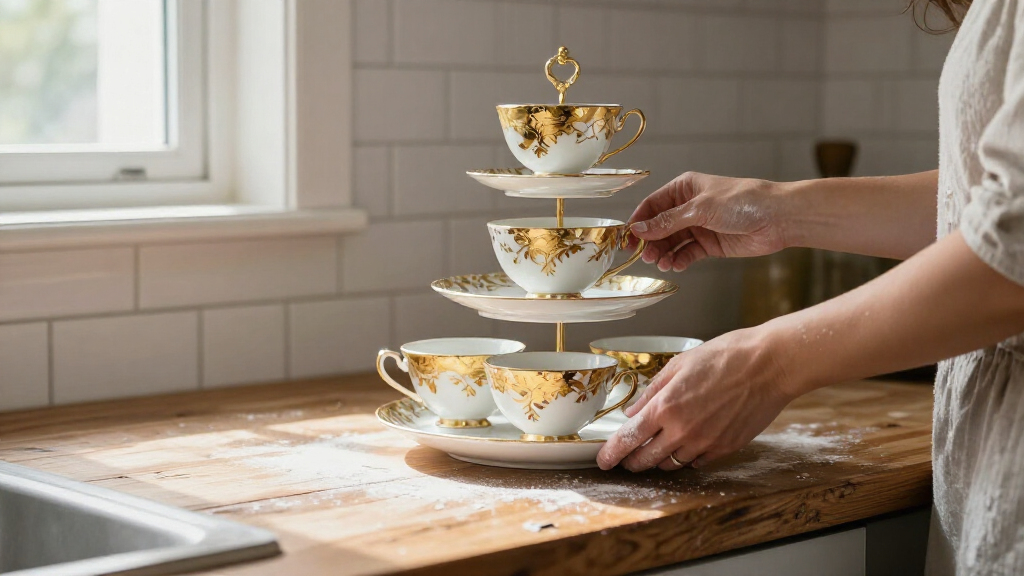
The ideas range from projects involving glue and other craft supplies to simple arrangements. For a teacup cake stand, designer Janette Ewen recommends attaching a cup to the underside of a dinner plate, after cleaning both surfaces with rubbing alcohol. The report says to apply ceramic glue around the cup’s base, press the plate into it, and allow the glue to cure for 24 hours. Ewen says the pieces do not need matching patterns; mismatched crockery can be part of the look.
For outdoor use, professional organizer Blanka Molnar suggests gluing a teacup to its saucer so the cup tilts as if pouring out birdseed. The finished feeder can sit on a flat surface or hang from a tree by a string looped through the handle. Another idea is a rhinestone-covered trinket dish: crafting expert Amanda Middleton recommends cleaning the cup with rubbing alcohol and using a strong adhesive to attach crystals, then letting the glue dry before using the cup for jewelry or small supplies.
The remaining suggestions are a miniature scene made with flower foam, moss and small decorative objects; a candle poured into a teacup, with scents or flowers added according to personal preference; and a succulent planter. For the planter, the article advises adding rocks at the bottom, followed by cactus potting mix and one or two small succulents. It does not provide a detailed drainage design or specific plant-care schedule.
Useful Ideas for Inherited Crockery
The report gives readers options for reusing cups that might otherwise sit unused, with projects suited to different levels of effort. Some ideas require only arranging plants or decorative pieces; others involve adhesives, candle-making materials or tools. That range lets readers choose a project based on the cup’s condition and intended use, rather than treating every piece as suitable for the same purpose.
Several suggestions also shift the teacup from display-only china to an object with a practical function: a place for jewelry, a feeder for birds, or a small planter. The article’s advice is primarily about craft and decor, however. It does not establish that these projects are safer, cheaper or more sustainable than buying purpose-made alternatives, and it gives no cost or environmental comparisons.
Products Worth Considering

Le Creuset Essential Non-Stick Ceramic Shallow Frying Pan, 12-Inch

KitchenAid Classic Series 4.5-Quart Tilt-Head Stand Mixer, Onyx Black

KitchenAid Artisan 5-Quart Tilt-Head Stand Mixer, Almond Cream
As an affiliate, we earn on qualifying purchases.
From Thrift Store Finds to Home Projects
The article opens with the observation that vintage teacups are commonly encountered in thrift stores and may also come from family collections. It frames their abundance and decorative patterns as a reason to find uses beyond serving tea. The supplied source does not report a specific increase in secondhand teacup sales, a new retail product, or a change in consumer behavior.
Good Housekeeping’s piece, titled “6 Perfectly Charming Ways to Upcycle Vintage Teacups,” is a lifestyle report featuring project suggestions and expert comments. Its six ideas share the same basic premise—adapt a small vessel for another role—but vary in how much alteration they involve. The cake stand and bird feeder use a cup with a plate, while the trinket dish, miniature scene, candle and succulent garden can be made with a cup alone.
““Don’t worry about matching patterns; the mismatched, shabby-chic look is part of the charm.””
— Designer Janette Ewen
Project Safety and Practical Limits
The supplied report does not specify whether every vintage cup is suitable for each project, or whether its glaze, cracks or previous repairs could affect use. It also does not give testing or care guidance for the glued cake stand or feeder, including how to clean them or how weather-resistant the bird feeder would be. Readers should not assume that a craft adhesive or decorative finish is food-safe just because a finished stand resembles serving ware.
The candle suggestion lacks technical details about wax type, wick placement, safe filling temperatures and clearance from flammable decorations. The source also gives only a brief drainage suggestion for succulents. These gaps mean the article is best read as a list of project concepts, not a complete set of instructions for every material or use. The supplied material does not include the article’s publication date, so its timing cannot be stated more precisely.
Choosing a Project and Materials
Readers can start by checking the condition and size of a cup, then selecting one of the six uses that fits. A cup with a matching saucer can be used for the proposed stand or feeder; an individual cup can hold small objects, a miniature display, a candle or a small plant. Before using adhesives, crystals, wax or soil, readers should follow the product makers’ directions and confirm the materials suit the intended purpose.
The source does not announce a follow-up, product release or scheduled next development. Any further practical guidance—especially on candle-making, food contact, outdoor durability or plant drainage—would need to come from additional instructions or material-specific advice beyond the supplied report.
Key Questions
What are the six suggested ways to repurpose vintage teacups?
The report suggests making a cake stand, bird feeder, rhinestone trinket dish, miniature scene, candle or succulent planter.
How long should the glue cure for the cake stand?
The article says to let the ceramic glue cure for 24 hours before turning the stand over. It does not give additional testing or care instructions.
Can a teacup bird feeder hang outdoors?
Organizer Blanka Molnar suggests either setting the cup and saucer on a flat surface or hanging them by a string looped through the handle. The source does not discuss weather exposure or how to test the attachment’s durability.
What should readers know before making a teacup candle?
The report proposes pouring a candle into a teacup but does not give detailed safety steps or technical instructions. Follow the wax and wick manufacturers’ directions, and keep flames away from flowers, spices and other flammable decorations.
Does the article say vintage teacups are safe for serving food after upcycling?
No. The supplied material describes craft and decor uses but does not say that glued or decorated pieces are food-safe. Readers should not assume a finished craft is suitable for serving food.
Source: goodhousekeeping.com