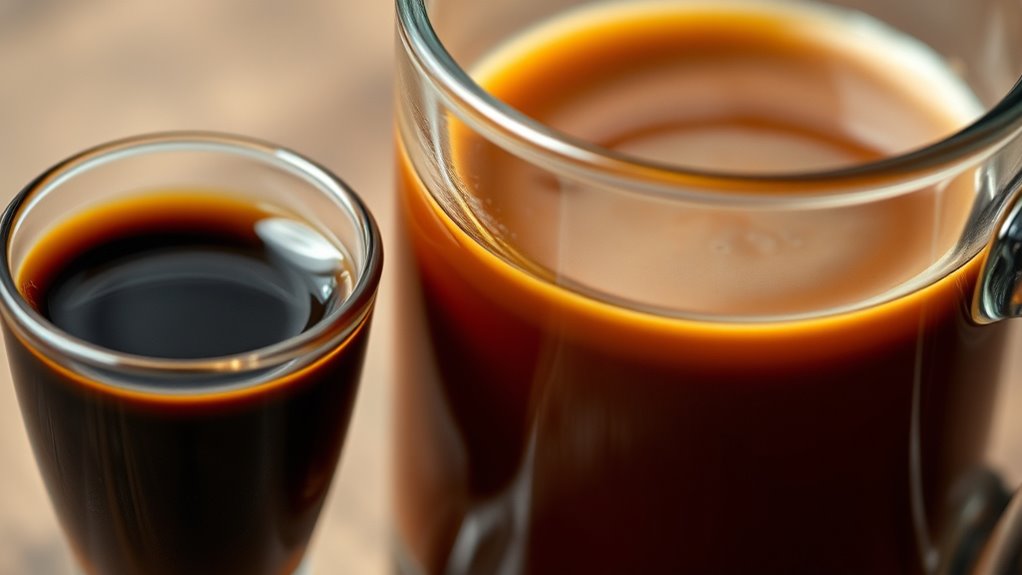

Espresso and drip coffee differ in brewing method, flavor, and texture. Espresso uses finely ground coffee pushed through hot water at high pressure, giving you a bold, rich taste with a thick body. Drip coffee, on the other hand, employs medium-coarse grounds with hot water flowing slowly, resulting in a lighter, more delicate flavor. Caffeine levels and serving sizes vary too. If you want to explore these differences further, you’ll find plenty of insights by continuing with this guide.

Get kitchen gear delivered free — and shop member deals
- Fast, free delivery on millions of items
- Access to Prime Big Deal Days deals on October 6–7
- Prime Video, Amazon Music and more included
Key Takeaways
- Espresso uses finely ground coffee and high pressure for a concentrated, bold flavor, while drip coffee employs medium-coarse grounds and slow water flow for a lighter taste.
- Espresso has a thicker, creamier body with higher viscosity, whereas drip coffee is smoother and more fluid with a lighter mouthfeel.
- A single shot of espresso contains about 63 mg of caffeine, while an 8 oz drip coffee can have 95-200 mg, depending on brewing variables.
- Espresso offers an intense, rich flavor profile with a crema layer, unlike drip coffee’s cleaner, brighter, and more aromatic taste.
- Both brewing methods serve different preferences: espresso is ideal for quick, concentrated drinks, while drip coffee suits larger, milder servings.
The Brewing Process and Equipment

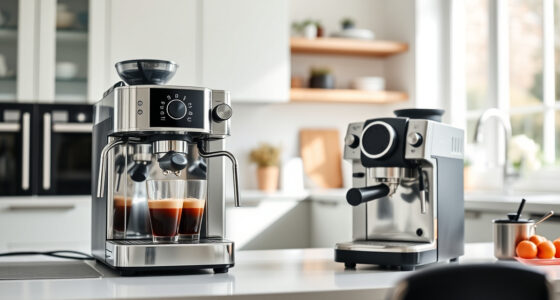
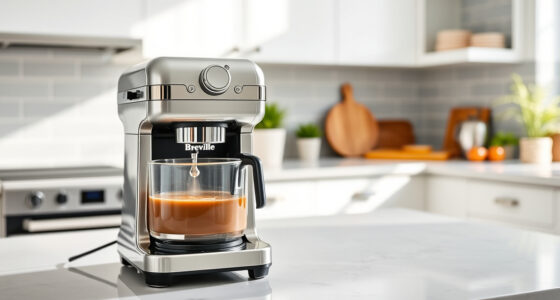
When it comes to brewing coffee, the process and equipment vary considerably between espresso and drip coffee. For espresso, you use finely ground coffee grounds, packed tightly into a portafilter. The machine then forces hot water through the grounds at a high brewing temperature, typically around 190-200°F, creating a concentrated shot. Drip coffee, on the other hand, uses medium-coarse coffee grounds placed in a filter basket. Hot water, usually between 195-205°F, is poured over the grounds and slowly drips through, extracting flavors gradually. The equipment differs as well: espresso machines are compact and pressurized, while drip coffee makers are more straightforward, often using a drip basket and a heating element. Both methods rely on precise brewing temperature, but their processes and equipment are distinctly different. Temperature control is essential for achieving optimal extraction in both methods. Additionally, machine quality can significantly impact the consistency and flavor of each brew. Proper grind size is also crucial to ensure the best possible flavor extraction for each brewing style. Furthermore, maintaining consistent water quality is vital for optimal flavor and aroma in both brewing methods.
Flavor Profiles and Tasting Experience

The differences in brewing process and equipment directly influence the flavor profiles and tasting experiences of espresso and drip coffee. Espresso’s high brewing temperature extracts bold, concentrated flavors with a rich, crema layer, often highlighting subtle notes and a thicker mouthfeel. In contrast, drip coffee’s lower temperature produces a cleaner, more delicate taste, emphasizing brighter acidity and complex aromas. Be mindful of artificial flavors that can sometimes be added to enhance or mask certain profiles. The brewing temperature plays a vital role: too hot, and it may produce bitterness; too cool, and flavors can be underdeveloped. Overall, espresso offers a robust, intense experience, while drip coffee provides a lighter, nuanced flavor, shaping your overall tasting journey. Understanding the impact of brewing methods on caffeine levels can further refine your coffee experience. Additionally, brewing temperature is a key factor that influences the extraction and final flavor profile of your coffee.
Caffeine Content and Serving Sizes

A single shot of espresso typically contains about 63 milligrams of caffeine, while a standard 8-ounce cup of drip coffee can pack anywhere from 95 to 200 milligrams, depending on the brew strength. Caffeine variations are influenced by factors like bean type, grind size, and brewing time, making each beverage unique. Serving size differences also play a vital role; espresso’s small volume concentrates caffeine, but because of the smaller amount, total caffeine per serving is lower compared to drip coffee. If you’re seeking a quick caffeine boost, espresso delivers a potent punch in a tiny package. Conversely, larger drip coffee servings provide more caffeine overall, which might last longer. Understanding these differences helps you choose the right coffee based on your caffeine needs and preferred serving size. Additionally, caffeine content can vary depending on the specific brewing method and bean quality, emphasizing the importance of knowing your coffee. Factors like brewing method and bean origin further influence caffeine levels, making it essential to consider these details for a precise understanding. Furthermore, picking the right brewing technique can optimize caffeine extraction to suit your preferences. It’s also worth noting that vaping innovations continue to evolve, impacting how users experience safety and customization options.
Texture and Body of the Coffee

Espresso offers a rich, full-bodied texture that feels thick and creamy on the palate, thanks to its high-pressure brewing process. This results in a distinct coffee mouthfeel and increased beverage viscosity, making each sip feel substantial. Drip coffee, on the other hand, tends to be lighter with a smoother, more fluid texture. Its lower extraction process produces a thinner body, which can feel less intense but more delicate. The difference in texture influences how you experience flavors and aromas—espresso’s heaviness emphasizes richness, while drip coffee’s lighter body provides clarity. To better understand, consider this table:
| Characteristic | Espresso | Drip Coffee |
|---|---|---|
| Coffee Mouthfeel | Thick, creamy | Light, smooth |
| Beverage Viscosity | High | Low |
| Body | Full | Light |
| Texture Experience | Dense, intense | Gentle, subtle |
Additionally, texture and body play crucial roles in the overall coffee experience, affecting how flavors are perceived and appreciated. A deeper appreciation of these sensory qualities can enhance your brewing and tasting journey, especially when exploring extraction methods and their impact on flavor profiles.
Ideal Uses and Popularity

Choosing between espresso and drip coffee depends largely on your preferences and daily routines. If you enjoy bold, concentrated flavors, espresso is ideal for quick, intense drinks like macchiatos or cortados. It’s popular in cafes and for those who appreciate single origin beans that highlight unique regional qualities. Additionally, the technological innovations in espresso machines have made it easier for consumers to prepare high-quality espresso at home. The precision brewing involved in espresso preparation allows for more control over extraction, resulting in richer flavors. Drip coffee suits those seeking a larger, milder cup and fits well into busy mornings. Its versatility allows you to explore various brewing methods, from paper filters to reusable baskets, making it accessible for everyday use. While espresso is often favored in specialty coffee scenes, drip coffee remains a staple in households due to its ease and ability to prepare multiple cups at once. Both brewing methods cater to different lifestyles and taste preferences, shaping their popularity. Additionally, understanding the brewing process can help you better appreciate the nuances of each method.
Frequently Asked Questions
How Does Grind Size Affect Espresso and Drip Coffee?
Your grind size directly impacts both espresso and drip coffee by influencing grind consistency and extraction quality. For espresso, a fine grind ensures proper pressure and flavor extraction, while a coarser grind suits drip coffee for even extraction. If your grind is inconsistent, it can cause over- or under-extraction, affecting taste. Adjusting your grind size helps you achieve ideal extraction, resulting in richer, balanced coffee regardless of brewing method.
Can You Make Espresso With a Drip Coffee Maker?
No, you can’t make true espresso with a drip coffee maker because it doesn’t generate the high pressure needed for that rich, concentrated flavor. Drip machines focus on brewing consistency and a different coffee flavor profile, which results in a milder taste. If you want authentic espresso, you’ll need a machine designed for high-pressure brewing. Otherwise, your drip coffee will just produce a different, but still enjoyable, brew.
What Are the Health Benefits or Drawbacks of Each?
Sure, drinking espresso or drip coffee isn’t just about waking up—it’s a health gamble! Espresso packs a punch with higher caffeine levels, possibly causing jitters or sleepless nights if you’re sensitive. Both drinks offer antioxidants, but drip coffee often wins in antioxidant content, boosting your health. So, choose wisely: a quick espresso for a caffeine kick or drip for a gentler antioxidant boost—your health, your choice!
How Long Does Each Brewing Method Take?
You’ll find that brewing time varies: espresso takes about 25 to 30 seconds for a shot, making it quick and efficient. Drip coffee generally requires 4 to 6 minutes for preparation duration, depending on your machine and amount. If you’re in a hurry, espresso’s fast brewing time suits you best. For larger quantities, drip coffee’s longer preparation duration is ideal, giving you more flexibility.
Are There Specific Beans Better Suited for Espresso or Drip?
You’ll find that single-origin beans shine in both methods, but their flavor profiles can sway your choice. For a bold, intense espresso, opt for beans with rich, deep notes—perhaps from Ethiopia or Sumatra. If you prefer a nuanced, brighter drip, select beans with fruity or floral hints. Ironically, the best beans depend more on your taste and brewing style than strict rules, so experiment and enjoy the journey!
Conclusion
Whether you prefer the bold richness of espresso or the smooth, easy-drinking nature of drip coffee, understanding their differences helps you choose the perfect brew. Did you know that espresso contains about 63 mg of caffeine per ounce, while drip coffee offers around 12 mg per ounce? This means a small shot of espresso packs a caffeine punch, making it ideal for quick energy. Ultimately, your choice depends on your taste, caffeine needs, and daily routine.
Fall Picks
fall essentials
As an affiliate, we earn on qualifying purchases.