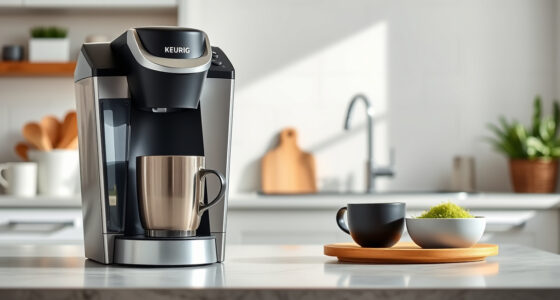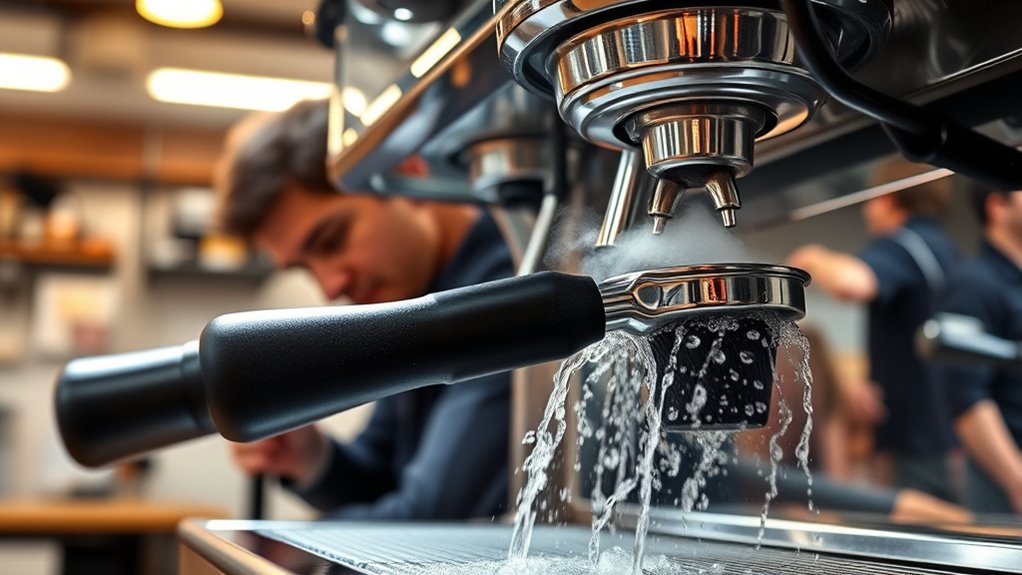

Backflushing is a vital maintenance step for your espresso machine that keeps it running smoothly and your brews tasting great. By using a backflush disc instead of a standard portafilter, you force water back into the group head, clearing out oils and coffee residues. Regular backflushing prevents flavor contamination and machine malfunctions, ensuring peak performance. Want to discover more about keeping your espresso machine in top shape? Stick around for essential tips and best practices.

Get kitchen gear delivered free — and shop member deals
- Fast, free delivery on millions of items
- Access to Prime Big Deal Days deals on October 6–7
- Prime Video, Amazon Music and more included
Key Takeaways
- Backflushing removes coffee oils and residue, enhancing espresso quality and preventing flavor contamination.
- The process involves using a blind filter to force water back through the group head.
- Regular backflushing maintains the machine’s optimal working condition and reduces the risk of malfunction.
- Neglecting backflushing can lead to flavor degradation, increased maintenance costs, and potential internal damage.
- Proper maintenance, including backflushing, ensures consistent espresso extraction and flavor integrity.
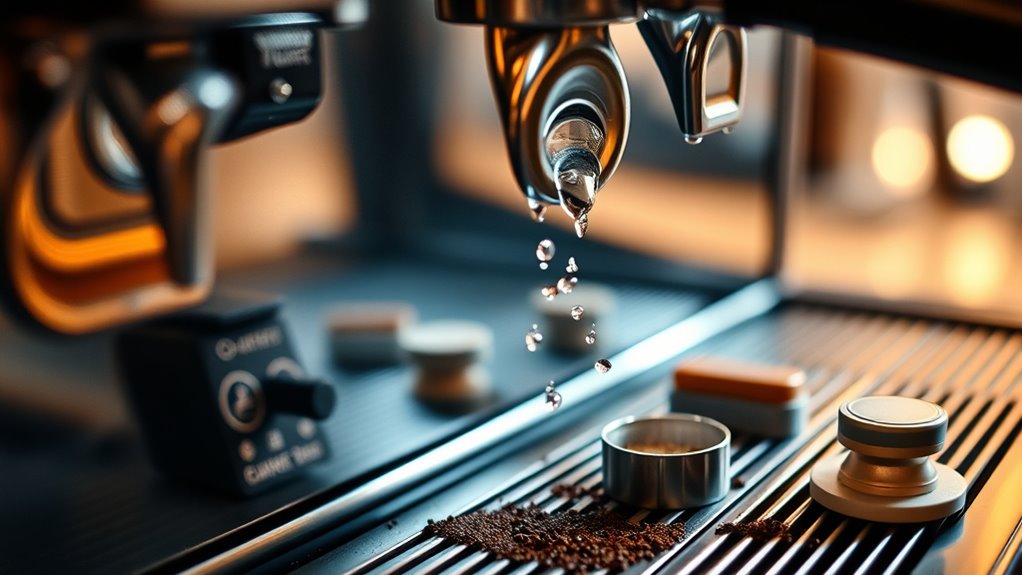
When you plunge into advanced espresso machine maintenance, you’ll discover that a little extra care can greatly enhance your brewing experience. One essential aspect of this upkeep is understanding backflushing. This process plays a crucial role in maintaining the quality of your espresso, ensuring that your machine remains in optimal condition. Backflushing helps remove coffee oils and residue that can build up over time, affecting both flavor and functionality.
To get started, you’ll need to run a cleaning cycle using a backflush disc or blind filter. This disc replaces your standard portafilter and allows water to flow back into the group head instead of through the coffee grounds. When you do this, the water forces any residual oils and coffee particles out of the machine, keeping the internal components clean. It’s vital to perform this cleaning cycle regularly, as neglecting it can lead to a buildup that not only affects taste but also may cause your machine to malfunction.
Machine calibration is another critical part of advanced maintenance. If your espresso isn’t pouring correctly or if the taste varies significantly, it might be time to recalibrate your machine. Calibration involves adjusting the grind size, dose, and extraction time to achieve the perfect balance for your espresso. Each of these elements interacts with the others, so even a small adjustment can have a substantial impact on flavor. Color accuracy in your espresso extraction can also influence the richness of your brew.
During the calibration process, pay attention to the extraction time. Ideally, you want it to be around 25 to 30 seconds for a double shot. If your shots are pulling too quickly or taking too long, adjust the grind size accordingly. A finer grind will slow down the extraction, while a coarser grind will speed it up. After each adjustment, pull a test shot to see if your changes have made a difference.
As an affiliate, we earn on qualifying purchases.
Frequently Asked Questions
How Often Should I Backflush My Espresso Machine?
You should backflush your espresso machine at least once a week to maintain ideal performance. This cleaning frequency helps prevent coffee oils and residues from building up, ensuring your machine runs smoothly. If you use your machine daily, consider incorporating backflushing into your maintenance schedule. For heavy usage, you might even want to backflush more often. Regular maintenance keeps your espresso tasting great and extends the life of your equipment.
What Are the Signs My Machine Needs Backflushing?
You’ll know your machine needs backflushing if you notice slower brew times, bitter flavors, or inconsistent extraction. Pay attention to the water quality; poor water can lead to buildup that affects performance. If your machine’s pressure gauge fluctuates or you see coffee residue in the portafilter, it’s time to take action. Regular backflushing, alongside proper descaling procedures, keeps your espresso machine in top shape and ensures every cup tastes great.
Can I Backflush Without a Backflush Disc?
You can backflush without a backflush disc, but it’s not perfect. While some may think this is a quick fix, it can lead to inadequate cleaning and potential damage. Regular cleaning frequency is essential for peak performance, so using proper maintenance tools is recommended. If you lack a backflush disc, you might consider a homemade alternative, but investing in the right tools will give your machine the care it truly needs.
Is Backflushing Necessary for All Espresso Machines?
Backflushing isn’t necessary for all espresso machines, but it’s vital for those with a three-way valve. Regular cleaning routines, including backflushing, help maintain peak performance and extend your machine’s lifespan. If your machine lacks a three-way valve, focus on other cleaning methods to guarantee it runs smoothly. Ultimately, tailoring your maintenance to your specific machine will keep it in great shape and secure you get the best espresso every time.
What Products Should I Use for Backflushing?
When you backflush your espresso machine, you should use specialized cleaning agents designed for this purpose. Backflushing kits often come with these cleaners, ensuring you’ve got everything you need in one package. Imagine pouring a cup of rich espresso, knowing your machine is in top shape. Using the right products helps remove coffee oils and residues, keeping your machine clean and your coffee tasting great. Don’t skip this essential step in maintenance!
As an affiliate, we earn on qualifying purchases.
Conclusion
In conclusion, mastering backflushing not only keeps your espresso machine in top shape but also enhances your coffee experience. Just as you’d expect a well-tuned engine to hum smoothly, your machine thrives on this routine care. Coincidentally, with each backflush, you’re not just cleaning; you’re paving the way for richer flavors and aromas. So, make it a habit, and your daily brew will reward you with perfection in every cup. Happy brewing!
blind filter for espresso machine
As an affiliate, we earn on qualifying purchases.
As an affiliate, we earn on qualifying purchases.
espresso machine calibration tools
As an affiliate, we earn on qualifying purchases.
As an affiliate, we earn on qualifying purchases.
Halloween Picks
halloween
As an affiliate, we earn on qualifying purchases.