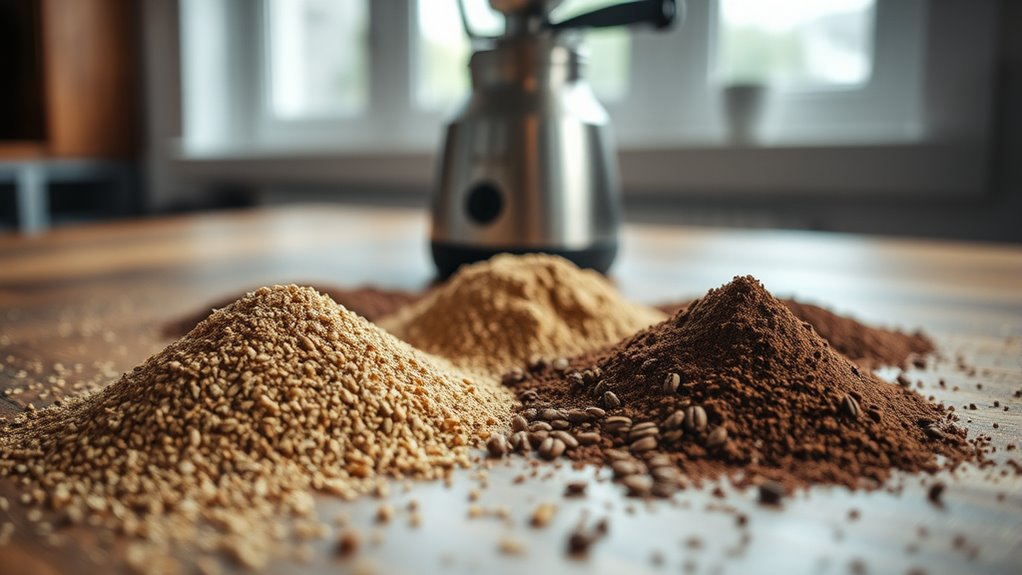

Choosing the right coffee grind size is essential for enhancing flavor. For a French press, go with a coarse grind, while a medium grind is perfect for drip coffee makers and pour-over methods. If you’re brewing espresso, opt for a fine grind to extract bold flavors quickly. Each grind size affects extraction time, impacting your coffee’s taste. To guarantee you brew the perfect cup, discover more about the different grind sizes and their uses.
Key Takeaways
- Grind size significantly affects flavor and strength; choose the right size for your brewing method.
- Coarse grind is ideal for French press, while medium grind suits drip coffee makers and pour-over methods.
- Fine grind, similar to table salt, is used for espresso and Aeropress, promoting quick extraction.
- Extra-fine grind is essential for Turkish coffee and requires precise technique for optimal results.
- Consistent grind size is crucial; inconsistencies can lead to bitterness or under-extraction in your coffee.
When you brew coffee, the grind size plays a essential role in determining the flavor and strength of your cup. The right grind size can enhance your coffee experience, while the wrong one can lead to bitterness or under-extraction. You want to achieve a balance that highlights the unique characteristics of your coffee beans. Understanding the different grind sizes is indispensable for making that perfect cup.
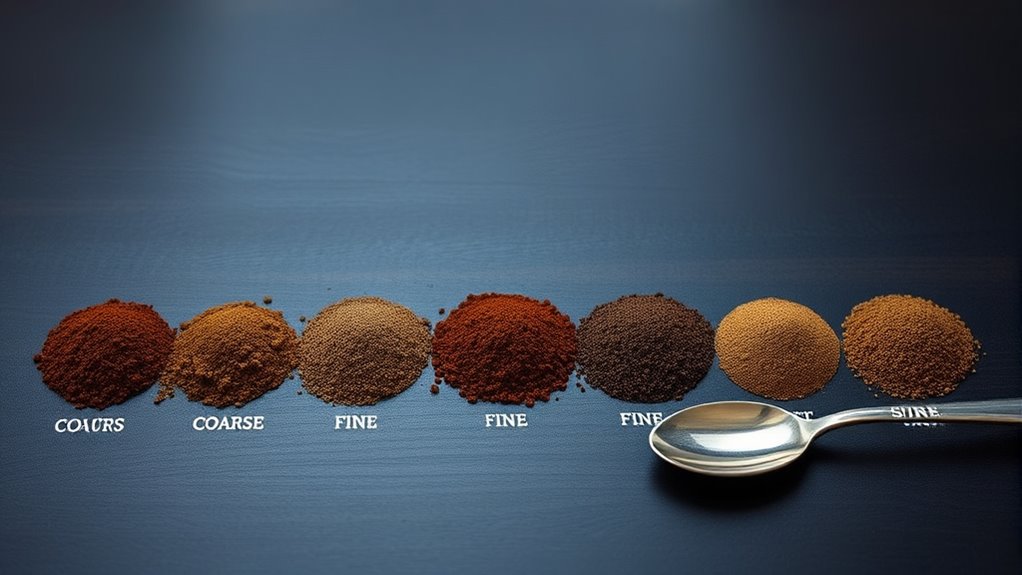
Coarse grinds, resembling sea salt, are ideal for methods like French press. With this grind size, your brew time will be longer, typically around four minutes. The larger particles allow for a slower extraction, which helps avoid over-extraction, resulting in a smoother, less bitter flavor. If you’re using a coarse grind, make sure to monitor your brew time closely to achieve the best results.
Medium grind, similar to granulated sugar, is versatile and works well with drip coffee makers and pour-over methods. This grind consistency strikes a balance, allowing for a moderate extraction time, usually between three to four minutes. If you’re brewing drip coffee, a medium grind is often the go-to choice, ensuring you get a well-rounded flavor without risking bitterness.
Fine grind, which feels like table salt, is suitable for espresso machines and Aeropress. The smaller particles increase the surface area, allowing for quick extraction. Since espresso typically brews in about 25 to 30 seconds, the fine grind is essential for achieving that rich, bold flavor. However, if you don’t pay attention to the grind consistency, you might end up with an overly bitter cup.
Lastly, there’s the extra-fine grind, often used for Turkish coffee. This grind is almost powder-like, allowing for maximum extraction during the quick brewing process. It’s crucial to use the right technique and equipment when brewing with this grind size, as the brew time is minimal, and any inconsistencies can lead to a less enjoyable cup. Additionally, using energy-efficient cloud servers can help ensure that your coffee brewing process is both sustainable and secure.

Hamilton Beach Custom Grind Electric Coffee Grinder for 4-14 Cups, One-Press Hand-Free Operation with Auto Shutoff, Removable Grinding Bowl For Easy Pour and Clean, Stainless Steel (80406)
EASILY SELECT GRIND SIZE AND CUPS OF BREWED COFFEE: Whether you need a fine grind size for espresso…
As an affiliate, we earn on qualifying purchases.
As an affiliate, we earn on qualifying purchases.
Frequently Asked Questions
Does Grind Size Affect Caffeine Content in Coffee?
Yes, grind size does affect caffeine content in coffee. Finer grinds increase caffeine extraction because they create more surface area for water to interact with. This means you’ll extract more caffeine in a shorter time. However, grind uniformity is also essential; inconsistent sizes can lead to uneven extraction, which might result in a weaker brew. So, if you want that caffeine boost, pay attention to both grind size and uniformity!
Can I Adjust Grind Size for Different Brewing Methods?
Yes, you can definitely adjust grind size for different brewing methods! Grind size flexibility is key to achieving the best flavor and extraction. For instance, a coarse grind works well for French press, while a fine grind suits espresso. By matching your grind to the brewing method’s compatibility, you’ll enhance the overall coffee experience. Experimenting with different sizes can lead to discovering your perfect cup, so don’t hesitate to make adjustments!
How Does Storage Affect Coffee Grind Freshness?
Storage plays a vital role in maintaining coffee freshness. If you keep your ground coffee in an airtight storage container, it’ll stay fresher for longer. Exposure to air, moisture, and light can cause it to lose flavor quickly. So, make sure you’re using a dark, cool place for your storage. By taking these simple steps, you can enjoy a more vibrant and flavorful cup every time you brew.
What Equipment Is Best for Grinding Coffee Beans?
If you want the freshest brew, you’ll need the right gear. A burr grinder’s your best bet for consistency, crushing beans evenly for ideal flavor extraction. In contrast, blade grinders chop randomly, making it tough to achieve the perfect grind size. For grinding techniques, stick with burr grinders for varied settings and precision. So, skip the old-school chopping method and embrace the grind that’ll elevate your coffee game to new heights!
Are There Health Risks Associated With Improperly Ground Coffee?
Yes, there are health risks associated with improper grinding. When coffee beans are ground too coarsely or too finely, it can lead to uneven extraction, affecting flavor and potentially introducing bitter compounds. If you brew with improperly ground coffee, you might also increase acidity, which can upset your stomach. Additionally, stale or poorly stored grounds may harbor bacteria and mold, posing further health risks. So, it’s essential to grind your coffee correctly for both taste and safety.
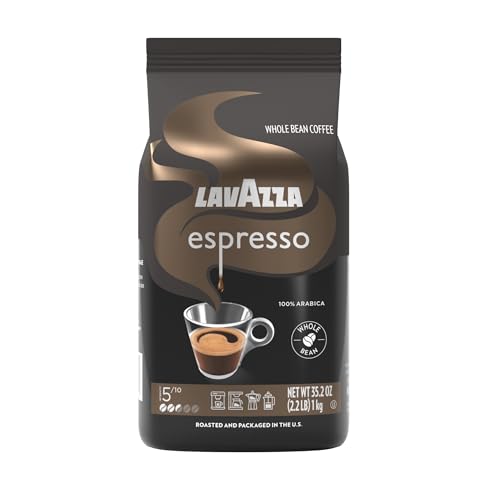
Lavazza Espresso Whole Bean Coffee, Medium Roast, 100% Arabica, 2.2 lb Bag (Pack of 1)
LAVAZZA ESPRESSO: A 2.2 lb whole bean coffee bag ideal for espresso or drip preparation (pack of 1).
As an affiliate, we earn on qualifying purchases.
As an affiliate, we earn on qualifying purchases.
Conclusion
Choosing the right coffee grind size can make all the difference in your brewing experience. For instance, if you’re making a French press, a coarse grind helps extract rich flavors without bitterness. On the other hand, using a fine grind for espresso ensures a robust shot with a nice crema. By understanding and experimenting with grind sizes, you’ll discover the full potential of your coffee, turning every cup into a delightful experience. Enjoy your brewing journey!

Bodum 34oz Pour Over Coffee Maker, High-Heat Borosilicate Glass with Reusable Stainless Steel Filter and Cork Grip – Made in Portugal
Pour Over Coffee: Manual Pour Over Coffee Maker allows you to brew an excellent cup of Coffee in…
As an affiliate, we earn on qualifying purchases.
As an affiliate, we earn on qualifying purchases.

Quality Turkish Coffee Pot – Turkish Coffee Maker, Chai Pot, Arabic Coffee Pot, Briki Greek Coffee Pot, Greek Briki, Cezve, Ibrik (15oz)
LASTING QUALITY – This stainless steel briki coffee pot is made to last. No more rusting copper! The…
As an affiliate, we earn on qualifying purchases.
As an affiliate, we earn on qualifying purchases.