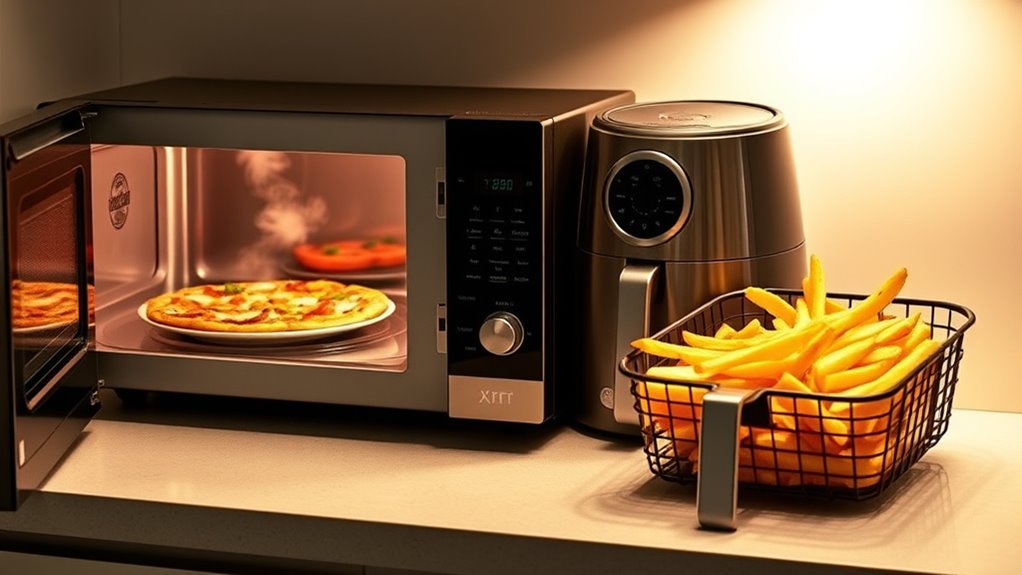

When it comes to reheating leftovers, you’ll find microwaves quick and convenient, perfect for moist foods. However, if you’re after a crispy texture, an air fryer’s hot air circulation can deliver that satisfying crunch, especially for pizzas and fries. While microwaves are speedier, air fryers enhance food quality and flavor. Ultimately, it depends on whether you prioritize speed or taste. Keep exploring to discover more tips on making your leftovers even better!

Get kitchen gear delivered free — and shop member deals
- Fast, free delivery on millions of items
- Access to Prime Big Deal Days deals on October 6–7
- Prime Video, Amazon Music and more included
Key Takeaways
- Microwaves excel in speed, reheating food quickly in just a few minutes, ideal for time-sensitive meals.
- Air fryers restore crispy textures, making them better for fried and crunchy leftovers like pizza and chicken.
- While microwaves may leave food soggy, air fryers enhance flavor and quality with a satisfying crunch.
- Both appliances are more energy-efficient than traditional methods, with air fryers saving energy while delivering better results for crispy foods.
- Choose microwaves for convenience and speed, and air fryers for improved taste and texture.

When you’re deciding between a microwave and an air fryer, it’s essential to understand how each appliance can transform your cooking experience. Both have their unique strengths, especially when it comes to reheating leftovers. You might be drawn to the microwave for its speed and convenience, but an air fryer can offer a different, often tastier, approach.
Microwaves have been a staple in kitchens for decades, primarily because they excel at reheating food quickly. If you’re in a rush, you can pop your leftovers in and have them warmed up in just a few minutes. This method is efficient and straightforward, making it a go-to for many. However, traditional methods of reheating can sometimes leave your food soggy or unevenly heated, robbing you of that delightful texture we all crave. While you’re saving time with a microwave, you might sacrifice the eating experience, especially with items like pizza or fried foods.
Microwaves offer quick reheating, but can compromise texture, leaving food soggy and unevenly warmed.
On the other hand, air fryers bring a new dimension to reheating. They work by circulating hot air around your food, which can give it a crispy texture reminiscent of freshly cooked meals. If you’ve got fried chicken or leftover fries, using an air fryer can revitalize them, making them just as enjoyable as when they were first made. The energy efficiency of an air fryer also stands out; they typically use less energy than a conventional oven while still delivering excellent results.
You may wonder about the time factor. While air fryers can take a bit longer than microwaves, the trade-off is often worth it. Foods come out with a satisfying crunch that you just can’t achieve in a microwave. If you value taste and texture in your leftovers, you might find that the air fryer becomes your new best friend.
Frequently Asked Questions
Can I Use Aluminum Foil in a Microwave or Air Fryer?
You can’t use aluminum foil in a microwave safely because it can cause sparks and reflect microwaves, leading to potential damage. However, in an air fryer, foil is generally safe if used correctly. Just make sure it doesn’t block the airflow, as that’s essential for even cooking. Always check your appliance’s manual for specific guidelines on foil safety, and you’ll avoid any mishaps while reheating your food.
Which Method Preserves Food Texture Better When Reheating?
When it comes to preserving food texture, an air fryer’s like a magic wand for your leftovers. It keeps the food’s moisture locked in while ensuring that delightful crispiness preservation. You’ll notice how your fries regain their golden crunch, while meats stay juicy and tender. In contrast, a microwave can turn your meal into a soggy mess, robbing it of its original charm. So, for texture, reach for that air fryer!
Is It Safe to Reheat Food Multiple Times?
It’s generally not safe to reheat food multiple times. Each reheating cycle increases the risk of bacterial growth, which can lead to foodborne illnesses. To guarantee food safety, only reheat what you plan to eat. If you must reheat leftovers, try to limit it to one or two cycles. Always check that the food reaches the appropriate temperature before consuming. Trust your instincts; if it doesn’t smell or look right, don’t eat it!
What Are the Energy Consumption Differences Between Both Appliances?
When comparing energy consumption, microwaves are generally more energy-efficient than air fryers. Microwaves typically have lower power consumption, using about 600 to 1200 watts, while air fryers can draw between 1400 to 2000 watts. If you’re looking to save on electricity bills, using a microwave for reheating is often the better choice. However, if you need that crispy texture, an air fryer might be worth the extra energy cost for a delicious result.
Can I Reheat Liquids in an Air Fryer?
Reheating liquids in an air fryer is like trying to paint a masterpiece with a sledgehammer—it just doesn’t work! Air fryers aren’t designed for liquid reheating, as they focus on circulating hot air to crisp food. Using them for air fryer liquids can lead to spills and messes. Stick to methods like microwaving or stovetop heating for your soups and sauces, where they can warm up evenly and safely.
Conclusion
In the battle of reheating leftovers, think of the microwave as a trusty steed—quick and efficient, ready to charge through your hunger. Meanwhile, the air fryer stands like a gourmet chef, transforming yesterday’s meal into a crispy delight. Depending on your mood, you can choose the swift convenience of the microwave or the culinary magic of the air fryer. Whichever you pick, you’re bound to savor those leftovers in a whole new light, like a phoenix rising from the ashes.
Fall Picks
fall essentials
As an affiliate, we earn on qualifying purchases.