Cooking with kids can be a fun adventure that builds skills and creates memories. Start by teaching measuring techniques with cups and spoons. Always emphasize kitchen safety—wash hands and supervise near hot surfaces. Show them how to safely use kid-friendly tools, gradually introducing more complex tasks. This experience not only boosts math skills but also fosters responsibility. You’ll transform your kitchen into a learning space where joy thrives, and there’s so much more to explore together.
Get ready for Prime Big Deal Days — try Prime free
Exclusive member deals on October 6–7, plus fast free delivery. Cancel anytime.
As an affiliate, we earn on qualifying purchases.
Key Takeaways
- Start with simple recipes that allow kids to practice measuring ingredients using cups and spoons for hands-on learning.
- Discuss kitchen safety rules, emphasizing hand washing and hazard awareness to ensure a safe cooking environment.
- Supervise closely when using sharp utensils and hot surfaces, establishing a safe zone away from potential dangers.
- Demonstrate proper techniques for kitchen tools, gradually introducing more complex tasks as kids gain confidence and skills.
- Create a positive atmosphere by engaging in fun activities, fostering creativity, and building lasting memories through cooking together.
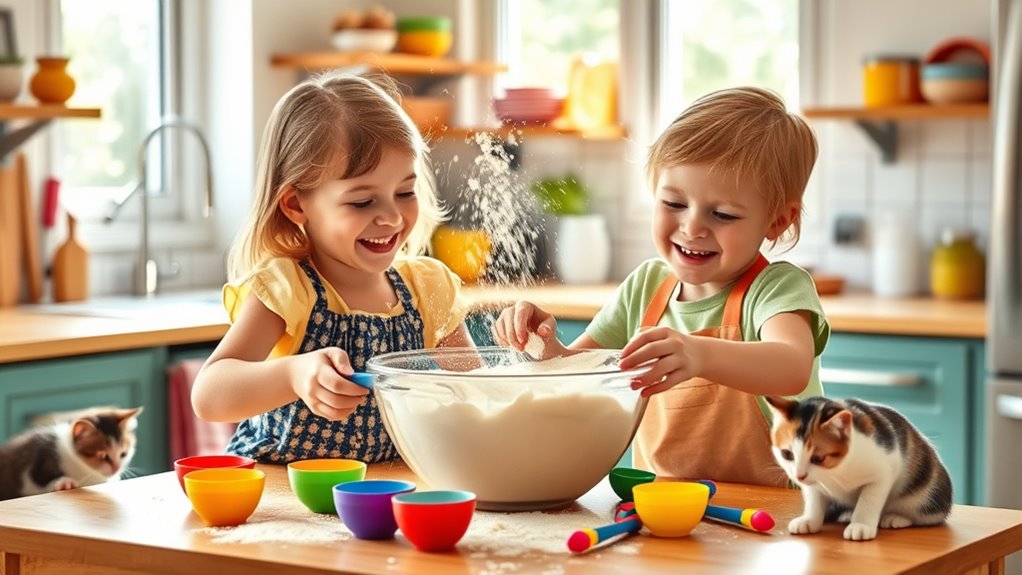
Cooking with kids can be a delightful adventure that not only teaches them valuable skills but also creates lasting memories. You’ll find that it’s a fantastic way to bond while instilling a sense of responsibility and creativity in your little ones. To guarantee the experience is both fun and safe, it’s important to focus on two key aspects: measuring techniques and kitchen safety.
Cooking with kids is a joyful journey that fosters skills, creativity, and cherished memories, emphasizing the importance of measuring and safety.
When you start cooking with kids, you’ll want to introduce them to the art of measuring ingredients. This is a vital skill that lays the foundation for successful cooking. Grab some measuring cups and spoons, and show them how to measure flour, sugar, or any other ingredient. Let them practice by pouring and leveling off the ingredients themselves. It’s a hands-on way for them to learn about fractions and volume, and it’s also a great opportunity to teach them about the importance of precision in cooking. Encourage them to read recipes aloud; it’ll help reinforce their understanding of measurements and the sequence of steps involved in cooking.
While you’re having fun with measuring techniques, don’t forget about kitchen safety. This should always be your top priority. Before you even start cooking, have a discussion about the potential hazards in the kitchen. Explain the importance of washing hands, especially after handling raw ingredients. Make sure to supervise them closely when they’re near hot surfaces or sharp utensils. You can create a designated safe zone in the kitchen where they can work without the risk of injury, perhaps away from the stove or knife block. It’s a good idea to have a first-aid kit nearby, just in case.
Additionally, involve them in learning how to use kitchen tools safely. Show them how to use a peeler or a kid-friendly knife, emphasizing the need for caution. As they gain confidence, gradually introduce them to more complex tasks, but always keep safety in mind. Incorporating kitchen safety guidelines ensures that everyone has a fun and secure cooking experience.
Cooking can be a fantastic way to instill valuable life skills in your kids, from basic math to safety awareness. With the right focus on measuring techniques and kitchen safety, you’ll turn your kitchen into a nurturing environment for learning. By making the experience engaging and educational, you’ll create not just tasty dishes, but also unforgettable memories together.
Frequently Asked Questions
What Age Is Appropriate for Kids to Start Cooking?
You can start letting your kids cook as early as age 3, with simple tasks like washing vegetables. As they grow older, around age 5, they can begin mixing ingredients or spreading butter. By age 7 or 8, they’re ready for more complex skills, like measuring and following simple recipes. Just consider their maturity and interest—this helps with skill development and boosts their confidence in the kitchen. Enjoy the process together!
How Can I Keep the Kitchen Organized While Cooking With Kids?
You can’t let chaos reign supreme in your kitchen while cooking with kids! To keep things organized, embrace clever storage solutions like colorful bins for ingredients and utensils. Create a simple cleaning routine where you tackle spills and messes together—turn it into a fun game! With your little chefs helping out, you’ll not only maintain order but also teach them responsibility. So roll up those sleeves and get ready for a neat culinary adventure!
What Common Kitchen Tools Are Safe for Children to Use?
Child safe knives and non-slip utensils are great kitchen tools for kids. You can introduce them to these items to help build their confidence and skills while cooking. Child safe knives have rounded edges, making them less dangerous to use. Non-slip utensils ensure a secure grip, reducing the risk of accidents. Always supervise your kids, and encourage them to practice with these tools to enhance their cooking experience securely and enjoyably.
How Do I Handle Kitchen Accidents Involving Kids?
When kitchen accidents happen, stay calm and assess the situation. First aid essentials like band-aids, antiseptic wipes, and ice packs should always be on hand. If it’s a minor cut or burn, clean the area and apply a bandage. For more serious injuries, don’t hesitate to call for emergency help. Always teach your kids about emergency preparedness, so they know what to do if something goes wrong in the kitchen.
What Are Some Easy Recipes for Beginners to Try With Kids?
You can start with simple snacks like fruit skewers or yogurt parfaits, which are easy and fun to assemble. For beginner desserts, try no-bake chocolate oatmeal cookies or rice crispy treats; they’re quick and require minimal supervision. Let the kids mix ingredients, shape the snacks, or decorate the desserts with toppings. These activities not only teach them basic cooking skills but also make the experience enjoyable for everyone involved.
Conclusion
Cooking with kids can seem intimidating, but it’s a rewarding experience that fosters creativity and confidence. You might worry about messes or safety, but with a little preparation and supervision, you can turn these potential challenges into fun learning moments. Embrace the chaos, and remember that the kitchen is a place for exploration and joy. By following these tips, you’ll create lasting memories and teach valuable skills that your kids will carry into adulthood.
Flea & tick season Picks
flea and tick prevention
As an affiliate, we earn on qualifying purchases.