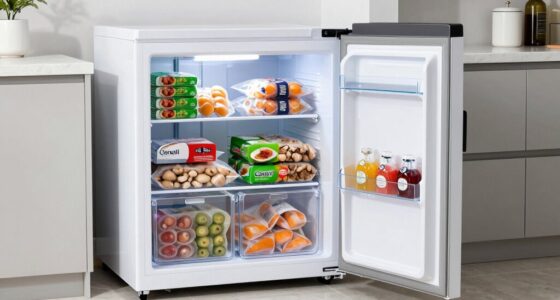
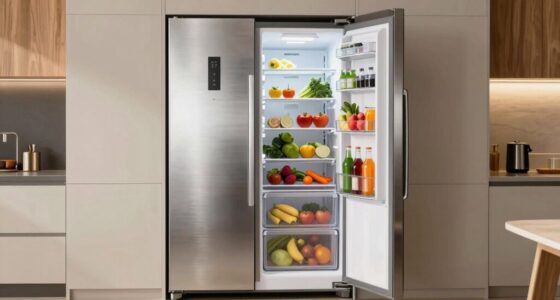
Beverage coolers are designed to keep drinks at a consistent, chilled temperature around 40-45°F, with adjustable thermostats for precision. Unlike standard refrigerators that have multiple zones and fluctuating temperatures for different foods, these coolers focus solely on drinks, ensuring better stability and energy efficiency. They’re also built for easy access and visibility, making drinks quick to serve. If you want to know more about how they compare, keep exploring the details below.
Key Takeaways
- Beverage coolers maintain a consistent temperature around 40-45°F, while standard refrigerators have multiple temperature zones with fluctuations.
- They offer superior temperature stability and precise control tailored for beverages.
- Beverage coolers are more energy-efficient due to their smaller size and focused cooling functions.
- They feature better insulation and cooling technology specifically designed for consistent drink temperatures.
- Designed for easy access and visibility, beverage coolers prioritize quick selection and convenience over food storage.
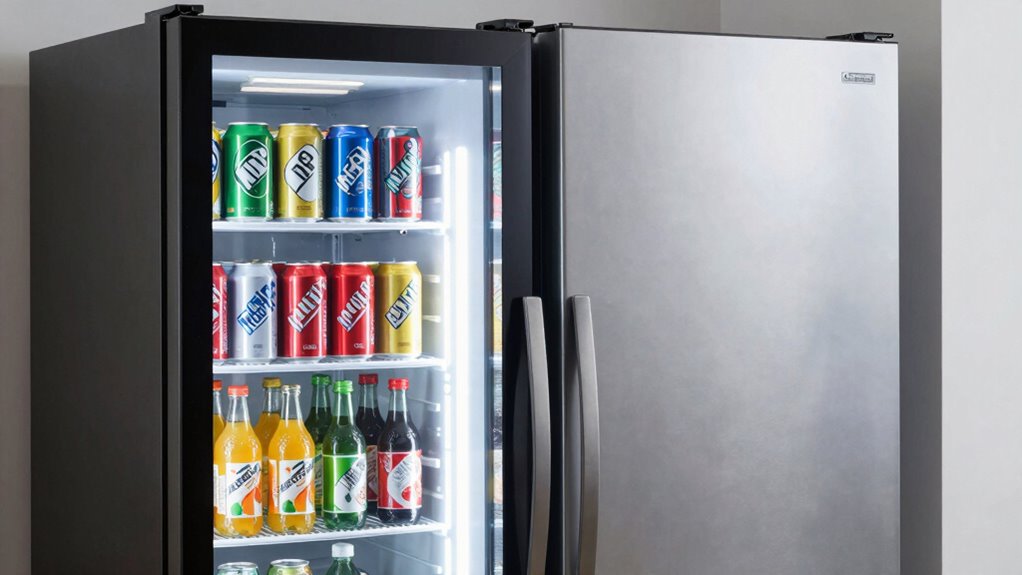
When choosing between a beverage cooler and a standard refrigerator, understanding their key differences can help you make the right decision for your needs. One of the main distinctions lies in how each appliance handles temperature control. Beverage coolers are designed to keep drinks at a specific, consistent temperature—usually around 40-45°F—making them ideal for storing beverages that you want chilled but not frozen. They often feature adjustable thermostats, so you can set the temperature precisely to suit your preferences. Standard refrigerators, on the other hand, are built to accommodate a wider variety of foods, which requires more complex temperature zones and more flexible controls. Their temperature settings typically fluctuate more to ensure fresh food stays at ideal levels, but this can sometimes make it harder to maintain a consistent temperature for beverages. The temperature stability of beverage coolers is often superior due to their focused design, ensuring your drinks stay just right. Energy consumption is another critical factor that sets these appliances apart. Beverage coolers are generally more energy-efficient because they are smaller and designed to operate at a consistent temperature with less effort. They often use less power per hour compared to full-sized refrigerators, which have larger cooling systems and more compartments to maintain. The focused purpose of beverage coolers means they don’t need to work as hard to keep a variety of items at different temperatures, reducing overall energy use. Conversely, standard refrigerators consume more energy due to their larger size and the need to cool multiple zones—such as the fridge and freezer compartments—simultaneously. This increased energy consumption can lead to higher utility bills, especially if the appliance is frequently opened or overloaded. Proper insulation and cooling technology are essential to maintaining their temperature consistency, especially in varying ambient conditions. Additionally, the design of beverage coolers often emphasizes visibility and accessibility, making it easier to quickly locate and serve your drinks. Proper placement within your space can also optimize energy efficiency and access.

Honeywell Beverage Refrigerator and Cooler, 116 Can Mini Fridge with Glass Door for Soda Beer or Wine for Office or Bar with Adjustable Removable Shelving, Commercial Grade
Three pane glass door for ultimate temperature control
As an affiliate, we earn on qualifying purchases.
As an affiliate, we earn on qualifying purchases.
Frequently Asked Questions
Are Beverage Coolers Energy-Efficient Compared to Standard Refrigerators?
Yes, beverage coolers are generally more energy-efficient than standard refrigerators. They consume less energy because they’re designed specifically for chilling beverages, often with better insulation and targeted temperature controls. By using less energy, they reduce environmental impact and lower your electricity bills. You’ll find that beverage coolers provide effective cooling while being a smarter choice for sustainability and cost savings, especially if you primarily store drinks.
Can Beverage Coolers Be Used for Food Storage?
Did you know that beverage coolers typically operate at higher temperatures than standard refrigerators? While they can be used for food storage, they’re not perfect for preservation, as their temperature control isn’t as precise. Beverage coolers are designed to keep drinks chilled, not to maintain the best conditions for perishable foods. For ideal food preservation, stick with a standard refrigerator that offers better temperature regulation.
What Is the Typical Lifespan of a Beverage Cooler?
You can typically expect a beverage cooler to last around 5 to 10 years, depending on cooling technology and durability factors. Modern coolers with high-quality compressors and efficient insulation tend to last longer. Proper maintenance, like cleaning the coils and avoiding overloading, also extends its lifespan. Regularly checking seals and ensuring proper placement helps prevent wear and tear, ensuring your cooler stays functional and efficient for years to come.
Do Beverage Coolers Require Special Maintenance?
Yes, beverage coolers do require special maintenance. You should perform regular cleaning cycles to prevent mold and bacteria buildup, especially inside the shelves and door seals. Additionally, temperature calibration is vital to guarantee your drinks stay perfectly chilled. Check the thermostat periodically and adjust it if needed. Proper maintenance keeps your cooler running efficiently, extends its lifespan, and guarantees your beverages are always at the ideal temperature.
How Do Noise Levels Compare Between the Two Appliances?
You’ll notice that beverage coolers generally operate more quietly than standard refrigerators. Their sound levels are lower because they’re designed specifically for cooling drinks, not food storage, which allows for quieter operation. The noise comparison shows that beverage coolers emit minimal sound, making them ideal for spaces where noise matters, like home bars or offices. Overall, you’ll find beverage coolers are much more discreet when it comes to sound levels.

EUHOMY Mini Fridge 130 Can Beverage Refrigerator Cooler Glass Door for Soda Wine Beer, Beverage Cooler for Home, Bar, Office with Digital Temperature Control Adjustable Shelves, 3.2 Cu.Ft, Silver
【Spacious & Customizable Storage】 With a 3.2 cu. ft. capacity, this mini fridge for bedroom holds up to…
As an affiliate, we earn on qualifying purchases.
As an affiliate, we earn on qualifying purchases.
Conclusion
In the end, understanding how beverage coolers differ from standard refrigerators helps you pick the right appliance for your needs. While a beverage cooler keeps drinks at the perfect chill, a traditional fridge offers more versatility. Think of it as choosing between a trusty steed and a high-tech hovercraft—you’ll want the one that best suits your lifestyle. So, don’t get caught in the 21st century without knowing your options; even a knight would appreciate the difference.
Honeywell Beverage Refrigerator and Cooler, 116 Can Mini Fridge with Glass Door for Soda Beer or Wine for Office or Bar with Adjustable Removable Shelving, Commercial Grade
Three pane glass door for ultimate temperature control
As an affiliate, we earn on qualifying purchases.
As an affiliate, we earn on qualifying purchases.
EUHOMY Mini Fridge 130 Can Beverage Refrigerator Cooler Glass Door for Soda Wine Beer, Beverage Cooler for Home, Bar, Office with Digital Temperature Control Adjustable Shelves, 3.2 Cu.Ft, Silver
【Spacious & Customizable Storage】 With a 3.2 cu. ft. capacity, this mini fridge for bedroom holds up to…
As an affiliate, we earn on qualifying purchases.
As an affiliate, we earn on qualifying purchases.