You can easily sous vide at home without fancy equipment by simply using a pot filled with water and resealable freezer bags. To seal your food, use the water displacement method: place the food in the bag, almost seal it, then submerge it in water to push out excess air before sealing it fully. Keep your pot at a consistent temperature using a thermometer, and don’t worry about overcooking as you follow time guidelines. There’s so much more to explore!

Get kitchen gear delivered free — and shop member deals
- Fast, free delivery on millions of items
- Access to Prime Big Deal Days deals on October 6–7
- Prime Video, Amazon Music and more included
Key Takeaways
- Use resealable freezer bags and the water displacement method to mimic vacuum sealing for sous vide cooking.
- Maintain a consistent water temperature using a large pot on the stove, monitored with a reliable food thermometer.
- Adjust stove heat to keep water at the desired temperature for precise cooking, like 130°F for medium-rare steak.
- Follow time guidelines based on food thickness to avoid overcooking; thicker cuts may need up to 2 hours.
- Finish with a quick sear in a hot pan to enhance flavor and develop a desirable crust.
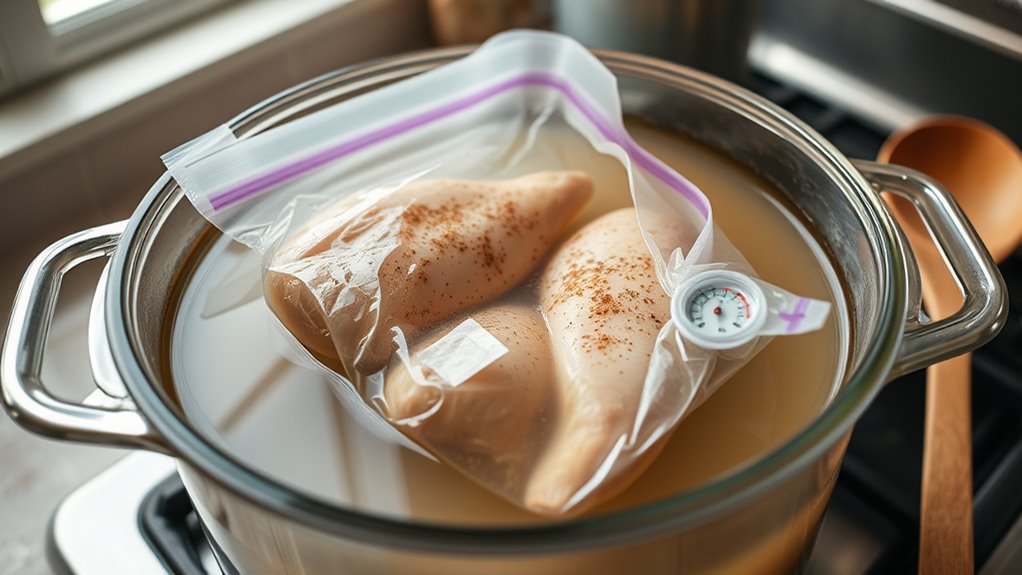
If you’ve ever wanted to try sous vide cooking but felt intimidated by the fancy gadgets, you’re in luck. You don’t need expensive equipment to enjoy the benefits of this precise cooking method. With a simple DIY setup, you can achieve perfectly cooked meals using just a pot, hot water, and some basic tools. The key is understanding vacuum sealing and temperature control, which are vital for sous vide success.
First, let’s talk about vacuum sealing. While traditional sous vide machines use vacuum-sealed bags to guarantee even cooking, you can easily replicate this at home. If you don’t have a vacuum sealer, you can use the water displacement method with resealable freezer bags. Place your food item—whether it’s steak, chicken, or vegetables—inside the bag, then seal it almost completely. Submerge the bag in water, allowing the pressure to push out the air before sealing it all the way. This method creates a makeshift vacuum seal, keeping your food submerged and allowing for even cooking.
Vacuum sealing is essential for sous vide; use resealable bags and the water displacement method for even cooking at home.
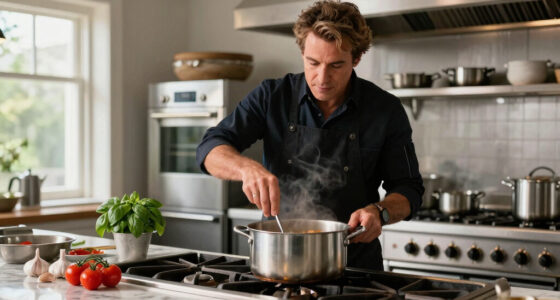
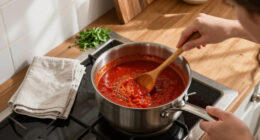
Next, you need to think about temperature control. The beauty of sous vide lies in its precision, but you can achieve this even without an immersion circulator. Fill a large pot with water and heat it on the stove. Use a reliable food thermometer to monitor the water temperature as you cook. The goal is to maintain a consistent temperature throughout the cooking process. When you’ve reached your desired temperature—say 130°F for medium-rare steak—carefully add your sealed bag of food to the pot. You’ll want to keep an eye on the temperature, adjusting the heat as necessary to maintain that perfect cooking temperature. Additionally, understanding the role of temperature precision in cooking ensures that your meals come out exactly how you want them.
Cooking times vary based on the thickness of your food. For example, a one-inch steak needs about one hour, while thicker cuts may take up to two hours. The great thing about sous vide is that you can’t overcook your food as long as you keep it in the water bath for the right amount of time. Once your food is done, you can quickly sear it in a hot pan to develop a delicious crust, enhancing the flavors.
As an affiliate, we earn on qualifying purchases.
Frequently Asked Questions
Can I Sous Vide With a Regular Pot and Stove?
Yes, you can sous vide with a regular pot and stove! To do this effectively, you’ll need to keep a close eye on your heat control. Fill your pot with water, then use a thermometer to monitor the temperature. You can even use a DIY equipment hack, like a zip-top bag, to seal your food. Just remember to adjust the heat as needed to maintain your desired cooking temperature throughout the process.
What Foods Can I Cook Using DIY Sous Vide Methods?
You can cook a variety of foods using DIY sous vide methods, from juicy steaks to tender vegetables. Did you know that cooking meat at lower temperatures can preserve up to 30% more nutrients? This DIY cooking technique not only enhances flavor but also aids in food preservation. Experiment with eggs, fish, and even desserts like custards to enjoy perfectly cooked meals that retain moisture and taste amazing. Your culinary creativity can thrive!
How Long Should I Cook Food Using This Method?
Cooking times vary based on the food and thickness, but a general rule is to sous vide for 1 to 4 hours. For meats, aim for 130°F for steak and 165°F for chicken, while vegetables can cook at 183°F for about an hour. Always guarantee you maintain proper temperature control throughout the process. If you’re unsure, it’s better to cook longer at lower temperatures for more tender results. Enjoy experimenting!
Is It Safe to Sous Vide With Plastic Bags?
Yes, it’s safe to sous vide with plastic bags, but you’ve got to choose wisely. Certain plastics can leach harmful chemicals into your food when heated. So, look for bags labeled as BPA-free or specifically designed for sous vide. As you prepare your meal, remember that maintaining proper temperatures is essential for food safety. If you follow these guidelines, you’ll enjoy delicious, perfectly cooked dishes without compromising your health.
Can I Achieve the Same Results as With a Sous Vide Machine?
You can achieve similar results as with a sous vide machine, but it takes some effort. By using a pot of water and a thermometer, you can maintain precise temperature control, which is essential for food safety. Just make sure to monitor the water temperature closely and adjust as needed. While it might not be as convenient, you’ll still create tender and flavorful dishes that rival those prepared with fancy equipment.
reusable freezer bags for sous vide
As an affiliate, we earn on qualifying purchases.
As an affiliate, we earn on qualifying purchases.
Conclusion
So, there you have it! With just a pot, a thermometer, and some zip-top bags, you can plunge into the sous vide world like a culinary superhero! Picture your perfectly cooked steak, tender and juicy, melting in your mouth like butter on a summer day. You don’t need fancy gadgets to create a dining experience that’ll make your guests swoon and beg for your secrets. Get ready to impress with your newfound sous vide prowess—gourmet meals await!
digital food thermometer for cooking
As an affiliate, we earn on qualifying purchases.
As an affiliate, we earn on qualifying purchases.
As an affiliate, we earn on qualifying purchases.
Halloween Picks
halloween
As an affiliate, we earn on qualifying purchases.