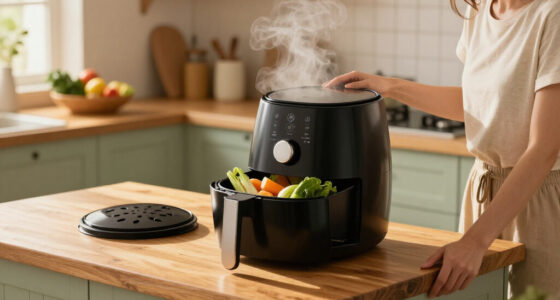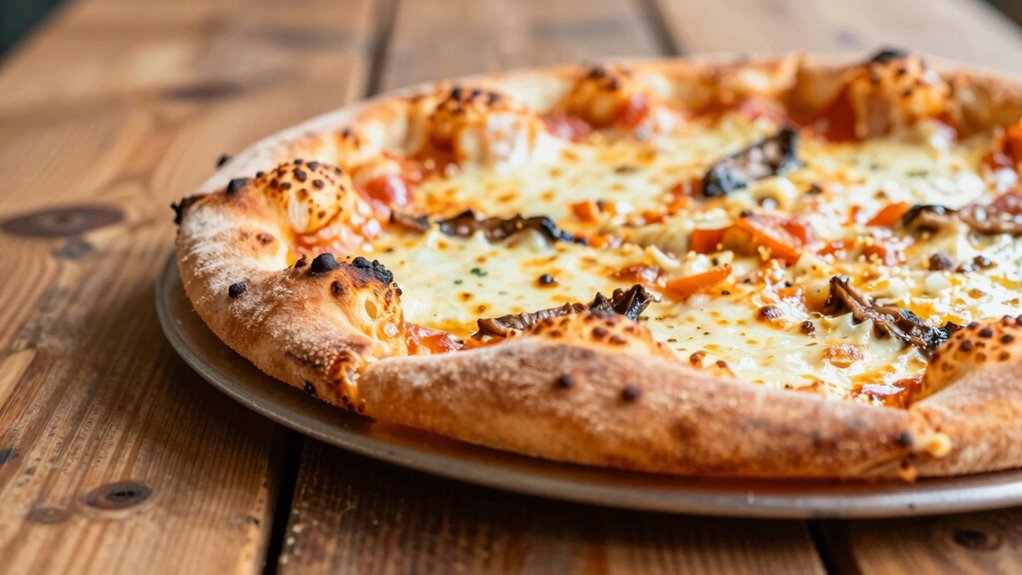

Your home pizza setup delivers better texture when you focus on proper heat management and fermentation. Using tools like pizza stones or steels helps distribute heat evenly, creating a crisp crust with a tender inside. Controlling fermentation guarantees your dough develops flavor and elasticity, making it easier to stretch. Preheating your oven and surfaces properly also plays a key role. Keep these techniques in mind, and you’ll discover how small changes can make a big difference in your pizza results.

Get kitchen gear delivered free with Prime
- Fast, free delivery on millions of items
- Prime Video, Amazon Music and more included
- Member-only deals all year
Key Takeaways
- Using a pizza stone or steel ensures even heat distribution and rapid cooking for a crisp crust.
- Proper preheating of oven surfaces creates a high-temperature environment that enhances crust texture.
- Controlled fermentation develops flavor, gluten structure, and dough extensibility for better handling and chewiness.
- Maintaining consistent oven temperature prevents hot spots, ensuring uniform crust quality.
- Timing proofing and managing oven heat optimize dough relaxation and crust crispness.
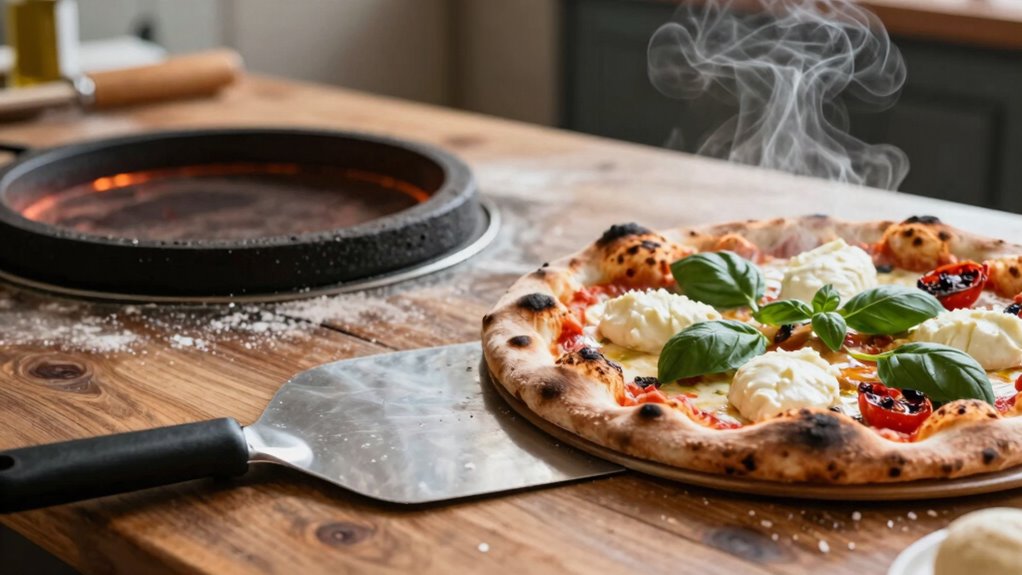
Have you ever wondered why some homemade pizzas come out with a crisp crust and a perfectly chewy center while others fall flat? The secret often lies in the details of your setup and technique. Two key factors that influence texture are dough fermentation and oven heat distribution. Understanding how these elements work together can dramatically improve your pizza results.
First, dough fermentation is essential for developing flavor and texture. When you allow the dough to ferment properly, the yeast produces gases that create a light, airy crumb. Longer fermentation, especially slow cold fermentation, helps break down gluten, giving your crust a better chew and more complex flavor. If you rush this step, the dough remains dense and chewy without that desirable crispness. You want your dough to proof until it’s just puffed up and slightly relaxed, ensuring it’s neither under-fermented nor over-proofed. This process makes the dough more elastic, which is key for stretching it thin without tearing and for achieving a crispy outer crust with a tender interior. Proper fermentation also allows for better dough extensibility, making shaping easier and more consistent. Incorporating controlled fermentation environments can further optimize these results by maintaining steady temperatures and humidity levels.
Proper dough fermentation creates a light, airy crumb with better chew and complex flavor.
Oven heat distribution also plays a critical role in delivering the perfect texture. A well-heated oven with even heat distribution ensures the crust cooks uniformly. If the heat is concentrated in one spot or fluctuates, parts of your pizza might burn while others remain undercooked. Using a pizza stone or steel can help manage heat more effectively, absorbing and radiating heat evenly. Preheating these surfaces for at least 30 minutes ensures they reach the desired temperature and act like a traditional pizza oven. This high, consistent heat creates the rapid cooking environment needed for a crispy crust on the outside and a chewy, moist center. Additionally, proper oven setup can prevent hot spots and promote even cooking, which is essential for achieving the ideal texture.
As an affiliate, we earn on qualifying purchases.
Frequently Asked Questions
How Does Oven Type Affect Pizza Texture at Home?
You’ll notice that oven type greatly affects your pizza’s texture because of factors like oven insulation and cooking temperature. A well-insulated oven retains heat better, ensuring a consistent high temperature that crisps the crust and melts the cheese perfectly. Electric ovens often provide stable heat, while gas ovens can reach higher temps quickly. Adjusting your oven’s heat and understanding its insulation helps you achieve that ideal, restaurant-quality crunch and chew at home.
What Role Does Dough Hydration Play in Texture?
Dough hydration considerably influences your pizza’s texture, making it chewier or crisper. Higher hydration levels, achieved by using the right flour types and proper kneading techniques, create a more elastic dough that develops a light, airy crust. When you adjust the water content carefully, you improve gluten development, resulting in a better rise and texture. Experimenting with hydration helps you customize your pizza to get that perfect, bakery-quality bite.
Can Pre-Baking the Crust Improve Final Texture?
Pre-baking the crust can improve its final texture by enhancing dough elasticity and creating a sturdier base. It allows you to set a crispier crust, especially if you bake at a higher temperature initially. This method helps prevent sogginess from toppings and ensures a more even, desirable crunch. Just be careful not to overbake, as too much heat can make the crust tough, compromising the overall texture.
How Does Humidity Influence Pizza Crispiness?
Humidity effects your pizza’s crispiness by adding moisture to the environment, which can make the crust soggy. To achieve better crispiness, you need moisture control; use a dehumidifier or air-conditioned space to reduce humidity. Keep your dough dry before baking, and avoid covering the pizza tightly, allowing moisture to escape. Proper humidity management guarantees your crust stays crispy and delicious.
Does the Thickness of Toppings Impact Overall Texture?
Yes, the thickness of toppings impacts overall texture. When toppings are uneven or too thick, they can create inconsistent bites and sogginess, affecting crispiness. Uniform toppings promote better flavor distribution and guarantee each slice has the same satisfying crunch. Thin, even layers help the crust stay crisp and allow flavors to meld properly. So, controlling topping thickness enhances both texture and taste, making your homemade pizza more enjoyable.
As an affiliate, we earn on qualifying purchases.
Conclusion
So, next time you’re tempted to splurge on that fancy pizza oven or endless toppings, remember—sometimes, the secret to perfect texture isn’t high-tech gadgets but simple patience and attention. Ironically, your humble home setup with a good stone and a hot oven might just outshine those flashy appliances. It’s not about the equipment; it’s about your willingness to master the basics. After all, great pizza is as much about love as it is about tools.
As an affiliate, we earn on qualifying purchases.
As an affiliate, we earn on qualifying purchases.
Columbus Day / Indigenous Peoples' Day Picks
long weekend sales
As an affiliate, we earn on qualifying purchases.